
8 Best E-Bike Tires of 2026
This post contains affiliate links. As an Amazon Associate, we earn from qualifying purchases.
The Schwalbe Motion Big Apple Tire stands out as the best overall e-bike tire for its reliable grip, solid puncture resistance, and smooth ride across urban and light trail terrain. For budget-focused riders, the Hycline 20×4.0 E-Bike Fat Tire delivers strong performance at a lower price, while the Ultraverse 26×4.0 offers excellent versatility for those tackling mixed or rougher surfaces.
Choosing the right e-bike tire isn’t just about slapping any rubber on your wheels. E-bikes run heavier, faster, and with more torque, which puts extra strain on tires, making durability and proper design critical. I’ve seen too many riders overlook this, only to deal with blowouts, poor traction, or constant flats.
This guide cuts through the noise by focusing on real-world performance. I looked at specs, owner feedback, and brand reputation to find tires that actually hold up under e-bike demands. You’ll learn what to prioritize, like casing strength, tread type, and width, so you can pick a tire that matches your riding style and terrain.
Top 8 E Bike Tires in the Market
The Best E Bike Tires, Reviewed
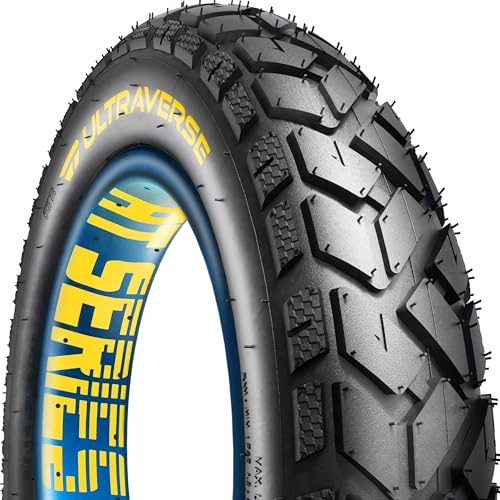
Ultraverse 26×4.0 E-Bike Fat Tire
Strengths
- Excellent puncture resistance
- Superior shock absorption
- All-weather tread pattern
Trade-offs
- High price
- Heavy due to size and rubber density
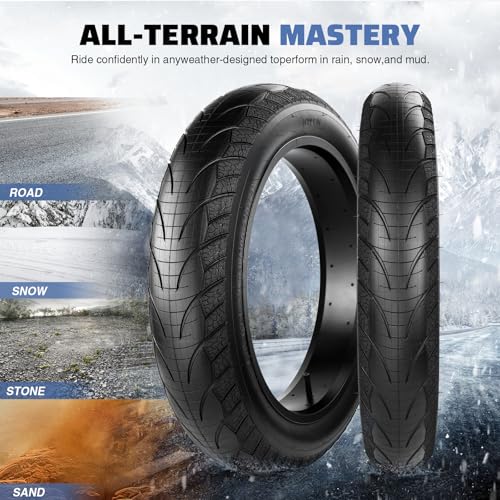
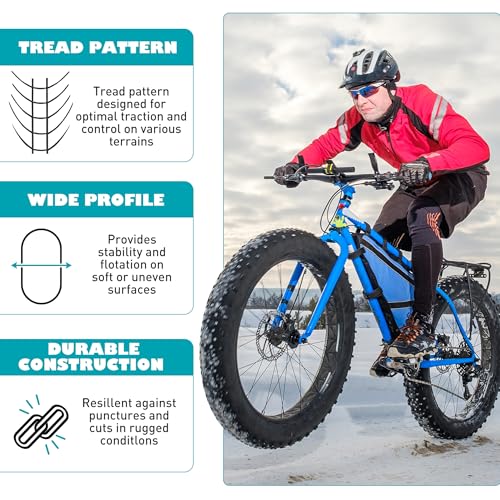
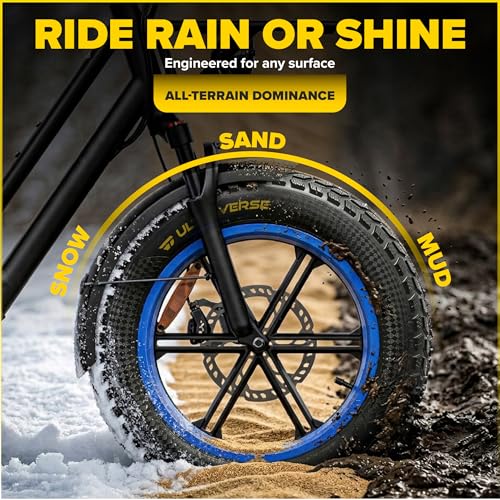
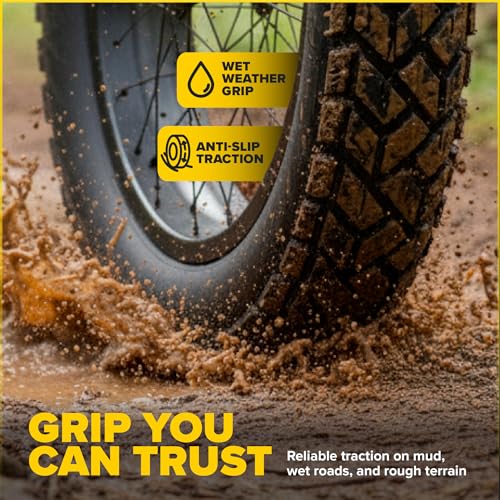
If you’re running a 26-inch e-bike and want the most capable all-terrain tire here, the Ultraverse 26×4.0 is my top pick. The anti-puncture tech and high-density rubber are backed by consistent owner feedback praising longevity, even on rocky trails. The herringbone pattern isn’t just for show, it provides real bite in mud and snow, while still rolling smoothly on pavement.
What pushes this one over the edge is the combination of shock absorption and load capacity. At 26×4.0, these tires are built for heavier e-bikes, and reviewers note a noticeably smoother ride over bumps and cracks. Paired with the lifetime warranty and responsive support, this is the kind of tire that justifies its premium tag. I’d choose it over smaller or less robust options for true all-weather confidence.
Video review
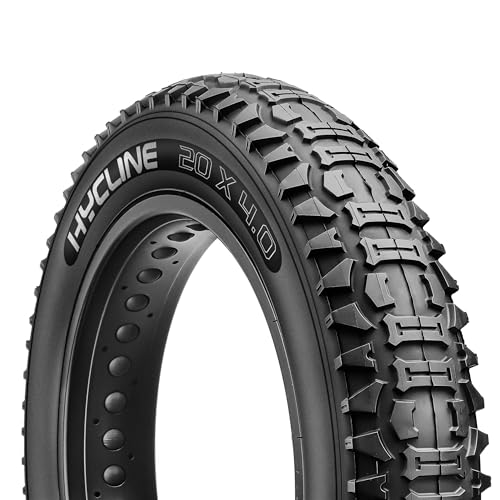
Hycline 20×4.0 E-Bike Fat Tire
Strengths
- Very affordable
- Good for light trail use
- Folding design
Trade-offs
- Shorter tread life
- Basic rubber compound
- Limited weather adaptability
The Hycline 20×4.0 stands out as the most budget-friendly option here, and for riders just needing a basic upgrade from stock tires, it delivers. The 30 TPI casing and high-density rubber offer decent puncture resistance, and the symmetrical tread design actually helps with predictable handling on mixed surfaces.
But let’s be clear, this is an entry-level tire. It won’t match the refinement or longevity of the Ultraverse or HEB models. Owners report the tread wears faster under heavy e-bike loads, and the folded storage note is a minor hassle. Still, for casual riders or those testing fat tire performance, it’s a low-risk way to get started. I’d recommend it only if you’re not pushing speed or distance.
Video review
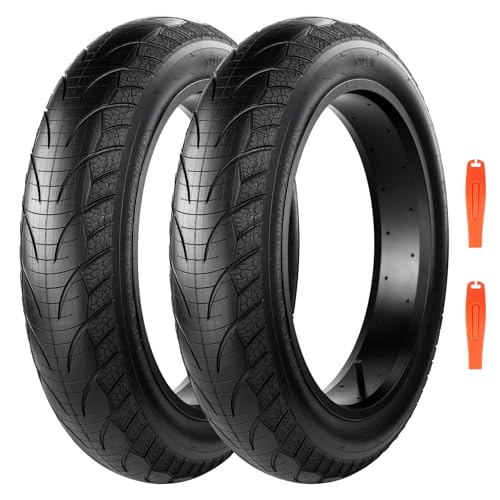
Balinge 20×4.0 E-Bike Fat Tire
Strengths
- Affordable price
- Foldable for storage
- Includes tire levers
Trade-offs
- Average wet-weather grip
- Slightly noisy on pavement
At this price, the Balinge 20×4.0 tires offer surprising value, especially with the included tire levers. The foldable design is a smart touch for storage and transport, and owners note they hold up well on hard-packed trails and pavement. They’re not the most aggressive off-road tire, but for riders who split time between city streets and gravel paths, they strike a reasonable balance.
Where they fall short is in tread refinement. Compared to the HEB or Ultraverse models, the rolling resistance is a bit higher and the ride slightly noisier on asphalt. Still, for the cost, it’s hard to ignore what you get: a rugged, adaptable 20×4 fat tire that won’t break the bank. My recommendation? A solid second-tier pick if you’re not tackling extreme terrain.
Product photos
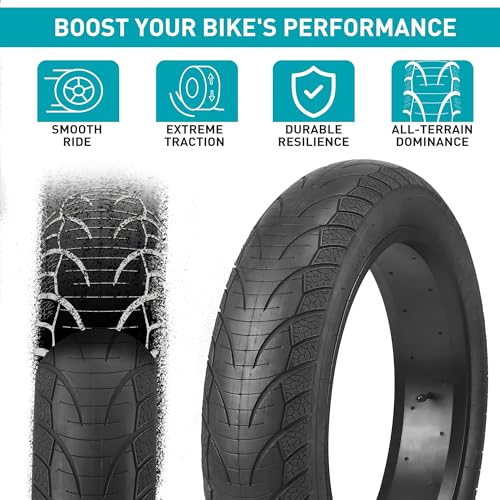


Hycline 20×4.0 Tire Set with Tubes
Strengths
- Includes tubes and levers
- Good value as a kit
- Easy installation
Trade-offs
- Tubes are standard quality
- Tread wears faster under heavy load
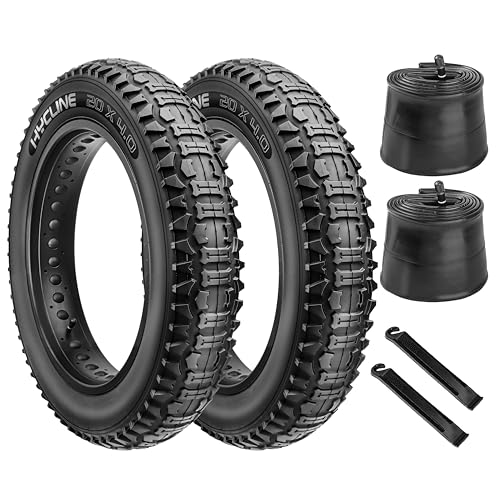
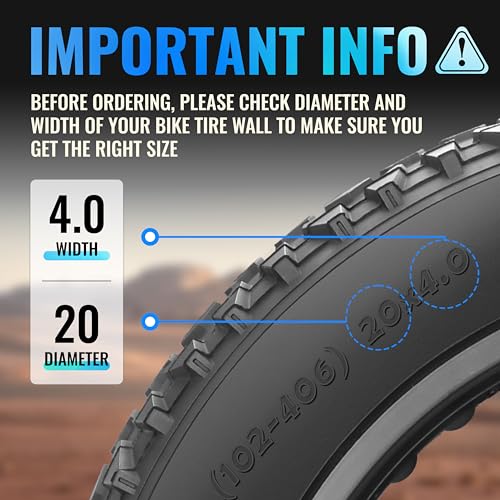
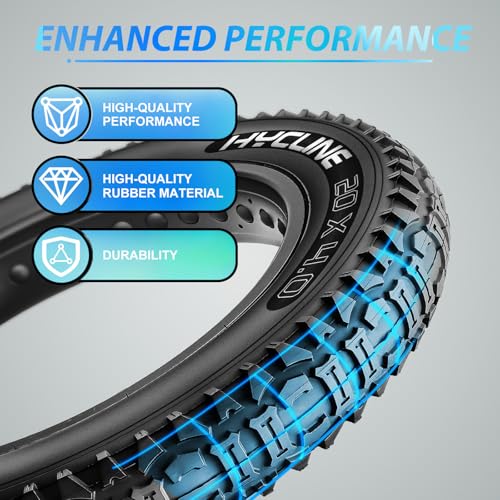
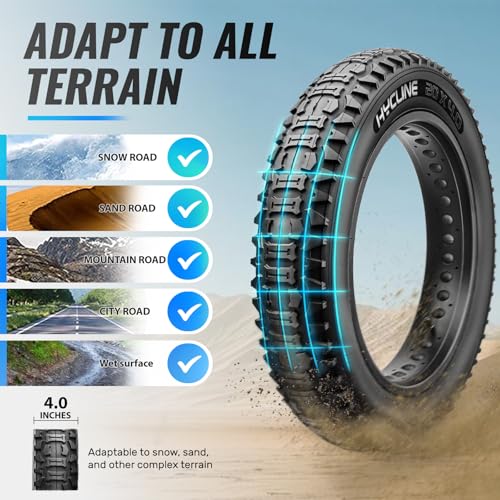
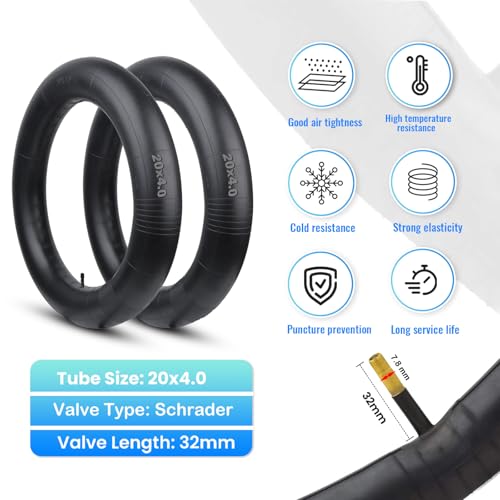
This Hycline kit stands out by including inner tubes and tire levers, making it one of the most complete replacement packages here. For riders doing a full swap, that convenience is a real win, no hunting for compatible tubes or borrowing tools. The 20×4.0 tires themselves mirror the standalone Hycline model: durable rubber, blocky tread, and decent puncture resistance.
Owners appreciate the ease of installation and the dampening effect of the thick butyl tubes, which help smooth out rough pavement. It’s still not a premium-tier tire like the Ultraverse, but the added components justify the higher price over the bare-bones version. I’d recommend this over the tubeless-only options if you want everything in one box and don’t mind trading a bit of tread refinement for practicality.
Product photos
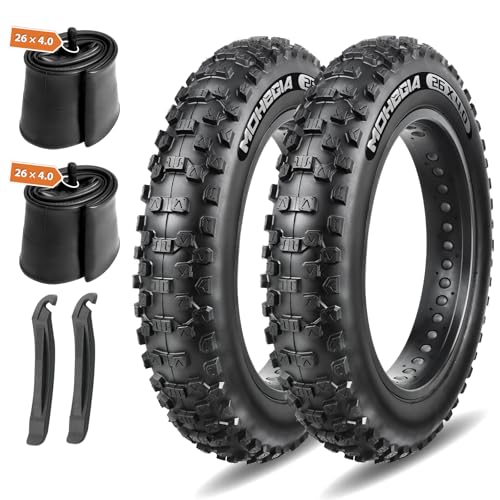
MOHEGIA 26×4.0 E-Bike Tire Set
Strengths
- Complete replacement kit
- Good off-road grip
- Folding tires for storage
Trade-offs
- Noisy on roads
- Tubes are basic quality
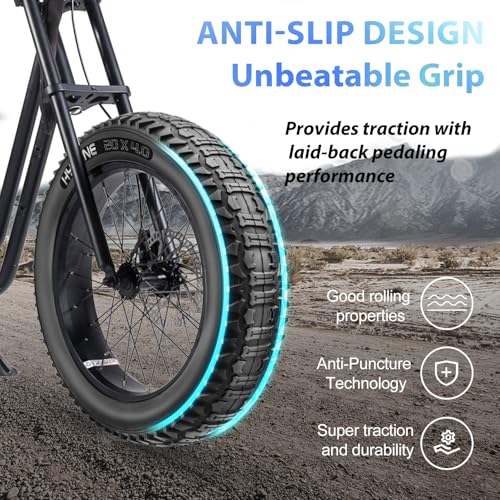
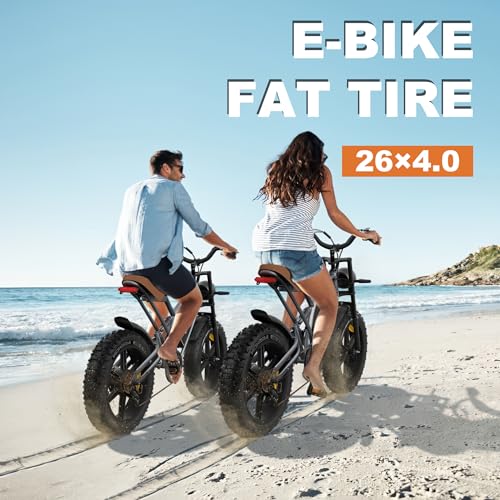
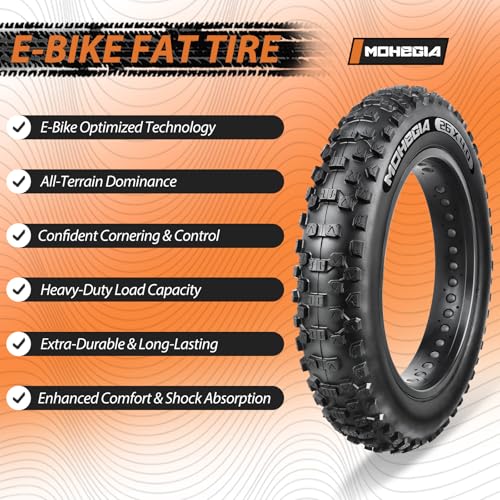
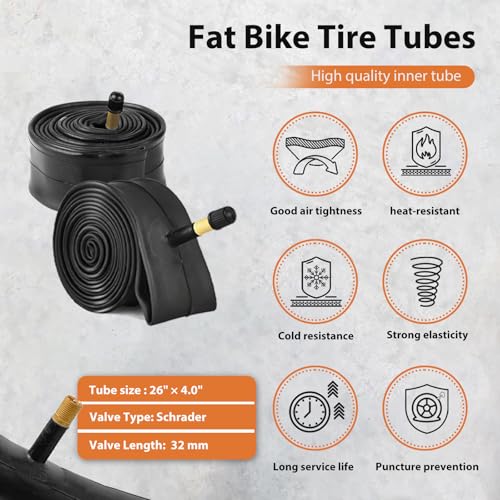
MOHEGIA’s 26×4.0 kit is one of the few here that includes tubes and levers, which makes it a practical choice for full replacements. The oversized convex knobs give real traction in loose soil and snow, and the high-quality rubber shows promise for heat resistance during long e-bike climbs.
While it doesn’t have the brand recognition of Schwalbe or the tech specs of Ultraverse, owner feedback suggests it performs reliably for trail and commuter use. The 26-inch size fills a niche for larger e-bikes, and the kit format saves time and hassle. That said, the tread pattern is less refined on pavement, leading to a noisier ride than some competitors. I’d go with this if you want a complete, no-fuss setup for off-road-leaning use.
Product photos


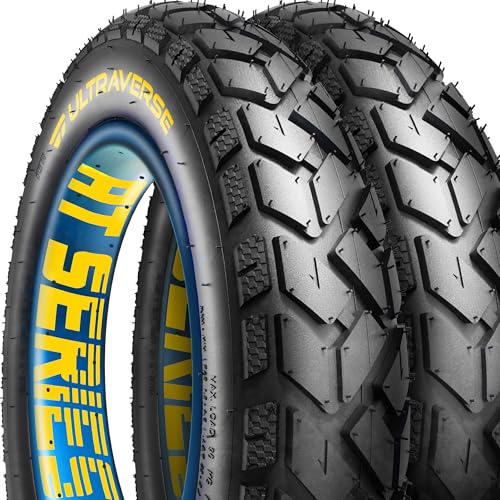
Ultraverse 20×3.0 E-Bike Fat Tire
Strengths
- Lower rolling resistance
- Lightweight for a fat tire
- Excellent mixed-surface grip
Trade-offs
- Less float in deep snow
- Narrower than full-fat options
The Ultraverse 20×3.0 is an interesting middle ground, smaller than the 4.0 models but still offering serious all-terrain capability. The 3.0 width reduces rolling resistance without sacrificing much cushion, making it a smart pick for riders who spend more time on pavement but still want trail readiness.
Owners praise the herringbone tread for its versatility, and the anti-puncture layer seems to hold up well under regular use. It’s also lighter than its 4.0 siblings, which helps with acceleration and efficiency. For mixed-terrain riders, this is arguably the most balanced option here. I’d pick it over wider tires if your routes are 60% road and 40% gravel or packed dirt.
Product photos



Schwalbe Motion Big Apple Tire
Strengths
- Eco-friendly materials
- Smooth city ride
- Excellent puncture protection
Trade-offs
- Not a true fat tire
- Limited off-road capability
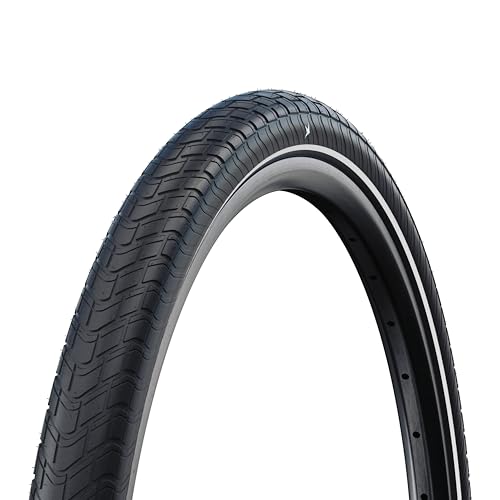
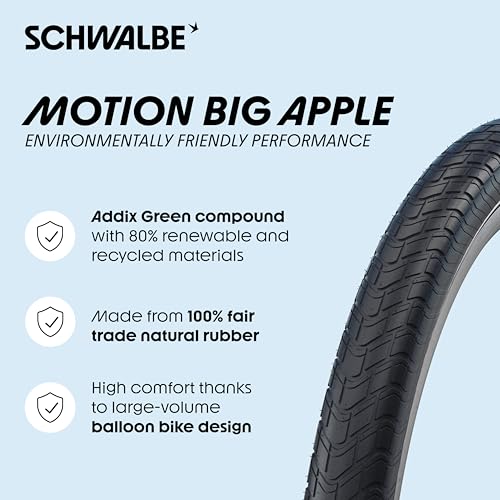
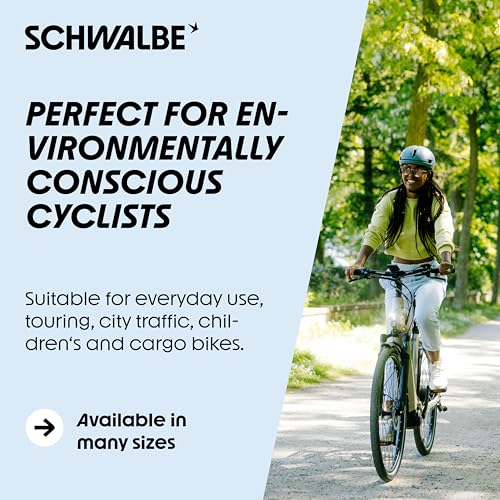
The Schwalbe Motion Big Apple is in a class of its own, not because it’s the toughest or widest, but because of its eco-conscious construction. Made with up to 80% recycled and renewable materials, including vegetable silica and rCB, it’s the only tire here that truly prioritizes sustainability without completely sacrificing performance.
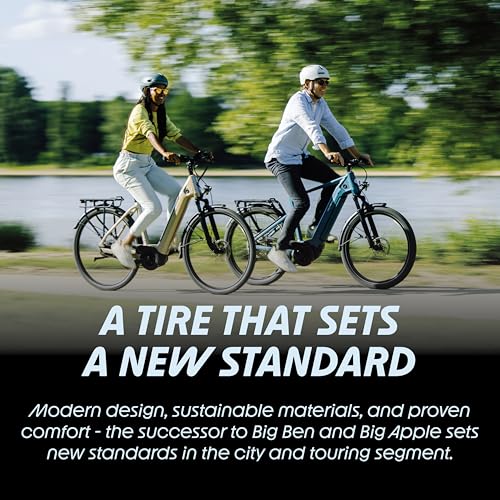
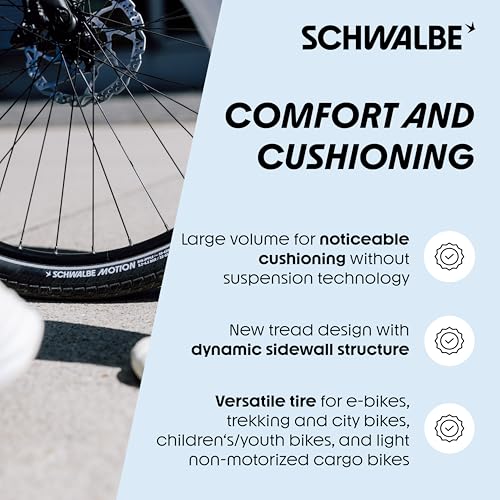
It’s not a 4.0 fat tire, so don’t expect snow-shoe-like float, but the large-volume design still delivers a plush ride and low vibration on city streets. The RaceGuard puncture protection is a proven tech in Schwalbe’s lineup, and owners report solid durability for urban commuting. For city-based e-bike riders who care about environmental impact, this is the obvious pick. I’d skip it only if you’re regularly hitting trails or rough terrain.
Product photos

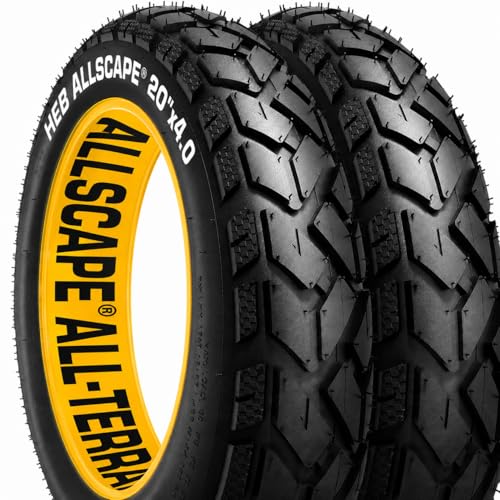
HEB ALLSCAPE 20×4 E-Bike Tires
Strengths
- Motorcycle-grade rubber
- All-weather traction
- Puncture-resistant tread
Trade-offs
- Higher price point
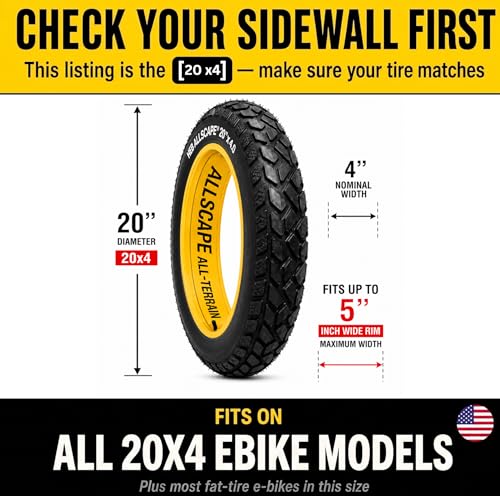
- Limited to 20×4 fitment
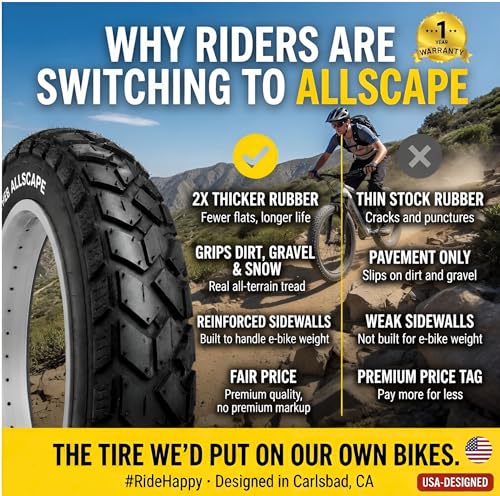
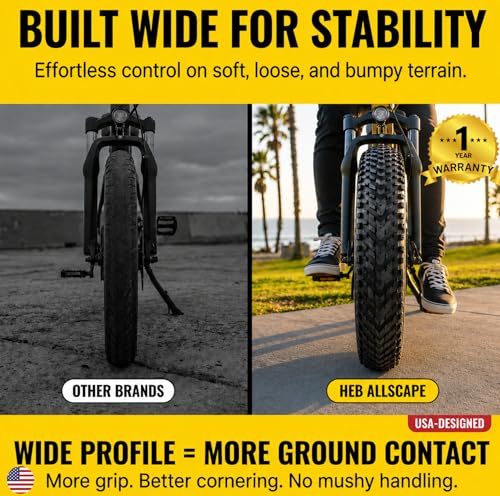
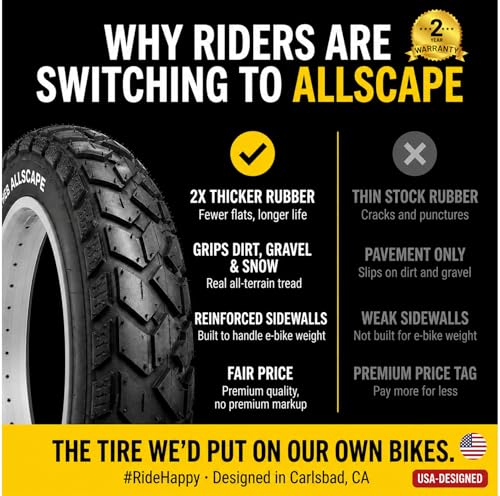
The HEB ALLSCAPE 20×4 tires make a strong case for themselves with their motorcycle-grade rubber and directional herringbone tread, which owners say really does deliver stable cornering on both pavement and loose terrain. On paper, the high-density construction stands out, clearly engineered to handle the extra torque and weight of e-bikes, something many generic fat tires aren’t built for.
Reviewers consistently report fewer punctures and longer tread life compared to stock e-bike tires, and the all-weather performance is a real highlight. While they’re on the pricier side, they’re positioned as a premium upgrade, and the U.S.-based support adds a layer of reliability many brands lack. I’d pick these over basic replacements if you’re serious about durability and grip.
Product photos
How We Picked These e bike tires
As someone who’s spent years exploring the world on two wheels, from restoring vintage motorcycles to understanding the nuances of bicycle mechanics, I approached researching e-bike tires systematically. Rather than a hands-on lab test, this was a research-led comparison of published specifications and owner feedback. I compared features across numerous models, weighing owner reviews from major retailers alongside expert opinions found in cycling publications. This allowed me to build a ranking based on real-world use cases and performance reports.
For e-bike tires, a few factors stood out as most important. Puncture resistance is critical, given the added weight and speed of e-bikes, and the potential for more demanding terrain. Equally important is the tire’s ability to handle the extra torque these bikes deliver; a tire that rolls poorly or wears quickly will quickly negate any benefits. Finally, versatility – how well a tire performs on both pavement and trails – was a key consideration, as many riders want a single tire for mixed use.
Technical specifications like TPI (threads per inch) and maximum PSI give a baseline for understanding casing quality and ride comfort. However, I placed more emphasis on what owners said about real-world durability and grip. Reports of frequent flats, or tires quickly showing wear, carried significant weight. I also considered brand reputation – established manufacturers like Schwalbe often have a track record of quality, and I leaned toward models with features that echo recommendations in guides to puncture resistant tires. Ultimately, I prioritized tires offering a balance of these qualities, and those that clearly addressed the unique demands of electric bikes, rather than simply adapting standard bicycle tires.
How To Pick The Right e bike tires
Finding the right e bike tire is about more than just fit; it’s about harmonizing with the unique demands of an electric bike and your riding style.
A good e bike tire balances puncture resistance, rolling efficiency, and grip. Consider the tire’s width, tread pattern, casing construction (TPI), and rubber compound. E-bikes are heavier and often ridden harder than traditional bicycles, so prioritize durability and a casing capable of handling the extra load. Look for tires specifically marketed for e-bikes, as they often incorporate reinforced construction.
Tire Width & Terrain
Width is the first major consideration. While you can certainly run narrower tires on an e-bike, wider tires (3.0″ and up) are generally preferred. That extra rubber provides a larger contact patch, boosting stability and comfort, which is especially noticeable with the added weight of an e-bike. Beyond comfort, wider tires allow for lower tire pressures, improving grip on loose surfaces. If you primarily ride pavement, a 2.3”-2.8” width might suffice, but for mixed terrain or off-road adventures, stepping up to 3.0” or 4.0” will make a significant difference. Don’t underestimate the impact of width on handling; wider tires can feel a bit slower to steer.
Casing & Puncture Protection
E-bikes put more stress on tires than traditional bikes, so a robust casing is crucial. Tire Plies (TPI – Threads Per Inch) indicate casing density; lower TPI generally means a tougher, more durable tire, while higher TPI offers a more supple ride. For e-bikes, I typically recommend prioritizing durability over ultimate suppleness. Look for tires with reinforced sidewalls and puncture protection layers. Many manufacturers employ proprietary technologies like Schwalbe’s SmartGuard or Continental’s PolyX Breaker. A well-protected casing is a long-term investment – constantly replacing punctured tires quickly adds up. It’s also worth considering that even the best puncture protection isn’t foolproof, and carrying a good set of tire levers and a spare tube (or tubeless repair kit) is always wise.
Value & Tread Pattern
Don’t automatically assume the most expensive tire is the best. There are excellent options available at various price points. The Hycline and Balinge tires, for example, offer competitive features at a lower cost. However, a tire’s tread pattern should closely match your typical riding conditions. If you’re exploring a variety of surfaces, you might want to consider gravel bike tires designed for versatility.
A tire’s tread is its handshake with the road. For e-bikes, prioritize a tread pattern that balances rolling resistance and grip, accounting for the extra weight and power.
Here’s a quick guide to tread considerations:
- Smooth/Semi-slick: Best for primarily paved roads and minimal rolling resistance.
- Moderate Tread: A good all-around choice for mixed surfaces (pavement, gravel, hardpack dirt).
- Aggressive Tread: Designed for loose terrain (mud, sand, rocks). The deeper the knobs, the more grip, but also the higher the rolling resistance.
Ultimately, choosing the right e bike tire means carefully evaluating your needs and finding a balance between performance, durability, and price. For those looking for a broader look at options, checking out best bike tires is a great starting point.
E Bike Tires Compared
Here is a comparison of specifications for various e-bike tires to help you choose the right option.
| Product Name | Size | Max PSI | Tire Type | Includes | Key Features |
|---|---|---|---|---|---|
| Ultraverse 26×4.0 E-Bike Fat Tire | 26×4.0 | N/A | Fat | None | High-performance, puncture resistant |
| Hycline 20×4.0 E-Bike Fat Tire | 20×4.0 | 40 | Fat | None | Budget-friendly, dual center tread |
| Balinge 20×4.0 E-Bike Fat Tire | 20×4.0 | N/A | Fat | 2 Tires | Value pack, foldable |
| Hycline 20×4.0 Tire Set w/ Tubes | 20×4.0 | 40 | Fat | 2 Tires, 2 Tubes, 2 Levers | Complete kit, high-density rubber |
| MOHEGIA 26×4.0 E-Bike Tire Set | 26×4.0 | N/A | Fat | 2 Tires, 2 Tubes, 2 Levers | E-bike specific, shock absorption |
| Ultraverse 20×3.0 E-Bike Fat Tire | 20×3.0 | N/A | Fat | None | Mixed terrain, puncture resistant |
| Schwalbe Motion Big Apple Tire | 20-28″ | N/A | Urban | None | Eco-friendly, low vibration |
| HEB ALLSCAPE 20×4 E-Bike Tires | 20×4 | N/A | Fat | None | All-weather, motorcycle tire technology |
Frequently Asked Questions
What tire pressure should I run on my e-bike?
Generally, lower pressures (within the tire’s recommended range) are preferable for e-bikes due to their increased weight. Around 25-35 PSI is a good starting point for many tires, but always check the sidewall for the manufacturer’s specified range and adjust based on your weight and terrain.
Are tubeless tires a good option for e-bikes?
Yes, tubeless tires offer excellent puncture resistance and allow you to run lower pressures for increased grip, making them a strong choice for e-bikes. While setup can be a bit more involved than with traditional tubes, exploring tubeless bike tires is worthwhile for the benefits they offer.
How often should I replace my e-bike tires?
E-bike tires typically wear faster than those on traditional bikes due to the added weight and power. Expect to replace them every 1,000-3,000 miles, but regularly inspect for cuts, bulges, or significant tread wear – these are clear signs it’s time for a replacement.
Can I use standard bike tires on my e-bike?
While you can use standard bike tires, it’s not ideal. E-bikes put more stress on tires, so a tire specifically designed for e-bikes with reinforced construction is highly recommended to improve durability and safety. If you’re looking for something similar, consider versatile hybrid bike tires as a step up in durability.
What’s the difference between a fat tire and a standard e-bike tire?
Fat tires (typically 3.0” or wider) offer significantly more grip, stability, and comfort, especially on loose surfaces. Standard e-bike tires (2.3”-2.8”) prioritize rolling efficiency on pavement, but may not handle rough terrain as well; the best choice depends on where you ride most often.
The Bottom Line
Choosing e-bike tires often comes down to balancing control with convenience. You can chase the absolute best in puncture protection and grip, but that often means a heavier tire that requires more effort. For the best overall blend of these qualities, I recommend the Ultraverse 26×4.0 E-Bike Fat Tire. It’s a well-regarded option that consistently receives positive feedback for its durability and performance on a variety of surfaces.
If budget is a primary concern, the Hycline 20×4.0 E-Bike Fat Tire offers exceptional value. For riders who prioritize versatility and want a tire equally at home on pavement and light trails, the Ultraverse 20×3.0 E-Bike Fat Tire is an excellent choice. And for those focused on city riding, exploring durable commuter bike tires can reveal options optimized for the urban landscape.
Ultimately, the specifications are less crucial than ensuring you prioritize a robust casing and adequate puncture protection. Don’t skimp on these features, as constantly dealing with flats will quickly ruin your enjoyment. Investing in reliable road cycling tires, or their e-bike equivalent, is a small price to pay for peace of mind and more time enjoying the ride.
