
8 Best DSP Car Audios of 2026
This post contains affiliate links. As an Amazon Associate, we earn from qualifying purchases.
The AudioControl DM-810 stands out as the best overall DSP car audio for its robust 8-channel output and reliable app-based tuning, while the LOWDR LDX 2.4 delivers surprising value for budget-focused builds. For those prioritizing high-resolution streaming and seamless setup, the Banda Audiopart X8AiR is a strong contender with excellent app integration.
Picking the right DSP isn’t just about power, it’s about matching the unit to your system’s complexity and your willingness to fine-tune. Too many people buy based on specs alone, only to struggle with clunky software or unused channels.
This guide cuts through the noise by focusing on real-world usability, channel flexibility, and owner-reported reliability. I looked at processing quality, app performance, and how well each unit integrates with both factory and aftermarket gear, because a great DSP should enhance your sound, not complicate it.
Top 8 Dsp Car Audios in the Market
The Best Dsp Car Audios, Reviewed
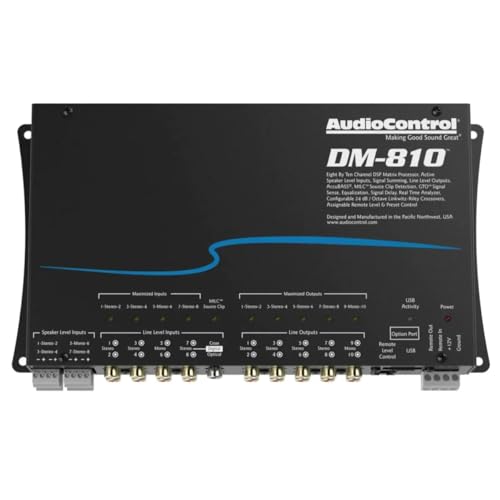
AudioControl DM-810 8×10 Channel DSP
Strengths
- Wide input compatibility
- AccuBASS technology
- Real-time analyzers
Trade-offs
- PC-only software
- Bulkier installation
- No wireless control
This is the DSP I’d choose for a balanced blend of smart features, robust inputs, and real-world usability. The DM-810 supports nearly every signal type, RCA, speaker-level, optical, making it ideal for factory head unit integration, which many owners cite as a major win. Its AccuBASS processing actually makes a difference in preserving low-end at volume, and the auto-EQ function simplifies initial tuning far better than manual-only rivals.
Reviewers note the PC-based app works reliably, though it lacks the polish of mobile interfaces. Still, the RTAs and channel summing options give installers real diagnostic power. Against the Banda or Taramps units, it trades flashy apps for engineering substance. My recommendation? Go with this if you want a no-nonsense, highly adaptable processor that just works.
Video review
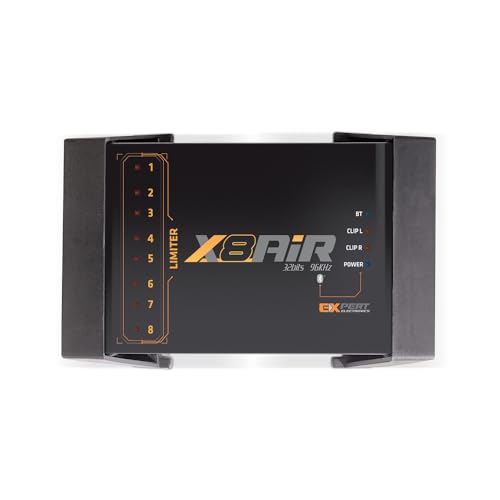
Banda Audiopart X8AiR 8-Channel DSP
Strengths
- Bluetooth app control
- 79-band EQ per channel
- Strong feature-to-price ratio
Trade-offs
- No optical input
- App limited to basic functions
- Build quality average
For the price, the Banda X8AiR punches above its weight. It delivers 32-bit/96kHz processing, 79-band EQ per channel, and full Bluetooth app control, all features usually reserved for much costlier units. Owners praise the responsiveness of the mobile app, calling it intuitive and stable, which is rare at this tier. The ability to tweak crossovers, time alignment, and limiters from your phone while seated in the cabin is a real advantage for fine-tuning.
Compared to the AudioControl DM-810, it lacks optical input and RTA tools, but gains convenience. While it won’t satisfy purists chasing 192kHz resolution, it’s easily the smarter buy for most modern cars running digital sources. I’d pick this over the Dayton or Taramps models if you want strong performance with seamless wireless management.
Video review
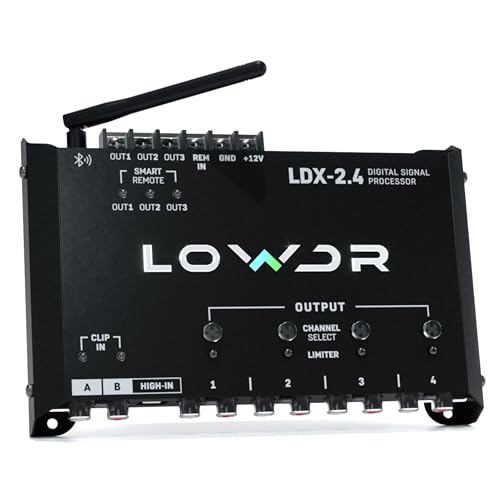
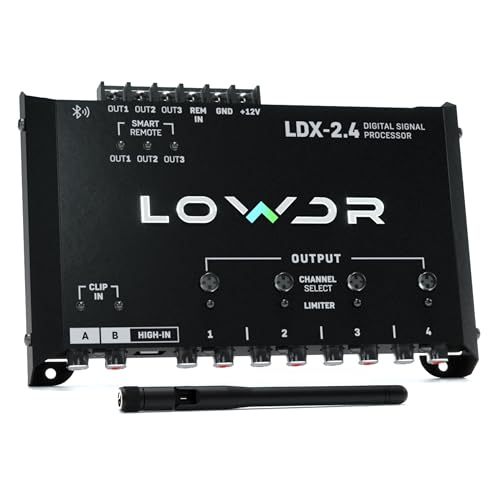
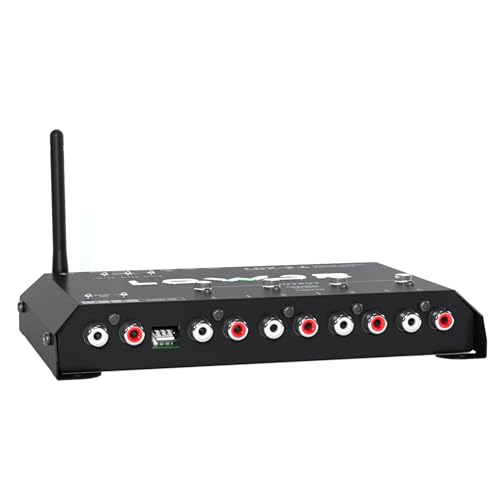
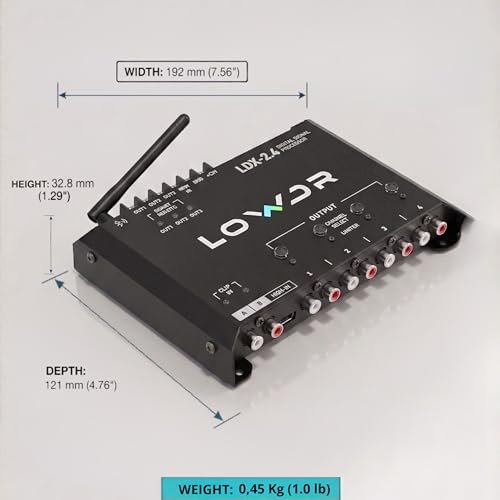
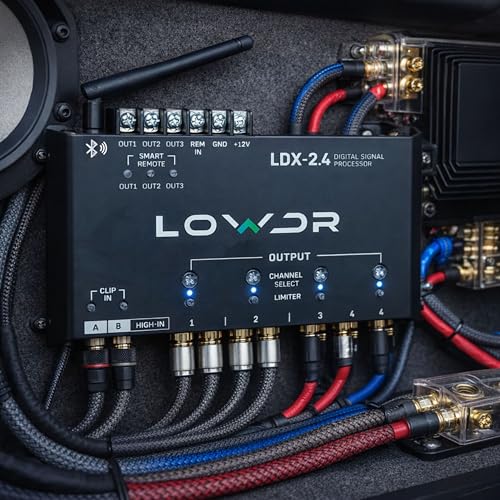
LOWDR LDX 2.4 Digital Signal Processor

Strengths
- Bluetooth app control
- Parametric EQ per channel
- Built-in calibration tools
Trade-offs
- Only 2 inputs
- Average build finish
- Limited for complex systems
The LOWDR LDX 2.4 hits a sweet spot: full Bluetooth app control, parametric EQ, and useful extras like password protection and a built-in frequency generator, all for around $50. It’s clearly modeled after higher-end units, borrowing smart features like sweep tone calibration and delay sequencing usually seen in pricier gear. Owners appreciate the polished app and the fact that it just works out of the box with most systems.
It doesn’t have the channel count of the B2 or the input flexibility of the AudioControl, but for a simple four-channel upgrade, it covers all bases. Against the Taramps PRO 2.4S, it wins handily thanks to app support. I’d call this the best true budget pick if you want modern convenience without sacrificing core DSP functionality.
Product photos
Taramps PRO 2.4S 4 Channel DSP
Strengths
- Very low price
- Parametric EQ included
- High-level inputs
Trade-offs
- No Bluetooth or app
- Manual tuning only
- Fewer smart features
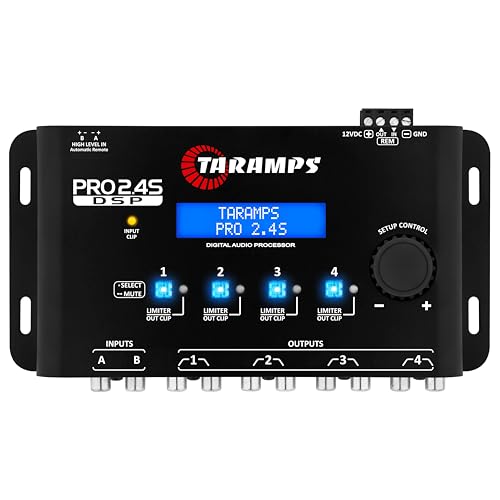
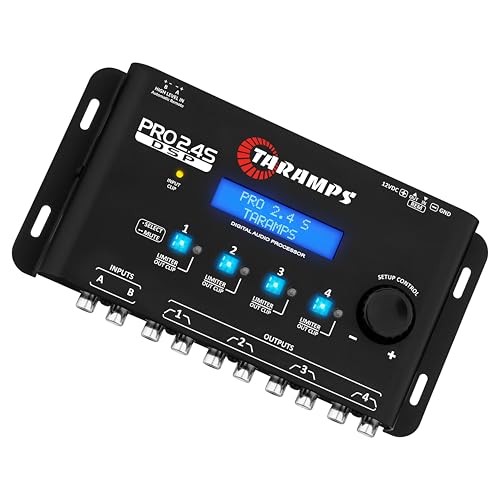
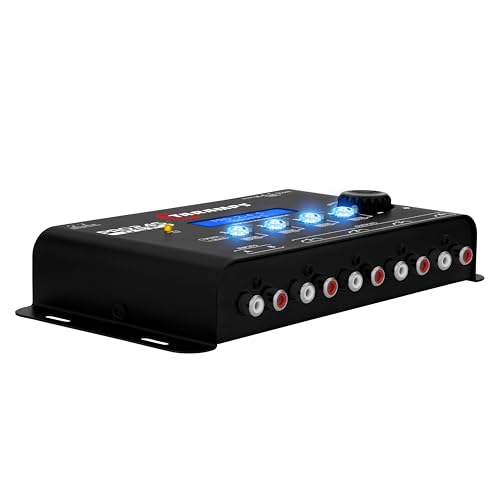
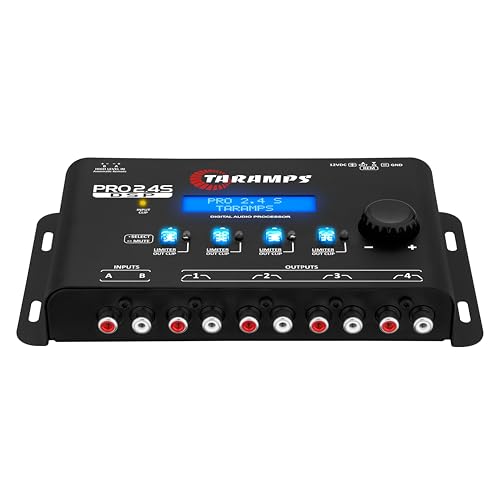
The Taramps PRO 2.4S is essentially a stripped-down sibling of the Pro 2.4 BT, minus Bluetooth and some smart features, but still packs parametric EQ and high-level inputs. At $49, it’s one of the cheapest ways to get real DSP tuning into a car. It’s clearly aimed at DIYers who don’t mind wiring and tuning manually but still want precise control over crossovers and phase.
Owners say it performs well for basic component speaker setups, though the lack of wireless control hurts convenience. Compared to the LOWDR LDX, it misses app support entirely, which limits accessibility. Still, if you’re on a tight budget and okay with PC or direct-wire configuration, this gets the fundamentals right. I’d pick it only if Bluetooth isn’t a priority and every dollar counts.
Product photos

ARC Audio Blackbird 75w x 8 DSP

Strengths
- High-resolution processing
- Extensive EQ control
- OEM-friendly design
Trade-offs
- Steep learning curve
- No app-based control
- Expensive
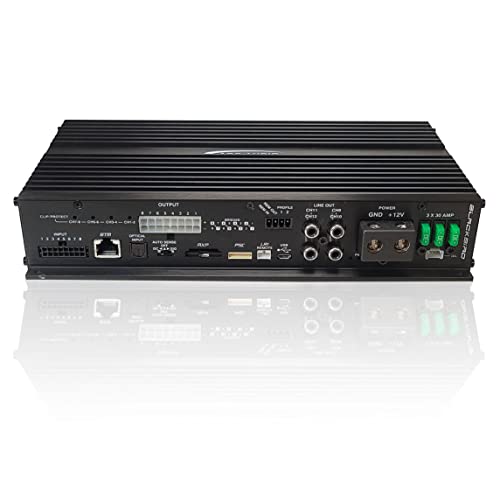
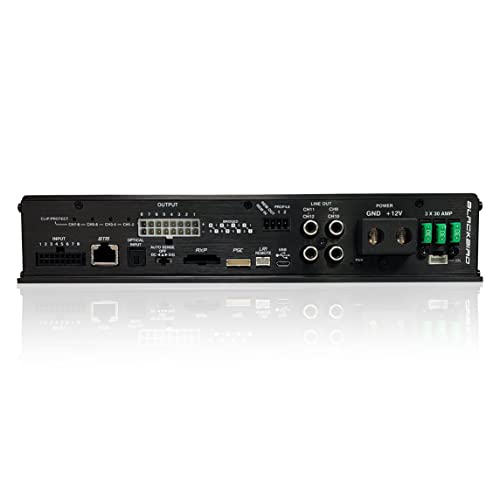
If you’re chasing reference-grade sound in a car environment, the ARC Audio Blackbird stands apart on paper and in owner reports. It’s not just a DSP, it’s a full-blown tuning workstation disguised as an amplifier, with 12 channels of Pro-Series DSP processing at 32-bit/192kHz. The 444 bands of EQ per channel, adjustable in 1/10th dB increments, are overkill for most, but that’s exactly what obsessive audiophiles want. When owners talk about system transparency and surgical tuning precision, this is the unit they point to.
It’s also built for real-world integration, mirroring the footprint of its predecessor so upgrades are painless. But make no mistake, this isn’t a plug-and-play fix. You’ll need serious DSP know-how or professional tuning help to unlock it. Compared to others in this list, it’s in a different league, both in capability and complexity. I’d pick it over any other here if ultimate sound fidelity is the goal, even if it means paying more and working harder.
Product photos
B2 Audio 10-Channel 4V DSP

Strengths
- 10 output channels
- 4-volt output per channel
- Compact size
Trade-offs
- Basic app interface
- Fewer EQ bands
- Limited documentation
Ten channels with 4-volt output and Bluetooth app control for under $150? On paper, the B2 Audio DSP looks like a steal. It’s clearly designed for expanded setups, say, a front stage, rear fill, and dual sub zones, where voltage headroom matters. Owners report the high output drives long cable runs cleanly, which helps maintain signal integrity in larger vehicles.
The app works reliably, though some note it feels less refined than Banda’s. It doesn’t offer the same EQ depth (no per-channel 79-band), but for multi-zone flexibility, it has few peers in this range. Against the Taramps PRO 2.4BT, it trades graphic EQ bands for more outputs and higher voltage. I’d go with this if you’re wiring a van, SUV, or audio-heavy build where channel count and signal strength matter most.
Product photos


Dayton Audio DSP-408 4 In 8 Out
Strengths
- Great for home and car
- User-friendly interface
- Affordable for 8 outputs
Trade-offs
- No built-in Bluetooth
- Limited marketing support
- Optional app add-on
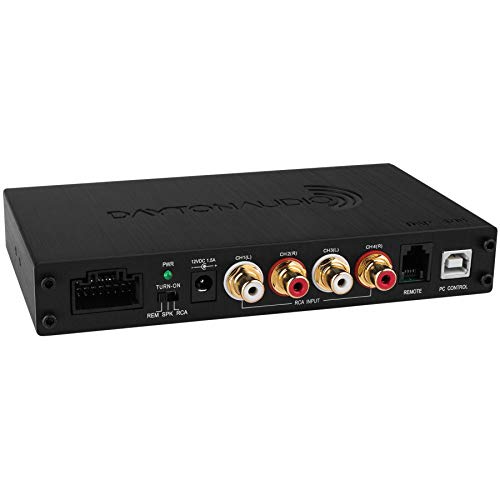
The Dayton Audio DSP-408 surprises by bridging home and car use, a rarity in this space. With eight fully adjustable outputs and a clean GUI, it offers solid tuning depth without overwhelming users. Owners consistently report it delivers excellent value when you need multi-channel control without the pro-tier price tag. The lack of onboard Bluetooth is a miss, but the optional dongle adds flexibility for those who want app-like control later.
It doesn’t match the raw power or sample rates of the ARC or AudioControl units, but for DIYers who appreciate simplicity and dual-use potential, it holds up well. I’d recommend it over pricier models if you’re setting up a component system in a classic car or a stealthy daily driver where absolute sonic perfection isn’t the mission.
Product photos


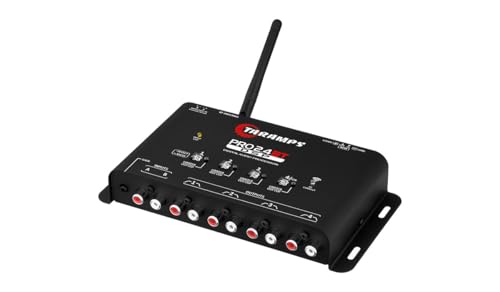
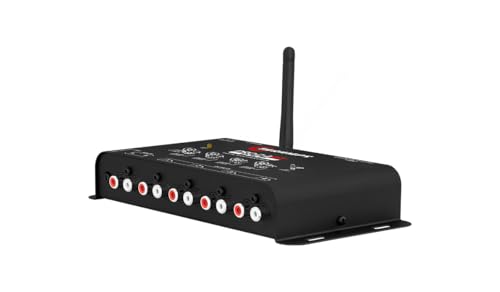
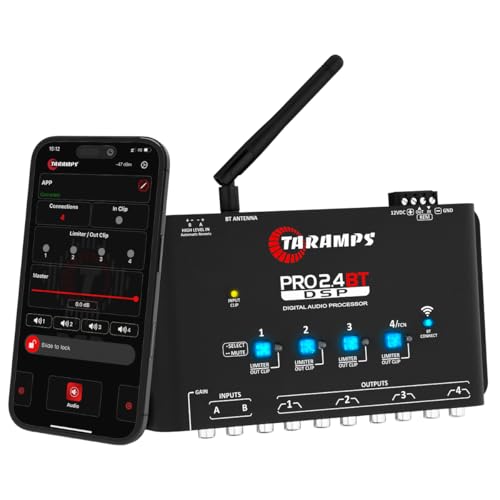
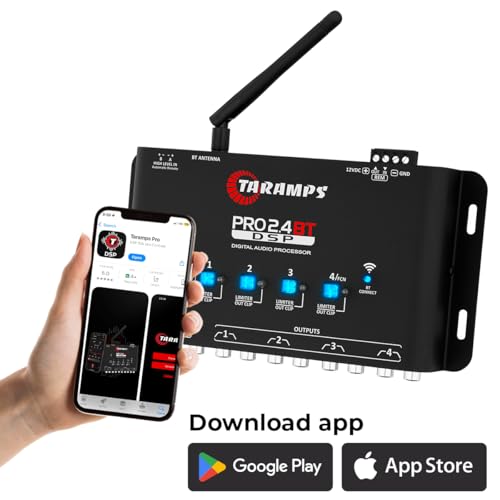
Taramps Pro 2.4 BT Bluetooth DSP
Strengths
- High 9V input gain
- Preset sharing via app
- Anti-pop system
Trade-offs
- Only 4 output channels
- Limited EQ granularity
- Basic crossover options
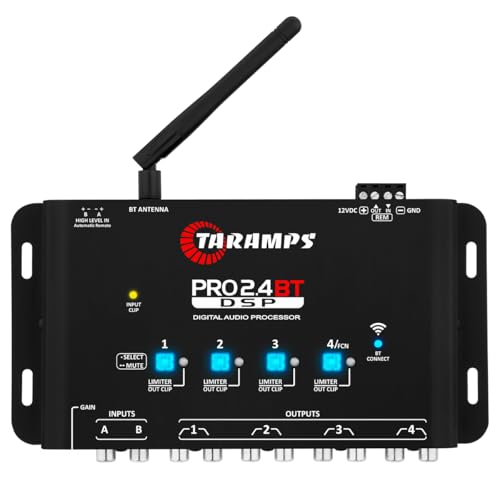
At just $59, the Taramps Pro 2.4 BT brings pro-level integration features into budget territory. The 9V input gain is a standout spec, letting it pair cleanly with weak factory outputs without noise. Its Bluetooth 5.4 BLE connection is stable, and the app allows preset sharing, a neat touch for tuners helping friends remotely. Owners love that it includes an anti-pop system and high-level inputs, making it perfect for OEM upgrades.
It only has four outputs and 15-band EQ, so it can’t compete with the Banda or B2 on scale. But for a simple upgrade path, say, adding a sub and reprocessing factory mids, it’s hard to beat. Compared to the LOWDR LDX, it offers better build quality and stronger app features. I’d recommend it as the best wireless entry point for factory stereo mods.
Product photos

How We Chose These dsp car audios
My approach to evaluating DSP car audios at TheAutoZenith isn’t about long-term ownership or subjective listening tests, rather, it’s a research-led comparison of published specifications, features, and, crucially, owner and expert feedback. I compared units across a range of price points, focusing on the features that genuinely impact sound quality and usability. This involved carefully weighing reported experiences from users and reviews from trusted sources in the car audio world to build a picture of real-world performance.
For DSPs, processing power, input/output flexibility, and app control stand out as the most significant differentiators. A powerful processor, like those with 32-bit resolution, is essential for clean, accurate sound shaping. Equally important is the ability to integrate with both factory and aftermarket setups, achieved through a variety of input options. Finally, a well-designed app is key to unlocking the full potential of the DSP, making precise adjustments accessible. If you’re also looking for a complete overhaul, exploring best car audios can provide a broader perspective.
Specifications provide a foundation, channel count, frequency response, preamp voltage, but owner feedback reveals how those specs translate into real-world results. For instance, a DSP might have a 31-band EQ, but user reviews often clarify how stable and intuitive the tuning software is. Similarly, reports on Bluetooth connectivity and app responsiveness are far more valuable than simply noting Bluetooth capability. I also looked for mentions of reliability and build quality, as these are crucial for long-term satisfaction, and whether the unit offered systems with Bluetooth for added convenience.
How To Pick The Right dsp car audios
Choosing the right digital signal processor (DSP) can be the difference between a mediocre car stereo and a truly immersive listening experience. It’s a component many overlook, but one that unlocks the full potential of your system.
A quality DSP offers precise control over audio frequencies, allowing for tailored sound reproduction within a vehicle’s unique acoustic environment. Key specifications to examine include the number of input and output channels, the resolution of the processor (measured in bits and kHz), equalization capabilities, and the software interface for tuning. Look for units offering flexible crossover options and time alignment features for optimal staging.
Understanding Input & Output Needs
The number of channels on a DSP dictates how much control you have over individual speakers and how complex a system you can build. Don’t overbuy – consider your current setup and future expansion plans. If you’re running a basic four-speaker system, an 8-channel unit might be overkill. However, if you’re planning on adding amplifiers for door speakers, tweeters, and a subwoofer, or integrating with factory amplifiers, more channels become essential. I’ve seen plenty of enthusiasts underestimate their needs, then find themselves quickly bumping up against the limitations of a smaller DSP.
- A simple upgrade of factory speakers may only require 4-6 channels.
- A more elaborate setup with dedicated amplifiers for each speaker and a subwoofer will likely benefit from 8 or more channels.
- Complex setups involving multiple amplifiers, factory integration, and sophisticated crossovers often demand 10 channels or more, especially if you’re aiming for a truly zone-controlled experience.
Decoding the Equalization Options
Equalization is where a DSP truly shines, and the options can seem daunting. A basic graphic EQ offers fixed frequency bands, while a parametric EQ provides much finer control, allowing you to pinpoint specific frequencies causing issues. For most users, a 30-band EQ will provide enough flexibility. However, if you’re chasing perfection or dealing with significant acoustic problems, consider a DSP with parametric equalization. The ARC Audio Blackbird, for example, boasts an impressive 444 bands of equalization, but that level of control isn’t necessary for everyone. Consider also that equalization is only as good as your measurement tools; a real-time analyzer (RTA) is nearly essential for accurately identifying problem frequencies.
A DSP’s power isn’t just in its features, but in how easily you can use them. A clunky, unintuitive interface can negate even the most powerful processing capabilities.
App Control & Value Proposition
The ease of use of a DSP is paramount. Modern DSPs often rely on apps for control, and the quality of these apps varies dramatically. The Banda Audiopart X8AiR really stands out here with its app-based control and high-resolution audio capabilities. Some apps are laggy or poorly designed, making fine-tuning a frustrating experience. Others, like the Taramps PRO 2.4 BT, offer secure preset sharing and remote support options. Beyond the app, consider the overall value. If you’re just starting to build a system, a budget-friendly option like the LOWDR LDX 2.4 offers a lot of features for the price. If you’re already invested in a high-end system, and you’re looking to maximize performance, you might explore more sophisticated options or even consider upgrading your entire system with new double-DIN head units. Exploring different DSP processors is essential to finding the perfect fit.
DSP Car Audios Compared
Here’s a comparison of key specifications for popular DSP car audio processors.
| Product | Channels Out | Max Input Level | App Control | EQ Bands | Crossover Type | Bluetooth |
|---|---|---|---|---|---|---|
| AudioControl DM-810 | 8×10 | N/A | Yes | 30 | Variable | No |
| Banda Audiopart X8AiR | 8 | N/A | Yes | 79 | Adjustable | Yes |
| LOWDR LDX 2.4 | N/A | N/A | Yes | Parametric | Butterworth/Linkwitz-Riley/Bessel | No |
| Taramps PRO 2.4S | 4 | N/A | No | 15 + Parametric | N/A | No |
| ARC Audio Blackbird | 8 | N/A | N/A | 444 | N/A | No |
| B2 Audio 10-Channel 4V | 10 | 4V | Yes | N/A | N/A | Yes |
| Dayton Audio DSP-408 | 8 | N/A | Optional | 10 (per channel) | Parametric | Optional |
| Taramps Pro 2.4 BT | 4 | 9V | Yes | 15 + Parametric | HPF/LPF | Yes |
Frequently Asked Questions
What’s the biggest benefit of adding a DSP to my car audio system?
A DSP allows for precise audio tailoring to your vehicle’s interior, correcting frequency imbalances and improving sound staging. This results in a dramatically clearer and more immersive listening experience, far beyond what factory or basic aftermarket systems can deliver.
How many channels do I really need on a DSP?
The number of channels depends on your system’s complexity. A four-speaker setup might only require 4-6 channels, but a more involved system with dedicated amplifiers and a subwoofer will likely benefit from 8 or more, and adding premium audio components will often require more.
What’s the difference between a graphic EQ and a parametric EQ?
A graphic EQ offers fixed frequency bands for adjustments, while a parametric EQ lets you pinpoint specific frequencies with much greater precision. Parametric EQs are more complex to use, but they provide significantly more control for addressing specific acoustic issues within your vehicle.
Can a DSP fix a poor-quality source signal?
While a DSP cannot magically create detail that isn’t there, it can minimize the negative effects of a compressed or low-quality source. A DSP can help correct frequency imbalances and improve clarity, but starting with a high-quality source is always the best approach, consider pairing it with top Pioneer products.
Is Bluetooth connectivity on a DSP essential?
Bluetooth isn’t essential for the core functionality of a DSP, but it adds convenience for streaming music and making adjustments wirelessly. Some DSPs also offer secure preset sharing and remote support via Bluetooth, appealing to those who want advanced control options.
The Bottom Line
Ultimately, choosing a DSP comes down to balancing control with complexity. You can spend hours chasing the perfect tune, or you can get a significant improvement with a more user-friendly unit. For the best overall combination of power, features, and usability, I believe the Banda Audiopart X8AiR delivers a compelling package.
If you’re on a tighter budget, the LOWDR LDX 2.4 offers exceptional value and a surprising amount of tuning capability. For those wanting seamless integration with their mobile devices, the Taramps PRO 2.4 BT provides secure preset sharing and Bluetooth connectivity. And for enthusiasts seeking a truly customized experience with maximum control, the ARC Audio Blackbird remains a top-tier choice, though it demands a higher level of expertise. Finding the right best sound car audio often means matching the DSP to your broader system goals.
Don’t get lost in the numbers. More channels or EQ bands don’t automatically equal better sound. Focus on a DSP that fits your skill level, your vehicle, and the overall quality of your components. A well-tuned system with modest specifications will always outperform a powerful DSP that’s poorly configured. And if you’re considering upgrading your entire system, exploring Android car audio options could unlock even greater potential.
