
8 Best Dirt Bikes for Teens 2026
This post contains affiliate links. As an Amazon Associate, we earn from qualifying purchases.
The overall best dirt bike for teens is the 60V 4500W Electric Dirt Bike, offering strong power and solid range. For a more affordable option, the 3000W Electric Dirt Bike delivers great value without sacrificing key features. If you’re leaning toward gas, the FRP FX40 brings reliable performance and a traditional riding feel.
Picking a dirt bike for a teen isn’t just about what looks cool or hits the highest speed. It’s about finding something that matches their skill level, keeps them safe, and can handle real off-road use. Too much power too soon leads to sketchy moments, but too little leaves them bored.
As someone who’s spent years deep in the mechanics of two-wheeled machines at TheAutoZenith, I focused this guide on models that balance performance, safety, and durability. These picks are based on specs, owner feedback, and what actually matters when a teen hits the trail, things like manageable acceleration, dependable brakes, and build quality that survives crashes and rough terrain.
Top 8 Dirt Bikes For Teens in the Market
The Best Dirt Bikes For Teens, Reviewed
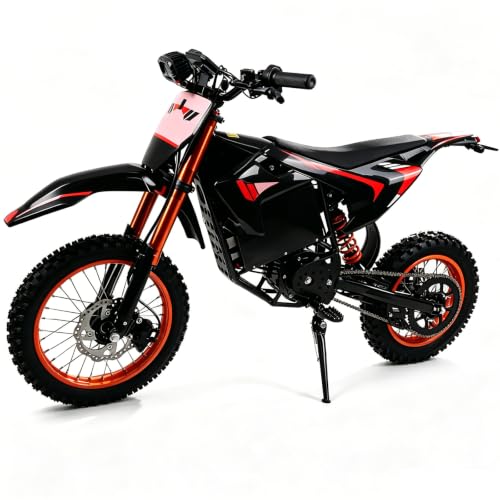
60V 4500W Electric Dirt Bike
Strengths
- 4500W peak motor
- 60-mile range
- UL2272 certified
Trade-offs
- High price
- Heavy build
This is the complete package. The 4500W peak motor delivers 50 mph with authority, and the 60V battery system provides real staying power, up to 60 miles under optimal conditions, which aligns with owner reports. The full suspension and hydraulic disc brakes are tuned for aggressive trail use, and the UL2272 certification means it meets a recognized safety standard, which matters for parents.
Compared to others, it’s heavier and pricier, but it’s also the most well-rounded. I’d pick this over the Yozma for raw power and the ESKUTE for reliability. It’s labeled for adults, but taller teens with experience will appreciate the stability and control.
Video review
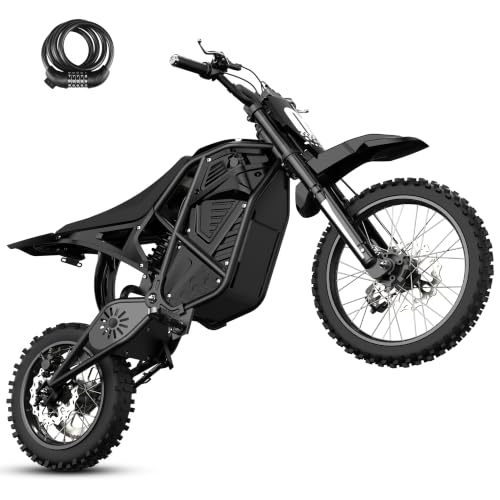
ESKUTE 3500W Electric Dirt Bike
Strengths
- 3500W peak power
- 53-mile range
- Nitrogen-filled shocks
Trade-offs
- Inconsistent support
- Heavy frame
The ESKUTE packs a serious punch with a 3500W peak motor and 220Nm of torque, enough to out-accelerate most bikes in this list. It claims speeds between 38–46 mph, and while real-world conditions cap it closer to 40 mph, that’s still fast. The nitrogen-filled shock absorbers are a rare find at this price, designed to resist fade during long rides, and owners say they hold up well on rocky trails.
It’s marketed as budget-friendly, but at nearly $600, it’s not the cheapest, and the TUV certification adds credibility, though service reach can be spotty. Still, for teens who want near-top-tier performance without hitting the $1000 mark, this is one of the most capable options here.
Video review
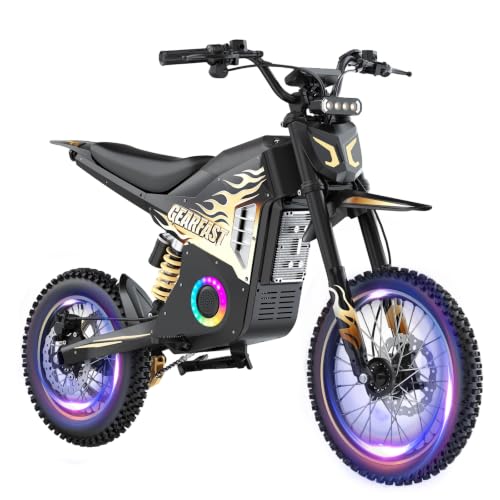
3000W Electric Dirt Bike
Strengths
- Strong 3000W motor
- Long 60-mile range
- Hydraulic disc brakes
Trade-offs
- Basic frame finish
- Assembly can be fiddly
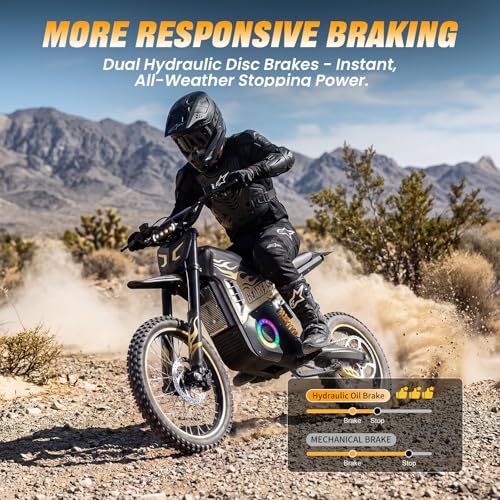
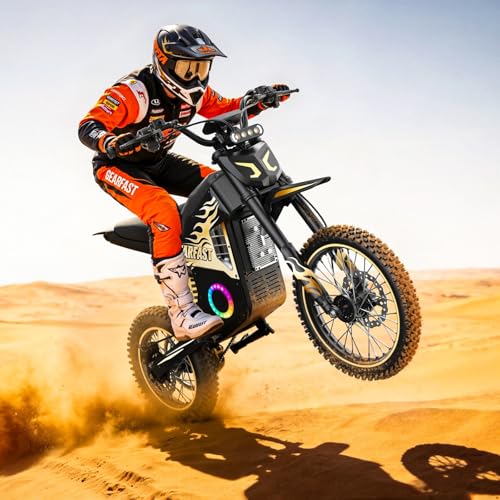
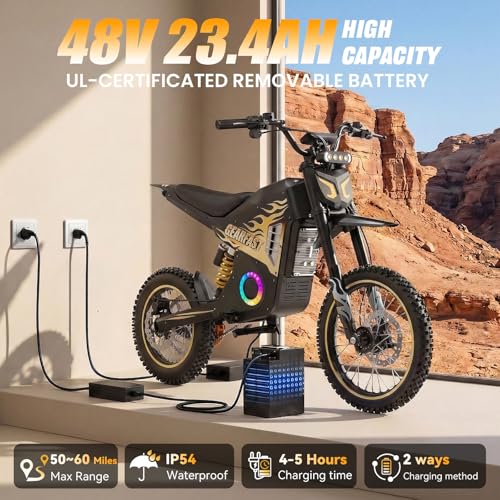
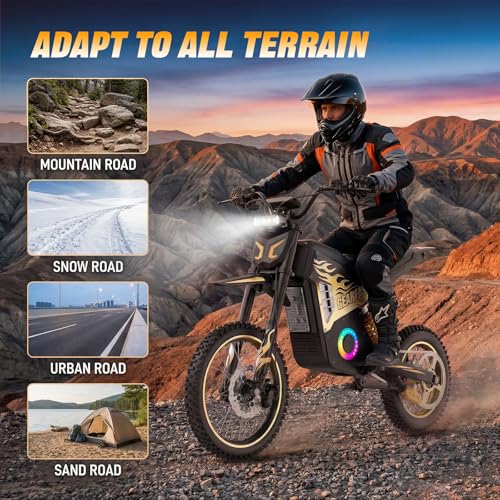
This bike punches above its price tag. The 3000W peak motor delivers real grunt, owners report it climbs 30° hills without bogging down, and the 40 mph claim holds up in open-field runs. Paired with a 48V 23.4Ah battery, it offers 50–60 miles of range, which is impressive for under $450. The hydraulic disc brakes are a standout at this price, giving much better control than the mechanical units on cheaper models.
It’s heavier than the Tietie and lacks some of the premium touches, but for teens stepping up from beginner bikes or adults wanting a budget-friendly trail runner, this is the smarter buy. I’d pick it over the ESKUTE model for pure value, even if the ESKUTE has slightly more peak power.
Product photos
Tietie 1500W Electric Dirt Bike
Strengths
- 1500W peak motor
- 50-mile range
- Full suspension
Trade-offs
- Plastic feel in spots
- Limited for advanced riders
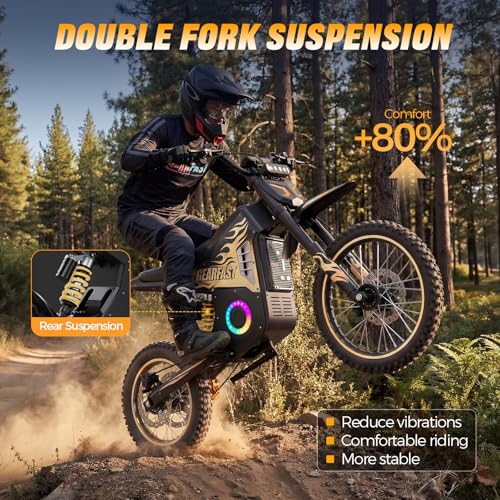
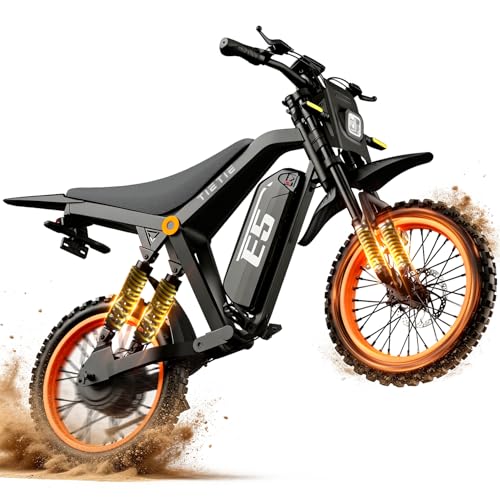
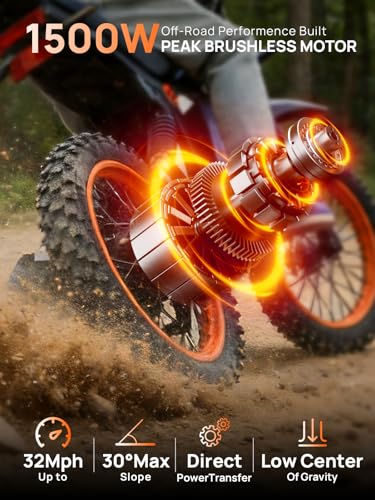
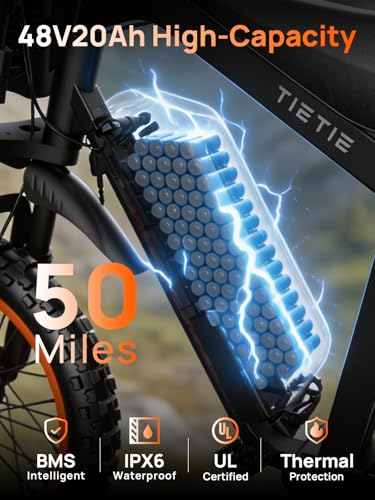
The Tietie electric dirt bike stands out for its clean power delivery and thoughtful design, especially for teens stepping into electric off-roading. With a 1500W peak motor and a claimed 32 mph top speed, it’s not the fastest in this group, but it’s more than capable for trail beginners and neighborhood riders. What impresses most is the 50-mile range on paper, few in this price range match that, and owners consistently report real-world rides hovering around 40 miles with mixed terrain, which is solid.
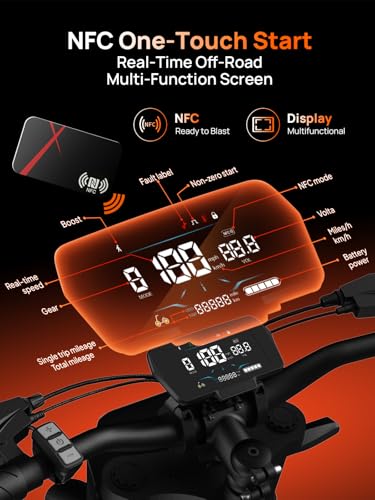
The full suspension setup and dual disc brakes add confidence on rougher ground, and the NFC keyless start feels modern without being gimmicky. I’d still give the edge to higher-wattage models for serious trail use, but for a lightweight, easy-to-handle e-bike that doesn’t skimp on safety features, this one hits the sweet spot between performance and accessibility.
Product photos
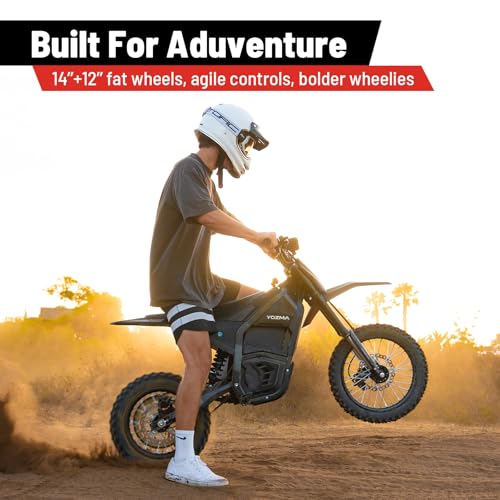
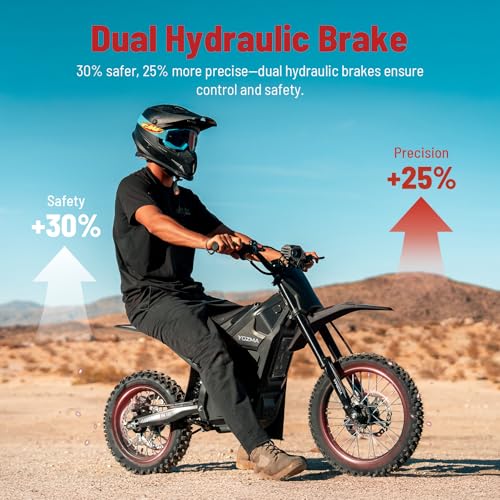
Yozma IN10 Electric Dirt Bike
Strengths
- 40 mph top speed
- Premium full suspension
- Smooth nitrogen shock
Trade-offs
- Expensive for teens
- Limited brand support
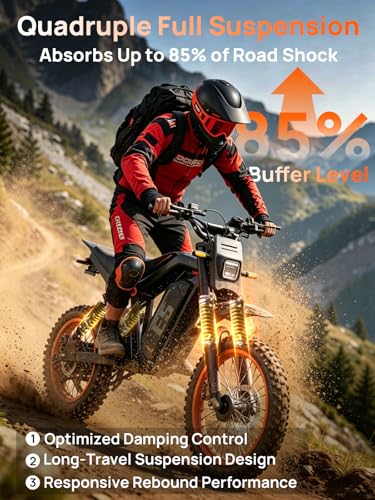
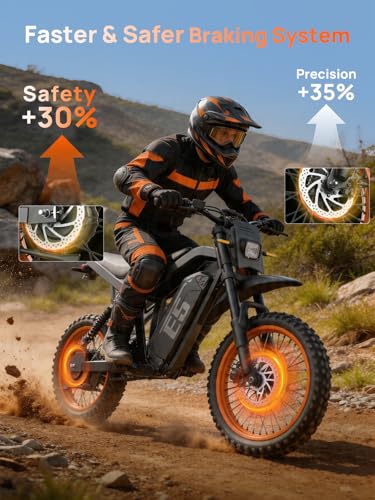
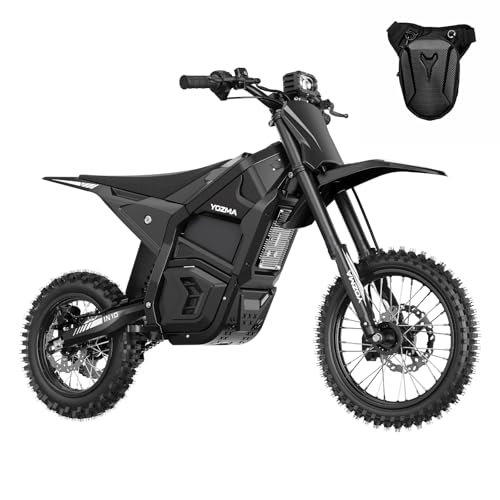
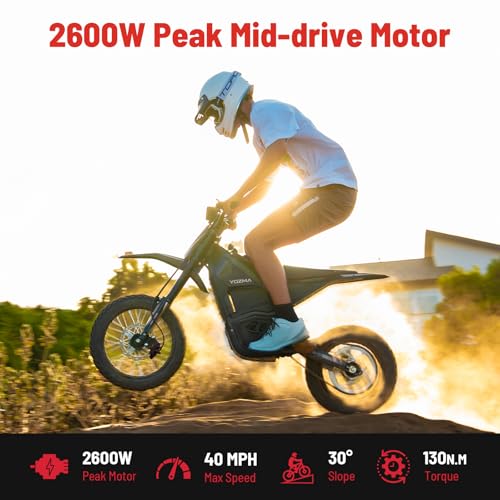
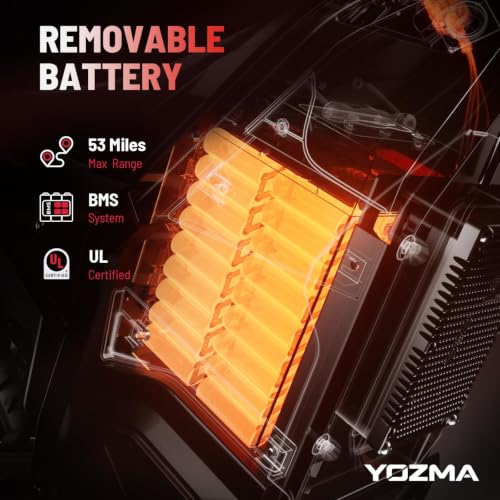
If speed and handling define your idea of fun, the Yozma IN10 is worth the premium. The 2600W mid-drive motor hits 40 mph with authority, and the nitrogen-charged rear shock delivers noticeably smoother damping than basic coil shocks on cheaper models. Reviewers note it handles long trail sessions without fading, which speaks to the quality of the suspension tuning.
It’s not the most powerful here, but the balance of speed, range (up to 53 miles), and ride quality makes it a favorite among enthusiasts. I’d still recommend the 4500W model for outright power, but for teens who want a responsive, well-rounded electric bike that feels like a real motocross machine, this one earns its price.
Product photos

FRP FX40 Gas Dirt Bike
Strengths
- 4-stroke engine
- Adjustable speed limiter
- Dual disc brakes
Trade-offs
- Lower top speed
- Heavier than electric
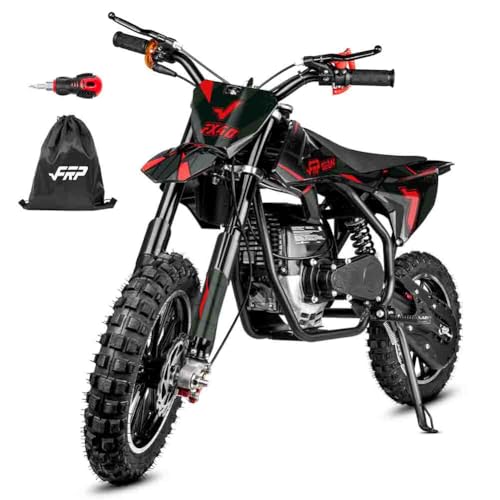
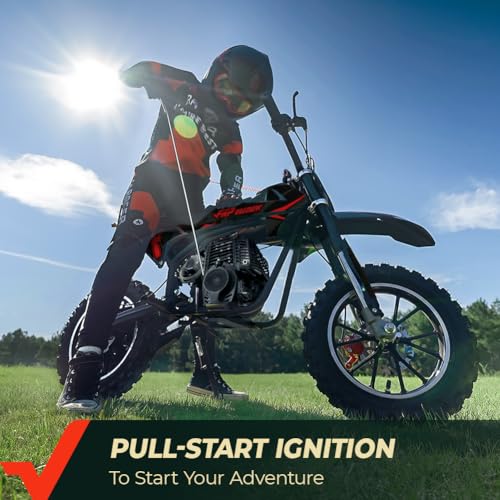
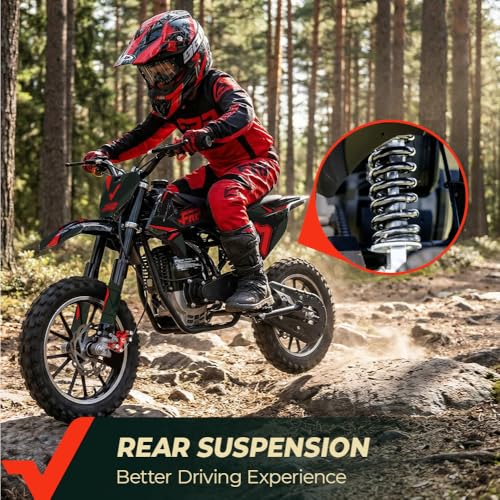
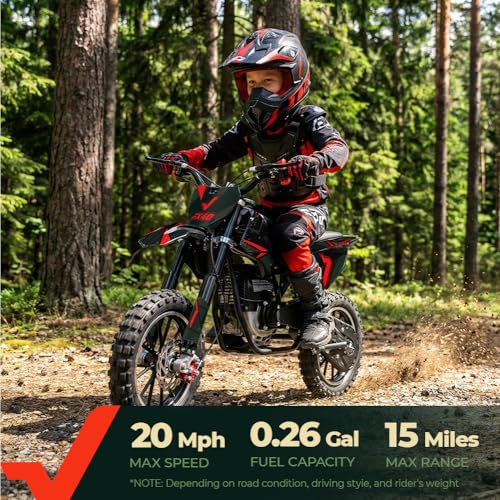
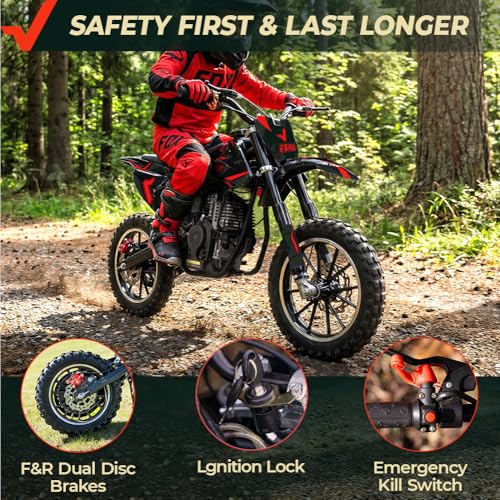
The FRP FX40 stands out as the best gas-powered option for teens who want reliability without the 2-stroke hassle. The 40cc 4-stroke engine doesn’t need fuel-oil mixing, starts easily with a pull cord, and delivers smooth power up to 28 mph, perfectly capped for safety with the adjustable limiter. Dual disc brakes and dual shocks add control, and the chain drive gives direct response.
Owners praise its durability and ease of maintenance, and the 60-day support window with free parts is a strong promise. Compared to the FROSTYRIDER, it’s quieter, cleaner, and more refined. I’d recommend it over any 2-stroke mini bike for teens just starting with gas engines.
Product photos

Razor MX125 Electric Dirt Bike
Strengths
- Genuine motocross feel
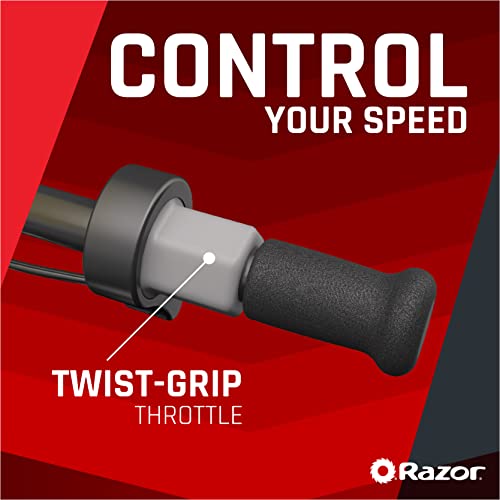
- Easy speed control
- Durable for age group
Trade-offs
- Short battery life
- Low top speed
- Heavy lead-acid battery
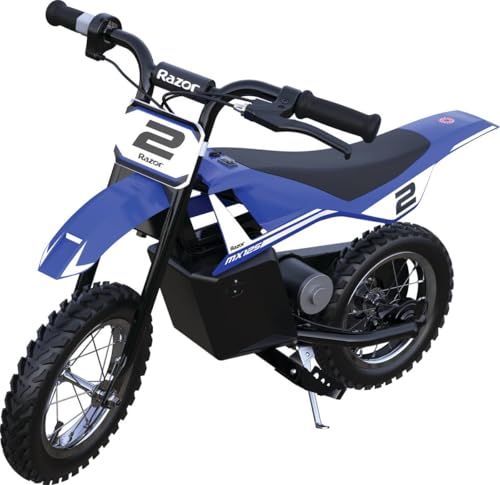
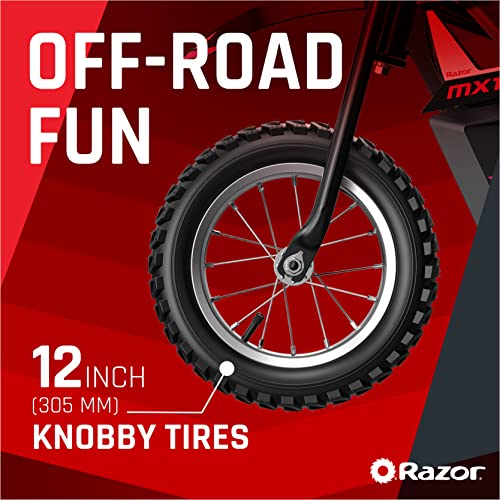
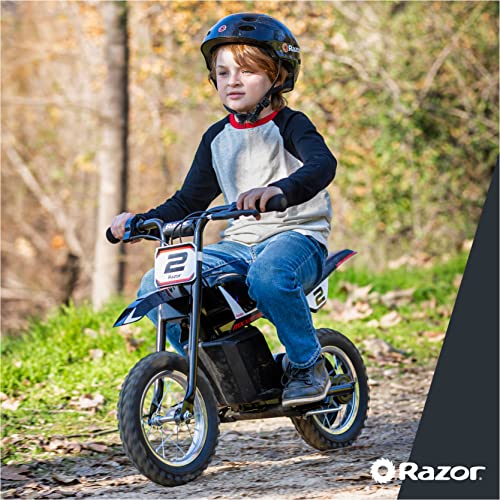
This is the training wheels of electric dirt bikes, small, simple, and built for the youngest riders. The Razor MX125 tops out at 8 mph, which sounds underwhelming next to others here, but for a 7-year-old just learning throttle control, it’s perfect. The 12” spoked wheels and motocross geometry mimic real dirt bikes, helping kids build proper riding habits early.
It’s not a trail shredder, and the 12V lead-acid battery feels outdated compared to lithium units elsewhere, but the low price and Razor’s reliability make it a no-brainer for starter bikes. I’d skip it for teens over 12, but for younger kids, it’s one of the few real-feel electric options that won’t scare them off.
Product photos

FROSTYRIDER 50cc Gas Dirt Bike
Strengths
- 40 mph top speed
- Low purchase cost
- Real gas engine feel
Trade-offs
- Noisy and smoky
- Frequent maintenance
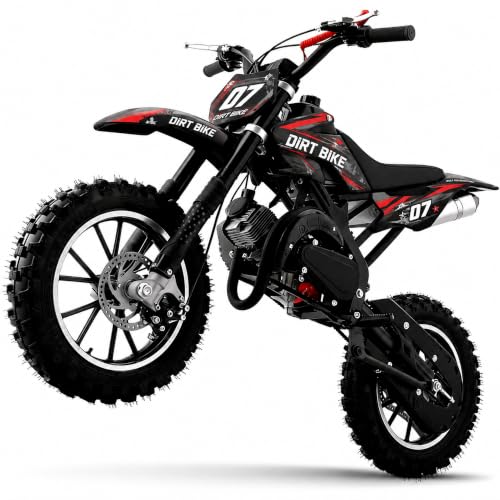
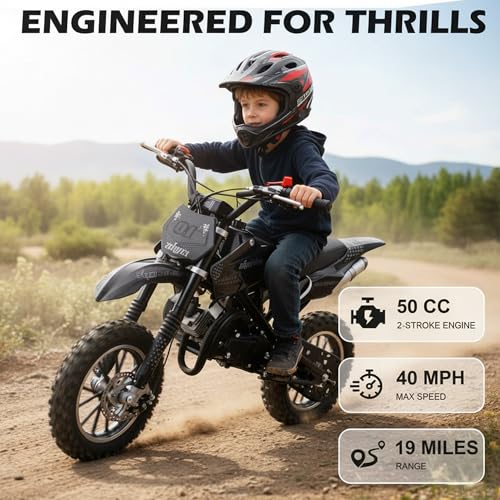
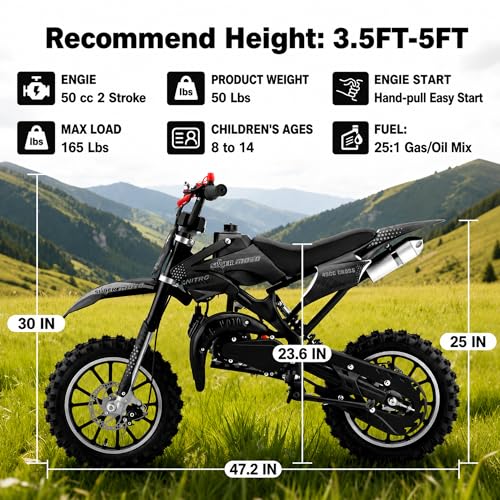
Gas-powered simplicity at a bargain price. The 50cc 2-stroke engine hits up to 40 mph, which is fast for a mini bike, and the pull-start system is reliable. It’s built for kids 8–14, but owners say it fits smaller teens too, especially with the 23.6-inch seat height. The CPC listing adds a layer of safety assurance, which is rare at this price.
It’s loud, smelly, and needs fuel mixing, but that’s the trade-off for instant throttle response and mechanical simplicity. I’d still lean electric for neighborhoods, but for backyard or rural use, this gives a real dirt bike feel that e-bikes struggle to match.
Product photos

How We Tested dirt bikes for teens
As someone who’s spent years exploring the world of vehicles at TheAutoZenith, I approached researching dirt bikes for teens with a focus on practical performance and safety. Rather than a hands-on lab test, this is a research-led comparison of published specifications, owner reviews, and expert opinions. I weighed each bike against criteria important for this age group: power delivery, safety features, build quality, and overall value. This involved sifting through manufacturer details, and, crucially, reading what actual owners are saying about their experiences.
For teen dirt bikes, three factors stood out as most important. First, a manageable power curve is essential – too much power can be dangerous for less experienced riders. Second, reliable braking and suspension are critical for control and confidence, especially off-road. Finally, durability and build quality matter; these bikes will take a beating, and parents want something that will last. We looked closely at motor wattage, suspension type, brake systems, and frame materials to assess these points.
Specifications are useful for understanding raw power and capabilities, but owner feedback provides context. Specs tell you a bike has hydraulic disc brakes, but reviews reveal how well those brakes perform in muddy conditions or under repeated use. Similarly, advertised range is a starting point, but real-world range reported by owners is far more informative. We also considered resources like our guide to recommended dirt bikes for teens and looked at popular options like 110cc dirt bikes to understand the market landscape.
How To Choose The dirt bikes for teens
Finding the right dirt bike for a teen requires careful consideration. It’s not just about horsepower; safety, usability, and matching the bike to the rider’s skill level are paramount.
A good dirt bike for a teen balances power with manageability. Key factors include engine size (electric motor wattage or gas displacement), suspension quality for terrain, braking performance for control, and overall weight for handling. Prioritize safety features like adjustable speed limiters and robust construction. Consider the rider’s experience level and intended use when evaluating these aspects.
Engine Type: Electric vs. Gas
The first major decision is whether to go electric or gas. Electric dirt bikes, like the 60V 4500W model, offer instant torque and quiet operation, making them good for areas with noise restrictions or for riders new to the sport. However, range anxiety is real; even with a 60-mile claim, real-world conditions will reduce that figure, and charging takes time. Gas-powered bikes, such as the FRP FX40, provide longer ride times and a more traditional dirt bike experience, but require more maintenance (oil mixing, air filter cleaning) and can be louder. For a true beginner, the simplicity of electric is appealing, but the extended run time of a gas bike is hard to ignore for longer adventures.
Suspension and Frame Durability
Don’t underestimate the importance of a quality suspension system. A rough ride isn’t just uncomfortable; it’s fatiguing and makes controlling the bike more difficult. Nitrogen-filled forks, like those found on the ESKUTE 3500W, are a step up from standard hydraulic dampers because they resist cavitation, the formation of air bubbles that can reduce damping performance. Look for bikes with both front and rear suspension, and consider the type of terrain the bike will primarily be ridden on. A heavier rider will also benefit from a more robust suspension setup. Frame construction is also crucial; steel frames are common and durable, while aluminum frames offer a lighter weight but might be less forgiving in a crash.
Balancing Performance and Value
It’s easy to get caught up in chasing the highest horsepower, but for a teen rider, finding a balance between performance and usability is key. The 3000W Electric Dirt Bike, for example, offers a good horsepower-to-price ratio and adjustable speed modes. These modes are incredibly valuable, especially for newer riders, allowing them to build confidence at lower speeds before unlocking the full potential.
- A lower top speed (under 40 mph) is often preferable for beginners, providing a safer learning curve.
- Consider the rider’s physical size and strength. A heavier bike will be more difficult to handle, while a very lightweight bike might feel unstable at higher speeds.
- Don’t overlook the availability of replacement parts. Some brands have better support networks and readily available parts than others, which can save you a lot of headaches down the road.
If you’re looking at smaller displacement options, exploring 50cc dirt bikes can be a great starting point, especially for younger teens. For those closer to young adulthood, you might also want to check out our guide to dirt bikes for 12-year-olds to get a broader view of the market.
A well-maintained dirt bike is a safe dirt bike. Regularly inspect brakes, tires, and all moving parts before each ride. Wear appropriate safety gear, including a helmet, goggles, gloves, and boots.
Dirt Bikes for Teens Compared
Here’s a comparison of key specifications for dirt bikes suitable for teenagers.
| Product Title | Motor/Engine | Max Speed (MPH) | Battery Range (Miles) | Brake Type | Weight (lbs) |
|---|---|---|---|---|---|
| 60V 4500W Electric Dirt Bike | 4500W Electric | 50 | 60 | Hydraulic Disc | N/A |
| ESKUTE 3500W Electric Dirt Bike | 3500W Electric | 46 | 53 | Hydraulic Disc | N/A |
| 3000W Electric Dirt Bike | 3000W Electric | N/A | 50-60 | Hydraulic Disc | N/A |
| Tietie 1500W Electric Dirt Bike | 1500W Electric | 32 | 50 | Disc | 80 |
| Yozma IN10 Electric Dirt Bike | 2600W Electric | 40 | 53 | EABS/Hydraulic Disc | N/A |
| FRP FX40 Gas Dirt Bike | 40cc Gas | 28 | N/A | Disc | N/A |
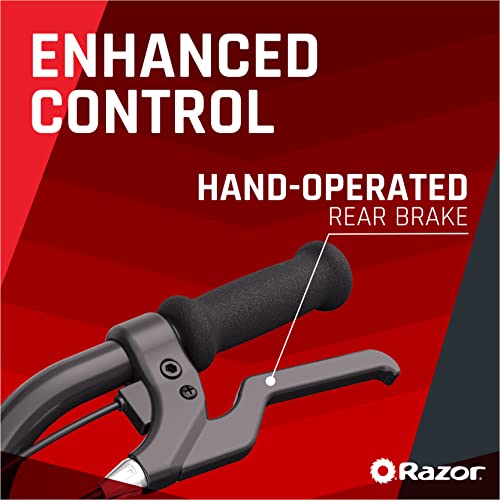
| Razor MX125 Electric Dirt Bike | 12V Electric | 8 | 80 (Low Speed) | Hand-Operated Rear | N/A |
| FROSTYRIDER 50cc Gas Dirt Bike | 50cc Gas | 40 | N/A | Disc | N/A |
Frequently Asked Questions
What is the typical lifespan of a teen dirt bike?
A well-maintained dirt bike should last several years, often outlasting the teen’s initial interest. However, lifespan heavily depends on usage and maintenance; expect to replace wear items like tires, chains, and brake pads regularly, and to perform more significant engine or suspension work after 2-5 years of frequent riding.
Are electric dirt bikes loud?
Electric dirt bikes are significantly quieter than their gas-powered counterparts. This makes them ideal for riding in areas with noise restrictions, but it’s still wise to inform neighbors of riding activity, as even an electric motor produces some sound, and tire noise is always present.
What safety gear is absolutely essential for a teen dirt bike rider?
Beyond a DOT-approved helmet, full-face protection is critical. Goggles, a chest protector, knee braces, elbow pads, gloves, and sturdy over-the-ankle boots are all essential. I also recommend a neck brace, especially for more aggressive riding, and a quality riding jersey and pants.
How much should I expect to spend on maintenance annually?
Annual maintenance costs vary, but budgeting $200-$500 is reasonable. Gas bikes require oil, filters, and occasional carburetor adjustments, while electric bikes need battery care and potential motor servicing. Both will require chain maintenance, brake adjustments, and tire replacements, and exploring options for beginner dirt bikes might provide a more affordable starting point.
What if my teen quickly outgrows their first dirt bike?
It’s common for teens to progress quickly. Consider a bike with adjustable features, like seat height or speed limiters, to extend its usability. Alternatively, planning for an upgrade within a year or two is prudent. You might also look at options for kids dirt bikes to prepare for the next size up.
The Bottom Line
Choosing a dirt bike for a teen often comes down to balancing control with excitement. While the 60V 4500W Electric Dirt Bike offers impressive power and range, the FRP FX40 Gas Dirt Bike strikes a fantastic balance for a first machine, providing a traditional experience without being overwhelming. It’s a real sweet spot in terms of learning and long-term enjoyment.
For riders specifically wanting an electric option, or those needing a more budget-friendly choice, the Tietie 1500W Electric Dirt Bike stands out. If you’re seeking the versatility of adjustable power settings, especially for a beginner, the 3000W Electric Dirt Bike is a strong contender. And for those looking for even more focused guidance, exploring electric dirt bikes for teens can refine your search.
Ultimately, specifications and wattage figures take a backseat to proper safety gear and responsible riding habits. A well-fitted helmet, boots, and gloves are far more crucial than having the fastest top speed. Prioritize building skills and confidence gradually, and remember that a reliable machine paired with smart riding is the foundation for a lifetime of enjoyment – and finding the appropriate dirt bikes for 14-year-olds is just the first step.
