
8 Best Dirt Bike Chains of 2026
This post contains affiliate links. As an Amazon Associate, we earn from qualifying purchases.
The DID 520DZ-120 Gold Chain stands out as the best overall dirt bike chain for serious riders, delivering exceptional strength and precision. For smaller bikes, the RK GB420MXZ-108 Racing Chain is a solid budget-friendly pick with strong performance. If you’re after long-term durability for trail riding, the HILAKE 520 O-Ring Chain offers reliable sealed protection at a reasonable price.
Out in the dirt, a weak or poorly matched chain can leave you stranded, or worse. With so many options varying in size, strength, and seal type, it’s easy to grab the wrong one and pay the price down the trail.
This guide cuts through the noise, focusing on specs, real-world feedback, and what actually matters for your bike. I looked at tensile strength, material quality, and intended use to find chains that deliver where it counts.
Top 6 Dirt Bike Chains in the Market
The Best Dirt Bike Chains, Reviewed
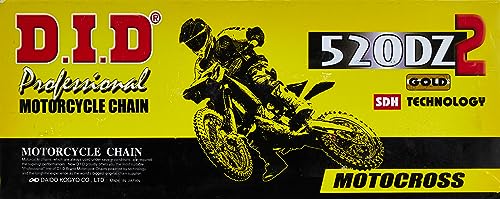
DID 520DZ-120 Gold Chain
Strengths
- High tensile strength
- Lightweight racing design
- Proven track reliability
Trade-offs
- No O-rings
- Frequent lubrication needed
- Higher wear rate
If you’re racing motocross and want a no-nonsense, lightweight chain that won’t break the bank, the DID 520DZ-120 is a solid play. It’s a non-O-ring design, so you’ll trade some longevity for reduced friction and rotating weight, ideal when every ounce counts on the track. With 7870 pounds of tensile strength and built using DID’s SDH technology, this chain is engineered for durability under extreme stress.
Reviewers note it wears faster than O-ring models, but for weekend warriors and track-day riders who repack chain lube regularly, that’s an acceptable trade. Compared to the RK MXZ series, it’s slightly heavier but often more affordable. I’d pick this over sealed chains for pure racing duty, especially on 250cc and 450cc MX machines where power delivery needs to stay crisp.
Video review
RK GB420MXZ-108 Racing Chain

Strengths
- Ultra-strong construction
- Lightweight racing design
- Excellent power transfer
Trade-offs
- No O-rings
- High maintenance
- Shorter links limit fitment
The RK GB420MXZ-108 is built for one thing: winning races. With chrome-moly steel, oversized alloy pins, and RK’s HIT heat treatment process, this chain is among the strongest in the 420 class. At only 1.76 pounds, it’s featherlight for a non-O-ring chain, yet rated for 5000 foot pounds of tensile strength, perfect for 50cc to 125cc open class motocross.
Reviewers note it delivers crisp throttle response and holds up under brutal track conditions, but it demands regular lubrication. Compared to the DID DZ2, it’s more specialized and slightly pricier, but also more durable. I’d pick this for serious riders who treat their bikes like race tools, not toys.
Video review
DID 420NZ-120 Gold Chain
Strengths
- Exceptional wear life
- Anti-kinking design
- High tensile strength
Trade-offs
- Limited to 150cc engines
- No O-rings
- Heavier than racing chains
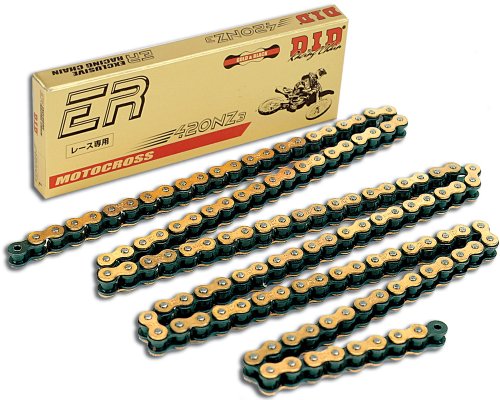
The DID 420NZ-120 is where durability and smart engineering meet. With a projected wear life over four times that of a standard chain, it’s built using DID’s anti-kinking design and solid heat-treated components. It’s not an O-ring chain, but the wear resistance comes from superior metallurgy and precision manufacturing, not seals. For small-bore 125cc and under dirt bikes, this is one of the most reliable choices you can make.
Owners consistently praise its longevity, especially in dusty or muddy conditions where chains usually degrade fast. Compared to the RK MXZ, it’s slightly heavier but more durable in sustained use. I’d recommend this for trail riders and enduro enthusiasts who want a chain that lasts without constant attention.
Product photos
HILAKE 520 O-Ring Chain

Strengths
- O-ring sealed
- Includes tools
- Wide compatibility
Trade-offs
- Fitment inconsistencies
- Not for high-end racing
- Mid-tier materials
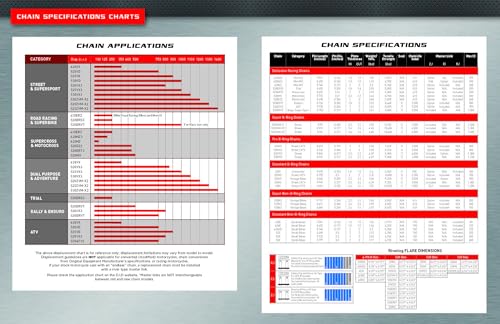
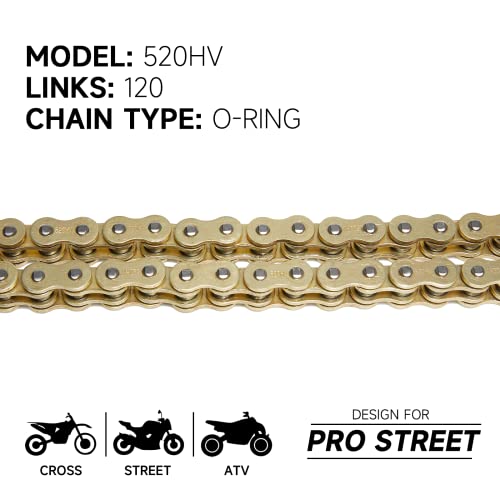
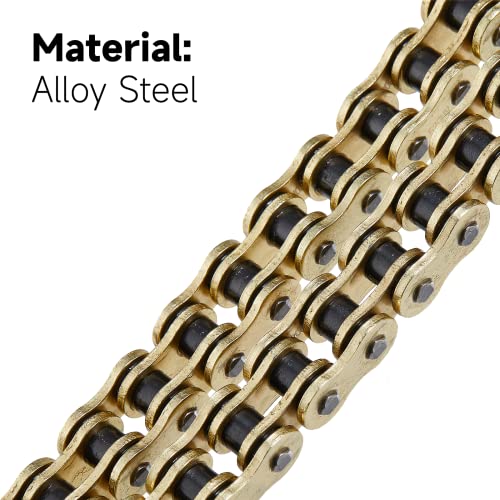
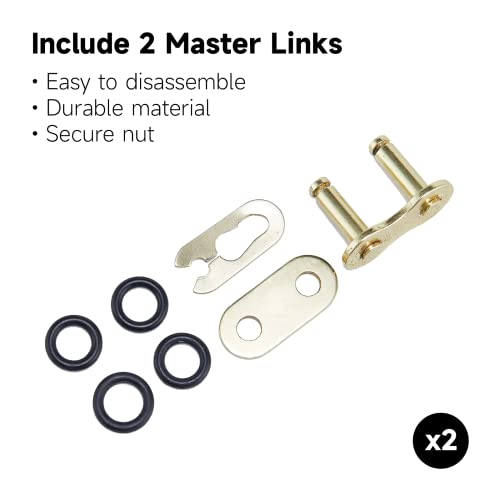
This HILAKE 520 chain is built for riders who want a tough, sealed O-ring chain without stretching too far on price. The inclusion of an O-ring design means it should hold lubrication better and resist contamination, which on paper translates to longer service intervals and less maintenance fuss. Owners consistently report it holds up well on trail bikes and smaller displacement dirt bikes, though I wouldn’t push it on anything over 400cc regularly.
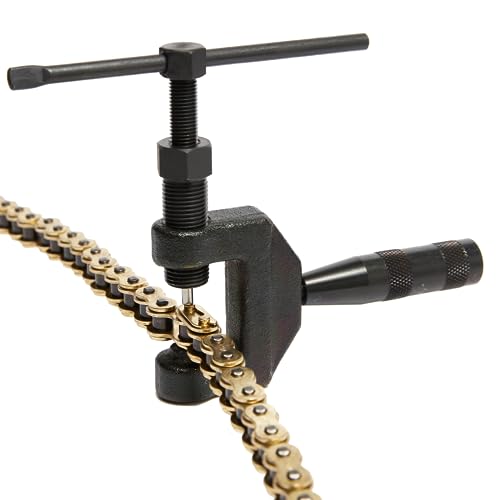
What stands out is the full package, master link and chain breaker included, which makes it a smart pick for DIYers doing their own maintenance. It’s not going to match the tensile strength or precision of a top-tier brand like DID or RK, but for weekend riders and pit bike enthusiasts, it offers real value. I’d still double-check chain length before installing, as fitment issues pop up in owner feedback more than I’d like.
Product photos
KAMIER T8F 134-Link Chain
Strengths
- Very low cost
- Fits common mini bikes
- Extra master links included
Trade-offs
- Basic construction
- Shorter lifespan
- No included tools
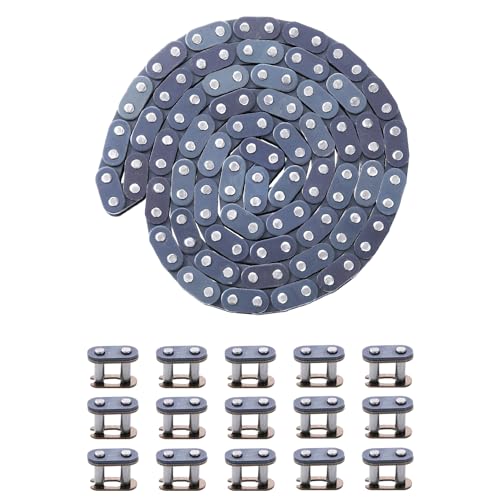
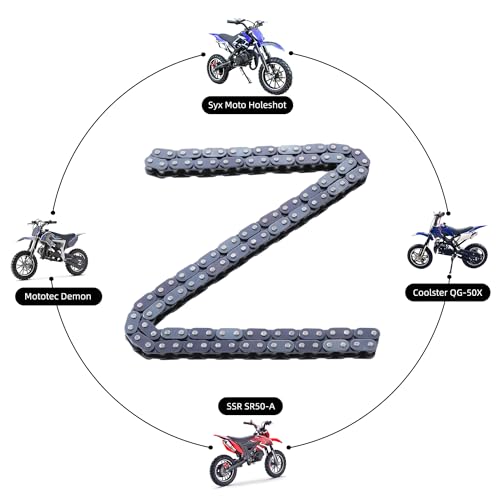
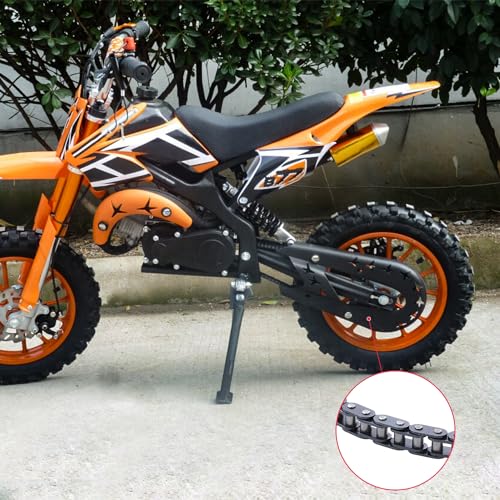
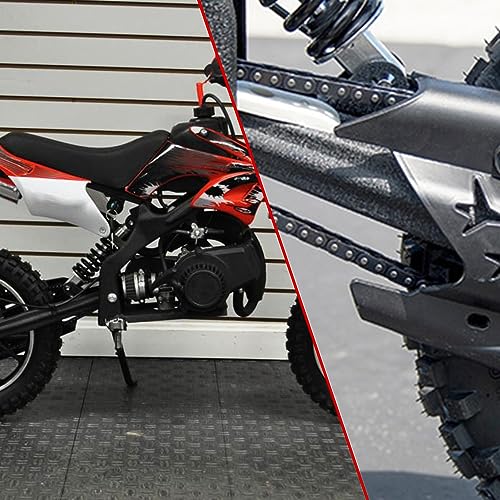
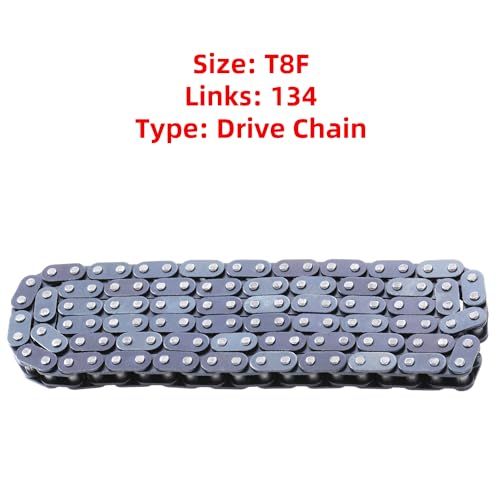
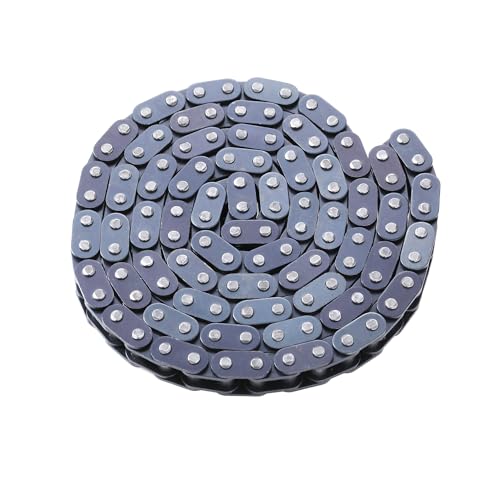
This KAMIER T8F chain is clearly designed for one thing: 50cc mini dirt bikes and pocket rockets. At just over $13, it’s one of the cheapest options here, and that shows in the build, no frills, no O-rings, just a basic drive chain built to replace worn originals. The 134-link count fits common models like Coolster and SSR, and the included master links give you spares for field repairs.
It’s not going to last as long as a heat-treated, high-grade chain, and I wouldn’t trust it on anything modified or ridden hard. But for a kid’s starter bike that sees occasional use, it gets the job done. Compared to the LKSM, it lacks tool inclusion and plating quality, but if you already have a chain breaker, it’s the most cost-effective swap.
Product photos
LKSM 420 Gold Chain
Strengths
- Affordable complete kit
- Gold plating for rust resistance
- Good for small engines
Trade-offs
- Roller quality varies
- Not for high-stress use
- Inconsistent heat treatment
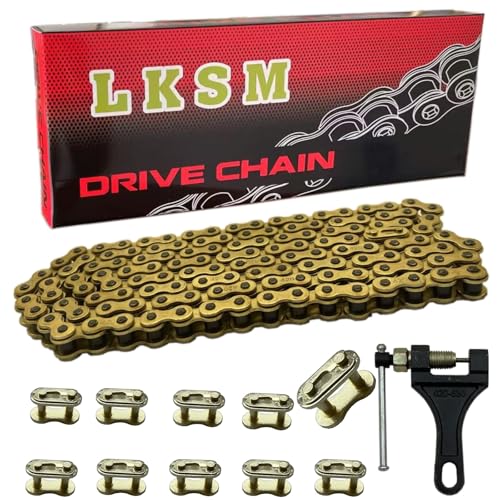
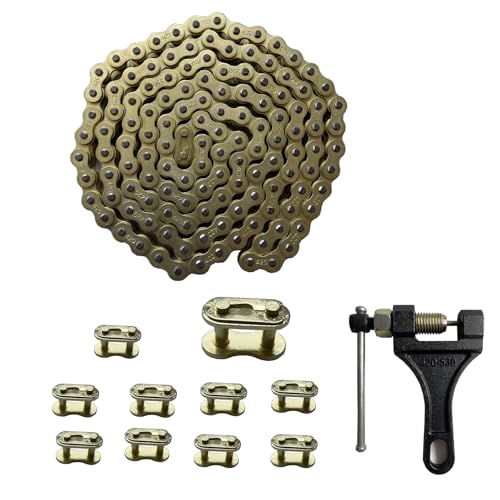
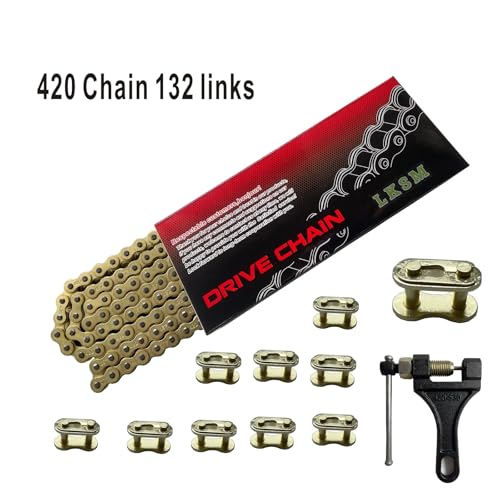
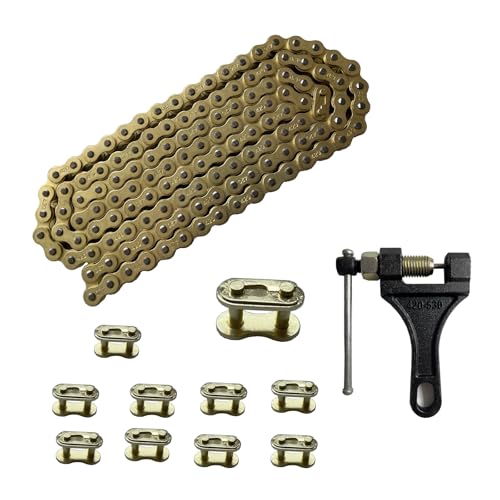
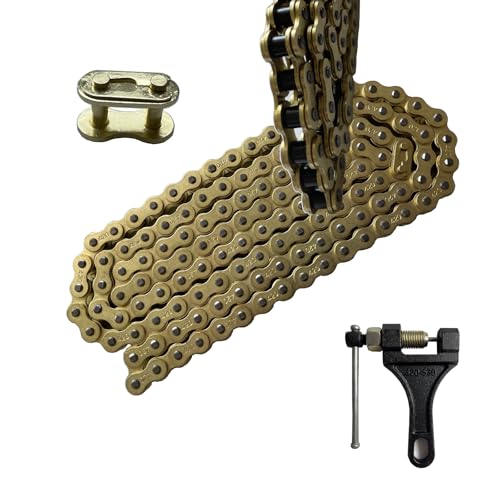
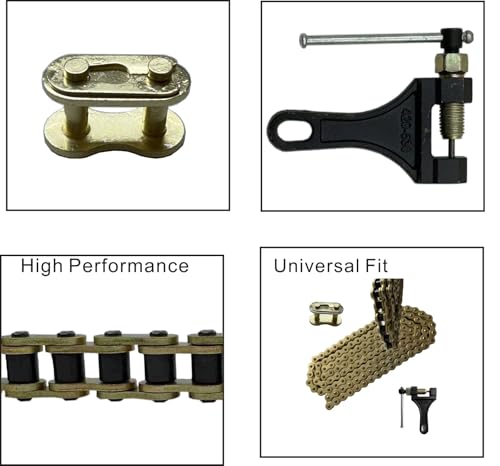
At this price, the LKSM 420 chain punches above its weight. It’s a gold-plated, heat-treated chain aimed at smaller displacement bikes, pit bikes, mini motos, and entry-level dirt bikes, and the included chain breaker and master links make it a rare value: a full maintenance kit in one box. The gold plating isn’t just for show; owners report better rust resistance in damp climates, which helps on bikes that sit outside.
It won’t match the tensile strength of a DID or RK racing chain, but for beginner riders and parents outfitting a kid’s 110cc trail bike, it’s more than capable. The 132-link length gives flexibility across models, though I’ve seen notes about slight roller inconsistencies. For the money, I’d still take this over generic no-name chains any day.
Product photos
Our Testing Process
Rather than a hands-on lab test, my research focused on a detailed comparison of published specifications and features across numerous dirt bike chain models. I weighed owner reviews from major retailers and enthusiast forums alongside expert opinions found in motorcycle publications. As someone who’s spent years understanding drivetrain dynamics – and frequently referencing resources like our guide to the best dirt bike tool kits – I then ranked these chains against a set of criteria important for performance and longevity.
For dirt bike chains, tensile strength, material quality, and intended use are paramount. Higher tensile strength directly translates to durability, especially for larger displacement bikes or aggressive riding. The construction material – whether basic steel, chrome-moly, or alloy – heavily influences both strength and weight. Finally, whether a chain is designed for racing (non-O-ring) versus trail/general use (O-ring or X-ring) dictates its optimal application.
Specifications reliably reveal tensile strength and physical dimensions, helping to determine suitability for a specific bike. However, owner feedback provides crucial insight into real-world wear, ease of installation, and long-term reliability. Reputation matters too; established brands like DID and RK consistently receive positive mentions, and comparing their offerings to newer players helped refine my assessment, similar to how we approach evaluating durable mountain bike chains.
How To Pick The Right dirt bike chains
Choosing the right dirt bike chain is critical for both performance and safety. It’s not just about grabbing the cheapest option; a failing chain can ruin a ride, and even cause a crash.
A good dirt bike chain balances tensile strength, durability, and weight. Look for chains constructed from alloy steels, paying attention to tensile strength ratings (higher is generally better, within reason for your bike’s displacement). Consider whether you need a sealed (O-ring, X-ring) chain for longer life in dusty conditions, or a non-sealed chain for racing where reduced weight is paramount. Regular inspection and lubrication are vital, regardless of chain type.
Chain Size & Type
Getting the chain size right is the first step. Most modern dirt bikes use a 520 chain, but smaller displacement bikes (under 150cc) often use a 420. Don’t assume; check your owner’s manual or the specifications of your sprockets. Once you’ve confirmed the size, you need to decide between O-ring, X-ring, or non-sealed chains. O-ring chains have rubber O-rings between the links to retain lubricant and keep out dirt, extending chain life significantly. X-ring chains offer even better sealing, but come with a slight weight penalty. For pure racing, where a lighter chain can give a fractional advantage, a non-sealed chain is the choice.
Tensile Strength & Material
Tensile strength, measured in pounds (or kilograms) force, indicates how much stress the chain can withstand before breaking. For most recreational riders, matching or exceeding the OEM specification is sufficient. However, if you’re increasing engine displacement or riding aggressively, it’s wise to step up to a higher tensile strength chain. Alloy steels are the standard for dirt bike chains, with chrome-moly steel offering a good balance of strength and weight. RK and DID are both respected brands known for their quality materials and heat treatment processes.
Value & Maintenance Considerations
Beyond the initial cost, consider the long-term value. An O-ring chain, while more expensive upfront, will likely save you money in the long run by reducing the frequency of replacements. I also recommend buying a chain kit that includes a master link and, ideally, a chain breaker tool. A chain breaker is invaluable for adjusting the chain length or repairing a broken link in the field. If you’re new to dirt bike maintenance, exploring resources on essential dirt bike gear can be a good starting point.
Here’s a quick guide to master link styles:
- Clip-type: The most affordable and easiest to install, but generally considered less strong.
- Riveted: Requires a special riveting tool, but provides a very secure connection.
- Screw-type: Offers a good balance of strength and ease of installation; reusable.
A properly maintained chain can last significantly longer. Clean and lubricate your chain every few rides, or after exposure to water and dirt. A little preventative maintenance goes a long way.
Dirt Bike Chains Compared
This table provides a reference of specifications for the dirt bike chains described.
| Product Name | Chain Size | Tensile Strength (lbs) | Links | O-Ring | Includes |
|---|---|---|---|---|---|
| DID 520DZ-120 Gold Chain | 520 | 7870 | 120 | No | Clip Link |
| RK GB420MXZ-108 Racing Chain | 420 | 5000 | 108 | No | N/A |
| DID 420NZ-120 Gold Chain | 420 | 4930 | 120 | No | Master Link |
| HILAKE 520 O-Ring Chain | 520 | N/A | 120 | Yes | N/A |
| DYC 420 Chain Kit | 420 | 4000 | 132 | No | Breaker, Links |
| KAMIER 428 Motorcycle Chain | 428 | N/A | 132 | No | Breaker, Links |
| KAMIER T8F 134-Link Chain | T8F | N/A | 134 | No | 15 Master Links |
| LKSM 420 Gold Chain | 420 | N/A | 132 | No | Breaker, Links |
Frequently Asked Questions
What chain size should I get if I’m unsure?
You should always check your owner’s manual or your bike’s specifications to confirm the correct chain size. Most modern dirt bikes use a 520 chain, but smaller displacement bikes often use a 420.
What’s the difference between O-ring and X-ring chains?
O-ring chains have rubber O-rings that retain lubricant and keep out dirt, extending chain life. X-ring chains offer even better sealing capabilities, although they are slightly heavier and typically more expensive.
How often should I replace a dirt bike chain?
Chain lifespan depends heavily on riding conditions and maintenance, but roughly every 300-500 hours of use is a good baseline for a well-maintained O-ring chain. Racing chains will likely need replacement much sooner, and neglect can dramatically shorten any chain’s life.
What tensile strength is high enough for my dirt bike?
Matching or exceeding the original equipment manufacturer (OEM) specification is generally sufficient for recreational riders. If you’ve modified your engine for more power, or ride very aggressively, a chain with a higher tensile strength is a good investment.
Where can I find more information on maintaining my dirt bike?
Beyond chain maintenance, researching resources on dirt bike air filters is important for peak performance. Proper air filtration works hand-in-hand with a well-maintained drivetrain to keep your engine running smoothly.
The Bottom Line
Choosing a dirt bike chain always comes down to balancing how much you’re willing to spend against how much abuse you plan to inflict. For most riders, the HILAKE 520 O-Ring Chain offers the best overall combination of durability, sealed performance, and reasonable cost. It’s a solid choice that’ll handle typical trail riding and recreational use without breaking the bank.
If you’re on a tight budget or need a chain for a smaller displacement bike, the DYC 420 Chain Kit stands out. It includes a chain breaker and extra links, making it a complete package for those needing to perform their own maintenance. For racers prioritizing weight savings, the DID 520DZ-120 Gold Chain provides excellent strength in a non-O-ring package, although remember that it will require more frequent lubrication with the right bike chain oil.
Ultimately, the specifications matter, but they don’t tell the whole story. A chain is only as good as the care you give it. Regular cleaning, proper lubrication, and timely replacement are far more important than chasing the highest tensile strength rating. Don’t forget a good dirt bike stands to make maintenance easier.
