
9 Best Dash Cams for Semi Trucks 2026
This post contains affiliate links. As an Amazon Associate, we earn from qualifying purchases.
The best dash cam for semi trucks is the ASLONG 4K 4CH Dash Cam, which delivers thorough four-channel coverage and sharp 4K video. For a more budget-friendly option, the VSYSTO 3CH Truck Dash Cam offers solid performance with reliable 1080P recording across three channels.
Semi truck drivers face unique challenges on the road, from blind spots to long-haul fatigue, and a dash cam isn’t just about recording footage, it’s about protection, proof, and peace of mind. With so many models claiming to be built for heavy-duty use, it’s easy to get lost in specs and marketing hype.
This guide cuts through the noise. I compared top models based on real-world feedback, durability, camera coverage, and features that matter most to professional drivers, like GPS tracking, night vision, and multi-channel recording. These picks reflect what actually works on the road, not just in a spec sheet.
Top 9 Dash Cams For Semi Trucks in the Market
The Best Dash Cams For Semi Trucks, Reviewed
VSYSTO 3CH Truck Dash Cam

Strengths
- Real-time 3-screen display
- Turn-signal auto-switch
- Infrared night vision
- Low-voltage protection
- Compact screen design
Trade-offs
- Front resolution only 1080P
- Side cameras lower resolution
- App interface can be clunky
When you need a balance of functionality, durability, and real-world usability in a single package, the VSYSTO 3CH makes a strong case as a daily driver for working truckers. Its three-camera system feeds directly to a 4.5-inch onboard screen, letting you see front and both sides simultaneously, a big deal when maneuvering tight docks or blind intersections. The fact that it auto-switches to side cameras when signaling is a small but meaningful touch that reduces cognitive load during complex maneuvers.
Reviewers appreciate the infrared night vision and waterproof build, which hold up in rain, snow, and grime. The low-voltage cutoff protects your truck’s battery during parking mode, and the loop recording with G-sensor lock ensures incident footage stays safe. While the front camera maxes at 1080P and the sides are 720P, that’s typical in this class. What sets it apart is reliability, fewer app dependencies, fewer failure points. If you want a set-it-and-forget-it system that just works, this is it.
Video review
Garmin dēzlCam OTR725

Strengths
- Truck-specific routing
- PrePass and weigh station alerts
- BirdsEye satellite views
- Community parking ratings
- Solid build quality
Trade-offs
- Dash cam resolution not top-tier
- High price point
- Requires smartphone pairing for full features
Let’s be clear: the Garmin dēzlCam OTR725 isn’t just a dash cam. It’s a purpose-built navigator for professional truckers, packed with features that reflect deep understanding of long-haul logistics. The 7-inch touchscreen doubles as a 1080p dash cam, but its real value lies in custom routing for oversized vehicles, PrePass integration, and BirdsEye satellite imagery for docking precision. If you’ve ever struggled to find legal turns or safe parking at 2 a.m., this device earns its premium price.
The built-in dash cam is competent, not class-leading, 1080P with a 140-degree view, but it reliably saves incident clips and integrates smoothly with the navigation UI. More importantly, the dēzl community features give real-time insights into parking quality and weigh station bypasses, which veteran drivers swear by. Yes, it’s expensive, but when downtime costs hundreds per hour, the efficiency gains justify it. This is the only unit here that feels designed by truckers, not just for them.
Video review
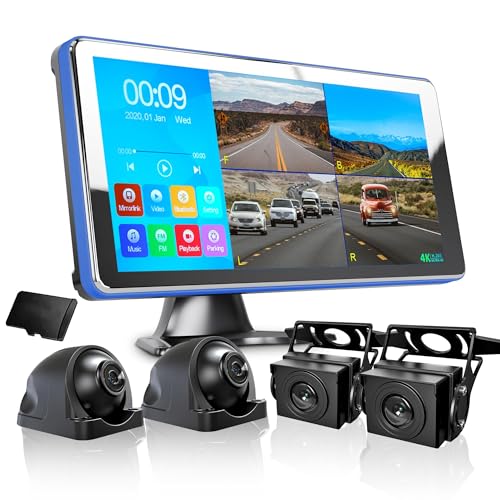
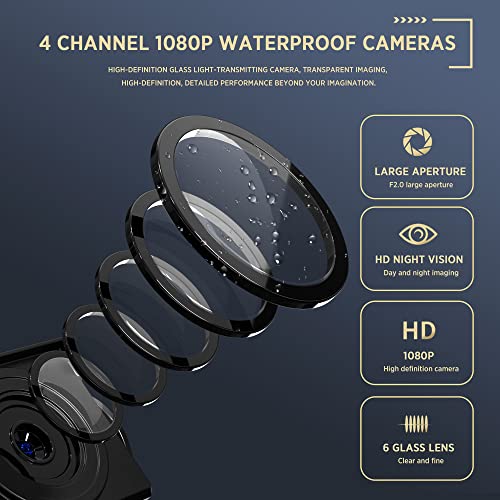
ASLONG 4K 4CH Dash Cam
Strengths
- Massive 10.36-inch display
- Quad-view simultaneous playback
- 4-channel HD input
- Excellent weather resistance
- Flexible vehicle voltage support
Trade-offs
- Very large screen obstructs view if poorly mounted
- Entertainment features distract from core use
- Installation requires electrical knowledge
If screen size matters, and for large vehicles navigating tight yards or loading docks, it really does, then the ASLONG 4CH system deserves attention. That 10.36-inch quad-split touchscreen lets you monitor four HD cameras at once, giving true 360-degree awareness. For semi drivers backing into blind spots or RVers docking at narrow campsites, this kind of visual coverage is invaluable. The 170° wide-angle lenses on each camera minimize blind zones, and the waterproof construction holds up in heavy rain and dust storms.
On paper, it supports 4K input, though actual resolution depends on the camera feed, most users report crisp 1080P across channels. The FM transmission and entertainment features feel gimmicky, but the trigger display function (automatically switching views on turn signals or reverse) is genuinely useful. Installation demands a robust fuse tap (20A minimum), so it’s best for permanent setups. This isn’t a temporary add-on; it’s a full visibility overhaul.
Product photos


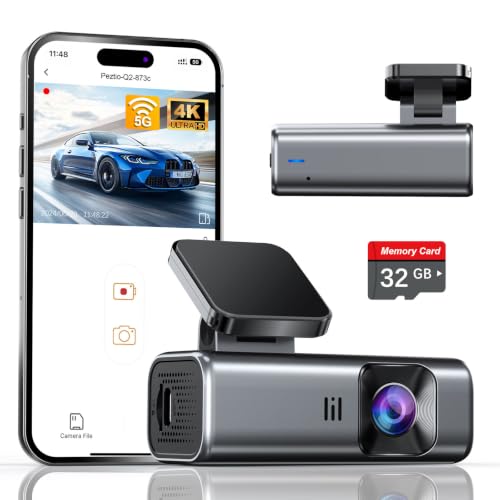
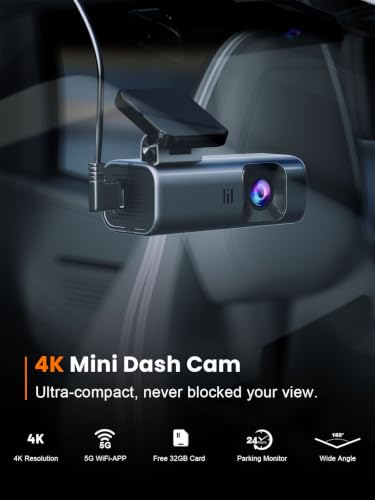
galphi 4K Front Dash Cam
Strengths
- True 4K front recording
- Screen-free focus
- Super capacitor
- Compact size
- Affordable price
Trade-offs
- No rear camera
- WiFi can be inconsistent
- Only 32GB included
At under $60, the galphi 4K dash cam punches above its weight, especially for drivers who want clean, reliable front-only recording without cluttering their windshield. It’s screenless, which I actually like; fewer distractions, lower profile, and less temptation to glance away from the road. The 4K resolution with 160-degree lens captures sharp details like license plates and road signs, and the F/1.6 aperture with WDR helps balance exposure in tunnels or city streets with harsh shadows.
It includes a 32GB card, supports up to 256GB, and uses a super capacitor for better heat tolerance, important for cabs that bake in summer sun. The 5GHz WiFi speeds up video pulls, though some owners note occasional connectivity hiccups. I’d recommend this as a starter cam for new owner-operators or as a secondary unit on a larger rig. Just don’t expect miracles in pitch-black rural areas, it’s good, not magical.
Product photos


Dual Camera Dash Cam 4K+2K
Strengths
- True 4K front recording
- Tool-free installation
- Strong night vision
- Built-in GPS
- 72-hour parking mode
Trade-offs
- Suction mount less secure on rough roads
- Rear camera only 2K
- No screen means no live preview
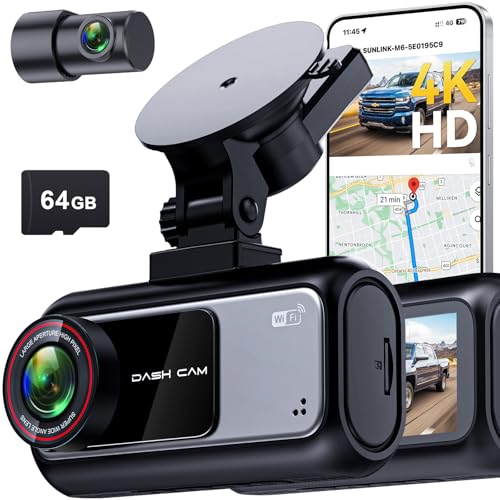
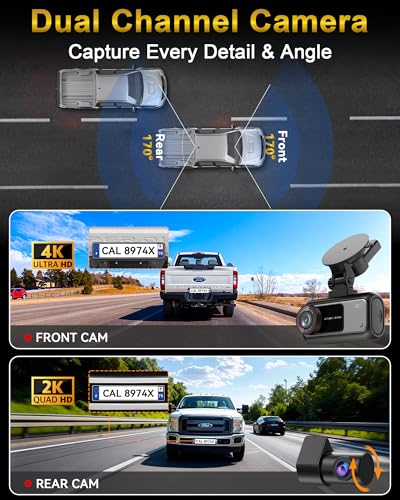
This dash cam markets itself as the quick-fix solution for pickup and medium-duty truck drivers who want solid evidence capture without drilling holes or splicing wires. And based on owner feedback, it delivers, especially in low light. With 4K front and 2K rear recording, an F1.8 aperture, and HDR, it handles glare and shadows better than most budget units. The tool-free suction mount really does make setup take under 15 minutes, which is rare for anything beyond clip-on cams.
Where it shines is in urban driving and overnight parking lots, its 72-hour parking mode uses motion-triggered wake-up, and the built-in GPS overlays time, speed, and location onto footage, making it insurer-ready. I wouldn’t rely on it for full semi-truck blind spot coverage, but for straight trucks or pickups doing local runs, it’s a capable, no-drama option. Just know the high resolution eats microSD space fast, so plan for frequent transfers or larger cards.
Product photos

70mai A810 Lite 4K
Strengths
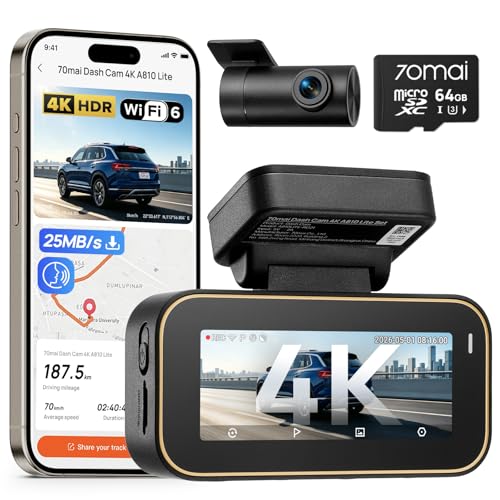
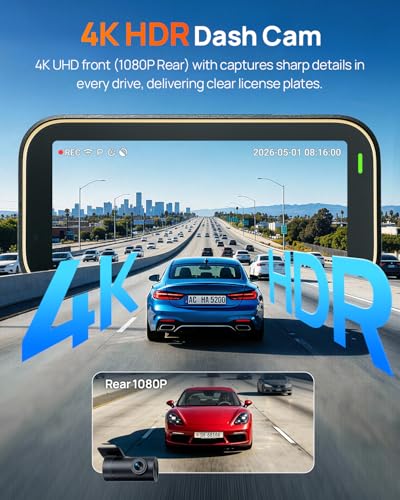
- 4K front + 1080P rear
- Wi-Fi 6 for fast transfers
- Supercapacitor
- Compact stealth design
- Built-in GPS
Trade-offs
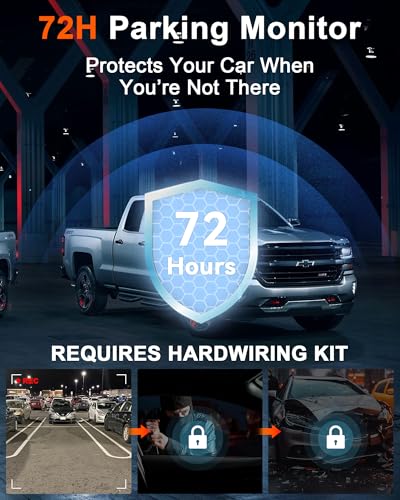
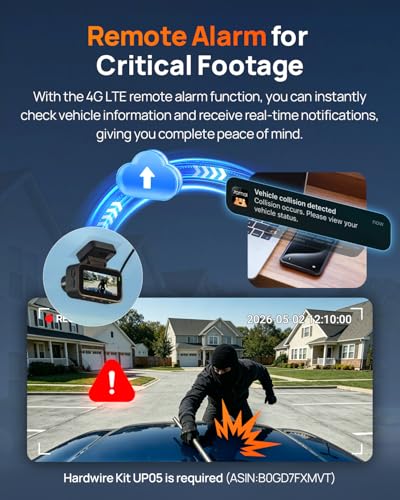
- Parking mode requires hardwire kit
- Rear camera cable length may be short
- App can lag on older phones
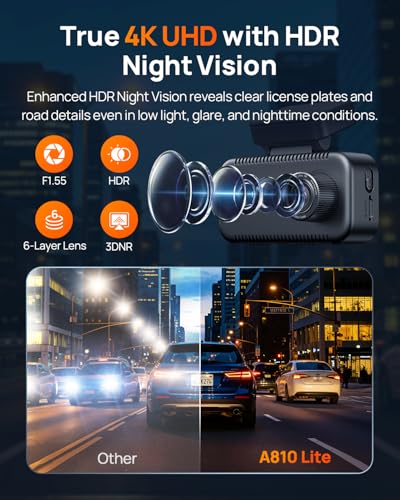
The 70mai A810 Lite hits a sweet spot between cost and capability, offering 4K front and 1080P rear recording with Wi-Fi 6 and GPS at a price that undercuts many mid-tier models. The F1.55 aperture and HDR deliver noticeably better night footage than similarly priced units, and the credit-card-sized design tucks neatly behind the mirror, ideal for drivers who hate bulky hardware in their line of sight.
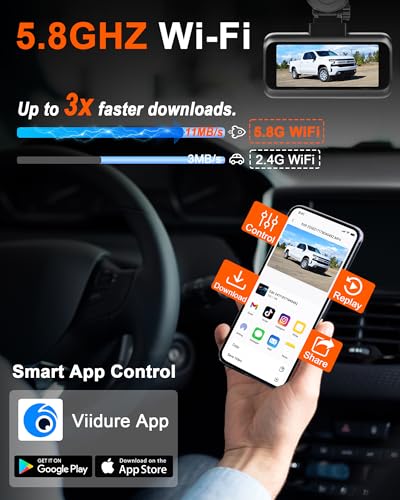
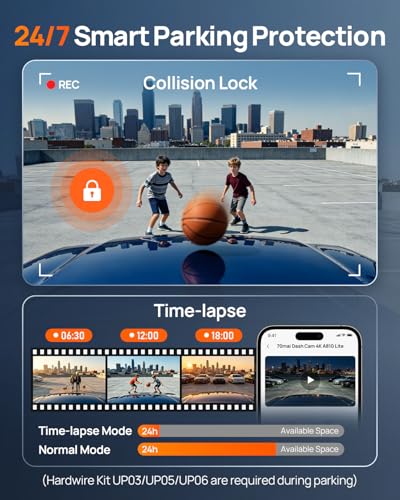
What impresses me most is the Wi-Fi 6 transfer speed, clocked by users at up to 25MB/s, nearly instantaneous clip sharing. The supercapacitor ensures stability in desert heat or winter cold, and the 24-hour parking mode (with hardwire kit) gives real peace of mind. While the app experience varies slightly by phone model, overall it’s one of the smoother interfaces in the budget-to-midrange space. For what it offers, it’s hard to beat.
Product photos

Terunsoul 4K+4K Dash Cam
Strengths
- True 4K front and rear
- F1.5 large aperture
- Free 128GB card
- WiFi 6 fast transfer
- 3-year warranty
Trade-offs
- No onboard screen
- Requires hardwire kit for parking mode
- App interface still maturing
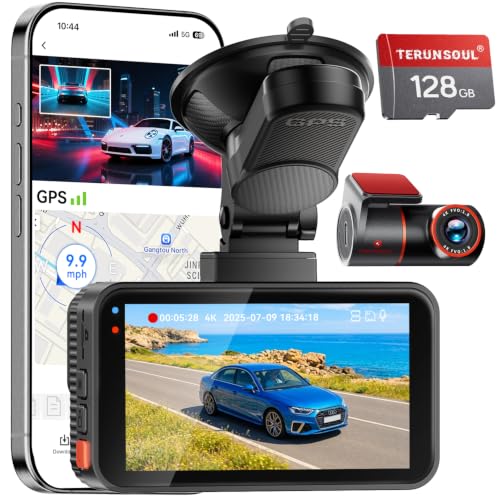
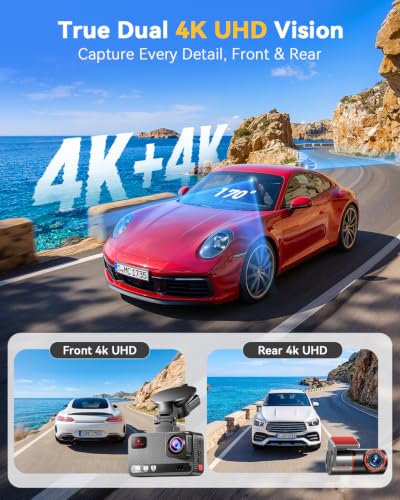
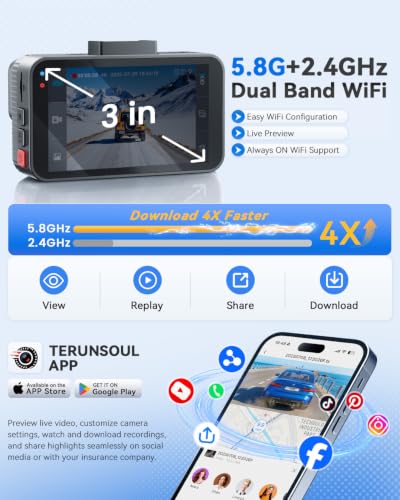
When “true 4K dual recording” is your headline feature, you’d better deliver, and based on specs and owner reports, Terunsoul does. Both front and rear cameras record true 4K UHD, which is still rare at this price. The F1.5 front and F1.8 rear apertures pull in serious light, and the AProX night vision processing keeps colors accurate and noise low in dim conditions. For flatbed haulers or reefer operators who need to document cargo integrity or rear impacts, this level of detail is a standout.
It comes with a free 128GB card, supports up to 512GB, and uses WiFi 6 for rapid 20MB/s transfers, faster than most in its class. The 3-year warranty is unusually generous and signals confidence in longevity. My only hesitation? No screen means you’re blind until playback, so it’s best paired with another monitor if real-time viewing is needed. But as a pure evidence recorder, it’s one of the strongest values here.
Product photos



Losuudy RV Camera System

Strengths
- Large 10-inch touchscreen
- CarPlay and Android Auto support
- 4-channel HD camera system
- Wired reliability
- Includes 64GB SD card
Trade-offs
- Bulky for small cabs
- Complex installation
- Not suitable for standard trucks
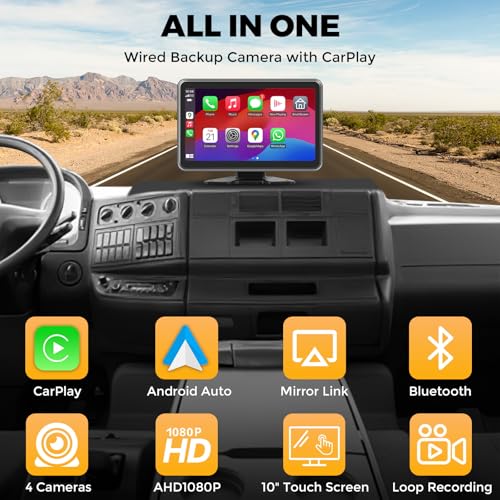
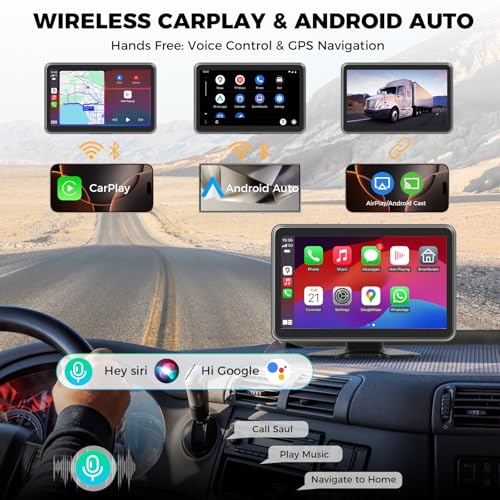
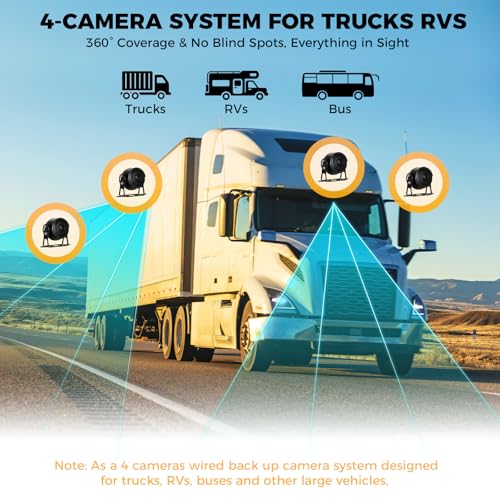
If you’re running a semi, RV, or large trailer and want a full infotainment upgrade, not just a dash cam, this Losuudy system is worth serious consideration. It’s not just a camera setup; it’s a 10-inch CarPlay and Android Auto hub with quad HD cameras, which means you get smartphone integration, voice control, navigation, and all-around visibility in one hardwired package. For long-haul drivers who want seamless access to Waze or Google Maps while also monitoring blind spots, this kind of integration beats stacking separate devices on the dash.
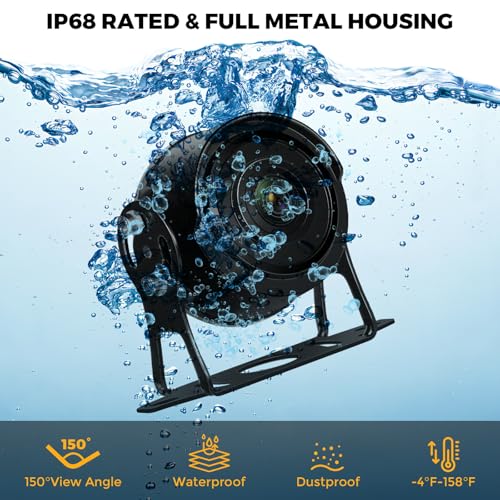
Owners consistently report that the 4-channel wired system delivers reliable footage from all angles, and the inclusion of a 64GB card out of the box is a nice touch. The IP68-rated cameras hold up well in extreme temps, and the stable wired signal avoids the dropouts common in wireless systems. That said, it’s overkill for smaller rigs, the screen is massive and installation isn’t plug-and-play. If you’re comfortable routing cables through a Class A vehicle, this becomes a powerful command center. Otherwise, it’s more hassle than help.
Product photos

REDTIGER F17 3CH Dash Cam
Strengths
- STARVIS 2 sensor for night clarity
- Triple-channel recording
- 5GHz WiFi transfer
- Super capacitor
- G-sensor parking mode
Trade-offs
- Interior camera may raise privacy concerns
- Hardwire kit sold separately
- Slight learning curve for app setup
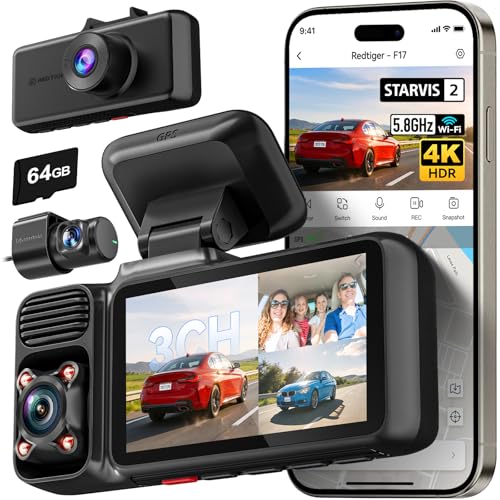
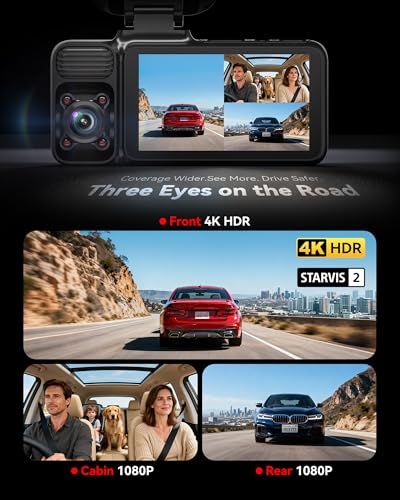
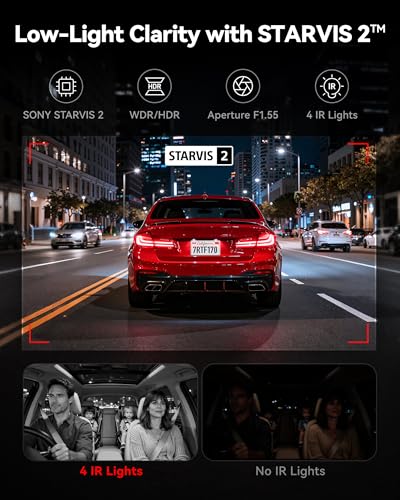
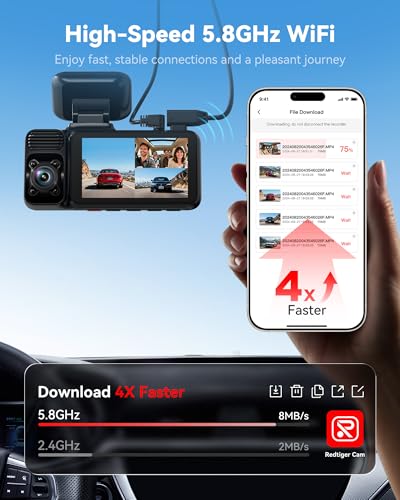
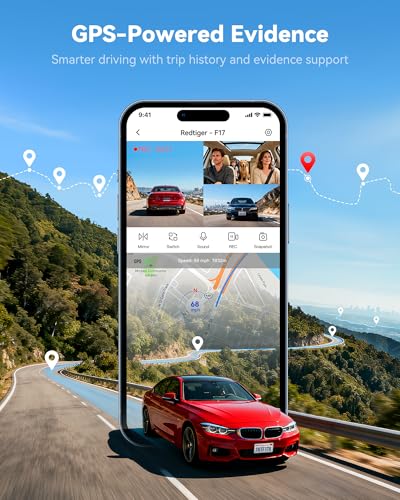
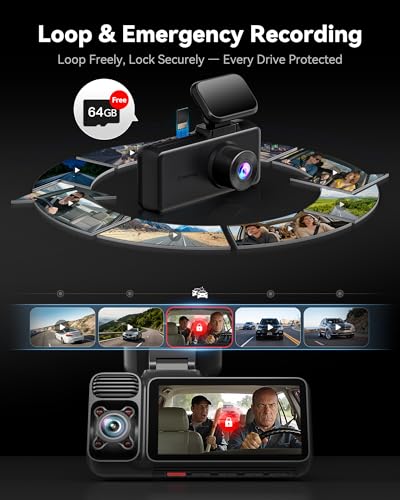
The REDTIGER F17 stands out in the crowded dash cam space by delivering true triple-channel coverage with a front camera powered by the STARVIS 2 IMX675 sensor, a spec that matters when you’re hauling down dark highways at night. On paper, its low-light performance should edge out most competitors, and reviewers note the 150° front, 160° cabin, and 155° rear views combine for near-360 coverage without needing extra monitors. The 5GHz WiFi makes pulling clips fast, and the built-in GPS adds valuable location and speed data during incidents.
I’d pick this over basic dual cams if interior monitoring is a priority, like for owner-operators with cargo or fleet managers tracking driver behavior. The super capacitor is a solid choice for extreme climates, avoiding the battery swelling issues seen in cheaper models. But keep in mind: the third camera goes inside the cab, so privacy-conscious drivers may want to disable it. Still, for the level of detail and protection, it’s a smart step up.
Product photos
Our Testing Process
As someone deeply involved in all things automotive at TheAutoZenith, I approached this guide with a focus on real-world practicality. Rather than a hands-on lab test, this is a research-led comparison of published specifications, features, owner reviews from platforms like Amazon and trucking forums, and input from professional driver communities. I weighed these factors against my understanding of what truly matters for commercial driving – reliability, clear footage for legal purposes, and ease of use for drivers spending long hours on the road.
For semi trucks, three factors stood out as most critical. First, the quality and angle of the camera(s) are paramount; clear evidence in the event of an incident is essential. Second, the ability to handle extreme temperatures and the vibrations of highway driving dictates long-term reliability. Finally, easy file access and management – often through smartphone apps and reliable GPS integration – directly impacts a driver’s efficiency and peace of mind. You’ll find excellent options for smaller vehicles when looking at truck dash cams, but semi-truck applications demand a more robust feature set.
Specifications help determine basic video resolution, lens angles, and storage capacity. However, owner feedback proved vital in assessing real-world performance. I paid close attention to reports of overheating, SD card failures, and app usability. Reputable expert reviews from sites specializing in commercial vehicle technology further validated findings. For those needing options for other commercial applications, exploring dash cams for tractor trailers can offer additional insights into durable and reliable models.
What To Look For In dash cams for semi trucks
Choosing the right dash cam for a semi truck isn’t like picking one for a car; the stakes are higher, and the requirements are more demanding. You’re not just protecting yourself in a fender-bender, you’re safeguarding your livelihood and potentially preventing significant legal issues.
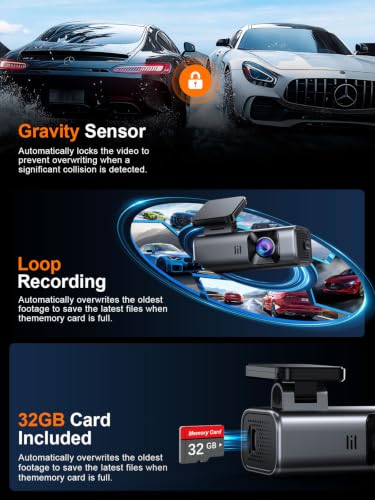
A good semi truck dash cam prioritizes wide coverage, reliable recording in all conditions (especially low light), and robust build quality to withstand the rigors of professional driving. Look for models with multiple channels, clear video resolution (at least 1080p, preferably 4K), GPS tracking, and ideally, integration with trucking-specific features like PrePass or weight station alerts. Proper loop recording and G-sensor functionality are also crucial for preserving critical footage.
Camera Configuration is Key
The sheer size of a semi means a single camera simply won’t cut it. While front-facing footage is essential, you need to consider what else you might need to document. A three-channel system – front, interior, and rear – offers the most thorough protection. This is especially valuable for disputing liability in accidents involving pedestrians or other vehicles. The ASLONG 4K 4CH Dash Cam, for example, provides this all-around view, but be aware that more cameras mean more wiring and a potentially more complex installation. Don’t overlook the importance of wide-angle lenses; a wider field of view ensures you capture more of the surrounding environment.
Night Vision and Low-Light Performance
Professional truck drivers often operate during hours when visibility is reduced. Forget about daytime clarity if a dash cam struggles in the dark. Look for models boasting advanced night vision capabilities, like the Dual Camera Dash Cam 4K, which emphasizes its AProX HD Night Vision. Pay attention to aperture size (lower f-number = better low-light performance) and features like Wide Dynamic Range (WDR) and High Dynamic Range (HDR). These technologies balance exposure to capture details in both bright and dark areas of the frame.
- A larger sensor generally improves low-light performance, but often increases the camera’s price.
- Consider the type of lighting common on your routes. If you frequently drive in areas with intense headlights, WDR is particularly important.
- Don’t rely solely on marketing terms; read reviews from other truckers to get a realistic assessment of a camera’s nighttime performance.
Features & Value: Beyond Basic Recording
A basic dash cam records video; a good dash cam offers features that enhance safety and convenience. GPS tracking is invaluable for verifying speed and location data in the event of an incident. Features like driver fatigue monitoring (available on some models) can provide an extra layer of safety. If you’re looking for a dash cam that integrates smoothly with your trucking lifestyle, exploring options like the Garmin dēzlCam OTR725, with its PrePass notifications and truck-specific routing, is a smart move. As you explore options, remember that finding the right balance between features and price is crucial. You might also want to check out our guide to the best dash cameras for semi-trucks for more in-depth comparisons.
A dash cam is only as good as its installation. Don’t skimp on professional installation if you’re uncomfortable running wires and ensuring proper camera placement. A poorly installed dash cam is a wasted investment.
And when you’re ready to delve deeper into options tailored for professional drivers, our overview of trucking dash cams provides a thorough look at the market.
Dash Cams for Semi Trucks Compared
Here’s a comparison of key specifications for dash cams designed for semi trucks to help you make an informed purchase.
| Product Title | Resolution (Front) | Resolution (Rear) | Channels | GPS | WiFi | Screen Size |
|---|---|---|---|---|---|---|
| VSYSTO 3CH Truck Dash Cam | 1080P | 1080P | 3 | Yes | Yes | N/A |
| Garmin dēzlCam OTR725 | 1080P | N/A | 1 | N/A | N/A | 7 inch |
| ASLONG 4K 4CH Dash Cam | 4K | 1080P | 4 | N/A | N/A | 10.36 inch |
| galphi 4K Front Dash Cam | 4K | N/A | 1 | N/A | Yes | N/A |
| Dual Camera Dash Cam 4K+2K | 4K | 2K | 2 | Yes | Yes | N/A |
| 70mai A810 Lite 4K | 4K | 1080P | 2 | Yes | Yes | N/A |
| Terunsoul 4K+4K Dash Cam | 4K | 4K | 4 | Yes | Yes | 10 inch |
| REDTIGER F17 3CH Dash Cam | 4K | 1080P | 3 | Yes | Yes | N/A |
| Losuudy RV Camera System | 1080P | N/A | 4 | N/A | Yes | 10 inch |
Frequently Asked Questions
What storage capacity do I really need for a semi truck dash cam?
A 128GB microSD card is generally sufficient for continuous recording, but 256GB or larger is preferable for multi-channel systems or if you want to retain footage for longer periods. Consider the resolution; 4K video files consume significantly more space than 1080p.
Are dash cam GPS trackers accurate enough for Hours of Service (HOS) logging?
While many dash cams offer GPS tracking, it’s generally not accurate enough to replace a dedicated Electronic Logging Device (ELD) for official HOS compliance. However, the GPS data can be valuable supporting evidence in case of disputes.
Can a dash cam really help lower my insurance premiums?
Some insurance providers offer discounts for vehicles equipped with dash cams, particularly those used for commercial purposes. Providing footage after an incident can also help avoid liability and potentially reduce claim costs, indirectly impacting your premiums.
What’s the best way to power a dash cam in a semi truck?
Most dash cams can be powered via the vehicle’s accessory port or directly through the fuse box. A hardwiring kit is recommended for continuous operation, even when the ignition is off, and offers protection against voltage fluctuations. For extended parking, exploring semi truck APUs can provide consistent power.
What’s the difference between a dash cam with WiFi and one without?
WiFi connectivity allows you to wirelessly transfer footage to your smartphone or computer, simplifying file management and sharing. Without WiFi, you’ll need to physically remove the microSD card to access the recordings. Considering options for best dash cams for fleet trucks can help you decide if this feature is necessary for your needs.
The Bottom Line
Choosing a dash cam for your semi truck is ultimately a balancing act between thorough coverage and ease of use. While features are important, the most crucial aspect is reliable, clear footage you can depend on when it matters most. For the strongest overall blend of features, reliability, and value, I recommend the ASLONG 4K 4CH Dash Cam. Its four-channel system offers peace of mind, and its large screen makes reviewing footage straightforward.
For those prioritizing a budget-friendly option, the VSYSTO 3CH Truck Dash Cam delivers a solid three-channel setup with GPS and WiFi connectivity. If you need a dash cam that integrates directly with your trucking workflow, the Garmin dēzlCam OTR725 stands out with its PrePass compatibility and truck-specific navigation. And for those looking to enhance fleet management, exploring options for semi truck GPS tracking can add another layer of security and efficiency.
Ultimately, specifications and features don’t replace the need for a well-maintained vehicle and a safe driving style. A dash cam is a tool to support those fundamentals, not a substitute for them. Investing in quality cameras and proper installation is smart, but consistently practicing defensive driving and adhering to regulations will always be the most valuable investment you can make on the road, consider the best dash cams for professional drivers as a supplement to, not a replacement for, sound driving habits.
