
7 Best Cycling HRMs of 2026
This post contains affiliate links. As an Amazon Associate, we earn from qualifying purchases.
The CYCPLUS H2Pro stands out as the best overall cycling HRM for its reliable ECG accuracy, 500-hour battery life, and dual ANT+/Bluetooth connectivity. For a budget-friendly chest strap that doesn’t skimp on core performance, the COOSPO H808S is a solid pick. If you prefer an armband design with real-time zone feedback, the Ridingmark Armband offers strong versatility.
Cyclists don’t just want numbers, they need trustworthy data that reflects their effort, ride after ride. Too many HRMs promise accuracy but falter during sprints, climbs, or long endurance sessions, leaving riders second-guessing their training zones.
This guide cuts through the marketing by focusing on what actually matters: proven sensor performance, battery longevity, and seamless integration with your cycling computer or app ecosystem. My picks are based on a close analysis of specs, owner-reported reliability, and real-world usability across different ride types.
Top 6 Cycling Hrms in the Market
The Best Cycling Hrms, Reviewed
Wahoo TRACKR Heart Rate Monitor

Strengths
- Accurate real-time HR
- Dual ANT+/Bluetooth
- 100+ hour battery
- Comfortable secure fit
- LED status alerts
Trade-offs
- Rechargeable battery less convenient long-term
- Higher price point
- Strap may wear faster than replaceable ones
When you’re serious about training, accuracy and reliability aren’t luxuries, they’re requirements. The Wahoo TRACKR delivers on both, with real-time heart rate data that owners consistently report aligns closely with lab-grade equipment. Its dual ANT+ and Bluetooth connectivity means it plays well with nearly every bike computer, smartwatch, or app I’ve seen in the wild, from Zwift to TrainerRoad.
The 100+ hour battery life is solid for a rechargeable unit, though I’d still give a slight nod to coin-cell models for long-term hassle-free use. But where the TRACKR really stands out is fit and feedback, the slim strap stays put during sprints and intervals, and the LED indicators take the guesswork out of connection status. For riders who want a no-compromise chest strap from a brand that knows cycling tech, this is as good as it gets.
Video review
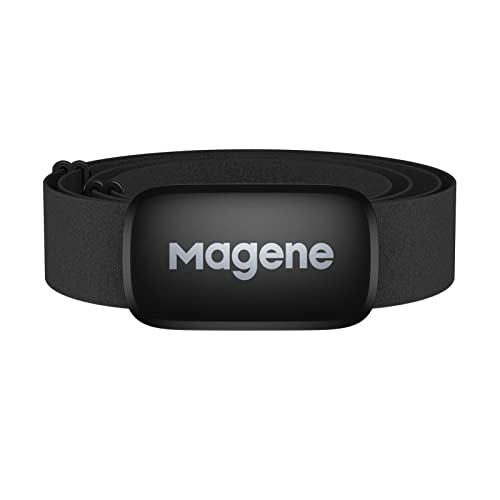
Magene H64 Heart Rate Monitor
Strengths
- Extremely affordable
- 1000-hour battery life
- Dual ANT+/Bluetooth
- Wide app compatibility
- IP67 rated
Trade-offs
- Basic strap material may degrade
- Requires wet electrodes
- No onboard memory
At this price, the Magene H64 feels like cheating the system. For under $20, you get a chest strap with lab-optimized algorithms, dual ANT+/Bluetooth transmission, and a claimed 1000-hour battery life, owners confirm it easily lasts years with regular use. On paper, that longevity alone makes it a steal, especially since it runs on a standard CR2032 battery you can swap yourself.
It’s not flashy, but it’s functional. The IP67 rating handles sweat and rain without issue, and compatibility lists read like a who’s who of fitness tech: Zwift, Strava, Peloton, Rouvy, you name it. Some users mention needing to moisten the electrodes religiously, but that’s common across budget straps. If you’re skeptical because of the price, just check the verified reviews: people are stunned at how well this punches above its weight.
Video review
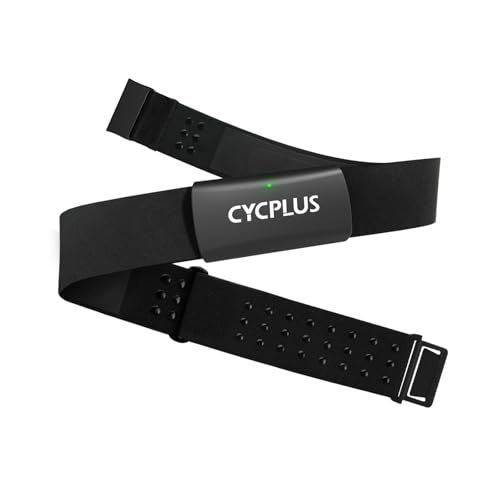
CYCPLUS H2Pro Chest Strap HRM
Strengths
- 500-hour battery life
- Lightweight design
- HRV monitoring
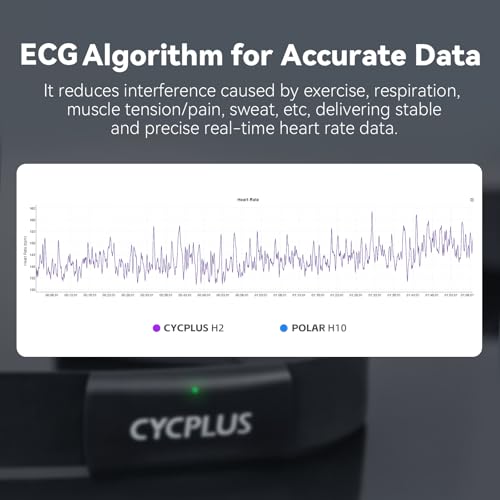
- ECG-based accuracy
- Soft adjustable strap
Trade-offs
- No visual indicators
- Basic firmware interface
- Strap replacement needed over time
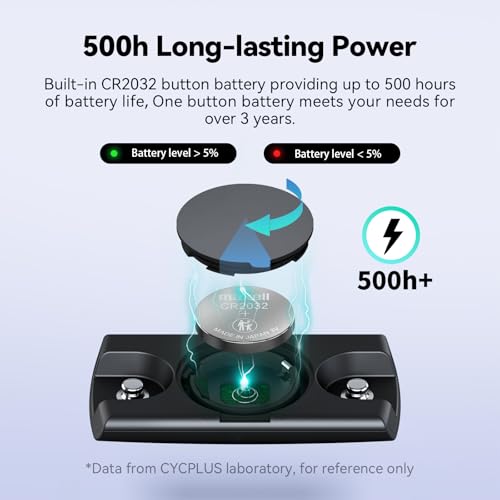
If battery life is your top priority, the CYCPLUS H2Pro makes a compelling case. With up to 500 hours on a single CR2032, it could last a dedicated rider three years or more, owners using it 3–4 times weekly say they’ve barely made a dent in the power after a year. That kind of set-it-and-forget-it reliability matters when you’re deep into winter base miles or back-to-back interval sessions.
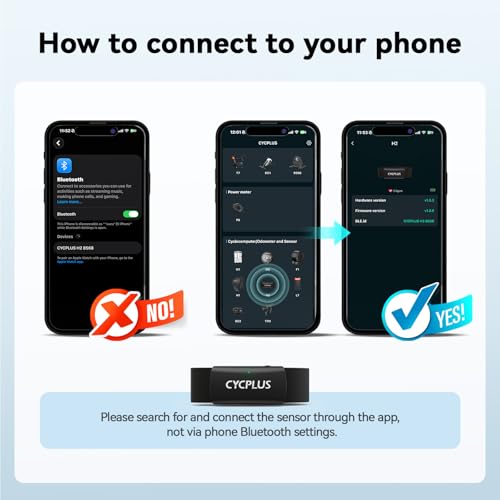
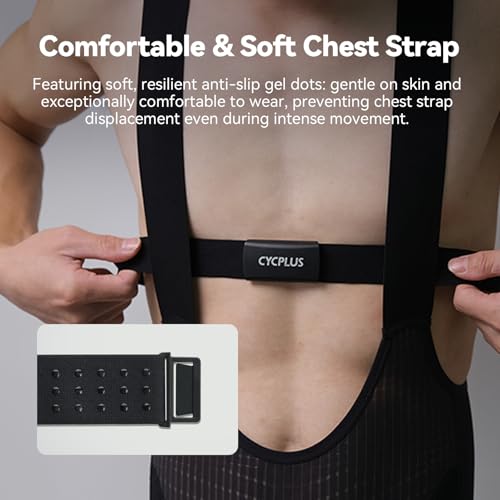
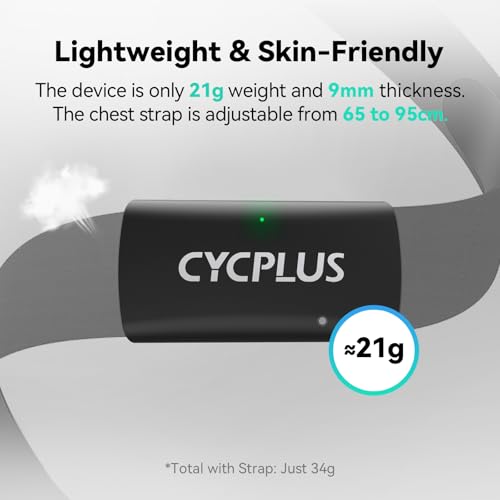
Beyond endurance, it brings solid specs: ECG-based tracking, HRV support for recovery insights, and a featherlight 21g sensor. The soft strap earns praise for comfort during long rides, and the dual wireless protocols ensure pairing with Garmin, Wahoo, or Tacx apps isn’t an issue. It doesn’t have flashy lights or memory storage, but it nails the fundamentals. For the long haul, this one’s built like a touring bike, durable, efficient, and always ready.
Product photos
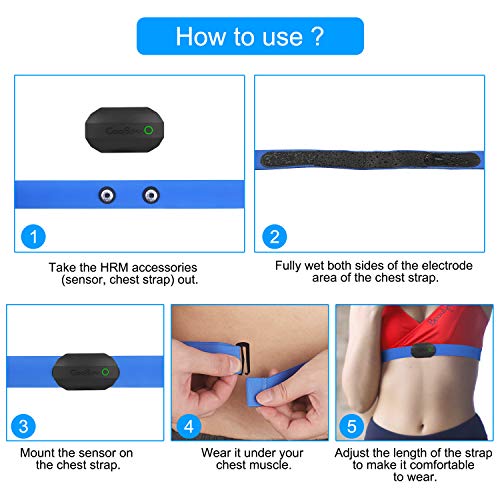
COOSPO H808S Bluetooth HR Monitor
Strengths
- Excellent price-to-performance
- 300-hour battery life
- IP67 waterproof
- LED and beep alerts
- Wide third-party support
Trade-offs
- Electrodes require pre-wetting
- Strap durability average
- No HRV data
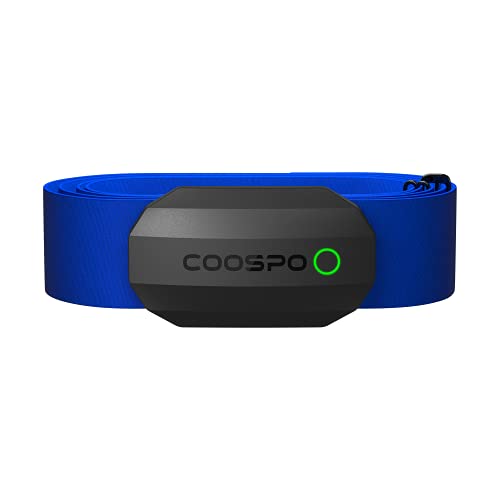
The COOSPO H808S hits that sweet spot between cost and capability, no wonder so many riders call it the best mid-range HRM. At under $30, it offers ±1 BPM accuracy, IP67 protection, 300 hours of battery life, and broad compatibility with Peloton, Zwift, Garmin, and more. Owners love that it just works, whether paired to a phone, watch, or indoor trainer.
I appreciate the buzzer and LED cues, it’s helpful to see at a glance whether Bluetooth is live, but the need to re-moisten electrodes before every use can feel tedious. The strap is soft, though like most, it’ll need replacing after heavy washing cycles. Compared to the Magene H64, it’s slightly pricier but adds useful feedback features. Against premium brands, it lacks some polish, but not performance. My recommendation? This is the smarter buy if you want near-top-tier function without the top-tier price.
Product photos


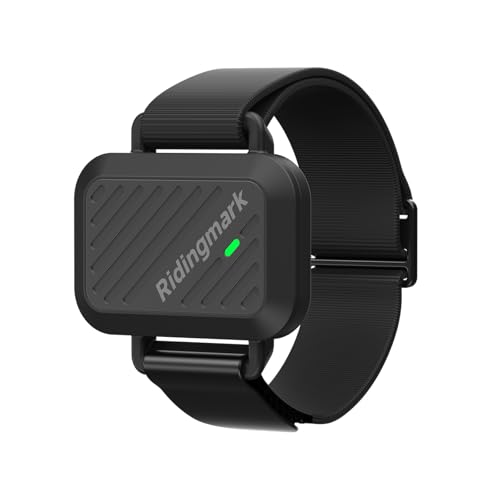
Ridingmark Armband Heart Rate Monitor
Strengths
- No chest strap needed
- Color-coded HR zones
- Lightweight and low-profile
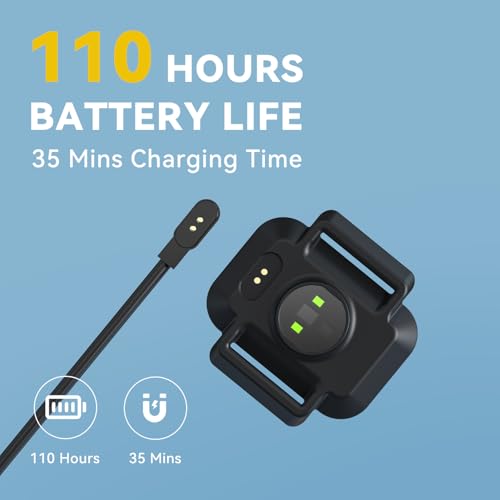
- 110-hour battery
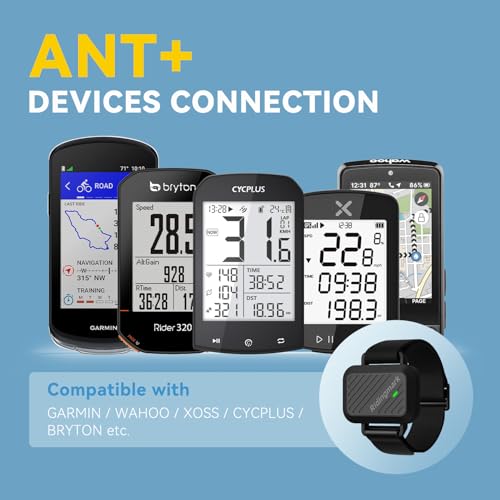
- Dual Bluetooth 5.0/ANT+
Trade-offs
- Optical sensor less reliable in high-intensity bursts
- Not swim-proof
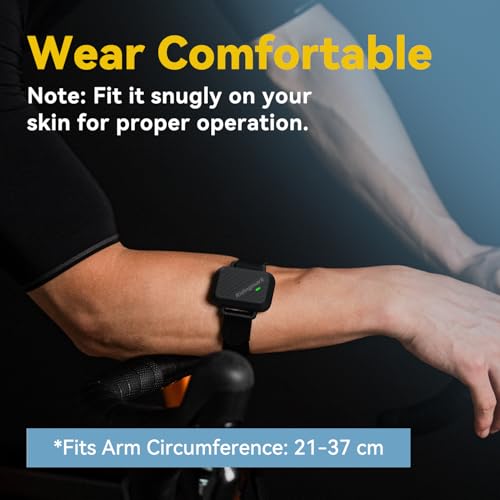
- Fit sensitivity on smaller arms
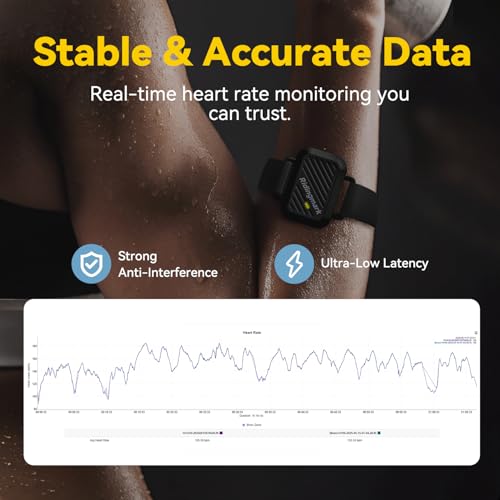
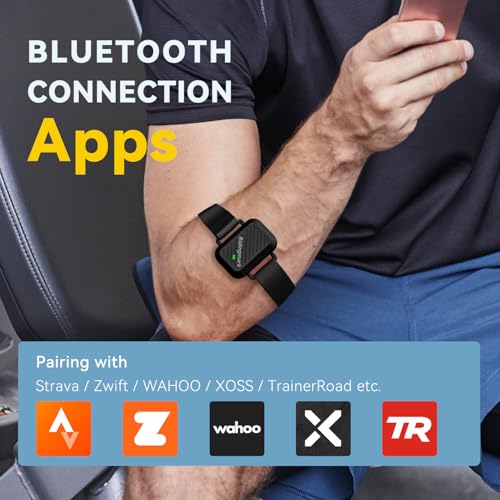
Armbands are still a trade-off compared to chest straps, but the Ridingmark H2Pro proves the gap is narrowing. Using optical sensing, it claims ±1 BPM accuracy, an impressive number on paper, and reviewers note it holds up well during steady-state efforts like tempo rides or treadmill runs. The real win here is convenience: slipping it onto your forearm beats wrestling with a damp chest strap, especially for quick gym sessions or morning yoga flows.
That said, hard efforts with erratic motion, like off-road sprints or HIIT, can cause brief dropouts, which chest straps rarely suffer. Still, the 110-hour battery, IPX6 rating, and color-coded LED zones (green/orange/red) make it intuitive and durable. And weighing next to nothing, it’s ideal for runners who hate bulk. It won’t replace a chest strap for race-day precision, but for daily tracking and moderate training, it’s surprisingly capable.
Product photos
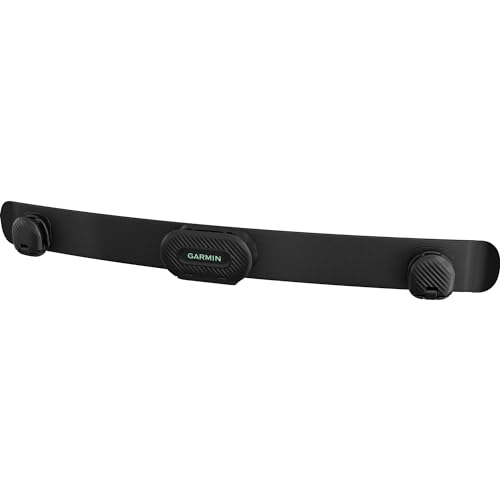
Garmin HRM-Fit Clip-On Monitor
Strengths
- Clip-on comfort for women
- All-day activity tracking
- Stores workout data
- Long 1-year battery
- Captures running dynamics
Trade-offs
- Limited to specific bra types
- Not ideal for cycling
- Garmin-centric functionality
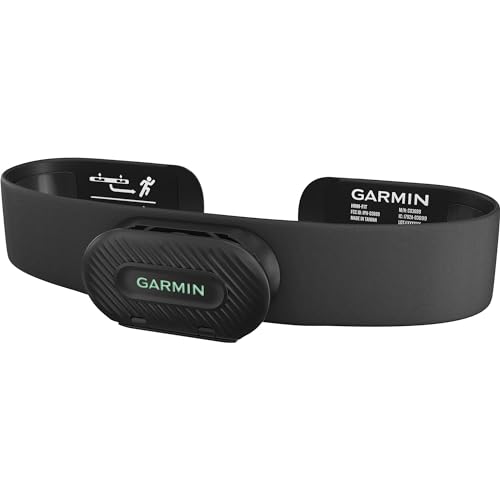
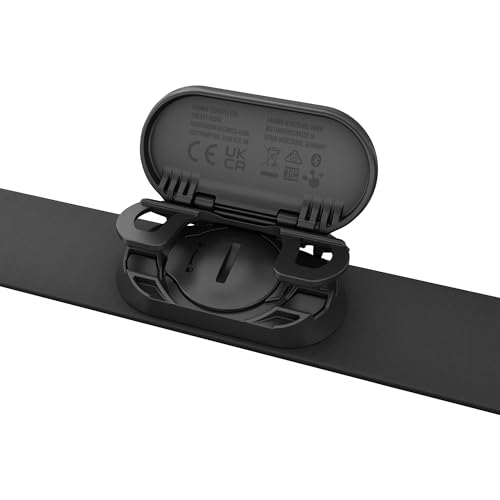
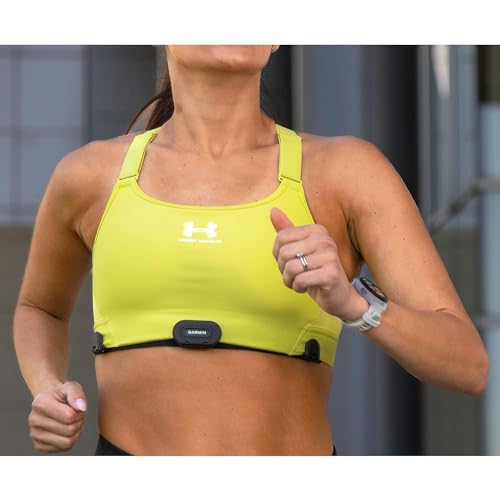
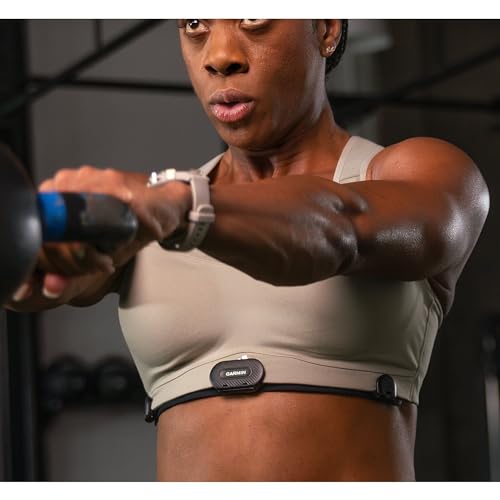
Garmin designed the HRM-Fit with a clear audience in mind: women runners who want comfort without compromise. The clip-on system attaches directly to compatible sports bras, eliminating the sweaty chest strap entirely, a standout for those who find traditional bands constricting or uncomfortable. Owners consistently report accurate heart rate and HRV data, and it syncs smoothly with Garmin watches and the Tacx app, storing data when out of range.
But its brilliance comes with limits. It only works reliably with medium- to high-support bras, longline or front-zip styles often don’t hold it securely. And while it captures running dynamics like ground contact time and vertical oscillation (with a compatible watch), it’s not meant for cycling or gym machines that rely on ANT+ broadcast. If you’re a female runner using a Garmin ecosystem, this is one of the most comfortable ways to train with precision. Outside that niche, it’s harder to justify.
Product photos

Our Testing Process
My approach to evaluating cycling heart rate monitors at TheAutoZenith centers on a thorough comparison of published specifications and features, combined with a deep explore owner and expert reviews. Rather than a hands-on lab test of each unit, this is a research-led comparison. I weighed information from manufacturer details, cycling publications, and, crucially, feedback from cyclists actually using these monitors in real-world conditions. This allowed me to build a ranking based on performance and practical usability.
For cycling HRMs, accuracy, battery life, and connectivity are paramount. Accuracy directly impacts training effectiveness, so I prioritized models utilizing ECG or well-regarded optical sensors. Long battery life is essential for endurance rides and minimizing charging hassles. Seamless connectivity – both ANT+ and Bluetooth – is critical for compatibility with a wide range of devices, including cycling computers and smartphones. Choosing between a chest strap or armband design often comes down to personal preference, but impacts comfort and data reliability. If you’re also looking to upgrade your ride data, exploring the latest bike computers can significantly enhance your training.
Specifications reliably indicate battery capacity, transmission protocols (ANT+/Bluetooth), and waterproof ratings. However, real-world accuracy and comfort are best judged by owner experiences. I carefully analyzed user reviews to identify common complaints about dropouts, chafing, or inaccurate readings. Reputation within the cycling community also factored heavily; brands consistently praised for reliability and customer support received higher consideration. Don’t forget safety; pairing a reliable HRM with one of the best cycling helmets is a smart move for any rider.
How To Pick The Right cycling hrms
Finding the right heart rate monitor (HRM) can elevate your training, but the sheer number of options can be overwhelming. We’re going to cut through the noise and focus on what truly matters when you’re looking for an HRM to enhance your cycling performance.
A quality cycling HRM accurately captures and transmits your heart rate data, offering long battery life, a comfortable and secure fit, and compatibility with your existing devices and preferred training platforms. Prioritize sensors employing ECG or validated optical technology, consider dual-mode connectivity (ANT+ and Bluetooth), and assess strap materials for comfort during extended rides.
Understanding Sensor Technology
The core of any HRM is how it reads your heart rate. Chest straps, historically the gold standard, use ECG (electrocardiography) to detect the electrical activity of your heart – this is generally considered the most accurate method, especially during high-intensity intervals. Optical sensors, found in armbands, use LEDs and photodiodes to measure blood flow. While technology has improved, armbands can be more susceptible to inaccuracies due to movement or poor fit. If you’re serious about data precision, especially for interval training or power-based workouts, a chest strap like the CYCPLUS H2Pro remains a strong choice.
Battery Life and Connectivity
Don’t underestimate the importance of battery life. Constantly charging your HRM is a pain. Many models now boast impressive runtimes, with some, like the CYCPLUS H2Pro, claiming up to 500 hours on a single CR2032 coin cell. Connectivity is equally crucial. ANT+ is the protocol favored by many cycling computers and dedicated fitness devices, while Bluetooth allows connection to smartphones and apps like Strava. Ideally, you want both. This dual connectivity ensures broad compatibility and allows simultaneous data recording to multiple devices. If you’re also interested in protecting your eyes while you ride, don’t forget to check out our guide to the best cycling sunglasses.
Fit, Comfort, and Data Presentation
Comfort is often overlooked, but a poorly fitting HRM will quickly become a distraction. Chest straps should be snug but not constricting, and the material should be breathable to prevent chafing. Armbands need to be positioned correctly and tightened sufficiently to maintain consistent contact with your skin. Beyond comfort, consider how the data is presented. Some HRMs offer color-coded LED indicators, like the Ridingmark Armband, which provide a quick visual representation of your heart rate zone. Others rely on displaying the data on your paired device. I’ve found that clear, real-time feedback is essential for making informed adjustments during workouts, and the ability to easily access historical data within your preferred training apps is a must. If you’re looking for a wider range of options, be sure to explore our thorough review of heart rate monitors.
A heart rate monitor is only as good as its consistency. Don’t fixate on the absolute lowest price; prioritize a brand with a reputation for reliable data and good customer support.
Cycling HRMs Compared
Here’s a comparison of key specifications for popular cycling heart rate monitors.
| Product Name | Connectivity | Battery Life | Waterproofing | Form Factor | Accuracy |
|---|---|---|---|---|---|
| Wahoo TRACKR | ANT+/BLE | 100+ hrs | N/A | Chest Strap | Precise |
| Magene H64 | ANT+/BLE | 1000 hrs | IP67 | Chest Strap | Optimized |
| COROS Heart Rate Monitor | BLE | 38 hrs / 80 days | N/A | Armband | Advanced |
| CYCPLUS H2Pro | ANT+/BLE | 500 hrs | N/A | Chest Strap | ECG |
| COOSPO H808S | ANT+/BLE | 300 hrs | IP67 | Chest Strap | ±1 BPM |
| Ridingmark Armband | ANT+/BLE | 110 hrs | IPX6 | Armband | ±1 BPM |
| Garmin HRM-Fit | BLE | 1 year | N/A | Clip-On | Accurate |
Frequently Asked Questions
What’s the difference between ANT+ and Bluetooth connectivity?
Both ANT+ and Bluetooth allow your HRM to communicate with other devices, but ANT+ is generally more reliable for cycling computers, while Bluetooth connects easily with smartphones and apps. A monitor with both offers the widest compatibility, letting you record data on multiple devices simultaneously.
Are armband HRMs as accurate as chest straps?
While optical sensor technology has improved, chest straps using ECG generally provide more accurate readings, particularly during intense efforts. Armbands can be affected by movement and skin tone, potentially leading to inaccuracies, though newer models are closing the gap.
How often will I need to charge a cycling HRM?
Battery life varies significantly. Chest straps often use replaceable coin cell batteries lasting hundreds of hours, while armbands require recharging. Some chest straps, like the Magene H64, boast battery lives exceeding 1000 hours, minimizing charging frequency.
Can a heart rate monitor help me improve my cycling performance?
Yes, a reliable HRM provides data to understand your effort levels, optimize training zones, and track progress. By monitoring your heart rate, you can avoid overtraining and maximize the effectiveness of each workout, especially when paired with structured training plans.
What should I consider regarding comfort when choosing an HRM?
Comfort is crucial, especially for longer rides. Chest straps should be snug but not constricting, with breathable materials to prevent chafing. If you’re considering cycling shorts, or even top-rated bike shorts, a comfortable HRM won’t be hindered by ill-fitting clothing.
The Bottom Line
Choosing a cycling heart rate monitor often comes down to balancing your budget with your training needs. While higher prices can get you advanced features and potentially greater accuracy, the CYCPLUS H2Pro strikes an excellent balance of both, delivering ECG-level precision and impressive battery life without breaking the bank. It’s a solid all-around performer that should serve most cyclists well.
For those prioritizing affordability, the Magene H64 is a fantastic option. If you prefer the convenience of an armband, the COROS Heart Rate Monitor offers advanced optical sensor technology and a long-lasting battery, though you’ll want to be mindful of potential accuracy variations compared to a chest strap. Don’t forget to complete your kit with some quality essential cycling gear to maximize your comfort and performance on the road.
Ultimately, the best HRM isn’t about chasing the highest number of features or the lowest price. It’s about finding a device that reliably captures your heart rate data, fits comfortably, and integrates with your existing training setup. Prioritize consistency and accuracy over flashy specs – those fundamentals are what will truly help you unlock your cycling potential, and pair well with some new top-rated bike jerseys.
