
8 Best Cycle Roof Racks of 2026
This post contains affiliate links. As an Amazon Associate, we earn from qualifying purchases.
The Thule ProRide XT is the best overall cycle roof rack for its secure fit, broad compatibility, and durable build. For a budget-friendly option that still performs well, the Swagman Upright Roof Mount Rack stands out. If you regularly haul different bike types, the GATHERSKY Dual-Arm Rooftop offers unmatched versatility.
Hauling a bike on your roof shouldn’t mean risking damage to the frame or stressing over loose hardware halfway to the trailhead. Too many racks promise security but fall short when it matters.
This guide cuts through the noise by focusing on real owner experiences, material quality, and how well each model protects your bike. I looked at mounting style, compatibility with common roof systems, and long-term durability, so you can choose with confidence.
Top 8 Cycle Roof Racks in the Market
The Best Cycle Roof Racks, Reviewed
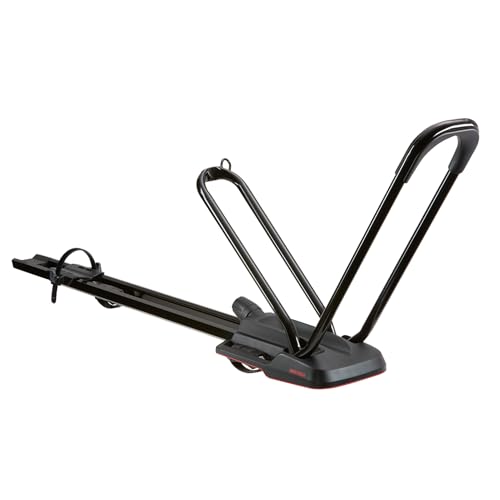
Yakima HighRoad Upright Bike Mount
Strengths
- Fits long wheelbases
- Low-profile design
- Universal fit
Trade-offs
- No lock included
- High price
- Sold separately
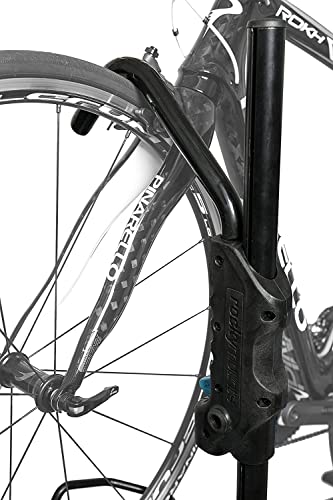
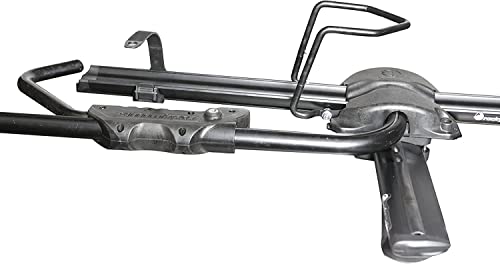
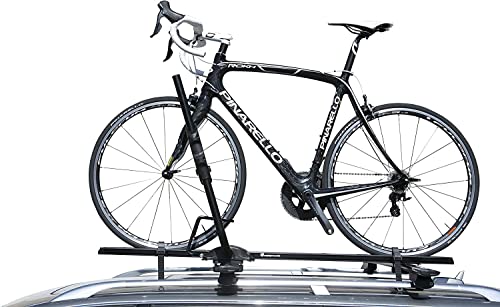
This is the one I’d take home if budget weren’t an issue. The Yakima Highroad supports wheelbases up to 52″, which means it handles long-tail commuters and full-suspension mountain bikes better than almost any other upright rack here. Its tool-free universal fit works across square, aero, and factory bars, and the low-profile tray reduces hatch interference, a real pain point with bulkier models.
Owners praise how smoothly it integrates with existing Yakima systems, but even non-Yakima users find it adaptable thanks to the 18″–40″ crossbar spread range. While it lacks built-in locks, the option to add SKS security is a big plus for urban riders. It’s expensive, yes, but it earns its place as the most complete package.
Video review
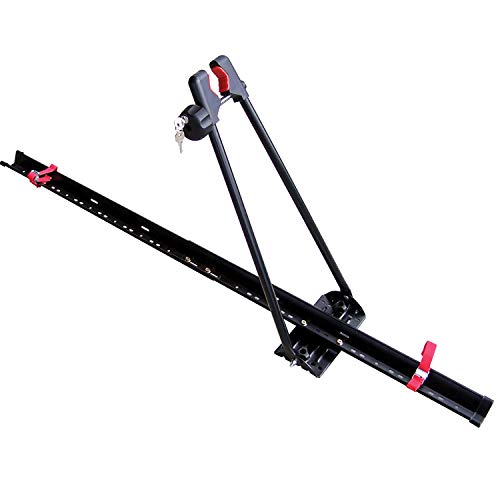
Swagman Upright Roof Mount Rack
Strengths
- Low cost
- Fits most bars
- Lightweight design
Trade-offs
- 35 lb weight limit
- Plastic parts
- Basic straps
At this price, you’re not getting frills, but you are getting function. The Swagman Upright is barebones but effective, plastic-and-steel construction keeps it light, and the 35 lb capacity is enough for most standard bikes. It installs quickly on square, round, or oval bars, and the included straps offer basic peace of mind.
But it’s the lowest capacity here, and the plastic components feel less durable than metal alternatives. Long-term owners report cracking in extreme temperatures, and the lack of ratcheting arms means more manual strap tensioning. Still, for occasional use or as a backup, it’s hard to beat the value. Just don’t expect it to last a decade.
Video review
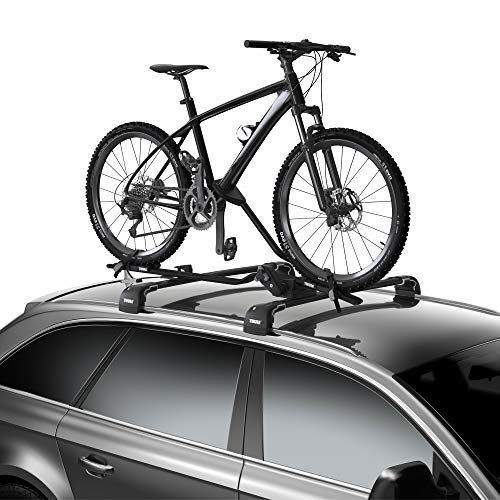
Thule ProRide XT Roof Bike Rack
Strengths
- Frame protection
- Auto-positioning
- Lock-ready
Trade-offs
- Heavy
- Expensive
- Locks sold separately
Thule’s reputation isn’t just marketing, this rack proves it. The ProRide XT uses a soft claw system that automatically centers the bike, reducing wobble and frame stress. The mounting dial lets you control clamping force precisely, which I appreciate for carbon frames. It’s also one of the few here that locks both bike and rack (with add-ons), a must for city dwellers or long trips.
It’s heavy at 11 lbs, and the price is steep, but it’s built to integrate smoothly with Thule’s ecosystem. If you already have Thule crossbars, this is the logical upgrade. Even non-Thule users benefit from the broad factory rack compatibility. It’s not the cheapest, but it’s the one I’d trust with a $4,000 gravel bike.
Product photos


GATHERSKY Dual-Arm Rooftop Bike Carrier

Strengths
- Corrosion-resistant build
- Wide crossbar fit
- 50 lb capacity
Trade-offs
- Slightly heavier
- No lock included
- Folding arms need care
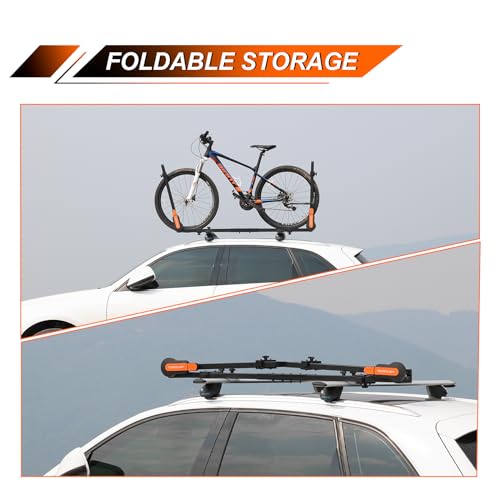
I appreciate how this rack balances durability and adaptability. The use of black aluminum and thickened powder-coated steel gives it real resistance to rust, which matters if you’re in a humid or coastal area, something cheaper steel racks can’t match. Owners confirm it holds up well over seasons of use, and the folding arms make storage less of a hassle when not in use.
Its compatibility range is one of the broadest here, supporting crossbar spreads from 19.68″ to 47.25″, which means it fits more vehicles out of the box than the TOOENJOY or Upright Roof Mount models. The 50 lb capacity also edges out most rivals, making it a smarter pick for heavier commuters or e-bikes. While it doesn’t have the premium branding of Thule or RockyMounts, it performs like one.
Product photos
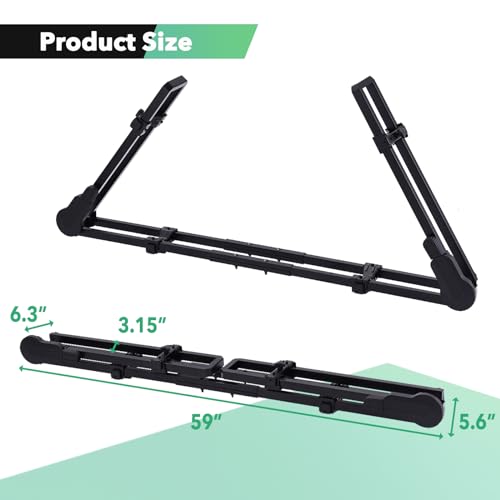
Upright Roof Bike Rack Mount
Strengths
- Double-lock security
- Rust-resistant coating
- Tool-free adjustment
Trade-offs
- No 29″ wheel support
- Narrow crossbar range
- Not for fendered bikes
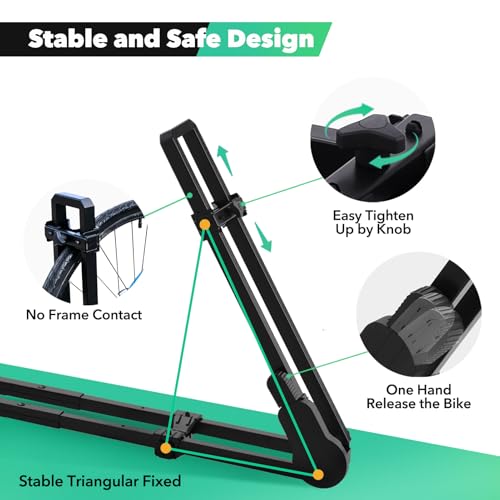
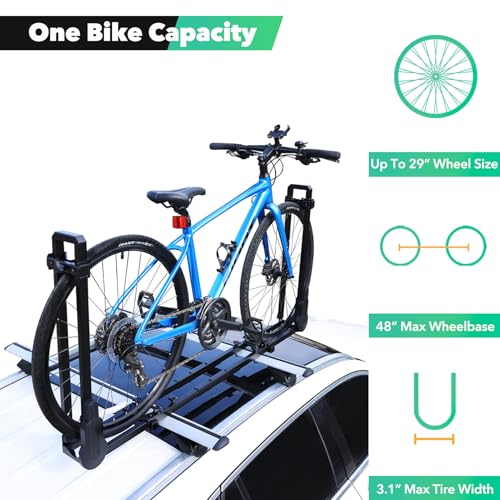
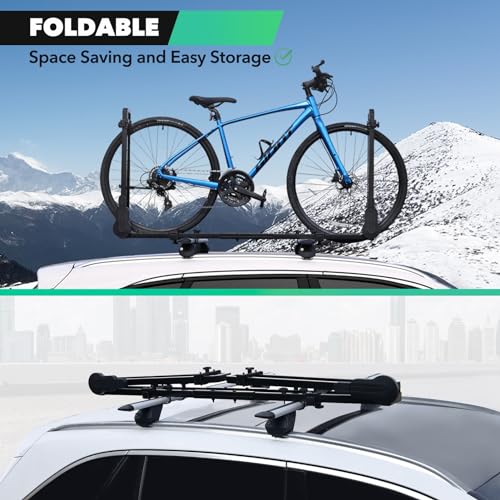
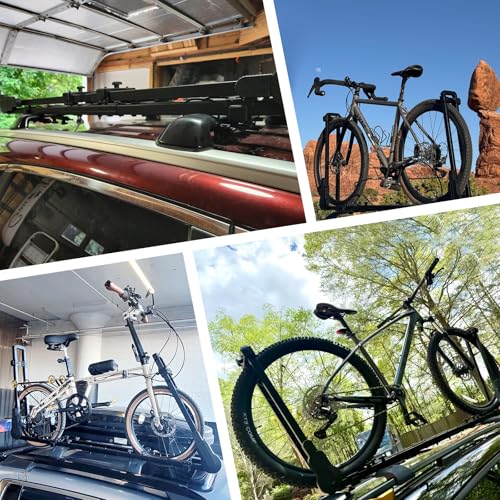
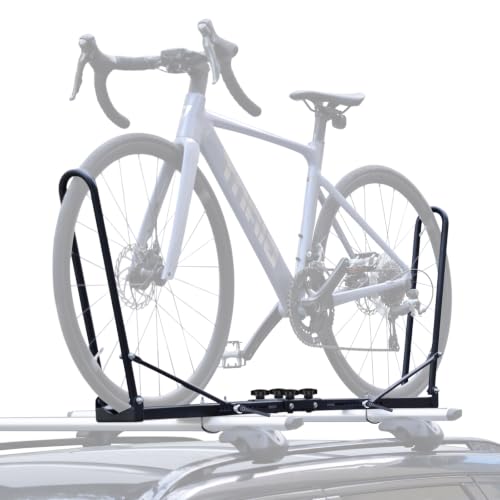
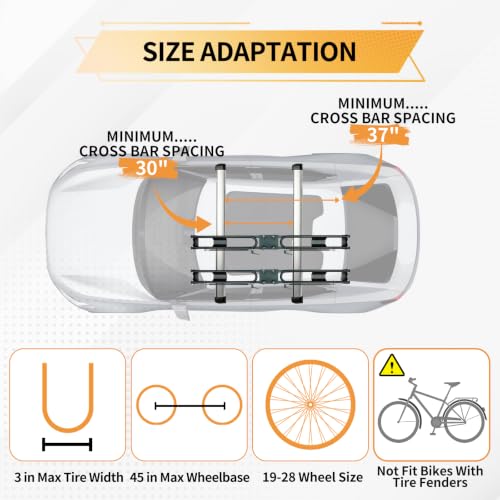
The double-lock system here, featuring a serrated slide rail and tightening knob, sounds impressive on paper, and reviewers say it does prevent accidental release better than basic ratchet systems. That added security makes sense for high-speed highway drives, but it comes at the cost of versatility. The exclusion of 29″ wheels is a real limitation, especially since many modern mountain bikes use that standard.
It’s built tough with synthetic steel and anti-rust coating, but the rigid crossbar spacing requirement (32″–37″) knocks it out of contention for many factory racks. Compared to the GATHERSKY or Yakima, it’s less forgiving. I’d only recommend this if you prioritize mechanical security over adaptability and already know your crossbars fit the narrow window.
Product photos
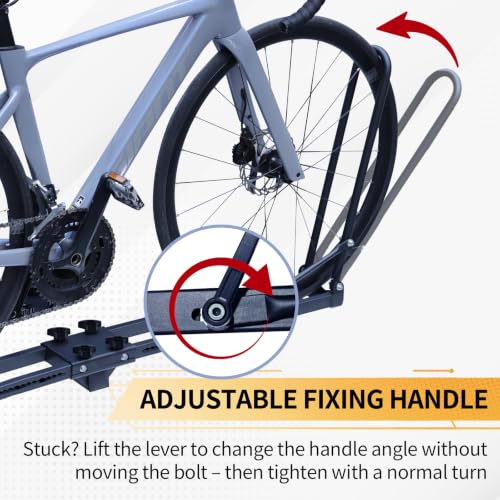
Swagman Standard Fork Mount Rack
Strengths
- Fork-mounted stability
- Fits round bars
- No tools needed
Trade-offs
- Requires wheel removal
- 9mm QR only
- No fat tire support
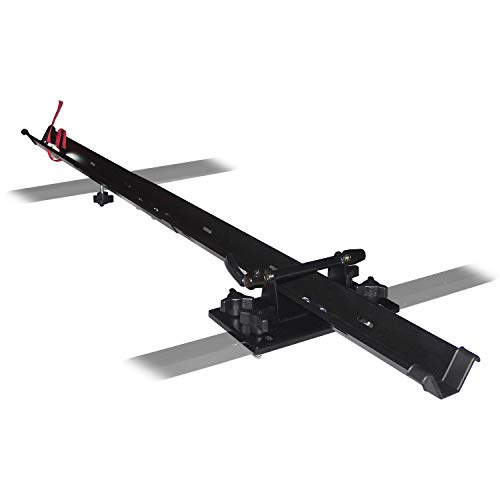
This is a niche player, and it knows it. If your bike has a 9mm quick release front fork, this rack makes for a rock-solid mount, fork-based systems like this are inherently stiffer than wheel cradles. The included skewer adds security, and setup is genuinely tool-free and fast. But that’s the catch: it only works if you’re willing to remove the front wheel, which isn’t ideal for commuters or families in a hurry.
It’s also one of the few here that fits round bars without adapters. That versatility helps, but the lack of support for thru-axle or fat-tire bikes limits its appeal. I’d pick this only if you’re a solo rider with a quick-release road bike and value speed and rigidity over convenience.
Product photos


RockyMounts Tomahawk Upright Roof Rack

Strengths
- Fat bike ready
- Easy-Load straps
- Swingarm flexibility
Trade-offs
- No fender clearance
- Higher price
- No lock included
If you ride a fat bike, this is the rack you’ve been waiting for. The Tomahawk handles tires up to 5″ wide out of the box, and the included strap extensions mean you won’t need add-ons. That’s rare, most racks max out at 3″. The swingarm design lets you switch sides easily, which is great for loading near curbs or avoiding traffic.
Owners consistently highlight the Easy-Load straps as a standout for solo riders, and the build quality lives up to RockyMounts’ reputation. It’s compatible with all crossbar types, including factory rails, and holds bikes from 20″ to 29″ wheels. The only downside? It’s not for bikes with front fenders. But if you’re hauling a Surly Pugsley or a winter fat-tire rig, this is the one.
Product photos

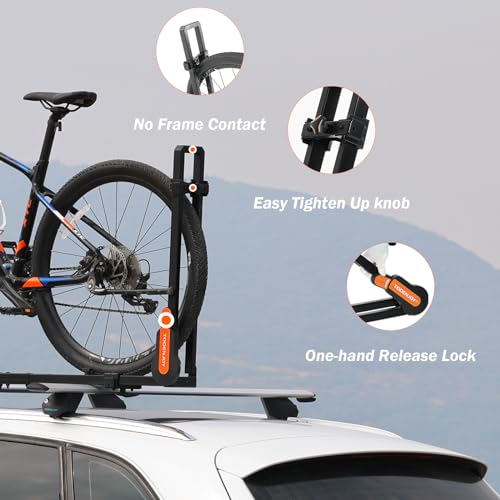
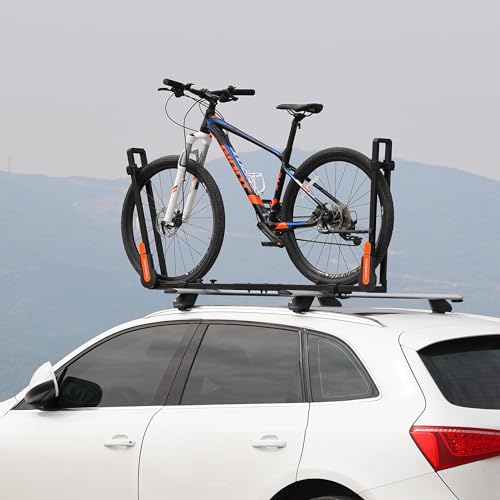
TOOENJOY Upright Roof Mount Rack
Strengths
- Dual ratchet locks
- No frame contact
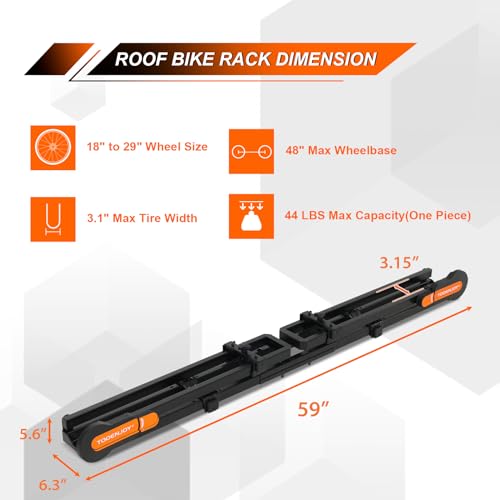
- Fits 18–29″ wheels
Trade-offs
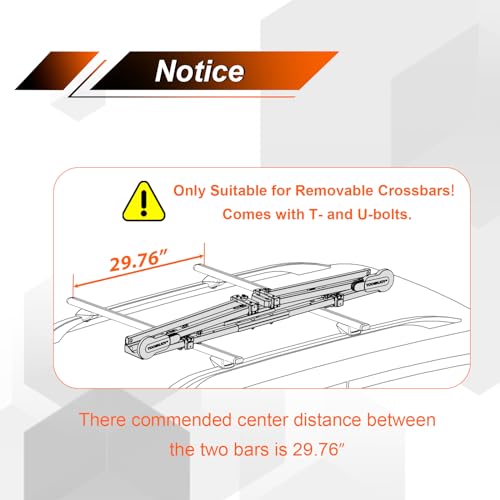
- Strict crossbar spacing
- Not for 29″ fat tires
- Max 44 lbs
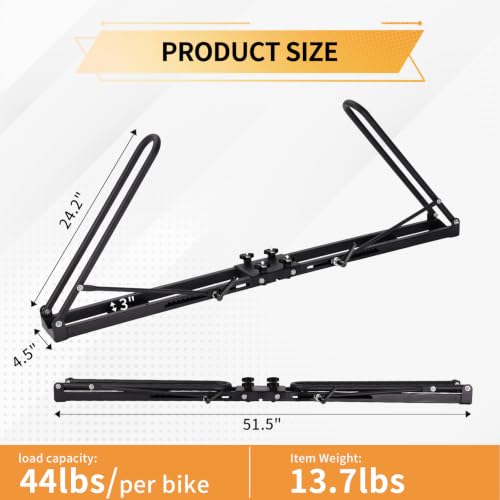
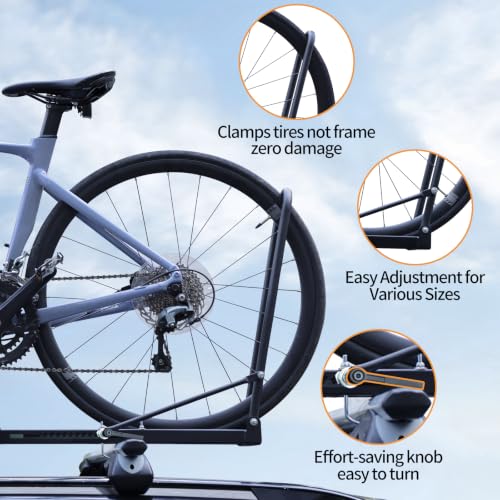
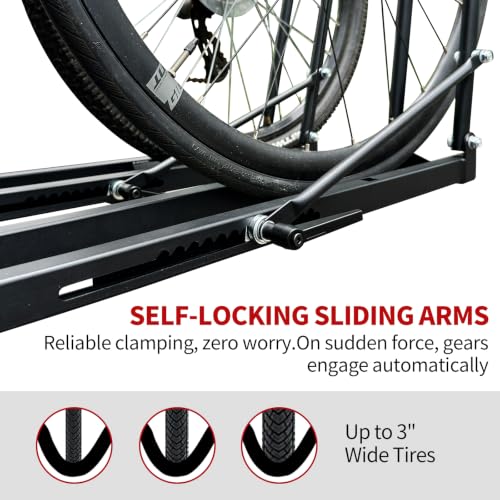
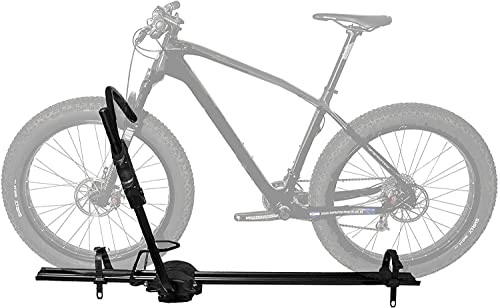
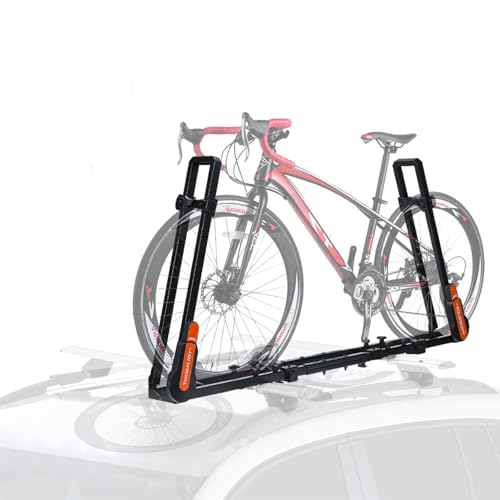
This rack delivers solid protection with its dual-arm wheel grip system, which keeps the frame untouched, ideal for anyone worried about scratching a prized finish. Owners consistently report that the ratchet lock system is intuitive and secure, though some note it requires careful alignment during first use to avoid binding. The 44 lb weight limit is standard, but the requirement for a very specific crossbar spacing (29.76″) limits flexibility compared to more adaptable designs.
On paper, the build looks durable with its coated metal and ABS components, but long-term corrosion resistance isn’t as strong as aluminum-based competitors like GATHERSKY. It’s a decent mid-tier option, but not the one I’d reach for if I were regularly hauling heavier e-bikes or riding in coastal environments.
Product photos
How We Chose These cycle roof racks
My approach at TheAutoZenith is always to combine detailed specifications with real-world owner experiences. Rather than a hands-on lab test of each rack, this selection is a research-led comparison of published features and owner feedback. I compared mounting mechanisms, weight capacities, materials, and compatibility across numerous models, then weighed that against what current owners are saying about ease of use, security, and long-term durability. This allowed me to build a picture of which racks consistently deliver on their promises.
For cycle roof racks, three factors stood out as most important. First, secure bike mounting – avoiding frame contact is crucial, especially for more expensive bikes. Second, compatibility with a wide range of vehicle roof systems and bike types is essential. Finally, the ease of loading and unloading the bike significantly impacts usability, making a difference on every trip. A good rack shouldn’t add stress to the start or end of a ride. If you’re also considering other options, exploring broader options like car bike racks can be helpful.
Specifications reliably indicate weight capacity and crossbar compatibility. However, owner feedback proved essential for understanding real-world ease of installation, how well the locking mechanisms hold up over time, and whether the racks truly deliver on claims of frame protection. Reputation and longevity are key; a well-regarded brand with a history of quality, like those offering compatible SUV roof racks, often translates to a more reliable product.
Choosing The Right cycle roof racks
Picking the right cycle roof rack isn’t just about strapping a bike to your car; it’s about protecting your investment and enjoying the freedom to explore new roads.
A quality cycle roof rack prioritizes bike security through robust locking mechanisms and frame-friendly contact points. Look for models offering wheel-based support to avoid damaging expensive frames, especially carbon fiber. Compatibility with your vehicle’s existing roof rack system and ease of use are also critical considerations, alongside weight capacity and overall durability.
Fork vs. Wheel Mounting
The fundamental decision revolves around how the rack secures the bike. Fork-mount racks, like the Swagman Standard Fork Mount Rack, require removing the front wheel and clamping the fork. While secure, this isn’t ideal for everyone. Wheel-mount racks, on the other hand – seen in options like the Yakima HighRoad – grip the wheels, leaving the frame untouched. This is a huge benefit for bikes with delicate paint jobs or carbon frames. Consider your bike type and how frequently you plan to install and remove it.
- If you have a quick-release skewer on your front wheel, a fork mount is relatively easy.
- For bikes with integrated handlebars or complex front-end setups, wheel mounting is often simpler.
- If you frequently swap bikes on the rack, the convenience of wheel mounting outweighs the slightly lower security (though good wheel-mount racks still offer robust straps).
Material and Durability
Roof racks live a harsh life exposed to the elements. Cheaper racks made from thinner steel or plastic are prone to rust and cracking. Look for racks constructed from aluminum and powder-coated steel, like the GATHERSKY Dual-Arm Rooftop Bike Carrier, as these materials offer superior corrosion resistance and longevity. A rack’s weight capacity is also a good indicator of build quality; don’t skimp here, especially if you plan on hauling heavier e-bikes or downhill machines. Before buying, read reviews to see how well a rack holds up to long-term use. You might also want to explore other options for car roof racks if you’re looking for a complete system.
Security and Compatibility
Beyond keeping your bike from moving during transit, security against theft is paramount. Many racks, like the Upright Roof Bike Rack Mount, feature dual-lock systems, securing both the bike to the rack and the rack to your vehicle. These are a worthwhile investment. Equally important is compatibility. Not all racks fit all roof bike racks. Check the manufacturer’s specifications carefully to ensure the rack will work with your existing crossbars – specifically, the width and shape. The Thule ProRide XT, for instance, is designed to integrate smoothly with Thule rack systems, but also works with many factory racks.
A good rule of thumb: always double-check the fit before a long trip. Even a properly installed rack can loosen over time, so make it a habit to inspect the mounting hardware before each drive.
Cycle Roof Racks Compared
Here’s a comparison of key specifications for several cycle roof racks to help you make an informed decision.
| Product Title | Max Bike Weight (lbs) | Wheel Size Compatibility | Tire Width (in) | Crossbar Type Compatibility | Security Features |
|---|---|---|---|---|---|
| Yakima HighRoad | N/A | N/A | N/A | Square, Round, Oval | Lock Compatible |
| Swagman Upright Roof Mount Rack | 35 | Up to 29″ | Up to 3 | Square, Round, Oval | Tie Downs, Locking Feature |
| Thule ProRide XT | 44 | N/A | N/A | Thule & Most Factory | Lock Compatible |
| GATHERSKY Dual-Arm Rooftop | 50 | Up to 29″ | Up to 3.1 | Square, Round, Aero | Pivoting Arms |
| Upright Roof Bike Rack Mount | 44 | 21-28″ | Up to 3 | Square, Aero, Factory | Dual-Lock System |
| Swagman Standard Fork Mount Rack | N/A | N/A | N/A | Square, Round, Oval | 9mm Quick Release Skewers |
| RockyMounts Tomahawk | N/A | 20-29″ (no fenders) | Up to 5 | All Types | Wheel Straps |
| TOOENJOY Upright Roof Mount Rack | 44 | 18-29″ | Up to 3.1 | N/A | Ratchet Locks |
Frequently Asked Questions
What’s the biggest drawback of using a roof rack compared to other options?
Roof racks increase your vehicle’s overall height, which can be a concern for garages, parking structures, and fuel economy. While a convenient way to transport bikes, be mindful of added height and potential drag when traveling.
Are fork-mount racks safe for carbon fiber bikes?
Generally, no. Fork-mount racks clamp directly onto the fork, and the pressure can potentially damage a carbon fiber fork over time. Wheel-mount racks are almost always preferred for carbon frames to avoid any risk of compression or scratching.
How much weight can a typical cycle roof rack hold?
Most quality cycle roof racks are rated to hold between 35 and 50 pounds per bike. However, always check the manufacturer’s specifications and consider your bike’s actual weight, especially with e-bikes becoming more common.
Will any roof rack work with my vehicle?
Not necessarily. Compatibility depends on whether your vehicle has factory crossbars or requires an aftermarket roof rack system. Before purchasing, confirm the rack’s compatibility with your vehicle’s roof type and the width between the crossbars. You can find a thorough cycle rack guide to help with this.
What security features should I look for in a cycle roof rack?
Look for racks with integrated locking systems that secure both the bike to the rack and the rack to your vehicle. While no system is foolproof, a dual-lock setup provides a significant deterrent against theft and offers peace of mind, especially when leaving your vehicle unattended. Consider exploring other options like vehicle bicycle carriers if security is a major concern.
The Bottom Line
Choosing a cycle roof rack often comes down to balancing convenience with security and long-term durability. While many options exist, the Yakima HighRoad consistently stands out as a well-rounded choice, offering a solid blend of ease of use, broad compatibility, and a reputation for reliability. It’s a great starting point for most cyclists looking to transport their bikes safely.
If you’re on a tighter budget, the TOOENJOY Upright Roof Mount Rack provides excellent value without sacrificing essential features like secure locking mechanisms. For those needing maximum versatility, perhaps you switch between road bikes and mountain bikes frequently, the GATHERSKY Dual-Arm Rooftop Bike Carrier’s adjustable arms and wide tire compatibility make it a compelling option. Don’t forget to check out our guides to best bike racks for even more options.
Ultimately, the most important factors aren’t the flashiest features or highest weight capacity. Focus on a rack that securely holds your bike, fits your vehicle’s roof, and is easy enough to use that you’ll actually use it. And remember, a secure attachment to your vehicle is just as vital as a secure hold on the bike itself – consider exploring SUV bike racks if that’s your vehicle type.
