
2 Best Cutoff Wheels of 2026
This post contains affiliate links. As an Amazon Associate, we earn from qualifying purchases.
The VOISEN 100-Pack 4-1/2″ Cut Off Wheels stand out as the overall best choice for most users, offering solid performance, high quantity, and reliable aluminum oxide abrasives. For those watching their budget, the FOXBC 4-1/2″ 50-Pack delivers a capable cut at a lower price point, making it our top value pick.
If you’ve ever had a cutoff wheel shatter mid-cut or wear down too fast, you know how frustrating it is to lose time and momentum. The wrong wheel can turn a simple job into a safety risk or a weekend project into a weeklong chore.
After researching specs and sifting through owner feedback, I focused on what matters: abrasive quality, reinforcement, and real-world durability. This guide breaks down the top performers based on consistent data and user experience, so you can pick the right wheel for your grinder and your work.
Top 2 Cutoff Wheels in the Market
The Best Cutoff Wheels, Reviewed
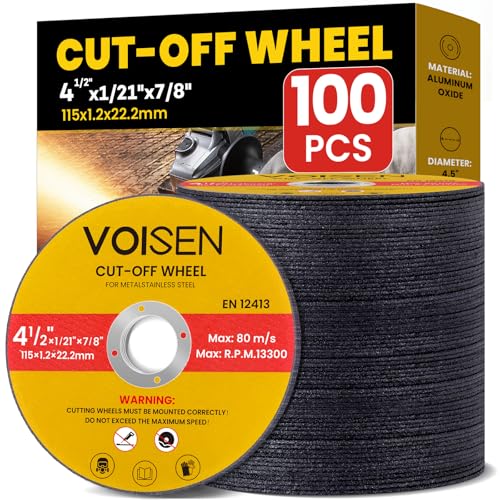
VOISEN 100-Pack 4-1/2″ Cut Off Wheels
Strengths
- 100-piece pack
- Ultra-thin kerf
- Double fiberglass mesh
- Long cutting life
- High RPM rating
Trade-offs
- Not ideal for heavy-duty grinding
- Less aggressive on thick steel
For anyone running through cutoff wheels like they’re going out of style, the VOISEN 100-pack stands out on paper and in owner feedback. The ultra-thin 1/21-inch profile isn’t just a spec gimmick, it translates to noticeably less material waste and smoother cuts, especially on stainless and carbon steel. With a 13,300 RPM rating and double fiberglass mesh, these are built to last longer than generic discs, and reviewers consistently report fewer breakages even under repeated use.
The use of proprietary aluminum oxide grain seems to deliver on the promise of faster cutting and extended life. Compared to basic single-mesh wheels, these hold up better over time, and the sheer volume in this pack makes it a smart buy for weekend warriors or pros doing repetitive metalwork. It’s not the thickest disc out there, but that’s the point, precision and efficiency are the priorities here.
Video review
FOXBC 4-1/2″ 50-Pack Cut Off Wheels

Strengths
- Double fiberglass reinforcement
- 0.045-inch durability
- High RPM tolerance
- Clean cut performance
- Optimized for cordless tools
Trade-offs
- Fewer discs per pack
- Slightly higher resistance
If you’re working in tight spaces or relying on a cordless angle grinder, the FOXBC wheels make a strong case for themselves. At 0.045-inch thickness, they’re slightly thicker than the VOISEN option, but that extra material brings more durability without sacrificing too much cutting speed. Owners praise their consistency and resistance to shattering, which makes sense, these are fully reinforced with two layers of fiberglass, a must for handheld, high-vibration environments.
The aluminum oxide blend delivers solid material removal rates, and the flat Type 1 design ensures straight, stable contact with the workpiece. While you get fewer discs per pack compared to VOISEN, the focus here is on rugged reliability. For jobs where safety and wheel integrity are essential, like cutting rebar or working overhead, I’d lean toward FOXBC over thinner, more fragile alternatives.
Video review
How We Picked These cutoff wheels
As someone who’s spent years around tools and tackling projects at TheAutoZenith, I understand the frustration of a cutoff wheel failing mid-cut. Rather than a hands-on test of every wheel, my approach was research-led. I compared published specifications – dimensions, max RPM, abrasive material – and then weighed those against what owners and professional reviewers said about performance and durability. This allowed me to rank options based on real-world feedback and established criteria.
For cutoff wheels, consistent cutting speed and resistance to shattering are paramount. I gave significant weight to the abrasive material used (aluminum oxide is a strong performer) and the reinforcement layers (fiberglass is key). These directly impact how quickly you work and how safely. Getting the right cutoff wheel can make a difference, much like finding the best black wheel cleaners for maintaining your vehicle’s appearance.
Specifications reliably indicate a wheel’s physical characteristics and suitability for different grinders. However, owner feedback and professional reviews reveal how those specs translate into actual performance. Reports on cutting life, burr formation, and breakage rates were particularly valuable. Reputation matters; brands consistently praised for quality, like those offering recommended car wheels, tend to deliver reliable results across their product lines.
How To Pick The Right cutoff wheels
Choosing the right cutoff wheel can make a huge difference in how quickly and safely you tackle metalworking projects. It’s a deceptively complex topic, though; more than just grabbing the cheapest box is involved.
A quality cutoff wheel balances abrasive grit, reinforcement material, and wheel thickness. Look for aluminum oxide grains for versatility, reinforced construction (typically fiberglass) to minimize breakage, and a kerf (thickness) appropriate for the material and precision needed. Maximum RPM ratings must always match or exceed your grinder’s capabilities.
Understanding Abrasive Grain & Material
The type of abrasive grain is fundamental. Aluminum oxide is the most common and a good all-rounder, performing well on steel, stainless steel, and even some softer metals. Silicon carbide is harder and better for non-ferrous metals like aluminum, but it’s generally more brittle. Beyond the grain itself, consider what you’re cutting. Thicker materials demand more aggressive grains and a wheel that won’t glaze over prematurely. If you’re frequently switching between metals, an aluminum oxide wheel is a sensible compromise, and keeping a selection of grains on hand isn’t unreasonable for serious work.
Reinforcement and Safety
Reinforcement is where many cheaper wheels fall short. Fiberglass mesh is standard now, but the amount of reinforcement matters. A wheel that shatters under pressure isn’t just inefficient, it’s dangerous. Look for wheels advertised with multiple layers of fiberglass, as those are more likely to hold up. Beyond the wheel itself, remember that proper safety gear is absolutely critical. Using the right wheel cleaners to prep surfaces also minimizes debris and improves cutting consistency.
- A single layer of fiberglass offers minimal protection, suitable only for light-duty cutting.
- Two layers represent a solid balance of durability and cost for most DIY and automotive tasks.
- Wheels with three or more layers are geared toward professional use, offering maximum safety and longevity when dealing with thick or hardened materials – they justify the expense if you push your grinder hard.
Never exceed the maximum RPM rating printed on the wheel. A bursting wheel is a serious hazard.
Balancing Cost and Application
It’s tempting to buy the largest pack of the cheapest wheels, but that’s often a false economy. Inferior wheels wear down quickly, requiring more frequent changes and potentially leading to errors. Consider what you’ll be cutting most often. For occasional use on thin sheet metal, a thinner kerf wheel (like the 1/21-inch mentioned in some specs) will give you cleaner cuts with less effort. If you’re planning a full restoration and require robust performance on thicker materials, investing in higher-quality wheels – and potentially even exploring options for wheel spray paint for finishing touches – will save you time and money in the long run.
Cutoff Wheels Compared
Here’s a spec-by-spec comparison of the cutoff wheels featured in this guide.
| Product | Diameter | Arbor Size | Thickness | Max RPM | Material | Count |
|---|---|---|---|---|---|---|
| VOISEN 100-Pack 4-1/2″ Cut Off Wheels | 4-1/2″ | 7/8″ | 1/21″ | 13,300 | Aluminum Oxide | 100 |
| FOXBC 4-1/2″ 50-Pack Cut Off Wheels | 4-1/2″ | 7/8″ | 0.045″ | 13,280 | Aluminum Oxide | 50 |
Frequently Asked Questions
What grit cutoff wheel is best for stainless steel?
A 60-grit aluminum oxide wheel is generally best for stainless steel. Stainless steel is harder to cut than mild steel, so a coarser grit removes material faster, though finer grits can be used for cleaner finishes if speed isn’t a priority.
How can I tell if a cutoff wheel is high quality?
High-quality wheels will clearly state the number of reinforcement layers, with two or more layers of fiberglass being a good indicator. Also, reputable brands consistently receive positive feedback from professional users regarding durability and reduced breakage.
Are thinner cutoff wheels always better?
No, thinner wheels (smaller kerf) are better for precision and faster cutting of thinner materials. However, thicker wheels offer more durability and are better suited for cutting through heavier stock, even if they remove a bit more material in the process.
Can I use a cutoff wheel on any angle grinder?
You can, but only if the wheel’s maximum RPM rating matches or exceeds your grinder’s speed. Exceeding the wheel’s RPM limit creates a significant safety risk, and using a wheel with a lower RPM rating won’t provide optimal cutting performance.
What’s the link between maintaining my wheels and using quality cutting tools?
Proper wheel maintenance, like applying protective coatings for wheels, keeps them looking their best, and using durable, effective cutoff wheels ensures you can tackle any metalwork project – even prepping surfaces for new Jeep Wrangler wheels.
The Bottom Line
Choosing a cutoff wheel often comes down to balancing immediate cost with long-term efficiency. While a larger quantity doesn’t always mean better value, the VOISEN 100-Pack 4-1/2″ Cut Off Wheels strike a strong balance, offering a substantial supply of reliable aluminum oxide wheels for a wide range of tasks. I believe this set provides the best overall combination of price and performance for most users.
For those tackling specific jobs, the right wheel makes all the difference. If you need something exceptionally thin for precise cuts, the FOXBC 4-1/2″ 50-Pack Cut Off Wheels are a solid choice. And if you’re looking to upgrade your vehicle’s appearance alongside your metalworking, exploring options for best truck wheels can complete the project.
Ultimately, the specifications on the package are less crucial than understanding your materials and prioritizing safety. A wheel’s grit and reinforcement are important, yes, but consistently wearing safety glasses and adhering to the maximum RPM rating are the fundamentals that protect you and ensure clean, efficient cuts. Don’t neglect regular maintenance, and consider keeping cleaners for alloy wheels on hand to prep surfaces.
