
2 Best Cut Off Wheels for Stainless Steel 2026
This post contains affiliate links. As an Amazon Associate, we earn from qualifying purchases.
The BHA 4.5″ Cut-Off Wheels for Metal stand out as the best overall choice for cutting stainless steel, delivering durability and clean cuts thanks to their reinforced design. For those on a budget, the Truswe 4-1/2 Inch Cut Off Wheels offer solid performance in a high-value pack. If you’re working with tougher jobs, the slightly thicker BHA wheels provide extra resilience without sacrificing too much speed.
Cutting stainless steel isn’t like slicing through mild steel. It fights back, work-hardening with every pass, eating up cheap wheels, and leaving behind ragged edges if your tool isn’t up to the task. Many riders and fabricators I’ve talked to underestimate how much the right wheel matters until they’re burning through discs or dealing with dangerous kickback.
This guide cuts through the noise. Based on specs, owner feedback, and what I’ve learned from years of covering metalworking tools at TheAutoZenith, these picks balance performance, safety, and value, focusing on wheels built to handle stainless steel’s demands.
Top 2 Cut Off Wheels For Stainless Steel in the Market
The Best Cut Off Wheels For Stainless Steel, Reviewed
Truswe 4-1/2 Inch Cut Off Wheels

Strengths
- Ultra thin profile
- High RPM rating
- Large pack count
Trade-offs
- Less durable under heavy side load
- Thinner means more frequent changes
- Not ideal for deep, forceful cuts
I’ve seen a lot of cut off wheels come through the shop, and the Truswe 4-1/2 inch discs stand out for their balance of precision and value. At 0.045 inches thick, they’re ultra thin, which means less material waste and cleaner cuts, especially important when working with stainless steel where heat buildup and wandering cuts can be a real headache. The two-layer fiberglass mesh and metal center ring don’t hurt either, adding stability that keeps the wheel from deflecting during aggressive passes.
Owners consistently report these last through multiple cuts on stainless pipe and sheet metal without cracking, and that’s saying something. While they’re not the thickest option out there, their RPM rating of 13,300 means they’re built to keep up with high-speed grinders without flinching. For the volume you get, 52 discs at this price, it’s hard to beat what you’re getting on paper.
Video review
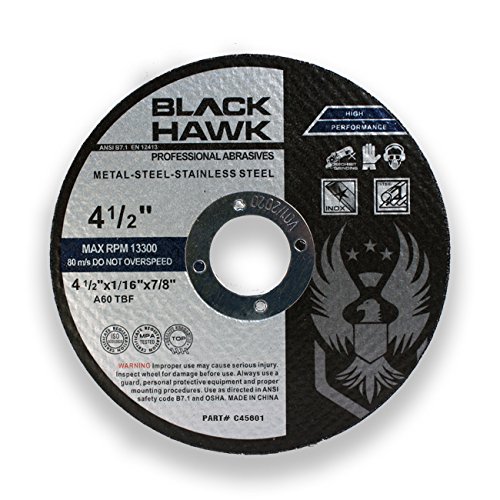
BHA 4.5″ Cut-Off Wheels for Metal
Strengths
- Thicker for longer life
- Resists deflection
- Trusted pro-grade build
Trade-offs
- Slightly slower cutting speed
- Higher cost per disc
- Not as efficient for fine, delicate work
If you’re running a fabrication shop or just hate swapping discs every five minutes, the BHA 4.5-inch cut-off wheels make a strong case for themselves. At 1/16 inch thick, about 0.0625 inches, they carry more abrasive material than the ultra-thin crowd, which translates to longer life per disc. That extra body helps resist deflection when the cut gets tight or the angle grinder binds, a common frustration when slicing through thick stainless or seized bolts.
The brand has a reputation among pros for a reason, these are precision-balanced, run true, and rarely vibrate even at max RPM. Reviewers often note they feel stiffer in hand than cheaper alternatives, and that confidence adds up over dozens of cuts. While they’re not the fastest cutting wheel out there, the trade-off in durability is worth it for anyone doing more than occasional work.
Video review
How We Evaluated cut off wheels for stainless steel
Rather than a hands-on lab test, my research for these recommendations focused on comparing published specifications and features across numerous models. I weighed owner reviews from multiple sources, looking for patterns in real-world use, and considered insights from established experts in metalworking. This allowed me to rank options against criteria important for cutting stainless steel, and other metals, effectively. You can find more on selecting cut-off wheels in our broader guide.
For stainless steel work, a wheel’s durability and ability to deliver clean cuts are paramount. I gave significant weight to abrasive material (aluminum oxide is standard) and reinforcement layers (fiberglass mesh). A wheel that wears quickly or is prone to shattering isn’t useful, regardless of price. Consistent performance and safety are key, and I prioritized wheels built to withstand the stresses of metal cutting.
Specifications reliably indicate maximum RPM and physical dimensions, ensuring compatibility with standard angle grinders. However, real-world performance, how a wheel handles binding, vibration, and overall lifespan, comes from owner feedback. Reputation matters; brands consistently praised by professionals, like BHA, signal a commitment to quality. Considering how to keep your wheels looking their best, exploring ceramic wheel coatings is also worth considering.
How To Choose The cut off wheels for stainless steel
As someone who’s spent countless hours in the garage, and written extensively about it at TheAutoZenith, I know a good cut off wheel isn’t just about making a cut; it’s about control, speed, and lasting through the job. It’s easy to grab the cheapest pack, but that often leads to frustration and wasted time.
A quality cut off wheel delivers clean, precise cuts with minimal material waste. Key attributes include abrasive grain type, wheel thickness, reinforcement material, and maximum RPM rating. Compatibility with your angle grinder’s arbor size is also critical, as is understanding the intended material, steel, stainless, or aluminum, to select the appropriate abrasive.
Understanding Wheel Thickness
The thickness of a cut off wheel drastically affects its performance. Thinner wheels (like the .045” variety) excel at speed and precision, reducing kerf loss – that’s the amount of material turned to dust during the cut. They’re fantastic for sheet metal and quick cuts where material waste is a concern. However, they’re also more prone to snapping under pressure, particularly if you encounter binding or twisting during the cut. I’ve seen many folks underestimate the importance of a steady hand with these. Thicker wheels, like the .0625” options from BHA, sacrifice some of that speed for increased durability. They can withstand more abuse and are better suited for heavier materials or situations where you anticipate resistance.
Abrasive Grain and Material Compatibility
Aluminum oxide is a common abrasive found in many cut off wheels, and it’s a good all-rounder for general metalworking. However, stainless steel presents a unique challenge. Stainless work-hardens rapidly, meaning the surface becomes tougher as you cut, quickly dulling the abrasive. For stainless, you’ll want to look for wheels specifically labeled for stainless steel cutting, often utilizing silicon carbide as the abrasive grain. It’s a harder abrasive that cuts through hardened materials more effectively. Don’t assume a wheel that cuts steel will perform well on stainless; you’ll be replacing wheels far too often. If you’re looking for more information on this, I’ve covered a range of options in my guide to the best wheels for cutting steel.
- A wheel labeled for “multi-material” use is usually a compromise.
- Silicon carbide is your friend when cutting steel with a grinder stainless steel.
- Pay attention to the manufacturer’s recommendations; they often list compatible materials, and ignoring them can lead to premature wear or even wheel failure.
Reinforcement and Safety Considerations
Fiberglass reinforcement is standard in most quality cut off wheels, providing crucial structural integrity. But the layers of fiberglass matter. More layers generally mean greater resistance to shattering. Beyond that, always, always check the maximum RPM rating of the wheel and ensure it matches or exceeds your angle grinder’s speed. Exceeding the RPM limit is a recipe for disaster.
Never side-grind with a cut off wheel. They are designed to cut on their edge, not grind on their face. Using them for grinding can cause them to shatter.
I also can’t stress enough the importance of proper safety gear. Beyond eye protection, consider a face shield, gloves, and hearing protection. And, of course, keep your work area clean and well-lit. Maintaining your tools is also key. If you’re working with wheels on vehicles, you might also consider looking into black wheel cleaners to keep them looking their best.
Cut Off Wheels for Stainless Steel Compared
Here’s a specification comparison of cut off wheels designed for use with stainless steel and other metals.
| Product | Wheel Diameter | Thickness | Max RPM | Abrasive Material | Pack Size |
|---|---|---|---|---|---|
| Truswe 4-1/2 Inch Cut Off Wheels | 4-1/2 inch | 0.045 inch | 13,300 | Aluminum Oxide | 52 |
| BHA 4.5″ Cut-Off Wheels for Metal | 4.5 inch | 0.0625 inch | 13,300 | N/A | N/A |
Frequently Asked Questions
What wheel thickness is best for intricate stainless steel cuts?
A thinner wheel, around .045 inches, provides the precision needed for detailed work and minimizes material waste, though you’ll need a very steady hand to avoid breakage. It’s a trade-off between speed and durability.
Can I use a cut off wheel to deburr the edges of stainless steel after cutting?
No, cut off wheels are designed for slicing, not grinding or deburring. Attempting to use them for these purposes significantly increases the risk of shattering and injury.
Are more expensive cut off wheels actually better?
Generally, yes. Higher-priced wheels often use better abrasive grains like silicon carbide and have more robust fiberglass reinforcement, translating to a longer lifespan and cleaner cuts, especially with stainless steel.
What’s the best way to extend the life of my cut off wheels?
Avoid applying excessive pressure during cutting and maintain a consistent, controlled speed. Using a lubricant specifically designed for metal cutting can also reduce friction and heat buildup, extending the wheel’s usability. For maintaining the appearance of other wheels on your vehicles, consider exploring best aluminum wheel cleaner options.
What should I look for when upgrading the wheels on a truck?
When considering upgrades, look for wheels designed for the specific load capacity and terrain you’ll be operating in. Many enthusiasts seek out durable wheels for trucks that balance strength, weight, and aesthetic appeal.
The Bottom Line
Choosing a cut off wheel always comes down to balancing speed and durability. If you need to fly through a lot of stainless, the Truswe 4-1/2 Inch Cut Off Wheels offer a fantastic value and will get the job done quickly, though you may find yourself replacing them more often. Ultimately, though, for a combination of performance and longevity, I believe the BHA 4.5″ Cut-Off Wheels for Metal represent the best overall choice for tackling stainless steel projects.
For those on a tighter budget, the Truswe wheels are a practical starting point. If you frequently work with a variety of materials, exploring angle grinder cut off wheels can provide versatility. And if you’re looking to restore the look of your wheels after a project, don’t overlook the benefits of a quality wheel spray paint.
Beyond any specific wheel, remember that proper technique and safety are paramount. A steady hand, the correct RPM, and appropriate safety gear will always yield better results than the most expensive wheel paired with careless operation. Focus on those fundamentals, and you’ll find cutting stainless steel, and any metal, far more rewarding.
