
9 Best Cushions for Truck Drivers 2026
This post contains affiliate links. As an Amazon Associate, we earn from qualifying purchases.
The best overall cushion for truck drivers is the Elmara Doctor-Designed Truck Seat Cushion Set, offering superior support and thoughtful ergonomics. For a solid budget-friendly option, the ComfiLife Gel & Memory Foam Cushion delivers reliable comfort without the extras. If you want added versatility, the CushZone Seat Cushion and Lumbar Pillow gives you dual support in one package.
Long hours in the cab demand more than just willpower, they demand real support. A poor cushion can make back pain worse, shift around at the worst times, or break down after a few weeks on the road. This guide cuts through the noise, highlighting cushions that deliver where it matters most: pressure relief, stability, and durability. I researched each based on design, materials, and what actual drivers report after months behind the wheel.
Top 9 Cushions For Truck Drivers in the Market
The Best Cushions For Truck Drivers, Reviewed
Elmara Doctor-Designed Truck Seat Cushion Set

Strengths
- Doctor-designed ergonomics
- Full-coverage sizing
- Stable with straps
Trade-offs
- Premium price
- Bulky for small cabs
- Requires adjustment period
This is the most complete package in the lineup, doctor-designed, truck-specific, and built with long-haul reality in mind. The NeuroFoam + gel infusion combo adapts quickly and evenly, distributing weight without overheating. The 20″ x 17″ seat cushion covers nearly the entire truck seat, and the adjustable straps with rubber studs prevent slippage better than most.
Owners consistently say it’s the only cushion they’ve kept after a month of daily use. The two-piece design means you get both coccyx and lumbar support working in sync, which is rare at any price. Against the GKTKG or japiroc, it wins on material quality and stability. If you drive 8+ hours daily, this is the closest thing to a medical-grade solution that fits your cab.
Video review
GKTKG Truck Driver Seat Cushion Set
Strengths
- Includes neck pillow
- Breathable 3D fabric
- Non-slip with straps
Trade-offs
- Best for medium builds
- Foam breaks in slowly
- Limited lumbar height
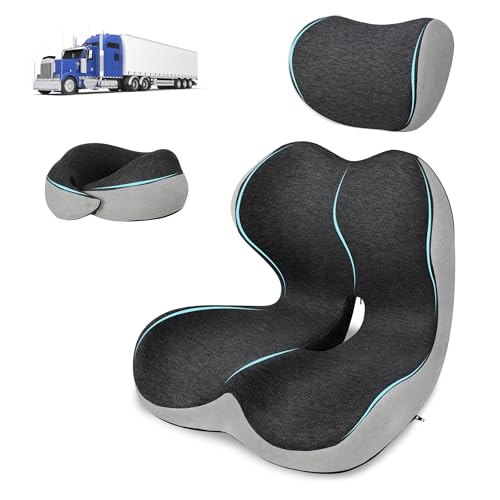
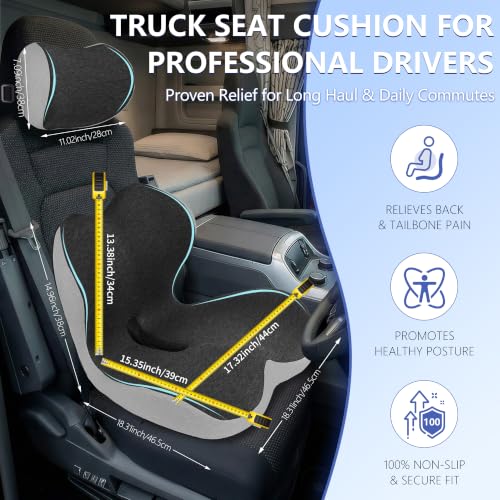
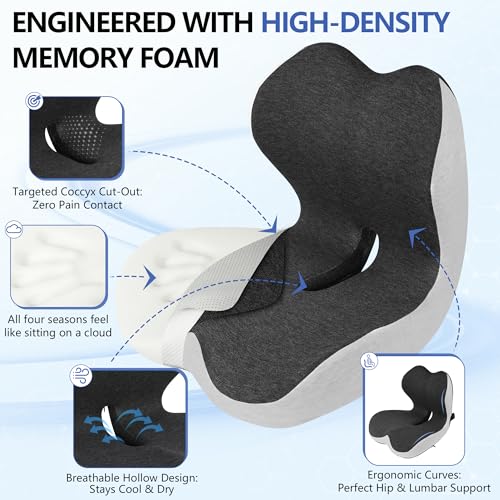
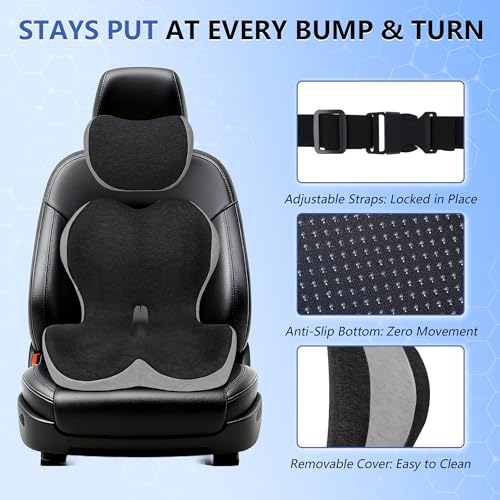
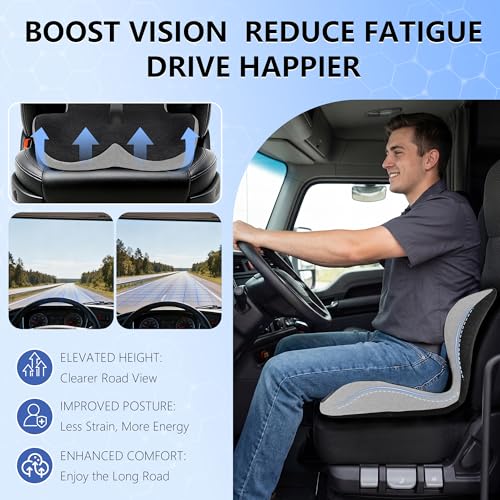
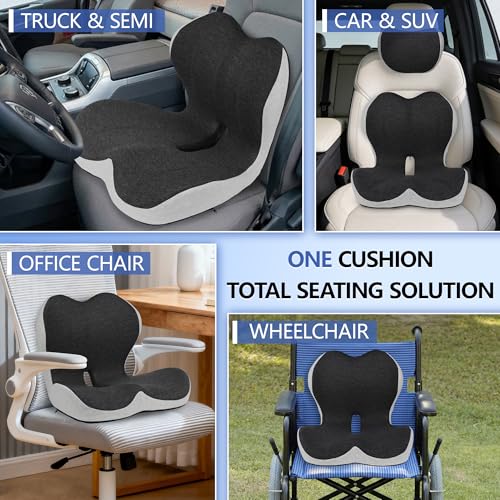
This 2-in-1 set clearly targets the real-world needs of long-haul truckers, deep memory foam for the seat, plus a neck pillow to handle fatigue. The 3.2-inch thickness and U-shaped coccyx groove do a solid job of reducing pressure, and the honeycomb fabric helps airflow where it matters most. Owners report less numbness on 12-hour shifts, which speaks to its functional design.
What sets it apart is the inclusion of adjustable straps and a headrest pillow, making it more complete than most standalone cushions. But the seat cushion alone isn’t as contoured as the Elmara or japiroc models, and the fit is best for medium builds. If you’re tall or broad, it might feel cramped.
Product photos
ComfiLife Gel & Memory Foam Cushion
Strengths
- U-shaped tailbone relief
- Doctor-recommended design
- Non-slip bottom
Trade-offs
- No lumbar pillow
- Firm for some tastes
- Narrower than truck seats
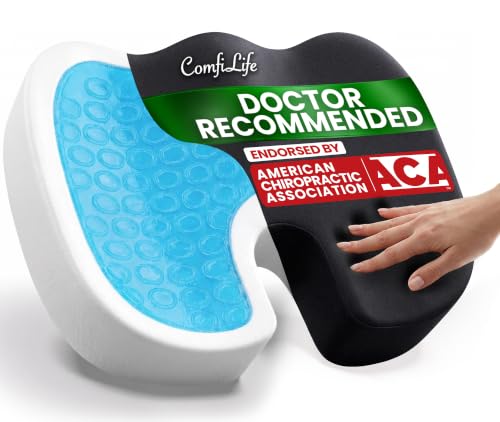
The ComfiLife cushion is built like a clinic-grade solution, and that’s no accident, its U-shaped cutout is precisely engineered to float the tailbone, a feature doctors actually recommend for sciatica and coccyx pain. The combination of gel-infused memory foam and medium-firm density gives it an edge in pressure distribution, and owners with herniated discs or long-haul fatigue consistently call it a standout.
It’s not the bulkiest, but the 2.8-inch height lifts hips just enough to tilt the pelvis forward, promoting better posture. The non-slip base works well on leather seats, and the machine-washable cover is a practical touch. Against the GKTKG or Elmara sets, it lacks lumbar support, but as a standalone seat pad, it’s one of the most validated options out there.
Video review
Lofty Aim Car Seat Cushion
Strengths
- Affordable price
- W-shaped ergo design
- Adds 2.5 inches height
Trade-offs
- Foam less dense
- Limited airflow
- No lumbar support
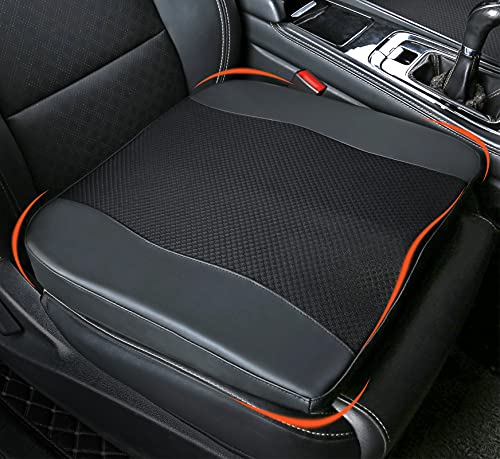
At this price, the Lofty Aim cushion delivers more than expected, its ‘W’ shape is a smart take on ergonomics, offering slight tailbone relief and a modest lift that improves visibility. The 2.5-inch height boost is useful for shorter drivers, and the non-slip base holds well on vinyl and leather. The hybrid leather-mesh cover looks clean and wipes down easily, though it’s not as breathable as full mesh.
It doesn’t match premium models in contouring or support depth, but for budget-conscious buyers, it’s a sensible middle ground. Compared to the ComfiLife, it lacks the U-groove precision, but it covers more area. Owners note it’s comfortable for 4–6 hour stretches, but not quite built for 10-hour hauls without some repositioning.
Product photos


MYFAMIREA Truck Seat Cushion

Strengths
- L-shaped ergonomic fit
- Adjustable straps
- Affordable lumbar support
Trade-offs
- Lumbar not removable
- Foam less resilient
- Mesh can pill
This cushion hits a sweet spot between price and functionality, L-shaped design, 12.6-inch lumbar support, and a non-slip rubber base with adjustable straps mean it stays put even on rough roads. The memory foam is firm enough to last, and owners report noticeable relief in both lower back and tailbone areas after a few days of use.
It’s not the most advanced in materials, but the breathable mesh and zip-off cover make maintenance easy. At under $30, it offers more support than basic pads and competes well with pricier models. Against the CushZone or Lofty Aim, it has better lumbar integration and a more truck-specific shape.
Product photos
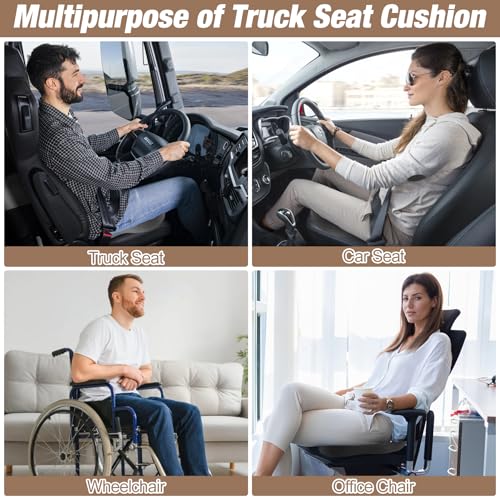
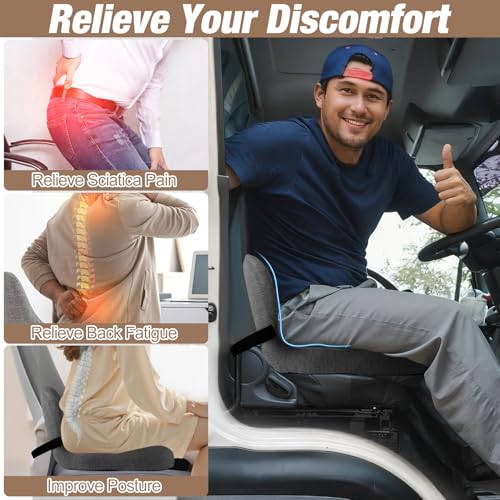
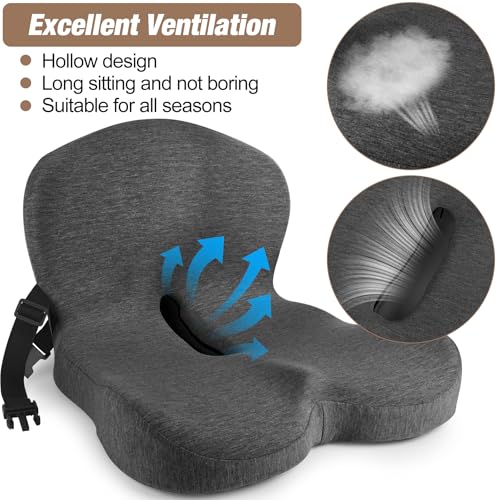
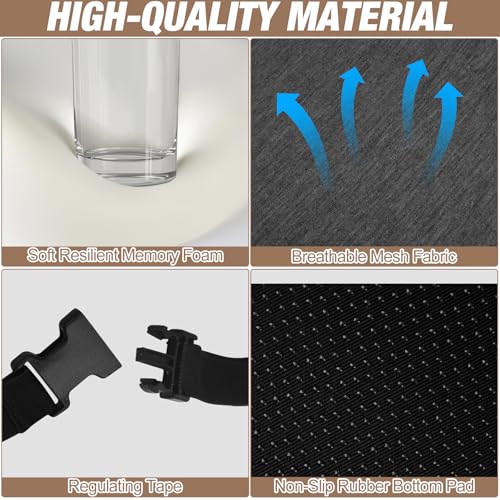
L-Shaped Ergonomic Seat Cushion with Lumbar

Strengths
- Tall lumbar support
- Thick 3.95-inch foam
- Breathable mesh cover
Trade-offs
- Bulky for small cabs
- Fixed lumbar position
- Foam may soften over time
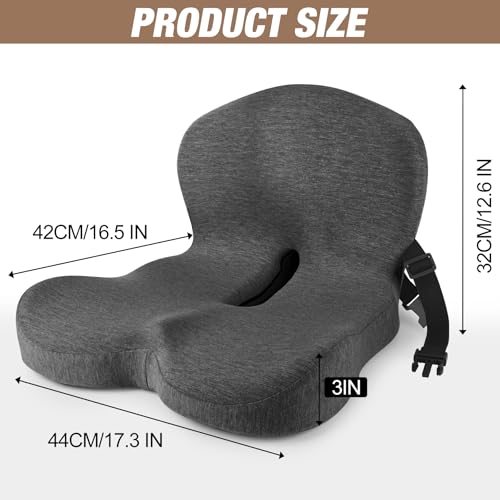
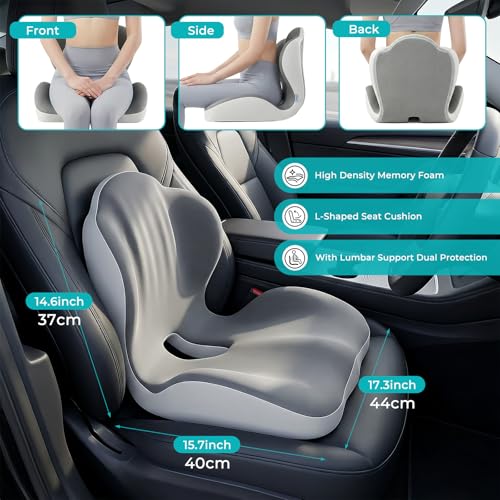
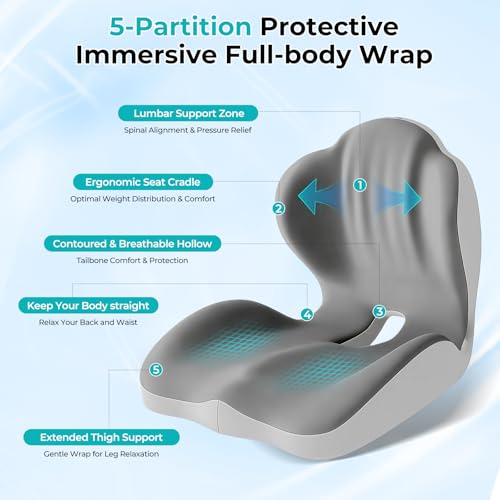
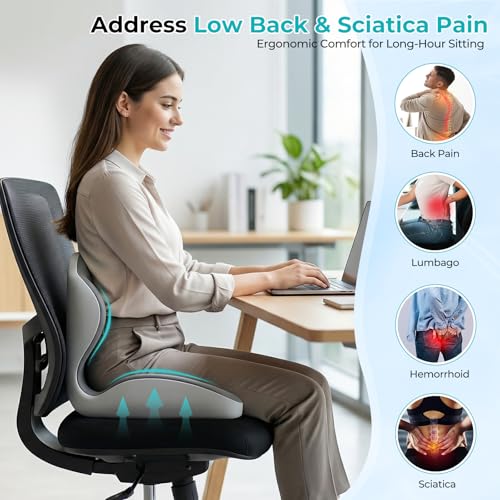
This L-shaped cushion is one of the few that combines deep seat foam with a tall 14.6-inch lumbar extension, making it a strong contender for drivers who feel lower back fatigue before tailbone pain. The 3.95-inch padding is thick, and high-density memory foam means it won’t bottom out quickly. Owners praise the elevated seating position for improving visibility and reducing strain on long routes.
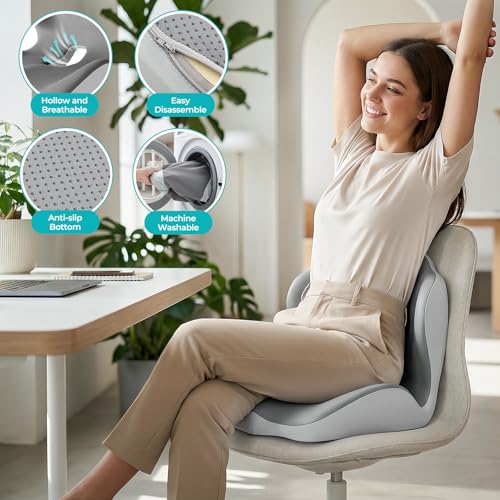
The removable mesh cover is a win for hygiene, and the non-slip base works on most surfaces. But the size can be bulky for smaller cabs, and the lumbar section doesn’t adjust. Compared to the Elmara set, it’s less refined in strap design and material feel, but it offers similar support at a lower price.
Product photos

japiroc X-Large Truck Seat Cushion

Strengths
- Extra-large fit
- Vibration control
- Buckle-secured straps
Trade-offs
- Top-heavy without lumbar
- Cover hard to wash
- Firm for new users
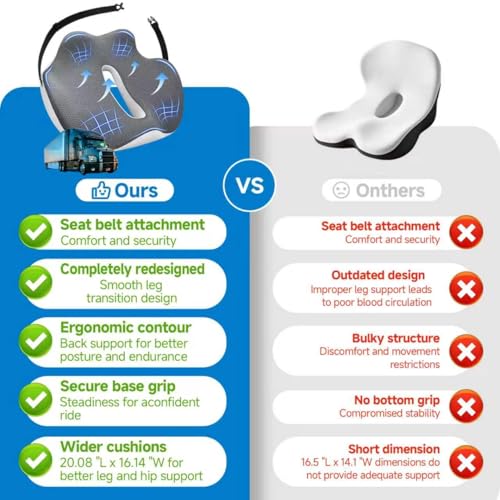
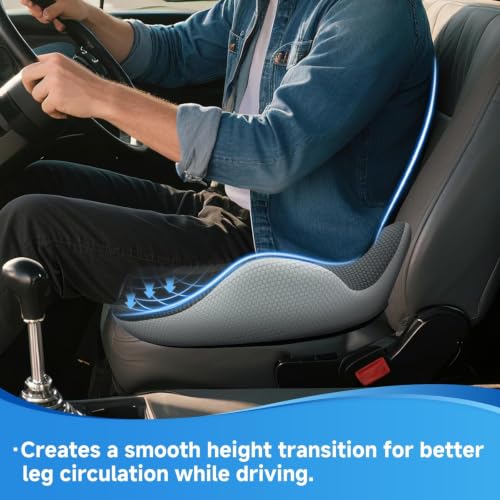
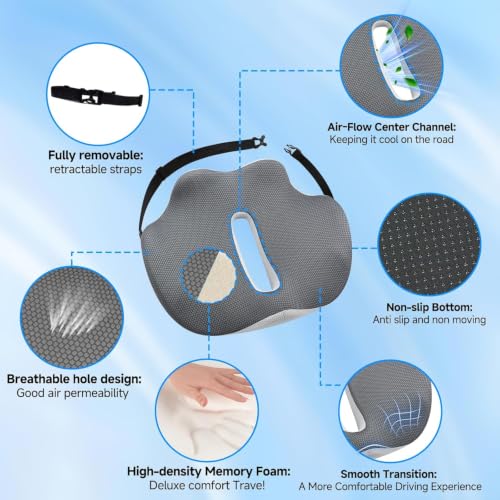
The japiroc cushion is clearly made for larger builds, the 20-inch length and 16-inch width accommodate broader hips better than most, and the 4.33-inch thick front taper helps with leg circulation. The vibration control tech isn’t marketing fluff; owners on rough routes say it reduces fatigue over bumpy terrain.
The buckle-secured straps are a standout, easy to clip and remove, and they hold the cushion firmly even during sudden stops. The upgraded transition zone between cushion and seat is a subtle but smart touch for blood flow. Compared to the Elmara, it’s less medicalized but more driver-tested. This is the pick for big guys who need space, stability, and real-world toughness.
Product photos


Gel Seat Cushion for Long Sitting
Strengths
- Large surface area
- Good heat dissipation
- Soft gel feel
Trade-offs
- Minimal posture support
- No tailbone cutout
- Slips without straps
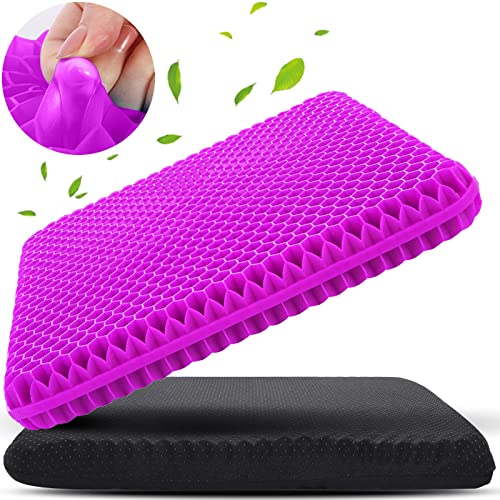
This gel cushion stands out on paper for its unusually large size and thick 1.5-inch profile, which should offer solid surface area for truckers who shift positions frequently. The thousands of air columns in the gel layer suggest decent breathability, and owners consistently report it stays cooler than foam cushions during summer drives. But gel has limits, it doesn’t contour like memory foam, so pressure relief is more about surface dispersion than anatomical support.
For drivers without existing back issues, this might feel like a refreshing upgrade from a flat seat. But compared to U-shaped coccyx designs, it lacks targeted tailbone relief. It’s a simple, no-frills pad that cools well but doesn’t do much for posture or spinal alignment.
Product photos


CushZone Seat Cushion and Lumbar Pillow

Strengths
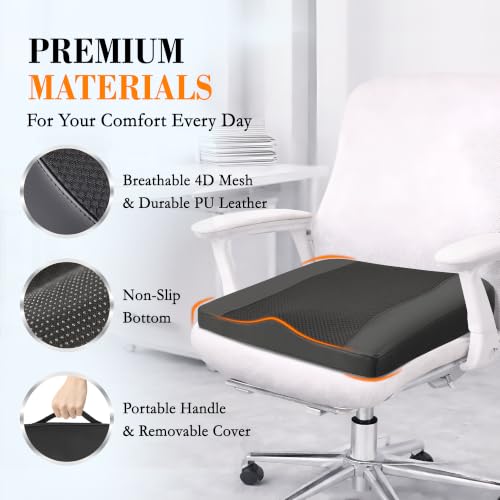
- Portable with handle
- Machine-washable covers
- Non-slip bottom
Trade-offs
- Lumbar support weak
- Not deep for truck seats
- Foam less durable
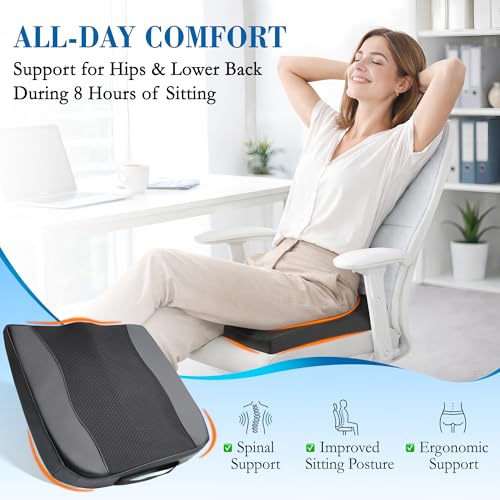
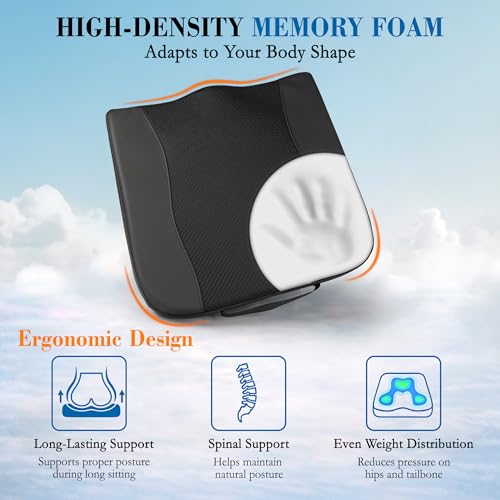
The CushZone set is built for portability, lightweight, compact, and easy to carry thanks to the built-in handle. The seat cushion’s 3.2-inch thickness and lumbar pillow’s 13-inch height offer decent support for office or short-haul use. The zippers are sturdy, and the non-slip base works well on most chairs.
But it’s clearly designed more for desk jobs than cross-country routes. The lumbar pillow is small and doesn’t lock tightly to seats, so it can shift during turns. Compared to the Elmara or japiroc models, it lacks depth and stability. Still, for drivers who split time between truck and office, it’s a solid, no-fuss option.
Product photos


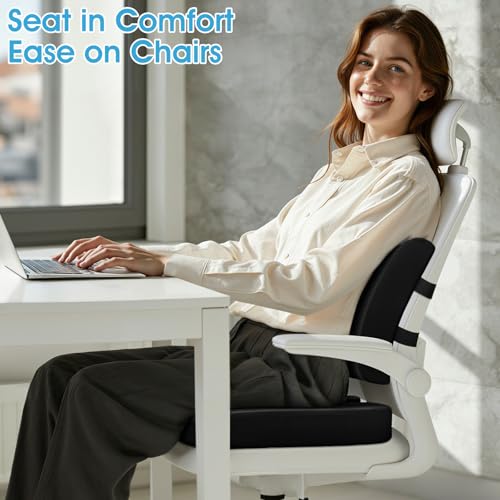
How We Picked These cushions for truck drivers
Rather than a hands-on lab test, my research for TheAutoZenith focused on a detailed comparison of published specifications and features across numerous cushions marketed to truck drivers. I weighed owner reviews from major retailers alongside professional assessments from automotive and ergonomics publications. As someone who’s spent years understanding the mechanics of comfort and support in vehicles, I applied that knowledge to evaluate each cushion against key criteria for long-haul drivers.
For truck drivers, the most significant factors are durable support and pressure relief. Prolonged sitting puts immense strain on the tailbone, lower back, and hips, so a cushion’s ability to mitigate those pressures is paramount. Equally important is stability; a constantly shifting cushion is more frustrating than helpful. I prioritized cushions offering both robust construction and features designed to stay put, recognizing the constant movement within a truck cab. Finding solutions for support for back pain was also a key focus.
Published specifications reliably indicate materials used – memory foam density, gel layer thickness, cover materials – giving a baseline for expected comfort and durability. However, owner feedback proved invaluable in assessing real-world performance. I paid close attention to comments regarding long-term comfort, how well cushions held their shape, and whether they truly alleviated pain. Beyond the cushions themselves, I also considered the availability of complementary truck accessories that could enhance the overall driving experience.
How To Pick The Right cushions for truck drivers
Finding the right seat cushion can make or break a long haul. I’ve spent years observing what makes a difference for those behind the wheel, and it’s about more than just softness.
A good truck driver seat cushion prioritizes ergonomic support, particularly for the tailbone and lower back. Look for features like a coccyx cutout, high-density foam, and breathable materials. Adjustability is also key, allowing the cushion to conform to individual body types and seat configurations. Prioritize durability – these cushions take a beating – and consider options with machine-washable covers for easy maintenance.
Prioritize Ergonomic Design
The shape of a cushion matters immensely. Too many options simply add padding without addressing the underlying issues causing discomfort. I often see drivers enduring pain because their cushion isn’t properly supporting their posture. A well-designed cushion will actively encourage a natural spinal alignment. Look for features like a U-shaped cutout to relieve pressure on the tailbone, or an L-shaped design that offers broader support. Don’t assume more padding equals better support; density and strategic shaping are far more important.
Material & Construction Quality
Don’t underestimate the impact of materials. Memory foam is popular, but not all memory foam is created equal. High-density foam will hold its shape longer and provide more consistent support than cheaper, lower-density alternatives. Gel-infused foam can help with temperature regulation, especially during hot summer months. Beyond the foam itself, pay attention to the cover material. Breathable mesh is essential to prevent sweating, and a durable, washable cover is a must for maintaining hygiene. Consider also how the cushion is constructed; a well-made cushion will feature secure stitching and a non-slip base.
- A simple non-slip base is sufficient for most applications.
- Adjustable straps offer greater security, especially in seats with significant contours, and are a valuable addition.
- A removable, machine-washable cover is a standout for keeping your cushion clean and hygienic, extending its lifespan and ensuring lasting comfort.
Value Beyond Basic Comfort
While comfort is paramount, look for features that enhance usability and long-term health. I frequently recommend exploring options that include lumbar support. A combined seat cushion and lower back supports package can provide thorough support for your entire back, preventing strain and fatigue.
A rule of thumb: if a cushion feels too soft and your tailbone is still making contact with the seat, it’s not providing adequate support. You should feel a noticeable lift and pressure relief.
Ultimately, the best cushion is one that addresses your individual needs and preferences. If you struggle with sciatica, a cushion with a pronounced coccyx cutout might be ideal. If you spend extremely long hours on the road, investing in a high-quality, durable option is worthwhile. Don’t hesitate to explore a range of comfortable seat cushions to find the perfect fit for you and your rig.
Cushions for Truck Drivers Compared
Here’s a comparison of features for various cushions designed for truck drivers, to help you find the best fit for your needs.
| Product Title | Size (LxW) | Material | Lumbar Support | Special Features | Warranty |
|---|---|---|---|---|---|
| Elmara Doctor-Designed Truck Seat Cushion Set | 20″ x 17″ | NeuroFoam, Gel | Yes | Adjustable straps, non-slip base | 2-Year |
| GKTKG Truck Driver Seat Cushion Set | N/A | Memory Foam | Yes | U-Shaped cutout, breathable fabric | N/A |
| ComfiLife Gel & Memory Foam Cushion | 17.5″ x 13.7″ | Gel, Memory Foam | No | U-Shaped cutout, non-slip bottom | N/A |
| Lofty Aim Car Seat Cushion | N/A | Memory Foam, Leather/Mesh | No | Adds 2.5″ height, W-shaped design | N/A |
| MYFAMIREA Truck Seat Cushion | 17.3″ x 16.5″ | Memory Foam, Mesh | Yes | L-Shaped design, adjustable straps | N/A |
| L-Shaped Ergonomic Seat Cushion with Lumbar | N/A | Memory Foam | Yes | L-Shaped design, high-density foam | N/A |
| japiroc X-Large Truck Seat Cushion | 20.08″ x 16.14″ | Memory Foam | No | Vibration control tech, adjustable straps | N/A |
| Gel Seat Cushion for Long Sitting | 18.51″ x 17.33″ | Gel | No | Air column design, cooling gel | N/A |
| CushZone Seat Cushion and Lumbar Pillow | 18.1″ x 14.2″ / 13”x 13″ | Foam | Yes | Adjustable straps, carrying handle | N/A |
Frequently Asked Questions
What cushion material offers the best long-term support?
High-density memory foam generally provides the best long-term support, as it resists compression better than lower-density foams. While gel layers add comfort, they don’t replace the foundational support of a quality foam core; look for a density of at least 5lbs per cubic foot for lasting performance.
Are seat cushions with adjustable straps really necessary?
Adjustable straps are particularly beneficial if your truck seat has aggressive bolstering or unusual contours. They help secure the cushion and prevent it from sliding around during movement, contributing to a more stable and supportive experience.
Can a seat cushion help with existing back pain?
A properly designed cushion can absolutely help alleviate some back pain, especially if it addresses pressure points and encourages better posture. However, for chronic or severe pain, it’s best to consult a medical professional; exploring seat cushions for sciatica can be a good starting point.
How often should I replace my truck seat cushion?
The lifespan varies, but generally, you should consider replacing your cushion every 1-2 years with heavy daily use. Look for signs of significant compression, loss of shape, or reduced support as indicators it’s time for a replacement.
Beyond a seat cushion, what else can I do to improve driving comfort?
Improving circulation is crucial for long hauls, and combining a supportive cushion with compression socks can significantly reduce leg fatigue and swelling. Regular stretching breaks and maintaining good posture are also vital for overall comfort.
The Bottom Line
Ultimately, choosing the right cushion comes down to balancing initial cost with long-term comfort and support. While numerous options exist, the Elmara Doctor-Designed Truck Seat Cushion Set consistently stands out as the strongest overall pick, offering a well-rounded package of ergonomic design, durable materials, and adjustable features. It’s an investment in your well-being on those long hauls.
For drivers on a tighter budget, the ComfiLife Gel & Memory Foam Cushion delivers a surprising amount of support for the price, and the japiroc X-Large Truck Seat Cushion provides a good option for those seeking vibration dampening. Those needing maximum versatility and complete back support should look closely at the CushZone Seat Cushion and Lumbar Pillow, and don’t overlook the importance of finding the right comfortable truck cushions for your specific needs.
At the end of the day, specs and features are only part of the equation. Prioritizing a supportive core, a cushion that actively encourages good posture and relieves pressure points, will benefit you far more than chasing the latest gel or foam technology. And remember to pair that comfort with a good pair of driving shoes to ensure a properly supported and comfortable driving experience.
