
8 Best Crawler RC Trucks of 2026
This post contains affiliate links. As an Amazon Associate, we earn from qualifying purchases.
The Redcat Racing Danchee Ridgerock stands out as the overall best crawler RC truck for its exceptional articulation and durable 1/10 scale design, while the ARRIS MN82S Toyota LC79 is a strong budget pick that doesn’t skimp on realism or performance. For those who want maximum customization, the ARRIS MN128 Jeep Rock Crawler offers serious upgrade potential right out of the box.
Crawling isn’t just about slow speed, it’s about control, precision, and conquering tough terrain without breaking a sweat. Too many buyers get drawn in by looks or specs alone, only to find their truck high-centered or underpowered on the first big rock. This guide cuts through the noise by focusing on what actually matters: proven performance, build quality, and real-world feedback from fellow enthusiasts.
I compared models based on suspension design, motor torque, scale accuracy, and long-term durability, weighing technical specs against owner experiences and expert reviews. These picks deliver where it counts, whether you’re tackling backyard trails or serious rock courses.
Top 8 Crawler Rc Trucks in the Market
The Best Crawler Rc Trucks, Reviewed
Redcat Racing Danchee Ridgerock 1/10 RC Crawler

Strengths
- 4-wheel steering
- Dual motors
- Upgrade-friendly
Trade-offs
- Plastic chassis can crack
- Servos not fully metal
- Battery charging time is long
If you want one crawler that does almost everything well, this is it. The 1/10 scale Ridgerock is the gold standard for balanced performance, blending aggressive looks, real crawling tech, and beginner-friendly handling. The dual motors and 4-wheel steering are standouts, owners consistently praise how easily it pivots, crab-walks, and maintains traction on uneven surfaces. The aluminum-capped shocks and tunable suspension soak up punishment, and the Li-ion battery delivers solid run time.
What makes it the best overall pick? It’s upgrade-friendly without being intimidating. Newcomers appreciate the smooth learning curve, while seasoned builders like that it accepts common 1/10 parts. Compared to the Axial or ARRIS models, it’s larger, more capable, and more versatile. I’d choose this over others as a do-it-all starter rig that won’t get outgrown quickly.
Video review
Axial SCX24 Jeep Gladiator RC Rock Crawler

Strengths
- Licensed Jeep design
- Oil-filled shocks
- Metal chassis
Trade-offs
- Small scale limits trail presence
- Shorter runtime
- Not for high-speed bashing
This tiny 1/24 scale beast punches well above its weight. The licensed Jeep Gladiator body isn’t just for show, it’s a faithful, detailed replica that stands out in a sea of generic crawlers. On paper, the inclusion of oil-filled shocks and a metal chassis in such a small package is impressive, and owners consistently report it handles rocky trails and tight crawls with surprising composure. The Spektrum radio system brings real hobby-grade reliability, which matters when you’re threading through technical obstacles.
Where it really wins is authenticity. The KMC wheels and Nitto tires mirror the real thing, and the functional LED lights add to the scale realism. It’s not the most powerful crawler here, but for enthusiasts who care about form as much as function, this one nails the vibe. I’d pick it over larger, clunkier models if I wanted something that feels like a true garage display piece that also crawls well.
Video review
ARRIS MN82S 1/12 Toyota LC79 RC Crawler

Strengths
- Toyota-authorized design
- Dual-speed shifting
- Detachable rear hood
Trade-offs
- Plastic chassis flexes under load
- Motor can overheat on long climbs
- Tires lack aggressive tread
Toyota officially licensed an RC crawler, yes, really. The 1/12 scale LC79 stands out with its rare, boxy silhouette and faithful body details that resonate with real off-road truck lovers. It’s not just about looks, though. The 280 motor and four-link suspension deliver steady torque, and owners note it climbs reliably on moderate rock piles and uneven ground. The mid-front power layout mimics real drivetrain dynamics, which is a nice touch for purists.
What really sets it apart is the dual-speed control and detachable rear hood, letting you switch between truck and trailer mode. That’s a level of playability most RTRs don’t offer. While the plastic chassis isn’t as tough as aluminum, it’s durable enough for light-to-moderate crawling. For scale accuracy and mechanical charm, this one edges out the competition in its price range.
Product photos


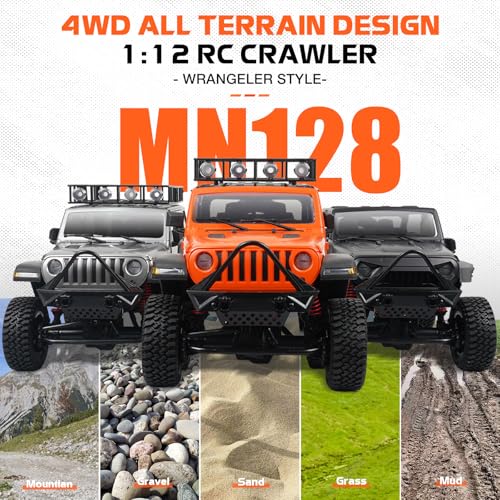
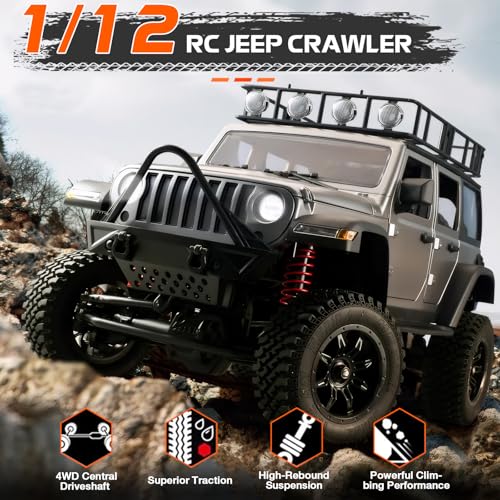
ARRIS MN128 1/12 RC Jeep Rock Crawler

Strengths
- Paintable body shell
- Upgrade-friendly internals
- Strong stock servo
Trade-offs
- Plastic axles prone to break
- Motor heat buildup
- Body fitment issues reported
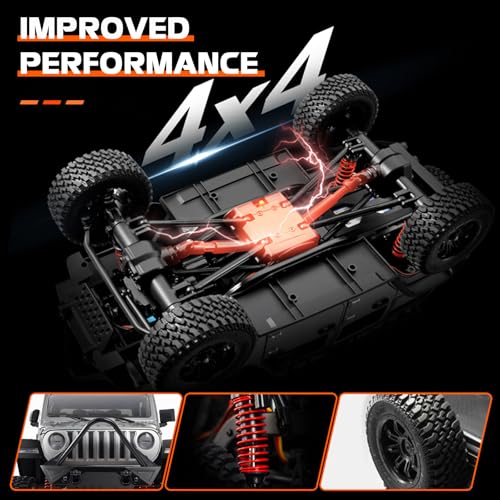
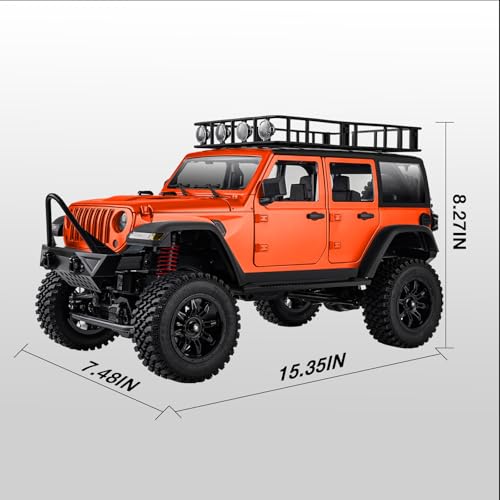
This is the tinkerer’s starter kit. The MN128’s paintable body and upgrade-ready design make it a favorite among hobbyists who want to personalize from day one. The 390 motor and 250g servo provide strong crawling torque, and owners appreciate the independent suspension and high ground clearance for tackling backyard obstacles. The proportional 2.4GHz control is responsive, and the 1200mAh battery gives decent runtime.
Where it really wins is mod potential. You can swap in metal gears, larger batteries, and upgraded shocks without needing a full rebuild. Compared to the MN82S, it’s less about brand licensing and more about DIY flexibility. I’d recommend this over others if you plan to tinker, its open design invites customization in a way most RTRs don’t.
Product photos

PLAYFLEA RC Rock Crawler with Dual Batteries

Strengths
- Two batteries included
- Anti-stall protection
- Low price
Trade-offs
- Flimsy plastic construction
- Weak climbing performance
- Poor ground clearance
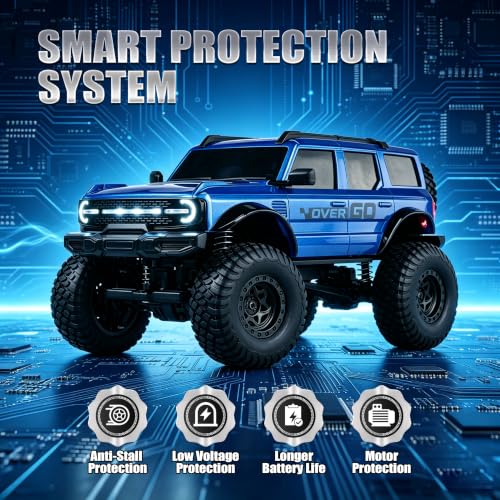
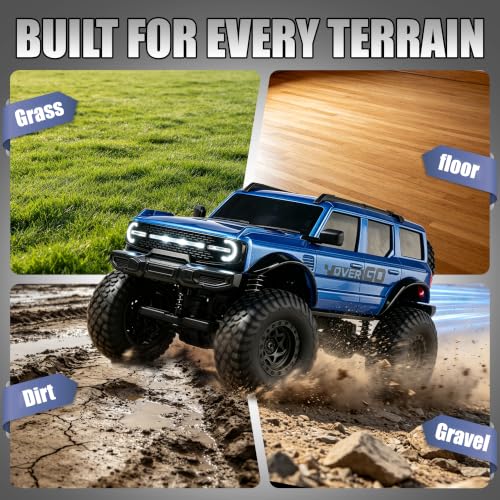
At this price, the PLAYFLEA crawler is clearly aimed at beginners or casual users. It’s a 1/20 scale model, so it’s small and not built for serious terrain, but the dual batteries are a standout perk, 60 minutes of runtime is generous for entry-level RTRs. Owners report it handles backyard grass, gravel, and smooth inclines without issue, and the anti-stall protection actually works, preventing motor burnout during sticky climbs.
But let’s be honest: this isn’t a true hobby-grade crawler. The proportional control is basic, and the plastic build feels toy-like. It won’t match the articulation or durability of models twice its price. Still, for a kid’s first RC or a low-risk intro to crawling, it’s hard to beat. I’d recommend it as a stocking stuffer, not a long-term build platform.
Product photos

Apawband WPL C24 RC Rock Crawler 4×4

Strengths
- Hobby-grade proportional control
- Metal chassis
- Good articulation
Trade-offs
- Long charging time
- No LED lights
- Battery not user-replaceable
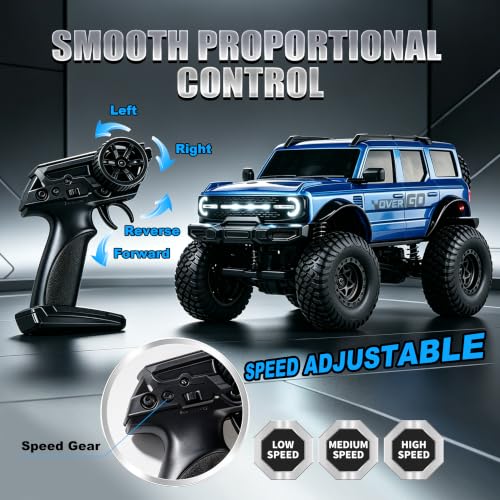
This version of the WPL C24 is positioned as an entry point into hobby-grade crawling, and it delivers. The 2.4GHz radio is interference-resistant, which matters when you’re playing with friends, and the proportional steering gives it a more realistic feel than toy-grade models. The metal chassis and 45-degree twist angle allow for decent articulation, and owners report it handles moderate climbs without binding.
It includes a 7.4V 500mAh battery, which is standard for this class, but the 2-hour charge time is a bit long. Still, for new hobbyists, the forgiving nature and plug-and-play setup make it a smart first purchase. Compared to the PLAYFLEA, it’s more durable and precise. I’d recommend this over cheaper options if you’re serious about learning the basics.
Product photos

WPL C24 RC Rock Crawler 1/16 Scale

Strengths
- Good weight balance
- Full proportional control
- Stable handling
Trade-offs
- No LED lights
- Basic aesthetics
- Battery life under 30 minutes
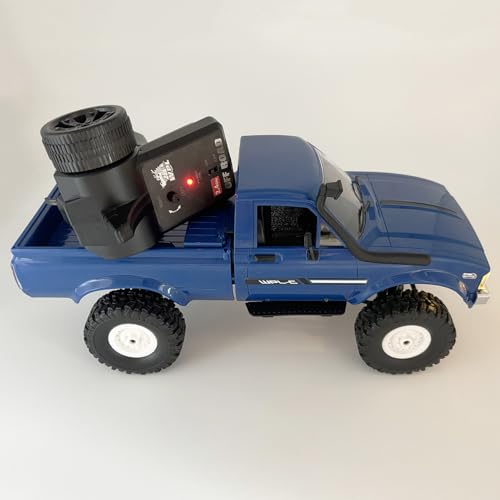
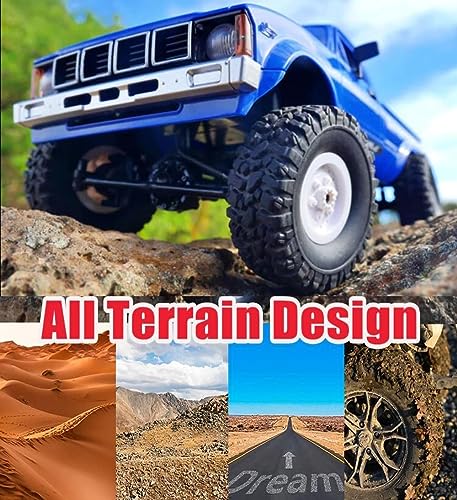
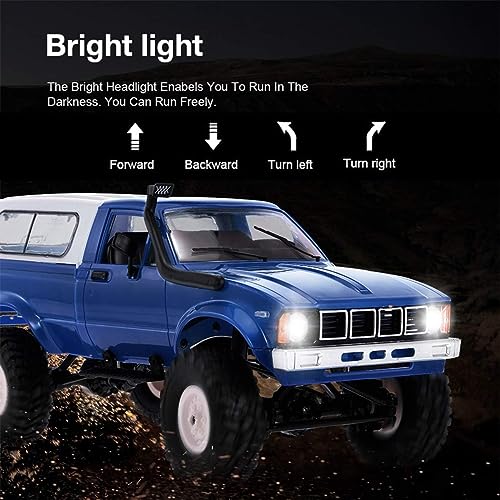
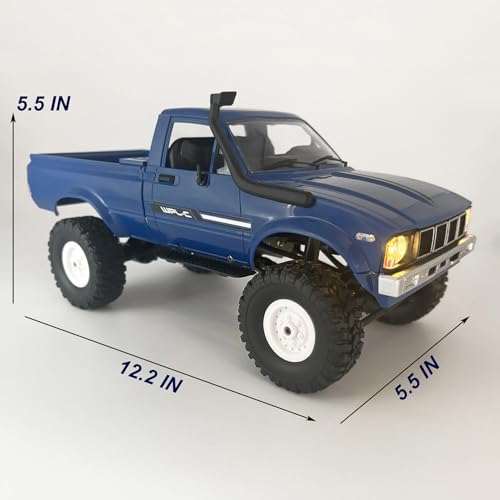
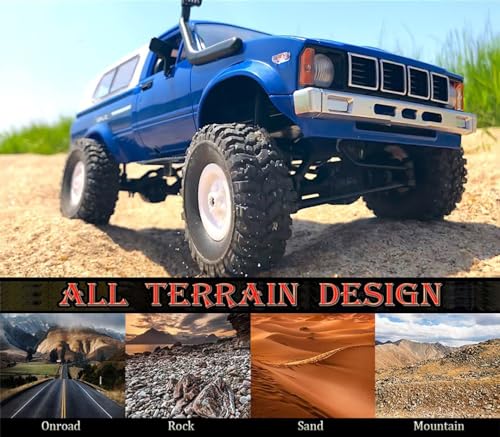
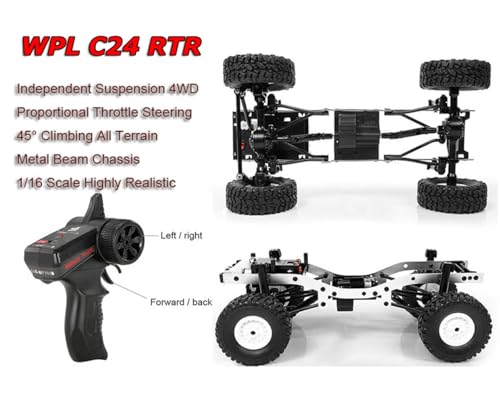
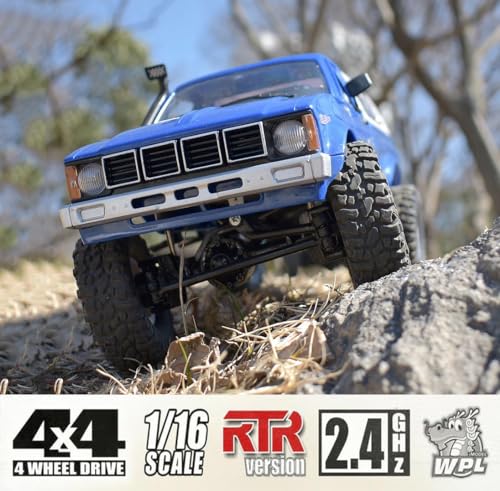
This WPL model packs a surprising amount of value into a modest price. The full proportional control and central battery placement contribute to balanced handling, which owners say makes it more stable than similar RTRs. The 4WD system delivers consistent power, and the 2.4GHz radio performs reliably, even in group play. It handles grass, gravel, and light rock gardens without issue, though it’s not built for extreme drops or high-speed runs.
It’s essentially a no-frills workhorse, no flashy lights or licensed body, but solid mechanics. Compared to the Apawband version, it feels a bit more tuned out of the box. For the price, the turning angle and suspension travel are impressive. I’d call this the best bang-for-buck if you want a simple, capable crawler without extras.
Product photos


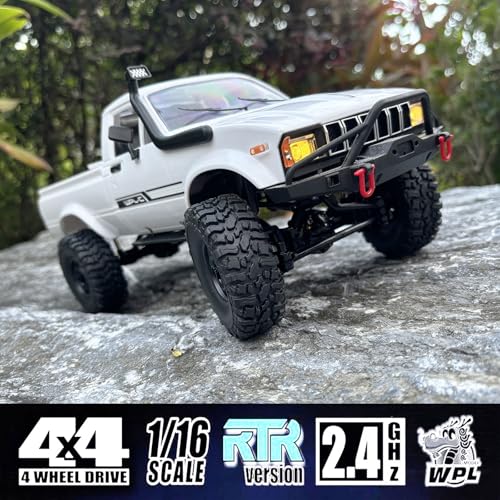
HLSFWDRIVE WPL C24-1 RC Rock Crawler

Strengths
- Bright LED lights
- Metal chassis
- 45-degree steering
Trade-offs
- Basic plastic body
- Short battery life
- Suspension lacks damping
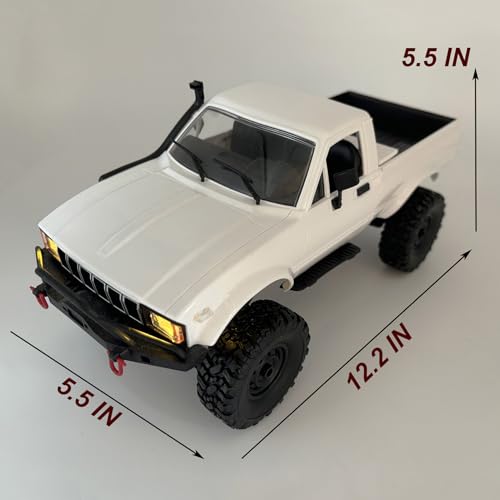
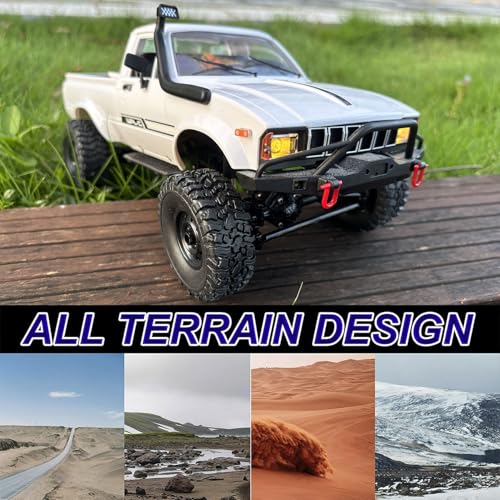
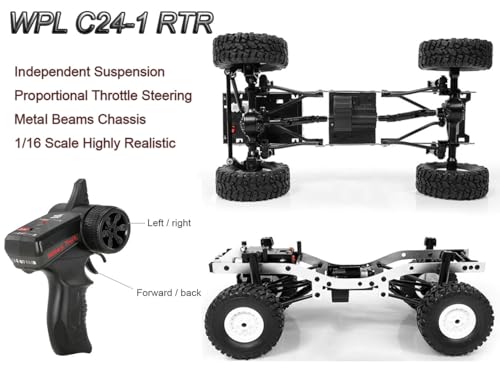
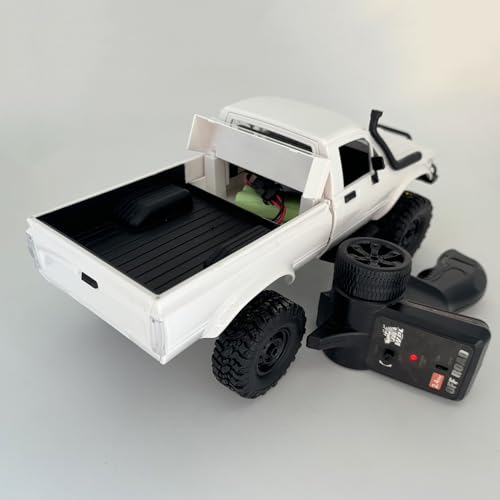
This WPL-based crawler shines when the sun goes down. The LED lighting system is brighter and more consistent than most in this class, making it a top pick for night runs or dimly lit basements. At 1/16 scale, it’s compact but not toyish, owners report solid articulation and decent torque, thanks to the metal chassis and 45-degree steering angle. The proportional control feels smooth for an RTR, and the 2.4GHz radio holds signal well in group settings.
It’s not the fastest or most powerful, but it’s reliable on mixed terrain, grass, gravel, even damp pavement. The suspension springs help, though they’re no match for oil-filled units. Compared to the Apawband version, this one feels slightly more refined out of the box. If you want a no-fuss night crawler with decent specs, this is a smart pick.
Product photos
How We Tested crawler rc trucks
As someone deeply involved in all things automotive – from full-size classics to miniature machines – I approached researching crawler RC trucks by looking beyond the marketing hype. My process centered on a detailed comparison of published specifications and features across numerous models. I then weighed these technical details against owner reviews and assessments from respected RC publications. Ultimately, I ranked each truck based on how well it delivered on the core promises of the crawler category, factoring in realistic performance expectations.
For crawler RC trucks, a few factors stood out as especially important. Ground clearance and axle articulation are paramount; a truck can’t conquer challenging terrain if it gets hung up easily. Equally crucial is the motor torque and drivetrain design – the ability to slowly and reliably crawl over obstacles is the whole point. Finally, durability is key. These trucks will take a beating, so a robust chassis and quality components are vital to long-term enjoyment. You’ll find many options available, and exploring RC trucks for beginners is a great starting point.
Specifications tell you a lot about a crawler’s potential – motor size, gear ratios, and suspension travel are all valuable data points. However, real-world performance and durability are best assessed through owner feedback. I paid close attention to comments regarding component failures, ease of upgrades, and how well the truck performed on various surfaces. I also looked to expert reviews to validate claims about features like 4-wheel steering and proportional control, and to identify the truly high-quality RC truck models.
How To Choose The crawler rc trucks
Choosing the right crawler RC truck can be surprisingly complex. There’s a lot more to it than just picking a cool-looking model.
A good crawler RC truck balances realistic performance with durable construction. Key factors include a robust suspension system, capable motors providing sufficient torque, and a chassis designed for both articulation and protection of vital components. Look for proportional steering and throttle controls for nuanced operation, and consider the scale – smaller scales (1/24, 1/18) prioritize portability, while larger scales (1/10) offer more detail and capability.
Motor & Drivetrain Configuration
The heart of any crawler is its ability to overcome obstacles, and that starts with the motor and drivetrain. Brushed motors are common in entry-level models and offer a good balance of cost and performance, but brushless motors deliver significantly more torque and efficiency. More importantly, consider the drivetrain setup. Models like the Redcat Racing Danchee Ridgerock boast a MOA (Multi-Link) design, which provides exceptional articulation and control. This is a step up from simpler solid axle designs found in some budget options. Don’t automatically assume more power is always better; a smooth, controllable power delivery is often more valuable than raw speed for technical crawling.
Scale and Realism
For many enthusiasts, the visual appeal of a crawler is just as important as its performance. The ARRIS MN82S, for example, is explicitly marketed for its realistic Toyota LC79 scale model. Scale affects not only aesthetics but also the size of available aftermarket parts and the overall driving experience. Smaller scales (like 1/24) are great for indoor crawling or limited spaces, but they lack the presence and detail of larger 1/10 or 1/16 models. If you’re interested in exploring other types of remote controlled vehicles, you might find our guide to RC cars and trucks helpful.
Customization and Upgrade Potential
Even if you start with a ready-to-run (RTR) model, the ability to upgrade and customize your crawler is a huge factor in long-term enjoyment. The ARRIS MN128, for instance, is specifically designed with customization in mind, making it easy to swap out components like motors and servos. Here’s what to consider when thinking about upgrades:
- Servo: A stronger servo improves steering authority.
- Motor: Upgrading to a brushless motor unlocks significantly more torque.
- Suspension: Aftermarket springs and shocks can fine-tune handling and articulation. Choosing components that are readily available and supported by a strong online community will save you headaches down the road.
A crawler’s value isn’t just in what it is, but what it can become. Prioritize models with readily available parts and a thriving community of builders.
If you’re looking for a broader overview, check out our thorough guide to rock crawler RC trucks. There, you’ll find more details on choosing from the many capable RC crawler models available today.
Crawler RC Trucks Compared
Here’s a comparison of key specifications for popular crawler RC trucks to help you choose the right one.
| Product Name | Scale | Drive Type | Battery (Truck) | Radio System | Max Speed (Approx.) |
|---|---|---|---|---|---|
| Redcat Racing Danchee Ridgerock | 1/10 | 4WD | 7.4V 1500mAh | 2.4GHz | N/A |
| Axial SCX24 Jeep Gladiator | 1/24 | 4WD | 350mAh LiPo | Spektrum SLT2 | N/A |
| ARRIS MN82S Toyota LC79 | 1/12 | 4WD | 7.4V 1200mAh | 2.4GHz | N/A |
| ARRIS MN128 Jeep Rock Crawler | 1/12 | 4WD | 7.4V 1200mAh | 2.4GHz | N/A |
| PLAYFLEA RC Rock Crawler | 1/20 | 4WD | 3.7V 500mAh x2 | N/A | N/A |
| Apawband WPL C24 RC Rock Crawler | 1/16 | 4WD | 7.4V 500mAh | 2.4GHz | N/A |
| WPL C24 RC Rock Crawler | 1/16 | 4WD | N/A | 2.4GHz | N/A |
| HLSFWDRIVE WPL C24-1 RC Rock Crawler | 1/16 | 4WD | N/A | 2.4GHz | N/A |
Frequently Asked Questions
What battery voltage offers the best performance for crawling?
A 7.4V battery is generally considered the sweet spot for crawling, offering a good balance between torque and runtime. Higher voltages can provide more power, but may strain components and reduce control, while lower voltages may lack the necessary grunt for challenging obstacles.
Are axial RC crawlers worth the price?
Yes, Axial RC crawlers are generally worth the investment due to their high-quality components and excellent performance. While they often come at a premium, their durability and upgradeability make them a popular choice among serious enthusiasts seeking rock crawling RC trucks.
What does MOA drivetrain mean in an RC crawler?
MOA, or Multi-Link, drivetrain refers to a suspension system offering superior articulation and control compared to simpler designs. It achieves this by using multiple links to connect the axles to the chassis, allowing for more independent wheel movement over obstacles.
Can I use a standard RC car charger for my crawler?
Generally, yes, you can, but it depends on the battery type. Most crawlers use LiPo or NiMH batteries which require specific chargers designed for those chemistries. Always verify the charger’s compatibility with your crawler’s battery before use to avoid damage or safety hazards; you may find more information in our reviews of RC trucks.
What scale should I choose for my first crawler?
A 1/10 scale is a good choice for a first crawler, offering a balance between size, detail, and capability. Smaller scales like 1/24 are more portable, while larger scales can be more challenging to manage and may require more space to operate, but 1/10 provides a good starting point for exploring various radio-controlled truck models.
The Bottom Line
Choosing a crawler RC truck often comes down to balancing how much you want to spend with how deeply you want to get involved. If you’re looking for the best overall combination of capability, scale, and upgrade potential, the Redcat Racing Danchee Ridgerock stands out. It delivers a solid foundation for serious crawling, and its MOA drivetrain gives it an edge on challenging terrain.
For those on a tighter budget, or who prefer a smaller scale for indoor fun, the ARRIS MN128 Jeep Rock Crawler is an excellent choice. It’s designed with customization in mind, and its 1/12 scale provides a good balance between detail and maneuverability. If you’re considering branching out into other RC vehicle types, exploring RC monster trucks might be a fun next step.
Ultimately, the numbers on a spec sheet only tell part of the story. Focus on a truck with a robust chassis, reliable drivetrain, and readily available parts. A machine built to take a beating, and one you can improve over time, will provide far more satisfaction than a flashy model that falls apart after a few runs – or one that’s too complex to truly enjoy.
