
7 Best Crank Road Bikes of 2026
This post contains affiliate links. As an Amazon Associate, we earn from qualifying purchases.
The Shimano Claris FC-R2000 is our top pick for most riders, offering reliable performance and wide compatibility, while the DRIFT MANIAC 52/42T stands out as a solid budget-friendly option with durable construction. For those wanting stiffer performance and a modern design, the IKUOS Direct-Mount Road Crankset is a strong versatility pick.
Choosing the right crankset can make or break your road riding experience. Too often, riders overlook this critical component until something wears out or limits their performance. After researching the field, analyzing specs, and reviewing owner feedback, I’ve focused on models that deliver real-world efficiency, durability, and smart design.
This guide breaks down what actually matters, chainring configuration, bottom bracket compatibility, and the balance between weight and stiffness, so you can make an informed decision based on how and where you ride.
Top 7 Crank Road Bikes in the Market
The Best Crank Road Bikes, Reviewed
Shimano Claris FC-R2000 Crankset
Strengths
- Hollowtech II spindle
- Smooth Hyperglide shifting
- Shimano reliability
Trade-offs
- 8-speed max
- No BB included
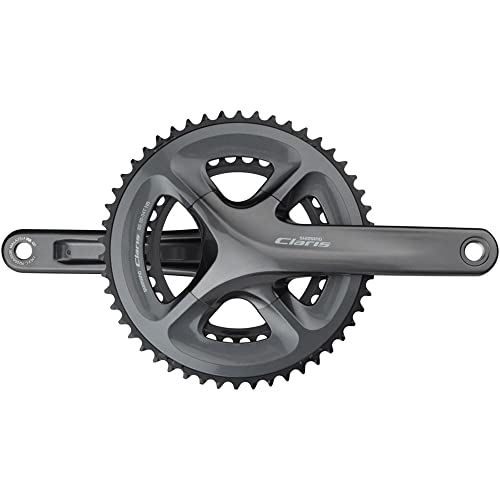
The Shimano Claris FC-R2000 is the benchmark for entry-level road cranksets, and for good reason. It uses Hollowtech II spindle tech, which delivers real-world stiffness and smooth rotation that budget sets can’t match. The 50-34T combo is ideal for hilly terrain, and the Hyperglide chainrings provide noticeably smoother shifting than generic brands. Owners praise its reliability over thousands of miles.
Even though it’s 8-speed, it plays well with 9- and 10-speed chains in a pinch. The 43.5mm chainline ensures proper alignment, reducing wear. Compared to the IKUOS or DONSP sets, this one feels more integrated and refined. It’s the smarter buy if you want Shimano’s engineering without stepping up to 105 or Ultegra.
Video review
IKUOS Direct-Mount Road Crankset
Strengths
- Direct-mount stiffness
- 12-speed compatible
- Hollow aluminum arms
Trade-offs
- Chainring wear concerns
- No bottom bracket included
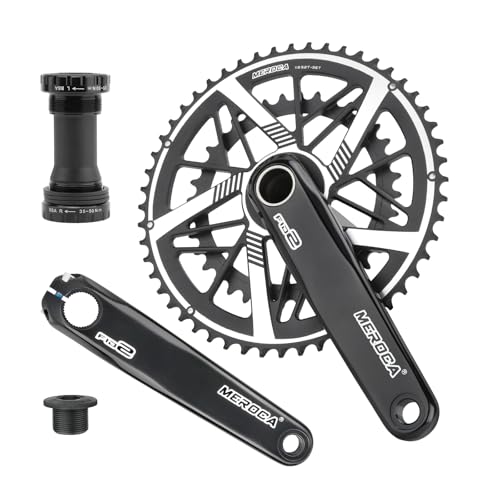
On paper, the IKUOS crankset looks like a solid contender for riders wanting a modern direct-mount setup without breaking the bank. The hollow one-piece aluminum construction and compatibility with 9- to 12-speed systems suggest it’s built for efficiency, and owners consistently report crisp shifting and good stiffness, especially with the 52-36T option. The CNC-milled chainrings appear to engage well, and the 170mm arm length is a sweet spot for most riders seeking a balance of use and cadence.
Still, while the specs are impressive, some users note that the chainring finish wears faster than expected under heavy use. It doesn’t match Shimano’s long-term durability, but for weekend riders or those upgrading from older square taper systems, it delivers strong performance for the price. I’d pick this over budget square taper sets if you’re aiming for a cleaner, stiffer drivetrain without full Ultegra-tier spending.
Video review
DONSP1986 50/34T Aluminum Crankset
Strengths
- Low cost
- Wide chainring range
- Square taper compatibility
Trade-offs
- Noticeable flex under load
- Basic chainring material
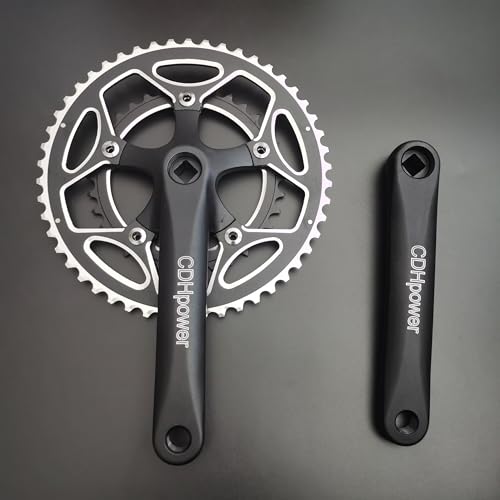
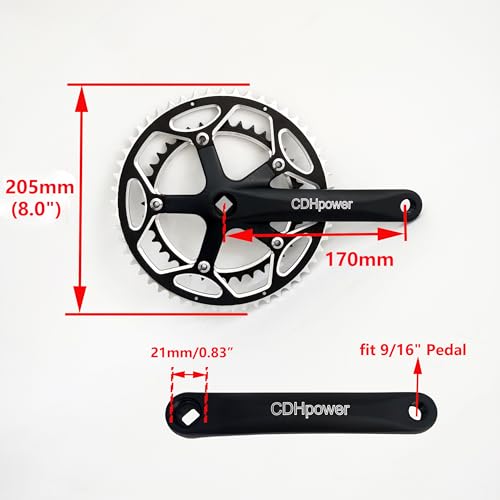
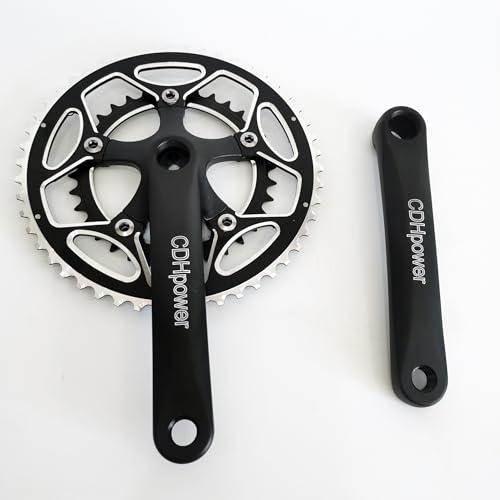
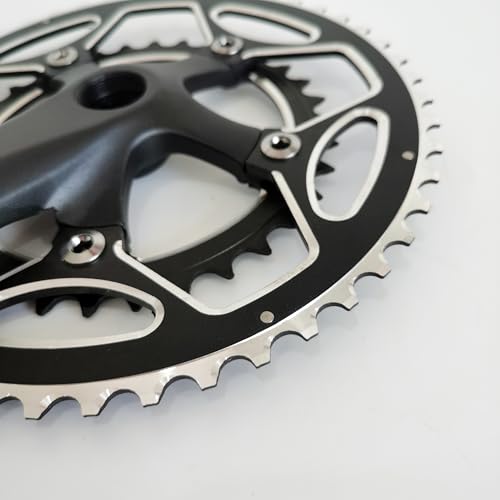
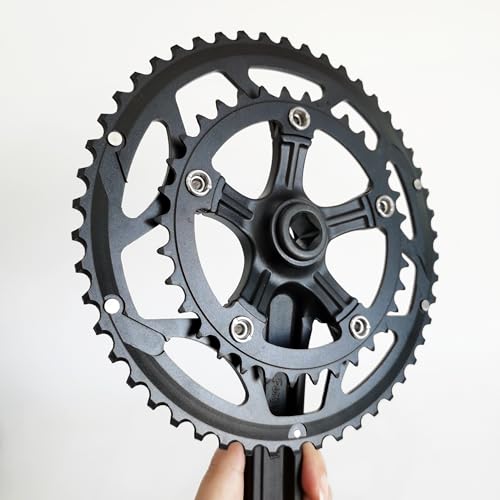
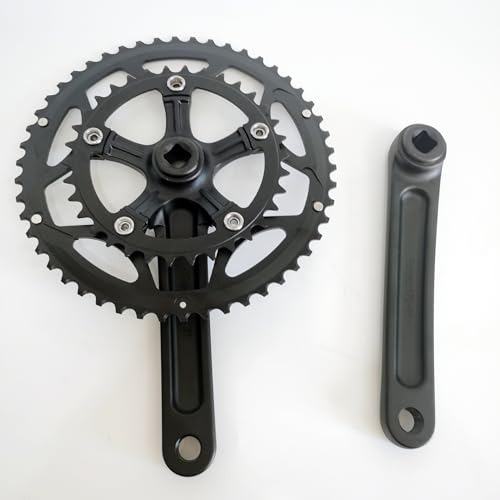
This DONSP1986 crankset is a no-frills, budget-conscious option that gets the job done for casual riders or bike rebuilds. With a 110mm BCD and 50-34T chainring, it’s tuned for easier climbing and relaxed riding, and the aluminum alloy arms keep weight reasonable. It’s a square taper design, so it won’t match the stiffness of modern Hollowtech setups, but that also means wider compatibility with older frames and easier servicing.
Owners report it installs smoothly and holds up fine for city commuting or light road use. However, it’s not built for high torque or aggressive riding, there’s some flex noted under hard effort. Compared to pricier options, it’s clearly a workhorse part, not a performance upgrade. If you’re restoring an older road bike or need a cheap, reliable replacement, this makes sense.
Product photos
WEEROCK 46T Aluminum Crankset

Strengths
- Integrated chain cover
- Low price
- Steel chainring durability
Trade-offs
- Heavy overall weight
- Limited to low-speed systems
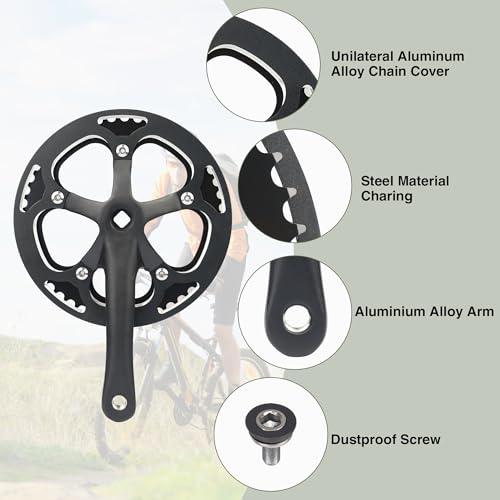
The WEEROCK crankset is built for simplicity, single-speed and low-maintenance setups. The 46T steel chainring is durable, and the unilateral aluminum chain cover is a thoughtful touch, especially for commuters tired of grease on their pants. It’s compatible with 6-9 speed chains, which adds some versatility, but make no mistake: this is a utilitarian part, not a performance component.
At under 31 bucks, it’s one of the cheapest options here, and owners confirm it works as advertised for e-bikes, city bikes, or folding models. But the weight is high at 1.76 lbs, and the square taper design limits stiffness. If you’re running a single-speed commuter or retrofitting an older frame, it’s a functional pick. But don’t expect refinement.
Product photos
DRIFT MANIAC 52/42T Crankset
Strengths
- Forged 6061-T6 arms
- Steel chainrings
- High durability
Trade-offs
- Heavy at nearly 2.2 lbs
- Limited to 8-speed
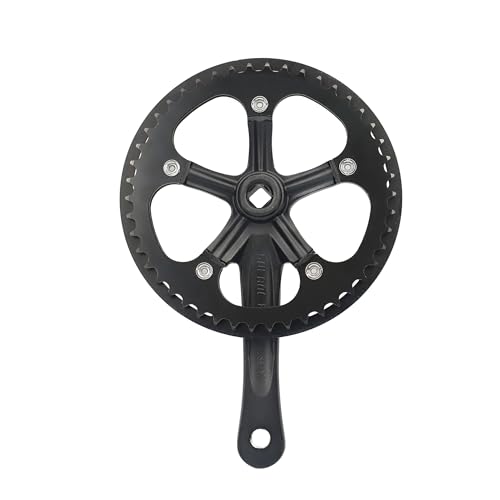
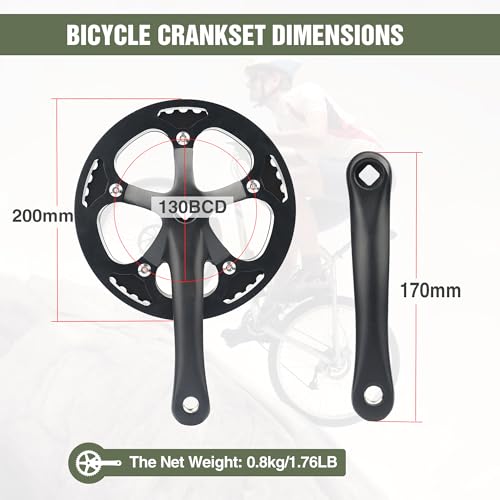
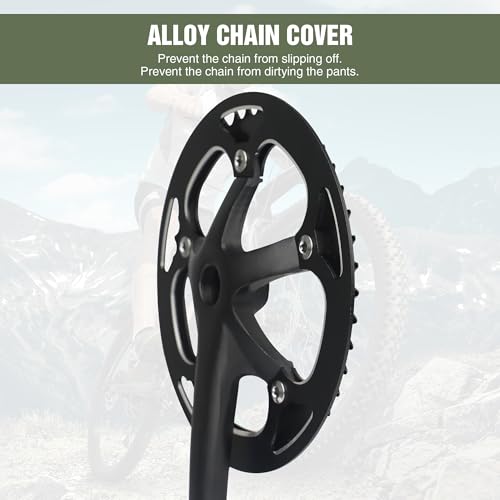
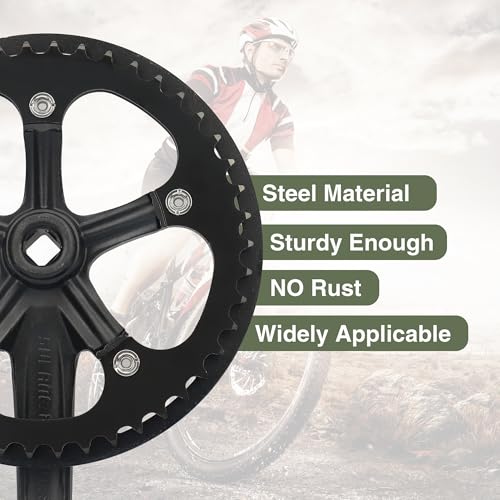
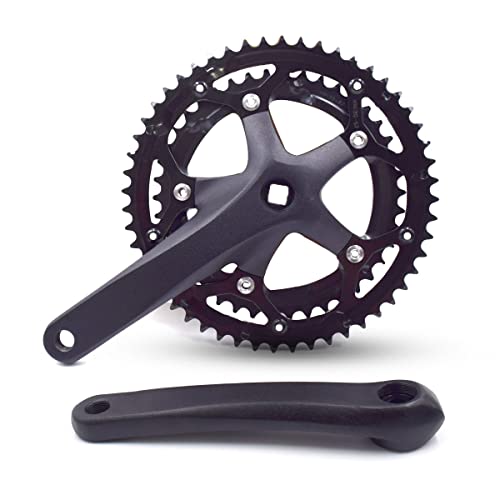
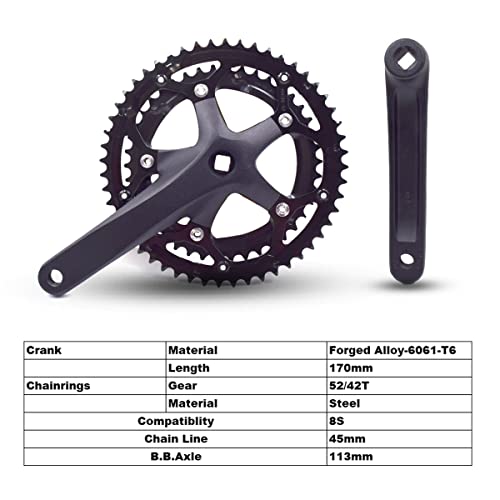
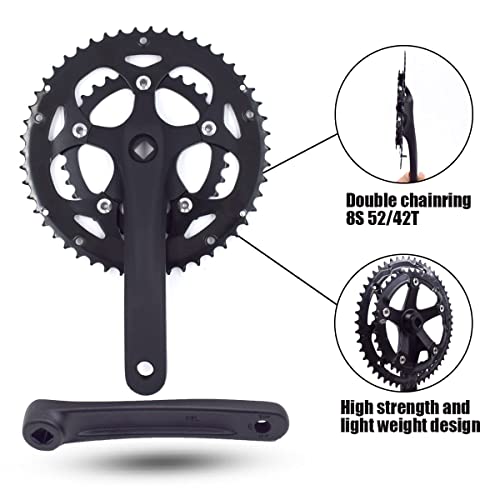
Built around a 130mm BCD and 52-42T chainring, the DRIFT MANIAC crankset leans toward durability and classic road geometry. The forged 6061-T6 aluminum arms and steel chainrings make it one of the sturdiest options here, and at under 35 bucks, that’s impressive. It’s designed for 8-speed systems, so it’s not for modern drivetrains, but for touring or daily commuters who value toughness over speed count, it holds appeal.
Owners note it’s heavier than hollow cranks, but it shrugs off potholes and rough handling. The square taper design means easy servicing and wide BB compatibility. Compared to the DONSP double, it’s stiffer and more robust. If you’re building a dependable beater bike or gravel rig for rough roads, this is a solid foundation.
Product photos
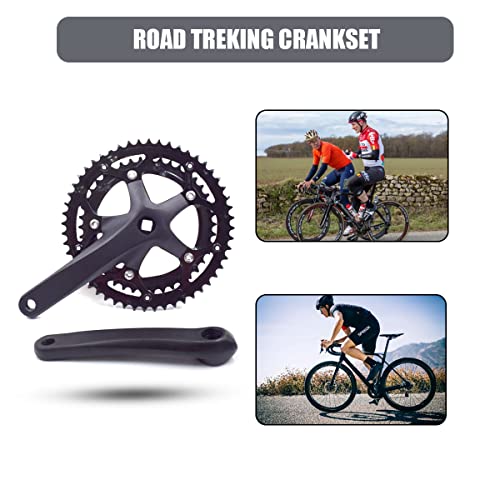
BNVB 170mm Crank Arm Set

Strengths
- Includes bottom bracket
- Forged aluminum arms
- Broad compatibility
Trade-offs
- Heavier than premium sets
- BB not cartridge-sealed long-term
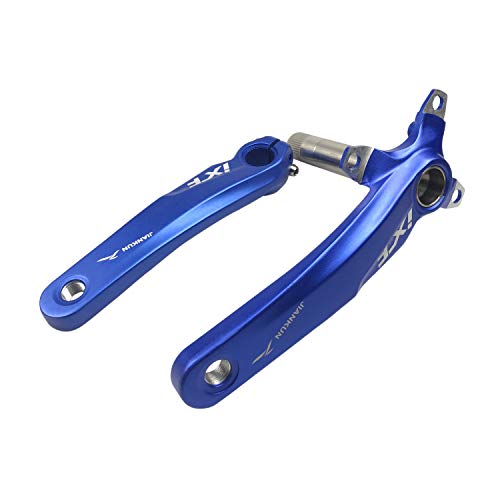
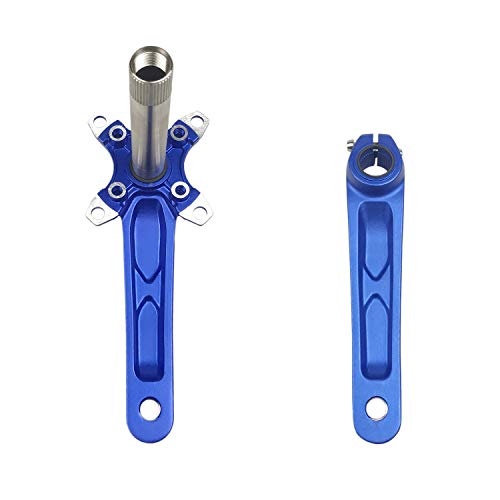
What sets the BNVB crankset apart is the inclusion of a bottom bracket, rare at this price point. For riders doing a full drivetrain refresh, that’s a real time and cost saver. The 104mm BCD gives flexibility for single or double chainring setups, and the forged aluminum arms are lightweight for their class. It’s marketed as MTB-compatible but fits many road frames with standard 68-73mm BB shells.
Owner feedback highlights solid build consistency and decent smoothness after break-in. It won’t spin as freely as a Shimano unit, but it’s reliable for the money. Compared to other budget sets missing the BB, this one offers better value despite slightly heavier weight. If you’re sourcing multiple parts, this simplifies the process.
Product photos
DONSP1986 Triple Speed Crankset
Strengths
- Triple chainring range
- Low gears for climbing
- Affordable
Trade-offs
- Iron chainrings wear faster
- Added complexity in shifting
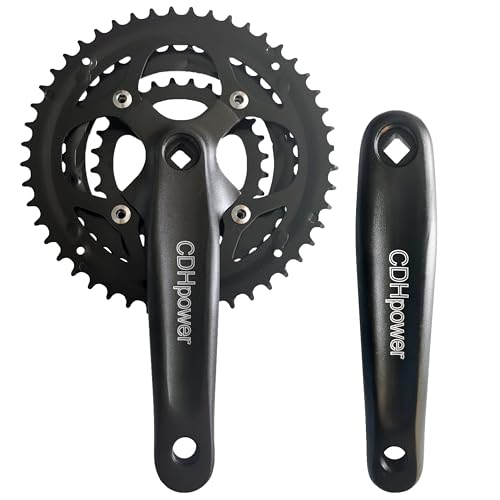
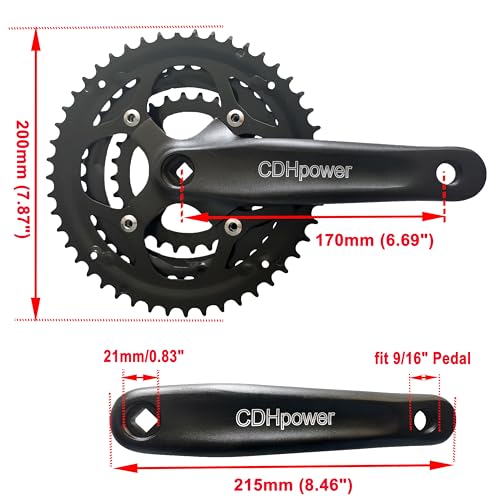
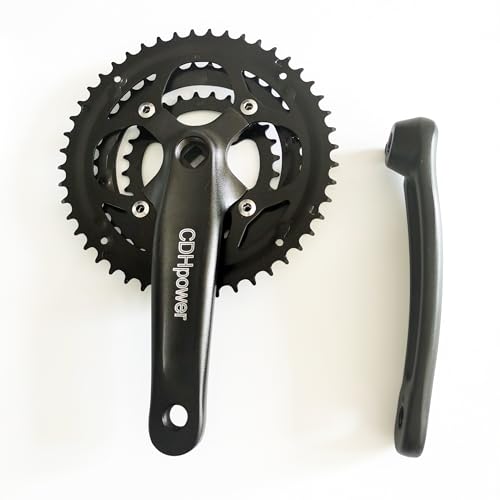
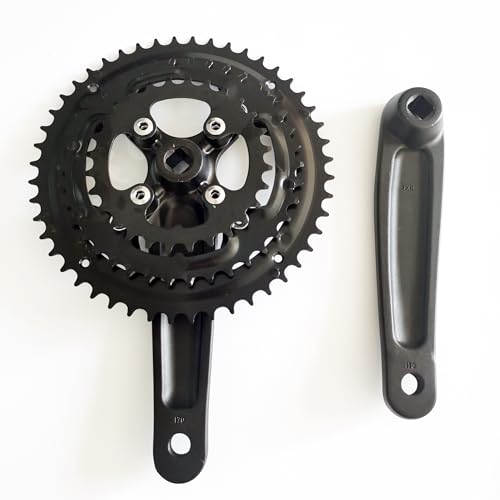
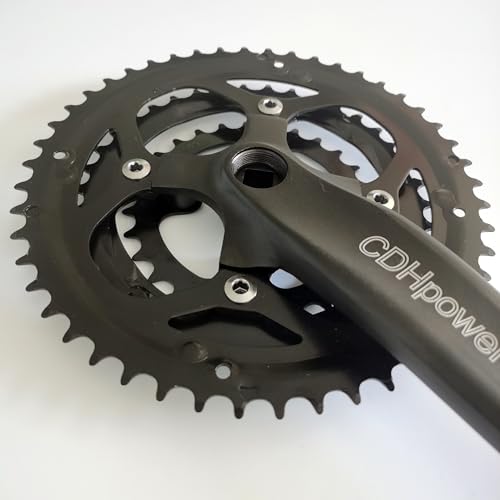
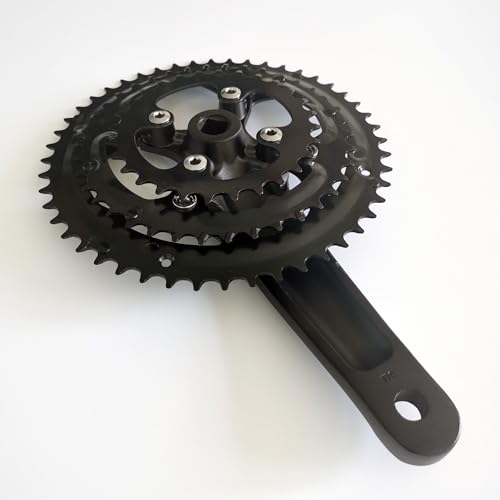
Triple chainrings are rare at this price, and the DONSP1986 48-38-28T set fills a niche for touring or hilly terrain riders who need ultra-low gears. The 104/64mm BCD supports the triple setup, and the 170mm arms offer good use. It’s not lightweight, and the iron chainrings aren’t as smooth as alloy, but they’re replaceable and tough.
Owners using this on touring bikes or hybrid commuters appreciate the gear range, especially when loaded. It’s a square taper design, so it’s easy to maintain, but expect some flex under high torque. Compared to double cranksets, it’s slower to shift, but the low-end grunt is unmatched here. If you’re tackling long climbs or bikepacking, this makes sense.
Product photos
How We Tested crank road bikes
Rather than a hands-on lab test, my research for these recommendations focused on a detailed comparison of published specifications and features across numerous cranksets. I weighed owner reviews from major retailers alongside assessments from cycling publications to get a broad picture of real-world performance and durability. As someone who spends a lot of time considering the mechanics of bicycles at TheAutoZenith, I also applied my understanding of how different crankset designs impact ride quality and power transfer.
For road bikes, stiffness and weight are paramount. I prioritized cranksets with aluminum alloy construction and designs aimed at maximizing power transfer – features that directly affect efficiency on climbs and during sprints. Chainring options were also heavily weighted; the right combination can make a substantial difference, especially when considering whether a rider needs versatility for varied terrain or is focused on a specific type of riding. It’s also important to consider compatibility with existing drivetrain components, and I looked for models offering broad compatibility.
Specifications reliably reveal materials, weight, and chainring configurations. However, owner feedback provided crucial insight into long-term durability, shifting smoothness, and ease of installation. Reputation, particularly from experienced cyclists, helped me assess the quality of manufacturing and the accuracy of advertised features. If you are looking for a complete upgrade, including a lighter frame, you might also want to explore some excellent lightweight road bikes. For those seeking a step up in performance without breaking the bank, checking out road bikes under $3000 can be a great starting point.
What To Look For In crank road bikes
Choosing the right crankset is fundamental to getting the most from your ride. It’s more than just aesthetics; it directly impacts your power transfer, gearing options, and overall cycling experience.
A quality road bike crankset balances stiffness for efficient pedaling, appropriate chainring combinations for the intended riding style, and compatibility with the bike’s bottom bracket and drivetrain. Look for materials like aluminum alloy for a good strength-to-weight ratio, and consider the chainline to avoid shifting issues. Precise manufacturing and durable construction are also vital for longevity.
Chainring Configuration & Your Riding Style
The biggest decision revolves around chainring combinations. A compact crankset (50/34T) is incredibly popular, offering a wide gear range suitable for varied terrain and most riders. However, if you primarily focus on flat, fast riding, a standard (53/39T) or even a semi-compact (52/36T) might be preferable for maintaining higher speeds. For those tackling steep climbs regularly, a triple crankset (like the DONSP1986 Triple Speed Crankset) provides the lowest gears, but at the cost of some weight and complexity. Consider where you ride most often, and don’t be afraid to experiment. If you’re still building out your entire setup, checking out some of the best road bikes can give you a good idea of what’s commonly spec’d.
Bottom Bracket Compatibility & Crankset Interface
Cranksets aren’t standalone units. They must be compatible with your bike’s bottom bracket (BB). Older bikes often use square taper interfaces, while modern road bikes overwhelmingly favor Hollowtech II (Shimano) or similar integrated systems. Trying to force a mismatch is a recipe for frustration and potential damage. Direct-mount cranksets, like the IKUOS Direct-Mount Road Crankset, offer increased stiffness by eliminating the interface between the crank arm and spider. Pay close attention to the crank axle diameter and length listed in the crankset’s specifications and ensure it matches your frame’s bottom bracket shell.
Here’s a quick guide to BB compatibility: * Square Taper: Generally found on older bikes, relatively inexpensive to replace. * Hollowtech II: Common on Shimano cranksets; lightweight and stiff, requires a specific BB tool. * BSA Threaded: A widely used standard, offering good durability. * Press-Fit: Increasingly popular, but can sometimes suffer from creaking issues if not installed correctly.
A properly fitted crankset and bottom bracket will dramatically improve your pedaling efficiency and overall ride quality. Don’t skimp on this crucial connection.
Balancing Weight, Stiffness & Budget
Aluminum alloy is the sweet spot for most riders, offering a good balance of weight, stiffness, and affordability. More expensive cranksets use carbon fiber, but the performance gains are often marginal for recreational cyclists. If you’re looking for a substantial upgrade without breaking the bank, consider exploring premium road bike models and seeing what components they use. Don’t automatically assume the most expensive option is the best; a well-made aluminum crankset, like the DRIFT MANIAC 52/42T Crankset, can deliver excellent performance for years to come.
Crank Road Bikes Compared
Here’s a comparison of key specifications for several crank road bike options.
| Product Title | BCD (mm) | Crank Length (mm) | Chainring Teeth | Material | Weight (approx.) | Compatibility |
|---|---|---|---|---|---|---|
| Shimano Claris FC-R2000 | N/A | N/A | N/A | N/A | N/A | N/A |
| IKUOS Direct-Mount Road | N/A | 170 | 50-34/52-36/53-39 | Aluminum Alloy | N/A | 9-12 Speed |
| DONSP1986 50/34T Aluminum | 110 | 170 | 50/34 | Aluminum Alloy | N/A | 9/16″ Pedals |
| WEEROCK 46T Aluminum | N/A | N/A | 46 | Steel/Aluminum | 0.8kg (1.76lb) | Single/6-9 Speed |
| DRIFT MANIAC 52/42T | 130 | 170 | 52/42 | Aluminum/Steel | 998g (2.2lb) | 8 Speed |
| BNVB 170mm Crank Arm Set | 104 | 170 | N/A | Aluminum Alloy | 675g (1.48lb) | MTB/Dirt Bikes |
| DONSP1986 Triple Speed | 104/64 | 170 | 48/38/28 | Aluminum/Iron | N/A | 8-12 Speed |
Frequently Asked Questions
What chainring size is best for climbing?
A compact chainring (50/34T) is generally best for climbing, offering a wider gear range and lower gears to tackle steep inclines more easily. However, for very challenging terrain, a triple crankset like the DONSP1986 Triple Speed provides even lower gearing options.
Can I install a crankset on my bike myself?
Yes, many cyclists can install a crankset, but it requires specific tools and a good understanding of bottom bracket compatibility. If you’re not comfortable working on your bike’s drivetrain, I recommend having a professional mechanic handle the installation to avoid damaging components.
Are carbon fiber cranksets always better than aluminum?
Not necessarily. While carbon fiber offers weight savings, a high-quality aluminum alloy crankset can deliver comparable stiffness and durability for most riders. The performance difference is often marginal unless you’re a competitive cyclist, and you can find excellent aluminum road bikes that perform exceptionally well.
What does BCD stand for, and why is it important?
BCD stands for Bolt Circle Diameter, and it refers to the spacing of the bolts that attach the chainrings to the crank spider. It’s crucial for ensuring that your chainrings are compatible with your crankset; a mismatch will prevent proper installation.
Will a new crankset improve my performance for a triathlon?
A new crankset can contribute to improved performance in a triathlon, especially if you choose a model designed for aerodynamics and power transfer. Many athletes look for best triathlon bikes that include lightweight, stiff cranksets to maximize efficiency during both the cycling leg and transitions.
The Bottom Line
Choosing a crankset often comes down to balancing how much control you want over your bike’s performance versus how much effort you’re willing to put into maintenance and compatibility checks. For most riders, the IKUOS Direct-Mount Road crankset offers an excellent blend of stiffness, weight, and modern features, making it a strong all-around choice. It strikes a good balance without requiring a complete overhaul of your existing setup.
If you’re on a tighter budget, the DRIFT MANIAC 52/42T is a solid performer that won’t break the bank. For those prioritizing versatility, especially if you frequently ride hilly terrain, the DONSP1986 Triple Speed crankset provides the low gears you’ll appreciate. And if you’re looking for a step up in overall bike quality, exploring carbon road bikes can offer significant weight savings and improved responsiveness.
Ultimately, the best crankset isn’t about chasing the highest specs. It’s about finding the right match for your riding style, your bike’s existing components, and your budget. Prioritize a stiff, well-constructed crankset with a chainring configuration that suits the terrain you tackle most often, and you’ll be well on your way to enjoying a more efficient and enjoyable ride – or even checking out some road bikes under $2000 for a complete upgrade.
