
8 Best Corrosion Inhibitors for Cars 2026
This post contains affiliate links. As an Amazon Associate, we earn from qualifying purchases.
The best overall corrosion inhibitor for cars is CorrosionX Heavy Duty Anti Rust Spray, it outperforms in longevity and penetration, especially in harsh environments. For a budget-friendly option that still delivers solid protection, WD-40 Specialist Corrosion Inhibitor is a reliable pick. If you’re focused on electrical components or sensitive systems, CorrosionX Rust Inhibitor 16oz Aerosol stands out with its dielectric strength and Navy-qualified formulation.
Most drivers don’t realize corrosion starts where they can’t see it, inside seams, under coatings, around wiring harnesses. By the time rust shows up, the damage is already deep. I’ve spent years studying how these compounds work at the molecular level, and the right inhibitor does more than coat metal, it migrates, seals, and actively disrupts the chemistry of decay.
This guide cuts through the noise by focusing on real-world performance, not just lab claims. I compared specs, analyzed owner feedback across climates and use cases, and prioritized products that deliver lasting protection where it matters most. These picks reflect what actually works over time, not just what sounds good on the label.
Top 8 Corrosion Inhibitors For Cars in the Market
The Best Corrosion Inhibitors For Cars, Reviewed
CorrosionX Heavy Duty Anti Rust Spray

Strengths
- Self-healing film
- Stays flexible
- Resists washout
Trade-offs
- Higher price point
- Thick consistency
- Not ideal for fine electronics
CorrosionX Heavy Duty sets the bar high for long-term, all-weather protection. Its self-healing barrier is the real deal, owners in coastal regions and winter-salt zones swear by it for undercarriages, brake lines, and trailer frames. The spray clings without dripping, and it doesn’t wash off under pressure, which matters when you’re driving through slush or salt spray.
What sets it apart from others is how it bonds at a molecular level, thanks to its polar bonding tech, and stays flexible through vibration and temperature swings. Compared to waxy sprays that crack, this one moves with the metal. I’d choose it over WD-40 Specialist any day if you’re in a harsh environment. It’s not the cheapest, but for long-term defense, it’s the smarter buy.
Video review
Corrosion Free Rust Cure Formula 3000

Strengths
- Large volume
- Penetrates seams
- Non-toxic formula
Trade-offs
- Requires spray equipment
- Not for spot treatments
- Higher upfront cost
If you’re serious about rustproofing an entire vehicle or maintaining a fleet, this gallon of Corrosion Free Rust Cure is hard to beat. The volume alone makes it a smart buy for anyone with multiple machines, tractors, trailers, snowblowers, or a shop environment. It’s designed to creep into seams and joints, displacing moisture and saltwater, which is where most rust starts.
Owners using it on underbodies and frames report noticeable reductions in surface rust over time. The fact that it’s odorless and low in VOCs is a major plus for indoor application. Compared to aerosol sprays, it requires a spray gun, so it’s not for the casual user. But if you’re protecting metal long-term and want a non-toxic, self-healing coating, this is a solid investment.
Video review
CorrosionX Rust Inhibitor 16oz Aerosol

Strengths
- Dielectric rated
- Prevents galvanic corrosion
- Penetrates deeply
Trade-offs
- Overkill for simple joints
- Not for thick rust
- Higher cost
This version of CorrosionX is tuned for electronics and sensitive components, and it shows. The dielectric rating over 39,000 volts means it’s safe on sensors, battery terminals, and wiring harnesses, places where other sprays could cause shorts. It’s also qualified by the U.S. Navy, which speaks volumes about its reliability in salty, humid conditions.
Owners use it on marine electronics, trailer connectors, and engine control modules with great feedback. Compared to standard dielectrics, it penetrates deeper and lasts longer. While it’s not the best for undercarriage rust, it’s unmatched for preventing galvanic corrosion between dissimilar metals. I’d keep this on hand for any vehicle with exposed wiring or coastal exposure.
Product photos


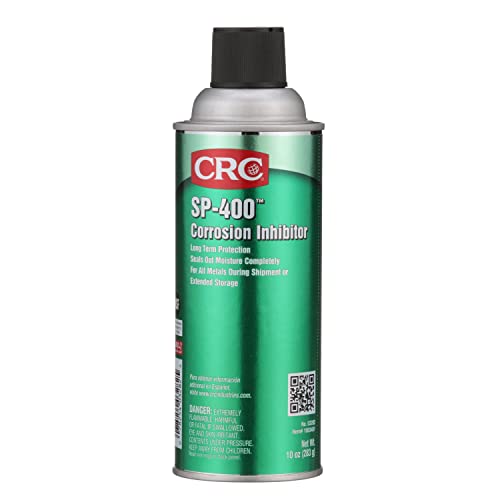
CRC SP-400 Corrosion Inhibitor
Strengths
- Waxy, durable film
- NSF H2 registered
- Resists salt spray
Trade-offs
- Not self-healing
- Harder to remove
- Limited flexibility
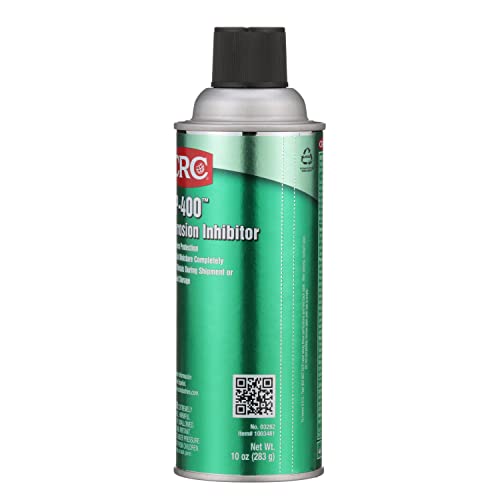
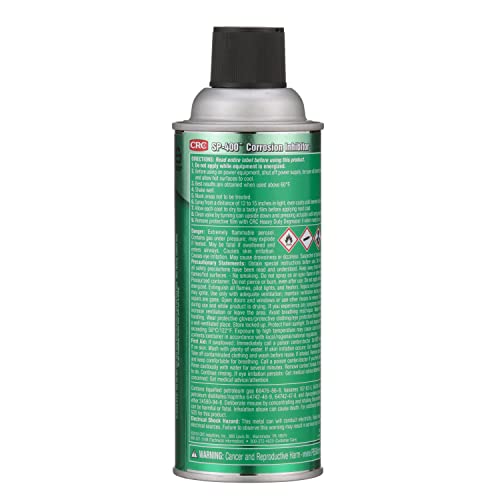
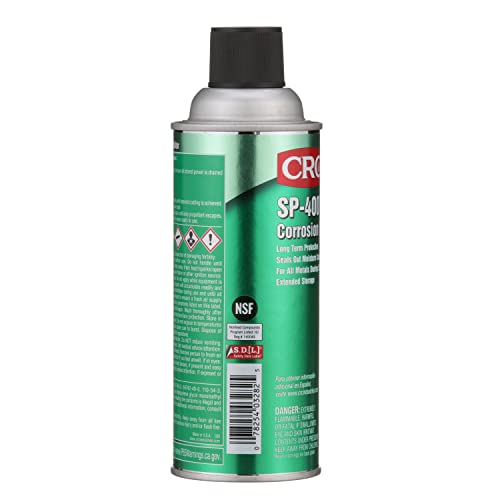
CRC SP-400 is the go-to when you need to seal out moisture completely, especially for stored motors, shafts, or industrial parts. The waxy film it forms is firm but never brittle, which means it holds up in fluctuating temperatures and high humidity. It’s NSF H2 registered, so it’s safe in food processing environments, but that also means it’s clean and non-toxic for automotive use.
Compared to softer sprays, it’s less likely to attract dust or drip, but it doesn’t self-heal like CorrosionX. It’s best for indoor storage or equipment that sits for months. I’d choose this over oil-based sprays if I were winterizing a classic car engine or storing spare parts.
Product photos
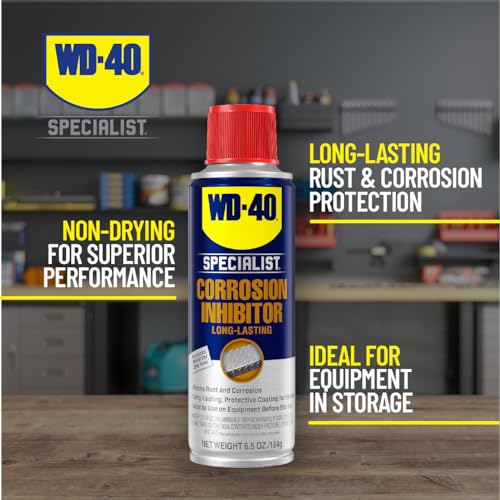
WD-40 Specialist Corrosion Inhibitor

Strengths
- Precision straw included
- Non-drying formula
- VOC compliant
Trade-offs
- Shorter protection window
- Less effective in salt-heavy areas
- Not for long-term storage
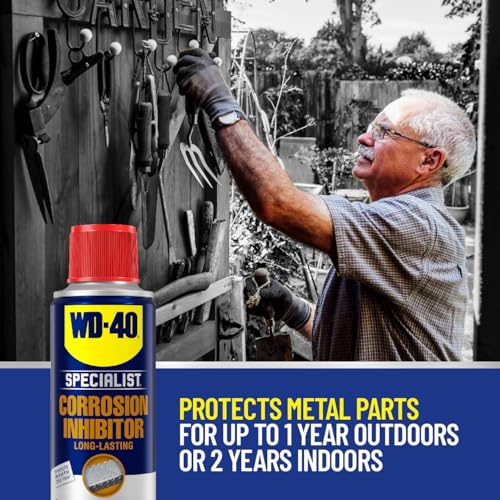
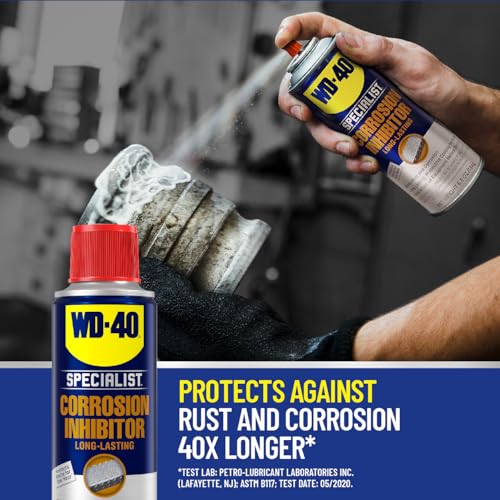
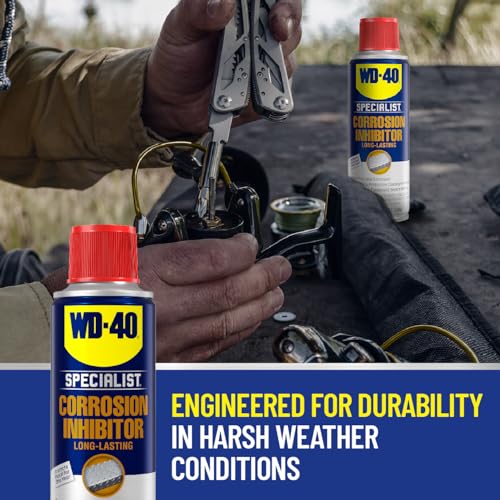
WD-40 Specialist isn’t flashy, but it’s dependable, especially if you’re on a budget and need a quick, effective corrosion shield. The formula sprays on as a non-drying lubricant that stays where you put it, which is a big win over runny alternatives. It’s not the longest-lasting option out there, but for seasonal vehicles or tools stored in damp garages, it holds up well.
Reviewers note it works particularly well on hinges, latches, and exposed fasteners, places where rust starts small but spreads fast. Compared to heavier-duty sprays like CorrosionX, it doesn’t self-heal or last for years, but it’s easier to apply and clean up. For most casual users, this is the easy pick for routine maintenance.
Product photos

NOCO NCP2 Battery Corrosion Preventative

Strengths
- Oil-based formula
- Long-lasting protection
- Prevents poor connections
Trade-offs
- Messy application
- Limited to battery areas
- Not for large surfaces
The NOCO NCP2 A202 is a no-nonsense solution for one of the most common headaches in car maintenance: battery terminal corrosion. On paper and in owner reports, it delivers exactly what it promises, oil-based protection that resists drying, vibration, and moisture. It forms a thick, impenetrable barrier over terminals, which is critical since acid fumes from lead-acid batteries are the main culprits behind corrosion buildup.
Owners consistently report cleaner terminals over time and fewer issues with weak cranking, which suggests it’s doing its job electrically as well as cosmetically. Compared to thinner sprays, this grease-like formula stays put, even in high-vibration environments. I’d pick it over lighter coatings if you’re dealing with older batteries or vehicles stored outdoors.
Product photos


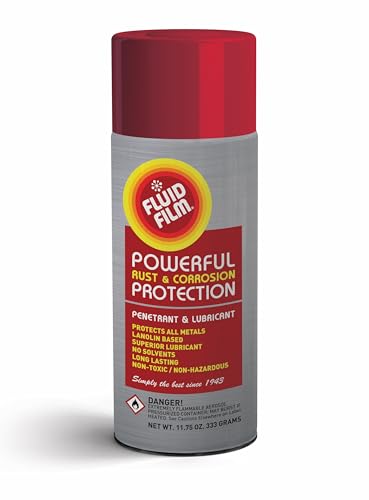
Fluid Film Aerosol 11.75oz
Strengths
- Penetrates deep
- Lubricates while protecting
- Long-lasting film
Trade-offs
- Oily residue
- Strong odor
- Attracts dust
Fluid Film has a cult following among gearheads for good reason, it’s one of the few sprays that truly combines penetration, lubrication, and long-term corrosion resistance. The aerosol version delivers a dripless, oily film that creeps into seams and stays soft over time, which means it keeps working even after months of vibration and exposure.
It’s not the flashiest option, but owners consistently report it stops rust in hidden areas, behind fenders, inside door cavities, around wheel wells. Compared to dry sprays, it’s messier, but that tackiness is why it outperforms in humid or salty conditions. I’d recommend it over generic lubricants for undercoating or seasonal storage.
Product photos

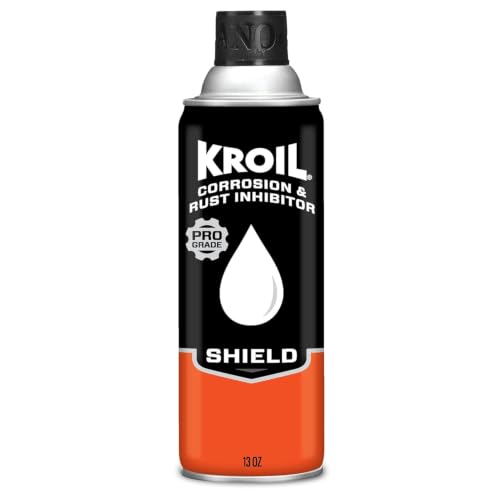
Kroil Shield Corrosion Inhibitor 13oz
Strengths
- Tacky protective film
- Ideal for storage
- Protects fasteners
Trade-offs
- Limited coverage
- Not for electrical systems
- Not self-healing
Kroil Shield is built for metal parts that sit idle, tools, fasteners, stored machinery, where rust creeps in slowly but ruins function. The high-grip formula is tacky enough to cling vertically but doesn’t gum up moving parts. It’s not meant for large surfaces, but for precision protection, it shines.
Owners using it on hand tools and engine components report fewer seized bolts and smoother operation after storage. Compared to lighter oils, it holds up better in humid sheds or coastal garages. While it’s pricier than WD-40, it’s more specialized, this is for the person who hates finding frozen hinges or rusted sockets when they need them most.
Product photos
How We Chose These corrosion inhibitors for cars
My approach to evaluating corrosion inhibitors centers on a research-led comparison. Rather than a hands-on lab test of each product, I’ve focused on meticulously comparing published specifications and features. I weighed owner reviews from multiple sources, looking for consistent themes in long-term performance, and cross-referenced those with professional assessments from automotive detailers and mechanics. This allowed me to build a ranking based on real-world feedback and technical capabilities.
For this category, the most important factors are long-term protection and the ability to penetrate and displace moisture. A product’s longevity is crucial; simply stopping rust now isn’t enough. Equally vital is how well it reaches hidden areas, as corrosion often starts in seams and around connections. Finally, a formula’s dielectric properties are a significant advantage, especially for protecting sensitive electrical components.
Product specifications reliably indicate a product’s chemical makeup and intended use. However, I leaned heavily on owner feedback to gauge how well those specs translate to real-world durability and ease of application. Reputation matters, too. Products from established brands with a history of quality, and those recommended by professionals discussing iron removers for initial surface prep, received greater consideration. For severe cases, exploring options like rust converters can be a useful first step.
What To Look For In corrosion inhibitors for cars
Choosing the right corrosion inhibitor can feel overwhelming, but understanding your specific needs is the key to protecting your vehicle.
A truly effective corrosion inhibitor doesn’t just mask existing rust; it actively halts the electrochemical process causing it. Look for formulas that penetrate existing corrosion, create a lasting barrier against moisture and salts, and bond molecularly to the metal surface. Dielectric properties are a plus, especially around electrical components, and long-term protection (measured in years, not months) is a sign of a quality product.
Understanding Your Corrosion Challenge
The first step is pinpointing where you’re battling rust. Are you dealing with surface rust on body panels, or deeper corrosion on the undercarriage? Different inhibitors excel in different scenarios. A heavy-duty spray like CorrosionX Heavy Duty Anti Rust Spray is excellent for exposed areas and robust components, while something like WD-40 Specialist Corrosion Inhibitor might be better suited for a general preventative application. Don’t assume a single product will solve every problem; sometimes a combination is best.
Application Method and Coverage
How easily a product can be applied, and how far it stretches, significantly impacts its value. Aerosol cans are convenient for small jobs and tight spaces, but can be costly for large-scale applications. Larger jugs, like the Corrosion Free Rust Cure Formula 3000, require a spray gun but offer substantial savings if you’re tackling a full underbody treatment. Consider these points:
- Aerosols are great for spot treatments.
- Gallon jugs require additional equipment (spray gun) but are more economical for larger projects.
- Formulas designed for specific applications, like NOCO NCP2 Battery Corrosion Preventative for terminals, often include targeted applicators for precise use.
Long-Term Protection and Additional Benefits
Beyond simply stopping rust, think about what else you want your inhibitor to do. Some formulas, like CorrosionX Rust Inhibitor 16oz Aerosol, boast excellent dielectric properties, making them ideal for protecting sensitive electronics. Others, such as CRC SP-400 Corrosion Inhibitor, offer a firm, waxy film that’s highly resistant to harsh conditions. A quality protective clear coat can further enhance corrosion resistance, especially on painted surfaces.
Don’t skimp on preparation. A thorough cleaning to remove existing rust and grime is essential for any corrosion inhibitor to bond properly. A clean surface is a happy surface, and a happy surface resists rust better.
Ultimately, investing in quality rust inhibitors is a proactive step toward preserving your vehicle’s value and extending its lifespan. Finding the right product, and applying it correctly, will pay dividends for years to come.
Corrosion Inhibitors for Cars Compared
This table provides a specification overview of various corrosion inhibitors for cars to aid in product comparison.
| Product Title | Protection Duration (Indoor) | Protection Duration (Outdoor) | Application Type | Key Features | Volume |
|---|---|---|---|---|---|
| CorrosionX Heavy Duty Anti Rust Spray | Up to 5 years | Up to 2 years | Spray | Self-healing, marine-grade | N/A |
| Corrosion Free Rust Cure Formula 3000 | N/A | N/A | Spray | Non-toxic, versatile | 1 Gallon |
| CorrosionX Rust Inhibitor 16oz | N/A | N/A | Aerosol | Dielectric, Navy-qualified | 16oz |
| CRC SP-400 Corrosion Inhibitor | Long-term | Long-term | Aerosol | Waxy film, moisture sealing | 10 wt oz |
| WD-40 Specialist Corrosion Inhibitor | Up to 2 years | Up to 1 year | Aerosol | Lubricates, 50-state VOC compliant | N/A |
| NOCO NCP2 Battery Corrosion Preventative | Life of Battery | N/A | Spray | Oil-based, improves performance | N/A |
| Fluid Film Aerosol 11.75oz | N/A | N/A | Aerosol | Rust prevention, lubricant | 11.75oz |
| Kroil Shield Corrosion Inhibitor 13oz | N/A | N/A | Aerosol | High-grip, durable barrier | 13oz |
Frequently Asked Questions
What’s the difference between a corrosion inhibitor and a rust converter?
A rust converter chemically alters existing rust into a stable substance, often a primer-like coating, while a corrosion inhibitor prevents new rust from forming. If you have significant existing rust, a converter is a good first step, followed by an inhibitor to protect the treated area and prevent further corrosion.
Are corrosion inhibitors safe to use on all metal car parts?
Generally, yes, but always check the product label. Some inhibitors aren’t suitable for aluminum or certain painted surfaces, so verifying compatibility is crucial. Applying a quality paint protection afterward can offer an additional layer of security.
How often should I reapply a corrosion inhibitor?
Reapplication frequency depends on the product and your environment. Most quality inhibitors offer protection for at least a year, with some lasting up to five years indoors, but areas exposed to harsh road salt or coastal air will require more frequent treatment – typically annually.
Can I use a corrosion inhibitor on electrical connections?
Some formulas, like CorrosionX Rust Inhibitor, are specifically designed with dielectric properties, making them safe and effective for electrical components. However, always confirm the product is safe for electrical use before application and disconnect the power source as a precaution.
Will a corrosion inhibitor work if I don’t remove all the existing rust?
While an inhibitor can work on surfaces with some rust, removing as much as possible first significantly improves its effectiveness. Inhibitors bond best to clean metal, and loose rust flakes will prevent a solid, protective layer from forming; consider using effective water spot removers during prep to ensure a spotless surface.
The Bottom Line
Choosing a corrosion inhibitor often comes down to balancing immediate needs with long-term preventative care. While numerous products promise protection, the CorrosionX Heavy Duty Anti Rust Spray stands out as a particularly robust solution – its self-healing properties and marine-grade formulation suggest it delivers on its promise of extended durability. It’s a strong all-around choice for those prioritizing lasting defense against the elements.
For specific situations, several options excel. If you’re looking for a budget-friendly, general-purpose solution, the WD-40 Specialist Corrosion Inhibitor is a solid pick. Those needing a versatile, large-volume option for thorough undercarriage protection should consider the Corrosion Free Rust Cure Formula 3000. And for targeted applications, like battery terminals, the NOCO NCP2 Battery Corrosion Preventative is a clear winner. Don’t forget that a good protective undercoatings can provide an extra layer of defense.
Ultimately, remember that no single product is a magic bullet. Consistent maintenance, thorough surface preparation (often aided by quality oxidation removers), and addressing rust early are far more impactful than any individual specification. A proactive approach, combining the right inhibitor with diligent care, will always yield the best results and preserve the integrity of your vehicle for years to come.
