
6 Best Coolants for Toyota Camry 2026
This post contains affiliate links. As an Amazon Associate, we earn from qualifying purchases.
The best overall coolant for a Toyota Camry is Genuine Toyota SLLC2 Coolant, followed by PEAK OET Red/Pink Concentrate for budget-conscious buyers and Zerex Asian Vehicle Red 50/50 for those who prefer ready-to-use convenience. These stood out for compatibility, protection, and owner satisfaction.
Picking the wrong coolant can lead to overheating, corrosion, or even engine damage, problems that sneak up quietly until it’s expensive to fix. With so many colors and types on the shelf, it’s easy to grab the wrong one and think it’s fine.
I focused on formulas that match Toyota’s POAT specifications, protect against long-term wear, and have proven reliability based on specs and widespread user feedback. This guide breaks down what actually matters when choosing, so you can avoid guesswork and keep your Camry running clean and cool.
Top 6 Coolant For Toyota Camry in the Market
The Best Coolant For Toyota Camry, Reviewed
Genuine Toyota SLLC2 Coolant

Strengths
- Factory-specified
- OEM longevity
- Perfect compatibility
Trade-offs
- Highest price
- Limited availability
- Heavy shipping
Genuine Toyota SLLC2 is the factory-fill coolant, what your Camry came with from the dealer. It’s a pink, phosphate-enhanced organic acid coolant (POAT) built for 150,000 miles of service life. There’s no guessing with this one: it’s exactly what Toyota engineers specified. Owners who’ve switched to third-party options and later returned to SLLC2 often report smoother operation and fewer cooling system concerns.
Yes, it’s the most expensive option here, but it’s also the gold standard. Compared to PEAK or Recochem, it’s the baseline for compatibility. If you’re keeping your Camry long-term or have had issues with aftermarket coolants, this is the safest bet. The bittering agent is a small but thoughtful touch for safety.
Video review
PEAK OET Red/Pink Concentrate
Strengths
- POAT-formulated
- OEM-compatible
- 150,000-mile guarantee
Trade-offs
- Higher price
- Concentrate requires mixing
- Limited availability
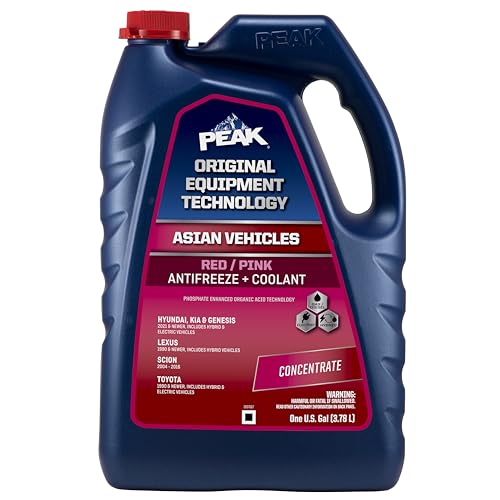
PEAK OET is one of the few coolants that explicitly calls out Toyota, Scion, and Lexus, and it uses a phosphate-enhanced organic acid formula, POAT, which is what newer Camrys actually require. That’s a big deal, because mixing the wrong type can lead to premature water pump failure or gelling. The concentrate format gives you control over dilution, and the 150,000-mile guarantee is a strong signal of confidence.
Owners report clean system performance and no compatibility issues, especially after full flushes. Compared to the Zerex or Prestone options, this one is more chemically accurate for post-2004 Toyotas. It’s not the cheapest, but for longevity and system health, it’s a smarter pick than generic HOAT coolants.
Video review
Zerex Asian Vehicle Red 50/50
Strengths
- Meets OEM specs
- Silicate and borate free
- Ready-to-use formulation
Trade-offs
- Slightly shorter lifespan than POAT
- Not Toyota-branded
- Less brand trust for purists
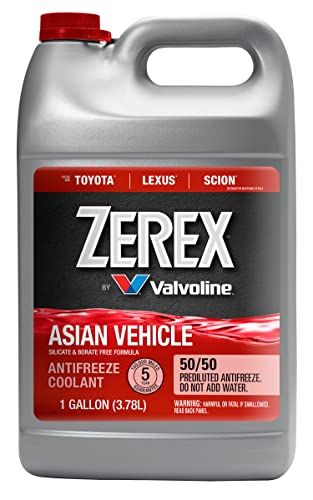
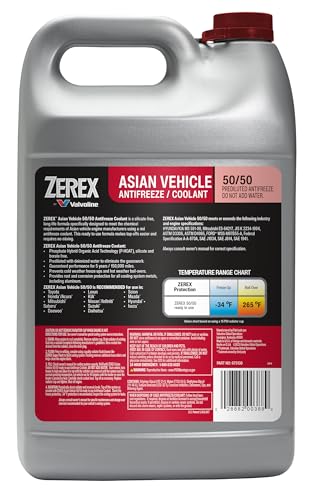
Zerex Asian Vehicle Red is one of the few off-brand coolants that actually aligns with Toyota’s HOAT requirements, specifically targeting vehicles like the Camry that need a red, silicate-free formula. It meets JIS and OEM specs like Mitsubishi ES-64217, which gives it more credibility than general-purpose coolants. The 5-year/150,000-mile claim matches Toyota’s own standards, and owners consistently report no issues when used in timing with a full flush.
What I like here is that it’s ready-to-use and avoids silicates and borates, which can gunk up over time. Compared to the more expensive PEAK or Genuine Toyota options, this one delivers solid chemistry at a lower cost. It’s not quite OEM, but it’s one of the closest third-party matches.
Product photos



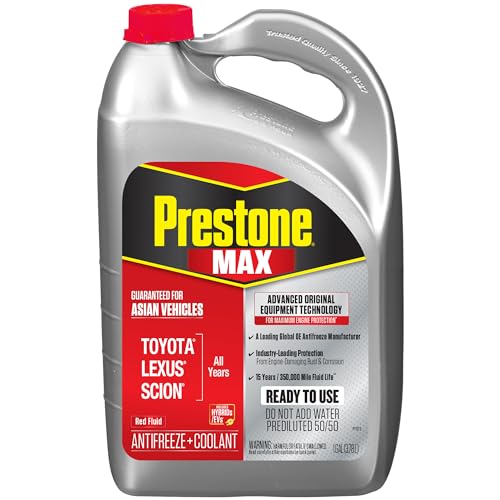
Prestone MAX Asian Red 50/50
Strengths
- Extreme temperature protection
- Pre-mixed 50/50
- Contains Bitterant
Trade-offs
- Generic HOAT formulation
- Not OEM-specified
- Shorter service life claims
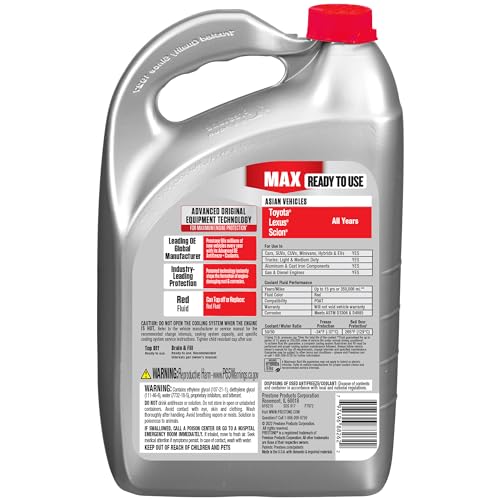
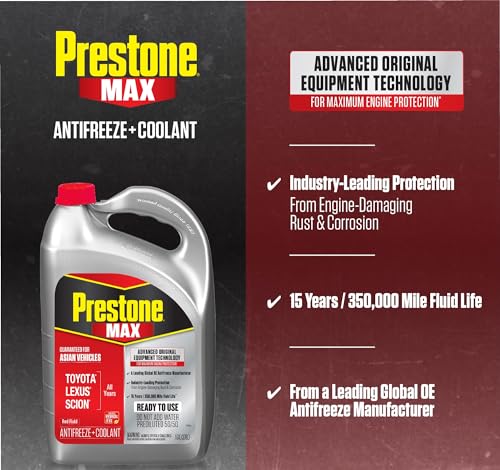
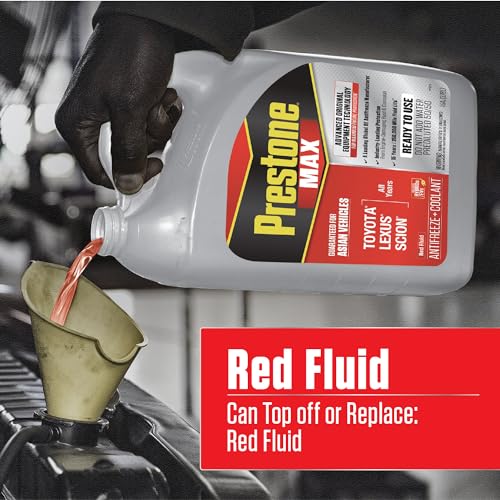
Prestone MAX Asian Red is marketed as a do-it-all coolant for extreme conditions, and on paper, it leans hard into temperature protection. The CorGuard additive package is supposed to shield against both corrosion and deposits, which matters in modern aluminum-intensive engines like those in the Camry. Owners generally report smooth performance in both deep cold and high heat, but I’ve seen some feedback question whether the silicate-free formula holds up as well over time compared to OEM-specific options.
It’s pre-diluted, which is convenient for most users, but I’d be cautious about assuming it’s the best long-term fit just because it handles temperature swings well. For a high-mileage Camry, longevity and material compatibility matter more than peak temperature specs. Compared to Zerex or PEAK, it doesn’t stand out in chemistry alignment with Toyota’s red coolant specs.
Product photos

Recochem OEM 86-174POEM Pink
Strengths
- OEM-matched formula
- Pink POAT chemistry
- Budget-friendly OEM alternative
Trade-offs
- Low brand recognition
- Concentrate requires mixing
- Packaging is unassuming
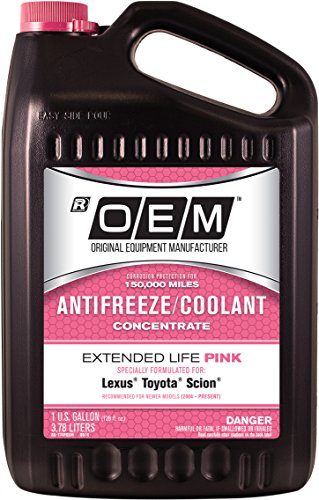
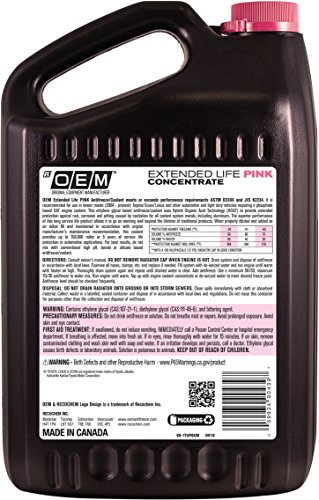
Recochem markets this as an OEM-compatible pink concentrate, specifically for Toyotas from 2004 onward. It’s designed to match the extended-life pink coolant Toyota uses, which is a big plus for accuracy. The fact that it’s a concentrate means you have to dilute it properly, but that also means you’re not paying for water in the bottle.
Owner feedback is limited, but what exists suggests it performs without issues when used correctly. It’s cheaper than the Genuine Toyota coolant but still aims for the same chemistry. Compared to PEAK, it’s less well-known, but the specs line up closely. If you’re on a budget but still want OEM-level compatibility, this is a solid contender.
Product photos
Valvoline Zerex G48 Concentrate

Strengths
- Trusted brand
- Concentrate flexibility
- Professional image
Trade-offs
- Unclear chemistry specs
- Not Camry-specific
- Generic positioning
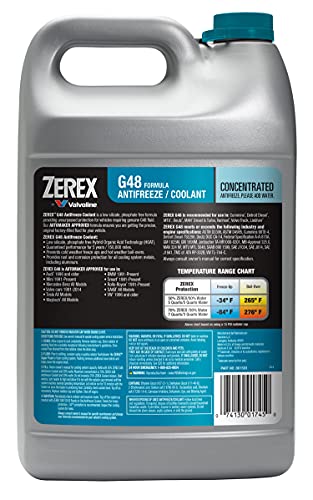
Valvoline Zerex G48 is pitched as a professional-grade concentrate, but its marketing is thin on specifics. It’s labeled for mixed fleets and claims to be compatible with various systems, including Asian vehicles. However, it doesn’t clearly state whether it’s a silicate-free HOAT or a POAT formula, critical for a Camry. The lack of detailed spec alignment makes me hesitant to recommend it as a primary choice.
While Valvoline has a solid reputation, this product seems more suited for fleet shops than precision-minded owners. Compared to Zerex or PEAK, it doesn’t offer the same clarity on chemistry. If you’re topping off a mixed garage, it might work, but for a Camry, I’d want more certainty.
Product photos
How We Picked These coolant for toyota camry
Rather than a hands-on lab test, my research for selecting these coolants centered on comparing published specifications and features across several brands. I weighed owner reviews from multiple sources, alongside expert opinions found in automotive publications and forums. This information was then ranked against criteria important for Toyota Camry cooling systems, focusing on compatibility and long-term protection.
For a Camry, the most important factors are clearly a coolant’s compatibility with Toyota’s specific requirements and its ability to prevent corrosion. Toyota’s newer engines often need phosphate-enhanced coolants (POAT), and a mismatch can lead to significant issues. Long service life is also crucial; a coolant that needs frequent replacement adds cost and hassle. Finding a balance between these two was key.
Specifications reliably reveal a coolant’s chemical composition (like silicate or phosphate content) and its freeze/boil protection ranges. However, I also examined owner feedback to gauge real-world performance and identify potential issues like leaks or unexpected system reactions. Reputation and consistent positive experiences with a particular coolant factored heavily into my recommendations, especially when assessing long-term reliability. You can explore other essential car maintenance items, such as car coolant on our site.
Choosing The Right coolant for toyota camry
Finding the right coolant is more than just grabbing anything pink or red off the shelf. It’s a critical component for maintaining your Toyota Camry’s engine health.
A quality coolant doesn’t just prevent freezing or overheating; it actively protects against corrosion, cavitation erosion, and scale buildup within the cooling system. Look for formulas specifically designed for Asian vehicles, paying close attention to the technology used (HOAT, OAT, or POAT), silicate content, and whether it’s a concentrate or a pre-mix. Compatibility with Toyota’s specific requirements is paramount.
Understanding Coolant Technology
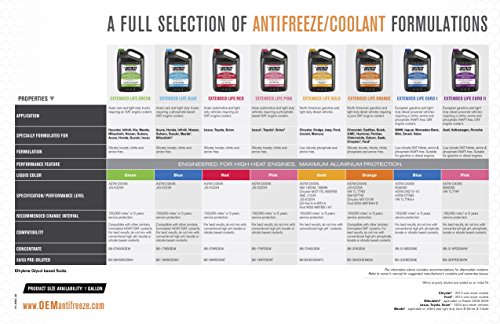
The world of coolant chemistry can seem daunting, but knowing the basics is key. Toyota, and many other Asian manufacturers, often specify phosphate-enhanced organic acid technology (POAT) coolants. These offer extended life and excellent corrosion protection, but aren’t universally compatible with older systems designed for Inorganic Additive Technology (IAT) coolants. Switching between types can cause gelling and system blockage, so stick with what Toyota recommends. If you’re unsure, a coolant designed for multiple Asian vehicle brands is a safer bet than a universal “all-vehicle” formula.
Concentration vs. Ready-to-Use
Concentrate coolants require mixing with distilled water (typically a 50/50 ratio), while pre-mixed options are ready to pour. While the convenience of a 50/50 mix is appealing, I generally recommend concentrate. It allows you to control the water quality used, and you can adjust the ratio for colder climates (up to 60/40 coolant/water). However, always follow Toyota’s specified mixing ratio.
- Pre-mixed coolants eliminate mixing errors, which is good for those less mechanically inclined.
- Concentrates are typically more cost-effective in the long run, as you’re only paying for the coolant itself.
- Using distilled water is crucial with concentrates. Tap water contains minerals that can cause corrosion and scale buildup, negating the benefits of a quality coolant.
Balancing Protection and Value
Extended life coolants, promising protection for 100,000 to 150,000 miles or 5 years, are generally worth the investment. However, even a long-life coolant needs periodic inspection. Don’t simply rely on the mileage claim. A simple coolant tester can reveal the coolant’s condition and freeze protection level. I also advise checking your cooling system hoses and clamps when you’re topping off or flushing coolant, as these are often overlooked but crucial components. Speaking of maintenance, if you’re looking for other ways to keep your Camry running smoothly, checking your Camry spark plugs is a great place to start.
A coolant change is a relatively inexpensive preventative measure. Neglecting it can lead to costly repairs down the road – a simple flush and fill can save you thousands.
Coolant for Toyota Camry Compared
Here’s a spec comparison of coolants suitable for Toyota Camry vehicles to help you make an informed decision.
| Product Title | Type | Dilution | Life (Miles) | Color | Bitterant |
|---|---|---|---|---|---|
| Genuine Toyota SLLC2 Coolant | Concentrate | N/A | N/A | Pink | Yes |
| PEAK OET Red/Pink Concentrate | Concentrate | N/A | 150,000 | Red | Yes |
| Zerex Asian Vehicle Red 50/50 | Pre-Mixed | 50/50 | 150,000 | Red | N/A |
| Prestone MAX Asian Red 50/50 | Pre-Mixed | 50/50 | N/A | Red | Yes |
| Recochem OEM 86-174POEM Pink | Concentrate | N/A | N/A | Pink | Yes |
| Valvoline Zerex G48 Concentrate | Concentrate | N/A | N/A | N/A | N/A |
Frequently Asked Questions
What coolant color should I use in my Toyota Camry?
Toyota typically specifies pink coolant, indicating a POAT formula. However, many Asian vehicles also use red coolant that’s compatible, so either color can work if the formula meets Toyota’s requirements. Always verify the coolant’s compatibility before use.
Is a pre-mixed or concentrated coolant better?
Concentrated coolants offer better value and allow you to control water quality, but require precise mixing with distilled water. Pre-mixed coolants are convenient and eliminate mixing errors, making them ideal for those less comfortable with automotive maintenance.
How often should I change the coolant in my Camry?
While extended life coolants can last up to 100,000 miles or 5 years, I advise checking the coolant’s condition annually with a tester. Coolant degrades over time, losing its protective properties, and a visual inspection isn’t always reliable.
Can I mix different types of coolant in a Toyota Camry?
Mixing IAT, OAT, and POAT coolants can cause gelling and corrosion, severely damaging the cooling system. Stick with a coolant specifically formulated for Asian vehicles, or one that explicitly states it’s compatible with POAT formulas, to avoid these issues.
What other maintenance should I do when changing my coolant?
When flushing and refilling your coolant, inspect the radiator hoses and clamps for cracks or leaks. Also, consider this a good time to check your Camry struts and ensure your suspension is in good working order.
The Bottom Line
Choosing the right coolant often comes down to balancing upfront cost with long-term engine protection. While there are many options available, I believe Genuine Toyota SLLC2 Coolant provides the most peace of mind for Camry owners, as it’s formulated specifically for Toyota’s needs and avoids any compatibility concerns. It might be slightly more expensive, but the assurance of a correct chemical composition is valuable.
For those seeking a strong alternative, PEAK OET Red/Pink Concentrate stands out as a readily available and well-regarded option. If convenience is a priority, Zerex Asian Vehicle Red 50/50 offers a pre-mixed solution, eliminating the need for dilution and ensuring the correct ratio. And if you’re also considering updating your Camry tires for optimal performance, we’ve covered that too.
Ultimately, remember that the specific coolant formula matters less than consistent maintenance. Regularly checking your coolant level and condition, along with flushing the system according to Toyota’s recommended intervals, will do more to protect your engine than any premium coolant ever could. Don’t forget to consider the coolant for a Honda Civic if you have other vehicles in the family, too.
