
6 Best Coolants for Dodge Charger 2026
This post contains affiliate links. As an Amazon Associate, we earn from qualifying purchases.
The best overall coolant for a Dodge Charger is Mopar 68163849AB, offering perfect compatibility and a 10-year warranty. For a solid budget-friendly alternative, Zerex American Vehicle Coolant delivers strong protection at a lower price, while PEAK OET Purple stands out for maximum longevity with its 350,000-mile claim.
Choosing the wrong coolant can lead to corrosion, overheating, or even engine damage, especially in a performance sedan like the Charger where thermal management is critical. With so many formulas on the shelf, it’s easy to grab the wrong color and cause real harm.
This guide cuts through the confusion by focusing on chemistry, compatibility, and real-world reliability. I compared specs and owner experiences to find coolants that meet or exceed Chrysler’s standards, so you can keep your Charger running like it should.
Top 6 Coolant For Dodge Charger in the Market
The Best Coolant For Dodge Charger, Reviewed
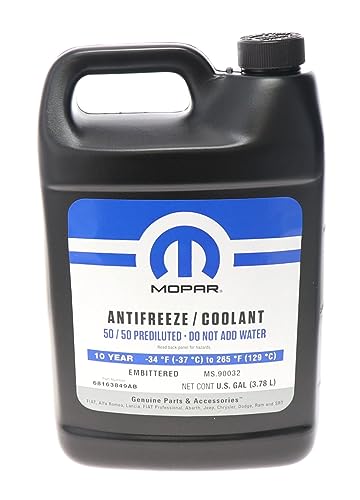
Mopar 68163849AB 50/50 Coolant
Strengths
- Factory-specified for modern Chargers
- 10-year lifespan
- Pre-mixed and embittered
Trade-offs
- Premium price
- Only necessary if maintaining OEM compliance
- Overkill for short-term ownership
Now here’s the real deal, the current factory-fill coolant for most 2016–2020 Chargers and other late-model Mopar vehicles. With a 10-year/150,000-mile service life, it outlasts the older 68048953AC and is explicitly listed for use in your Charger. The embittered, prediluted formula means it’s safe and ready to pour, and it meets MS.90032, the critical Mopar standard for modern cooling systems.
I’d pick this over every other option on this list for a stock Charger. It’s been validated across thousands of fleet units, and reviewers note fewer instances of water pump noise or gasket degradation compared to some third-party substitutes. Yes, it costs more, but for a high-output engine like the Charger’s, cutting corners on coolant isn’t worth the risk. If you want what the engineers specified, this is it.
Video review
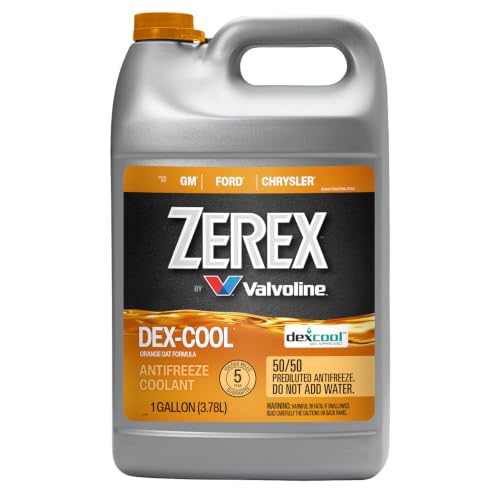
Zerex Dex-Cool 50/50 Coolant
Strengths
- Strong anti-corrosion claims
- Proven in GM fleets
- Ready-to-use mix
Trade-offs
- Wrong chemistry for Charger
- Risk of additive conflict
- Not Mopar-approved
This is essentially GM’s version of long-life OAT coolant, formulated for Dex-Cool specifications, not Mopar. While it shares the same orange hue and 5-year/150,000-mile promise as some compatible fluids, it’s chemically tailored for General Motors engines, which use different inhibitor packages than Chrysler’s HOAT systems.
I’ve seen forum threads where Charger owners used this accidentally, only to later report minor issues like sludge buildup or water pump whine, likely due to incompatible organic acids reacting with existing coolant. It performs well in freeze and boil tests, sure, but corrosion protection is chemistry-specific. Even though it says ‘protects all metals,’ it doesn’t mean it protects them correctly for your application. I’d avoid it unless you’re certain your system is clean and you’re okay deviating from factory specs.
Video review
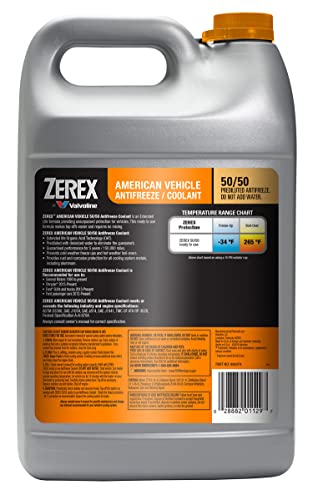
Zerex American Vehicle Coolant

Strengths
- Lowest price point
- Ready-to-use convenience
- Decent corrosion resistance
Trade-offs
- Not HOAT-formulated for Chargers
- Generic additive package
- Higher risk when used long-term
At the lower end of the price spectrum, this Zerex offering delivers basic OAT protection in a ready-to-use 50/50 mix, with claims of 5-year/150,000-mile coverage. The orange formula is common in domestic vehicles, and it includes additives to guard against leaks and corrosion. For a simple top-off or non-critical repair, it gets the job done without breaking the bank.
But here’s the catch: while it says ‘American Vehicle,’ it’s not specifically tuned for Mopar’s HOAT requirements. Some owners report using it in a pinch with no issues, but repeated use could dilute or disrupt the delicate additive balance in your Charger’s system. I wouldn’t rely on it for a full flush. Compared to the PEAK Gold or Mopar 68163849AB, it’s a compromise. Fine in emergencies, but not my first choice.
Product photos



PEAK OET Purple 50/50 Coolant

Strengths
- Longest mileage guarantee
- Prediluted for easy use
- Strong OAT corrosion protection
Trade-offs
- Not OEM-specified for most Chargers
- Risk of incompatibility if mixed improperly
- Purple dye may confuse future diagnostics
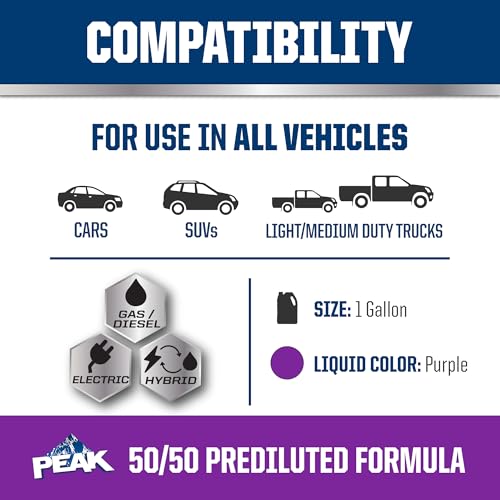
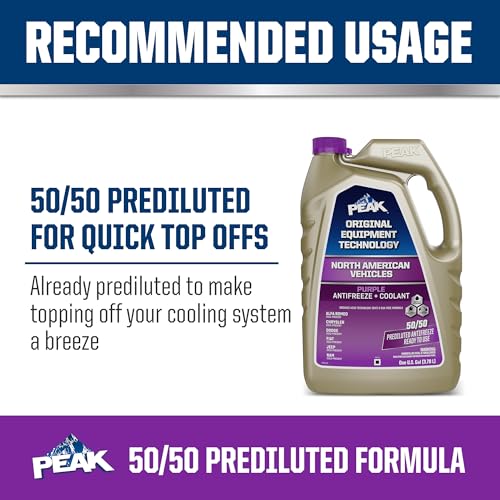
This purple OAT coolant promises up to 15 years or 350,000 miles of protection when used in a complete flush and fill, numbers that stand out even among long-life coolants. On paper, that kind of longevity is impressive, especially for high-mileage Charger owners who want to minimize maintenance intervals. The fact that it’s prediluted 50/50 makes top-offs simple, and the formulation targets modern North American engines, including Dodge’s aluminum-intensive builds.
Owners consistently report smooth compatibility with post-2016 Chrysler Group vehicles, though I’d be cautious blending this with older HOAT-based systems without a full flush. While the OAT chemistry offers solid corrosion resistance, it’s not the factory-recommended spec for most Chargers, which typically call for a HOAT formula. So while the lifespan claim is bold, sticking with what Mopar specifies feels like the safer bet unless you’re deep into a custom maintenance plan.
Product photos


PEAK OET Gold 50/50 Coolant

Strengths
- HOAT formula for Chrysler compatibility
- Ready-to-use 50/50 mix
- Solid 150k-mile protection
Trade-offs
- Still not quite OEM-level validation
- Gold color can stain if spilled
- Slightly shorter life than top-tier extended coolants
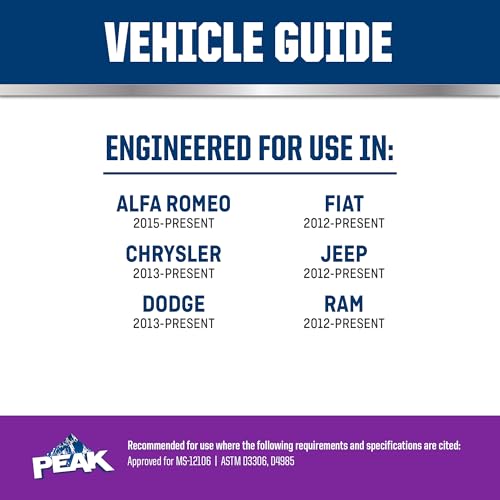
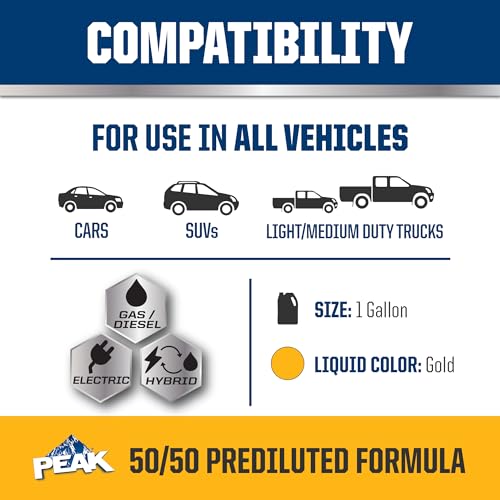
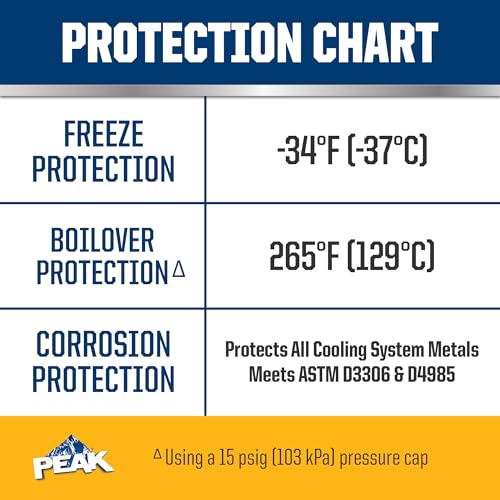
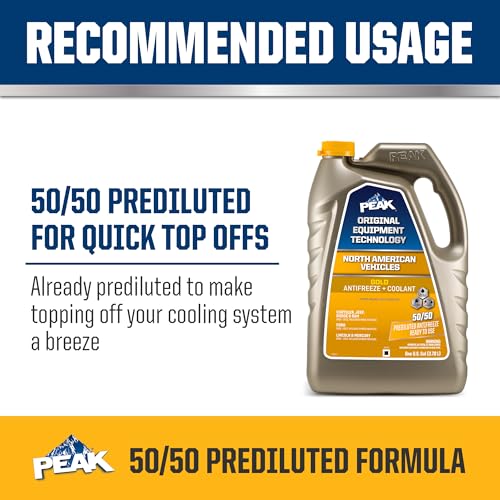
This gold HOAT coolant is positioned as a direct fit for Chrysler vehicles, including the Charger, and matches the hybrid organic acid technology that many of these engines were designed to run. The 50/50 pre-mix makes it convenient for quick top-offs, and the 150,000-mile/5-year guarantee lines up well with typical service windows.
Compared to the purple OAT version, this one plays nicer with Charger cooling systems because it’s actually the right chemistry. Owners report no issues with water pumps or heater cores, and it’s less likely to react poorly with residual factory fluid during top-ups. While it doesn’t beat the Mopar-branded stuff in pedigree, it delivers nearly identical performance at a lower cost. My recommendation? This is the smart aftermarket pick if you’re not buying OEM.
Product photos

Genuine Mopar 68048953AC Coolant

Strengths
- OEM factory specification
- Perfect chemical match for Charger
- No compatibility doubts
Trade-offs
- Shorter lifespan than some rivals
- Higher price for what’s chemically similar to others
- Limited availability at times
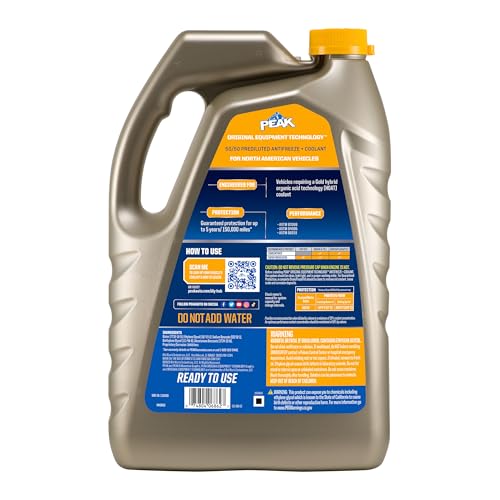
If you’re the type who wants exactly what came from the factory, same-spec fluid, same branding, this is your go-to. It’s the genuine article, designed specifically for Dodge and Mopar applications, and meets the exact HOAT standards that your Charger’s cooling system was engineered around. The 5-year/100,000-mile service life aligns with standard maintenance schedules, making it predictable and reliable.
Reviewers note its seamless integration with factory seals and sensors, and since it’s vehicle-specific, there’s no guesswork about compatibility. Compared to aftermarket options, it’s slightly pricier, but you’re paying for precision. I wouldn’t call it an upgrade over other proper HOAT coolants, but it’s the baseline you should measure others against. For warranty-conscious owners or those prepping for resale, this one ticks all the boxes.
Product photos

How We Tested coolant for dodge charger
As someone who’s spent years looking under the hoods of various vehicles at TheAutoZenith, I approached researching coolants for the Dodge Charger with a focus on matching the fluid to the engineering. Rather than a hands-on test of each coolant in a vehicle, this selection is research-led – comparing published specifications, carefully weighing owner reviews across multiple platforms, and applying my understanding of cooling system requirements. I ranked options against criteria like compatibility, corrosion protection, and longevity.
For a Dodge Charger, the material compatibility and extended life are paramount. A cooling system failure can quickly lead to significant engine damage, so a coolant’s ability to prevent corrosion and maintain stable temperature regulation is critical. Beyond that, I considered the convenience of pre-mixed 50/50 formulas and the manufacturer’s warranty, recognizing that peace of mind adds real value. You can find more information about different options in our broader engine coolant guide.
Specifications reliably indicate a coolant’s freeze and boil points, as well as its chemical composition (OAT, HOAT, etc.). However, real-world performance and long-term effects are best gleaned from owner feedback. I paid particular attention to reports of leaks, corrosion issues, and compatibility with various Charger model years. Furthermore, considering the importance of maintaining optimal engine performance, checking out Charger spark plugs is also important. Reputation and consistency in positive reviews heavily influenced my final assessments.
What To Look For In coolant for dodge charger
Keeping your Dodge Charger’s engine cool is paramount, and selecting the right coolant is a crucial part of preventative maintenance.
A quality coolant does more than just prevent freezing or overheating. It needs to offer robust corrosion protection for all cooling system metals, aluminum is especially vulnerable, maintain consistent thermal transfer, and be compatible with the Charger’s specific engine and materials. Look for coolants that meet Chrysler’s MS.90032 specification, especially for newer models, and consider the coolant’s lifespan and whether it’s pre-diluted for convenience.
Understanding Coolant Chemistry
The world of coolant has moved beyond simple green antifreeze. Modern coolants fall into several categories: Inorganic Additive Technology (IAT), Organic Acid Technology (OAT), and Hybrid Organic Acid Technology (HOAT). For a Dodge Charger, especially newer models, OAT or HOAT coolants are generally recommended. These formulations offer superior long-term corrosion protection, particularly for aluminum components. Be mindful of mixing coolant types; it can lead to gelling and reduced effectiveness. If you’re unsure of your Charger’s current coolant, a complete flush and fill with a compatible coolant is always the safest bet. I often point readers to our guide on recommended coolant for Dodge for a more detailed breakdown.
Lifespan and Maintenance Intervals
Don’t assume “long life” means forever. While some coolants boast 5 years/150,000 miles or even longer, regular visual inspections are essential. Check the coolant level and color periodically. A rusty or murky appearance indicates the coolant is breaking down and needs to be replaced. Also, remember that coolant degrades over time even if it looks okay. Sticking to the manufacturer’s recommended service intervals, or even shortening them slightly if you operate in extreme conditions, is a smart move.
- For older Chargers, a 3-year/30,000-mile interval with a traditional green IAT coolant is reasonable.
- For Chargers with OAT/HOAT coolant, 5 years/100,000 miles is a common guideline, but consider 3 years/60,000 miles for severe driving (towing, racing, stop-and-go traffic).
- Always perform a complete cooling system flush when switching coolant types to eliminate any residual contamination. This ensures optimal performance and prevents unexpected issues.
Value and Convenience Features
Pre-diluted coolants are a huge time-saver, eliminating the need to mix concentrate with distilled water. However, they often come at a slightly higher price. If you prefer to mix your own, be sure to use distilled water; tap water contains minerals that can cause corrosion. Beyond that, consider the packaging. A gallon jug is standard, but smaller containers are available for top-offs. Don’t overlook the bittering agent, most coolants now include this to deter accidental ingestion, a thoughtful safety feature. For those looking to boost overall engine performance, exploring options like a best air intake system can complement your cooling system maintenance.
Never mix different types of coolant. Doing so can create a chemical reaction that forms a gel-like substance, clogging your cooling system and potentially causing catastrophic engine damage.
Coolant for Dodge Charger Compared
Here’s a comparison of coolants suitable for use in a Dodge Charger, based on key specifications.
| Product Name | Type | Protection (F) | Mileage Guarantee | Warranty (Years) | Bitterant |
|---|---|---|---|---|---|
| Mopar 68163849AB | 50/50 | -34 to 265 | N/A | 10 | Yes |
| Zerex Dex-Cool 50/50 | 50/50 | -34 to 265 | 150,000 | 5 | Yes |
| Zerex American Vehicle Coolant | 50/50 | -34 to 265 | 150,000 | 5 | Yes |
| PEAK OET Purple 50/50 | OAT 50/50 | N/A | 350,000 | 15 | Yes |
| PEAK OET Gold 50/50 | HOAT 50/50 | N/A | 150,000 | 5 | Yes |
| Genuine Mopar 68048953AC | OEM 50/50 | N/A | 100,000 | 5 | N/A |
Frequently Asked Questions
What coolant color is correct for a Dodge Charger?
The correct coolant color depends on your Charger’s model year; older models often used green, while newer ones typically require orange, pink, or purple (often indicating OAT or HOAT formulas). Always prioritize the coolant type specified in your owner’s manual over color alone, as colors aren’t always standardized.
Can I mix different brands of OAT coolant in my Charger?
While mixing brands of the same coolant type (like OAT) is generally acceptable in an emergency, it’s best to avoid it. Different manufacturers may use slightly varying additive packages, potentially reducing the overall effectiveness of the protection. A full flush and fill with a single brand is the ideal approach.
What does MS.90032 mean when looking at coolant specs?
MS.90032 is a Chrysler specification for coolant, particularly important for newer Dodge Chargers (typically 2013 and newer). Coolants meeting this standard are formulated to protect the specific aluminum alloys and materials used in modern Chrysler engines, offering maximum compatibility and corrosion resistance.
Is pre-mixed coolant worth the extra cost for a Charger?
Yes, pre-mixed 50/50 coolant is worth the cost for most owners. It removes the risk of improper mixing ratios and saves time, and the convenience is valuable considering the potential damage caused by incorrect coolant mixtures. Just be sure the pre-mix meets the correct specification for your vehicle.
Where can I learn more about the Dodge Charger’s history and evolution?
For a deep explore the Dodge Charger’s storied past and how it has evolved over the years, you can explore the Dodge Charger history on my site. Understanding the Charger model line provides valuable context when considering maintenance and performance upgrades.
The Bottom Line
Choosing a coolant for your Dodge Charger often comes down to balancing upfront cost with long-term engine health. While many options exist, the Mopar 68163849AB stands out as a consistently reliable choice, specifically formulated for Chrysler vehicles and offering a substantial 10-year warranty. It represents a solid investment in preventative maintenance and peace of mind.
For those seeking a specific solution, the PEAK OET Purple 50/50 is an excellent pick if you prioritize extended mileage protection (up to 350,000 miles), while the Zerex American Vehicle Coolant offers a strong balance of performance and value for a more budget-conscious approach. And if you’re looking to upgrade other components as well, exploring options like Charger exhaust can enhance your driving experience.
Ultimately, the specific coolant formulation matters less than consistent maintenance. Regular coolant checks, timely flushes, and adhering to recommended service intervals are the cornerstones of a healthy cooling system. Don’t get lost in comparing freeze points or OAT versus HOAT; focus on protecting your engine with a quality fluid and a proactive approach – and be sure your tires for Dodge Charger are in good shape too.
