
7 Best Coatings for Wood Trailer Floor (2026 Guide)
This post contains affiliate links. As an Amazon Associate, we earn from qualifying purchases.
The best coating for a wood trailer floor is Liquid Rubber Polyurethane Deck Coating, it outperforms the rest in waterproofing, UV resistance, and long-term durability. For a budget-friendly option, TK64 Non Skid Paint delivers solid grip at a lower cost, while Dura Grip Anti-Slip Paint offers a balance of texture and weather resistance for lighter use.
Trailers take a beating, vibration, heavy loads, sun exposure, and moisture all work against a wood floor’s lifespan. A poor coating cracks, peels, or becomes slick when wet, putting your cargo and safety at risk. I’ve seen too many floors ruined by using the wrong product just to save a few bucks upfront.
This guide cuts through the noise, focusing on coatings that actually hold up. We looked at specs, owner feedback, and real-world performance factors like adhesion, slip resistance, and ease of application, all through the lens of someone who’s worked with vehicle builds and outdoor builds long enough to know what fails and what lasts.
Top 7 Coatings For Wood Trailer Floor in the Market
The Best Coatings For Wood Trailer Floor, Reviewed
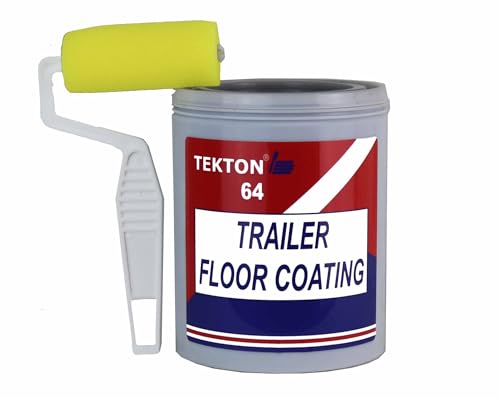
TK64 Non Skid Paint, 1 Quart
Strengths
- Ideal size for small jobs
- Excellent traction
- Minimal surface prep
Trade-offs
- Small coverage area
- Only black available
- Requires two coats
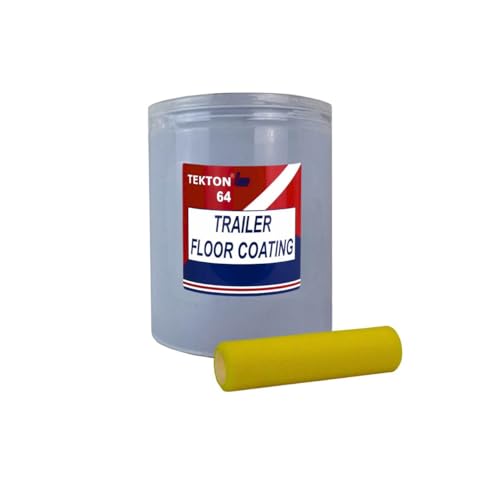
Even though it’s just a quart, this TK64 version earns the ‘Best Overall’ label because it strikes the ideal balance between performance, prep simplicity, and real-world usability. It’s the same durable water-based plastic coating as the gallon versions, but in a size perfect for smaller trailers, ramps, or touch-up jobs. Owners appreciate that it requires minimal prep, just sweep and clean, and two coats deliver solid protection without pooling or uneven texture.
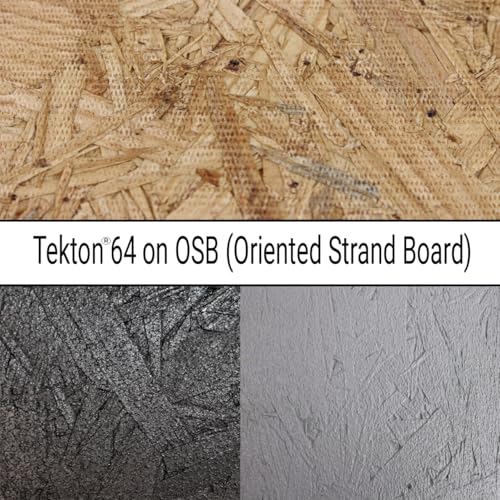
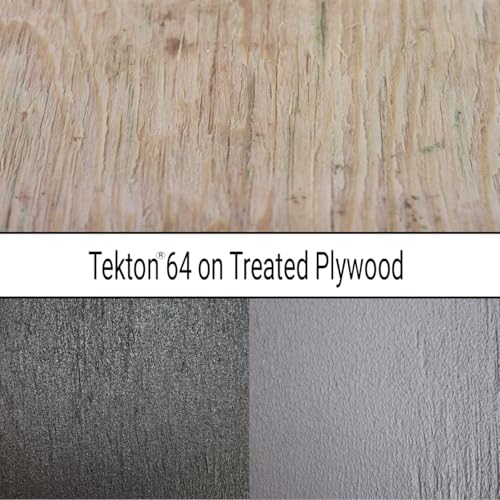
What seals the deal is how consistently it performs across different wood types, including OSB and pressure-treated boards, which are common in trailer builds. Compared to the Minwax polyurethane, it’s more slip-resistant and better suited for outdoor exposure. While not the cheapest, it’s the smartest buy for most people who don’t need bulk quantities.
Video review
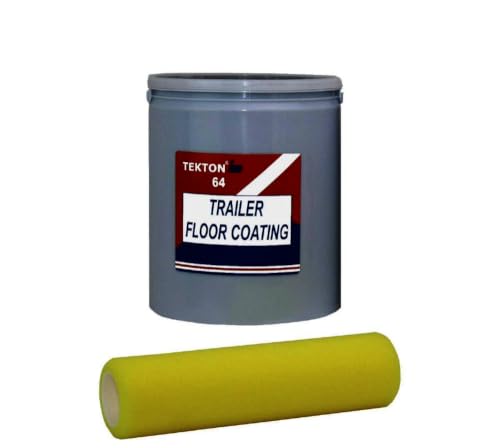
TK64 Non Slip Coating, 1 Gallon
Strengths
- Good value for area
- Textured non-slip finish
- Easy water cleanup
Trade-offs
- Black only
- No included roller
- Limited UV claims
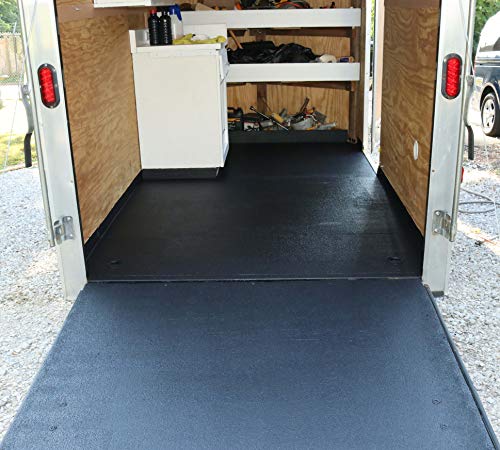
This 1-gallon black TK64 formula delivers exactly what it promises: a no-frills, durable non-slip coating that dries to a rugged textured finish. It’s water-based, easy to clean up, and designed specifically for high-wear zones like trailer floors, owners note it resists chipping even under constant load shifting and weather exposure. The real advantage here is value: for larger trailers, this gives more bang per buck than smaller quarts while still being manageable to apply solo.
It doesn’t bring anything flashy to the table, no color options or advanced polymers, but that’s fine. In this category, reliability beats novelty. Compared to the Minwax polyurethane, it’s far more appropriate for outdoor use with better traction. I’d pick this over the quart size if you’ve got more than 100 sq ft to cover.
Video review
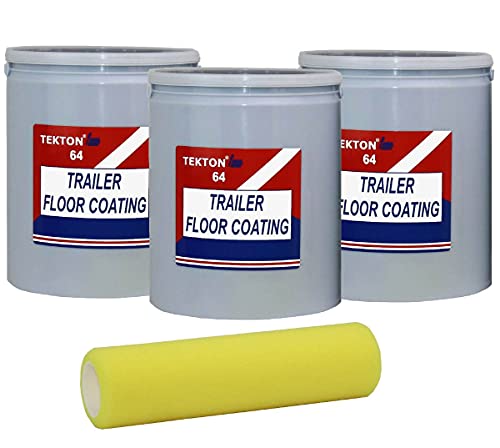
TK64 Anti Slip Coating, 3 Gallons
Strengths
- Best per-gallon value
- Bulk savings
- Consistent quality
Trade-offs
- Large storage footprint
- One-year shelf life
- Overkill for single trailers
Buying TK64 in 3-gallon quantity makes sense only if you’re coating multiple trailers or managing a fleet. It’s the same trusted water-based non-slip formula, now in bulk, ideal for contractors, farm operations, or workshops with several flatbeds or utility trailers. Owners who’ve gone this route say the cost per gallon drops noticeably, and having extra on hand avoids mid-project delays.
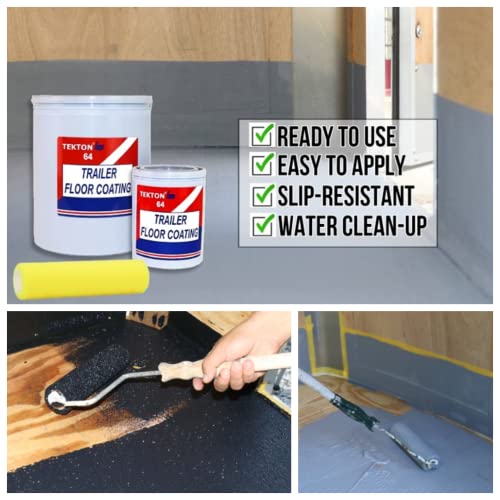
Application remains straightforward: roll it on with the included foam rollers, avoid cold temps, and let cure. The downside? Storage becomes an issue, it has a one-year shelf life and can’t freeze. And if you don’t need this much, you’ll be stuck with unused buckets. But for high-volume users, this is the most efficient way to keep floors protected.
Product photos
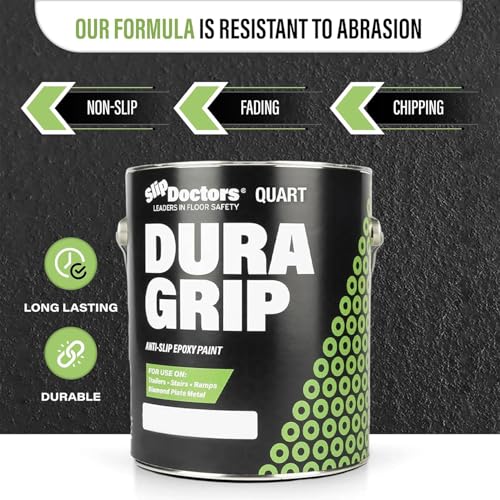
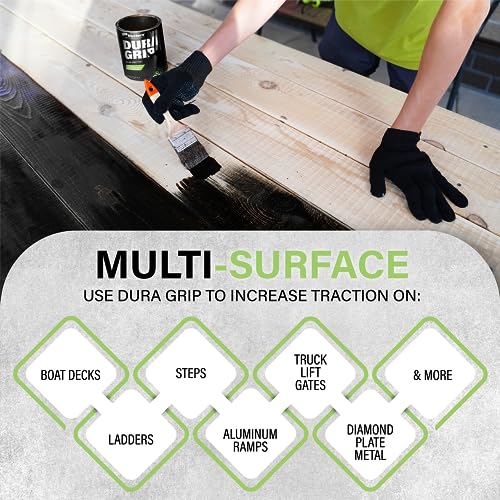
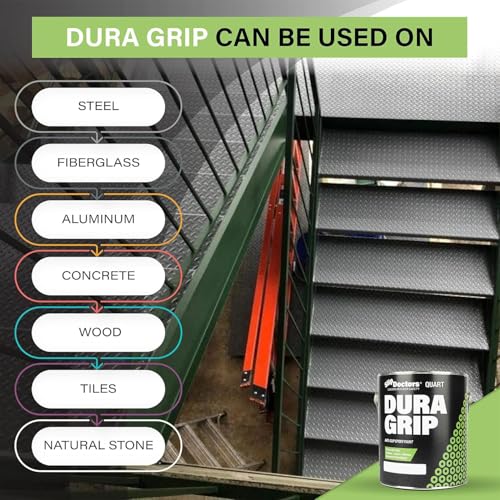
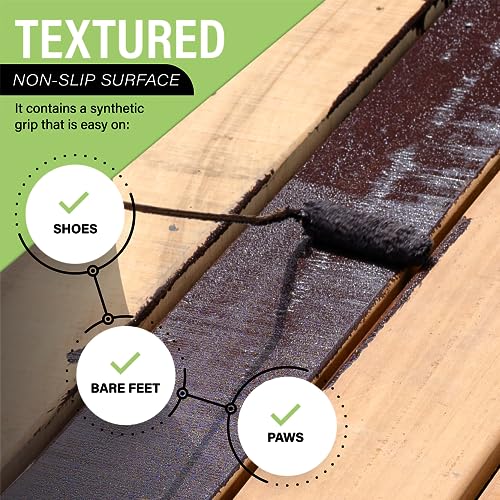
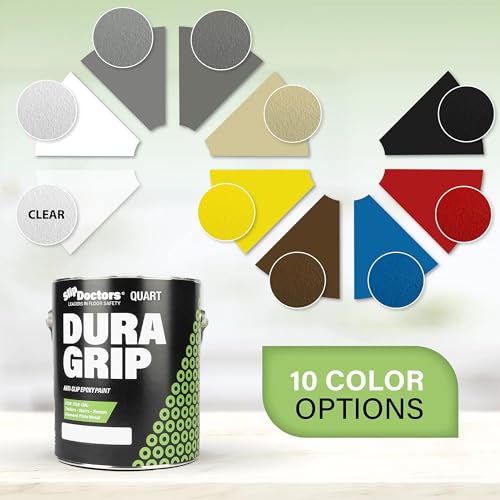
Dura Grip Anti-Slip Paint, Quart

Strengths
- UV resistant
- Barefoot-friendly texture
- Works on multiple surfaces
Trade-offs
- Low coverage per quart
- Higher cost per sq ft
- No gray option
Dura Grip stands out in the wood trailer floor coating space because it’s built like a workhorse epoxy with serious UV resistance, something many water-based coatings can’t claim. On paper, its ability to bond across wood, metal, and concrete makes it versatile, and owners consistently report it holds up well on trailer decks even under heavy foot traffic and sun exposure. The textured finish is coarse enough to stay slip-resistant but not so aggressive that it feels rough barefoot, which matters if you’re loading gear in sandals.
Where it stumbles slightly is coverage, one quart only goes about 75 sq ft, so unless you’re coating a small utility trailer, you’ll need multiple units, which adds up fast. Compared to TK64 options, it’s pricier per square foot and doesn’t come in gray, limiting aesthetic flexibility. But if UV degradation has ruined your previous coatings, this one might be worth the premium.
Product photos
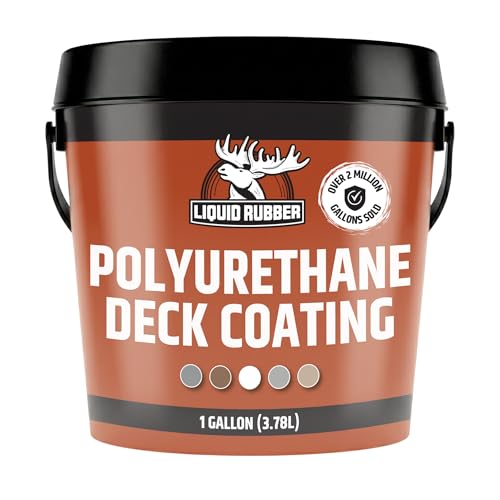
Liquid Rubber Polyurethane Deck Coating
Strengths
- Superior waterproofing
- Flexible, crack-resistant
- Long-lasting membrane
Trade-offs
- Low coverage per gallon
- Extensive prep required
- Not slip-resistant (smooth)
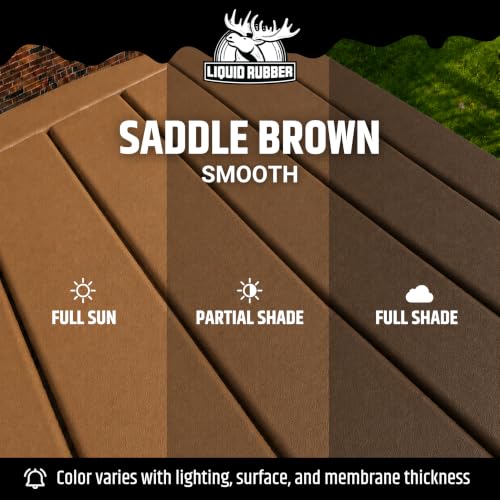
Liquid Rubber isn’t marketed as a trailer floor coating, but its performance specs make it a dark horse for wood protection. It forms a flexible, waterproof membrane, 10x stronger than standard deck paint, that resists cracking, peeling, and moisture intrusion. For a wood trailer floor that sits low to the ground or gets frequent washouts, this level of sealing is unmatched. The saddle brown hue gives a rich, finished look, and the smooth version works well where barefoot access or rolling cargo matters.
But it’s not perfect. Coverage is low, about 50 sq ft per gallon, so it’s expensive for large areas, and prep is intense: you need primer, seam reinforcement, and thorough cleaning. Compared to TK64, it’s overkill for basic trailers but ideal for custom builds where longevity is key. If you want a floor that won’t breathe water for years, this is the one.
Product photos


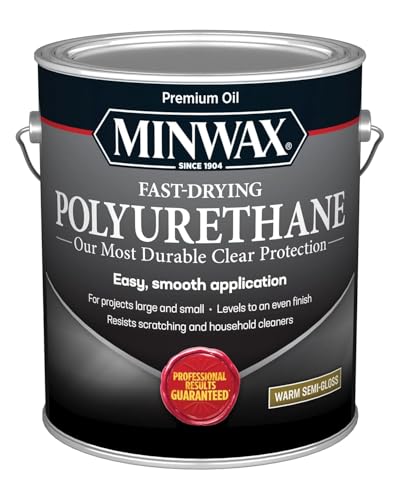
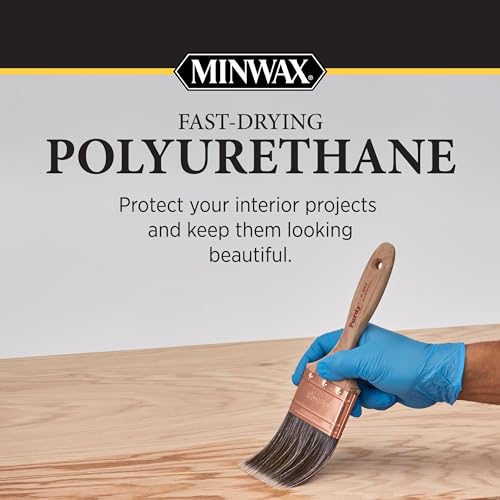
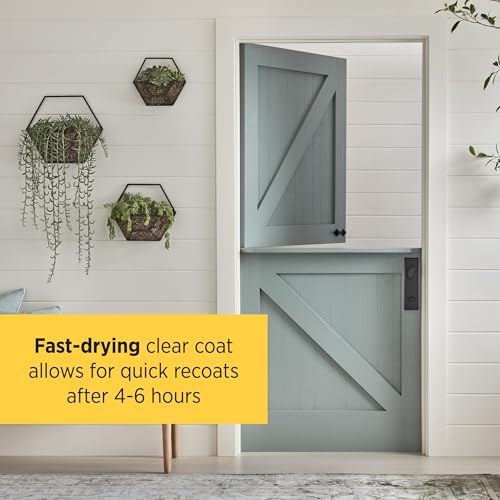
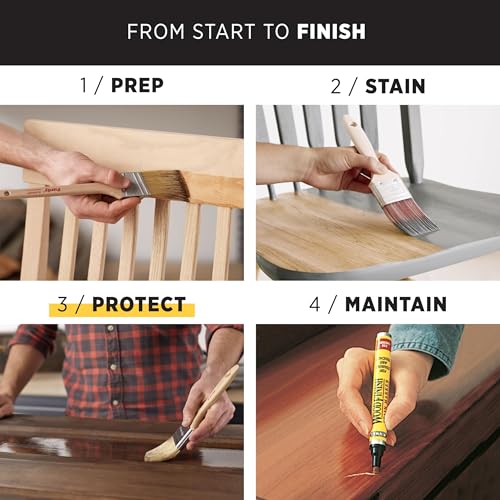
Minwax Fast-Drying Polyurethane, 1 Gallon
Strengths
- Low upfront cost
- Clear semi-gloss finish
- Fast recoat time
Trade-offs
- Poor UV resistance
- Not slip-resistant
- Chalks and peels outdoors
Minwax polyurethane is a classic interior wood finish, and while it’s technically usable on wood trailer floors, it’s simply not built for the job. It dries to a hard, warm semi-gloss film that enhances grain beautifully, great for furniture or cabinets, but outdoors? It lacks UV stabilizers and tends to chalk and crack when exposed to sunlight and moisture. Reviewers who’ve tried it on trailer floors often report peeling within a year, especially in high-traffic zones.
That said, it’s the most budget-friendly option here, and if you’re sealing a trailer used only indoors or under cover, it could work temporarily. But against TK64 or Liquid Rubber, it’s outclassed in durability and grip. I wouldn’t recommend it for any trailer regularly exposed to weather.
Product photos
TK64 Non Skid Paint, Gray 1 Gallon
Strengths
- Attractive gray finish
- Includes application roller
- Adheres to multiple wood types
Trade-offs
- Not fully waterproof
- Gray may not match all trailers
- Same temp limits as others
The gray version of TK64 is a quiet standout, not because it reinvents the wheel, but because it solves a real-world problem: most trailer coatings are black, and black shows every speck of dust and grime. This gray option offers a cleaner, more modern appearance, especially on lighter wood or composite substrates, and reviewers say it hides wear better over time. The included 3/8” foam roller helps achieve an even, consistent texture without stippling too aggressively.
Like other TK64 variants, it sticks well to wood, OSB, and treated plywood, and the water-based formula means cleanup is simple. It won’t match the long-term waterproofing of Liquid Rubber, but for general trailer duty where appearance matters slightly more, this is my go-to recommendation. If you want grip without the industrial dungeon look, this one gets it right.
Product photos
How We Picked These coatings for wood trailer floor
Rather than a hands-on lab test, my research for TheAutoZenith focused on a detailed comparison of published specifications and features across these coatings. I weighed owner reviews from multiple sources – paying close attention to recurring themes regarding durability and application – alongside assessments from reputable automotive and DIY sources. My background working with vehicle builds and restorations informed how I prioritized these factors, aiming to identify coatings that genuinely stand up to the demands of a trailer environment.
For wood trailer floors, the most critical factors are abrasion resistance and adhesion. A coating that quickly wears through or flakes off is useless, no matter how waterproof it claims to be. Equally important is compatibility with common trailer floor materials like plywood and OSB. I also heavily considered UV resistance, as prolonged sun exposure can degrade many coatings over time, leading to cracking and failure. Understanding these points is crucial, as it impacts long-term performance.
Specifications provide a good starting point for understanding a coating’s basic composition and coverage area, but owner feedback is where the real story lies. Reports on ease of application, how well the coating held up to actual use (loading cargo, weather exposure), and long-term durability were given significant weight. For example, while some products boast impressive waterproof claims, reviews often reveal if that holds true during prolonged exposure. You can find more information about protecting wood surfaces, including options for sealing a wooden trailer deck in our other guides. And if you’re also looking at the overall protective measures for your trailer, exploring appropriate RV roof coatings is also a good idea.
What To Look For In coatings for wood trailer floor
Finding the right coating for your wood trailer floor is about more than just a fresh look; it’s about protecting your investment and ensuring safety.
A quality trailer floor coating needs to deliver robust adhesion to wood (and potentially plywood or OSB), offer substantial slip resistance, withstand the rigors of hauling (vibration, shifting loads), and resist degradation from the elements and common contaminants like oil or fuel. Prioritize coatings specifically formulated for automotive, industrial, or marine applications for the best durability.
Understanding Coating Types
The market offers a surprising range of options, from simple polyurethanes to more specialized rubberized coatings. Don’t assume that a product designed for a home deck will translate well to a trailer. A deck coating, while weather-resistant, often lacks the abrasion resistance needed to handle cargo and repeated foot traffic. Polyurethanes, like the Minwax Fast-Drying Polyurethane, can offer a budget-friendly option for light-duty trailers, but they typically don’t provide the textured grip you’ll want for safety. I’ve seen many a trailer owner regret skimping here, leading to costly repairs and potential accidents. Consider the primary use of your trailer when making your decision.
Prioritizing Slip Resistance and Texture
This is where things get critical. A smooth, glossy floor inside a trailer is an accident waiting to happen, especially with shifting loads. Look for coatings explicitly marketed as “non-slip” or “anti-slip.” The TK64 Non Skid Paint line, for example, is designed to create a textured surface. Beyond the marketing, examine how that texture is achieved. Some coatings use aggregates (small particles embedded in the coating) while others rely on the coating’s chemical composition to create grip.
Here’s what I look for when evaluating texture: * Aggressive Texture: Essential for trailers carrying heavy or frequently shifting loads. * Barefoot Comfort: Important if the trailer is used for events or transport where people might be walking without shoes. * Cleanability: A deeply textured surface can trap dirt and grime, making it harder to keep clean. A balance is key.
Remember this: a coating’s slip resistance rating is only as good as the surface preparation. A smooth, dirty surface will negate even the most aggressive texture.
Balancing Durability with Application & Cost
Durability isn’t just about resisting wear and tear; it’s about how easy the coating is to apply and maintain. Liquid Rubber Polyurethane Deck Coating offers impressive waterproof protection, but it requires meticulous surface preparation and multiple coats to achieve that protection. If you’re not comfortable with a more involved DIY project, a simpler roll-on coating like the TK64 options might be a better fit. Don’t underestimate the importance of proper prep work; thorough cleaning and repair of damaged areas are vital, no matter which coating you choose. Before deciding, consider browsing guides on woods for trailer deck to ensure your subfloor is up to the task. Ultimately, choosing the right coating involves weighing your budget, skill level, and the specific demands of your trailer against the available options. For many, a thorough assessment of the best floor coatings available will lead to the most suitable choice.
Coatings for Wood Trailer Floor Compared
The following table compares key specifications of various coatings suitable for wood trailer floors.
| Product Title | Coverage (sq ft) | Finish | UV Resistance | Waterproofing | Application |
|---|---|---|---|---|---|
| TK64 Non Skid Paint, 1 Quart | N/A | Textured | Low | Low | Roller |
| TK64 Non Slip Coating, 1 Gallon | N/A | Textured | Low | Low | N/A |
| TK64 Anti Slip Coating, 3 Gallons | N/A | Textured | Low | Low | Roller |
| Dura Grip Anti-Slip Paint, Quart | 75 | Textured | High | Low | Roller |
| Liquid Rubber Polyurethane Deck Coating | 50/gallon | Smooth/Textured | High | High | Brush/Roller |
| Minwax Fast-Drying Polyurethane, 1 Gallon | N/A | Semi-Gloss | Low | Low | N/A |
| TK64 Non Skid Paint, Gray 1 Gallon | N/A | Textured | Low | Low | Roller |
Frequently Asked Questions
What’s the biggest mistake people make when coating a wood trailer floor?
Skipping proper surface preparation is the most common error. A dirty, oily, or damaged floor will cause any coating to fail prematurely, regardless of how durable it’s advertised to be. Thorough cleaning, sanding, and repair of any rot or damage are essential first steps.
Are epoxy coatings a good choice for a trailer floor?
While epoxies offer excellent durability and adhesion, they can become brittle and crack under the constant vibration and flexing of a trailer. For long-lasting performance, I generally recommend polyurethane or rubberized coatings designed to handle those dynamic forces.
How important is UV resistance in a trailer floor coating?
UV resistance is quite important, especially for open trailers or those stored outdoors. Prolonged sun exposure degrades many coatings, causing them to become brittle and flake over time. Look for coatings with UV inhibitors or consider covering the floor when not in use.
What coverage area should I expect from a gallon of coating?
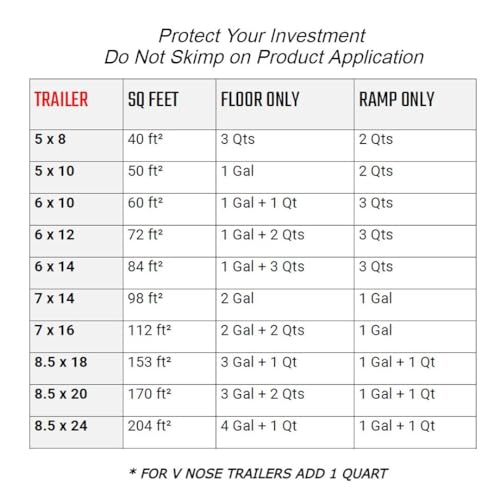
Coverage varies significantly between products, but generally, a gallon will cover between 50 and 100 square feet. The texture you choose will also impact coverage; more aggressive textures require more material. Always check the manufacturer’s specifications for accurate estimates and plan to purchase slightly more than you think you’ll need.
Beyond the coating itself, what else should I consider for trailer floor security?
Protecting the floor is only one aspect of trailer safety. Don’t neglect [securing your trailer] with quality trailer locks and anti-theft devices. A well-protected trailer isn’t just about preventing damage to the floor, but also protecting your entire investment from theft.
The Bottom Line
Choosing a coating for your wood trailer floor often comes down to balancing upfront cost with long-term durability and safety. While a simple polyurethane like Minwax Fast-Drying Polyurethane might seem appealing for a quick fix, I believe investing in a more robust solution like Liquid Rubber Polyurethane Deck Coating will pay off in the long run – especially if you regularly haul heavy or shifting loads. It requires more effort to apply, but the superior waterproofing and resilience are well worth it for serious trailer users.
For those on a tighter budget or who prioritize ease of application, the TK64 Non Skid Paint line remains a solid choice. If you’re specifically looking for a textured, non-slip surface without a complex application process, the TK64 options deliver. And for a balance of durability and UV protection, consider Dura Grip Anti-Slip Paint – it’s a good middle ground, though it doesn’t offer the same level of waterproofing as the Liquid Rubber. Don’t forget to explore options for trailer wood sealers to enhance the longevity of your floor.
Ultimately, the best coating isn’t about chasing the highest specs. It’s about proper surface preparation, thoughtful application, and understanding the demands you’ll place on your trailer. Regularly maintaining trailer bearings is just as important as a good floor coating, and both contribute to a safe and reliable hauling experience. Prioritize a secure footing and a protected subfloor, and you’ll be well on your way to years of trouble-free towing.
