
7 Best Clip Pedals for Mountain Bike 2026
This post contains affiliate links. As an Amazon Associate, we earn from qualifying purchases.
The Shimano PDM520 SPD Clipless Pedals stand out as the best overall for their rugged reliability and smooth performance, while the VENZO SPD Dual Platform Pedals offer the smartest budget-friendly versatility with included cleats and a dual-sided design.
Choosing clip pedals for mountain biking isn’t just about locking your feet in, it’s about control, confidence, and keeping power flowing when the trail gets rough. Too many riders settle for pedals that are finicky to engage or don’t survive a season of hard hits.
This guide cuts through the noise by focusing on what matters: real-world durability, consistent engagement, and practical features, based on specs, owner feedback, and years of watching how riders interact with their gear. I looked at materials, tension adjustability, and bearing quality to find models that deliver where it counts.
Top 5 Clip Pedals For Mountain Bike in the Market
The Best Clip Pedals For Mountain Bike, Reviewed
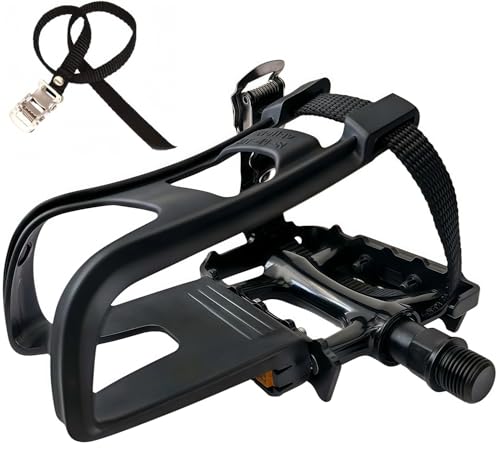
YBEKI All-Terrain Toe Clip Pedals
Strengths
- Works with regular shoes
- Excellent grip surface
- Compatible with spin bikes
Trade-offs
- Not true clipless
- Straps can wear
- Overstated power claims
These aren’t clipless pedals in the traditional sense, but a hybrid toe-clip design that’s drawing attention for spin classes and indoor cycling. The specs sound impressive, military-grade resin, corrosion resistance, and a claimed 22% power transfer boost from university testing. But real-world feedback splits: some love the secure feel with regular shoes, while others find the straps fiddly and the platform too rigid for long rides.
What stands out is the universal 9/16″ spindle and compatibility with Peloton and IC4 bikes, which explains its popularity in home gym setups. The diamond-cut treads do deliver solid grip, but if you’re serious about mountain biking, this isn’t the right tool. Compared to true SPD pedals, it’s a different category altogether, more about retention than quick release. I’d recommend these only for indoor or casual use, not technical trails.
Video review
Shimano PDM520 SPD Clipless Pedals

Strengths
- Proven reliability
- Dual-sided entry
- Durable sealed bearings
Trade-offs
- Small platform
- Few grip pins
- Basic tension tuning
Shimano’s reputation in the clipless pedal world is well earned, and the PDM520 reflects that pedigree. On paper, these are straightforward SPD pedals built for reliability, with a proven dual-sided entry mechanism and a durable chromoly axle. Owners consistently report long life even under muddy, off-road abuse, which makes sense given Shimano’s sealed bearing design and conservative pin layout.
That said, they don’t push any performance boundaries. The platform is on the smaller side compared to modern competitors, and the tension adjustment is basic. But if you’re after a no-fuss, dependable workhorse that’ll click in year after year, this is the kind of pedal you install and forget. I’d pick these over flashier options for riders who prioritize consistency over adjustability.
Video review
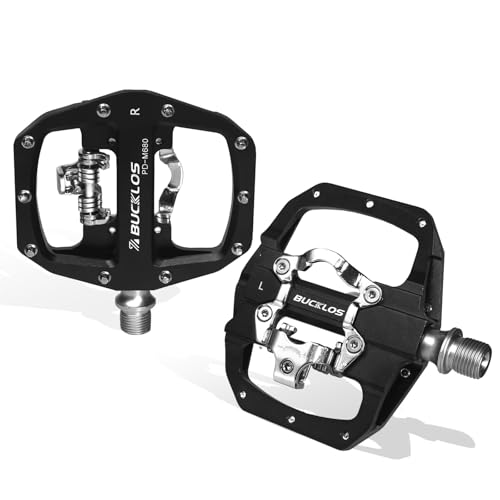
BUCKLOS Clipless Flat Combo Pedals
Strengths
- Dual-use design
- Wide platform
- Sealed bearings
Trade-offs
- Cleats not included
- So-so clip mechanism
- Budget materials
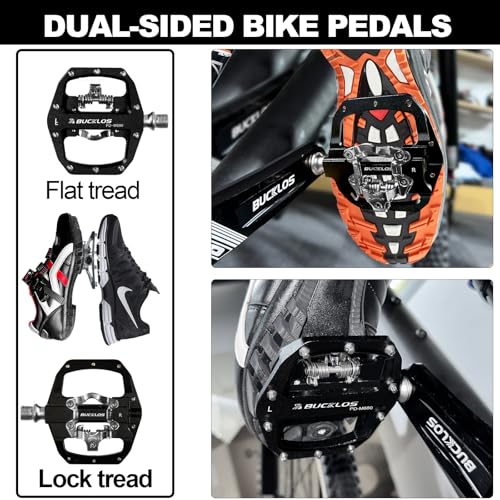
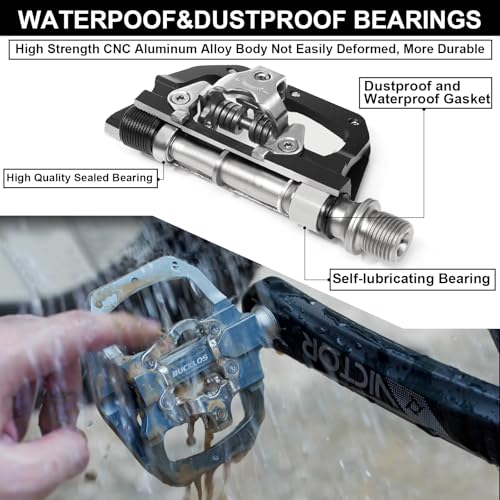
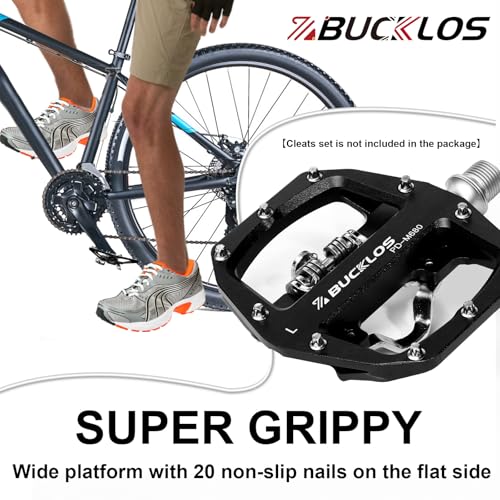
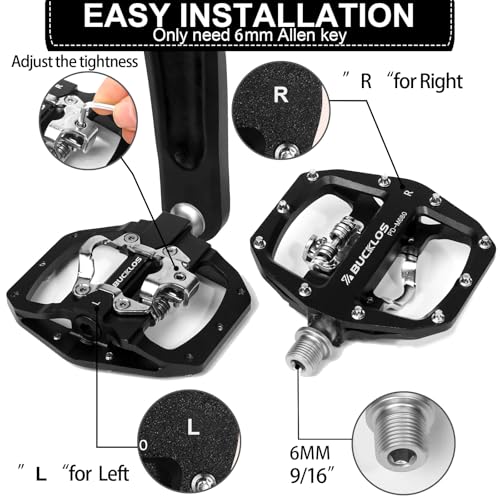
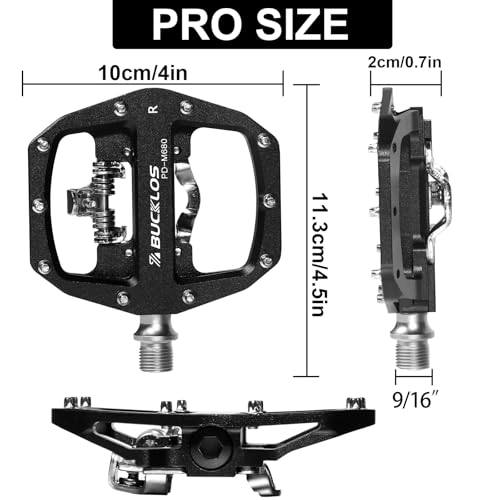
The BUCKLOS combo pedal tries to have it both ways, flat platform for regular shoes, clip-in SPD side for cycling shoes, and at this price, it mostly delivers. The CNC aluminum body is wider than average, which owners appreciate for stability, and the 10 anti-slip pins provide decent grip. Sealed bearings and a gasket design help keep out grime, and the adjustable tension is a nice touch for dialing in release feel.
But the dual-purpose design means compromises. The clip-in side isn’t as crisp as Shimano or Crankbrothers, and cleats aren’t included, which adds cost. Still, for someone transitioning to clipless or riding with mixed footwear, this is a smart entry point. Compared to the Funn Mamba, it lacks refinement but wins on versatility and price. The larger platform is a real plus for beginners.
Product photos
Funn Mamba MTB Clipless Pedals

Strengths
- Grease Renew System
- Large platform
- Durable CNC build
Trade-offs
- Single-sided entry
- Bright color shows scratches
- Premium price
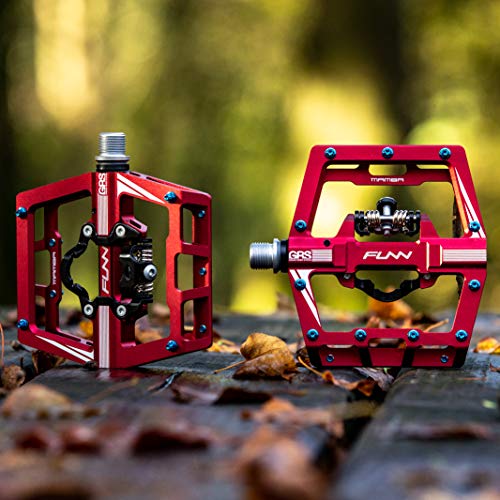
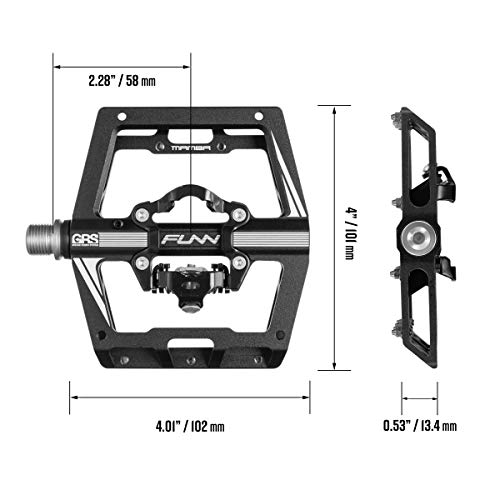
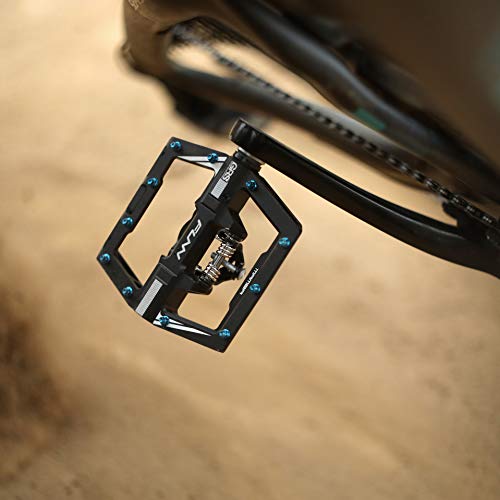
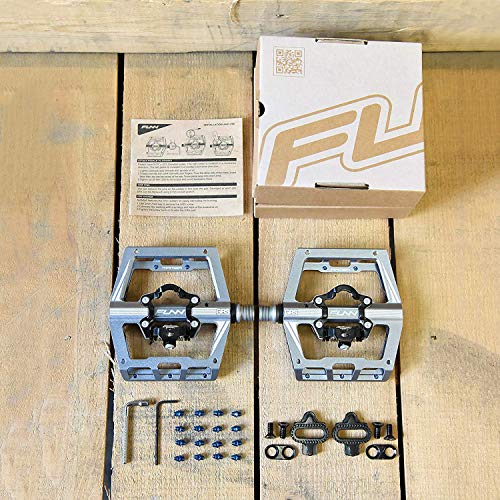
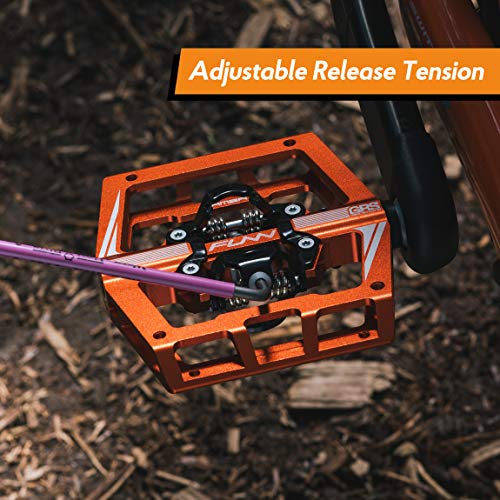
The Funn Mamba stands out with its patented Grease Renew System (GRS), a rare feature that lets you refresh pedal grease in under a minute without disassembly. That’s a standout for riders in wet or dusty conditions who hate tearing down pedals. CNC-machined 6061 alloy and a large platform offer solid support, and the single-sided SPD clip is responsive, making these a favorite among commuters and enduro riders who value low maintenance.
Owners praise the durability, though some note the orange finish shows wear quickly. At this price, it competes with high-end Shimano models, but the lack of dual-sided entry might frustrate some. Compared to the PDM520, it’s more serviceable and supportive, but less intuitive for quick starts. I’d pick the Mamba for riders who ride year-round in tough conditions and hate mechanical downtime.
Product photos
VENZO SPD Dual Platform Pedals

Strengths
- Adjustable tension
- Sealed bearings
- Good value
Trade-offs
- Single-direction release
- Inconsistent engagement over time
- Less brand reliability
At this price, the VENZO SPD pedals punch above their weight, offering sealed bearings, adjustable tension, and a CNC Cr-Mo axle that mirrors more expensive units. The die-cast aluminum body keeps weight reasonable, and owners note they hold up well on mixed terrain, especially for touring or gravel grinding where reliability matters more than race-day precision.
Still, the binding system only releases in one direction, which can trip up new riders. And while the 80–140 kgf.cm tension range sounds good on paper, some feedback mentions inconsistent release feel over time. Compared to the Shimano PDM520, these offer more adjustability but less refinement. My recommendation? A solid second-tier pick if you’re budget-conscious but still want real SPD functionality.
Product photos


How We Picked These clip pedals for mountain bike
My approach to evaluating clip pedals for mountain biking, as with all things at TheAutoZenith, began with a research-led comparison rather than a hands-on, long-term test of each model. I compiled specifications – materials, bearing types, weight, adjustability – from manufacturer data and cross-referenced them with owner reviews from major retailers and cycling forums. This data was then weighed against insights gained from years of observing the evolving needs of cyclists and understanding what truly contributes to performance and durability on the trails.
For mountain bike clip pedals, a few factors stood out as most critical. Power transfer is paramount; you want a pedal that efficiently translates effort into forward motion, especially on climbs. Equally important is durability – these pedals endure significant impacts and exposure to the elements. Finally, adjustability, particularly of the clip tension, allows riders of all levels to dial in a secure and comfortable feel. You can find more information about mountain bike clip-in pedals on our site.
Specifications reliably reveal construction quality and potential weight savings. However, I placed significant value on owner feedback regarding real-world durability and ease of clipping in and out, as these aspects aren’t always apparent from a datasheet. Reputation and brand history also played a role; established manufacturers often have a track record of producing reliable components. For a broader look at options, you might also find our bike pedals guide helpful when selecting bike pedals.
How To Pick The Right clip pedals for mountain bike
Finding the right clip pedals can significantly enhance your mountain biking experience.
A good set of clip pedals balances power transfer, durability, and rider comfort. Key considerations include the pedal’s body material (resin, alloy, or a hybrid), the bearing system for smooth rotation, and the adjustability of the clip mechanism to suit your riding style and shoe compatibility. Don’t overlook weight, particularly if you’re focused on climbing or racing.
Body Material & Durability
The material a pedal is made from impacts its weight, stiffness, and how well it holds up to abuse. Resin pedals, like those from YBEKI, are lighter and more affordable, but less durable than full alloy options. Alloy pedals, such as the Shimano PDM520, are incredibly tough and can withstand years of hard riding, but they add weight. Hybrid designs attempt to strike a balance, offering a good compromise between weight and resilience. Consider where and how you ride; if you’re regularly smashing through rocks, a more robust alloy construction is worthwhile.
Engagement & Adjustment
How easily you clip in and out is crucial, and this is dictated by the pedal’s mechanism and adjustability. Some pedals, like the Funn Mamba MTB Clipless Pedals, offer adjustable tension, letting you fine-tune the resistance. Lower tension is easier to release, ideal for beginners or technical trails, while higher tension provides a more secure connection for aggressive riding. Understanding the SPD (Shimano Pedaling Dynamics) system is also key, as many pedals require compatible clipless shoes.
- A simple, single-release mechanism is easiest to get used to.
- Dual-sided entry – as found in the BUCKLOS Clipless Flat Combo Pedals – increases the chance of clipping in on the first attempt, which is valuable on technical climbs.
- Adjustable cleat positioning on your mountain bike shoes allows you to customize your foot placement and optimize power transfer, but requires some experimentation to find what works for you.
A properly adjusted clip pedal feels like an extension of your foot. Don’t be afraid to spend time tweaking the tension and cleat position to find the sweet spot for your riding style.
Value & Versatility
Not everyone needs a super-specialized pedal. If you’re looking for a versatile option, dual-sided pedals like the MZYRH Dual Function MTB Pedals offer the ability to ride clipped in with SPD-compatible shoes or ride flat with regular shoes. This is great for commuting or mixed-terrain rides. If you’re exploring options, checking out a broader range of clip pedals can reveal unexpected value. For longer tours, the VENZO SPD Dual Platform Pedals, with their included cleats, can save you the expense of purchasing them separately.
Clip Pedals for Mountain Bike Compared
Here’s a comparison of specifications for various clip pedals designed for mountain biking.
| Product Title | Compatibility | Body Material | Bearings | Weight (per pair) | Cleats Included | Adjustable Tension |
|---|---|---|---|---|---|---|
| YBEKI All-Terrain Toe Clip Pedals | 9/16″ Spindle | Resin-Alloy Hybrid | Dual | N/A | No | Yes |
| BUCKLOS Nylon Clip Flat Pedals | SPD | Nylon Fiber | Sealed | N/A | No | Yes |
| Shimano PDM520 SPD Clipless Pedals | SPD | N/A | N/A | N/A | No | N/A |
| BUCKLOS Clipless Flat Combo Pedals | SPD | CNC Alloy Aluminum | Sealed | N/A | No | Yes |
| MZYRH Dual Function MTB Pedals | SPD | Aluminum Alloy | 3 Sealed | N/A | Yes | N/A |
| Funn Mamba MTB Clipless Pedals | SPD | 6061 Alloy | Cartridge & DU | N/A | Yes | Yes |
| VENZO SPD Dual Platform Pedals | SPD | Die-cast Aluminum | LSL Bushing & Sealed | 368g | Yes | Yes (80-140kgf.cm) |
Frequently Asked Questions
What cleat compatibility should I prioritize?
The vast majority of mountain bike clip pedals use the SPD (Shimano Pedaling Dynamics) system, offering widespread shoe compatibility. However, some pedals support other standards like Crankbrothers’ Eggbeaters, so verifying compatibility with your existing or planned shoes is crucial before purchasing.
How much weight difference is typical between resin and alloy pedals?
Generally, alloy pedals are around 50-150 grams heavier per pair than resin options. While this might not seem significant, weight savings can be noticeable during extended climbs, and a preference for lighter components is common among racers looking at bike pedals for MTB.
Are dual-sided entry pedals really easier to clip into?
Yes, dual-sided entry pedals increase the likelihood of engaging the clip on the first attempt. This is particularly beneficial on challenging technical climbs where quickly securing your feet is essential, and can be a great aid for those still getting used to clipping in.
What does pedal tension adjustment actually change?
Adjusting the tension alters the force required to clip in and out of the pedal. Lower tension makes release easier, which is ideal for beginners or situations demanding quick disengagement, while higher tension provides a more secure connection for aggressive riding or comparing flat and clipless mountain bike pedals.
Beyond SPD, are there any other clipless systems I should consider for mountain biking?
While SPD dominates the market, Crankbrothers’ Eggbeater system is a viable alternative, offering a different clipping feel and often broader release angles. Exploring options like these, or even considering mountain bike flat pedals can help you find the best fit for your style.
The Bottom Line
Choosing clip pedals always involves a bit of compromise. You’re balancing the desire for maximum power transfer and durability against weight and, of course, price. Considering all factors, the Funn Mamba MTB Clipless Pedals strike an excellent balance, offering adjustable tension and a robust alloy build that should hold up to serious trail time – it’s a great all-around choice for riders looking to improve their connection to the bike.
For those seeking specific features, the market offers compelling alternatives. If you prioritize versatility and the option to ride both clipped and flat, the MZYRH Dual Function MTB Pedals are a standout. Budget-conscious riders will find the YBEKI All-Terrain Toe Clip Pedals provide a solid entry point into the world of clipless riding, while those wanting to explore best mountain bike pedals should consider the Shimano PDM520 for a proven, durable option.
Ultimately, the perfect clip pedal isn’t about a single specification. It’s about finding a pedal that inspires confidence and allows you to focus on the ride. Don’t get too caught up in chasing the lightest weight or the most exotic materials – a well-adjusted pedal, paired with comfortable shoes and a solid technique, will deliver a far greater benefit than any premium feature. If you’re still considering other options, you may also want to explore flat pedals for mountain biking.
