
6 Best Chrome Polish for Motorcycles 2026
This post contains affiliate links. As an Amazon Associate, we earn from qualifying purchases.
The best chrome polish for motorcycles is Flitz Metal Polish Paste, it handles most jobs with reliable shine and leaves a protective layer. For a budget-friendly option, Blue Magic 400 delivers solid performance on light tarnish, while Chemical Guys Heavy Metal Polish is ideal for riders with lots of chrome who want a large, easy-to-use formula.
Every rider knows that gleam matters. A dull, hazy finish on your chrome can make even a well-maintained bike look neglected. The real challenge isn’t just finding a polish that shines, it’s picking one that matches your metal type, won’t damage delicate surfaces, and actually lasts.
This guide cuts through the noise. I compared top polishes based on specs, owner feedback, and real-world usability, focusing on metal compatibility, abrasiveness, and protection. Whether you’re restoring a vintage cruiser or just want to keep your daily rider looking sharp, these picks deliver results that hold up on the road.
Top 6 Chrome Polish For Motorcycles in the Market
The Best Chrome Polish For Motorcycles, Reviewed
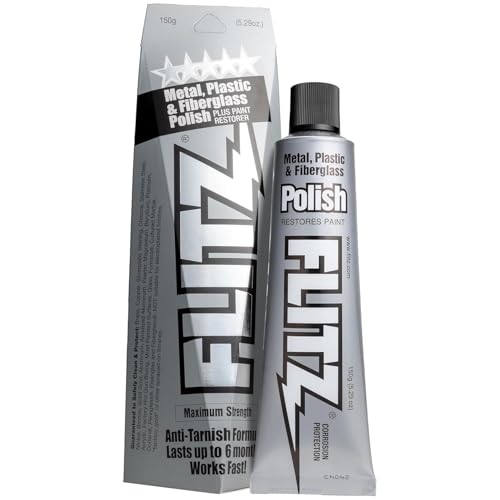
Flitz Metal Polish Paste 5.29oz
Strengths
- Safe for solid chrome
- Leaves long-lasting shine
- Made in USA
Trade-offs
- Not for plated finishes
- Manual effort required
- Not suitable for plastics
If you’re serious about metal care and own real chrome, not just chrome-plated plastic, Flitz should be on your radar. It’s designed specifically for solid metals, and that focus shows. The non-abrasive formula removes light oxidation, water spots, and tarnish while leaving behind a durable protective layer, which matters when your exhaust headers or tank badges face daily heat cycles and moisture.
Owners praise its consistency and effectiveness, especially when compared to sprays or liquid polishes that feel superficial. It requires elbow grease, manual buffing is mandatory, but that control lets you avoid over-polishing thin layers. Unlike Blue Magic or even Chemical Guys, Flitz won’t work on coated surfaces, so you need to know what you’re dealing with. But for genuine chrome on café racers, choppers, or vintage cruisers, this is the smarter buy.
Video review
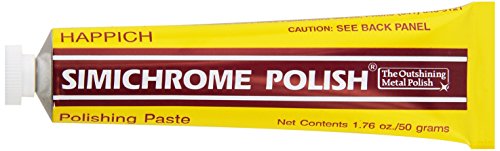
Simichrome All Metal Polish Tube
Strengths
- Excellent for fine details
- Non-abrasive and smooth
- Trusted by restorers
Trade-offs
- Very small quantity
- Expensive per ounce
Simichrome has been a staple in instrument cases and toolboxes for decades, and it’s easy to see why. This tiny tube packs a punch when it comes to finishing delicate chrome, think carburetors, gauges, kickstands, and other small hardware common on classic bikes. The paste spreads thin, buffs easily, and leaves a buttery-smooth shine that feels refined, not flashy.
It’s not meant for large panels or aggressive cleaning, and the size alone tells you that. But for touch-ups and final detailing, it’s unmatched. Owners love how it brings back luster without scratching, and many use it as a last-step enhancer after heavier polishes. Compared to bulkier formulas like 3D or Chemical Guys, Simichrome isn’t about power, it’s about finesse. If you’re restoring an old Triumph or Honda CB and care about authenticity, this is part of the ritual.
Video review
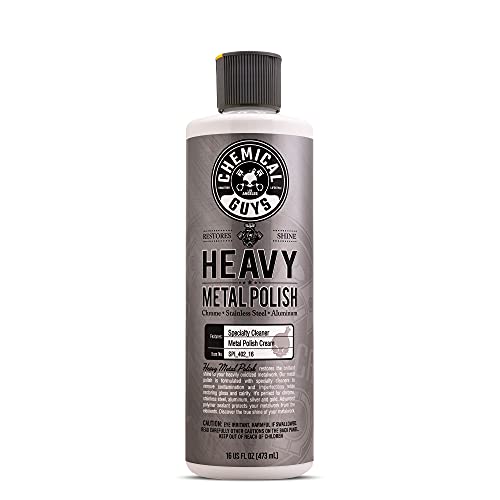
Chemical Guys Heavy Metal Polish
Strengths
- High volume per bottle
- Effective on light to moderate oxidation
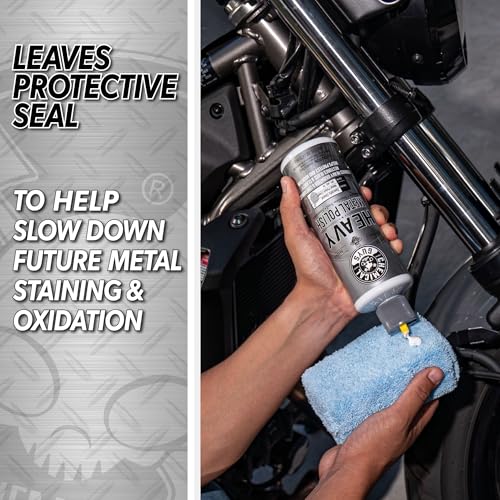
- Leaves protective layer
Trade-offs
- Not for delicate or antique pieces
- Slight odor during application
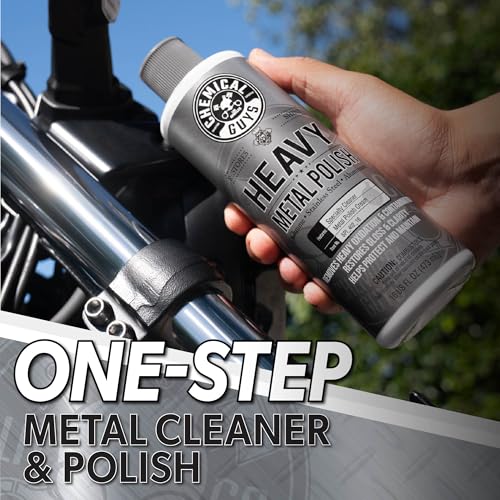
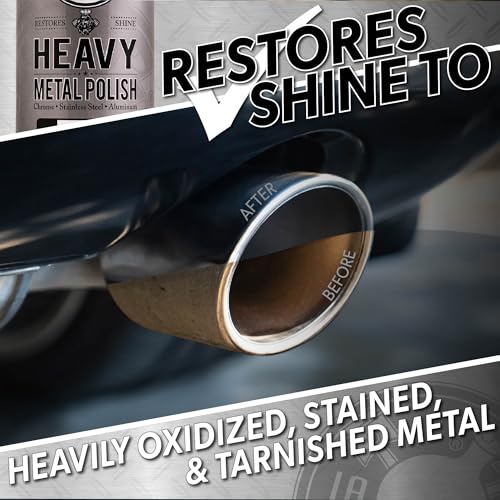
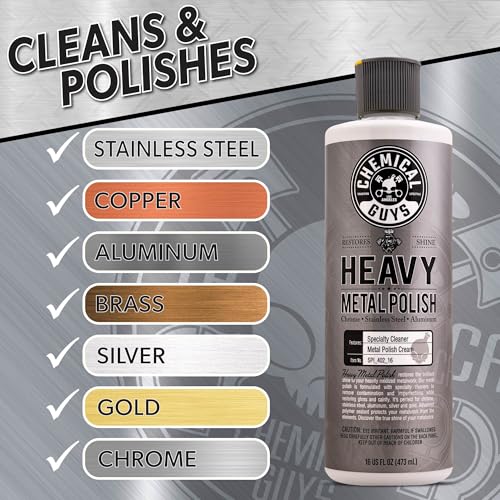
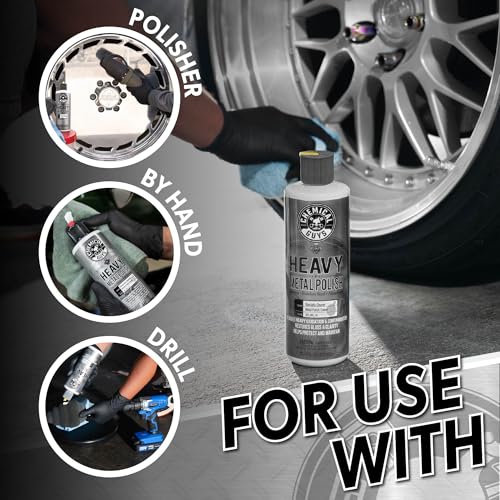
Chemical Guys have built a reputation on user-friendly detailing products, and this polish fits right in. It’s formulated to tackle oxidation and stains on chrome, aluminum, and stainless, common trouble spots on exhaust tips, rims, and engine covers. The 16 oz size gives you plenty of room to work on larger projects, making it a smart pick if you’re doing full bike detailing or maintaining multiple vehicles.
Reviewers note it buffs out cleanly and leaves a glossy finish without marring, thanks to its balanced cut. It doesn’t strip down to bare metal, but it does lift surface-level grime and discoloration effectively. When stacked against Flitz or Simichrome, it’s less specialized but more accessible, ideal for beginners who don’t want to worry about damaging plated finishes. I’d say it’s the better value if you’re covering broad areas and want consistent performance across different metals.
Product photos
Blue Magic 400 Metal Polish

Strengths
- Lowest cost option
- Gentle on surfaces
- Good for basic upkeep
Trade-offs
- Limited cutting power
- Shorter-lasting protection
- Less shine depth
At this price point, Blue Magic punches above its weight. It’s a non-abrasive cream that removes tarnish and oxidation from chrome, aluminum, brass, and silver, perfect for budget-conscious riders who still want decent shine and some protection. The 7 oz container offers more than Simichrome and costs less than nearly every other option here, making it a solid entry-level pick.
It won’t match the depth of Flitz or the heavy-lifting power of 3D, but for keeping everyday chrome looking cared-for, it gets the job done. Some users report it works especially well with a buffer, speeding up coverage on larger parts. It’s not my first choice for show bikes or rare builds, but for commuters or new riders learning how to detail, it’s hard to beat the value.
Product photos


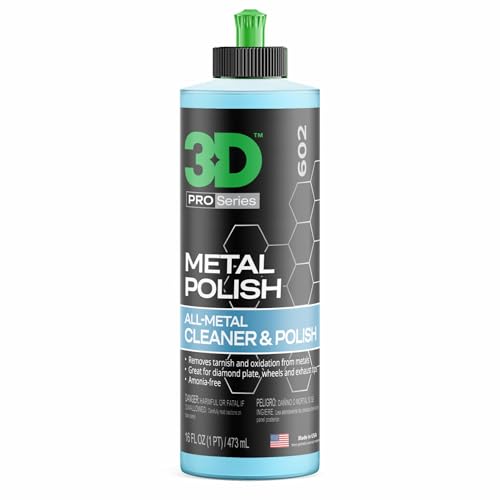
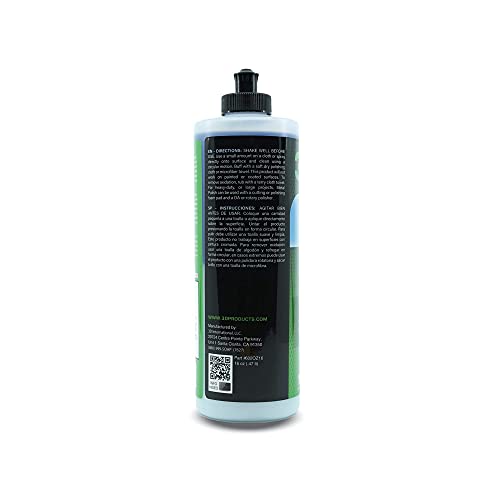
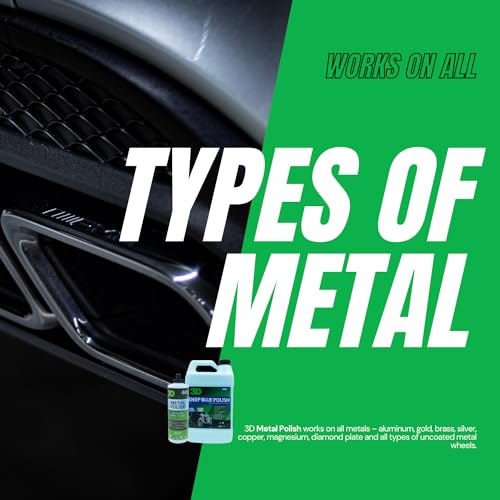
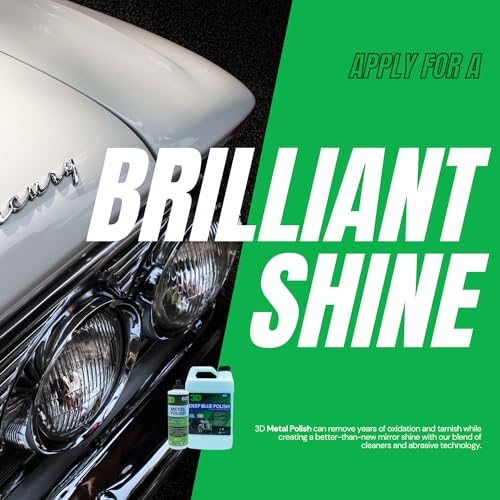
3D Metal Polish 16oz
Strengths
- Cuts through heavy oxidation
- No abrasive residue
- Mirror-like finish
Trade-offs
- Overkill for light cleaning
- Takes more effort to buff
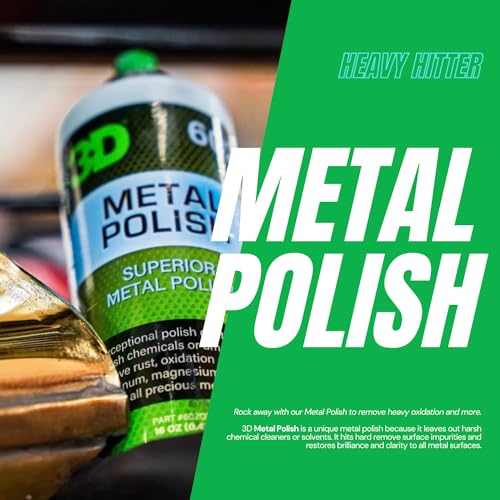
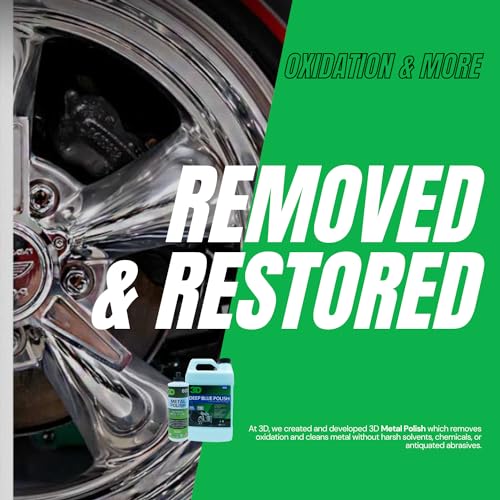
When you’re dealing with metal that’s seen years of weather, road grime, and sun damage, most polishes just smear the problem around. 3D is different. Its proprietary formula tackles heavy oxidation without relying on harsh abrasives, which means it can clean deep without leaving swirls or haze, a big deal on reflective surfaces like polished tanks or custom wheels.
This is the go-to when restoration is the goal, not just maintenance. Reviewers note it works well with both hand application and rotary tools, giving flexibility depending on the job. Compared to Schultz or Blue Magic, it’s far more aggressive, yet still safe on the base metal. If you’ve got a barn-find bike with dull chrome or milky aluminum accents, 3D will bring them back closer to factory brilliance than almost anything else here.
Product photos
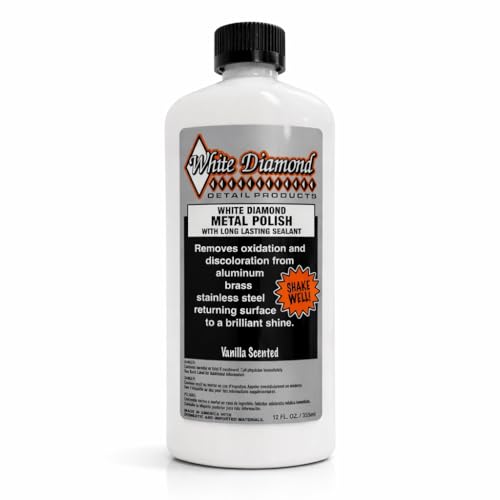
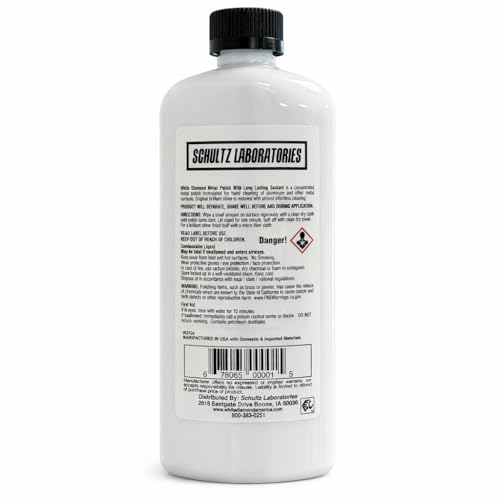
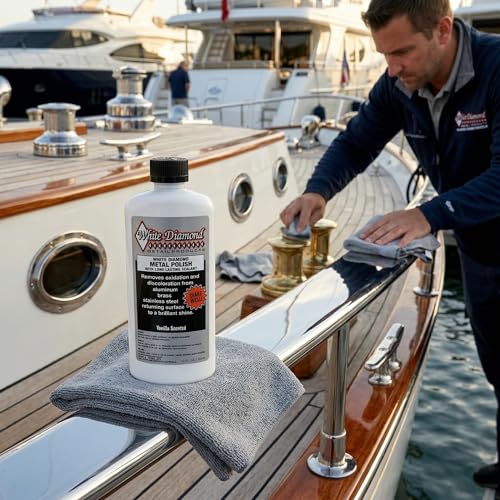
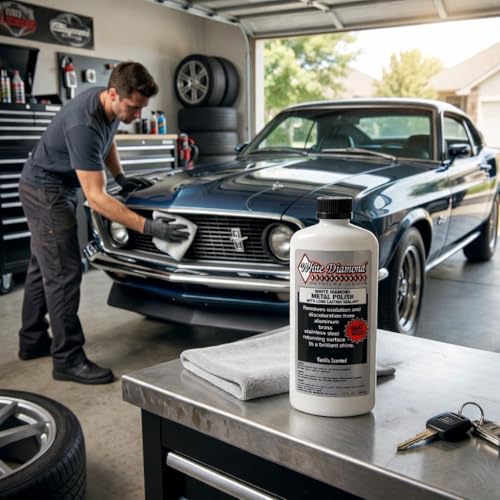
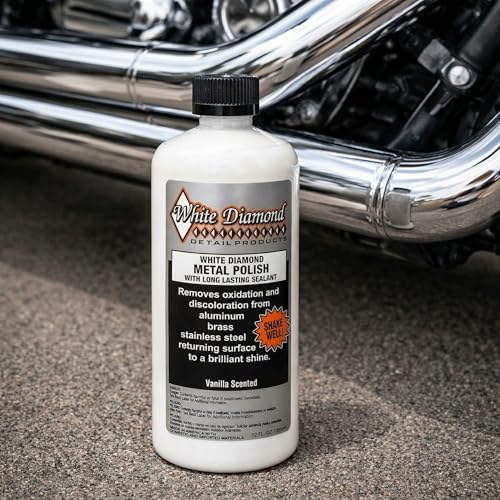
Schultz White Diamond Metal Polish
Strengths
- All-in-one formula
- Long-lasting sealant
- Safe on multiple surfaces
Trade-offs
- Not for heavy oxidation
- Requires reapplication in harsh conditions
I’ve seen a lot of all-in-one metal treatments come and go, and White Diamond stands out for its promise of cleaning, polishing, and sealing in a single step. On paper, that’s exactly what motorcycle owners want, efficiency without sacrificing protection. Owners consistently report it cuts through light oxidation on chrome and leaves behind a clear, non-greasy shield that resists water spots and grime, which is huge for bikes exposed to road elements.
It’s not a heavy-cut polish, so don’t expect it to revive badly pitted or deeply tarnished parts. But for routine maintenance on fuel tanks, fenders, or handlebars, it delivers solid results without needing multiple products. Compared to more aggressive pastes, this one leans toward preservation over restoration, and that’s fine by me for weekend riders who want shine and defense in one go.
Product photos
How We Picked These chrome polish for motorcycles
As someone who’s spent years turning wrenches and admiring gleaming metal, I approached researching chrome polish with a focus on real-world results. Rather than a hands-on lab test, this was a research-led comparison of published specifications, owner reviews, and expert opinions from detailing communities. I weighed features like abrasive qualities, metal compatibility, and ease of use, looking for patterns in what consistently delivered shine and protection. This guided my ranking of the options.
For motorcycle chrome, the ability to handle different metal types and the level of oxidation a polish can tackle are paramount. I prioritized formulas that explicitly stated compatibility with common motorcycle metals – chrome, aluminum, stainless steel – and those that offered a range of correction from light tarnish to more stubborn oxidation. Equally important was finding polishes that wouldn’t inflict swirl marks or damage the underlying finish; a protective element is a huge bonus, and something I discuss in my guide to motorcycle cleaner and polish.
Specifications reliably show what a polish is designed for – the metals it works on, its abrasive level. However, owner feedback and reputation are crucial for understanding how well it performs. I paid close attention to reports of ease of use, residue left behind, and lasting results. For those restoring classic bikes, particularly models like a Harley-Davidson chrome polish, I gave extra weight to polishes known for their ability to revive heavily tarnished surfaces.
What To Look For In chrome polish for motorcycles
Choosing the right chrome polish can make a real difference in how your bike looks, and frankly, how much you enjoy working on it. I’ve seen too many riders settle for lackluster results simply because they didn’t understand what separates a good polish from a mediocre one.
A truly effective chrome polish isn’t just about shine; it’s about the formula’s ability to remove oxidation without damaging the underlying metal. Look for non-abrasive options suitable for the specific metal (solid chrome, stainless, aluminum) and consider the level of restoration needed – light maintenance versus tackling heavier corrosion. Understanding the metal you’re working with is paramount.
Understanding Your Metal
First, you need to clearly identify what you’re polishing. Many products advertise compatibility with “metal,” but that’s often misleading. A significant number of motorcycle parts look like chrome but are actually chrome-plated plastic or have a protective coating. Using the wrong polish on these can cause irreversible damage. Solid chrome, stainless steel, and aluminum all respond to different formulas. I always recommend a spot test in an inconspicuous area before applying any polish liberally.
Assessing the Level of Oxidation
The amount of oxidation or tarnishing dictates the type of polish you’ll need. For light maintenance – keeping already shiny parts gleaming – a gentle, non-abrasive polish like Simichrome or Blue Magic is often sufficient. However, if you’re dealing with significant rust or heavy oxidation, you’ll need something with more cutting power, like 3D Metal Polish. Remember, more aggressive polishes aren’t necessarily better; they require more skill and effort to apply without creating swirl marks. If you’re unsure, start with a milder option and work your way up. You can find more about different options in our guide to the best chrome polish.
- For a quick detail spray, consider a product like Chemical Guys Heavy Metal Polish, which is easy to apply and buff.
- If you’re dealing with multiple metal types on your motorcycle (exhaust, wheels, trim), a versatile polish like Schultz White Diamond Metal Polish can save you space and money.
- For intricate, smaller parts, such as bolts or valve covers, a paste-style polish like Flitz Metal Polish Paste allows for precise application and control, minimizing waste and maximizing effectiveness.
Balancing Cost and Convenience
Price isn’t always an indicator of quality, but it does reflect the amount of polish you get and the ingredients used. A larger size, like the Chemical Guys Heavy Metal Polish, offers better value if you have a lot of chrome to maintain. However, for occasional touch-ups or smaller areas, a smaller, more concentrated polish might be more practical. I’ve found that a little goes a long way with many of these products.
A good rule of thumb: invest in quality microfiber cloths. They make a huge difference in both application and buffing, minimizing swirl marks and maximizing shine.
Don’t forget to consider the overall ease of use. Some polishes require significant elbow grease, while others are designed for use with a power polisher. If you’re new to detailing, starting with a user-friendly product is a smart move. And if you’re also looking to maintain the shine on your car, exploring options for car chrome polish can be a worthwhile venture.
Chrome Polish for Motorcycles Compared
Here’s a comparison of key specifications for popular chrome polishes designed for motorcycle use.
| Product Title | Volume | Metal Types | Abrasive? | Best For | Protective Seal | Made In |
|---|---|---|---|---|---|---|
| Flitz Metal Polish Paste | 5.29oz | Solid Metals | Yes | Overall | Yes | USA |
| Simichrome All Metal Polish | 3.0oz | All Metals | N/A | Small Parts | N/A | Germany |
| Chemical Guys Heavy Metal | 16oz | Multiple Metals | N/A | Value Size | Yes | N/A |
| Blue Magic 400 | N/A | Multiple Metals | No | Budget Friendly | Yes | N/A |
| 3D Metal Polish | 16oz | Multiple Metals | N/A | Heavy Oxidation | N/A | USA |
| Schultz White Diamond | N/A | Multiple Metals/Glass | N/A | All-in-One Protect | Yes | USA |
Frequently Asked Questions
Will any metal polish work on my motorcycle chrome?
No, not all metal polishes are suitable. Motorcycle chrome can be sensitive, and some polishes designed for other applications can cause damage, especially if your bike has chrome-plated plastic. Always verify compatibility with your specific metal type before use.
How often should I polish the chrome on my motorcycle?
Generally, polishing should be done every 3-6 months, but it depends on riding conditions and exposure to the elements. More frequent polishing is needed if you ride in harsh environments or want to maintain a pristine shine, and you might also consider a car wax and polish for added protection.
Can I use chrome polish on other metal parts of my motorcycle?
Yes, many polishes are versatile and work well on stainless steel and aluminum, but again, always check the product label. For example, Schultz White Diamond is designed for multiple metals and glass, offering a convenient all-in-one solution.
What’s the best way to remove stubborn rust spots from chrome?
For significant rust, a polish with some abrasive qualities like 3D Metal Polish is often necessary, but start with a gentle approach. Applying multiple light coats and buffing carefully is better than trying to remove it all at once and risking scratches.
Besides polish, what else do I need to keep my motorcycle chrome looking its best?
Quality microfiber cloths are essential for application and buffing to avoid swirl marks. Also, consider using a dedicated chrome wheel cleaner and polish to maintain the shine of your wheels and prevent brake dust buildup.
The Bottom Line
Ultimately, choosing a chrome polish comes down to how much effort you want to put in versus the level of shine you demand. For the best overall results, and a product that consistently earns praise for its ability to restore and protect, I believe Flitz Metal Polish Paste strikes the right balance. It requires a bit of elbow grease, but the lasting shine and protective qualities are well worth it for those serious about their bike’s appearance.
If you’re looking to save some money or need a versatile option for multiple metal surfaces, Blue Magic 400 provides excellent value. And for those who want a quick and easy solution, especially for maintaining existing shine, Chemical Guys Heavy Metal Polish is a great choice. Don’t overlook the need for a dedicated chrome wheel polish if your wheels are a key aesthetic component.
More than any specific product, remember that proper preparation and technique are crucial. A clean surface, quality microfiber cloths, and a gentle hand will always yield better results than an expensive polish applied carelessly. Don’t forget to consider a quality best car polish for your other vehicles – a consistent approach to detailing across your fleet can save time and effort in the long run.
