
8 Best Kids’ Trikes for 2026
This post contains affiliate links. As an Amazon Associate, we earn from qualifying purchases.
The TODECARE 8-in-1 Foldable Trike stands out as the best overall pick, thanks to its exceptional adaptability and long lifespan. For a simpler, durable option that nails the basics, the Umatoll Tricycle for Toddlers is a solid budget choice. If you want maximum versatility across multiple stages of development, the Radio Flyer Deluxe Steer & Stroll offers reliable performance and trusted build quality.
Most parents want a trike that lasts more than just one summer and keeps their child safe while they learn to ride. Too many models are outgrown quickly or lack the stability young riders need, leading to frustration and wasted money.
This guide cuts through the noise by focusing on what actually matters: real-world feedback, build integrity, and smart design choices. I looked at dozens of models through the lens of engineering fundamentals and parent experiences to find trikes that grow with your child, stay stable, and make outings easier.
Top 8 Childrens Trikes in the Market
The Best Childrens Trikes, Reviewed
TODECARE 8-in-1 Foldable Trike
Strengths
- 5-point safety harness
- Rotating, reclining seat
- Dual foot brakes
- Ample storage
- One-click folding
Trade-offs
- Higher price tag
- Slightly heavier
- Assembly takes time
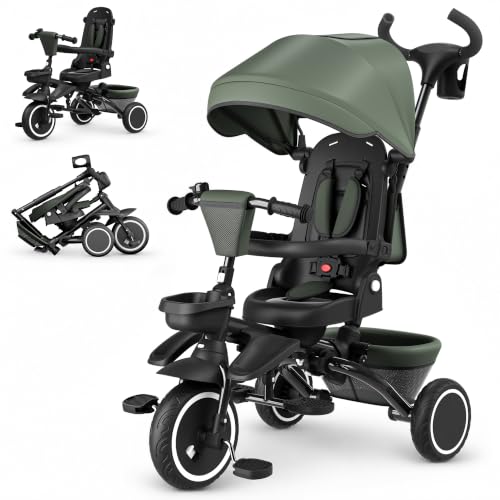
If I had to recommend one trike for most families, this would be it. The TODECARE nails the balance between versatility, safety, and thoughtful design. Eight modes include every stage from baby passenger to independent rider, and the 5-point harness with adjustable straps is a major safety upgrade over simpler models. The wraparound guardrail and dual foot brakes give real peace of mind.
Owners praise the one-button rotating seat, facing inward for bonding, forward for exploration, and the storage solutions are legit: three compartments, a peek-a-boo canopy, and dual baskets. Against the JMMD, it feels slightly more refined in materials and control. It’s not the cheapest, but it’s the one I’d buy for my own hypothetical kid.
Video review
Umatoll Tricycle for Toddlers 2-5

Strengths
- Budget-friendly price
- Light-up wheels
- Wide wheelbase
- Removable baskets
- Solid entry-level build
Trade-offs
- Basic braking
- Minimal padding
- Not for rugged use
For sheer bang-for-buck, the Umatoll stands out. At well under $40, it includes features usually reserved for pricier models: wide rear wheels for stability, dual baskets, and light-up wheels that activate with motion, no batteries required. Kids adore them, and parents appreciate the safety bump from the wider stance.
On paper, it looks almost too good to be true. And while owners confirm it’s sturdy enough for casual use, the steel frame isn’t reinforced like higher-end models. It works fine on driveways and sidewalks, but don’t expect it to survive weekly park trips on gravel. Still, as a first trike or gift for occasional use, it’s hard to beat.
Video review
Radio Flyer Deluxe Steer & Stroll
Strengths
- Parent steering handle
- Durable steel frame
- Covered storage bin
- Classic design
- Easy pedal transition
Trade-offs
- No folding feature
- Heavier than alternatives
- Only basic seat adjustability
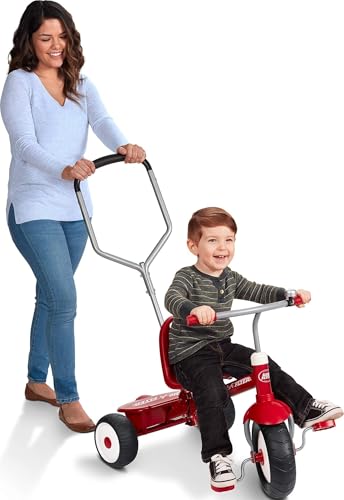
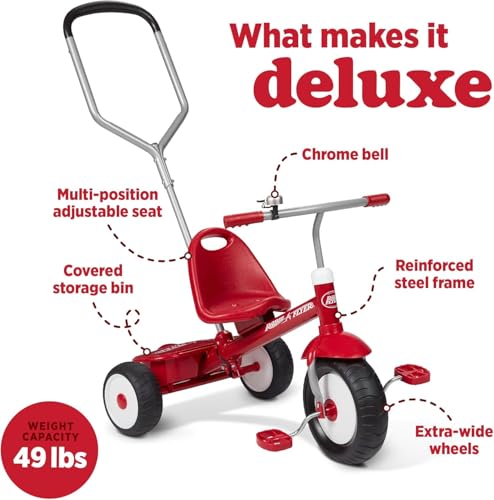
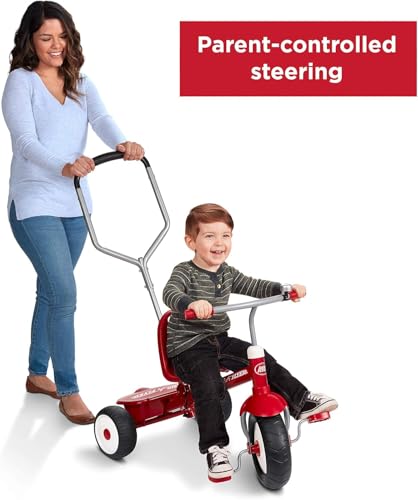
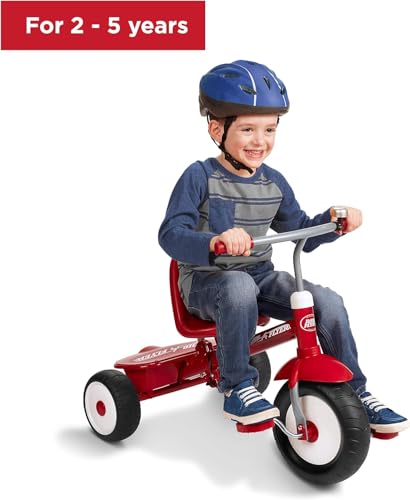
Radio Flyer earns its reputation here, the brand knows how to make parent-assist trikes, and this model proves it. The push-to-pedal shift is smooth, and the included steering handle gives real control during early outings. For parents walking alongside hesitant riders, that confidence boost matters. The steel frame feels overbuilt in the best way, and the chrome bell? A small touch, but kids love it.
It doesn’t convert as fully as the 8-in-1 models, but what it lacks in modes it makes up for in simplicity and charm. Compared to flashier options, this one stays focused: teach steering, build confidence, last for years. Owners report using it heavily across multiple kids, which says a lot about longevity.
Product photos


YGJT 3-in-1 Folding Balance Bike

Strengths
- Foldable design
- Balance-to-pedal transition
- Non-slip handlebar
- Adjustable seat
- EVA flat-free wheels
Trade-offs
- Basic build quality
- Limited padding
- Narrow wheelbase
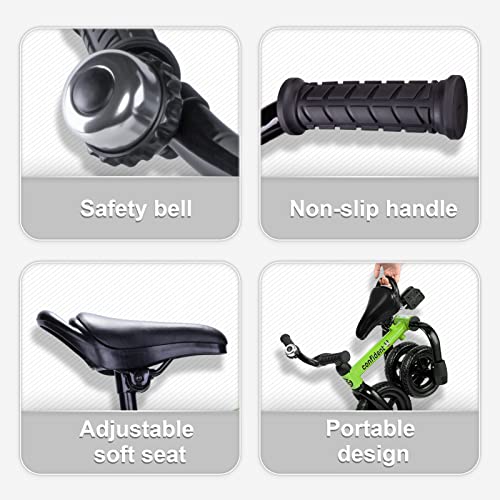
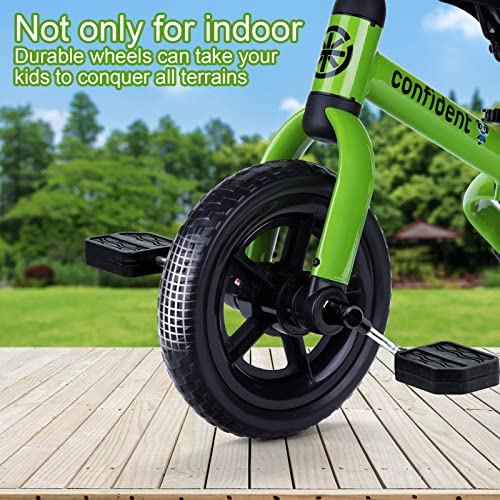
This trike tries to do a lot on a tight budget, and it shows. The idea of transitioning from balance bike to pedal trike is solid on paper, especially for parents wanting a grow-with-me option for toddlers under 3 into early preschool years. The foldable design is a real perk for small homes or car storage, and the EVA wheels mean no flats, just roll-out-and-go convenience.
But compared to more refined models like the TODECARE or JMMD, this one feels spartan. Owners consistently report that the seat adjustability is limited and the frame can feel a bit rigid on uneven sidewalks. It’s light-duty by design, best suited for smooth pavement and short rides. If your child is aggressive or rides daily, durability might become a concern down the line.
Product photos


BABY JOY 15-Inch Wheel Trike

Strengths
- Heavy-duty steel frame
- Inflatable rubber tire
- High weight capacity
- Swivel handlebar
- Anti-slip pedals
Trade-offs
- No folding mechanism
- No sun canopy
- Bulky for storage
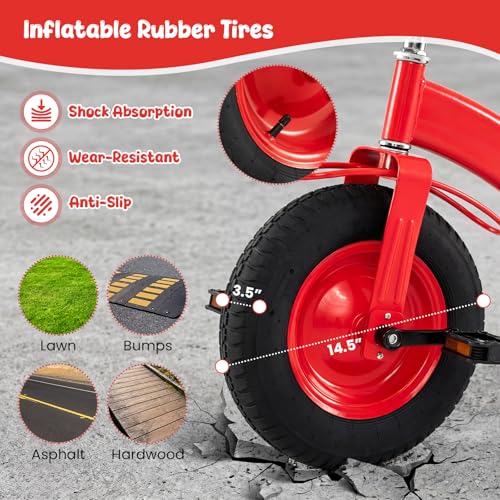
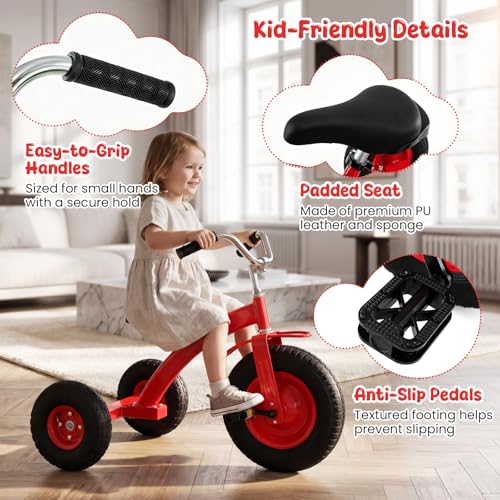
This trike is built like a tank. The 15-inch inflatable front tire and triangle carbon steel frame rated for 200 lbs set it apart, it’s clearly engineered for longevity and real-world surfaces. Unlike plastic-heavy models, this one handles grass, gravel, and cracked pavement without buckling. The shock-absorbing tire makes a noticeable difference in ride quality.
It’s also one of the few with a swivel handlebar and padded seat, adding comfort for longer sessions. But that durability comes with weight. At full size, it’s not easy to fold or carry. And while it adjusts well, it skips some modern niceties like a canopy or harness. Still, if toughness is your priority, this one earns respect.
Product photos



Dinosaur Kids Tricycle with Music
Strengths
- Engaging dinosaur design
- Built-in music and lights
- Rubber tires
- Fun factor
- Appeals to 3–7 age group
Trade-offs
- No safety harness
- No parental controls
- Limited adjustability
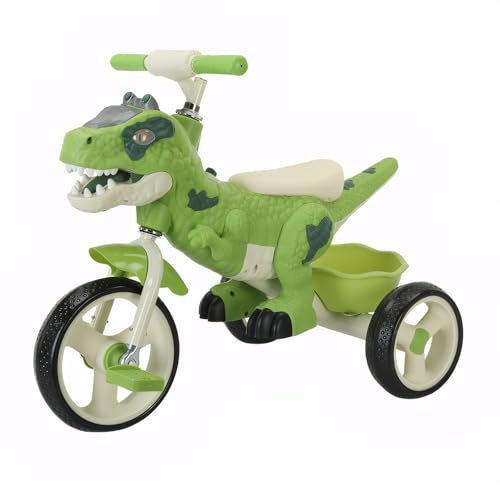
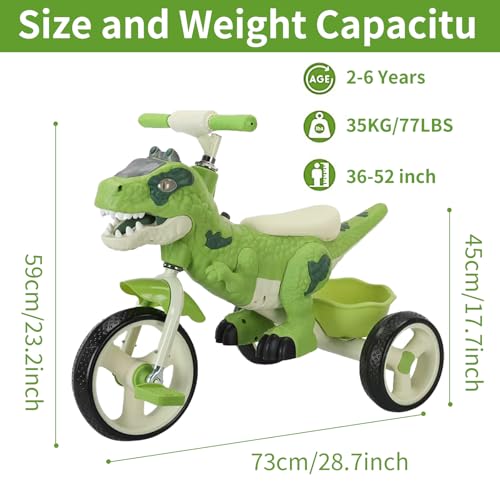
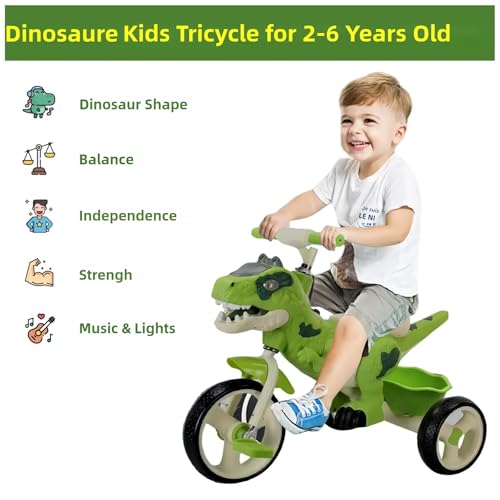
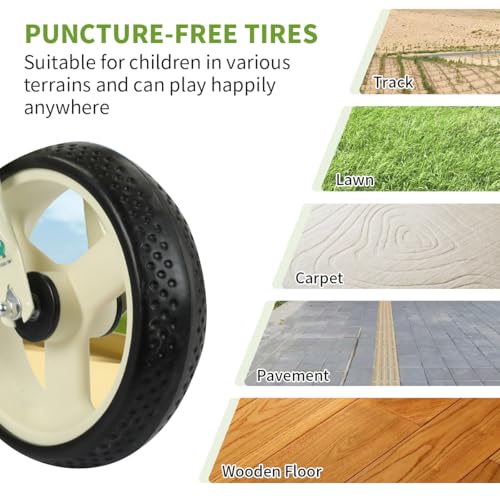
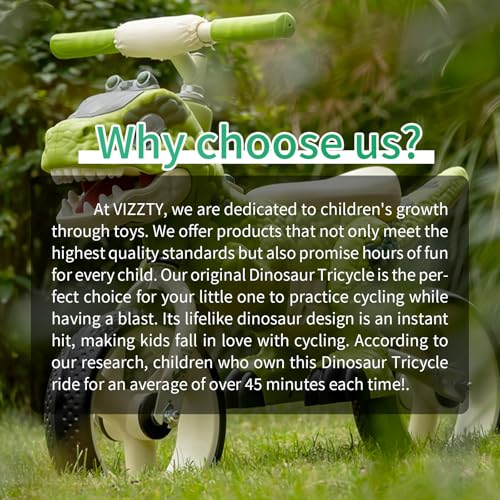
Let’s cut to the chase: this trike exists to delight. The dinosaur theme, music, and flashing lights turn every ride into a mini parade. For kids obsessed with prehistoric creatures, it’s an instant win. The rubber tires offer decent grip, and the storage basket adds practicality beneath the flair.
But specs reveal trade-offs. There’s no parent handle, no harness, no meaningful adjustability. It’s built for fun, not function. Compared to learning-focused trikes, it’s a step back in developmental support. That’s fine, if you’re buying a toy, not a trainer. But don’t expect it to teach balance or last through multiple siblings.
Product photos

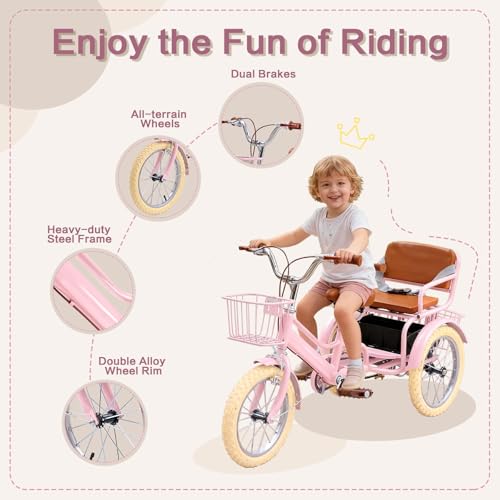
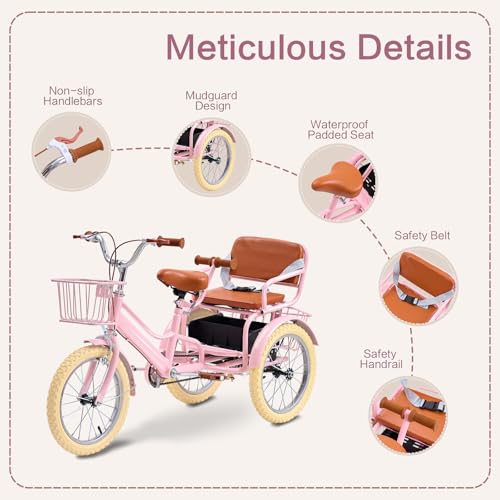
Kids Tricycle with 2 Seats

Strengths
- Large 16-inch wheels
- Dual handbrakes
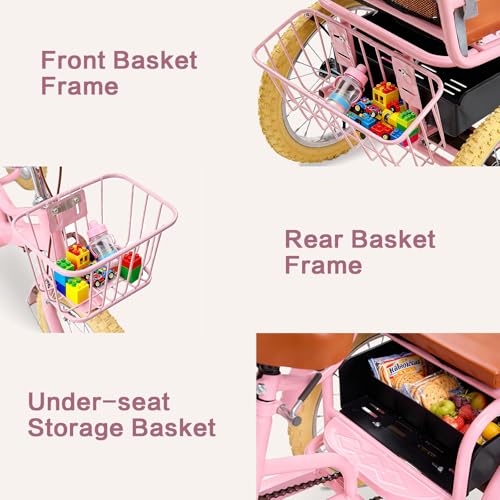
- Spacious storage
- Tandem seating
- Height-adjustable seat
Trade-offs
- Bulky footprint
- Limited solo usability
- Single color option
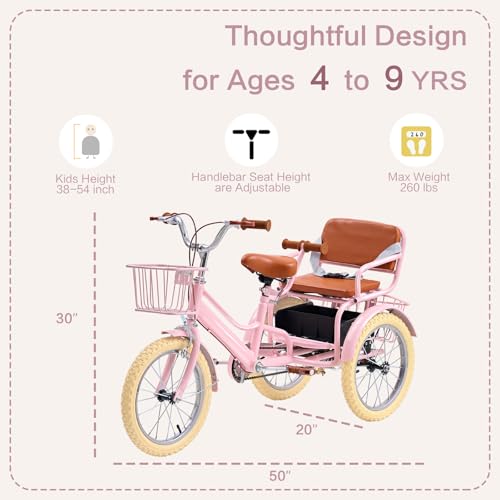
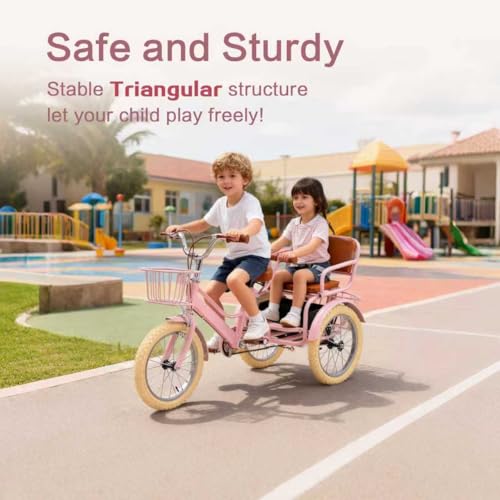
At this price point, I expect more than just size, I want engineering to match ambition. This tandem trike delivers something rare: a true big-kid machine that actually fits children up to age 9. The 16-inch wheels are a standout in a market flooded with tiny-wheeled novelties, giving real momentum and stability on longer rides. The dual handbrakes are properly functional, not just molded-on props, which makes me take this trike seriously as a transitional ride.
The three baskets are genuinely useful, more than gimmicks, and the waterproof PU seat is a comfort upgrade most others skip. But let’s be honest: tandem trikes are niche. They work only if you’ve got two kids close in age, or if an adult is okay riding with the child. That limits its appeal despite strong specs.
Product photos
JMMD 8-in-1 Foldable Toddler Tricycle
Strengths
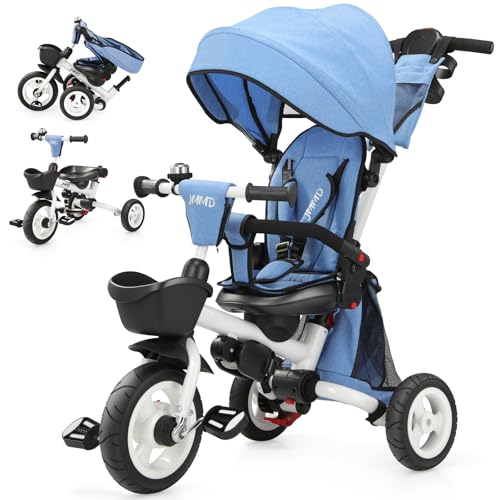
- True infant-to-toddler support
- Folds compactly
- All-terrain EVA wheels
- Tool-free assembly
- Canopy and cup holder
Trade-offs
- Seat recline limits visibility
- Slightly bulky when folded
- Harness not 5-point
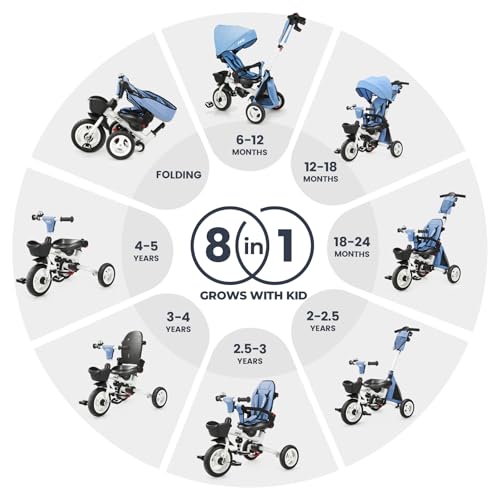
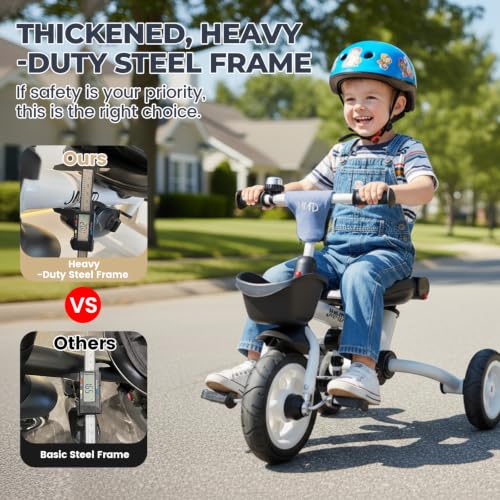
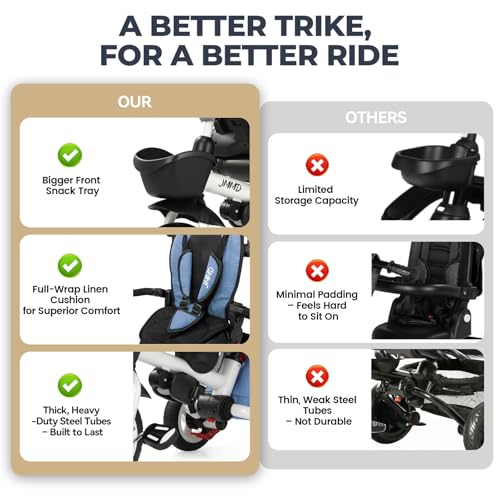
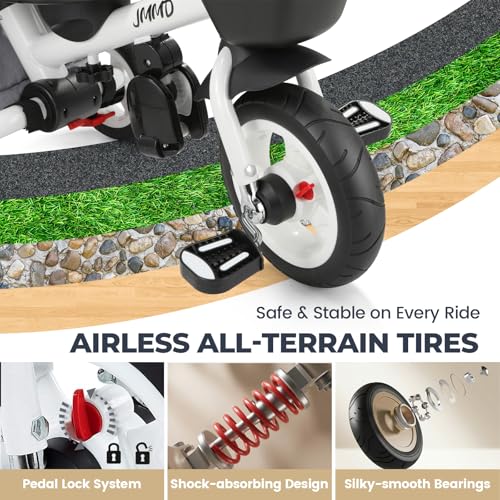
This is the Swiss Army knife of toddler trikes, eight modes, tool-free setup, and a reclining seat that accommodates babies as young as 12 months. The inclusion of a 3-point harness, dual foot brakes, and ASTM certification means safety isn’t an afterthought. For apartment dwellers or frequent travelers, the foldable design is a standout, you won’t need a pickup truck to haul this thing.
It’s also one of the few models with EVA all-terrain wheels and a canopy, making it genuinely usable beyond the driveway. Compared to the TODECARE, it trades a few premium touches (like a 5-point harness) for faster assembly and broader infant compatibility. Both are excellent, but JMMD wins for youngest riders.
Product photos

How We Chose These childrens trikes
Rather than a hands-on lab test, my research focused on a detailed comparison of specifications and features across numerous models. I weighed published owner reviews from major retailers alongside expert opinions found in parenting publications and gear review sites. As someone who’s spent years observing vehicle design and construction – even at a smaller scale – I applied that understanding to evaluate the engineering and build quality reported for each trike. Ultimately, I ranked options based on how well they met key criteria for safety, adaptability, and value.
For children’s trikes, three factors stood out as most critical. First, adjustability is key; a trike that grows with a child offers the best long-term value. Second, stability is paramount for building confidence in young riders. Finally, thoughtful features – like parent controls and storage – significantly enhance the overall experience for both child and caregiver. These factors dictated which models rose to the top of my recommendations.
Specifications reliably indicate a trike’s potential durability and size range. However, owner feedback proved invaluable in assessing real-world performance, particularly regarding ease of assembly, the smoothness of the ride, and the effectiveness of safety features. Reputation also played a role; established brands with a history of quality, like Radio Flyer, often inspire greater confidence, and are frequently mentioned in discussions about top toddler trike models. I also considered how well each option suited different age ranges and riding styles, including those seeking foot-propelled trikes.
Choosing The Right childrens trikes
Picking the right trike for your little one can feel overwhelming, but focusing on a few key areas makes all the difference. A good trike isn’t just about fun; it’s about supporting healthy development and providing a safe, enjoyable experience for both child and parent.
A well-designed children’s trike prioritizes stability through a low center of gravity and wide wheelbase. Adaptability is crucial, allowing the trike to evolve with the child’s growing abilities. Safety features like harnesses, brakes, and durable construction are paramount, alongside thoughtful details that enhance comfort and convenience for both rider and caregiver.
Adaptability for Growing Riders
One of the biggest mistakes I see parents make is buying a trike their child quickly outgrows. Look for models that offer significant adjustability. Seat height and handlebar reach are the obvious ones, but consider whether the trike transforms as well. Some, like the TODECARE 8-in-1, are designed to move through multiple stages, starting as a stroller-style trike with a parent handle and eventually transitioning to a fully independent pedal trike. This avoids the constant need for upgrades.
- A simple adjustable seat is good, offering a few inches of range.
- A trike with multiple configurations (like stroller, steering, and independent modes) is better, extending its usable life significantly.
- The best option offers a combination of both – a wide range of seat and handlebar adjustments and the ability to change riding styles, letting the trike truly grow with your child over several years.
Prioritize Stability and Build Quality
A wobbly trike is a frustrating trike, and more importantly, a potentially unsafe one. Don’t underestimate the importance of a robust frame and a well-considered design. Carbon steel frames, like those found in the Umatoll Tricycle, offer a good balance of strength and weight. Pay attention to wheel construction too. Larger, inflatable rubber tires (as seen on the BABY JOY 15-Inch Wheel Trike) will provide a smoother, more comfortable ride, especially on uneven surfaces, compared to hard plastic wheels.
A trike’s stability is directly related to its wheelbase width. Wider is generally better, especially for younger or less experienced riders. Don’t compromise on this for the sake of a slightly smaller footprint.
Features That Enhance the Experience
Beyond the core mechanics, think about the little things that make a big difference. Storage is a huge one. Baskets, compartments, and even cup holders (featured on many models) are incredibly convenient for longer outings. For parents of younger children, the ability to steer and control the trike is invaluable. If you’re looking for models that offer this, you may want to check out our guide to the best stroller trikes. Some trikes even include fun extras, like lights and music, but don’t let these be the deciding factor. If you have a 3-year-old, exploring options specifically designed for that age group with our guide to tricycles for 3-year-olds can be a great starting point. Ultimately, the best trike is the one that fits your child’s age, abilities, and your family’s lifestyle.
Childrens Trikes Compared
Here’s a comparison of key specifications for various childrens trikes to help you make an informed decision.
| Product Name | Age Range | Max Weight (lbs) | Foldable | Seat Adjustment | Wheel Size (in) | Special Features |
|---|---|---|---|---|---|---|
| TODECARE 8-in-1 Foldable Trike | 1-5 | N/A | Yes | Yes | N/A | 8 Riding Modes, Parent Handle |
| Umatoll Tricycle for Toddlers 2-5 | 2-5 | N/A | No | 2 Position | N/A | Light-Up Wheels |
| Radio Flyer Deluxe Steer & Stroll | 2-5 | N/A | No | Yes | N/A | Parent Steering, Pedal/Footrest |
| YGJT 3-in-1 Folding Balance Bike | 2-5 | 55 | Yes | Yes | N/A | 3-in-1 Modes |
| BABY JOY 15-Inch Wheel Trike | N/A | 200 | No | Yes | 15 | Inflatable Tires |
| Dinosaur Kids Tricycle w/ Music | 3-7 | N/A | No | N/A | N/A | Music & Lights, Storage Basket |
| Kids Tricycle with 2 Seats | 4-9 | N/A | No | Yes | 16 | Tandem Design, Dual Baskets |
| JMMD 8-in-1 Foldable Toddler Trike | 1-5 | 55 | Yes | Yes | N/A | 8 Modes, Adjustable Canopy |
Frequently Asked Questions
What weight capacity should I look for in a trike?
A trike’s weight limit is crucial for safety and longevity; most quality options accommodate up to 55 pounds, but the BABY JOY 15-Inch Wheel Trike stands out with a 200-pound capacity, making it suitable for larger or older children. Always check the manufacturer’s specifications to ensure it’s appropriate for your child’s current weight.
Are foldable trikes actually more convenient?
Yes, foldable trikes like the TODECARE 8-in-1 and YGJT 3-in-1 significantly improve portability and storage. They’re especially useful for families with limited space or those who travel frequently, as they can easily fit in a car trunk.
What’s the difference between a trike and balance bikes ?
Trikes offer immediate stability with three wheels, while balance bikes require children to learn to balance independently using only two wheels. Balance bikes are often seen as a stepping stone to traditional bicycles, fostering a different set of developmental skills compared to trikes.
How important is the type of tire on a children’s trike?
The tire material greatly impacts ride quality. Inflatable rubber tires, such as those on the BABY JOY 15-Inch Wheel Trike, provide a smoother, more comfortable ride, especially on uneven terrain, compared to hard plastic tires which are found on less expensive models.
Are there trikes suitable for very young children, even before they can pedal?
Absolutely. Many trikes, like some of our top infant trike picks, start as stroller-style options, meaning parents can push and steer. These typically transition into pedal-powered trikes as the child grows and develops the necessary coordination.
The Bottom Line
Choosing a trike often comes down to balancing control and convenience with a child’s growing independence. While many options exist, the TODECARE 8-in-1 Foldable Trike strikes the best overall balance, offering a remarkable range of configurations to adapt as your child develops, alongside useful features like a folding design for easy storage. It’s a smart investment that minimizes the need to buy multiple trikes over the years.
If you’re specifically looking for a budget-friendly option, the Umatoll Tricycle for Toddlers 2-5 delivers solid construction and essential features at an accessible price point. For families prioritizing versatility and the ability to transition to a standard pedal trike, the YGJT 3-in-1 Folding Balance Bike is an excellent choice. And for those very young riders, exploring options like trikes for 1-year-olds can help find the perfect starting point.
Ultimately, the most important aspects of a children’s trike aren’t flashy features or top speeds. A stable design, appropriate size for your child, and durable build quality are the fundamentals. Once you’ve prioritized those, then you can consider extras. Don’t forget to think about what comes after a trike, too – perhaps it’s time to start looking at kids bikes as your little one gains confidence!
