
7 Best Children’s BMX Bikes of 2026
This post contains affiliate links. As an Amazon Associate, we earn from qualifying purchases.
The Mongoose Legion Mag is the best overall kids’ BMX bike, offering durable hi-ten steel construction and reliable U-brakes for growing riders. For younger beginners, the cubsala 16 Inch BMX Style Bike is a solid budget pick with coaster braking, while the WEIZE 20 Inch Freestyle BMX Bike stands out for trick-loving kids with its 360-degree rotor and included pegs.
Every parent wants their kid to have fun and stay safe on two wheels, but not all BMX bikes are built to handle backyard jumps or sidewalk adventures. Poor build quality, wrong sizing, or inadequate brakes can turn excitement into frustration fast.
As someone who’s spent years around bikes of all kinds, I know what separates a bike that lasts from one that ends up in the garage. This guide cuts through the noise, focusing on real-world durability, proper fit, and features that matter, based on specs, owner experiences, and what actually works for kids learning to ride and push their limits.
Top 7 Children’S Bmx Bikes in the Market
The Best Children’S Bmx Bikes, Reviewed
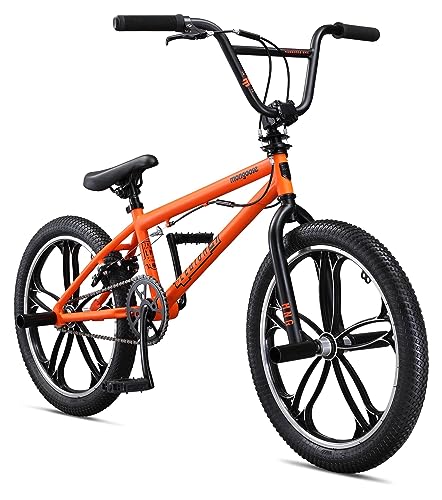
Mongoose Legion Mag 20-Inch BMX
Strengths
- 360-degree rotor
- Aluminum mag wheels
- 4 axle pegs
- Sealed bearing hubs
Trade-offs
- Heavy steel frame
- Higher price point
- Mag wheels harder to repair
If you’re going to spend on a kids’ BMX bike, this is the one. The Mongoose Legion brings legit DNA, aluminum mag wheels, sealed bearings, 4 pegs, and a 360-degree rotor, that parents and young riders actually notice. Owner feedback highlights how much smoother it rolls and spins compared to cheaper models. The hi-ten steel frame isn’t light, but it’s tough enough for daily abuse at skateparks.
What seals the deal is the micro drive gearing (40x16T), which gives better acceleration and control for small riders trying tricks. Against the Dynacraft Tony Hawk 720, it feels more purpose-built for real use. This isn’t just branding, it’s engineering tuned for kids. The smarter buy if your rider is serious about progressing.
Video review
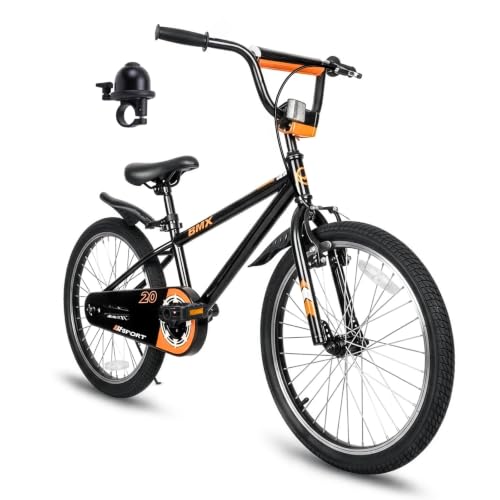
Yventix 20 Inch Kids BMX Bike
Strengths
- Affordable price
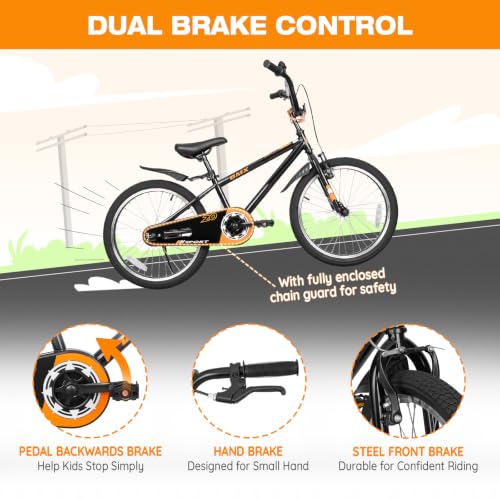
- Full chain guard
- Fenders and reflectors
Trade-offs
- Foot brake limits control
- No pegs or rotor
- Heavier than competitors
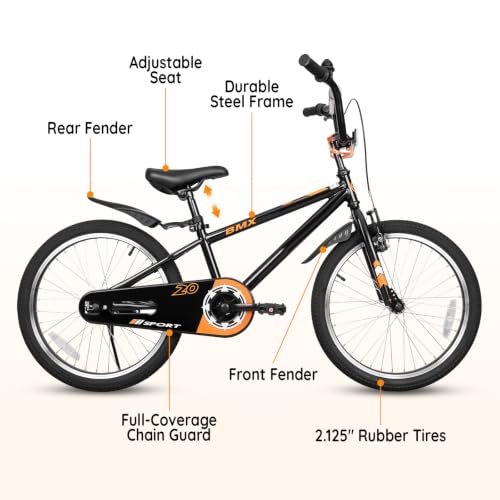
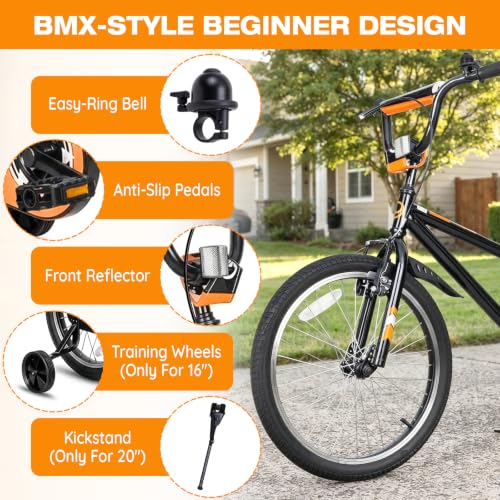
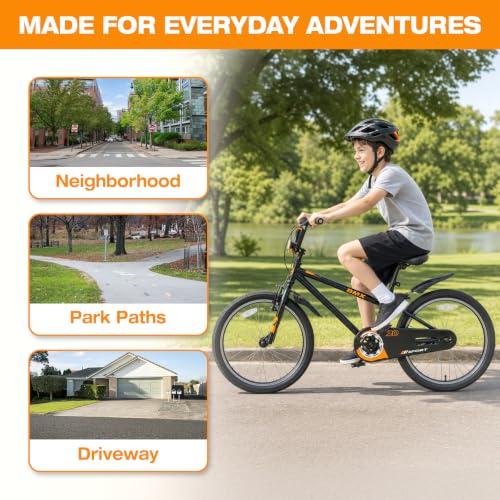
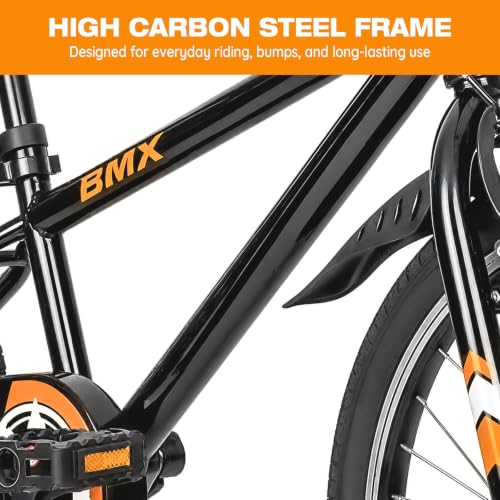
This Yventix bike screams practicality over performance. It’s got that classic BMX look, steel frame, bell, fenders, pad, but it’s clearly aimed at casual riders who want style and safety on neighborhood streets. The mix of front handbrake and rear foot brake feels outdated compared to full U-brake setups, but reviewers say younger kids adapt quickly.
At this price, it’s a decent value if you’re not chasing stunts. It lacks pegs and a rotor, so don’t expect any curb grinds or handlebar spins. When stacked against the WEIZE or Mongoose options, it’s undergunned for freestyle. But for birthday rides, sidewalk cruising, and growing confidence? A no-frills workhorse.
Product photos
67i 20-Inch BMX Bike with Pegs

Strengths
- 4 axle pegs
- Sturdy iron frame
- U-brakes front/rear
Trade-offs
- Heavy steel construction
- No rotor for bar spins
- Basic crankset
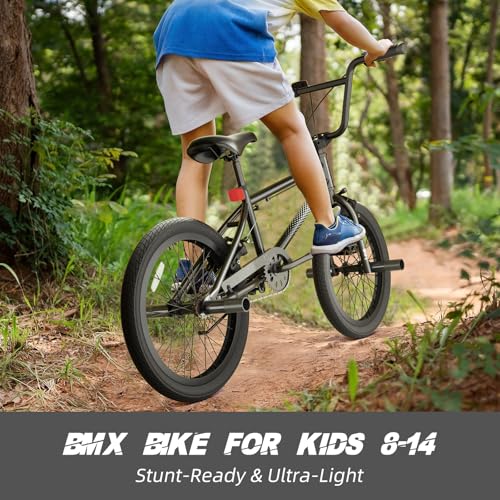
On paper, this 67i model looks like a solid entry into the kids’ freestyle scene, especially with 4 pegs and a drivetrain built for trick attempts. The compact iron frame keeps things stable for riders between 4’0″ and 4’8″, which is right in the sweet spot for early teens diving into BMX culture. Owners consistently report it holds up well on pavement and at local parks, though I wouldn’t expect race-level responsiveness.
It’s not a pro build, but for the price, it delivers more stunt-ready features than most budget bikes, U-brakes front and rear, 20” x 2.09” tires, and a one-piece crank that mimics real BMX setups. Compared to the Mongoose Legion, it’s less refined but gets close on function. My pick for families wanting a taste of freestyle without overspending.
Product photos
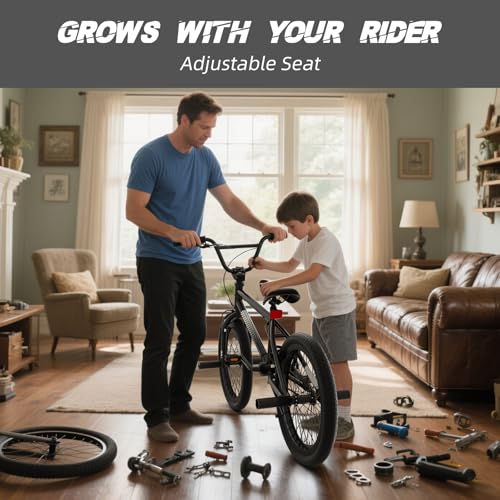
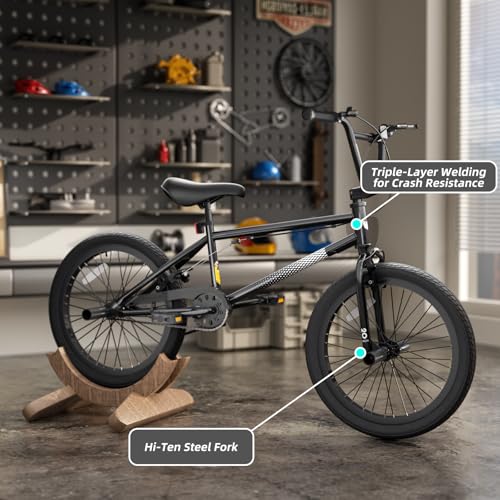
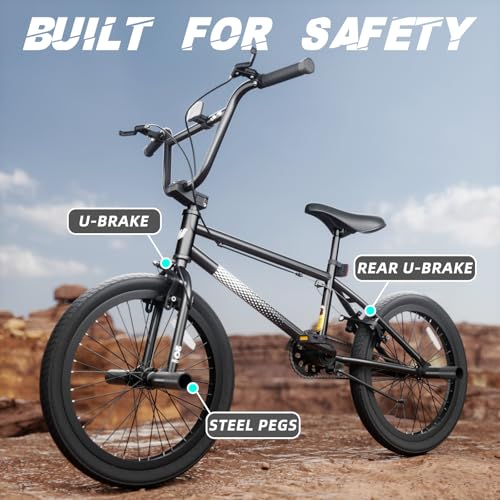
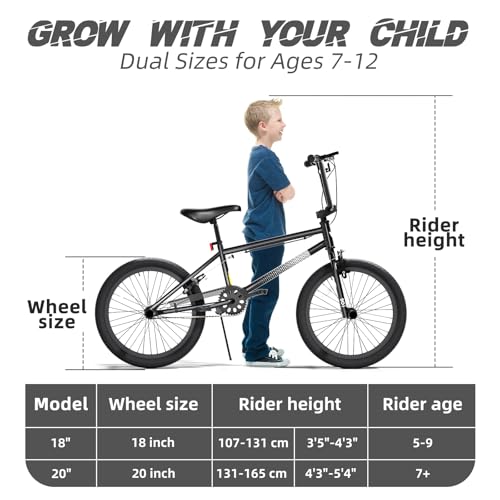
WEIZE 20 Inch Freestyle BMX Bike

Strengths
- 360-degree rotor
- 4 axle pegs
- Wide 2.40” tires
- V-brake stopping
Trade-offs
- Basic single-speed drivetrain
- Heavy hi-tensile frame
- Assembly reports vary
The WEIZE stands where function meets affordability. Its standout feature, the 360-degree rotor, is rare at this price and opens the door to real bar spins without cable snags. Paired with 4 pegs and wide 2.40” tires, it’s clearly aimed at kids who want to do tricks, not just look like they do. The V-brake adds strong stopping power, something many entry-level bikes skimp on.
Spec-wise, it edges past the 67i model with better tire grip and a rotor, though the drivetrain is simpler. Owners say assembly can be finicky, but once built, it performs reliably. For my money, this is the best blend of stunt-readiness and value. I’d pick it over the Yventix or 67i for any kid past the beginner stage.
Video review
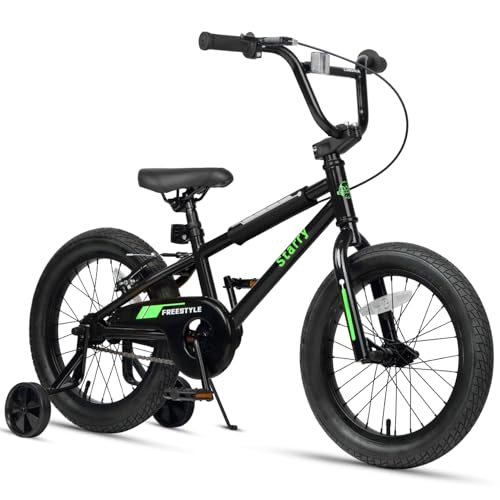
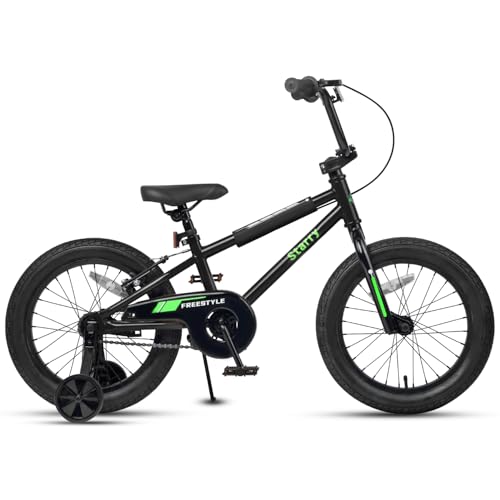
cubsala 16 Inch BMX Style Bike
Strengths
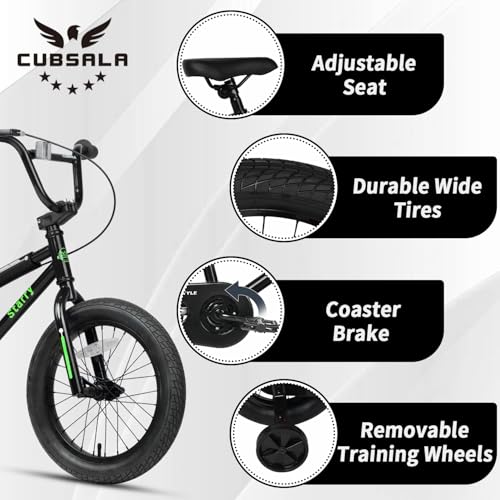
- Training wheels included
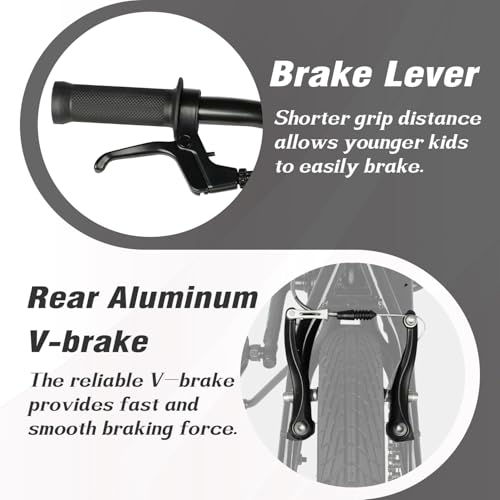
- Coaster + V-brake combo
- Quick 85% assembly
Trade-offs
- No stunt features
- Small 16-inch wheel
- Limited growth range
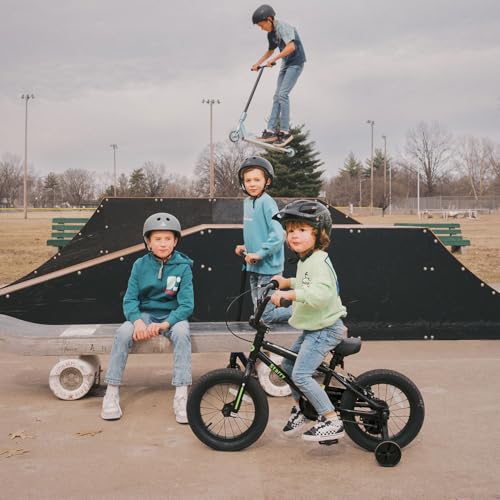
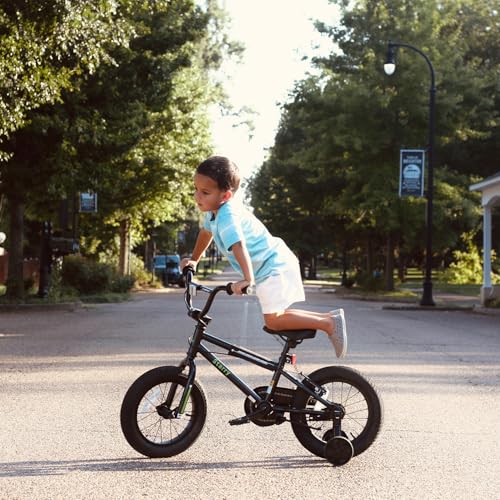
This cubsala model fills a niche: the transition from balance bike to pedaling machine. With training wheels, a coaster brake, and a rear V-brake, it gives little ones two ways to stop, critical for shaky new riders. The 16-inch size fits kids 38–50 inches tall, making it ideal for ages 4–7, and the half-chain guard adds a layer of clothing safety often skipped at this level.
It’s not a trick bike by any stretch, no pegs, no rotor, no freestyle ambition. But owners say setup is fast and their kids gain confidence quickly. When compared to the Mongoose Switch, it offers similar beginner utility but in a smaller wheel size. A smart first real bike, not a forever one.
Product photos
Mongoose Switch 18-Inch Kids BMX

Strengths
- Removable training wheels
- Low stand-over frame
- Coaster brake simplicity
Trade-offs
- Foot brake only
- Not stunt-capable
- Limited growth room
The Mongoose Switch stands out for one reason: it’s built for actual beginners. With removable training wheels, a low stand-over height, and a coaster brake, it’s designed to get tiny riders rolling safely. That makes it unique in a category full of bikes assuming some balance already exists. Owners praise how easy it is for 5- to 7-year-olds to mount and dismount confidently.
But let’s be clear, it’s not a freestyle machine yet. The 18-inch wheels and foot brake mean limited progression once skills improve. Still, as a bridge from balance bikes to real BMX, it beats handing a kid a full trick bike too soon. I’d pair this with a future upgrade to the Legion when they’re ready.
Product photos


Dynacraft Tony Hawk 20″ BMX

Strengths
- Tony Hawk branding appeal
- Strong warranty support
- Easy assembly reported
Trade-offs
- Missing rotor confirmation
- No pegs listed
- Unclear component specs
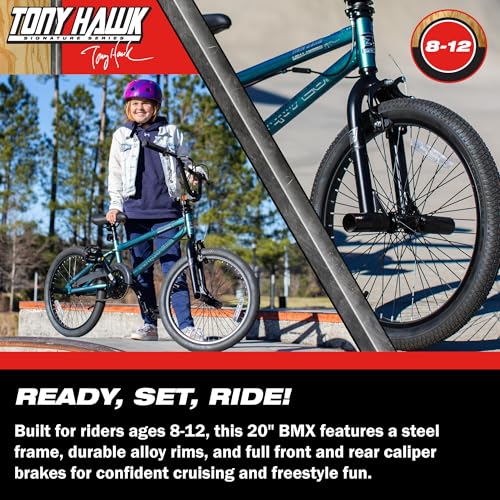
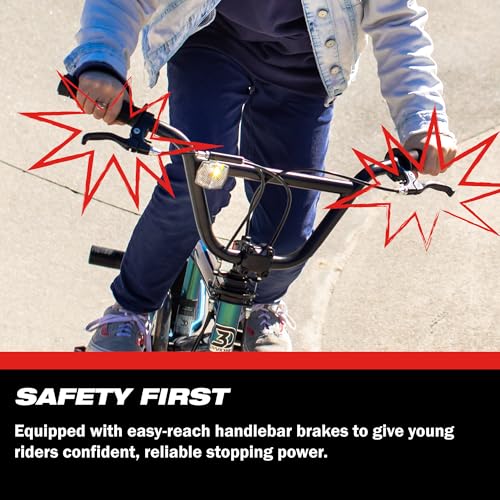
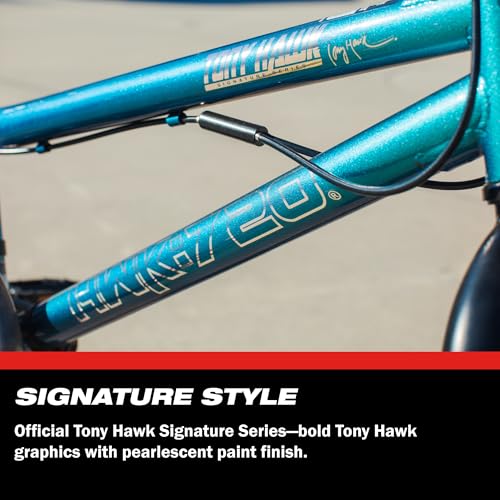
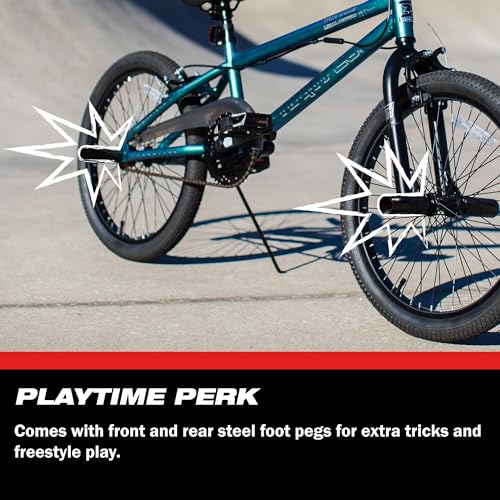
Let’s talk about the elephant in the room: the Tony Hawk name carries weight, but does the bike deliver? On specs alone, it’s vague, no mention of a rotor, pegs, or exact gearing. Marketing leans hard on brand trust and “premium materials,” but owner reviews are split. Some praise its durability; others note missing stunt features you’d expect at this price.
Compared to the Mongoose Legion or even the WEIZE, it doesn’t clearly justify its cost. If Dynacraft included a rotor or alloy components, it might earn the badge. As it stands, it feels more like a styled-up cruiser with BMX vibes than a true freestyle rig. I’d need to see more hard specs before calling it performance-grade.
Product photos
How We Picked These children’s bmx bikes
Rather than a hands-on lab test, this selection is a research-led comparison of published specifications and owner feedback. I started by compiling a list of popular models, then carefully weighed each bike’s features – frame material, brake type, wheel size, and included components – against its price point. Crucially, I then spent considerable time reading owner reviews and expert opinions from cycling publications to understand real-world performance and durability. This helped me identify trends in reliability and satisfaction.
For children’s BMX bikes, a few factors stood out as particularly important. Frame durability is paramount; these bikes will take a beating. Equally vital is the braking system, as a responsive and reliable brake gives young riders confidence. Finally, appropriate sizing is key – a bike that’s too large or small will hinder progress and potentially be unsafe. You can find more information about finding the right fit in our guide to the best BMX bikes for young riders.
Specifications provide a solid base for comparison – frame material tells you about potential weight and strength, while brake types indicate the level of control. However, owner feedback proved invaluable in assessing long-term reliability and identifying potential issues. Reputation matters; brands with a history of producing quality bikes, like those in our curated selection of top-rated BMX bikes, generally offer a better overall experience.
Choosing The Right children’s bmx bikes
Finding the right BMX bike for a child can be exciting, but it’s easy to get lost in the options. It’s more than just picking a cool color; a properly sized and equipped bike makes all the difference in building confidence and fostering a lifelong love of riding.
A good children’s BMX bike prioritizes durability with a hi-ten steel frame, appropriate component sizing for the rider’s height and skill level, and reliable braking systems. Frame geometry should encourage a comfortable riding posture, and consider features like pegs and a rotor if the child is interested in learning tricks. Weight is also a factor – lighter bikes are easier to maneuver.
Frame Size and Rider Height
Getting the frame size right is paramount. Too big, and the child won’t be able to control the bike; too small, and they’ll quickly outgrow it. Manufacturers usually provide height guidelines, but these are just starting points. A child’s inseam is a more useful measurement. Ideally, when standing over the top tube, there should be 1-2 inches of clearance. Don’t be tempted to buy a larger bike “to grow into” – it’s a safety risk. It’s also worth considering the type of riding they’ll be doing. If you’re looking at a bike for street and park use, a slightly smaller frame can offer more maneuverability, whereas a larger frame might be more stable for dirt tracks.
Brakes: Coaster vs. Hand Brakes
The braking system is a crucial safety feature. Many bikes for younger riders (like the cubsala 16 Inch BMX Style Bike) come with coaster brakes – you pedal backwards to stop. These are intuitive for very young children, but limit control. As kids progress, hand brakes are essential for learning proper braking technique and, eventually, performing tricks. Some bikes, like the Mongoose Switch 18-Inch Kids BMX, offer both, which is a great transition option. If your child is stepping up from a balance bike, or you want to encourage good habits early on, look for a bike with quality hand brakes and consider exploring our guide to BMX bikes for beginners for more information on developing these skills.
- A coaster brake is simple and reliable for initial learning.
- Hand brakes provide more control and are necessary for trick riding, but require more coordination.
- Dual brake systems (coaster and hand) offer a gradual learning curve, letting kids adapt at their own pace, but can add unnecessary complexity.
A child should always wear a helmet, regardless of the braking system.
Features and Value
Beyond the basics, consider features relevant to your child’s interests. If they’re captivated by BMX videos and want to try tricks, a bike with pegs (like the 67i 20-Inch BMX Bike with Pegs) and a 360-degree rotor (like the WEIZE 20 Inch Freestyle BMX Bike) is a good choice. However, these features add cost. For general riding and building confidence, a simpler, more affordable model might be sufficient. Don’t overlook the importance of build quality. Look for bikes from reputable brands like Mongoose or Dynacraft, and read reviews to get a sense of long-term durability. If you are looking for a wider selection, check out our detailed review of the best kids BMX bikes.
Children’s BMX Bikes Compared
Here’s a comparison of key specifications for various children’s BMX bikes to help you make an informed decision.
| Product Name | Wheel Size (in) | Rider Height (approx.) | Brakes | Frame Material | Pegs Included | Rotor (360°) |
|---|---|---|---|---|---|---|
| Mongoose Legion Mag | 20 | 3’6″ – 6’0″ | U-Brakes | Hi-Ten Steel | No | No |
| Yventix 20 Inch | 20 | 46-56″ | Hand/Foot | Carbon Steel | No | No |
| 67i 20-Inch with Pegs | 20 | 4’0″ – 4’8″ | Front/Rear U | Iron | Yes | No |
| WEIZE 20 Inch Freestyle | 20 | 4’0″ – 5’8″ | Rear V | Hi-Ten Steel | Yes | Yes |
| cubsala 16 Inch | 16 | 38-50″ | Coaster/V | Carbon Steel | No | No |
| Mongoose Switch 18-Inch | 18 | 42″ – 52″ | Coaster/Hand | Steel | No | No |
| Dynacraft Tony Hawk 20″ | 20 | N/A | N/A | N/A | N/A | N/A |
Frequently Asked Questions
What wheel size is best for a beginner?
A 16-inch wheel is typically best for younger or smaller beginners, while a 20-inch wheel is more common for kids who are a bit taller or have some existing bike experience. Choosing the right size ensures better control and confidence.
Are coaster brakes sufficient for learning?
Coaster brakes are perfectly adequate for initial learning and provide a simple braking method for very young riders. However, progressing to hand brakes is crucial for developing proper technique and eventually learning tricks.
How much should I expect to spend on a quality children’s BMX bike?
You can find entry-level models for around $150-$250, but a more durable bike with better components will likely cost $250-$400 or more. Investing a little more upfront often means a longer-lasting bike and a better riding experience.
Is it better to buy a larger bike for my child to grow into?
No, a bike that is too large is unsafe and will hinder your child’s ability to learn and control the bike properly. Proper fit, with 1-2 inches of clearance over the top tube, is much more important than anticipating future growth – you can find more information on best starter BMX bikes.
What should I look for beyond the basic frame and brakes?
Consider the overall build quality and the reputation of the brand. Reading reviews of children’s bicycles can reveal insights into the long-term durability and reliability of different models, helping you make a more informed decision.
The Bottom Line
Choosing a children’s BMX bike often comes down to balancing initial cost with long-term potential. While a simpler bike like the cubsala 16 Inch BMX Style Bike is a great starting point for very young riders, the WEIZE 20 Inch Freestyle BMX Bike stands out as the strongest all-around option, offering a good blend of features, durability, and the ability to grow with a child’s skills. It’s a bike that won’t necessarily break the bank, yet provides a foundation for genuine progression.
If your priority is affordability, the Mongoose Switch 18-Inch Kids BMX is an excellent choice, especially for those transitioning from balance bikes. For aspiring trick riders, the 67i 20-Inch BMX Bike with Pegs delivers the features they’ll want without a huge price jump. And for parents looking at a broader range of options, our guide to the best children’s bicycles offers a curated selection of options across various styles.
Ultimately, the best BMX bike is the one that fits your child and encourages them to ride. Don’t get too hung up on specs or brand names. Focus on a proper fit, reliable brakes, and a durable frame. A confident, comfortable rider is far more important than the latest components, and that’s what will foster a lifelong love of cycling – perhaps even leading to exploring BMX bikes for 10-year-olds as they grow!
