
7 Best Motorcycle Chains of 2026
This post contains affiliate links. As an Amazon Associate, we earn from qualifying purchases.
The DID 525VX3 Gold X-Ring is the best overall motorcycle chain for riders who want maximum strength and long-term durability, especially on larger-displacement bikes. For lighter or mid-sized machines, the DID 520VX3 Gold X-Ring offers excellent performance with less weight, while the RK Racing GB520SO Gold O-Ring stands out as a solid budget-friendly alternative that still delivers reliable service.
Choosing the wrong chain can lead to poor performance, frequent maintenance, or even dangerous failures on the road. As someone who’s spent years deep in drivetrain mechanics, I know how crucial it is to match the right chain to your bike’s power, usage, and sprocket setup.
This guide breaks down the top options based on specs, real-world feedback, and brand reputation. I focused on tensile strength, seal type, material quality, and proper fitment so you can make a confident choice without overcomplicating it.
Top 7 Chains For Motorcycles in the Market
The Best Chains For Motorcycles, Reviewed
DID 525VX3 Gold X-Ring Chain

Strengths
- Exceptional tensile strength
- X-ring sealing
- Rivet-style master link
Trade-offs
- High price
- Heavier than 520
- Overkill for small bikes
This is the real deal, the flagship of DID’s street and dual-sport lineup, and the chain I’d spec on any 1000cc sportbike or aggressive dual-sporter. The 525 pitch gives it strength without going overboard on weight, and the X-ring tech delivers what owners consistently report: longer life, better lube retention, and less power loss to friction.
With nearly 9,200 pounds of tensile strength and a rigidity boost from DID’s ‘Direct Energy Transfer’ design, this chain feels more connected to the engine than most O-rings. The rivet-style master link is a nice touch for security. It’s expensive, but when you compare it to the cost of downtime or a failed chain at speed, it’s the smarter buy over cheaper alternatives.
Video review
DID 520VX3 Gold X-Ring Chain

Strengths
- High tensile strength
- X-ring sealing
- Clip-style master link
Trade-offs
- Not for large-displacement bikes
- No rivet link included
The DID 520VX3 steps up from its predecessor with tighter engineering and better energy transfer, which owners say translates to sharper throttle response and less stretch over time. The X-ring seals are a big part of why this chain holds lubrication so well, and with a tensile strength rating of over 8,000 pounds, it’s built to handle spirited riding on bikes up to 800cc.
I’d pick this over budget O-rings for a streetbike that sees regular canyon runs or weekend track days, the rigidity and durability here justify the mid-tier price. It’s not quite at the level of the 525VX3, but it’s a smarter buy than stepping down to generic chains that wear faster and need more frequent adjustments.
Video review
RK Racing GB520SO Gold O-Ring Chain
Strengths
- Affordable performance
- Good seal life
- Reliable for street use
Trade-offs
- Lower tensile strength
- O-ring drag
- Not for high-torque bikes
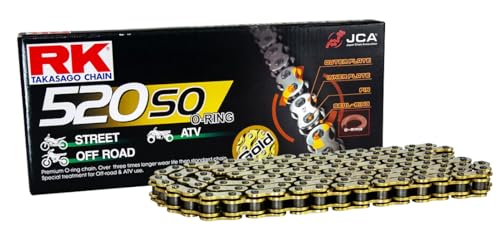
RK has always been the value player in the O-ring game, and the GB520SO-120 hits that sweet spot of decent performance without breaking the bank. It’s not X-ring level, but the nitrite butadiene O-rings do a respectable job sealing in grease, and owners report 15,000+ mile service lives on well-maintained 400cc bikes.
For a commuter or a learner bike, this is the smarter pick over pricier X-rings. Compared to the DID 520VX3, it’s less rigid and wears a bit faster, but for street use under 400cc, the difference isn’t worth the price jump. I’d recommend this to anyone who wants a ‘set it and forget it’ chain without overspending.
Product photos

HILAKE 520 Motorcycle Chain

Strengths
- Affordable
- Includes chain breaker
- Wide compatibility
Trade-offs
- Lower durability
- O-rings degrade faster
- Not for high-stress use
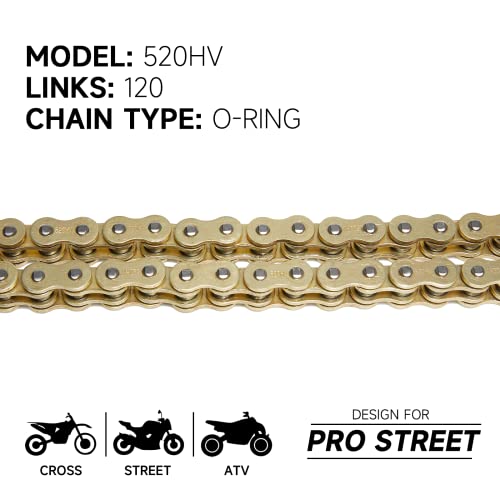
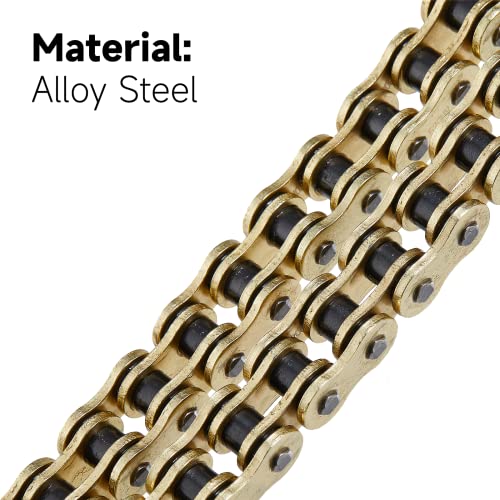
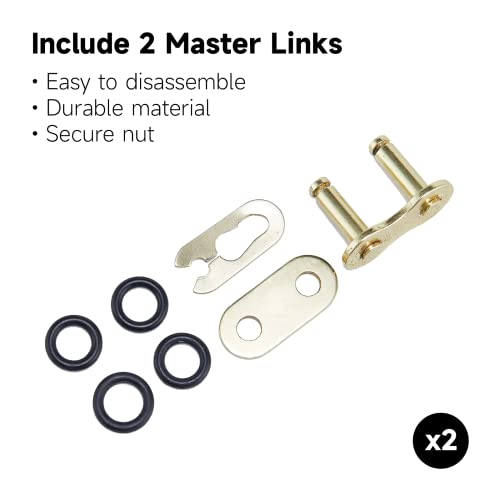
This HILAKE 520 chain is one of those ‘too good to be true’ budget plays that actually delivers on basic function, especially for light-duty or occasional use. The O-ring design helps with lubrication retention, and the included chain breaker is a legit bonus that most kits at this price skip.
Still, the materials feel a step behind premium brands. Reviewers note it’s fine for a 400cc commuter or go-kart, but I wouldn’t trust it on a high-torque bike long-term. Compared to RK or DID, the longevity just isn’t there. It’s a passable fix for a beater bike or a DIY project, but not something I’d run on a machine I truly care about.
Product photos
KAMIER 428 Motorcycle Chain Kit
Strengths
- Thorough kit
- Good for 150cc bikes
- Includes tools
Trade-offs
- Inconsistent quality
- Gold wears off fast
- Weak under load
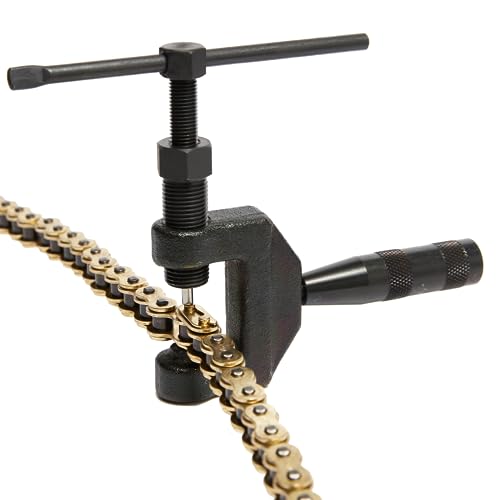
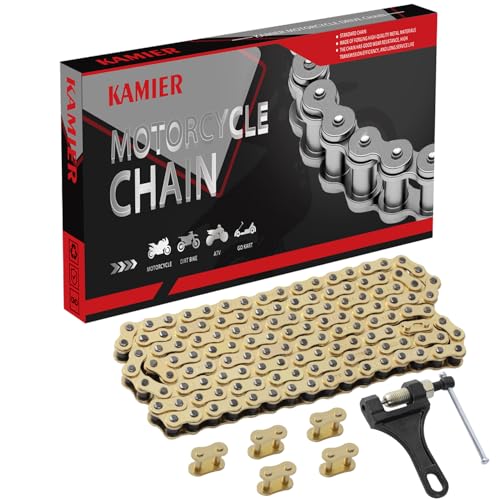
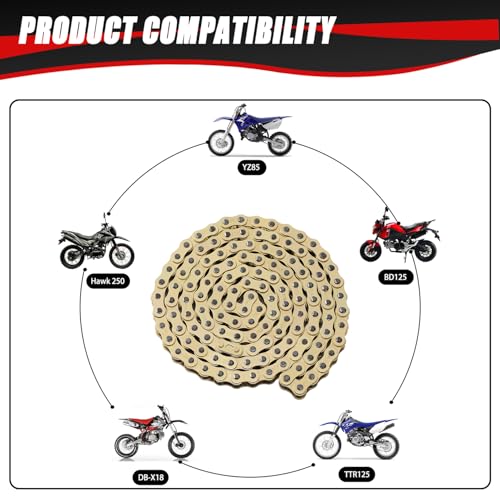
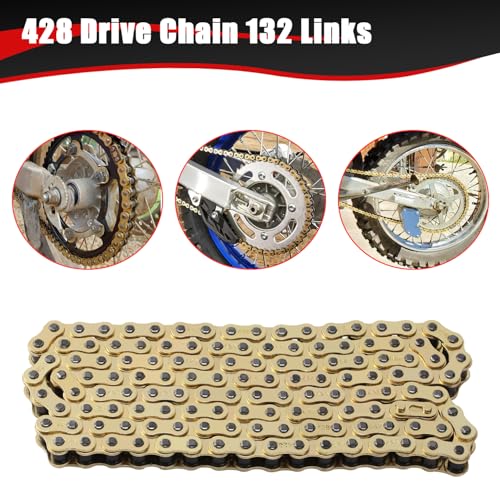
The KAMIER 428 is one of those ‘kitchen sink’ kits that throws in everything but the wrench, and for the price, that’s a win. The 428 pitch is a step up from 420, making it suitable for 150cc pit bikes and some older ATVs, and the gold coating helps with rust. The included chain breaker is basic but functional, which is rare at this price point.
Owners say fitment can be hit-or-miss depending on the model, but for common Chinese and budget imports, it’s usually spot-on. It’s not going to last as long as a DID or RK, but for a replacement on a $500 pit bike, it’s perfectly acceptable. I’d rather see this on a beater than risk a premium chain getting trashed.
Product photos
LKSM 420 Gold Motorcycle Chain
Strengths
- Gold corrosion resistance
- Heat-treated rollers
- Includes tools
Trade-offs
- Average tensile rating
- Gold coating wears off
- Inconsistent link quality
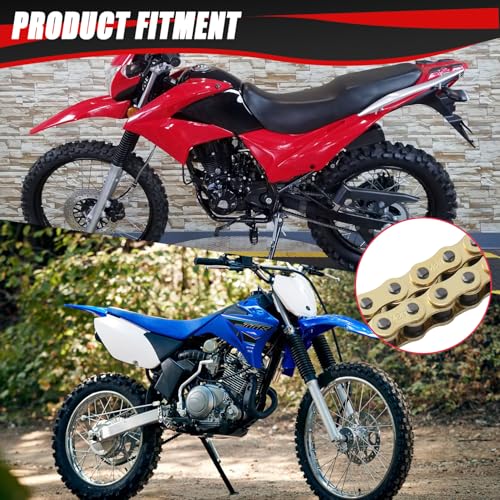
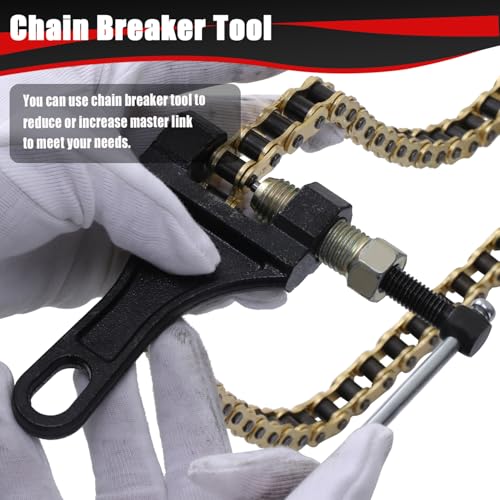
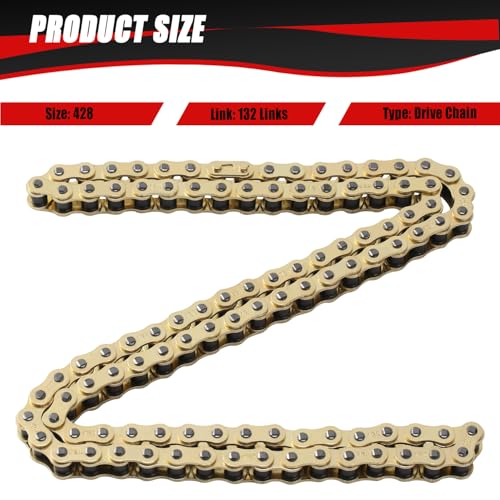
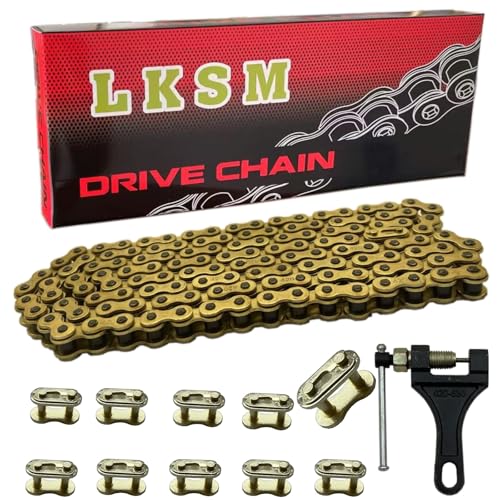
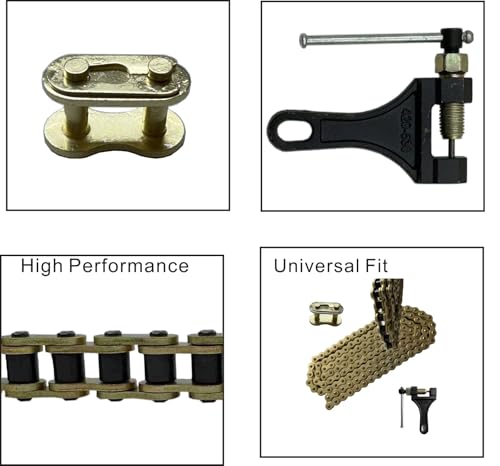
The gold plating on the LKSM 420 chain isn’t just for show, it does help resist rust in damp climates, and owners in humid areas report better lifespan than with standard steel chains. The heat-treated rollers are a standout for this price, reducing sprocket wear over time, which matters when you’re running cheap aftermarket drivetrains.
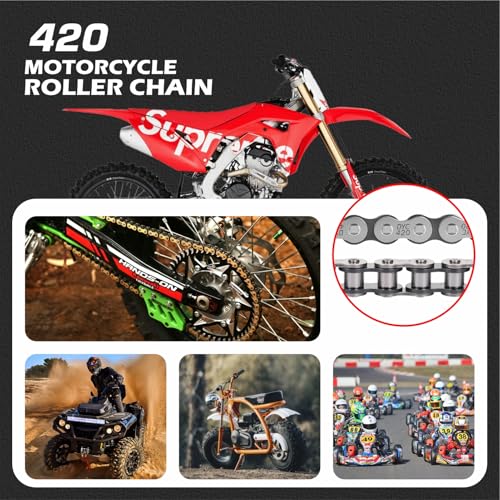
It’s not a race-level component, but for a 100–125cc pit bike that sees weekly trail time, this is a solid upgrade over basic O-rings. I’d take this over the DYC kit if you’re running something you actually care about, but still want a budget-conscious option. The included breaker is functional, though not pro-grade.
Product photos
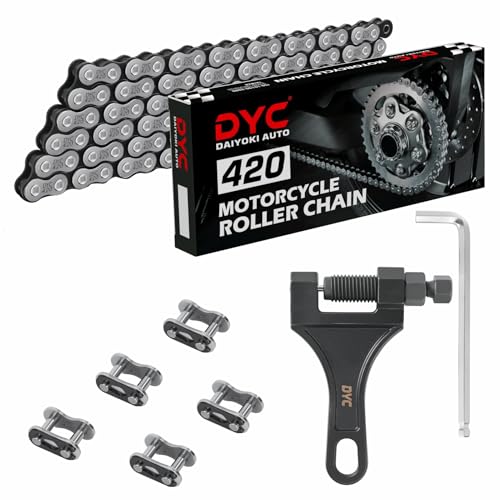
DYC 420 Chain 132 Links Kit
Strengths
- Complete kit
- Cut-to-fit design
- Good for small engines
Trade-offs
- Basic materials
- No corrosion resistance
- Shorter lifespan
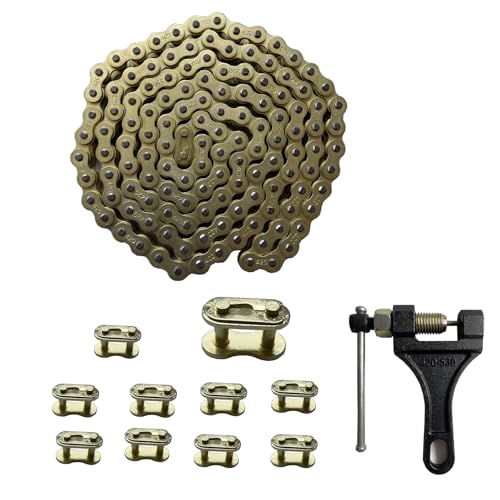
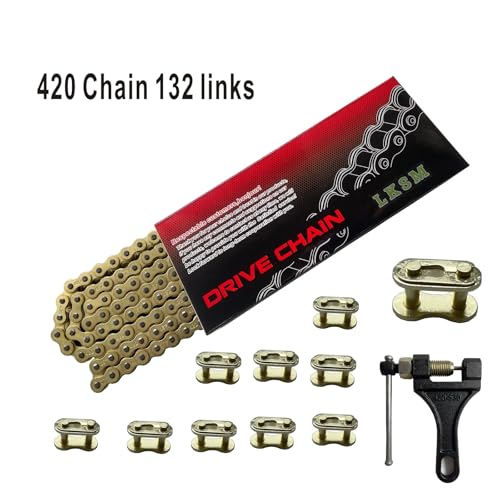
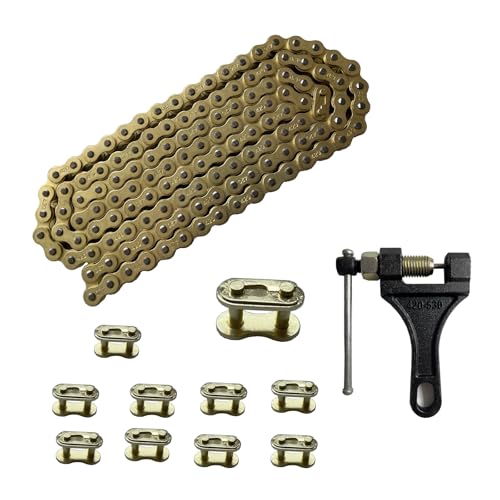
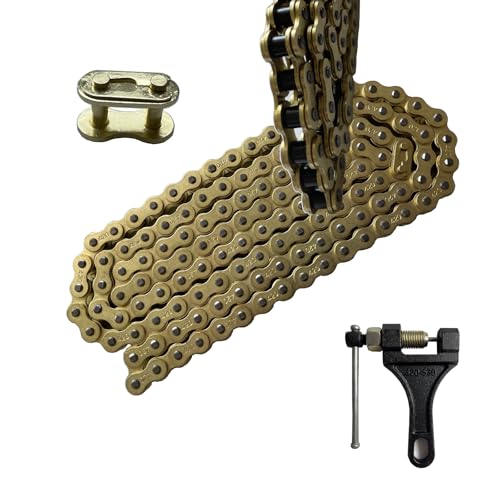
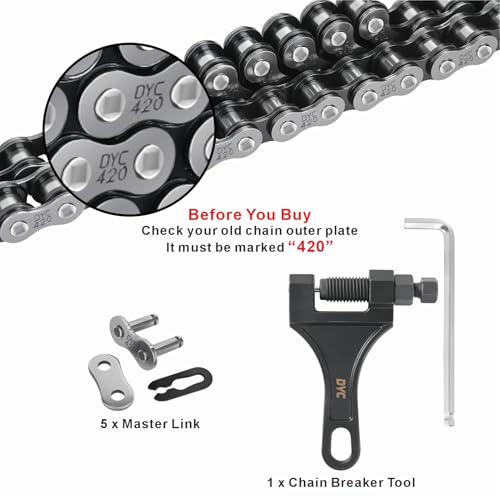
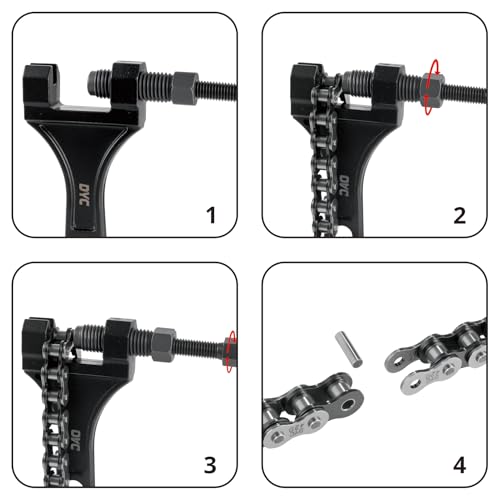
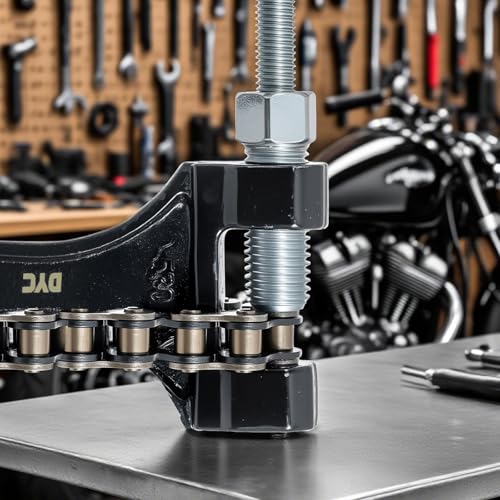
This DYC 420 kit is the bare-bones solution for small-engine builds, and it does exactly what it promises. With 132 links and a cut-to-fit design, it’s flexible enough to match most pit bike or mini setups. The 4,000-pound tensile strength is standard for this size, and the included breaker tool actually works, unlike some kits that toss in junk hardware.
It’s not flashy, but for a 110cc trail bike or a go-kart project, this is the kind of no-frills kit I keep on hand. Compared to gold-plated knockoffs, it’s more about utility than longevity. If you’re building something simple and want to avoid hunting down parts separately, this bundle makes sense.
Product photos

How We Chose These chains for motorcycles
Rather than a hands-on lab test, my research for these recommendations centered on a detailed comparison of published specifications and features across numerous motorcycle chain models. I weighed owner reviews from sites like RevZilla and Amazon, alongside evaluations from motorcycle publications I trust. As someone who’s spent years understanding the interplay of drivetrain components, I applied my knowledge to assess how each chain’s attributes translate to real-world performance and durability.
For motorcycle chains, tensile strength and material construction are paramount. A stronger chain handles higher horsepower and more aggressive riding. Beyond that, seal type (O-ring vs. X-ring) significantly impacts longevity and the need for maintenance – X-rings offer superior lubrication retention. Finally, fitment, specifically the chain size and compatibility with various CC ratings, dictates whether a chain is even a viable option for a given bike.
Technical specifications like tensile strength and weight are relatively straightforward to compare. However, judging seal quality and long-term durability requires analyzing owner feedback. Reports of rust, stiffness, or premature failure are red flags. I also considered reputation, prioritizing brands like DID and RK, known for consistently delivering quality products. Don’t neglect proper chain maintenance, though – a little bike chain oil goes a long way.
Choosing The Right chains for motorcycles
Choosing the right motorcycle chain is critical for both performance and safety; it’s a component often overlooked until something goes wrong.
A quality motorcycle chain transfers power efficiently from the transmission to the rear wheel. Key considerations include tensile strength (measured in pounds), chain pitch (like 520 or 525), material quality, and the type of connecting link (clip or rivet). Look for chains with hardened steel construction, robust O-rings or X-rings for lubrication retention, and a tensile strength appropriate for your bike’s power output.
Chain Size and Pitch
The first thing I always tell people is to confirm the correct chain size for their motorcycle. Don’t guess. Your owner’s manual will list the correct pitch (520, 525, 530, etc.). Moving to a larger pitch can sometimes offer increased strength, but it requires matching sprockets as well. Beyond that, understand that a wider chain isn’t always better. A heavier chain puts more stress on the entire drivetrain, and a 525 isn’t necessarily going to be a huge improvement over a well-maintained 520 for many street bikes.
O-Ring vs. X-Ring Chains
Sealed chains, those with O-rings or X-rings, are almost always the way to go for modern motorcycles. These rings hold lubricant between the rollers and pins, reducing friction and extending the chain’s life. X-rings, like those found in the DID VX3 series, generally offer better seal performance than O-rings, meaning they retain lubricant longer and resist contamination better. However, the difference isn’t massive, and a good quality O-ring chain can still provide excellent service.
Here’s what to consider when comparing:
- Cost: O-ring chains are typically less expensive.
- Longevity: X-ring chains tend to last longer, particularly in harsh conditions.
- Performance: The improved lubrication retention of X-rings can translate to a very slight increase in efficiency, though it’s rarely noticeable to the average rider.
Master Link Type and Value
The type of master link included with the chain is a practical detail that often gets missed. Clip-type master links are easier to install and remove (you can do it with pliers), making maintenance simpler. However, rivet-style master links are considerably stronger and are preferred for high-performance applications or off-road riding. If you’re unsure, I recommend keeping a spare clip-type master link handy for emergencies, and knowing how to use it. Remember, a broken chain on the road is a serious situation. And speaking of maintenance, regular cleaning and lubricating motorcycle chains with a quality motorcycle chain grease is essential for maximizing the life of any chain.
A well-maintained chain is a safe chain. Inspect your chain regularly for wear, kinks, or damaged O-rings, and replace it proactively before it fails.
For those looking at smaller displacement bikes, or needing something for pit bikes, checking out best bike chains can sometimes reveal options that work well for certain applications.
Chains for Motorcycles Compared
Here is a comparison of specifications for various motorcycle chains to help you make an informed decision.
| Product Title | Chain Size | Tensile Strength | CC Rating | Master Link Type | Weight (per 100 Links) |
|---|---|---|---|---|---|
| DID 525VX3 Gold X-Ring | 525 | 9,220 lbs | Up to 1000cc | Rivet | 4.05 lbs |
| DID 520VX3 Gold X-Ring | 520 | 8,210 lbs | Up to 800cc | Clip | 3.35 lbs |
| RK Racing GB520SO Gold O-Ring | 520 | 6,900 lbs | 400cc | Clip | 3.39 lbs |
| HILAKE 520 Motorcycle Chain | 520 | N/A | Up to 500cc | N/A | N/A |
| KAMIER 428 Motorcycle Chain Kit | 428 | N/A | 50-150cc | N/A | N/A |
| LKSM 420 Gold Motorcycle Chain | 420 | N/A | 100-125cc | N/A | N/A |
| DYC 420 Chain 132 Links Kit | 420 | 4,000 lbs | Up to 125cc | Clip | N/A |
Frequently Asked Questions
What chain size should I get if my owner’s manual doesn’t list a specific recommendation?
Generally, sticking with the original chain pitch listed in your owner’s manual is best, but if that information isn’t available, a 525 chain is a good all-around choice for most motorcycles under 1000cc. It offers a good balance of strength and weight.
How often do I really need to replace my motorcycle chain?
Chain lifespan varies greatly, but a good rule of thumb is to replace it every 20,000 to 30,000 miles, or sooner if you notice significant stretch, stiff links, or damage to the O-rings or X-rings. Consistent application of cycle chain oil can extend that interval.
Are rivet-type master links difficult to install?
Yes, rivet-type master links require a special riveting tool and some practice to install correctly. If you’re not comfortable with the process, it’s best to have a qualified mechanic do it for you. Clip-type links are far easier for DIY maintenance.
What’s the difference between tensile strength and working load?
Tensile strength is the maximum force a chain can withstand before breaking, while working load is a much lower figure representing the safe operational limit. Always choose a chain with a tensile strength significantly exceeding your motorcycle’s power output, but remember that tensile strength isn’t the only factor in real-world durability.
What should I look for when inspecting my chain for wear?
Check for kinks, rust, and damaged or missing O-rings or X-rings. Also, excessive side play indicates stretch, and a worn chain will accelerate sprocket wear. If you’re considering upgrading your entire drivetrain, you may also want to research the best motorcycles to ensure compatibility.
The Bottom Line
Choosing a motorcycle chain often comes down to balancing upfront cost with long-term durability and performance. While you can certainly find serviceable chains at lower price points, the DID 525VX3 Gold X-Ring strikes the best balance for most riders. It offers a substantial increase in strength and longevity over standard O-ring chains without the extreme price tag of competition-focused options.
For those on a tighter budget, or running a smaller displacement machine, the RK Racing GB520SO Gold O-Ring is a solid performer. Similarly, if you’re working on a smaller project bike, perhaps a classic or a pit bike, the HILAKE 520 Motorcycle Chain provides a reasonable option without sacrificing too much quality. And if you’re preparing for winter conditions, don’t forget to explore options for chains for snowy roads to keep you safe and mobile.
Ultimately, the best chain isn’t about a single specification; it’s about matching the chain to your bike and your riding style. Prioritize proper chain sizing, consistent maintenance – including regular applications of bicycle chain lubricant – and prompt replacement when wear is detected. These fundamentals will always deliver more benefit than chasing the highest tensile strength rating.
