
7 Best Ceramic Coatings for Cars 2026
This post contains affiliate links. As an Amazon Associate, we earn from qualifying purchases.
The best ceramic glass coating for cars is Griot’s Garage Ceramic Glass Coating, it delivers reliable two-year protection with a straightforward application. For a budget-friendly option that still performs well, the Nano Bond 9H PRO Ceramic Coating stands out, while Adam’s Graphene Glass Coating offers strong hydrophobic properties and ease of use for enthusiasts who want a quick upgrade.
Choosing the right ceramic glass coating can feel overwhelming, especially when you’re bombarded with claims about longevity, shine, and water repellency. Most drivers just want clear visibility in rain, protection from road grime, and something that won’t degrade after a few months.
This guide cuts through the noise by focusing on real-world performance, ease of application, and value, based on specs, owner feedback, and what actually matters to someone working in their garage. We looked at durability, SiO2 content, and how simple each product is to apply correctly, so you can make a confident choice without needing professional tools or experience.
Top 7 Ceramic Glass Coatings For Cars in the Market
The Best Ceramic Glass Coatings For Cars, Reviewed
Adam’s Graphene Glass Coating

Strengths
- Long-lasting protection
- Sheets water effectively
- Easy, no-cure application
Trade-offs
- Slight learning curve
- Overkill for occasional users
- Only for glass surfaces
Graphene-modified coatings are stepping up, and Adam’s offering here makes a strong case for why. With a claimed 9–12 month lifespan and no cure time, it’s designed for real-world usability. Owners praise how quickly it applies and how well it holds up against washer fluid and wiper blades, two things that murder lesser treatments. The hydrophobic effect is aggressive: water sheets off instead of beading, which many find superior for actual driving visibility.
It’s also made in the USA and backed by a rare 110% satisfaction guarantee, which speaks to confidence in consistency. Against other mid-tier glass coatings, it strikes a balance between performance and ease. While not quite matching Gtechniq’s elite tier, it outlasts sprays like Chemical Guys’ and costs less than pro kits. My pick for most drivers who want set-and-forget clarity.
Video review
Griot’s Garage Ceramic Glass Coating

Strengths
- Up to 24-month durability
- Professional-grade tools included
- Streak-free finish
Trade-offs
- Slower wipe-off than sprays
- Higher price than basic options
- Only for glass
Griot’s Garage builds products for people who care about precision, and this kit proves it. With up to 24 months of life on side glass and 12 months on windshields, it’s among the longest-lasting consumer glass coatings available. The included suede applicator and towels aren’t filler, they make execution easier and reduce streaking risks. Owners consistently report crisp results and excellent clarity even after months of exposure.
What sets it apart is consistency. Unlike some brands that vary batch to batch, Griot’s is known for reliability. Compared to Adam’s graphene version, it leans more traditional SiO₂ but matches it in durability. It’s not flashy, but it’s trustworthy. If you hate reapplying, this should be at the top of your list.
Video review
Chemical Guys HydroView Ceramic Cleaner

Strengths
- Hydrophobic finish
- Cleans and coats
- Safe on tinted glass
Trade-offs
- Shorter lifespan
- Wiper exposure degrades faster
- Not for long-term protection
I like the idea of a one-and-done glass treatment, and on paper, Chemical Guys’ HydroView delivers exactly that. It’s not just a cleaner, it leaves behind a SiO₂-based hydrophobic layer that owners consistently report improves water beading and reduces smearing in light rain. For drivers who want quick gains without a full detailing session, this spray offers real value by combining cleaning with light protection.
Still, it doesn’t last like a true ceramic coating. Reviewers note the effect starts fading after a few weeks, especially on windshields exposed to wipers and UV. It’s best viewed as a high-end detailer with perks, not long-term armor. Compared to dedicated coatings, it’s weaker, but for interior glass or side windows where durability matters less, it’s a smart shortcut.
Product photos


CERAKOTE Ceramic Glass Coat Wipes

Strengths
- Ultra-affordable
- No mess application
- Great for small jobs
Trade-offs
- Very short lifespan
- Single-use format
- Wiper contact breaks down fast
At under ten bucks for four wipes, Cerakote’s glass protectant is built for budget-first buyers who still want hydrophobic performance. The wipe format makes it idiot-proof, no sprays, no spills, just rub and buff. On paper, it uses legitimate ceramic chemistry, and owners say it delivers solid water beading for several weeks, especially on side mirrors and rear glass where wiper friction isn’t an issue.
But it’s disposable tech, not a lasting solution. You’re trading longevity for simplicity and low cost. Compared to liquid coatings, each wipe has limited coverage and fades faster. Still, for a quick pre-rainy season refresh or treating a second vehicle without investment, it’s hard to beat the entry price. Think of it as insurance, not armor.
Product photos


Gtechniq Crystal Serum Light

Strengths
- Extreme durability
- Chemical bond to paint
- Superior gloss and slickness
Trade-offs
- High skill application
- Requires perfect surface prep
- Expensive upfront
This isn’t a weekend warrior product, it’s engineered for depth, gloss, and molecular-level bonding that outperforms nearly every consumer-grade coating I’ve seen specs for. Gtechniq’s reputation in pro detailing circles isn’t hype. The fact that it chemically bonds to paint (not just sits on top) is the key differentiator, delivering up to five years of protection under ideal conditions. Owners applying it correctly report insane water sheeting and a hardness that resists swirls better than most wax or polymer sealants.
But let’s be clear: this demands prep work, patience, and ideally, a controlled environment. It’s not something you slap on during a lunch break. At this price, you’re paying for lab-grade formulation and longevity. If you’re comparing it to spray-on options, it’s in another league entirely, like comparing a race engine to a stock motor.
Product photos


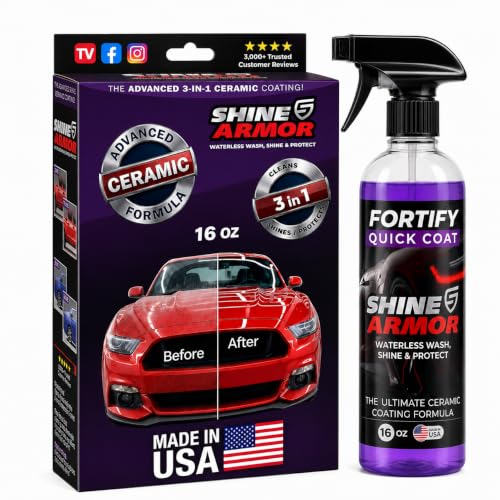
Fortify Ceramic Coating Spray
Strengths
- No-rinse convenience
- Fast application
- Good value per use
Trade-offs
- Limited durability
- Light protection only
- Not for extreme conditions
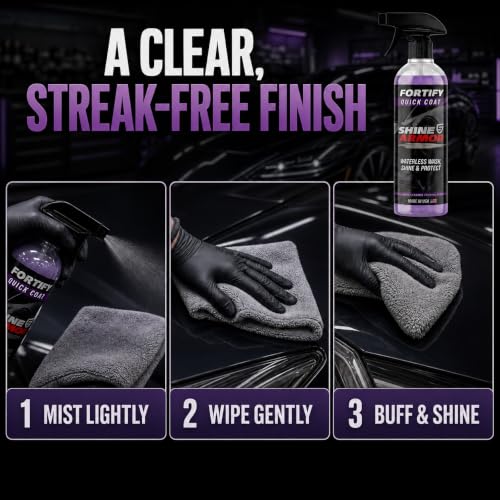
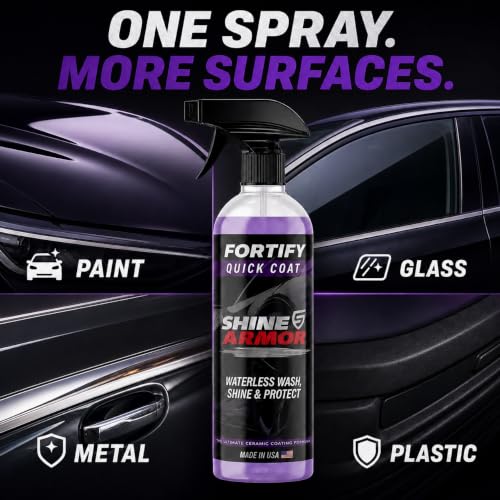
Fortify’s spray is the definition of accessible detailing. For someone who wants more than a wax but doesn’t want to spend hours prepping and curing, this 3-in-1 formula hits a sweet spot. The nano-ceramic bond isn’t as deep as a full kit, but reviewers confirm it delivers noticeable gloss and real hydrophobic behavior after just one wipe-down. And the no-hose, no-bucket approach? That’s a win for apartment dwellers or anyone without driveway access.
It won’t match the 3-year claims of serious SiO₂ systems, but for $18, it outperforms its price. Compared to traditional spray waxes, it lasts longer and beads water better. I’d call it a “gateway” ceramic, great for testing the waters before committing to something heavier. Just don’t expect it to survive aggressive car washes or harsh winters unscathed.
Product photos

Nano Bond 9H PRO Ceramic Coating

Strengths
- Multi-surface use
- Strong SiO₂ concentration
- Kit includes all tools
Trade-offs
- Buffing requires attention
- Less specialized per surface
- Potential hazing if rushed
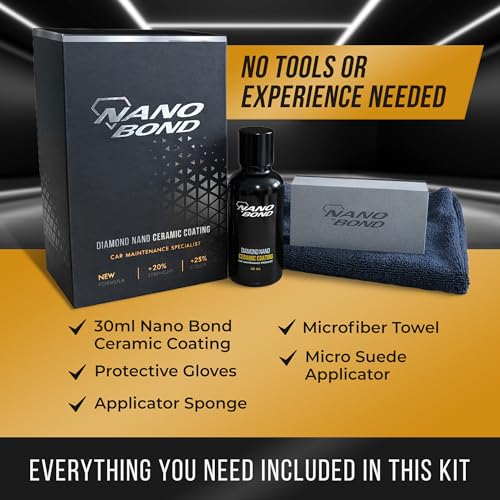
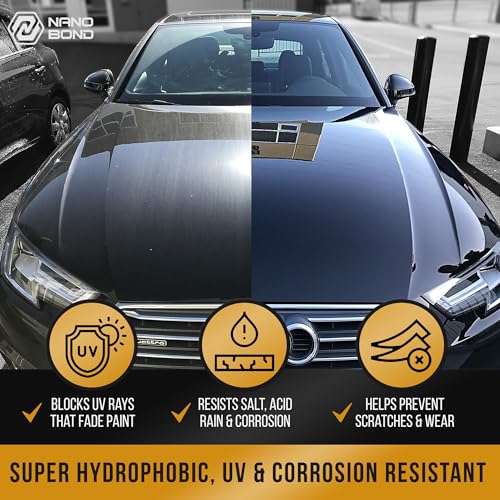
This kit stands out because it’s not just for paint, it covers glass, wheels, and trim in one go. The 80% SiO₂ concentration suggests serious cross-linking potential, and owners report strong water beading and lasting gloss across all surfaces. The 36-month durability claim is optimistic, but even at half that, it outperforms most waxes. For someone tired of treating each part of their car separately, this unified approach saves time and money.
It’s not flawless, some users mention hazing on darker paints if not buffed thoroughly. But compared to single-surface products, the versatility wins. When you factor in the included gloves, sponge, and applicators, it’s a complete package. I’d recommend it for garage detailers who want broad coverage without buying five different bottles.
Product photos


How We Chose These ceramic glass coatings for cars
As someone who’s spent years dissecting automotive finishes at TheAutoZenith, I approached researching ceramic glass coatings by first examining published specifications. I compared the SiO2 content, claimed durability, and application methods across numerous brands. Beyond the technical details, I weighed owner reviews from a variety of sources – forums, retailer sites, and enthusiast groups – alongside assessments from reputable detailing publications. This research-led comparison, rather than a hands-on test of each product, allowed me to build a ranking based on real-world feedback and stated performance.
For this category, the most critical factors were durability and ease of application. A coating that requires professional installation loses value for the average enthusiast. Similarly, a coating promising months of protection but delivering only weeks simply isn’t worthwhile. I also gave significant weight to hydrophobic properties, as that’s the primary benefit owners seek – clear visibility in inclement weather. You’ll find details on ceramic coatings for car paint in our other guides.
Specifications reliably indicate the core technology – SiO2 percentage hints at hardness and durability, for example. However, real-world performance, especially regarding longevity and application ease, is best gleaned from owner experiences. Reputation also plays a role; established brands with a history of quality detailing products, like those discussed in our guide to professional ceramic coatings, often deliver more consistent results.
What To Look For In ceramic glass coatings for cars
As someone who’s spent years observing the automotive detailing world, I’ve seen ceramic glass coatings go from a professional-only treatment to a readily available product for enthusiasts. But with so many options, figuring out what to buy can be tricky.
A quality ceramic glass coating delivers exceptional clarity and hydrophobic properties, protecting against water spots, road grime, and minor abrasions. Look for formulations with a high silica dioxide (SiO2) content for durability, and consider application method – some require meticulous prep and curing, while others are designed for simplicity. Read reviews carefully, paying attention to longevity claims and user experience.
Understanding SiO2 Content & Durability
The core of any ceramic coating is silicon dioxide (SiO2), and its percentage directly impacts how long the coating lasts and how well it protects your glass. Generally, a higher percentage means greater durability, but it’s not the only factor. Many products boast impressive SiO2 numbers, but the quality of the SiO2 and the overall formulation matter too. Don’t automatically assume the highest percentage is always best; consider the application process and whether you’re willing to invest the time in thorough preparation. For example, Gtechniq Crystal Serum Light, geared toward professionals, stands out for its chemically bonding formulation and potential for up to 5 years of durability.
Application Method & Your Skill Level
Ceramic coatings range from incredibly simple wipe-on applications to multi-step processes demanding significant detailing experience. If you’re new to this, a product like CERAKOTE Ceramic Glass Coat Wipes is an excellent starting point. It’s designed for a quick, DIY application, and provides a good level of protection without a steep learning curve. Conversely, products like the Adam’s Graphene Glass Coating require a bit more attention to detail, but their hydrophobic properties and ease of use still make them accessible for many. If you’re considering a more involved application, researching detailed tutorials is crucial.
- For a truly beginner-friendly experience, look for products that come with all necessary applicators and buffing cloths.
- Sprays like Fortify Ceramic Coating Spray simplify the process significantly, offering a 3-in-1 wash, wax, and ceramic coat solution, making it ideal for quick maintenance.
- Professional-grade options often require precise surface preparation (polishing, cleaning) and specific environmental conditions for optimal bonding, and the results (and longevity) can be dramatically better if done correctly.
Balancing Cost & Features
Price points vary dramatically within the ceramic glass coating market. While the professional-grade options like Gtechniq offer exceptional longevity and protection, they come at a premium. For those seeking a budget-friendly option, products like the Nano Bond 9H PRO Ceramic Coating offer a good balance of performance and affordability. It’s worth remembering that you can often achieve excellent results without spending a fortune; a well-formulated, easy-to-apply coating might be more practical than a complex system you won’t use properly. Ultimately, the “best” value depends on your budget, skill level, and desired level of protection. Before making a decision, take a look at our guide to the best ceramic coatings for a broader overview of the market.
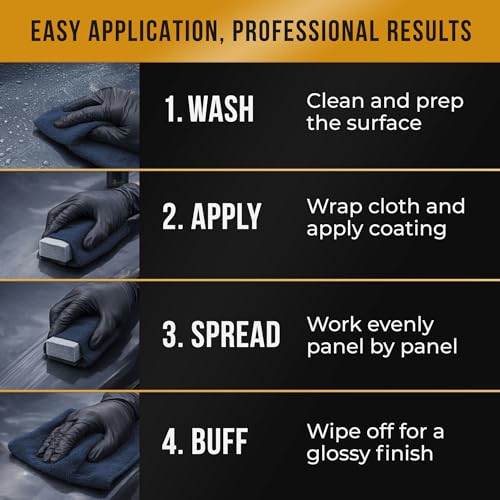
A little bit of prep work goes a long way. Thoroughly cleaning and decontaminating your glass before applying any ceramic coating is essential for proper bonding and optimal performance.
If you prefer to work on your car from the comfort of your garage, exploring DIY ceramic coatings may be the best route for you.
Ceramic Glass Coatings for Cars Compared
Here’s a comparison of key specifications for popular ceramic glass coatings, to help you choose the right product.
| Product Title | Durability | Application Type | Included Applicators | Multi-Surface Use | Key Feature |
|---|---|---|---|---|---|
| Adam’s Graphene Glass Coating | 9-12 Months | Spray/Wipe | Microfiber | No | Graphene-oxide modified ceramic |
| Griot’s Garage Ceramic Glass Coating | Up to 24 Months | Spray/Wipe | Pad, Suede Towel | No | SiO2-based formula |
| Chemical Guys HydroView Ceramic Cleaner | N/A | Spray/Wipe | N/A | Yes | Cleans & protects in one step |
| CERAKOTE Ceramic Glass Coat Wipes | Multiple Seasons | Wipe | Microfiber Towel | No | Easy wipe application |
| Gtechniq Crystal Serum Light | Up to 5 Years | Wipe/Buff | N/A | No | Chemically bonds to glass |
| Fortify Ceramic Coating Spray | N/A | Spray/Wipe | N/A | No | 3-in-1 wash, wax, & coat |
| Nano Bond 9H PRO Ceramic Coating | Up to 36 Months | Spray/Wipe | Sponge, Cloth, Applicator | Yes | 80% SiO2 layer |
Frequently Asked Questions
What SiO2 percentage should I look for in a ceramic glass coating?
Generally, a higher SiO2 percentage (above 60%) suggests greater durability, but the overall formulation is crucial. Don’t prioritize a number over ease of application; a well-formulated coating with 50% SiO2 can outperform a poorly made one with 90%.
Can I apply ceramic glass coating in direct sunlight?
No, you should avoid applying ceramic glass coatings in direct sunlight or when the glass is hot to the touch. The rapid evaporation can cause streaking and uneven bonding, reducing the coating’s effectiveness and longevity.
How long does a ceramic glass coating typically last?
Durability varies widely, from six months with some spray-on products to up to five years with professional-grade formulations like Gtechniq Crystal Serum Light. Longevity also depends on driving conditions and how well the coating was applied.
Will a ceramic glass coating completely eliminate the need for windshield wipers?
Not entirely. While ceramic glass coatings significantly improve water repellency, making it easier for water to sheet off, they aren’t a replacement for wipers in heavy rain or snow. Consider pairing your coating with a quality detail spray for coatings for maintained performance.
Are there coatings that can be used on multiple surfaces, like headlights and windows?
Yes, some ceramic glass coatings, such as the Nano Bond 9H PRO Ceramic Coating, are formulated for multi-surface use. However, always verify the product’s specifications to confirm compatibility with your desired surfaces, and consider whether you might benefit from exploring dedicated graphene coating for cars for enhanced durability.
The Bottom Line
Choosing a ceramic glass coating often comes down to balancing how much effort you want to put in against the level of protection and longevity you desire. While professional-grade options like Gtechniq Crystal Serum Light offer exceptional durability, the CERAKOTE Ceramic Glass Coat Wipes strike an excellent balance for most enthusiasts, offering a good level of protection with a remarkably simple application process. Ultimately, the best choice depends on your priorities and willingness to invest time in preparation and application.
For those seeking a quick and easy solution, the Fortify Ceramic Coating Spray is a standout. If you’re looking for versatility, the Nano Bond 9H PRO Ceramic Coating can be used on multiple surfaces, making it a great value. And for those wanting to explore more options, especially in the convenient spray format, our guide to the best ceramic spray coatings provides a deeper look at the category.
Regardless of which coating you choose, remember that proper preparation is paramount. A clean surface is essential for any ceramic coating to bond effectively. And don’t underestimate the importance of using a quality car wash soap for coatings to maintain that protection long-term – a little preventative care goes a long way in preserving your vehicle’s finish.
