
9 Best Carburetors of 2026
This post contains affiliate links. As an Amazon Associate, we earn from qualifying purchases.
The Edelbrock 1906 AVS2 stands out as the best overall carburetor for performance and reliability, delivering smooth fuel delivery and easy tuning for street and track. For budget-focused builds, the 2 Barrel Carburetor Ford 2100 2150 offers solid durability and compatibility with classic Fords and Jeeps. If you’re working on small engines, the VM22 26mm Carburetor Predator 212cc is a dependable, no-frills pick.
Choosing the right carburetor isn’t just about bolting on a shiny unit, it’s about matching airflow, engine demands, and real-world usability. Too many enthusiasts chase big CFM numbers only to end up with sluggish throttle response and poor drivability.
This guide cuts through the noise by focusing on specs, owner experiences, and application-specific fit. I looked at CFM ratings, choke types, build quality, and compatibility across classic cars, small engines, and OEM replacements to find the ones that actually deliver.
Top 9 Carburetors in the Market
The Best Carburetors, Reviewed
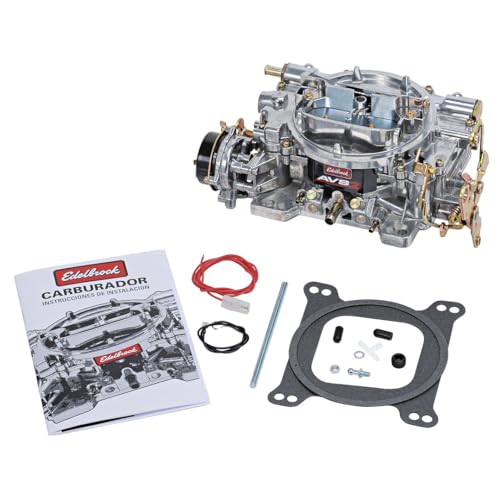
Edelbrock 1906 AVS2 Carburetor 650 CFM
Strengths
- Annular booster design
- Reliable electric choke
- 650 CFM ideal for street V8s
Trade-offs
- Premium price tag
- Overkill for stock engines
- Requires proper linkage setup
The Edelbrock 1906 AVS2 is the kind of carb I’d spec on a weekend cruiser or street-performance build where driveability and consistency matter. At 650 CFM, it’s sized perfectly for mildly built V8s, think 350ci small blocks with headers, mild cam, and dual-plane intake. The annular boosters improve fuel atomization, which translates to cleaner combustion and fewer flat spots, something reviewers consistently praise. Plus, the electric choke takes the guesswork out of cold starts.
Compared to budget four-barrels, this thing is built like a tank. The satin finish resists corrosion, and the internal circuitry is dialed from the factory. Some tuners prefer manual chokes for precision, but for daily drivers, I’d pick the convenience here every time. It’s not cheap, but you’re paying for engineering, not just cast metal.
Video review
1406 Carburetor 600 CFM 4 Barrel

Strengths
- 600 CFM street performance
- AFB-style square bore fitment
- Two-step metering rods
Trade-offs
- No installation guide
- Tuning required
- Secondary valves need break-in
Condgreemee’s take on the classic 600 CFM AFB-style carb gives budget-conscious hot rodders a real shot at solid performance without draining the wallet. At 600 CFM, it’s ideal for small-blocks in the 300–350hp range, perfect for a Silverado or Mustang with a mild cam and headers. The two-step metering rods help prevent backfire during transition, and owners note crisp throttle delivery once dialed in. It even mimics the square-bore pattern, so it swaps onto common intakes without adapter drama.
But it’s not an Edelbrock. The casting finish is rougher, and setup videos are a must, there’s no instruction sheet. Some users report rich running until secondary air valves settle. Still, for half the price of premium brands, it’s a smart buy if you’re willing to tune it yourself. I’d call it the best budget performance pick here.
Video review
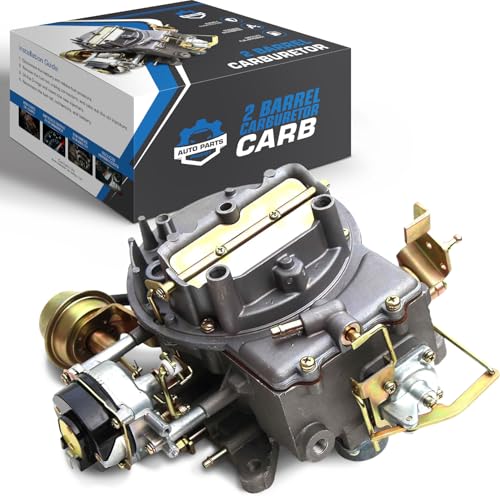
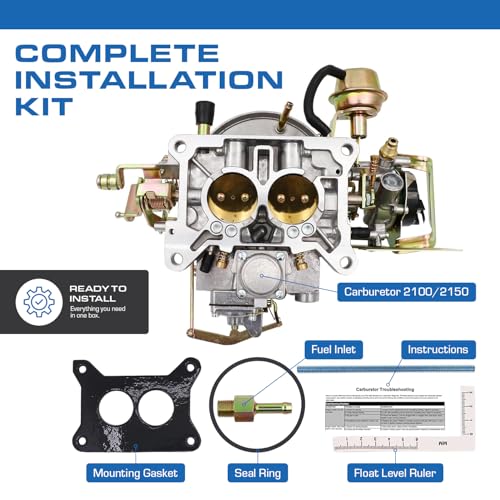
2 Barrel Carburetor Ford 2100 2150
Strengths
- Fits common Ford V8s
- Electric choke included
- Durable metal build
Trade-offs
- Needs external fuel filter
- Idle mixture screws can stick
- Not for high-lift cams
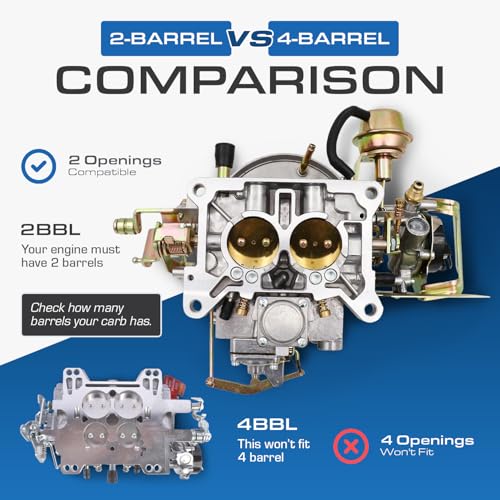
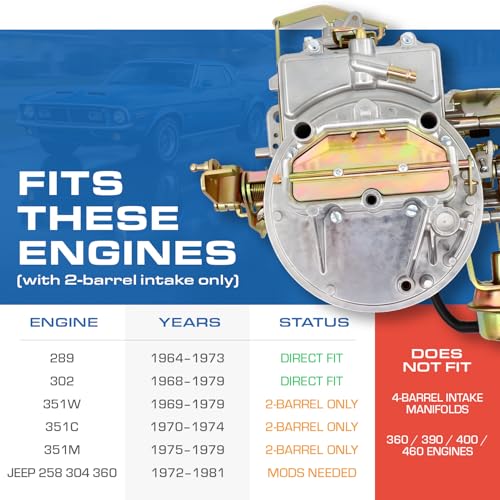
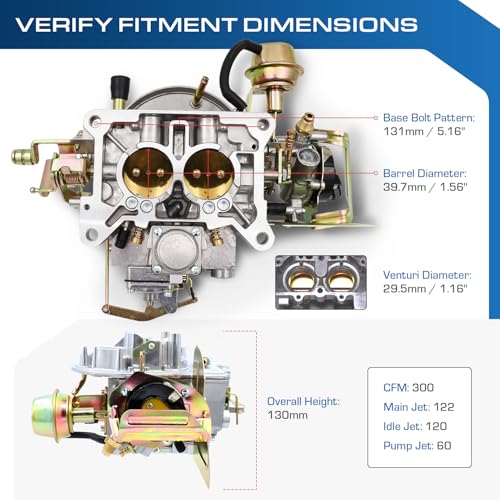
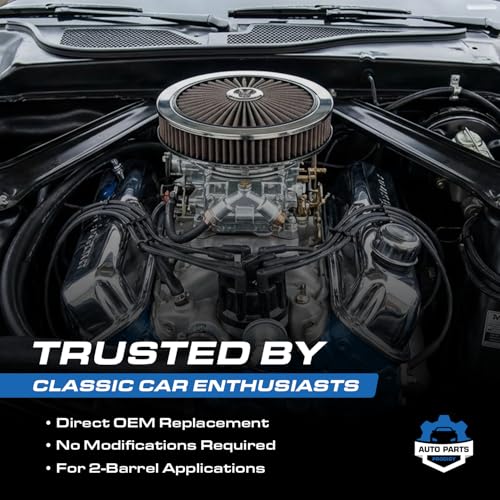
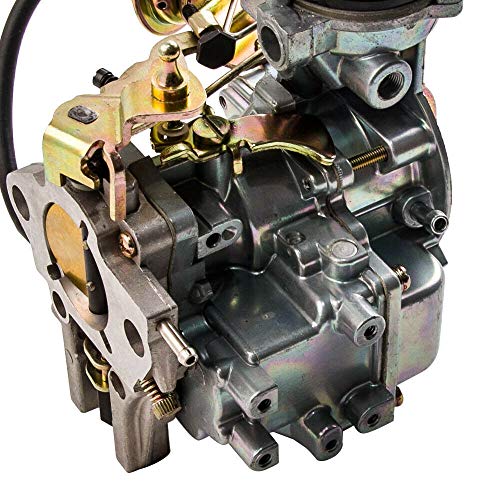
This Motorcraft 2150-style replacement nails the sweet spot between affordability and authenticity for classic Ford V8 owners. With a 1.14-inch venturi and .049 jets, it’s tuned for engines like the 302 and 351W in stock or lightly modified form. The electric choke is a welcome upgrade over manual units, especially if you’re driving your Mustang or Bronco in colder climates. Owners say it bolts right on and idles cleanly once adjusted.
I’d still recommend adding an inline fuel filter, the carb’s longevity depends on clean fuel, and these aftermarket units don’t always have the same debris resistance as NOS originals. But for the price, the metal construction feels substantial, and the fitment across Jeeps and Fords is well-documented. It won’t match a rebuilt OEM unit in refinement, but it comes close.
Product photos
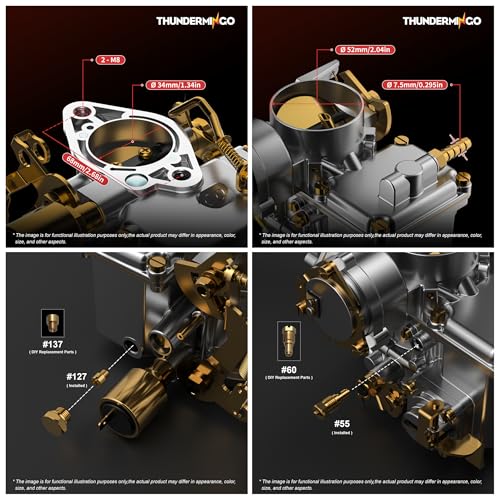
34 Pict-3 Carburetor VW Air Cooled
Strengths
- Correct fit for late-model VWs
- Electric choke for reliability
- Precise throttle response
Trade-offs
- Dual port only
- Needs careful syncing
- Not for stroker builds
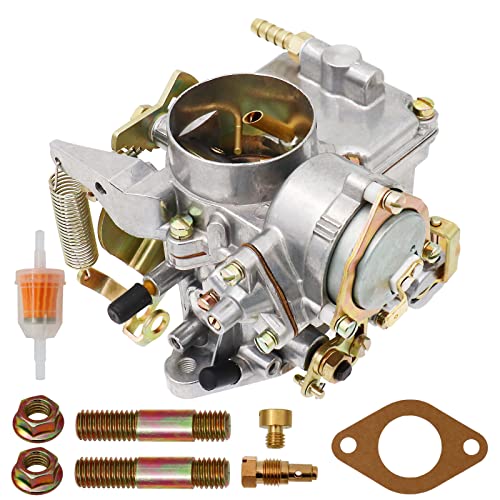
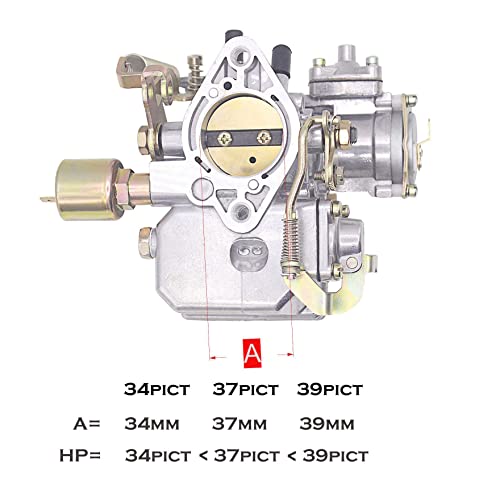
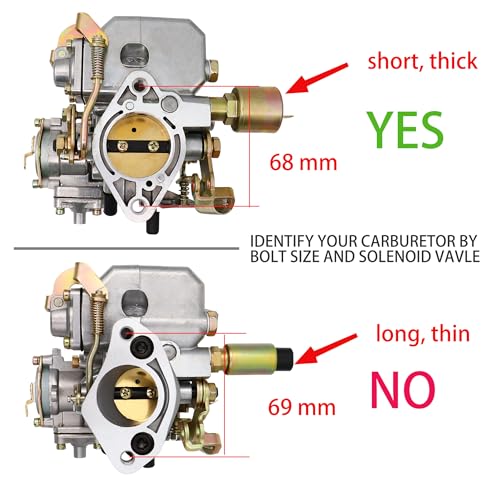
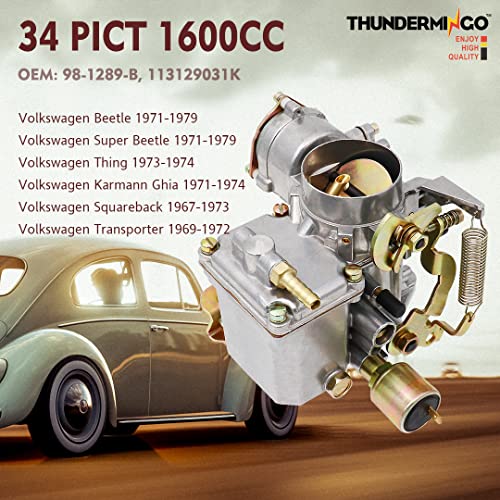
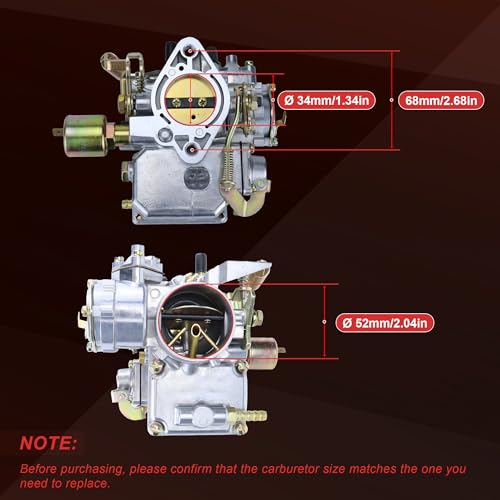
The 34 PICT-3 is iconic for a reason, it’s the last carbureted breath of the original VW air-cooled era. This reproduction fits 1600cc dual-port Type 1 engines and brings back that nostalgic kick of mechanical simplicity. The electric choke is a thoughtful touch for daily-driven Bugs that see colder climates, and the 26mm venturi keeps airflow in check without overwhelming the engine. Owners restoring Super Beetles or Things say it installs cleanly and delivers smooth idle once synchronized.
It’s not going to win drag races, but that’s not the point. Where some repros skimp on brass components, this one seems to hold tolerances well. Just verify your manifold type, this is dual-port only. If you’re chasing authenticity with a dash of modern usability, this hits the mark.
Product photos
1 Barrel Carburetor Ford 300 4.9L

Strengths
- OEM-style fit for inline-6
- Automatic choke convenience
- Heavy-duty metal housing
Trade-offs
- Single-barrel performance limit
- Choke warm-up delay
- Fuel sensitivity
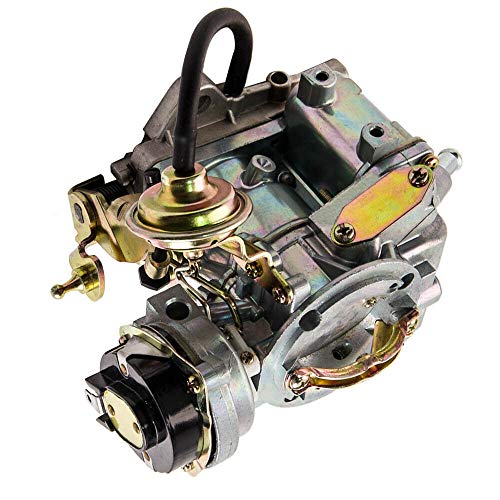
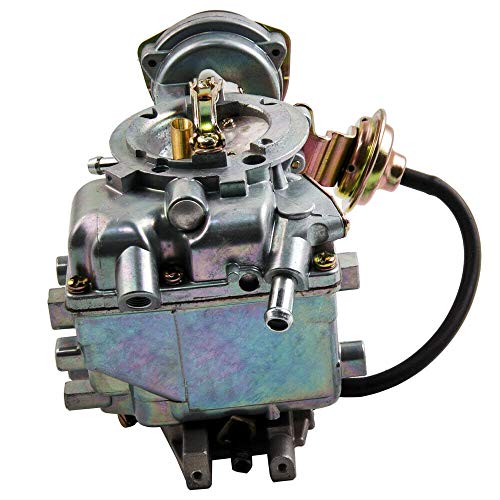
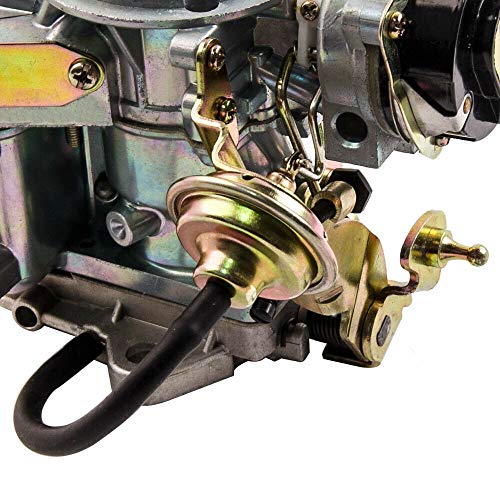
Ford’s inline-6 trucks from the ’70s and ’80s deserve better than being forgotten, and this 1-barrel replacement keeps them running without hunting for NOS parts. Designed as a direct fit for the 300 cubic inch 4.9L engine, it uses automatic choke control, critical for cold mornings, and maintains the side fuel inlet configuration that many older intakes rely on. Owners restoring F100s or Broncos appreciate that it looks period-correct while offering modern reliability.
Still, single-barrel carbs are inherently limited. You won’t gain power, and fuel economy is modest at best. Some feedback notes hesitation during acceleration until the choke fully opens. But for purists keeping a vintage truck original, that’s part of the charm. I’d pair it with a clean fuel system and fresh filter to avoid clogging the simple jets.
Product photos

VM22 26mm Carburetor Predator 212cc
Strengths
- 26mm bore upgrade
- Includes air and fuel filters
- Complete mounting hardware
Trade-offs
- Intake manifold fit issues reported
- Jetting may need adjustment
- Not fully sealed against dirt
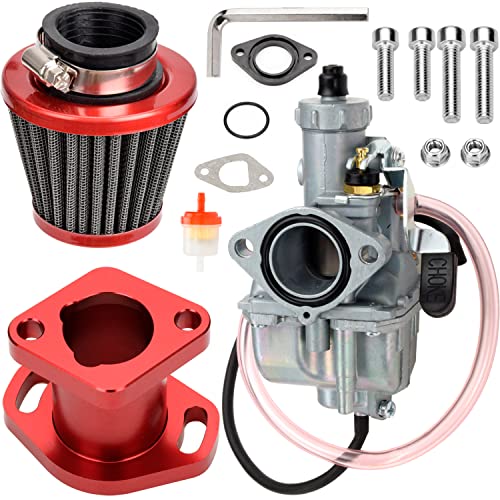
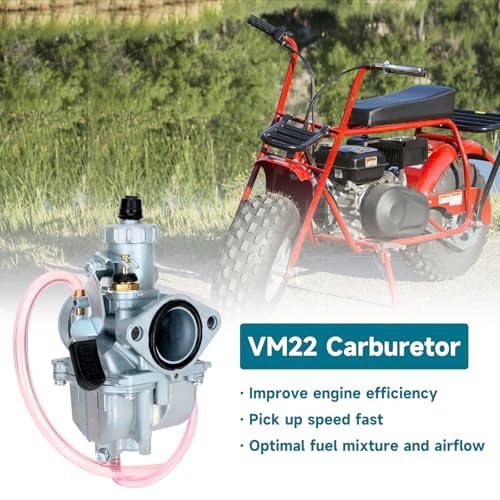
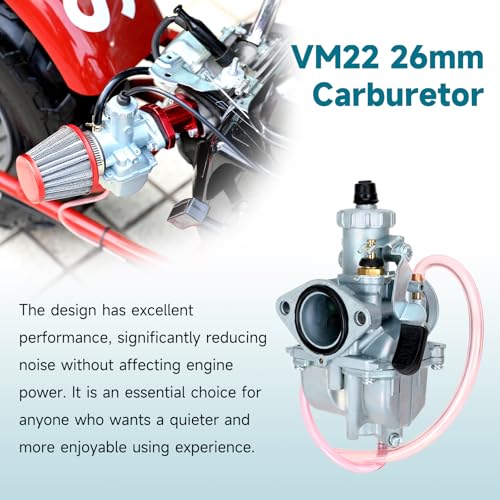
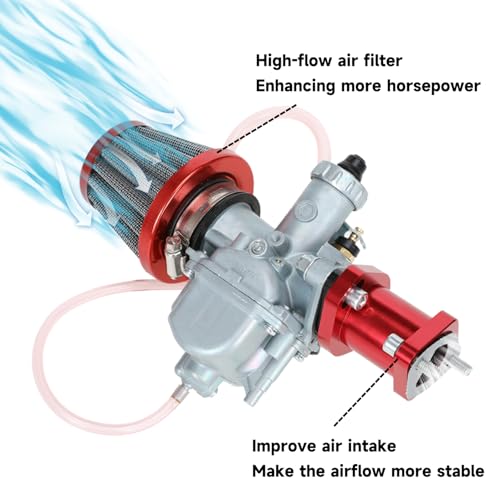
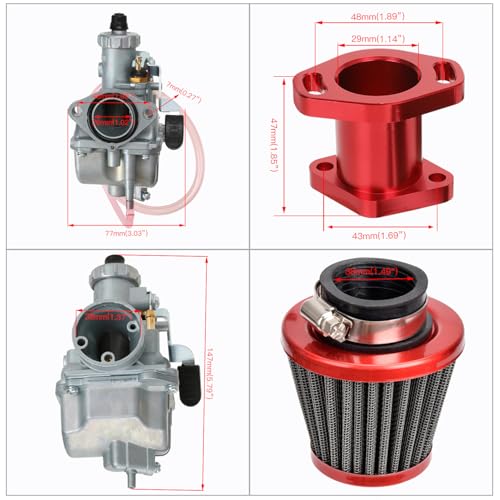
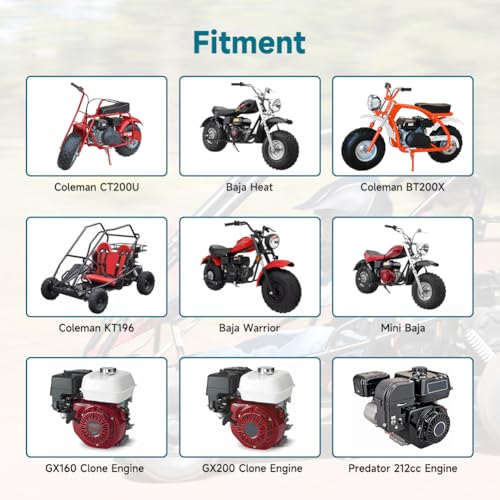
For go-kart and minibike builds running Predator 212cc or similar clone engines, the FVRITO VM22 kit delivers a solid step up from stock. The 26mm bore opens airflow over the stock carb, which on paper should help extract a bit more power, especially when paired with other basic bolt-ons like an exhaust or intake mod. Owners consistently report smoother idle and better throttle response after dialing it in, though some note the included intake manifold can be a tight fit depending on frame clearance.
The full kit adds real value: you get the carb, a decent-sized air filter, fuel filter, wrench, and gaskets, all for under thirty bucks. That said, tuning takes patience. The VM series is known for finicky idle circuits, and reviewers mention needing to tweak jetting for optimal performance. It’s not plug-and-play, but for this price, I wouldn’t expect it to be.
Product photos
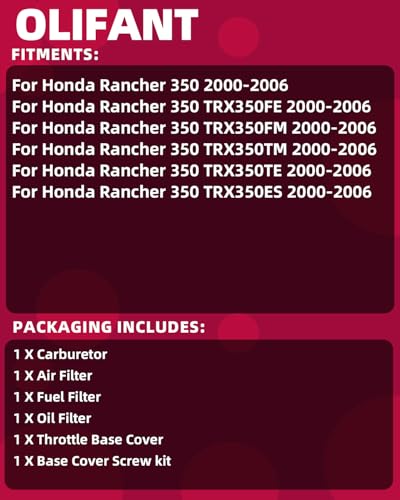
Carburetor for Honda Rancher 350
Strengths
- Direct fit for TRX350 models
- Comes with air and oil filters
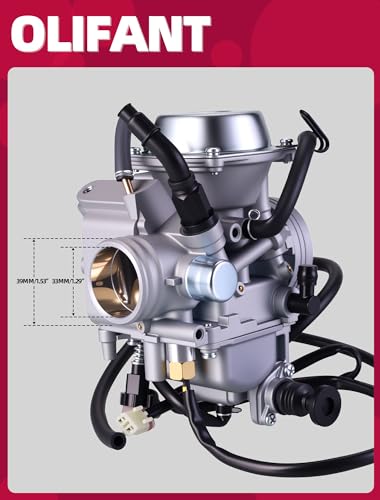
- Correct 33mm intake diameter
Trade-offs
- Oil filter quality unverified
- Some reports of leaky seals
- Not for high-output builds
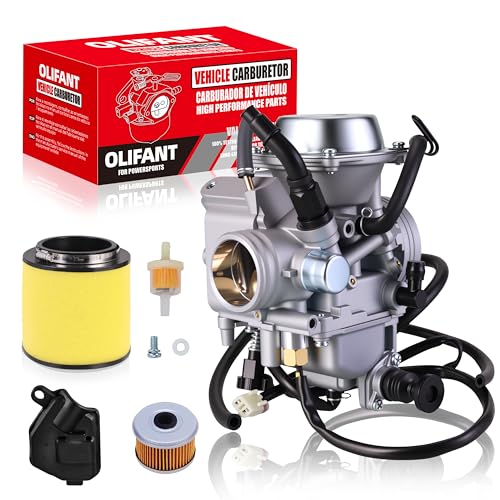
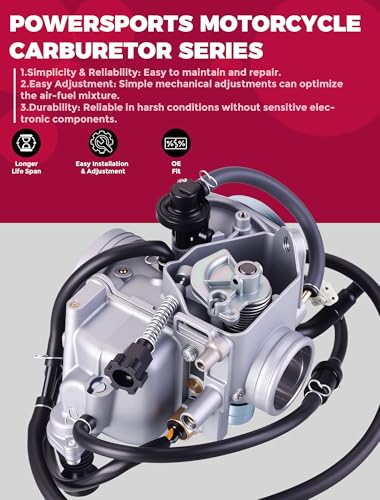
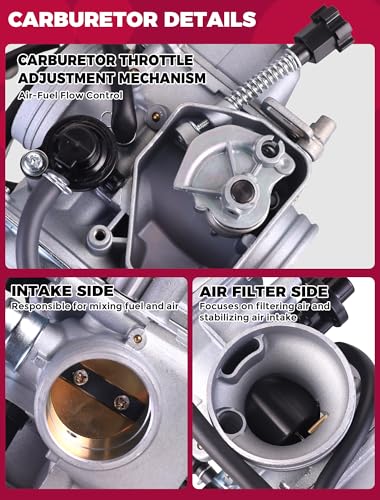
If you’re maintaining a Honda Rancher 350 from the early 2000s, this all-in-one replacement package makes sense on practicality alone. The carb itself matches OEM specs with a 33mm intake bore, and owners say it fits right in place of the original without major mods. What sets this apart is the inclusion of both air and oil filters, rare at this price, which simplifies sourcing parts separately. Still, I’d treat the oil filter with caution; it’s likely not making or breaking engine longevity here, but having one included beats nothing.
That said, ATVs like the TRX350 are sensitive to carb quality, and while most reviews confirm solid cold starts and stable idle, a few mention inconsistent fuel flow after extended use. This isn’t a high-performance part, it’s a service part. But for someone restoring or daily-driving an older Rancher, that reliability matters.
Product photos

799584 Carburetor 163cc Lawn Mower

Strengths
- Extremely low cost
- Wide mower compatibility
- Alloy construction
Trade-offs
- Basic tuning required
- Not for heavy-duty equipment
- Short lifespan under stress
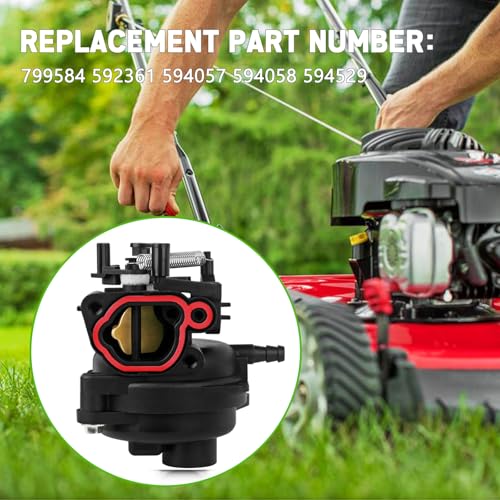
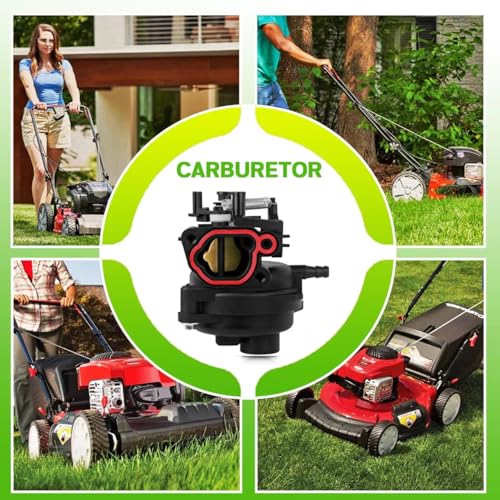
At $14, the Rakiyada 799584 carb is about as affordable as small-engine replacements get, and it shows. It’s designed for 163cc OHV engines found in Troy-Bilt, Craftsman, and Toro mowers, and fits a long list of model numbers, which helps when OEM parts are discontinued. Most owners report success reviving old walk-behinds that were flooding or refusing to start. The alloy body resists corrosion better than plastic-bodied carbs, and installation really does take under ten minutes if you’ve done one before.
But let’s be real: this is a wear item, not a performance part. You’re not gaining horsepower. Some users mention it arrives pre-set but needs minor tweaking for optimal fuel mix. Given the price, I’d keep a spare on hand for peace of mind, but don’t expect miracles if your engine has deeper issues.
Product photos


196cc Carburetor Predator 6.5 HP

Strengths
- Ultra-low price
- Broad clone engine fitment
- Manual choke simplicity
Trade-offs
- Inconsistent build quality
- May require re-jetting
- Not for performance builds
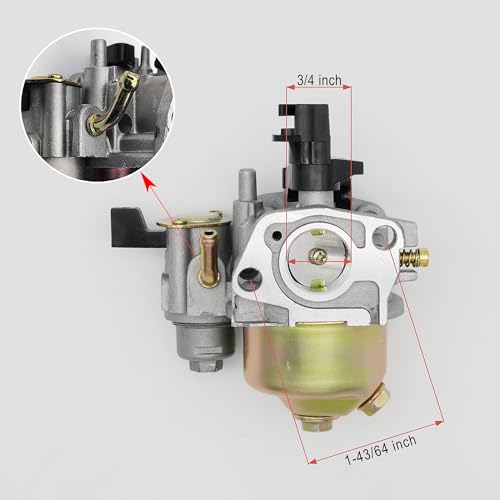
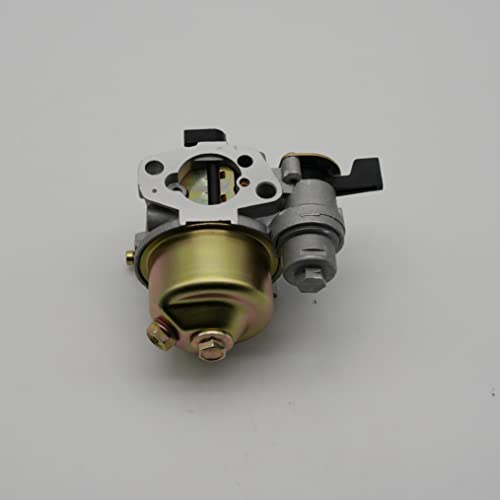
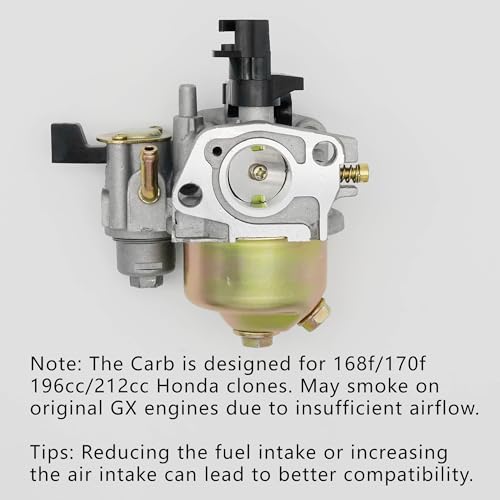
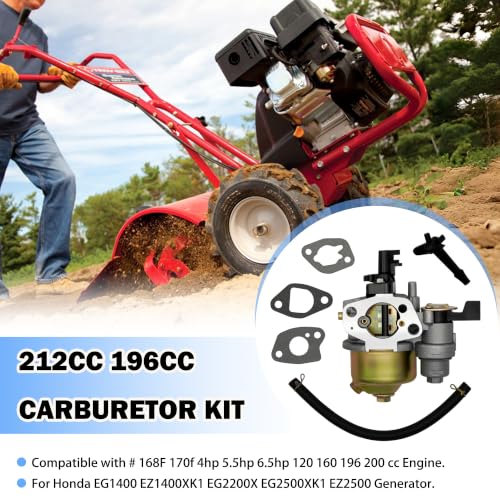
At just $10, the STRONGTHIUM carb is the ultimate bargain for tinkerers burning through clone engine parts. It fits a wild range of applications, from Predator-powered mini bikes to pressure washers and snow blowers, which explains its popularity. The manual choke version keeps things simple, and the 19mm bore matches stock specs, so there’s no surprise lean conditions if you’re staying OEM. Owners say it solves common issues like surging and hard starts when the old carb is gummed up.
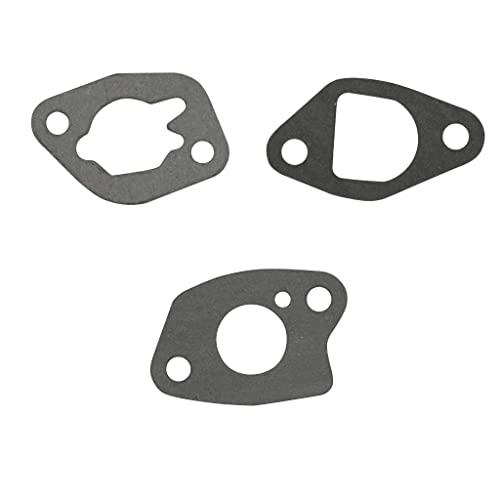
But this is clearly not a precision unit. Fitment isn’t guaranteed across all GX clones, especially older ones with worn manifolds. And while it includes gaskets and fuel line, don’t expect fine metering or crisp throttle transitions. Still, for the price, it’s a no-brainer as a backup or quick fix. I’d rather spend $10 twice than $50 once on a part that might not fit.
Product photos
How We Picked These carburetors
My approach at TheAutoZenith is always rooted in understanding the mechanics and the real-world needs of enthusiasts. Rather than a hands-on lab test of each carburetor, which isn’t practical given the sheer variety, I focused on a research-led comparison. This involved meticulously comparing published specifications, features, and, crucially, weighing owner reviews from across multiple platforms alongside expert analyses from reputable automotive publications. I then ranked these carburetors against criteria specific to their intended applications.
For carburetors, consistent fuel delivery, appropriate CFM (cubic feet per minute) rating for the engine size, and build quality were the most heavily weighted factors. Getting the CFM right is essential; under-carbureting starves the engine, while over-carbureting wastes fuel and can impact performance. Build quality, specifically the materials used and construction details, directly influences long-term reliability, a key concern for anyone investing in a carburetor. Finding the right Ford 302 carburetor is a good example of how these factors play out.
Published specifications give a clear picture of the carburetor’s intended operational parameters – venturi size, jetting, and choke type are all useful data points. However, owner feedback provides crucial insight into real-world performance, ease of tuning, and potential issues. Reputation matters too; brands known for consistent quality and good customer support naturally rank higher. For those looking for a robust option for a larger engine, exploring a 454 carburetor requires a similar blend of spec analysis and owner experience.
How To Pick The Right carburetors
Finding the right carburetor can dramatically improve your engine’s performance, but it’s a surprisingly nuanced process. It’s not simply about finding one that fits; it’s about matching the carburetor’s characteristics to your engine’s needs and your intended use.
A good carburetor delivers the correct air-fuel mixture consistently, across the entire RPM range. Key considerations include the carburetor’s size (measured in CFM – cubic feet per minute), the number of barrels, choke type, and metering system. Look for durable construction, positive reviews regarding fuel efficiency, and compatibility with your engine’s specific requirements.
Understanding CFM and Barrel Count
The carburetor’s CFM rating is often the first specification people look at, and for good reason. It indicates the volume of air the carburetor can flow at wide-open throttle. However, bigger isn’t always better. An oversized carburetor will suffer from poor throttle response and reduced fuel efficiency at lower RPMs. Conversely, a carburetor that’s too small will starve the engine of air at higher speeds. As a general rule, consider your engine’s displacement and intended use. A street-driven engine typically needs around 500-650 CFM per 500 cubic inches of displacement, while a high-performance or racing engine may require significantly more. The number of barrels (two or four) influences airflow characteristics; four-barrel carburetors offer more versatility but can be more complex to tune.
Choke Type and Cold-Starting Performance
The choke regulates the air-fuel mixture during cold starts, enriching it to help the engine overcome initial resistance. You’ll generally find either manual or electric chokes. Manual chokes require you to physically operate a lever, offering more control but demanding driver attention. Electric chokes are automated, simplifying the starting process, and are common on many modern replacements like the Edelbrock 1906 AVS2. However, the reliability of the electric choke actuator is a common complaint in owner feedback, so consider whether you prefer convenience or control. If you’re restoring a classic vehicle, maintaining the original choke type often contributes to authenticity.
Application-Specific Considerations
The best carburetor isn’t universal; it’s tailored to the engine. For instance, if you’re working on a classic Ford, you’ll want to consider a carburetor specifically designed for those engines, like the 2 Barrel Carburetor Ford 2100 2150. These often retain the original mounting patterns and linkage points, simplifying installation. Similarly, for unique applications like VW air-cooled engines, you’ll need a carburetor like the 34 Pict-3 specifically designed for those systems. Don’t overlook the importance of compatibility. When considering a carburetor for a Ford 8N tractor, for example, finding a replacement carb for 8N that matches the original specifications is critical. For a classic Chevy, selecting the right Chevy 350 carb will make all the difference.
Don’t chase the highest number on the spec sheet. A properly sized and tuned carburetor that matches your engine and driving style will always outperform an oversized, poorly-matched unit.
Carburetors Compared
Here’s a comparison of specifications for a range of carburetors to help you find the right one for your needs.
| Product Name | CFM/CC | Barrel Count | Choke Type | Fitment Highlights | Notes |
|---|---|---|---|---|---|
| Edelbrock 1906 AVS2 | 650 | 4 | Electric | N/A | Satin Finish |
| 1406 Carburetor | 600 | 4 | N/A | Corvette, Silverado, Mustang, GMC Pickup | Two-Step Metering |
| 2 Barrel Carburetor Ford 2100 2150 | N/A | 2 | Electric | Ford 289, 302, 351, Jeep 360 | Heavy-Duty Metal |
| 34 Pict-3 Carburetor VW | N/A | N/A | Automatic | VW Beetle, Super Beetle, Karmann Ghia | Dual Port Manifold |
| 1 Barrel Carburetor Ford 300 4.9L | N/A | 1 | N/A | Ford 3.3L, 4.1L, 4.9L | Side Fuel Inlet |
| VM22 26mm Carburetor Predator 212cc | N/A | N/A | Manual | Predator 212cc, Honda GX200 Clone, Go-Karts | Filter Included |
| Carburetor for Honda Rancher 350 | N/A | N/A | N/A | Honda Rancher 350 TRX350 2000-2006 | Air Filter Included |
| 799584 Carburetor 163cc | N/A | N/A | N/A | Troy Bilt, Craftsman, Toro Lawnmowers | Replaces #799584 |
| 196cc Carburetor Predator 6.5 HP | N/A | N/A | Manual | Honda GX140/160/200, Predator 212cc, Coleman | Huayi P19 |
Frequently Asked Questions
What’s the biggest mistake people make when choosing a carburetor?
Many people focus too much on CFM without considering their engine’s specific needs. An incorrectly sized carburetor – too large or too small – will negatively impact performance and fuel efficiency, regardless of other features.
Are electric chokes generally reliable long-term?
While convenient, electric chokes can be a point of failure. Owner feedback frequently cites issues with the choke actuator, so consider the trade-off between ease of use and potential maintenance when choosing a carburetor with an electric choke.
Can I use a carburetor designed for a different engine?
While sometimes possible, it’s generally not recommended. Carburetors are calibrated for specific engine characteristics, and using one designed for a different application will likely result in poor performance and require extensive, potentially unsuccessful, tuning.
What’s the best way to clean a dirty carburetor?
For heavily soiled carburetors, an ultrasonic carburetor cleaner is often the most effective method. It thoroughly removes deposits from even the smallest passages, restoring optimal fuel flow, and is often preferred over manual disassembly and cleaning.
What should I look for in a carburetor for a larger engine, like a Ford 460?
When searching for a Ford 460 carburetor, prioritize a CFM rating appropriate for the engine’s displacement and intended use, alongside robust construction and positive owner reviews regarding throttle response and fuel delivery.
The Bottom Line
Choosing a carburetor ultimately comes down to balancing control with convenience, and quality with cost. While a high-end, fully adjustable unit like the Edelbrock 1906 AVS2 offers incredible tuning potential, the vast majority of enthusiasts will find the 1406 Carburetor provides an excellent balance of performance and ease of use, making it our overall pick. It delivers strong, reliable operation for a wide range of common V8 engines.
For those with specific needs, we’ve highlighted several excellent options. If you’re rebuilding a classic Ford, the 2 Barrel Carburetor Ford 2100 2150 is a fantastic choice, retaining original fitment and a durable build. For small engine applications, the VM22 26mm Carburetor Predator 212cc is a solid performer, and anyone building a 383 stroker carb will want to research options carefully to match their build.
Don’t get lost in the numbers. CFM and barrel count are important, but they’re secondary to finding a carburetor that’s well-suited to your engine’s displacement, intended use, and your own mechanical aptitude. A carburetor that delivers consistent fuel delivery, is built to last, and is easy to maintain will always provide more satisfaction than chasing peak specifications. For Chevy enthusiasts, exploring an Edelbrock carburetor for 350 is a great starting point.
