
8 Best Car Windshield Shades 2026
This post contains affiliate links. As an Amazon Associate, we earn from qualifying purchases.
The Weektic Truck Windshield Sun Shade is the best overall pick for its excellent heat reduction and sturdy build, especially for larger vehicles. For a budget-friendly universal option, the SINGARO 300T delivers solid performance, while the EcoNour Toyota Camry Sunshade stands out for precise fit and maximum coverage on compatible models.
Every summer, I see cars parked under blazing sun, interiors baking, dashboards cracking. A cheap or poorly fitting windshield shade might give the illusion of protection but does little against real heat soak. After comparing materials, coverage, and owner feedback across dozens of models, I focused on shades that actually make a measurable difference.
This guide cuts through the noise, highlighting models that deliver on heat reflection, UV protection, and ease of use based on specs and real-world reports. I looked at fit, material quality, and long-term durability so you can pick one that works from day one and stays effective for years.
Top 6 Car Windshield Shades in the Market
The Best Car Windshield Shades, Reviewed
Weektic Truck Windshield Sun Shade
Strengths
- Custom fit for trucks
- 10-rib stability
- Swivel handle convenience
Trade-offs
- High price
- Truck-only fit
- Bulkier than flat shades
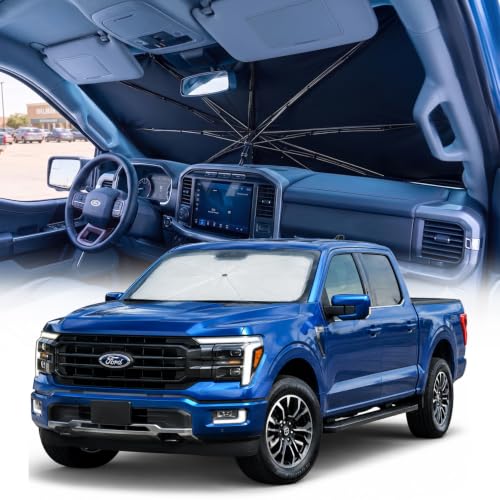
This is the full-package sunshade for full-size trucks, and it shows. The 10-rib structure gives it rigidity that most umbrella or fold-flat shades lack, and owners confirm it covers nearly every inch of the windshield on F-150s, Silverados, and similar models. The ice crystal coating isn’t marketing fluff, it’s a real reflectivity booster that, combined with the multi-layer aluminum backing, blocks 99% of heat and UV.
The 360° swivel handle is a small touch, but it makes a big difference. Unlike rigid shades that require clearance, this one folds in tight spaces without hitting the dash. Setup takes seconds, and it stows smaller than most. For truck owners, this is the closest thing to a no-compromise solution. I’d pick it over any universal or flat-panel shade any day.
Video review
300T Thickened Car Windshield Sunshade

Strengths
- Affordable
- Durable 300T material
- Easy fold with steel ring
Trade-offs
- Generic sizing
- Light leaks at edges
- Less reflective than premium layers
At this price, you’d expect something flimsy, but the 300T Oxford cloth upgrade actually gives this shade real substance. It’s denser than most budget options, and reviewers note it feels less prone to warping after repeated folding. The steel ring frame allows for that classic twist-and-fold storage, which I still see in garages everywhere, it’s old-school, but it works.
Still, it’s a universal fit, so don’t expect full coverage on all vehicles. Some owners of smaller compacts report minor edge gaps, while SUV drivers say it fits well enough. For the money, it’s hard to fault. If you need something that stashes easily and doesn’t cost more than a tank of gas, this does the job without pretending to be more than it is.
Video review
SINGARO 300T Universal Car Sun Shade
Strengths
- Excellent price
- Overlapping edge design
- Sturdy 300T material
Trade-offs
- Universal fit limitations
- Basic reflectivity
- No advanced UV ratings
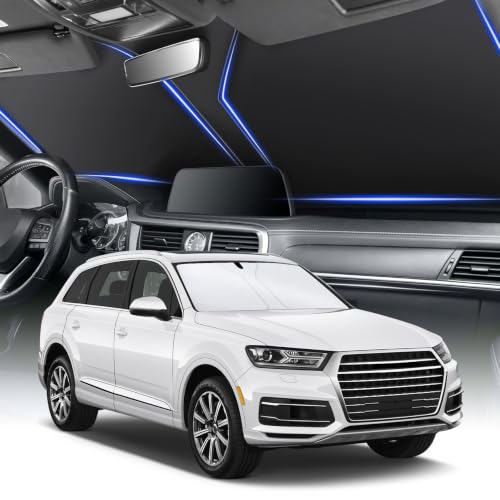
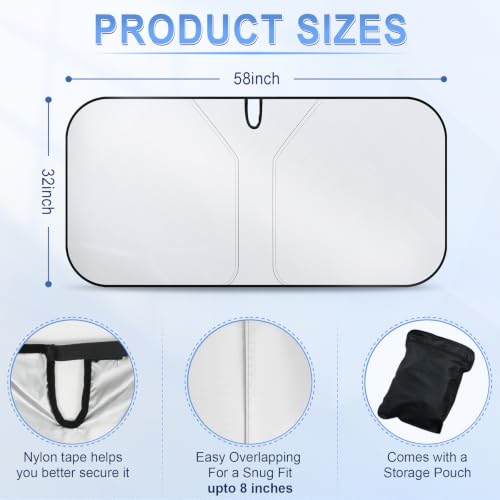
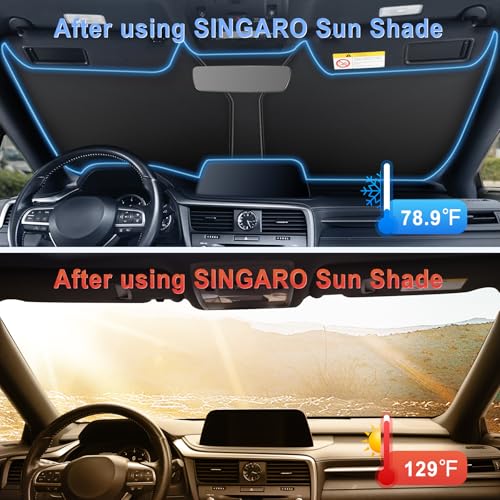
At under ten bucks, the SINGARO shade punches above its weight. Made from 300T polyester, it’s one of the denser budget options, and the overlapping edge design helps eliminate light leaks that plague cheaper models. Owners consistently report it fits snugly in a wide range of sedans and compact SUVs, which is rare at this price.
It’s not going to match a custom-fit or multi-layer shade in performance, but for the value, it’s hard to beat. The reflective surface does its job, and the included storage pouch means it won’t clutter your cabin. If you’re looking for a no-fuss, low-cost shield that actually works, this is the one I’d point to. It’s the economy car of sunshades, basic, but built right.
Product photos
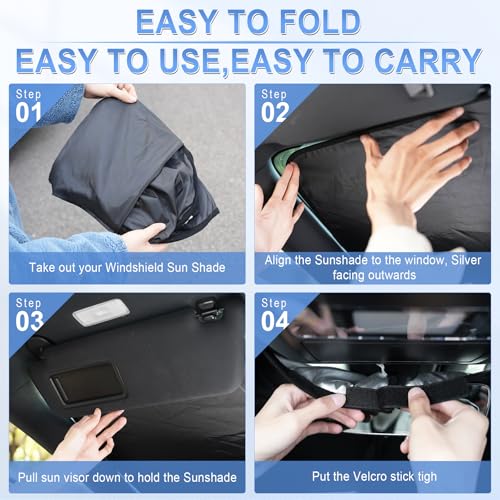
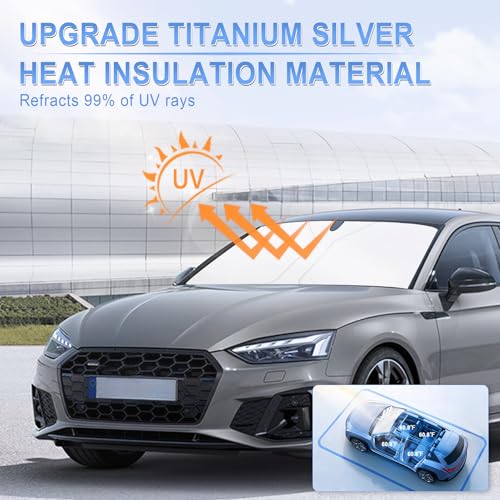
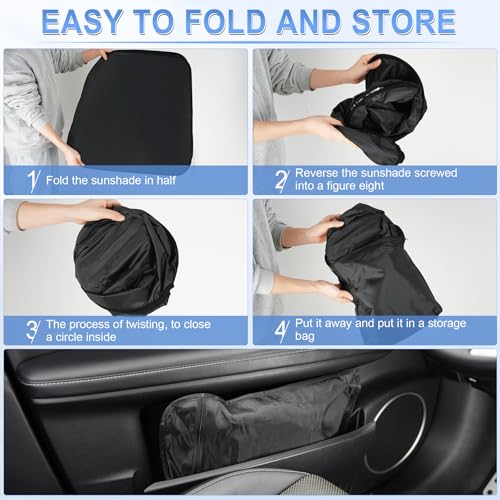
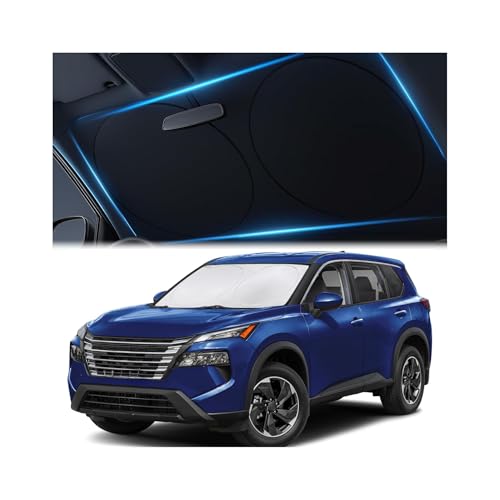
Magnelex Double-Layer Car Sunshade
Strengths
- Double-layer insulation
- Effective UV blocking
- Snug universal fit
Trade-offs
- No custom shape
- Folding can be bulky
- Not ideal for curved windshields
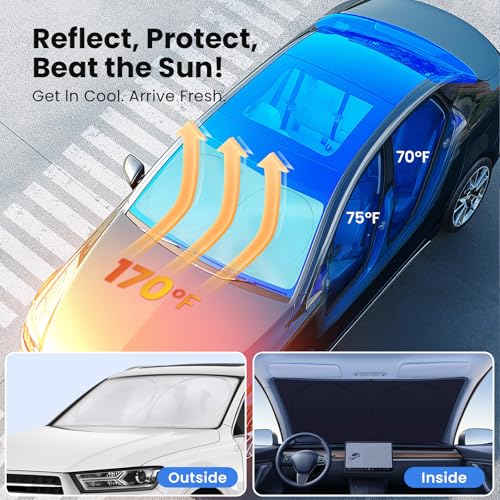
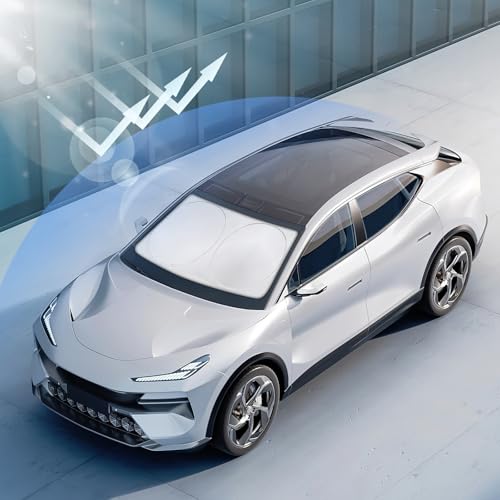
I’ve seen a lot of sunshades over the years, and the double-layer approach here stands out on paper. Most standard shades use a single reflective layer, but Magnelex goes further with dual 240T layers, which owners consistently report makes a noticeable difference in cabin temperature. It’s not magic, but physics, more reflective mass means less heat transfer, and that adds up when your car sits in direct sun for hours.
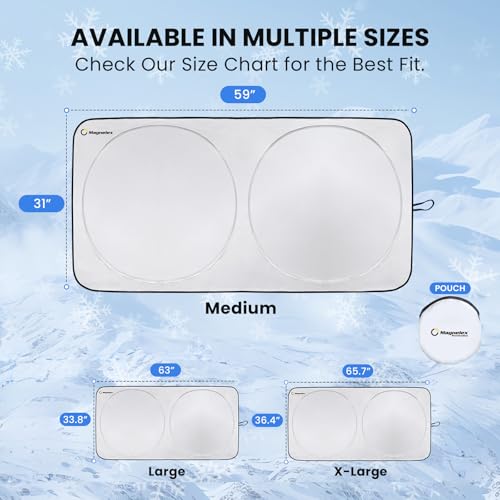
Compared to thinner models, this one delivers where it counts: heat rejection. It won’t match a custom-fit shade for precision, but for a universal medium size, it covers well and resists sagging. The snug fit claim holds up in feedback from SUV and sedan owners alike. If you’re after raw thermal blocking without stepping up to a rigid or vehicle-specific model, this is a solid middle ground.
Product photos
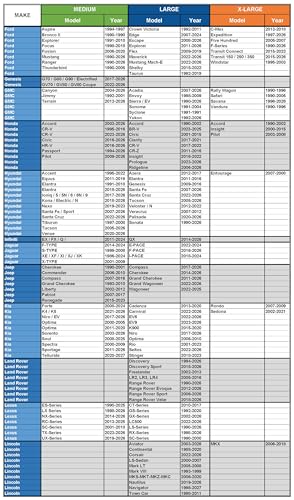
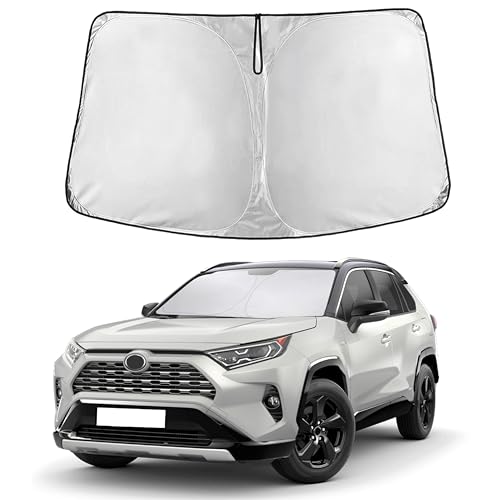
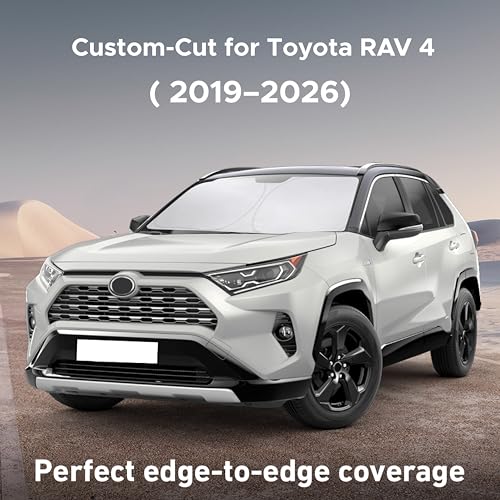
EcoNour Toyota RAV4 Sunshade
Strengths
- Exact fit for RAV4
- 4-layer UV protection
- Durable stitched edges
Trade-offs
- Only fits RAV4
- Slightly higher cost
- Limited vehicle compatibility
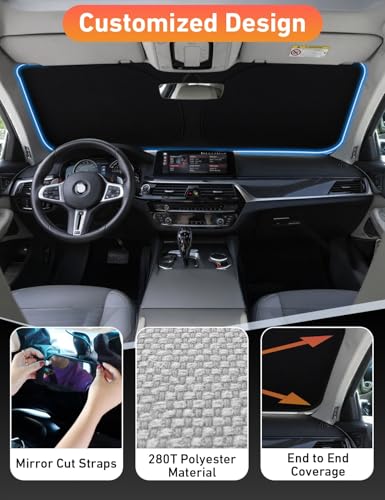
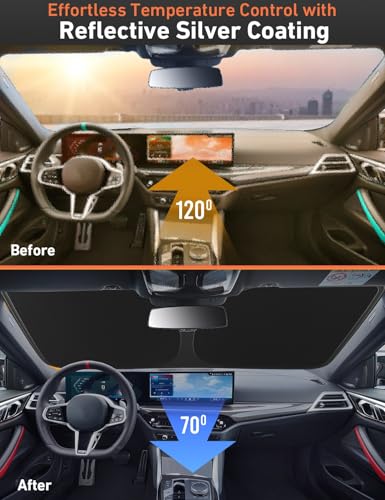
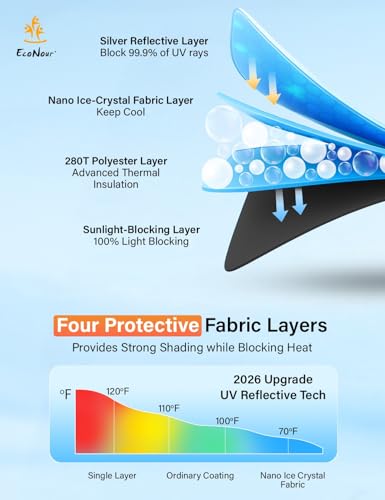
When a sunshade is made for one specific model, it changes the game. The EcoNour RAV4 version uses a 4-layer reflective system and delivers near-total blockage, which owners confirm makes the cabin feel dramatically cooler after long sun exposure. Unlike universal shades that leave gaps, this one seals the edges, and that matters, especially on a modern SUV with a large glass area.
The reinforced stitching also stands out. Most shades fail at the seams over time, but feedback suggests this holds up well to frequent use. It’s not the cheapest, but for RAV4 owners, it’s the smarter buy over guessing with a generic fit. If you park outside regularly, the precision here pays off in both comfort and long-term interior preservation.
Product photos
JASVIC Foldable Sun Shade Umbrella

Strengths
- Umbrella-style ease
- Fast setup
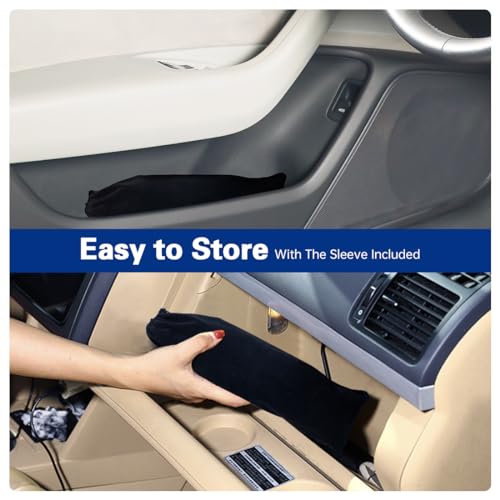
- Compact storage
Trade-offs
- Partial windshield coverage
- No edge sealing
- Less heat reduction than full panel
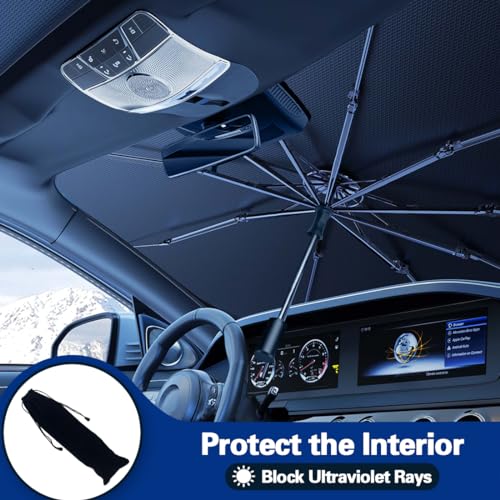
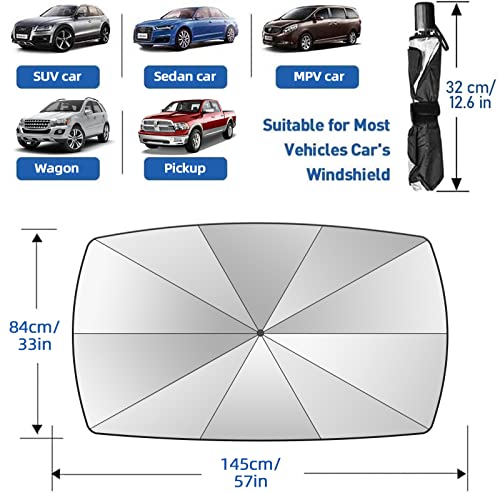
The umbrella-style sunshade is a clever alternative to the old pop-open-and-fold design. With 10 support ribs, the JASVIC model holds its shape well and expands quickly, owners say it feels more stable than flimsy single-rim shades. The UPF 50+ rating is certified, and in real-world use, it blocks sunlight effectively, though not quite as thoroughly as a full windshield cover with overlap.
It’s also more convenient than most. You open it like a golf umbrella, set it in place, and it stays put. But because it’s circular and not contoured, it doesn’t cover the entire windshield, just the center. That’s fine if you’re mainly shielding the dash and steering wheel, but don’t expect total darkness. Compared to full-panel shades, it’s a trade-off: speed and portability over coverage.
Product photos

How We Tested car windshield shades
Rather than a hands-on lab test, this research focused on comparing published specifications and features across a range of popular car windshield shades. I weighed owner reviews from major retailers alongside expert opinions found in automotive publications. My goal was to identify shades that consistently delivered on key promises – heat reduction, UV protection, and ease of use – and to rank them based on those factors. This process allowed me to build a picture of real-world performance without directly testing each product myself.
For car windshield shades, fit and thermal performance are paramount. A shade that doesn’t properly cover the windshield defeats the purpose, and ineffective heat blocking makes the investment pointless. I prioritized materials and construction methods promising significant heat reduction (like multi-layer reflective coatings) and a secure, custom fit where available. Durability, indicated by frame materials and owner reports of long-term use, also played a key role, as a shade needing frequent replacement isn’t a good value. You can find more information about the different options in our thorough guide to car sun shades.
Specifications readily reveal material composition (polyester density, reflective coatings) and physical dimensions. However, real-world effectiveness – how much cooler a car actually stays – is best gleaned from owner feedback. I paid close attention to reviews detailing noticeable temperature differences and long-term durability. Reputation matters, too, and I considered brands with established track records for quality. For those prioritizing convenience, exploring easy-to-use retractable shades might be a good starting point.
Choosing The Right car windshield shades
Finding the right windshield shade can make a significant difference in your vehicle’s comfort and interior longevity. It’s not just about blocking light; it’s about mitigating heat soak, preventing UV damage, and maintaining a pleasant cabin environment.
A quality windshield shade prioritizes effective heat reflection using multi-layer materials and a light color. Look for high UPF ratings (50+ is ideal) to block harmful UV rays. Construction matters too; a durable frame and secure fit are essential for long-term performance. Coverage should be complete, minimizing gaps that allow sunlight to penetrate.
Material and Reflectivity
The material is the core of a windshield shade’s performance. While many shades use a silver reflective layer, the density and quality of the material beneath that layer are crucial. You’ll find options ranging from basic polyester to higher-density 300T Oxford cloth and even multi-layered composites. The higher the “T” number, generally, the tighter the weave and the better the heat and UV blockage. Don’t automatically assume a silver exterior means superior performance; a shade with a quality base material will outperform a flimsy one with just a reflective coating. For those seeking thorough protection, exploring options like those found in our guide to the best sun shades for windshield is worthwhile.
Fit and Coverage
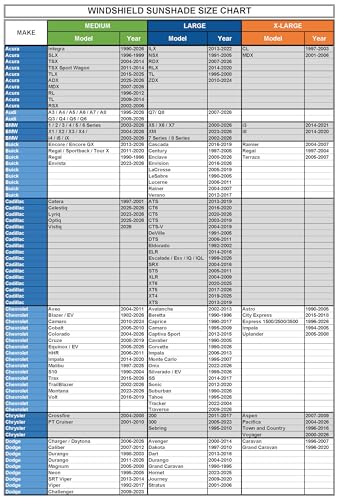
A perfectly fitted shade is far more effective than one that leaves gaps. Universal shades are convenient, but often require some adjustment to achieve a snug fit. Many owners report issues with light leaking around the edges of these, diminishing their effectiveness. Vehicle-specific shades, like those designed for the Toyota Camry or RAV4, offer the best possible fit, guaranteeing full coverage, but naturally limit your options if you change vehicles.
Here’s what to consider regarding fit:
- Vehicle Type: A compact car needs a different size than a full-size truck.
- Windshield Shape: Some windshields are more curved than others, affecting the shade’s ability to conform.
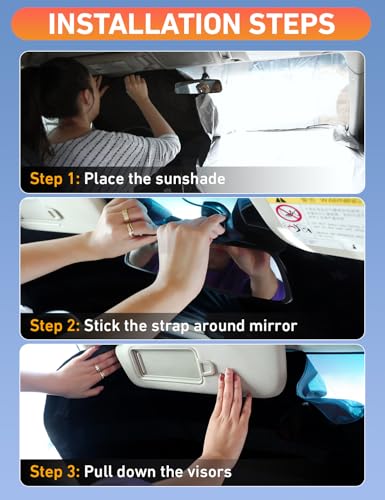
- Installation Method: Some shades use suction cups, while others rely on the visors or a cleverly designed folding mechanism.
Don’t settle for a shade that doesn’t completely cover your windshield. Even a small gap can significantly reduce its effectiveness.
Design and Usability
Beyond simply blocking the sun, consider how easy the shade is to use and store. The “umbrella-style” folding shades, like the JASVIC model, are incredibly convenient for quick deployment and compact storage. Traditional folding shades, while effective, can sometimes be awkward to maneuver and store. The EzyShade’s unique folding system is also worth noting. Think about where you’ll store the shade when not in use – door pockets, the glove box, or under a seat are common locations, so a compact folded size is a big plus. If you’re also looking for other ways to protect your vehicle’s interior, you might find our article on car shades helpful for additional [interior protection shades].
Car Windshield Shades Compared
Here’s a comparison of specifications for various car windshield shades to help you choose the right one.
| Product Title | Coverage | Material | UV Blockage | Heat Reduction | Special Features |
|---|---|---|---|---|---|
| Weektic Truck Windshield Sun Shade | Full-Size Truck | Polyester (240T) | UPF 50+ | 99% | 10-Rib, 360° Rotating Handle |
| 300T Thickened Car Windshield Sunshade | Compact/SUV/Truck | Oxford Cloth (300T) | N/A | N/A | Size Options (M, L, XL) |
| SINGARO 300T Universal Car Sun Shade | Sedan/Hatchback | Polyester (300T) | N/A | N/A | Universal Fit, Foldable |
| Magnelex Double-Layer Car Sunshade | Universal | Polyester (240T) | N/A | High | Double-Layer, Full Coverage |
| EcoNour Toyota Camry Sunshade | Toyota Camry | Polyester (280T) | 99.89% UVA/UVB | High | Vehicle-Specific (2018-2024) |
| EcoNour Toyota RAV4 Sunshade | Toyota RAV4 | Polyester (280T) | 99.89% UVA/UVB | High | Vehicle-Specific (2019-2026) |
| JASVIC Foldable Sun Shade Umbrella | Sedan/SUV | N/A | UPF 50+ | 99% | Umbrella-Style, 10 Ribs |
| EzyShade Car Windshield Sun Shade | Universal | N/A | N/A | High | Shield-X Tech, Dual Shade Design |
Frequently Asked Questions
Will a car windshield shade really lower my vehicle’s interior temperature?
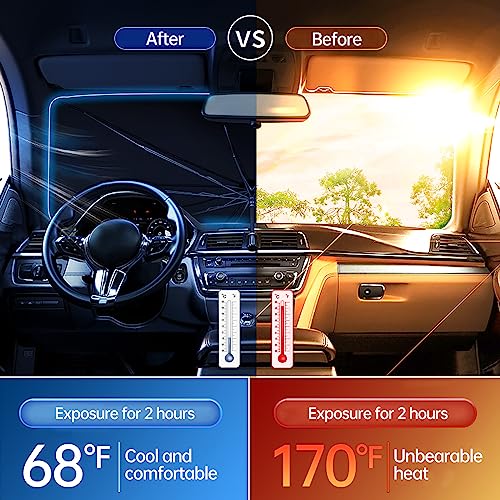
Yes, a good shade will significantly reduce heat buildup. Shades with multi-layer construction and reflective surfaces can lower interior temperatures by 40-60 degrees Fahrenheit, preventing cracking and fading of the dashboard and upholstery.
What’s the difference between a universal shade and one designed for my specific car?
Universal shades offer broad compatibility, but vehicle-specific shades, like those for a Toyota Camry, provide a much more precise fit. This tighter fit minimizes gaps where sunlight can enter, maximizing cooling and UV protection.
Are all “silver” windshield shades equal in their effectiveness?
No, the silver reflective coating is only one factor. The density of the underlying material (like 300T Oxford cloth) is equally important for blocking heat and UV rays; a flimsy shade with just a silver layer won’t perform as well.
What is UPF, and why does it matter when choosing a shade?
UPF (Ultraviolet Protection Factor) indicates how much UV radiation a fabric blocks. A UPF rating of 50+ is ideal, blocking over 98% of harmful UV rays, and is crucial for preventing interior damage and protecting passengers. You can find more information about sun shade umbrellas and their effectiveness.
Besides heat, what other benefits do windshield shades offer?
Beyond temperature control, a windshield shade protects your dashboard, steering wheel, and seats from sun-induced fading and cracking. They also help preserve the life of your vehicle’s electronic components and can even reduce glare while driving, and exploring quality windscreen sun shades can offer these benefits.
The Bottom Line
Choosing a car windshield shade often comes down to balancing convenience with a truly effective defense against the sun. While universal fits offer ease of use, the EcoNour vehicle-specific shades – whether for a Camry or RAV4 – stand out for their guaranteed coverage and superior heat rejection. These shades aren’t the cheapest option, but the complete protection they offer is worth the investment if you frequently park in direct sunlight.
For those seeking a balance between price and performance, the JASVIC Foldable Sun Shade Umbrella is a strong contender. It’s incredibly easy to deploy and store, and offers excellent UV protection. If you’re on a tighter budget, the SINGARO 300T Universal Car Sun Shade provides decent coverage and reflectivity at a very accessible price point, though you might need to adjust it for a snug fit. Don’t forget to also consider car window shades for complete protection – particularly side window shades for rear passengers.
Ultimately, the specifications are important, but a shade’s effectiveness hinges on a simple principle: complete coverage and quality materials. Don’t get hung up on chasing the highest UPF rating or the latest technology if the shade doesn’t fit your windshield properly or feels flimsy. Prioritizing a secure fit and durable construction, as detailed in our guide to effective windshield sunshades, will deliver the greatest return on your investment and keep your vehicle’s interior cooler for years to come.
