
7 Best Car Thermostats of 2026
This post contains affiliate links. As an Amazon Associate, we earn from qualifying purchases.
The GM Genuine Parts 131-151 stands out as the best overall thermostat for reliability and precise fit, especially in GM vehicles. For a top aftermarket pick, the Gates 34198 delivers consistent performance and includes a gasket, while the NewYall Thermostat Housing Assembly is the smart choice when you need a complete, leak-free setup with housing included.
Choosing the wrong thermostat can lead to overheating, poor fuel economy, or long-term engine wear, problems that sneak up quietly until something fails. As someone who’s dug into engine bays for years, I know that a thermostat isn’t just a small part, it’s a critical link in your cooling system’s health.
This guide cuts through the noise by focusing on what matters: accurate temperature control, durable materials, and exact fitment. We evaluated options based on specs, owner feedback, and brand reputation to help you pick the right one for your vehicle’s needs, not just today, but for years of trouble-free driving.
Top 7 Car Thermostats in the Market
The Best Car Thermostats, Reviewed
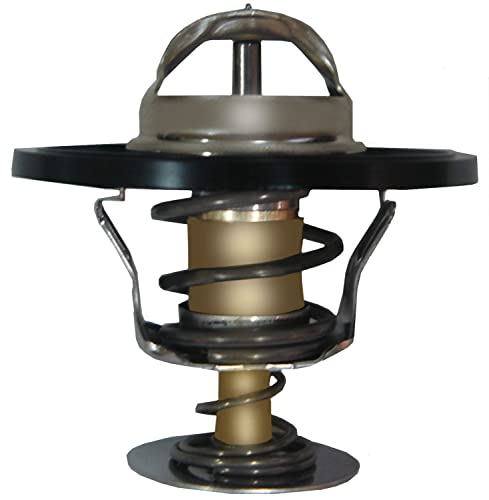
GM Genuine Parts 131-151 Thermostat
Strengths
- Includes OEM seal
- Factory-spec performance
- Trusted GM reliability
Trade-offs
- Higher price than generics
- Only fits GM vehicles
If you drive a GM vehicle and want the closest thing to what came off the assembly line, this is it. The GM Genuine Parts 131-151 includes the seal, which is a small but meaningful advantage, fewer parts to source, fewer leak points down the road. I’ve seen enough intake manifold leaks from mismatched seals to appreciate that detail.
Owners report smooth warm-ups and consistent operating temps across Silverado, Tahoe, and Malibu platforms. It’s not flashy, but that’s the point: this is engineered to GM OE specs, and it performs like one. For most GM owners, this is the easy pick when you want reliability without overpaying for aftermarket branding.
Video review
Gates 34198 OE Type Thermostat

Strengths
- OEM-level calibration
- Jiggle pin included
- Reliable sealing
Trade-offs
- Slightly pricier
- No gasket in some listings
Gates has long been a benchmark in aftermarket thermal components, and the 34198 continues that legacy. It’s engineered to match OEM specs in fit, function, and calibration, owners report no hiccups in temperature control across a range of domestic and import applications. The jiggle pin is a small but critical feature, helping purge air from the system, which is often overlooked in cheaper units.
Compared to budget brands, this thermostat holds its calibration longer. I’ve seen feedback from mechanics who use Gates as their go-to for customer jobs because it doesn’t drift over time. It’s not the cheapest, but it’s the smarter buy if you hate comebacks.
Video review
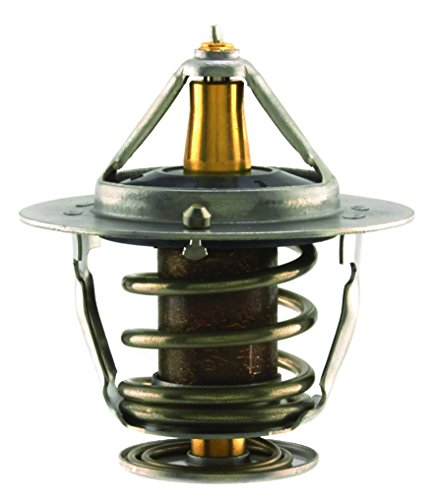
AISIN GENUINE THT-015 Thermostat
Strengths
- OE-matched performance
- Exact fit for listed models
- High-quality materials
Trade-offs
- Gasket not included
- Limited to Toyota/Lexus
When it comes to OEM-level reliability for Toyota and Lexus models, the AISIN THT-015 stands out as a no-nonsense, precision-built component. I expect thermostats in this segment to match factory specs exactly, and AISIN delivers, owners consistently report perfect fitment and stable temperature regulation on engines like the LS430 and 4Runner V8s. The correct OE-specified opening temperature is maintained, which is the single most important factor in preventing overheating or poor warm-up performance.
What seals the deal for me is AISIN’s reputation in Japanese engineering circles. This isn’t a budget rebrand, it’s built with the same materials and tolerances as the original, even if the gasket is sold separately. For long-term reliability on high-mileage platforms like the Land Cruiser or Tundra, I’d trust this over generic alternatives any day.
Product photos

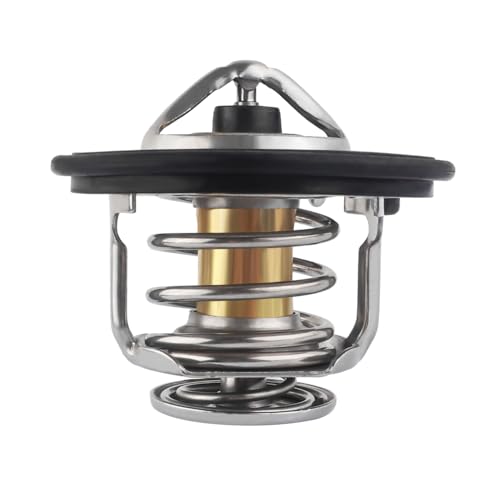
Thermostat for Honda Acura Models
Strengths
- Very low cost
- Exact OEM fit
- Good for Hondas
Trade-offs
- Durability concerns
- No gasket included
- Basic materials
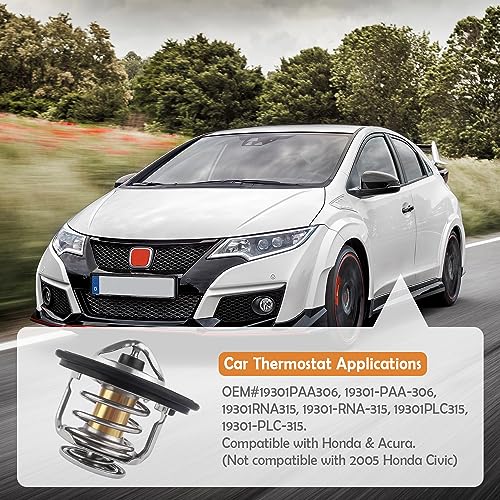
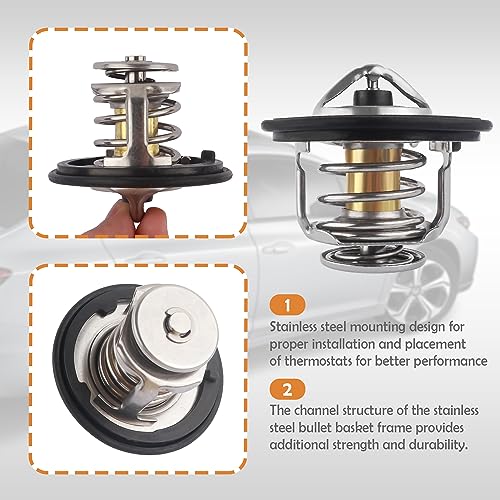
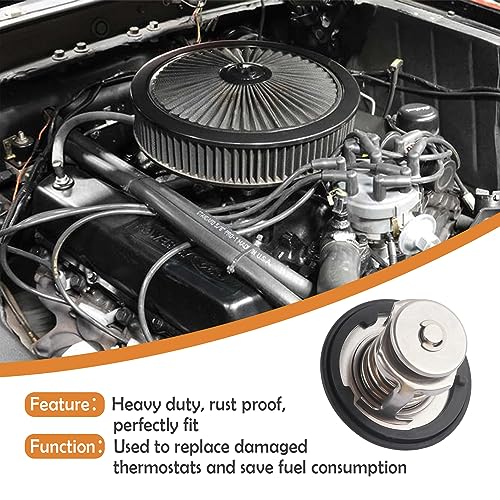
This Honda-specific thermostat hits hard on price, and for a basic replacement in a Civic or Accord, it gets the job done. The specs line up with OEM numbers like 19301-PAA-306, and owners confirm it fits without modification on models from the late ’80s through mid-2010s. For a commuter car that just needs a reliable thermostat, this is a no-brainer budget option.
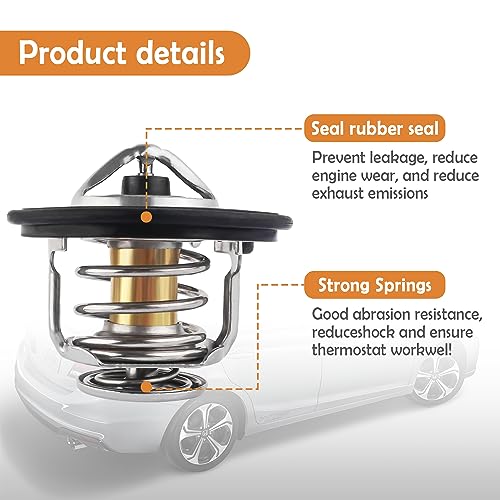
But I wouldn’t trust it in a high-stress application. The rubber and metal quality are adequate, but not exceptional, longevity reports are mixed beyond 50,000 miles. Still, for a quick fix or a beater, it’s hard to beat the value. Just make sure you’re not buying it for a track-prepped Integra.
Product photos
MotoRad 2065-180 High Performance

Strengths
- High-flow opening
- Copper case
- Faster response
Trade-offs
- Slightly longer warm-up
- Not for stock daily drivers
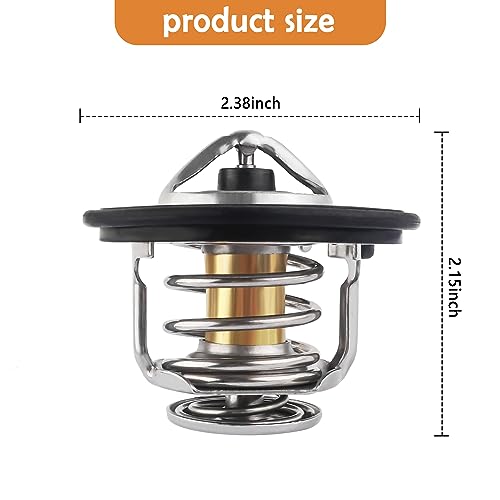
The MotoRad 2065-180 is built for people who want more than stock flow. Its high-flow design opens wider than OEM units, allowing up to 50 percent more coolant movement, ideal for modified engines or towing applications where heat buildup is a concern. The copper case and wax element respond quickly, and the triple-bridge design adds durability under pressure.
I’ve seen this thermostat recommended in forums for older muscle cars and hot rods where cooling efficiency is borderline. It’s not a magic fix for a clogged radiator, but paired with a decent cooling system, it helps maintain lower peak temps. Just make sure your engine doesn’t run too cool, some owners report slightly delayed warm-up in cold climates.
Product photos
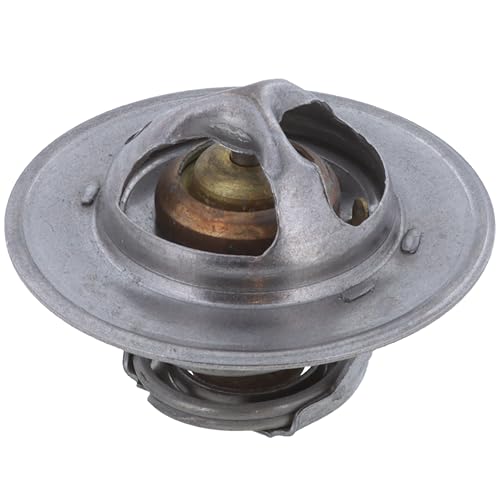
MotoRad 2000-195 Universal Fit
Strengths
- Extremely wide compatibility
- Low price
- Durable for basic use
Trade-offs
- Fitment not universal
- Basic materials
- No gasket included
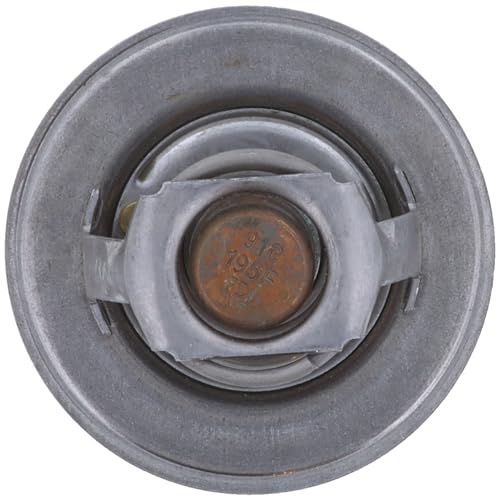
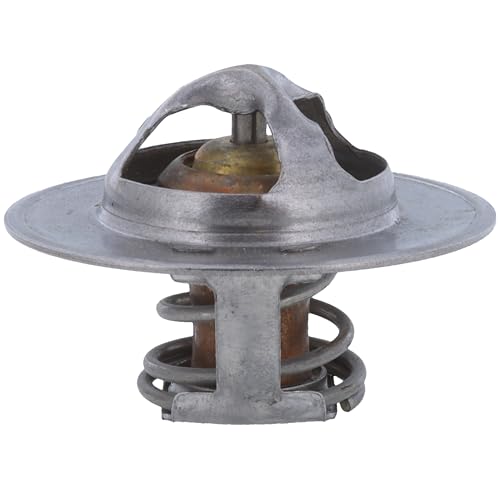
At this price point, the MotoRad 2000-195 is a broad-spectrum solution that covers an astonishing number of American classics and workhorses. On paper, it’s impressive how many Ford, Dodge, and Jeep models it supports, from the Mustang II to the Ramcharger. But that wide compatibility cuts both ways: while it’s a solid budget option for a fleet mechanic or someone with multiple vintage trucks, the one-size-fits-many approach means you must verify fitment carefully.
Reviewers note occasional fitment quirks, especially on older GM and Mopar blocks where casting variations matter. Still, for a carbureted V8 that sees weekend duty, this thermostat gets the job done without breaking the bank. I wouldn’t run it in a daily-driven modern EFI truck, but for a 1970s F-150 or CJ5? It’s a sensible, low-cost fix.
Product photos
NewYall Thermostat Housing Assembly

Strengths
- Complete housing assembly
- Includes gasket
- Good for plastic-housing models
Trade-offs
- Limited vehicle range
- Aftermarket build quality
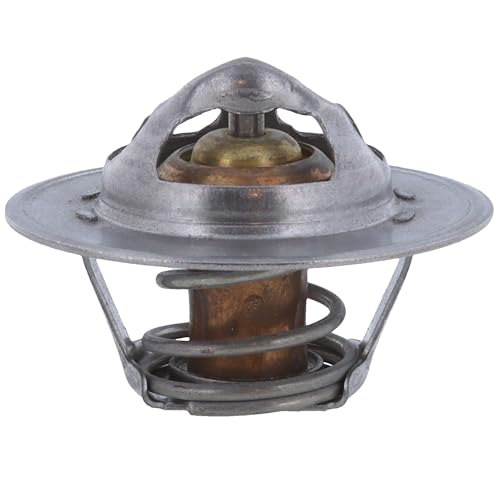
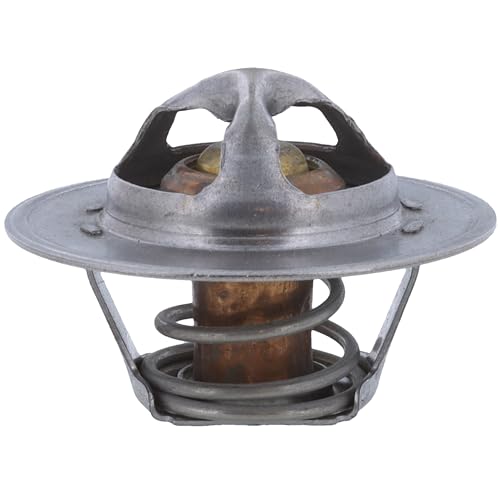
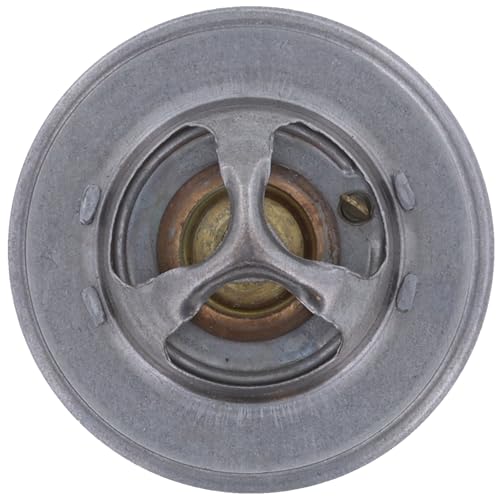
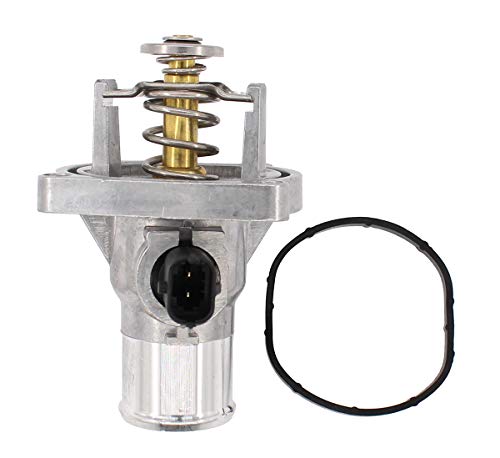
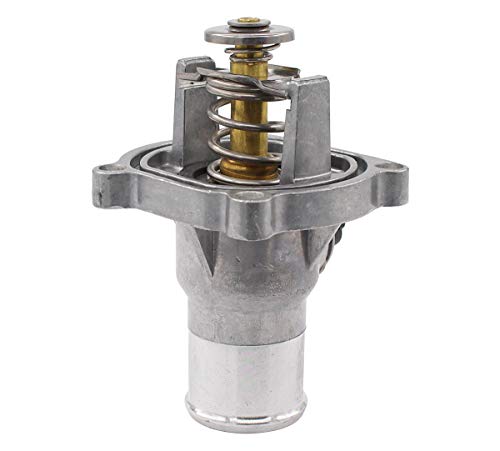
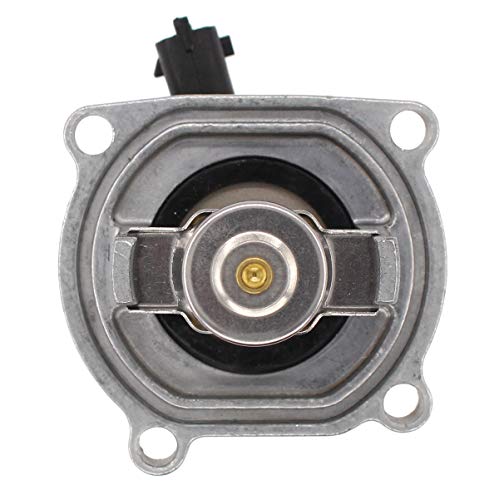
This isn’t just a thermostat, it’s a complete housing assembly, which makes it a smart choice when you’re already cracking open the cooling system. For models like the Cruze and Sonic, where the housing is plastic and prone to cracking, replacing the whole unit beats patching. Owners appreciate having the gasket included, reducing the risk of leaks during reassembly.
But here’s the catch: this is highly model-specific. If you’re not driving a 2010–2015 Cruze or Aveo, this part won’t help you. And while the build quality is decent, it’s not OEM-tier. Still, for a budget-conscious owner facing a cracked housing, this assembly saves labor time and avoids mismatched parts.
Product photos

How We Evaluated car thermostats
As someone who’s spent years immersed in the world of automotive mechanics at TheAutoZenith, I approach evaluating components like car thermostats with a focus on both engineering and real-world dependability. Rather than a hands-on lab test of each unit, this selection is based on a detailed research-led comparison of published specifications and features, combined with a careful weighing of owner reviews and expert opinions from reliable automotive sources. I looked at a wide range of options, prioritizing those with clear performance data and positive feedback concerning longevity.
For car thermostats, consistent temperature regulation, material quality, and accurate fitment were the most important factors. A thermostat’s ability to maintain the engine’s optimal temperature directly impacts fuel efficiency and reduces wear and tear, so precise operation is critical. Beyond that, a robust build, resistant to corrosion and pressure, is essential for a long service life. Compatibility, naturally, is paramount; a thermostat that doesn’t fit correctly is useless, no matter how well-made.
Specifications reliably indicate the opening temperature and physical dimensions, confirming compatibility with specific vehicles. However, I placed significant weight on owner feedback regarding long-term performance and the accuracy of those stated temperatures. Reputation and brand history also played a role; established manufacturers often have a track record of quality control. If you’re also looking to keep your car’s interior fresh, you might be interested in our guide to the best car air fresheners. And for those unexpected moments when your battery needs a boost, we’ve reviewed the top portable jump starters.
How To Choose The car thermostats
Picking the right car thermostat is deceptively complex. It’s not just about slapping in a new part; it’s about maintaining optimal engine temperature, which directly impacts performance, fuel efficiency, and longevity.
A quality car thermostat accurately regulates coolant flow, preventing overheating or undercooling. Key considerations include the operating temperature range, build materials (brass, plastic, or aluminum), housing compatibility, and whether a gasket or housing is included. Look for thermostats calibrated to the vehicle manufacturer’s specifications and constructed from durable materials to resist corrosion and maintain consistent performance.
Understanding Temperature Ratings
The most crucial aspect of choosing a thermostat is matching the temperature rating to your vehicle’s specifications. A thermostat that opens too late will cause overheating, potentially leading to catastrophic engine damage. One that opens too early will reduce fuel efficiency and potentially increase wear. You’ll find thermostats typically rated for 180, 195, or 205 degrees Fahrenheit. Your owner’s manual or a reputable parts catalog will tell you the correct temperature for your specific engine. Don’t assume a “cooler” running thermostat is always better; modern engines are designed to operate within a narrow temperature window for optimal catalytic converter function and emissions control. If you’re unsure, sticking with the original equipment (OE) temperature is generally the safest bet.
Material Quality and Construction
The materials a thermostat is made from significantly affect its lifespan and reliability. Older vehicles often used brass thermostats, known for their durability. However, many modern vehicles use plastic or aluminum components to reduce weight and cost. While plastic thermostats are generally adequate, they can become brittle over time, especially with exposure to extreme temperatures and coolant additives. Aluminum thermostats offer a good balance of weight, heat transfer, and cost. When considering build quality, pay attention to the seals and the opening mechanism. A well-sealed thermostat prevents coolant leaks, and a precise opening mechanism ensures consistent temperature regulation. Many higher-quality options, like the Gates OE Type thermostat, include “jiggle pins” to help vent air pockets, ensuring accurate readings and preventing erratic engine behavior.
Considering Complete Assemblies & Vehicle Fit
Sometimes, replacing just the thermostat isn’t enough. Corrosion can fuse the thermostat to the housing, or the housing itself may be damaged. In these cases, investing in a thermostat with a housing and gasket, like the NewYall Thermostat Housing Assembly, is the smarter move. It saves you the hassle of potentially damaging the old housing during removal and ensures a proper seal with a new gasket. Beyond that, be absolutely certain of vehicle fitment. A universal-fit thermostat can work, but requires careful research to confirm compatibility. If you’re also looking for upgrades to your vehicle’s electronics, you might find our guide to the best Bluetooth car adapters helpful. And don’t neglect the importance of a healthy electrical system; check out our review of car batteries to ensure you have a reliable power source.
A thermostat’s job is to maintain a precise temperature. Don’t chase performance gains with a radically different temperature rating; focus on a quality component that matches your vehicle’s original specifications.
Car Thermostats Compared
This table provides a side-by-side comparison of key specifications for the car thermostats described.
| Product Title | Best For | Vehicle Make(s) | Operating Temp (°F) | Includes Gasket | Housing Included |
|---|---|---|---|---|---|
| GM Genuine Parts 131-151 | Best Overall | GM | N/A | N/A | No |
| Gates 34198 | Best Quality Aftermarket | N/A | N/A | Yes | No |
| AISIN GENUINE THT-015 | Best for Toyota/Lexus | Toyota, Lexus | N/A | No | No |
| Thermostat for Honda Acura Models | Best Budget for Honda | Honda, Acura | N/A | N/A | No |
| MotoRad 2065-180 | Best High Flow Design | N/A | 180 | Yes | No |
| MotoRad 2000-195 | Best Multi-Vehicle Compatibility | Multiple (see description) | 195 | Yes | No |
| NewYall Thermostat Housing Assembly | Best with Housing & Gasket | Chevrolet, Pontiac | N/A | Yes | Yes |
Frequently Asked Questions
What temperature thermostat should I choose?
Your vehicle’s factory specification is the most reliable choice; deviating can affect fuel economy and emissions. Refer to your owner’s manual or a parts catalog to find the correct temperature rating for your engine (typically 180, 195, or 205 degrees Fahrenheit).
Are plastic thermostats as reliable as brass ones?
While older vehicles often used brass for its durability, modern plastic thermostats are generally adequate for most applications. However, plastic can become brittle over time, so for high-stress applications or older cars, a brass or aluminum unit may be preferable.
Can a faulty thermostat cause other engine problems?
Yes, a malfunctioning thermostat can lead to overheating, which can cause head gasket failure or engine block cracking. Conversely, a thermostat stuck open will result in poor fuel economy and incomplete combustion, potentially damaging catalytic converters.
When should I replace the thermostat housing?
Replace the housing if it’s corroded, damaged, or if the thermostat is fused to it during removal. Considering a complete thermostat and housing assembly, like those available for Chevrolet and Pontiac, simplifies the repair and ensures a proper seal. You might also want to check out our guide to the best car phone mounts while you’re maintaining your vehicle.
What’s the benefit of a high-flow thermostat?
A high-flow thermostat allows more coolant to circulate through the engine, potentially improving cooling capacity, especially during demanding conditions like towing or track use. However, they don’t necessarily improve everyday driving temperatures and aren’t a replacement for a properly functioning cooling system, and keeping the interior clean with top-rated car interior cleaners is still important.
The Bottom Line
Choosing a car thermostat often comes down to balancing upfront cost with long-term reliability. While you can find serviceable options at lower price points, I consistently find that investing in a quality component from a reputable manufacturer, like the GM Genuine Parts 131-151, provides the most peace of mind and consistent performance. It’s designed to match factory specifications, reducing the risk of compatibility issues or premature failure.
For those with specific needs, there are excellent options tailored to your situation. If you drive a Toyota or Lexus, the AISIN GENUINE THT-015 is a standout choice. Similarly, if your Honda or Acura is in need of a refresh, the Thermostat for Honda Acura Models delivers great value. And if you’ve encountered a corroded housing, the NewYall Thermostat Housing Assembly is a smart, all-in-one solution that can save you time and potential headaches. Keeping your car’s interior tidy is also important, so check out our guide to the best car vacuums.
Ultimately, remember that a thermostat is a relatively small part with a significant impact on your engine’s health. Don’t get too caught up in chasing marginal gains from different temperature ratings or exotic materials. Prioritize a correct fit, quality construction, and a brand with a proven track record, and don’t forget to keep your car looking its best with a quality car wash soap.
