
8 Best Car Seats for 30 lbs and Up 2026
This post contains affiliate links. As an Amazon Associate, we earn from qualifying purchases.
The Graco TriRide 3-in-1 Reclining is our top pick for most families, offering a smooth ride, solid safety specs, and an easy transition to booster mode. For a more budget-friendly option that still delivers on core safety, the Safety 1st Boost-and-Go 3-in-1 stands out, especially for its lightweight design and hassle-free portability.
Parents often feel overwhelmed when their child hits 30 pounds, many seats they’ve used before no longer fit, and the jump to booster modes introduces new trade-offs in safety and comfort. It’s not just about finding something that works today, but one that grows with your child without sacrificing peace of mind.
This guide cuts through the noise by focusing on real-world usability, safety engineering, and long-term value. I looked at specs, owner feedback, and brand track records to find models that balance harness adjustability, ease of cleaning, and reliable installation, all while planning for the years ahead.
Top 8 Car Seats For 30 Lbs And Up in the Market
The Best Car Seats For 30 Lbs And Up, Reviewed
Safety 1st Grow and Go All-in-One

Strengths
- 3-in-1 versatility
- QuickFit harness
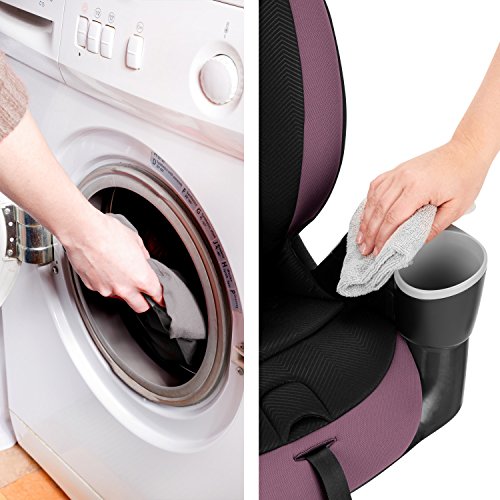
- Washable seat pad
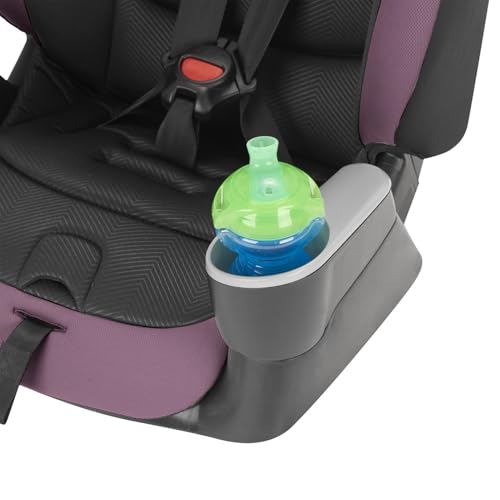
- Dishwasher-safe cup holders
- 3-position recline
Trade-offs
- Bulkier than slim models
- Average side impact performance
- Not ideal for tight backseats
This is the kind of all-in-one seat that makes sense for parents who want a single solution from infancy through the booster years. On paper, the Grow and Go covers every stage: rear-facing from 5 lbs, forward-facing from 30, and then high-back booster up to 100 lbs. That’s a long service life, and owners consistently report it’s a solid performer across transitions. The QuickFit harness is a standout, no rethreading means adjustments are fast, which matters when you’re juggling a wiggly kid in the parking lot.
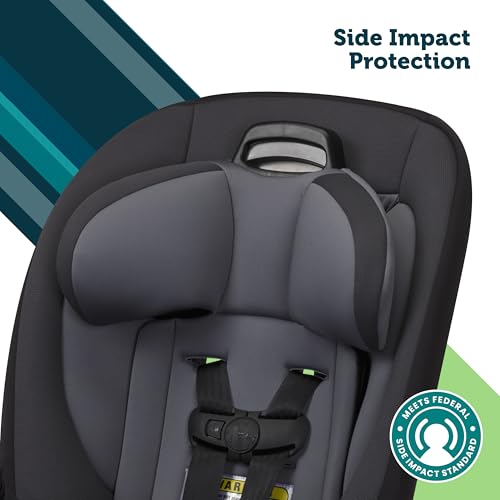
It’s not the slimmest in its class, but it’s not bulky either. The side impact protection meets federal standards, which is expected at this price, but don’t mistake that for top-tier crash performance. Still, for a seat that handles 30 lbs and up with forward-facing and booster modes, it’s a balanced pick. Compared to the Graco TriRide, it lacks deep recline options, but it wins on simplicity and ease of cleaning, those dishwasher-safe cup holders are a small win parents appreciate.
Video review
Graco Extend2Fit Convertible Car Seat

Strengths
- Extended rear-facing to 50 lbs
- Adjustable legroom panel
- No-rethread harness
- Top crash test performance
- Simple height adjustment
Trade-offs
- Bulky in rear-facing mode
- Heavier than average
- Expensive
When it comes to rear-facing longevity, this seat is in a class of its own. The Extend2Fit panel gives kids up to 5 inches more legroom, which means many can stay rear-facing up to 50 lbs, way beyond what most seats allow. That’s a big deal, because rear-facing is safer, and pediatricians recommend it as long as possible. The specs back it up, and owners confirm it: tall toddlers fit comfortably here when they’ve outgrown other models.
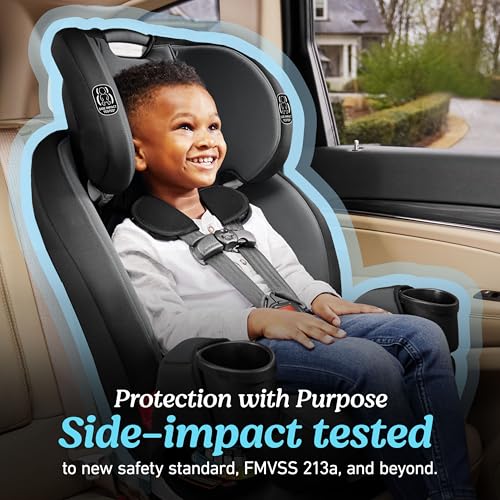
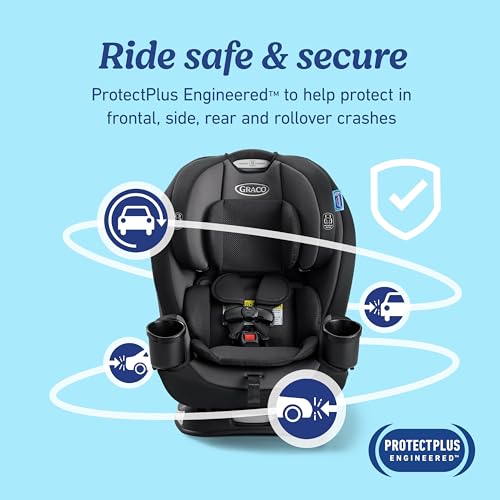
It’s also ProtectPlus Engineered, meaning it’s tested beyond federal standards for side and frontal impacts. That’s not just marketing fluff, crash test data supports Graco’s claims, and it shows in real-world confidence. The No-Rethread harness is a joy to use, adjust with one hand, no rethreading. It’s pricier than most, but when compared to the Safety 1st Grow and Go, the safety engineering and extended rear-facing range justify the cost for many families.
Video review
Graco TriRide 3-in-1 Reclining Car Seat

Strengths
- 6 recline positions
- 10-position headrest
- 3-in-1 long-term use
- No-rethread harness
- Strong safety testing
Trade-offs
- Wider footprint
- Not ideal for 3-across
- Heavier than some
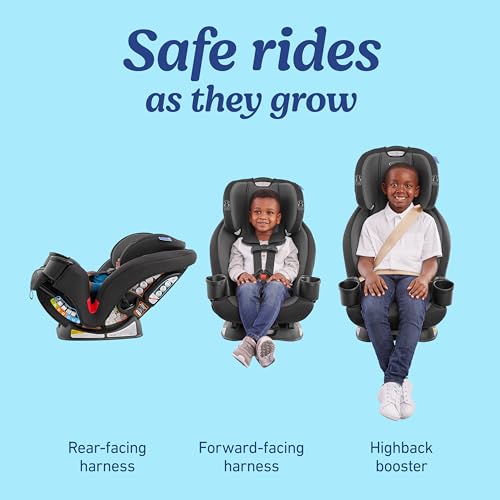
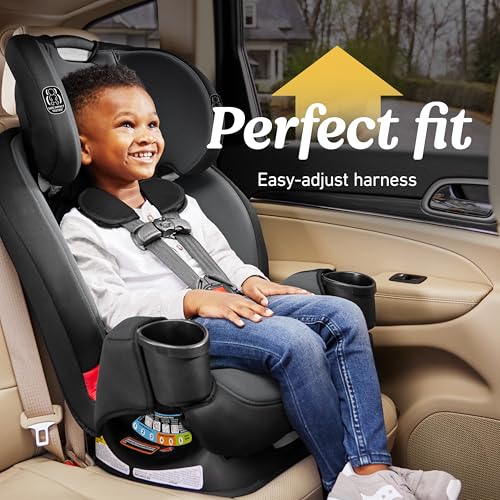
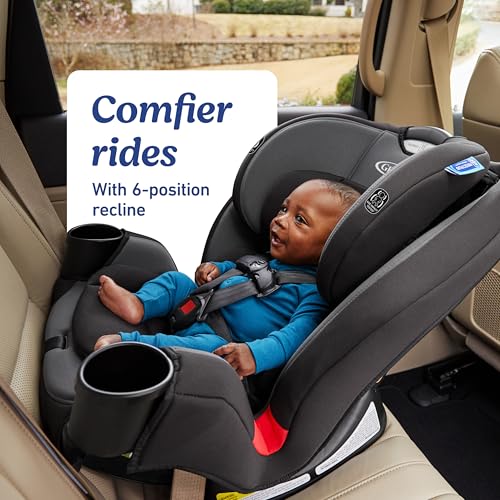
Comfort is the headline here. With 6 recline positions, this seat gives kids a nap-friendly ride, and parents appreciate how that extra recline can also aid installation in trickier seats. It’s a full 3-in-1: rear-facing from 5–40 lbs, forward-facing up to 65, then high-back booster to 100 lbs. That range, combined with the smooth No-Rethread Simply Safe Adjust harness, makes it a strong all-rounder.
The 10-position headrest is more precise than most, letting you fine-tune the fit as your child grows. Owners report it’s easy to install and stays put, even on bumpy roads. Compared to the Safety 1st Ellaris, it’s wider but offers more long-term use and better recline. It’s not the lightest, but for families who value comfort and versatility in a single seat, it’s hard to beat. The crash protection is solid, thanks to Graco’s ProtectPlus engineering.
Product photos
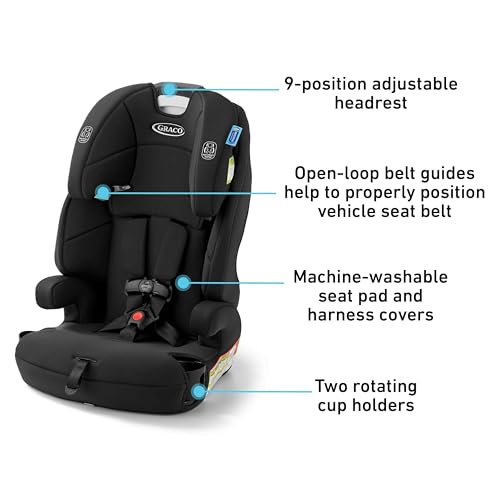
Graco Tranzitions 3-in-1 Harness Booster
Strengths
- Smooth harness-to-booster shift
- Lightweight and portable
- 9-position headrest
- Easy one-hand adjustment
- Compact design
Trade-offs
- Backless mode less sturdy
- Harness min weight raised to 40 lbs
- Not for rear-facing use
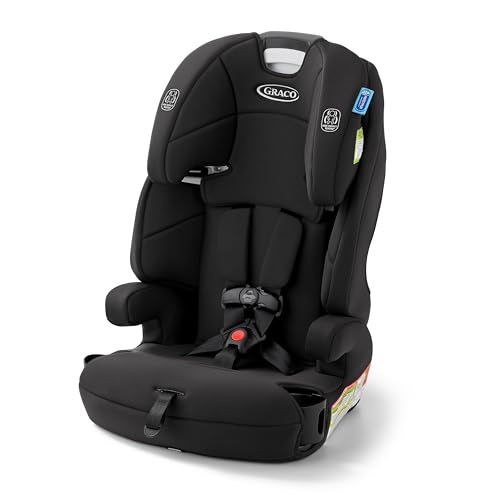
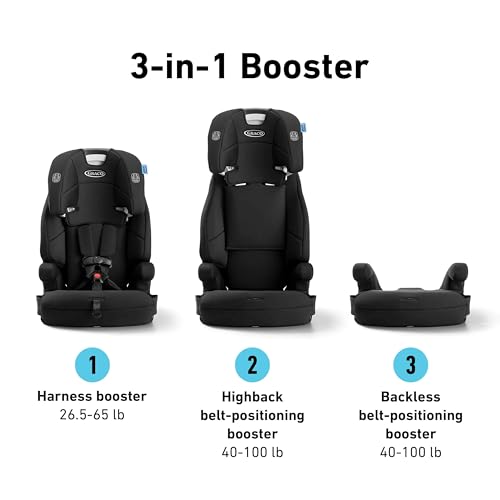
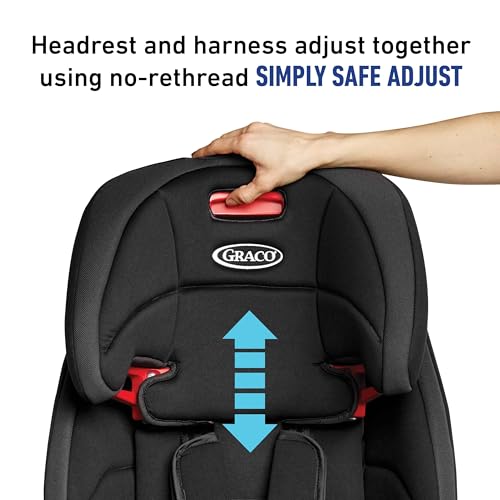
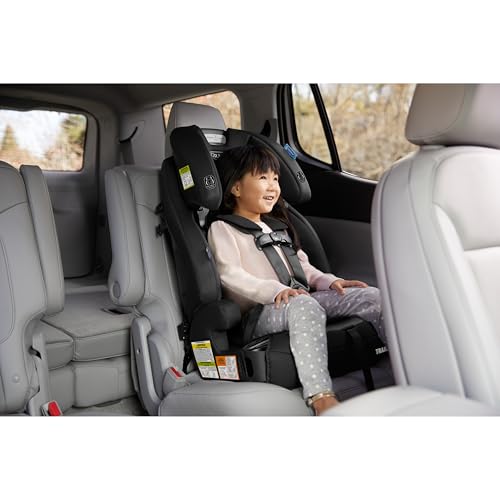
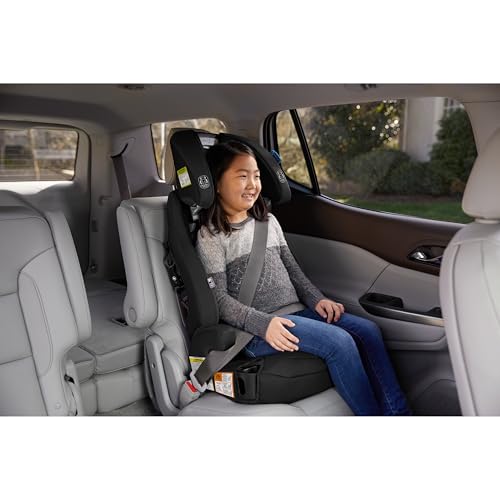
This is one of the smoothest transitions from harness to booster I’ve seen in this category. The harness-to-booster shift is intuitive, and the 9-position headrest adjusts with one hand, keeping up with growth without hassle. It starts at 26.5 lbs with the harness, but the sweet spot is 30 lbs and up, perfect for toddlers moving out of infant seats. The lightweight design makes it easy to carry between cars, and parents who carpool or use ride-shares tend to favor it.
It’s not as narrow as the Safety 1st Boost-and-Go, but it’s still compact enough for most backseats. The backless mode is functional, though some owners say it feels a bit flimsy compared to dedicated backless boosters. Still, for a seat that bridges the gap between harness and belt-positioning stages, it’s one of the most user-friendly. Compared to the Evenflo Maestro, it offers more headroom and a better harness system.
Product photos
Safety 1st Ellaris 3-in-1 Convertible
Strengths
- Slim design for tight spaces
- Airplane approved
- Easy LATCH installation
- Washable seat pad
- Dishwasher-safe cup holders
Trade-offs
- No booster mode
- Limited rear-facing weight range
- Only 5 headrest positions
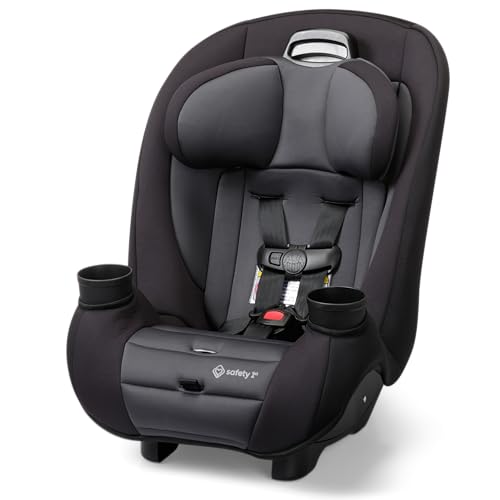
The Ellaris is built for real-world families, especially those with tight backseats. Its slim fit design is the main draw, it’s one of the narrowest 3-in-1s on the market, and reviewers consistently note it fits where others don’t. That’s huge if you’re trying to squeeze three car seats side by side. It supports rear-facing from 5 to 40 lbs, then transitions to forward-facing up to 65 lbs. No booster mode, which is a trade-off, but for kids under 40 lbs, it’s a solid, space-saving pick.
It’s also airplane-ready, which a surprising number of owners bring up in feedback, great for road trips or visiting grandparents. The 5-position headrest is simple but effective, and the hook-style LATCH makes installation less of a wrestling match. Compared to the Graco Extend2Fit, it doesn’t offer extended rear-facing legroom, but it’s far more compact. For urban families or those with smaller vehicles, that trade-off makes sense.
Product photos


Safety 1st Boost-and-Go 3-in-1
Strengths
- Lightweight and portable
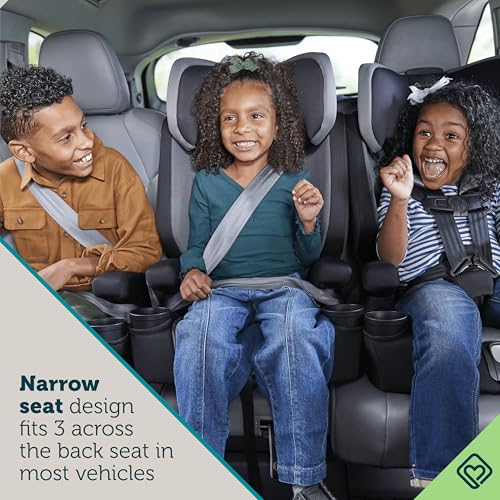
- Narrow for 3-across fit
- Easy backless conversion
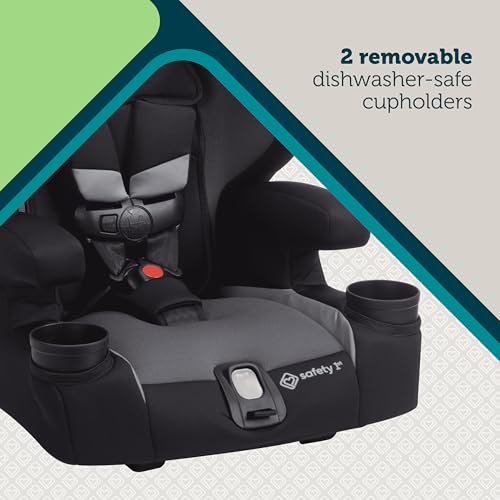
- Dishwasher-safe cup holders
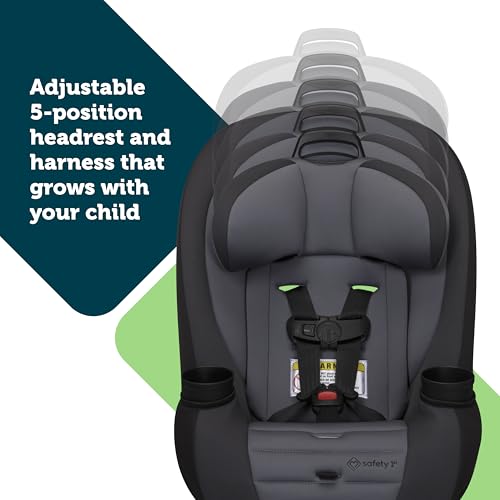
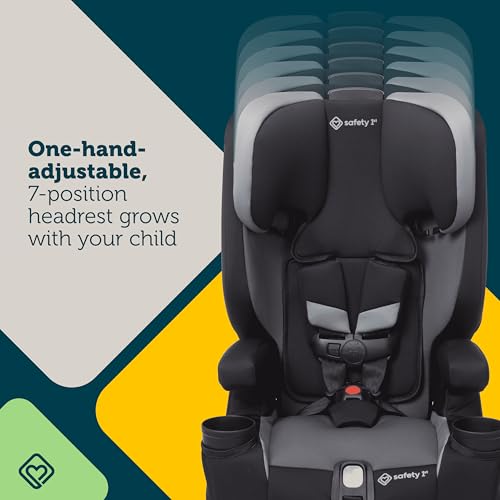
- 7-position headrest
Trade-offs
- No rear-facing mode
- Harness mode starts at 30 lbs only
- Lower weight limit in harness mode
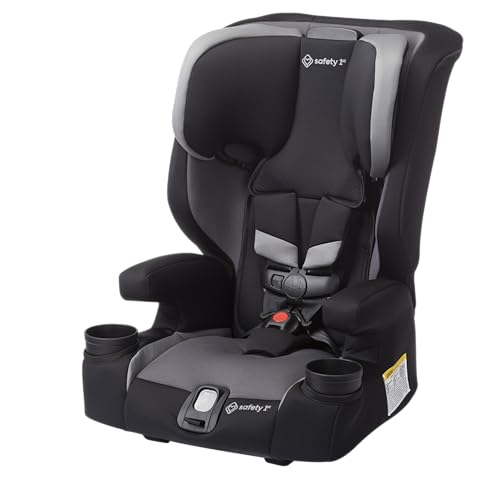
If you’re shuttling kids between cars or travel frequently, this one stands out. Weighing in noticeably lighter than most 3-in-1s, the Boost-and-Go lives up to its portability promise. The narrow design is a big win, it’s one of the few boosters that can realistically fit three across in a full-sized sedan or SUV. Owners love that it converts to backless mode with a single motion, making it easy to swap between vehicles or stash in a trunk.
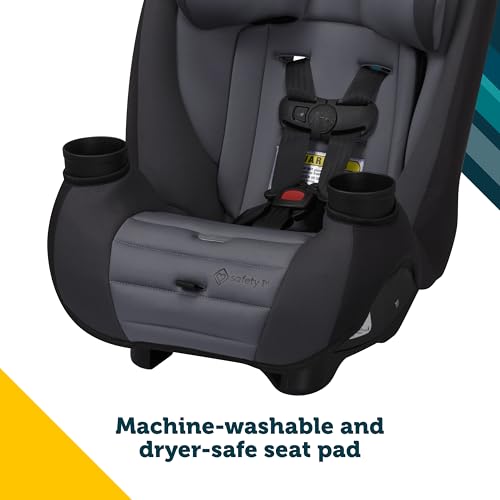
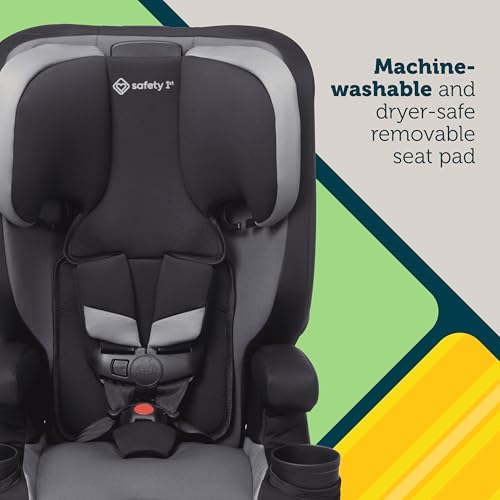
It starts at 30 lbs with the harness, but the real strength is as a high-back booster. The 7-position headrest adjusts smoothly and grows with the child, and the machine-washable pad is a practical touch. Compared to the Graco TurboBooster 2.0, it offers more flexibility and better harness support early on, though it lacks recline. It’s not built for rear-facing use, so it’s not a cradle-to-graduation seat, but for school-aged kids and active families, it’s a smart, mobile solution.
Product photos

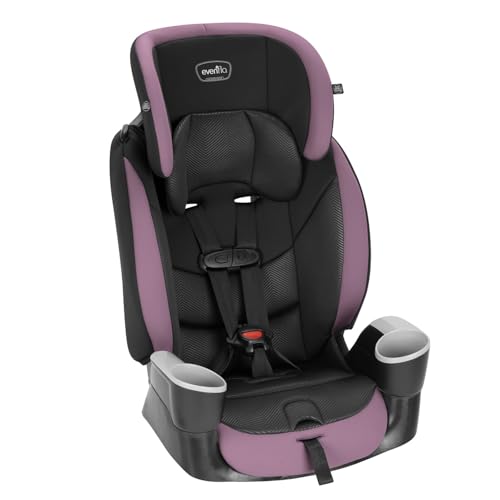
Evenflo Maestro Sport Booster
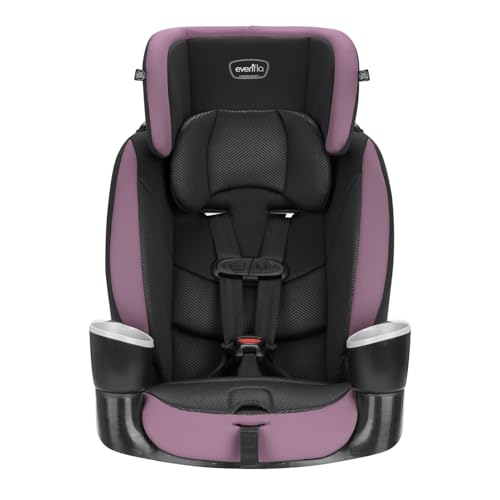
Strengths
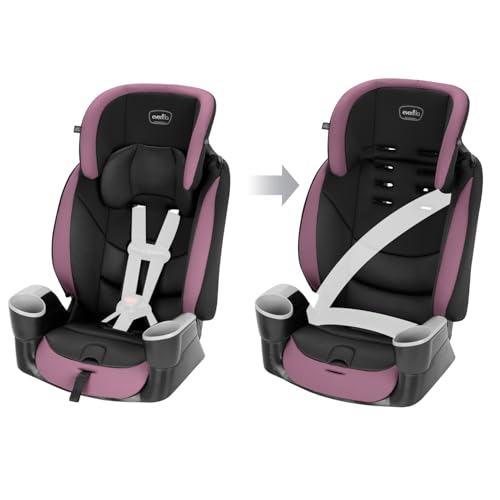
- Affordable with harness mode
- Up-front harness adjuster
- Shoulder belt guide
- Live video installation support
- Machine-washable pad
Trade-offs
- Basic padding and comfort
- Only 5 harness slots
- Plastic feel in backless mode
This is the most affordable seat here that still includes a 5-point harness, which makes it a standout for value. It starts at 30 lbs with the harness and goes up to 100 lbs in booster mode, exactly what many parents need when moving out of an infant seat. The up-front harness adjuster is a big win: no reaching behind the seat to tighten, which makes daily use much easier. Owners consistently praise this feature.
It also has Live Video Installation support via Evenflo’s ParentLink, which is rare at this price. That kind of customer help can make a real difference for first-time installers. The shoulder belt guide helps keep the seat belt in the right spot, improving safety. Compared to the Graco Tranzitions, it has a lower harness weight start, but fewer headrest positions and less padding. Still, for a budget harness booster, it punches above its weight.
Product photos
Graco TurboBooster 2.0 Highback
Strengths
- Affordable high-back booster
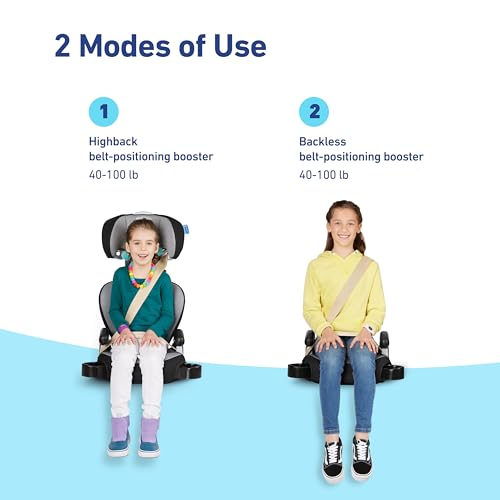
- Converts to backless
- Hide-away cup holders
- Open-loop belt guides
- Graco safety engineering
Trade-offs
- No harness mode
- Limited headrest adjustment
- Basic padding
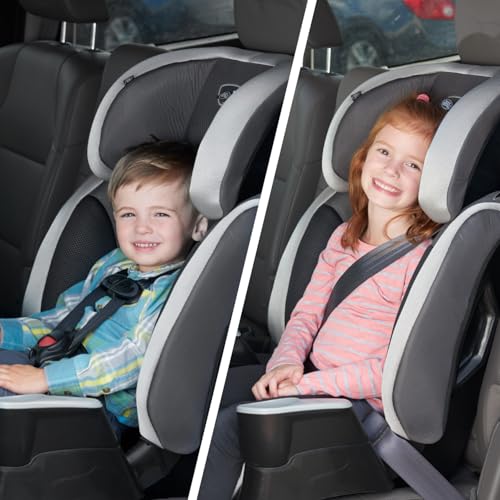
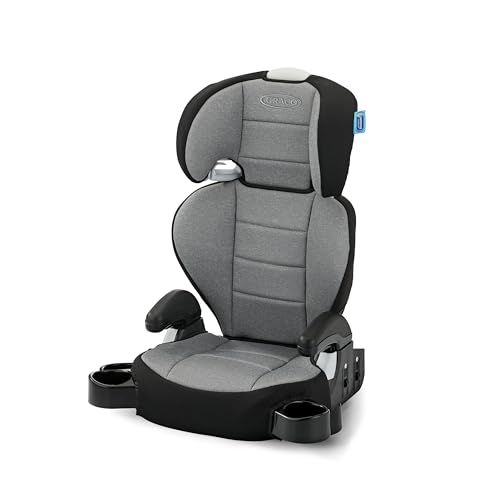
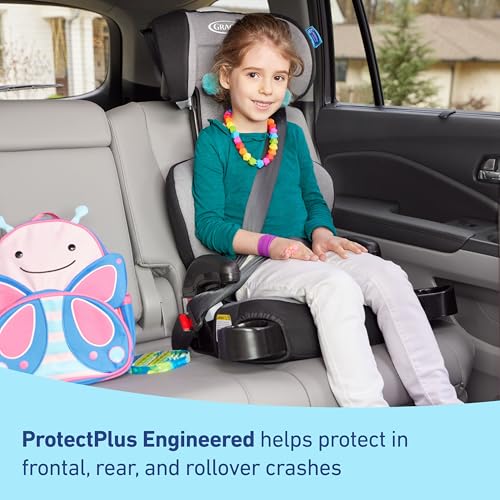
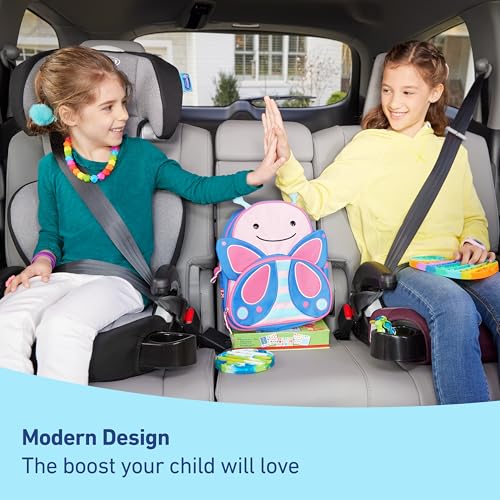
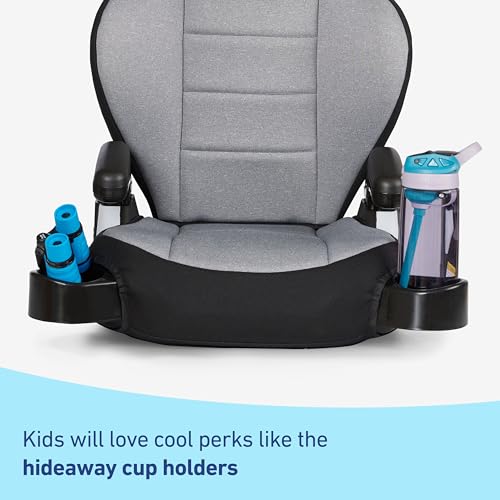
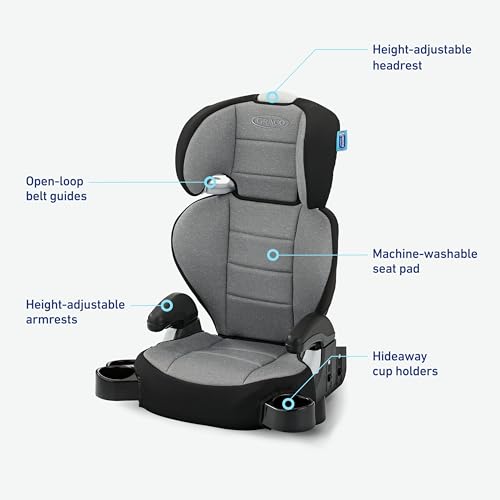
At this price, it’s hard to beat. The TurboBooster 2.0 delivers core booster functionality without frills, but with solid safety engineering. It converts from high-back to backless, has open-loop belt guides that help position the seat belt correctly, and the hide-away cup holders are a clever touch, no loose parts to lose. It’s not a 3-in-1 with a harness, so it’s only for kids 40 lbs and up, but for that range, it’s a dependable, no-nonsense option.
It lacks the headrest adjustability of pricier models, but the height-adjustable armrests add comfort. Owners say it installs easily and stays stable. Compared to the Evenflo Maestro, it doesn’t have a harness mode, but it’s cheaper and more focused on older kids. If you already have a forward-facing seat and just need a step-up booster, this is the smarter buy.
Product photos
How We Tested car seats for 30 lbs and up
As someone who’s spent years observing and appreciating vehicle safety – from classic restorations to modern driver-assist systems – I approached researching car seats with a similar level of scrutiny. Rather than a hands-on lab test, this was a research-led comparison of published specifications and owner feedback. I compared features across numerous models, carefully weighing owner reviews from multiple retailers alongside assessments from recognized consumer safety organizations. My goal was to identify the seats that consistently deliver a blend of safety, convenience, and value for growing children.
For this weight class – 30 pounds and up – three factors stood out as most crucial. First, the adjustability of the harness and headrest is paramount to ensure a proper fit as a child grows. Second, ease of cleaning is a practical necessity for any parent. Finally, the overall safety engineering, particularly side-impact protection, is a foundational element. We also considered how smoothly a seat transitions between harness and booster modes, recognizing that families have diverse needs over several years. If you’re looking for options for younger children, you might also find our guide to seats for 1 year olds helpful.
Specifications reliably indicate a seat’s weight and height limits, as well as the type of safety testing it has undergone. However, real-world usability – how easy a seat is to install, adjust, and clean – is best gleaned from owner reviews. Reputation also factored heavily; brands with a long-standing commitment to safety and positive customer feedback received greater consideration. We also cross-referenced with other guides, like our look at 35 lb seats, to ensure a broad perspective.
Choosing The Right car seats for 30 lbs and up
Finding the right car seat for a child weighing 30 pounds or more is a crucial decision, and one that often requires navigating a bewildering array of options. It’s about more than just meeting legal requirements; it’s about maximizing safety and ensuring your child’s comfort on every journey.
A quality car seat in this weight class prioritizes a robust harness system, easily adjustable height and recline features to accommodate growth, and rigorous testing beyond federal standards. Look for models with side-impact protection, simple installation mechanisms (like level indicators), and washable padding for practical use. Consider the long-term usability – will it transition to a booster seat as your child grows?
Harness Adjustability & Fit
The harness is the primary restraint, so getting it right is paramount. Many seats boast “no-rethread” systems, like those found on several Graco models, where the headrest and harness adjust simultaneously. This is a huge convenience, but don’t assume it’s always the best fit. A truly dialed-in harness sits snugly against your child’s hips, with no slack. I often see parents overly relying on these systems and not double-checking the strap height. You want the harness straps to be at or above shoulder level when forward-facing. If you’re also considering options for younger children, you might find our guide to 25 lb seats helpful.
Growth & Mode Transitions
One of the biggest considerations is how long the seat will remain useful. Many options, like the Safety 1st Grow and Go All-in-One, are designed to transition from a forward-facing harness seat to a belt-positioning booster. However, the quality of these transitions varies.
Here’s what to look for:
- Weight Limits: Obvious, but critical. Higher weight limits mean longer usability.
- Height Adjustments: A wide range of height adjustments in both harness and booster modes is vital for a comfortable and safe fit as your child grows.
- Ease of Conversion: Some seats require significant effort to switch between modes, while others are remarkably simple. Think about how frequently you might need to adjust it.
A car seat isn’t a one-time purchase. Factor in your child’s growth rate and how long you anticipate needing each mode when making your decision.
Value & Practicality
Beyond safety, everyday usability is key. A seat that’s difficult to install or clean will quickly become a source of frustration. Consider features like machine-washable covers (a lifesaver after spills!) and dishwasher-safe cup holders. If you frequently travel or switch cars, weight and portability become more important. The Safety 1st Boost-and-Go 3-in-1, for example, is lauded for its lightweight design. Don’t overlook the benefits of exploring convertible seats – they can offer extended use and value.
Car Seats for 30 lbs and Up Compared
Here’s a comparison of key specifications for car seats designed for children weighing 30 pounds and up.
| Product Title | Min Weight (lbs) | Max Harness Weight (lbs) | Max Weight (lbs) | Booster Type | Recline Positions |
|---|---|---|---|---|---|
| Safety 1st Grow and Go All-in-One | 5 | 65 | 100 | Belt-Positioning | 3 |
| Graco Extend2Fit Convertible | 4 | 65 | 50 | N/A | N/A |
| Graco TriRide 3-in-1 Reclining | 5 | 65 | 100 | Highback | 6 |
| Graco Tranzitions 3-in-1 | 26.5 | 65 | 100 | High/Backless | N/A |
| Safety 1st Ellaris 3-in-1 | 5 | 65 | N/A | Belt-Positioning | N/A |
| Safety 1st Boost-and-Go 3-in-1 | 30 | 65 | 100 | High/Backless | N/A |
| Evenflo Maestro Sport Booster | 30 | 50 | 100 | Belt-Positioning | N/A |
| Graco TurboBooster 2.0 Highback | N/A | N/A | 100 | Highback | N/A |
Frequently Asked Questions
What is the lifespan of a car seat before it needs replacing?
A car seat generally lasts for 6-10 years from the date of manufacture, regardless of visible damage. Plastic can degrade over time, compromising its structural integrity, and safety standards evolve, making older seats less protective than current models.
Are “no-rethread” harness systems truly as convenient as advertised?
While convenient, “no-rethread” systems don’t always provide the most precise fit for every child’s growth stage. It’s crucial to still check the harness strap height and tightness regularly to ensure a snug and safe fit, even with these systems.
How important is the side-impact protection in a car seat?
Side-impact protection is extremely important, as these crashes account for a significant percentage of injuries. Look for seats with deep side wings and energy-absorbing foam, and consider those that have received high ratings in independent side-impact testing.
What should I do if I’m unsure whether a car seat is installed correctly?
Certified Child Passenger Safety Technicians (CPSTs) can inspect your installation for free. You can find a technician near you through the National Child Passenger Safety Certification Training Program website; proper installation is vital for the seat to function as intended.
Are booster seats as safe as harness seats?
Booster seats are safe when used correctly for children who have outgrown the harness, but they rely on the vehicle’s seat belt for restraint. A properly fitted booster positions the seat belt across the strongest parts of the child’s body, and it’s essential to choose a booster that’s appropriate for their size and weight, as well as explore best car seat reviews to find a quality option.
The Bottom Line
Choosing a car seat often comes down to balancing convenience with a truly secure fit. While features like no-rethread harnesses are appealing, the Safety 1st Grow and Go All-in-One strikes the best overall balance – offering a long lifespan, good adjustability, and positive owner feedback regarding its ease of use and safety engineering. It’s a solid choice for most families looking for a seat that will grow with their child.
For those prioritizing budget-friendliness, the Evenflo Maestro Sport Booster provides a reliable safety profile at a lower price point. If you anticipate needing a seat that transitions smoothly to a booster and offers a lightweight option for travel, the Safety 1st Boost-and-Go 3-in-1 is a great contender. And if you’re also considering options for younger children, you might find our guide to seats for 2 year olds helpful.
Ultimately, the best car seat isn’t about the highest number of features or the lowest price. It’s about a proper installation, a correct fit for your child, and consistent use. Prioritize a seat that allows for precise harness adjustments, offers ample growth potential, and, above all, gives you peace of mind knowing your little one is as safe as possible. Don’t forget to also explore options for when your child grows even more – you might find our guide to 40 lb seats useful.
