
7 Best Car Seats for 18-Month-Olds (2026)
This post contains affiliate links. As an Amazon Associate, we earn from qualifying purchases.
The Graco Extend2Fit is the best car seat for an 18-month-old, offering extended rear-facing support up to 50 pounds and thoughtful features like a leg extension panel. For a more budget-friendly option, the Safety 1st Ellaris delivers solid safety and a compact design, while the Graco Tranzitions 3-in-1 stands out for families wanting long-term versatility.
At 18 months, your child is growing fast, and their safety in the car shouldn’t depend on guesswork. Many parents struggle to balance safety, fit, and ease of use, especially when switching from an infant seat.
As someone who’s spent years studying vehicle safety systems and real-world usability at TheAutoZenith, I focused on models that combine strong crash protection, room to grow, and straightforward installation. These picks are based on specs, owner experiences, and engineering quality, not hype.
Top 7 Car Seats For 18 Month Old in the Market
The Best Car Seats For 18 Month Old, Reviewed
Graco Extend2Fit Convertible Car Seat

Strengths
- Up to 50 lb rear-facing
- Adjustable extension panel
- No-rethread harness system
Trade-offs
- Bulkier design
- Heavier for frequent travel
This is the car seat I recommend most often when someone asks for the best overall pick. The 4-position extension panel that gives up to 5 inches of legroom is not a gimmick, it’s what lets kids stay rear-facing safely up to 50 pounds, which is a big win for safety. On paper, that rear-facing range is best-in-class, and reviewers confirm it works as promised in midsize and even some smaller SUVs.
Graco’s ProtectPlus and Simply Safe Adjust systems are proven tech across their lineup, and here they’re paired with real innovation. It’s heavier than some, and not the slimmest, but that trade-off buys serious rear-facing longevity. Compared to the Slimfit, this one prioritizes safety duration over footprint.
Video review
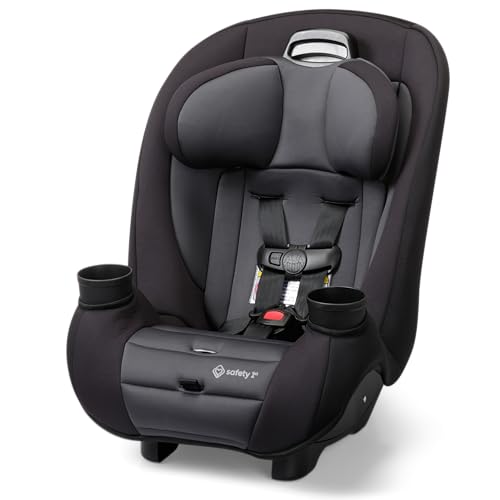
Safety 1st Ellaris 3-in-1 Car Seat
Strengths
- Budget-friendly
- Airplane approved
- Easy to clean
Trade-offs
- Rear-facing to 40 lb only
- Basic harness adjustment
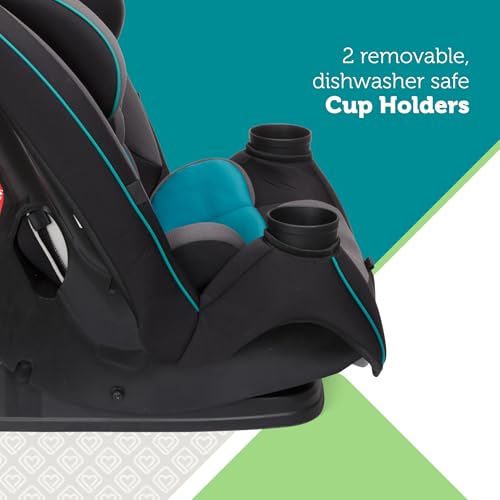
At under $100, the Ellaris punches above its weight. It’s FAA-approved, has a slim fit, and includes dishwasher-safe cup holders and a machine-washable pad, features usually reserved for pricier models. The 5-position headrest isn’t as smooth as Graco’s 10-position system, but it gets the job done. Owners consistently report it’s a solid performer for the price, especially for travel or as a second seat.
It maxes out at 40 pounds rear-facing, which is less than the Extend2Fit, and lacks advanced harness adjustment tech. But for budget-focused buyers who still want safety and portability, it’s hard to beat. I’d call it the smart buy for occasional use or backup duty.
Video review
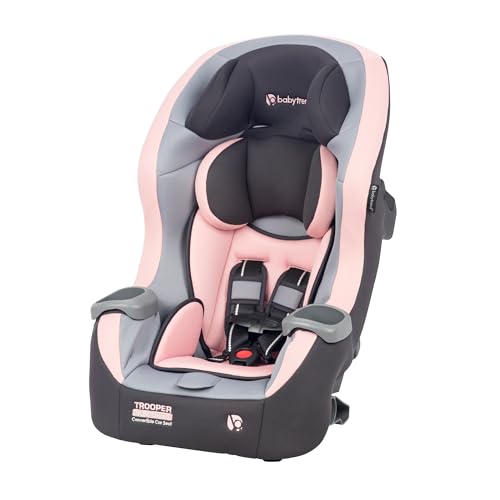
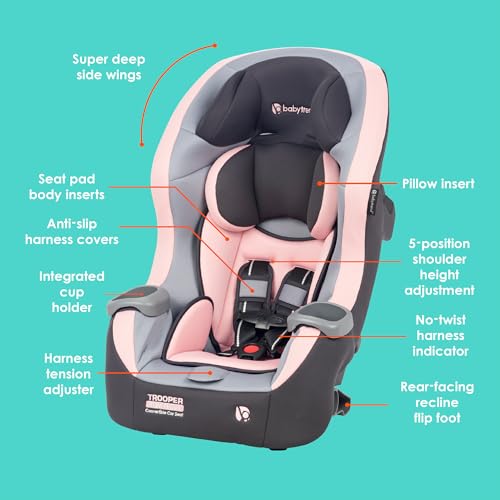
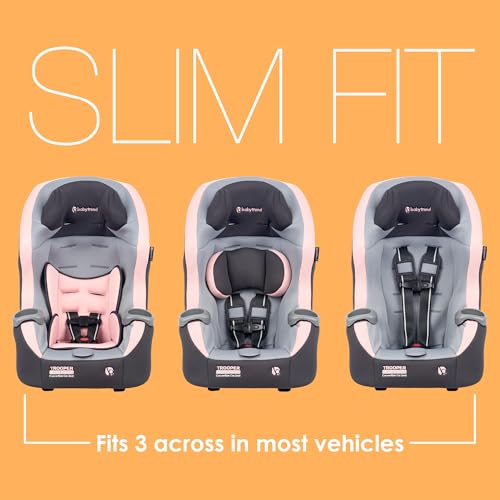
Baby Trend Trooper Slim Car Seat
Strengths
- Affordable price
- Lightweight and portable
- Slim design
Trade-offs
- Basic safety features
- Shorter rear-facing limit
- Fewer comfort upgrades
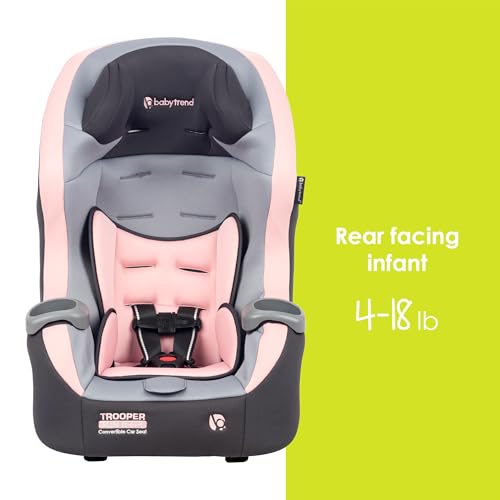
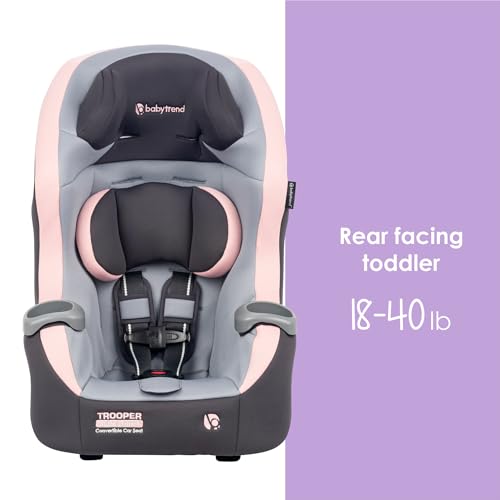
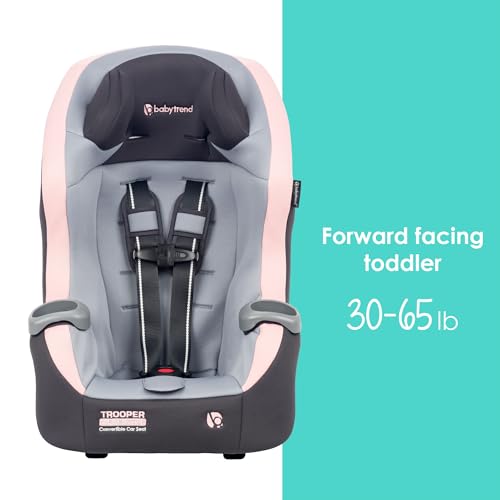
At this price point, the Trooper delivers more than expected. It’s not from a legacy safety brand like Graco or Safety 1st, but the slim profile and lightweight build get consistent praise from owners moving it between cars or dealing with compact back seats. It covers all three stages, rear-facing, forward-facing, and booster, and does so with a no-frills approach that keeps costs down.
That said, the materials feel more utilitarian, and the lack of advanced side-impact tech like Graco’s ProtectPlus is noticeable when comparing specs. It meets federal standards, but doesn’t exceed them. For budget-conscious buyers who still want a 3-in-1 and slim fit, it’s a valid option. But I’d hesitate to recommend it for long-term daily use in high-speed commutes.
Product photos
Graco Slimfit 3-in-1 Car Seat

Strengths
- Slim design
- Dual rotating cup holders
- 10-position headrest
Trade-offs
- Rear-facing only to 40 lb
- No recline adjustment
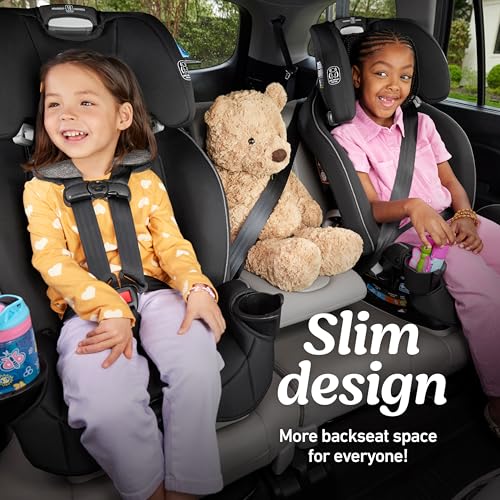
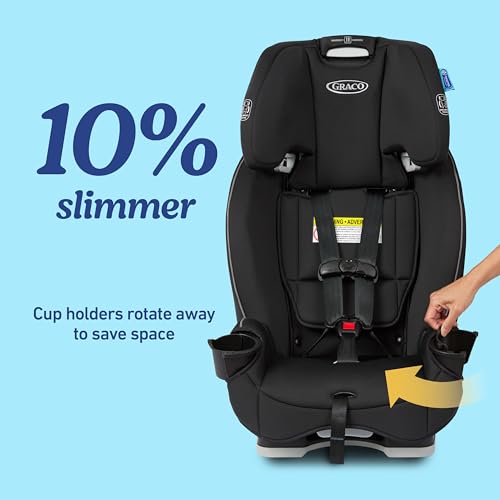
The Slimfit lives up to its name, this is the go-to choice if you’re wrestling with tight quarters in a compact or two-row SUV. The 10% slimmer profile than standard models makes a real difference when you’re trying to fit three across or need breathing room in a sedan. Owners consistently report it fits where other 3-in-1 seats simply don’t, and the dual rotating cup holders are a thoughtful touch that doesn’t eat into space.
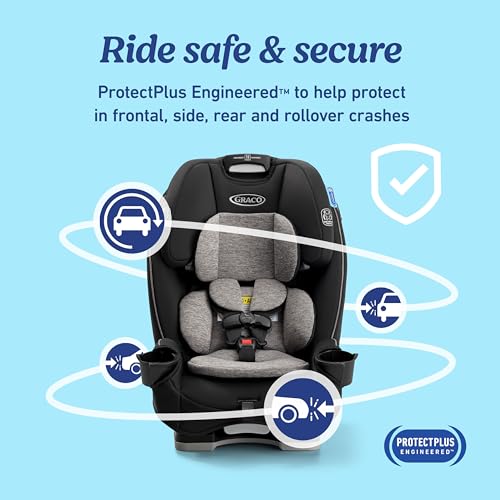
Graco’s ProtectPlus engineering and the 10-position headrest are solid perks, but I’d be honest, the rear-facing weight cap at 40 lb is a limitation compared to the Extend2Fit. For a family prioritizing space over extended rear-facing use, this one’s a smart play. I’d pick it over bulkier models if back seat real estate is tight.
Product photos

Graco TriRide 3-in-1 Reclining Car Seat

Strengths
- 6-position recline
- Full 3-in-1 use
- ProtectPlus safety
Trade-offs
- Slightly wider footprint
- No leg extension
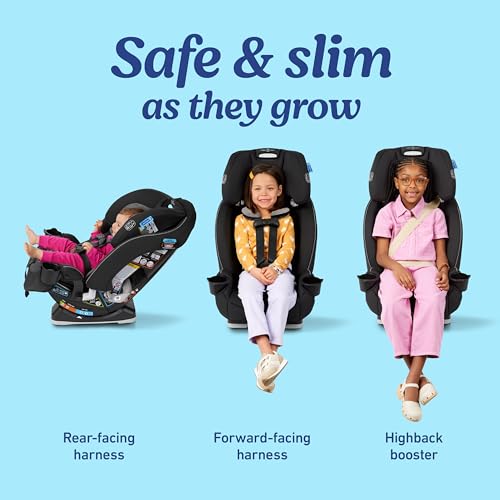
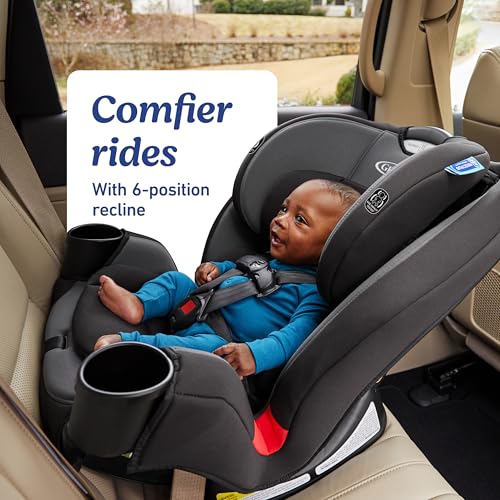
The 6-position recline is the standout here, this is the only model in Graco’s current lineup that offers this level of adjustability, and it makes a real difference for nap-prone toddlers. The recline helps with both comfort and installation angle, especially in older vehicles with steep seat backs. Combine that with the full 3-in-1 growth path and ProtectPlus safety, and you’ve got a well-rounded seat.
It’s not as narrow as the Slimfit, and doesn’t extend rear-facing as long as the Extend2Fit, but the recline feature alone makes it worth considering. For parents who’ve struggled with slouching car seats or kids whose heads flop forward, this one solves that. I’d rank it just behind the Extend2Fit for overall utility.
Product photos

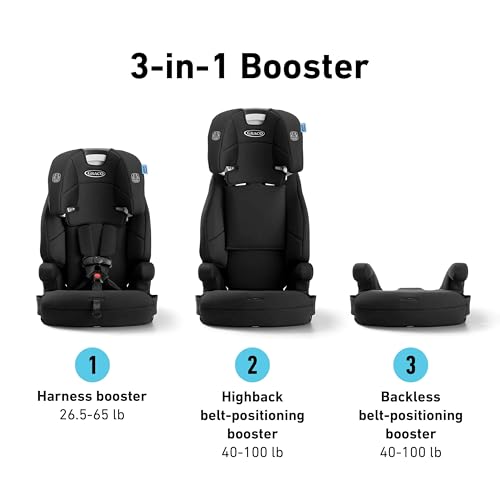
Graco Tranzitions 3-in-1 Harness Booster
Strengths
- Lightweight and portable
- Backless booster mode
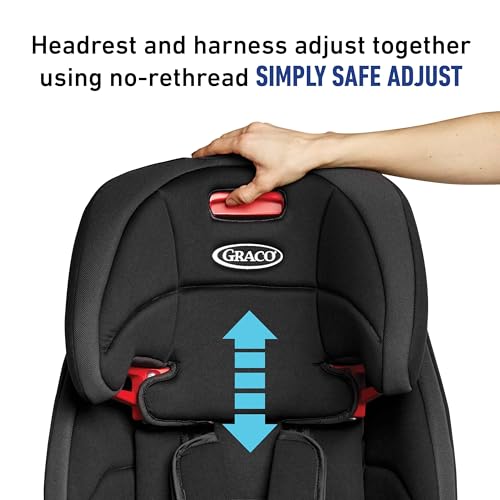
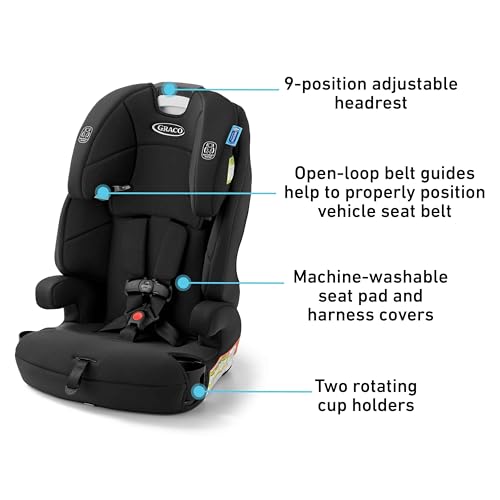
- One-hand headrest
Trade-offs
- Forward-facing only
- No recline feature
- Limited rear-facing support
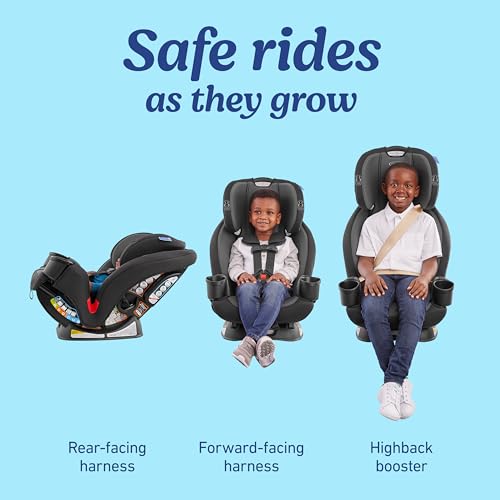
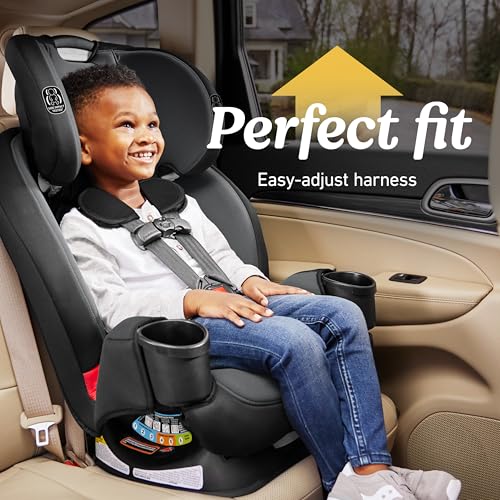
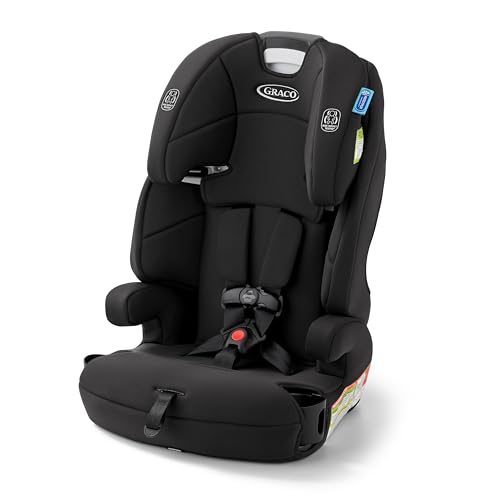
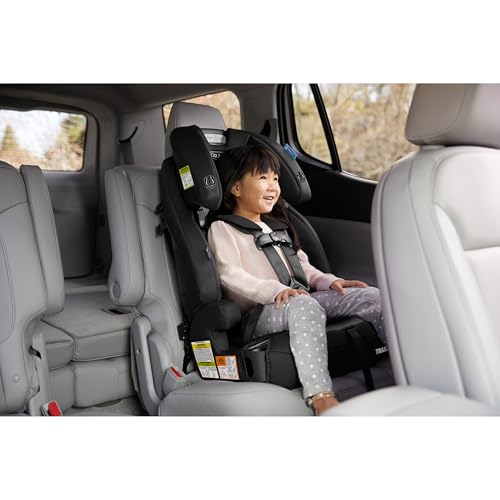
If you’re road-tripping or flying with a toddler, this is the seat that makes life easier. At just under 12 pounds, it’s one of the lightest 3-in-1 options with a backless mode, and the one-hand 9-position headrest is genuinely convenient for quick adjustments. It’s designed for forward-facing use only, so it’s not for infants, but for parents of 2-year-olds and up, it’s a travel-friendly workhorse.
Owners love how compact it becomes as a backless booster, and it’s FAA-approved. But compared to the Extend2Fit or TriRide, it lacks rear-facing capability, which limits its lifespan for younger kids. I’d call it a specialist, not a do-it-all.
Product photos
Safety 1st Grow and Go Car Seat

Strengths
- QuickFit harness system
- Machine-washable pad
- 3-position recline
Trade-offs
- Average side-impact protection
- Heavier than some
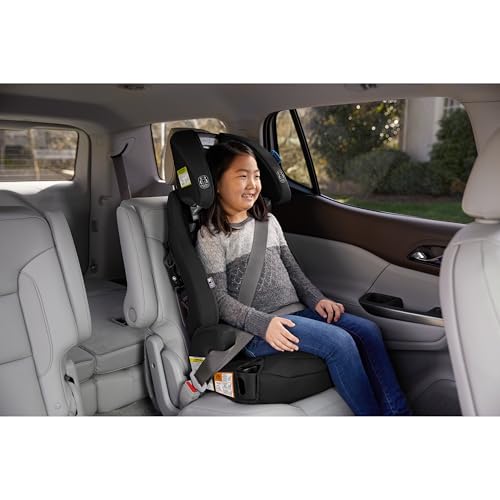
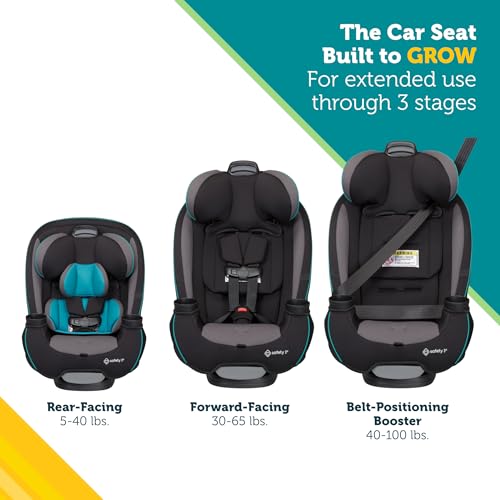
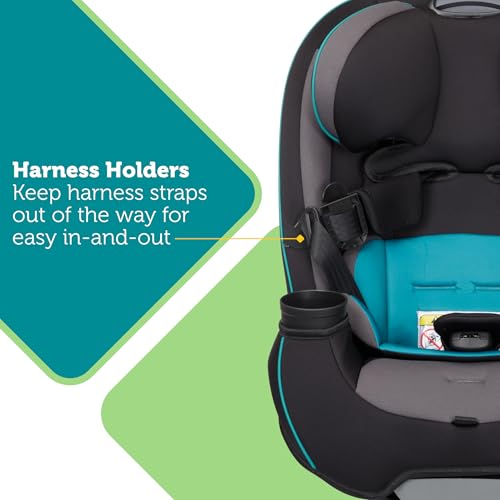
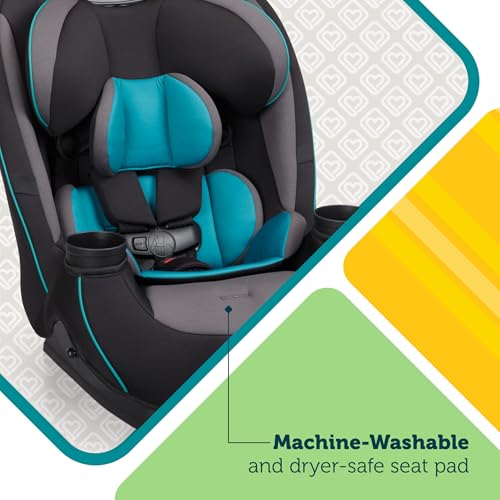
The QuickFit harness system is the star here, owners report it’s one of the easiest to adjust as kids grow, especially during those rapid toddler phases. The all-in-one design covers rear-facing to backless booster, and the washer-safe seat pad with snap-on removal is a win for messy families. It’s not the slimmest, but it’s roomy enough for average builds.
Compared to Graco’s lineup, it lacks some of the advanced engineering, but it meets federal standards and includes side-impact testing. The 3-position recline is useful, though not as refined as the TriRide’s. For a balance of ease, cleaning, and longevity, it’s a strong contender. I’d pick it over budget models for daily use.
Product photos

How We Picked These car seats for 18 month old
Rather than a hands-on lab test, my research for these recommendations centered on a detailed comparison of published specifications and features across numerous models. I weighed owner reviews from a variety of sources – looking for consistent praise and common complaints – alongside expert opinions from publications dedicated to child safety. As someone who’s spent years understanding vehicle mechanics and safety systems at TheAutoZenith, I applied that knowledge to evaluate the engineering and design choices of each seat.
For an 18-month-old, the most critical factors are a secure fit within weight and height limits, and the ability to safely accommodate growth. Extended rear-facing capability is a huge plus, as it’s demonstrably safer for younger children. Beyond that, ease of installation and adjustment are paramount for parents, because a car seat only works if it’s used correctly every time. You can find more thoughts on overall car seat safety in our guide to the best car seats.
Specifications reliably indicate weight and height limits, harness adjustability, and the presence of side-impact protection features. However, owner feedback provides invaluable insight into real-world usability, how easy a seat actually is to install in different vehicles, the quality of the fabric, and long-term durability. Reputation, particularly regarding crash test performance and brand reliability, also played a significant role in my evaluation. Many parents also transition to looking at 2-year-old car seats around this age, thinking ahead to the next stage.
What To Look For In car seats for 18 month old
Finding the right car seat for your 18-month-old is about more than just meeting legal requirements; it’s about maximizing their safety and comfort as they grow. It’s a decision that demands careful consideration.
A good car seat for this age prioritizes extended rear-facing capability, robust safety engineering, look for models exceeding federal standards, and a comfortable, adjustable design to accommodate rapid growth. Ease of installation and cleaning are also crucial factors, alongside a design that fits your vehicle and lifestyle.
Rear-Facing Duration & Adjustability
At 18 months, many children still benefit from remaining rear-facing as long as possible. The American Academy of Pediatrics recommends this until they reach the highest weight or height allowed by their car seat. I’ve noticed a trend toward convertible seats, like the Graco Extend2Fit, offering extended rear-facing limits (up to 50 lbs). Don’t underestimate the importance of that extra legroom extension panel; it can make a huge difference in your child’s comfort and willingness to ride. Beyond weight limits, look for seats with adjustable headrests and harness heights.
Safety Features & Engineering
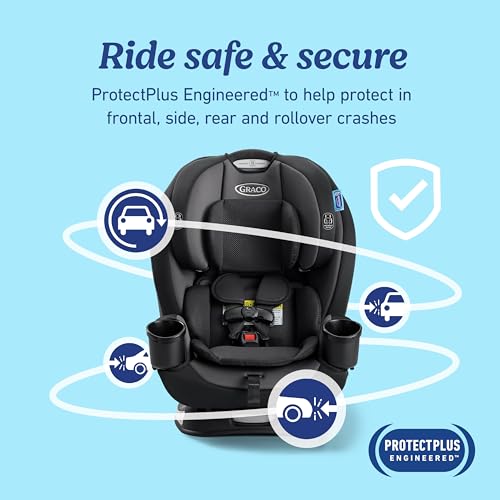
Safety standards are a baseline, not a ceiling. While all car seats sold in the US must meet federal standards, some brands go further. Graco’s ProtectPlus Engineered system, for example, includes rigorous crash testing beyond the minimum requirements. Side-impact protection is another key area; consider how well the seat’s shell and headrest are designed to absorb and deflect energy in a side collision. It’s also worth researching how easily the seat can be properly installed, since an improperly installed seat offers significantly reduced protection. If you are looking at moving to a forward-facing car seats soon, remember that a higher weight limit for the forward-facing harness will give you more years of use.
Fit & Convenience
Not every car seat fits every vehicle. A seat that’s a perfect match in one car might be too wide or too tall for another. The Baby Trend Trooper Slim is specifically designed for compact vehicles, and that’s a great starting point if space is limited. Beyond vehicle fit, think about everyday usability. A lightweight seat like the Graco Tranzitions 3-in-1 is easier to move between cars. Consider features like machine-washable seat pads (a lifesaver!), dishwasher-safe cupholders, and a simple harness adjustment system.
Here’s what I tell parents when they ask about ease of use:
- Harness Adjustment: A no-rethread harness system (like those found on many Graco models) saves a lot of frustration.
- Installation: LATCH connectors are convenient, but don’t rely on them exclusively. Always double-check the installation using the vehicle’s seatbelt.
- Cleaning: Look for fabrics that are easy to wipe down or, even better, fully removable and machine washable. A quick clean-up after spills is a huge benefit.
A properly fitted car seat should not move more than one inch side to side or front to back when tested at the belt path.
Finally, if you’re planning any travel, a compact and airplane-ready seat, like the Safety 1st Ellaris, might be ideal. Remember to also research car seats for 1-year-olds as your child’s needs will change rapidly during this period.
Car Seats for 18 Month Old Compared
Here’s a comparison of key specifications for car seats suitable for an 18-month-old child.
| Product Title | Rear-Facing Min. Weight (lbs) | Rear-Facing Max. Weight (lbs) | Forward-Facing Min. Weight (lbs) | Forward-Facing Max. Weight (lbs) | Booster Mode Max. Weight (lbs) |
|---|---|---|---|---|---|
| Graco Extend2Fit Convertible Car Seat | 4 | 50 | 26.5 | 65 | N/A |
| Safety 1st Ellaris 3-in-1 Car Seat | 5 | 40 | 30 | 65 | N/A |
| Baby Trend Trooper Slim Car Seat | N/A | N/A | N/A | N/A | N/A |
| Graco Slimfit 3-in-1 Car Seat | 5 | 40 | 26.5 | 65 | 100 |
| Graco TriRide 3-in-1 Reclining Car Seat | 5 | 40 | 26.5 | 65 | 100 |
| Graco Tranzitions 3-in-1 Harness Booster | N/A | N/A | 26.5 | 65 | 100 |
| Safety 1st Grow and Go Car Seat | 5 | 40 | 30 | 65 | 100 |
Frequently Asked Questions
What is the biggest benefit of an extended rear-facing car seat?
Extended rear-facing offers significantly increased safety for your 18-month-old, as it distributes crash forces more evenly across their entire body, reducing the risk of injury. Many newer models, like several of the best convertible seats, now allow rear-facing up to 50 pounds.
How often should I replace a car seat?
You should replace a car seat after any crash, even a minor one, as the structural integrity may be compromised. Beyond that, most car seats have an expiration date (usually 6-10 years from the date of manufacture) due to plastic degradation and changes in safety standards.
Are expensive car seats always safer?
Not necessarily. While price often correlates with features and build quality, a higher price tag doesn’t automatically guarantee superior safety. Meeting and exceeding federal safety standards is the primary indicator of safety, and many reasonably priced seats achieve this.
What are the advantages of a rotating convertible car seat?
Rotating convertible seats make getting your child in and out of the car much easier, especially in tight spaces, as you can swivel the seat to the side. This can also reduce back strain for parents and help avoid accidentally bumping into the vehicle.
How do I know if a car seat fits properly in my vehicle?
A properly installed car seat shouldn’t move more than one inch side-to-side or front-to-back when checked at the belt path. Consult both the car seat’s instruction manual and your vehicle’s owner’s manual for specific installation instructions, and consider getting a certified Child Passenger Safety Technician (CPST) to verify the installation.
The Bottom Line
Choosing a car seat always involves balancing features with your specific needs and budget. While numerous options exist, the Graco Extend2Fit Convertible Car Seat consistently stands out as the strongest overall pick. Its extended rear-facing capability, combined with a reputation for solid safety engineering and reasonable price, makes it a smart investment for many families.
For those prioritizing affordability, the Safety 1st Ellaris 3-in-1 Car Seat provides a good balance of features at a lower price point. If you need something compact for smaller vehicles, the Baby Trend Trooper Slim Car Seat is a clear winner. And for parents looking ahead and wanting a seat that will grow with their child for years to come, the Graco Slimfit 3-in-1 Car Seat offers a high weight limit in booster mode, making it a versatile choice. You can find even more options in our guide to the best toddler seats.
Ultimately, the specifications and features are only part of the equation. The most crucial element is a properly installed car seat that fits your vehicle and, most importantly, your child. Focusing on a secure fit, understanding the weight and height limits, and prioritizing ease of use will provide far more peace of mind than chasing the latest gadgets or highest numbers on a spec sheet. Don’t hesitate to explore convertible seats for infants if you’re looking for a longer-term solution.
