
8 Best Car Seat Cushions of 2026
This post contains affiliate links. As an Amazon Associate, we earn from qualifying purchases.
The ComfiLife Gel & Memory Foam Cushion stands out as the best overall car seat cushion, delivering consistent support and pressure relief. For those on a tighter budget, the BlissTrends Memory Foam cushion offers solid performance without breaking the bank. If you need extra height and better posture alignment, the Lofty Aim W-Shaped cushion is a strong versatility pick.
Long hours behind the wheel shouldn’t leave you sore and stiff. Yet so many drivers settle for flimsy cushions that collapse after a few weeks or fail to address real pressure points. As someone who’s spent years immersed in automotive comfort, from restoring vintage interiors to analyzing modern ergonomics, I know how much a well-designed cushion can improve both short commutes and cross-country trips.
This guide cuts through the noise by focusing on what actually matters: proven pressure relief, long-term durability, and practical features like non-slip bases and washable covers. I researched each option based on construction quality, user feedback from long-term owners, and expert insights into spinal support. These picks aren’t just comfortable, they’re built to make driving more sustainable for your body.
Top 8 Car Seat Cushions in the Market
The Best Car Seat Cushions, Reviewed
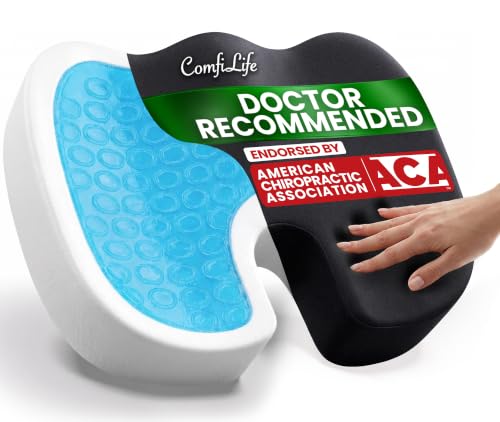
ComfiLife Gel & Memory Foam Cushion
Strengths
- Gel cooling layer
- Doctor-recommended shape
- Non-slip base
Trade-offs
- No lumbar pillow
- Firm feel
- Less height boost
This is the most complete package in the lineup, no single feature dominates, but the balance is unmatched. The gel-infused memory foam delivers both cooling and long-term support, and the U-shaped cutout is precisely sized to relieve tailbone pressure without sacrificing hip stability. Doctors and physical therapists recommend similar designs, and owner testimonials frequently mention reduced sciatica flare-ups during long drives or workdays.
It’s medium-firm, so it won’t feel plush, but that’s by design, this cushion is built to correct posture, not coddle. The non-slip base is among the most reliable, and the zippered velour cover is easy to clean. Compared to the kingphenix, it lacks a back pillow, but its shape and materials make it more adaptable across chairs, cars, and flights. For most people, this is the smarter buy over specialized or budget models.
Video review
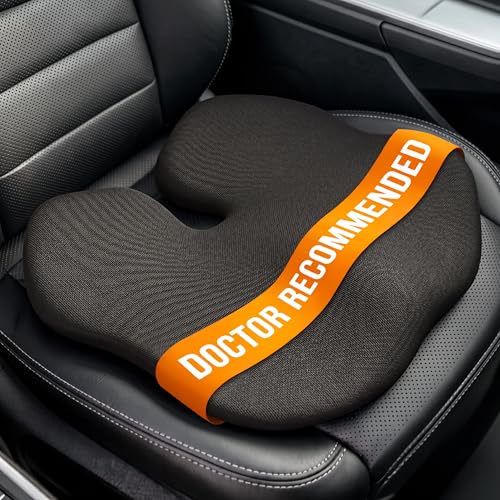
Everlasting Comfort U-Shaped Car Cushion
Strengths
- Deep tailbone relief
- Firm orthopedic support
- Washable cover
Trade-offs
- No cooling gel
- Can feel too high
- Less height stability
The deep U-shaped cutout is the hero here, engineered specifically to offload coccyx pressure, which many users with tailbone injuries or post-surgical needs highlight in reviews. The high-density foam provides firm, lasting support without bottoming out, and the contoured shape aligns well with the natural curve of the pelvis. It’s one of the few that feels truly orthopedic, not just comfort-focused.
While it lacks gel or advanced cooling, the breathable cover helps, and the machine-washable feature adds convenience. It performs best on firm seats; in soft, sagging car seats, the cushion can feel too tall or unstable. Compared to the Lofty Aim, it’s less aggressive in pelvic tilt but superior in tailbone relief. For anyone dealing with coccydynia or prolonged sitting pain, this deserves serious consideration.
Video review
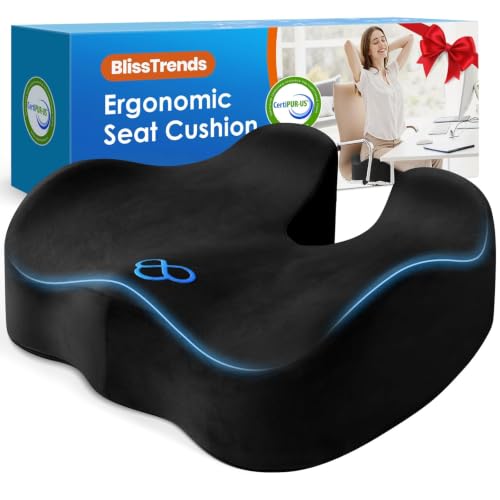
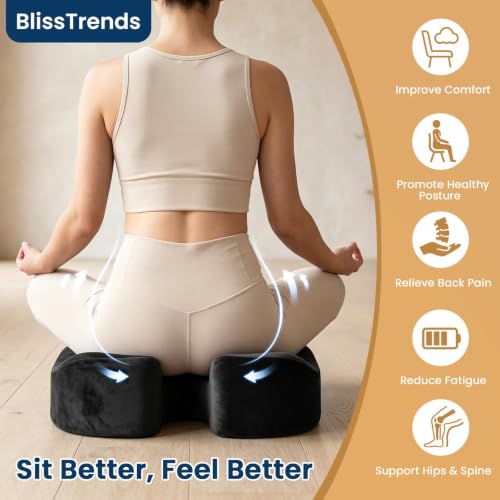
BlissTrends Memory Foam Seat Cushion
Strengths
- Affordable price
- Firm support
- Machine-washable cover
Trade-offs
- No cooling tech
- Basic design
- Less ergonomic shaping
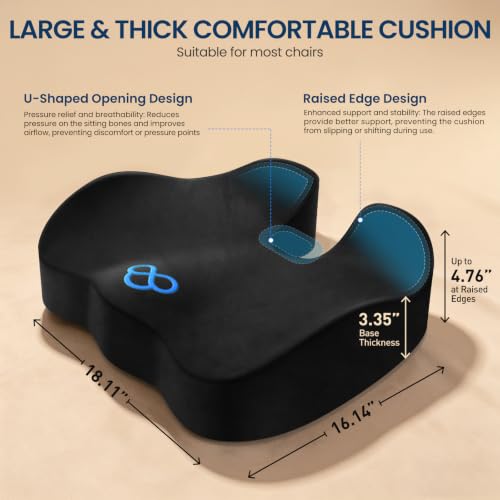
At this price, you’re getting solid fundamentals without frills. The 3.3-inch center thickness delivers real support, and the high-density foam maintains shape well according to long-term owners. The velvet cover feels soft and the anti-slip bottom works adequately on most surfaces, though it’s not as aggressive as rubber-dotted bases on pricier models.
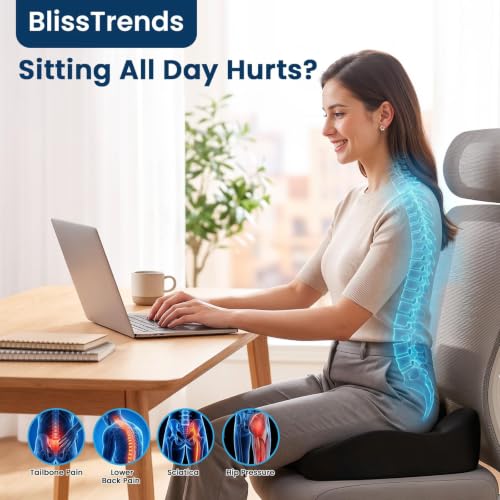
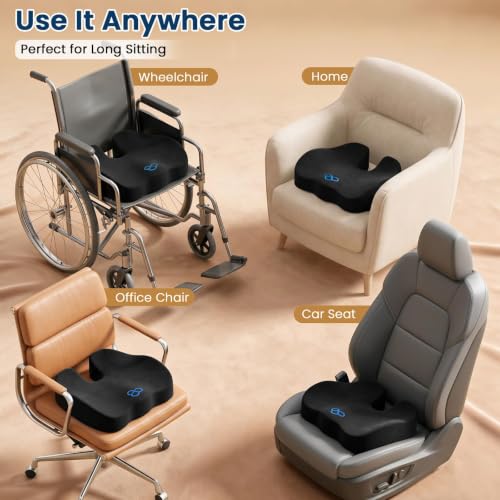
It lacks advanced features like cooling gel or a carry handle, and the design is more generic than the Lofty Aim or ComfiLife. But for someone who just needs reliable relief from tailbone or hip pressure without overspending, this is a no-brainer. Compared to the CushZone, it’s less portable but slightly firmer, better for heavier users. I’d recommend this as the smart budget pick unless you need specialized cooling or lumbar integration.
Product photos
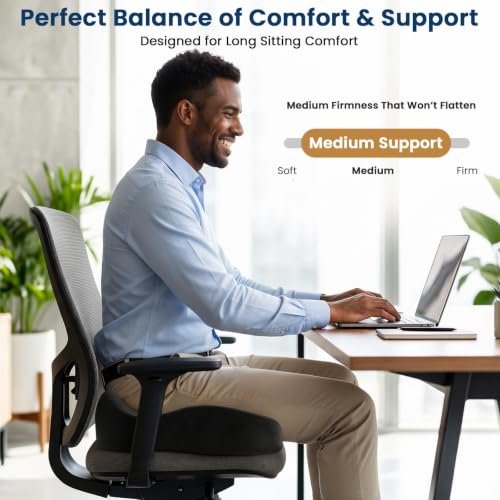
Wedge Car Seat Cushion

Strengths
- Firm support
- Height boost
- Non-slip strap
Trade-offs
- Minimal cooling
- Narrow fit for wide seats
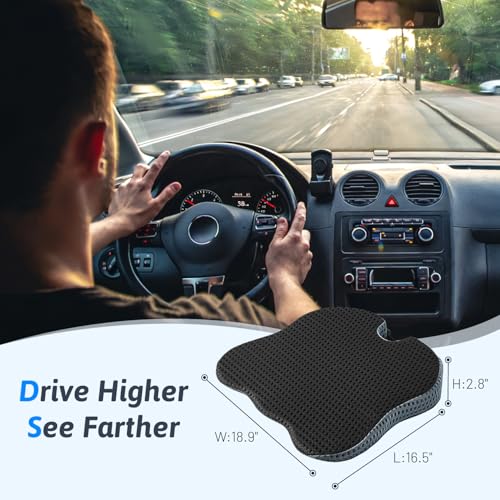
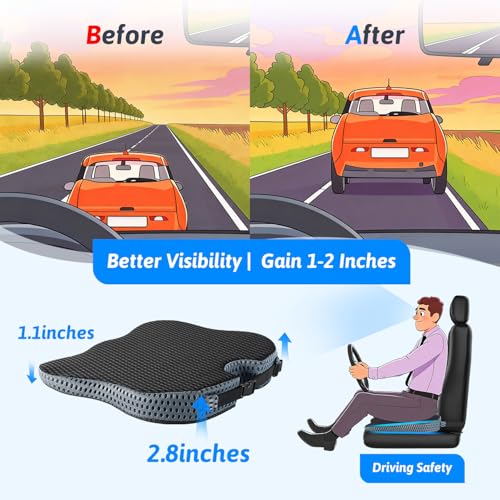
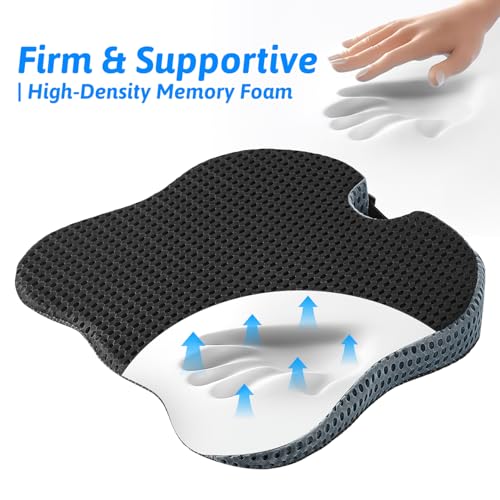
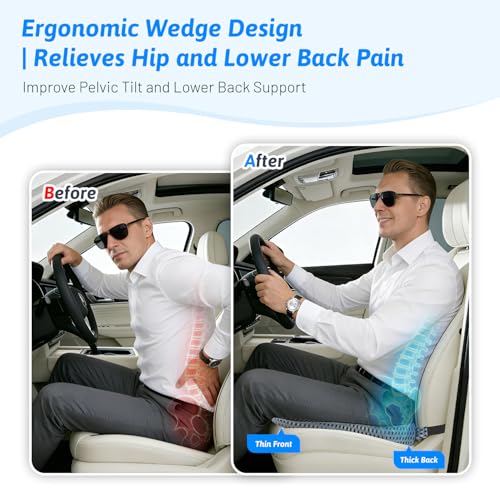
This wedge cushion stands out if you’re short on height, not comfort. The 1–2 inch lift is modest on paper, but owners consistently report it makes a real difference in forward visibility, especially in deeper bucket seats where shorter drivers feel buried. That’s a safety win, not just a comfort tweak. The high-density memory foam doesn’t collapse under pressure, which helps maintain pelvic tilt and reduces lower back strain over time.
It’s not the plushiest option, but that’s the point. The firm support targets posture and sciatica relief by encouraging a slight forward lean, and the non-slip base with strap keeps it anchored during entry and exit, something many similar cushions fail at. Compared to thicker gel models, this one trades cooling for structural integrity, making it better for drivers who prioritize stability over breathability.
Product photos
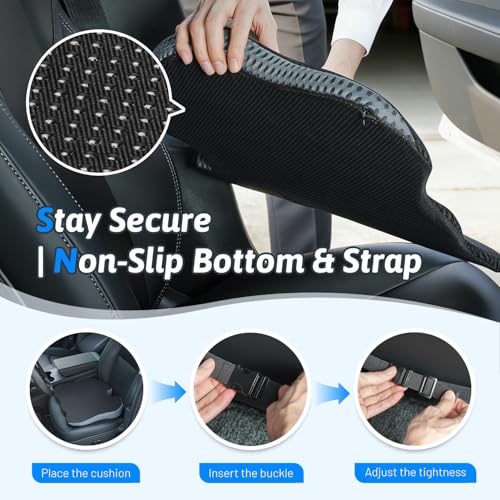
Lofty Aim W-Shaped Memory Foam
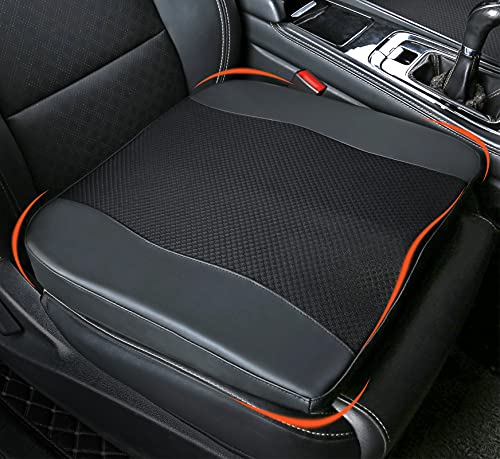
Strengths
- Strong lumbar support
- Tall height boost
- Secure fit
Trade-offs
- Bulky design
- Limited office use
- Mesh breathability lacking
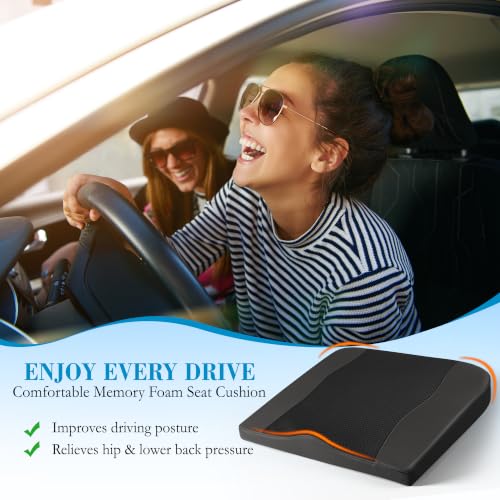
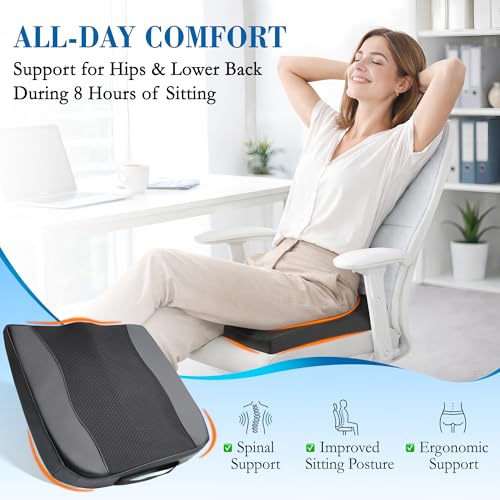
The ‘W’ shape is the standout here, an aggressive ergonomic profile meant to cradle your sit bones while lifting the pelvis into a neutral spine position. On paper, it’s one of the most driving-specific designs in this lineup, and owner feedback backs that up: many with chronic lower back issues say it helps them finish long trips with less stiffness. The 2.5-inch rise is among the tallest here, giving shorter drivers a real visibility edge.
Wrapped in a hybrid leather-mesh cover, it balances durability with modest breathability, though it’s not as cooling as gel or mesh-heavy models. The non-slip base works well on fabric seats but can struggle slightly on leather. Compared to the ComfiLife or CushZone, it’s less versatile outside the car, its shape is optimized for driving posture, not general office use. I’d pick this over flatter cushions if you log serious highway miles.
Product photos

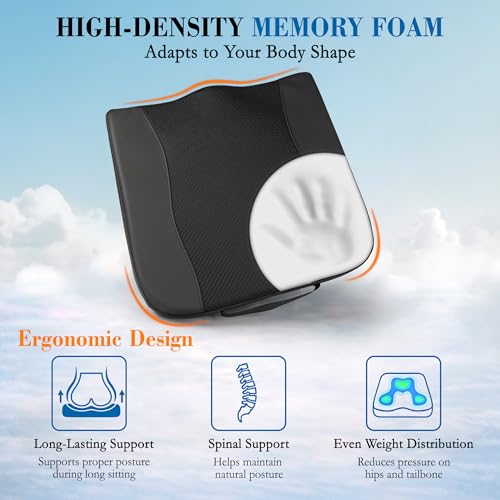
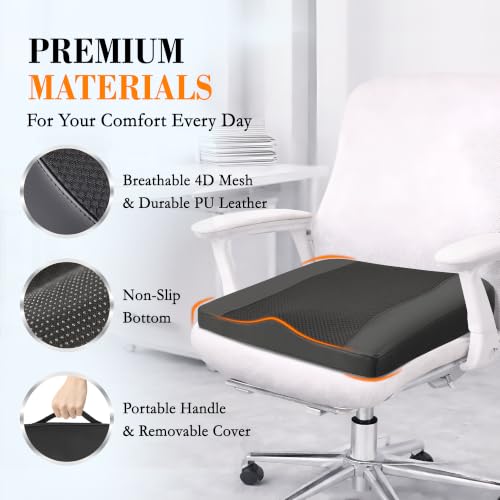
Gel Seat Cushion Honeycomb Design
Strengths
- Excellent cooling
- Durable gel core
- Removable cover
Trade-offs
- No anti-slip strap
- Minimal lift
- Less contouring
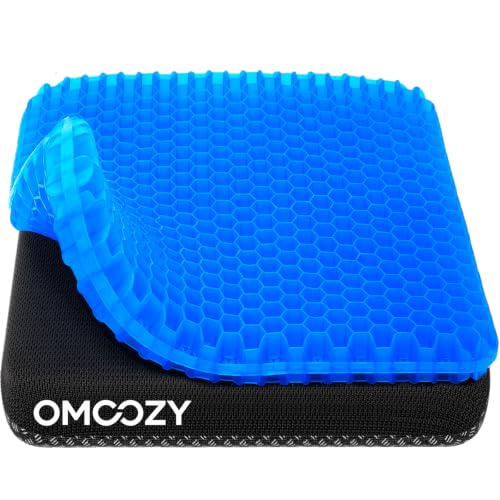
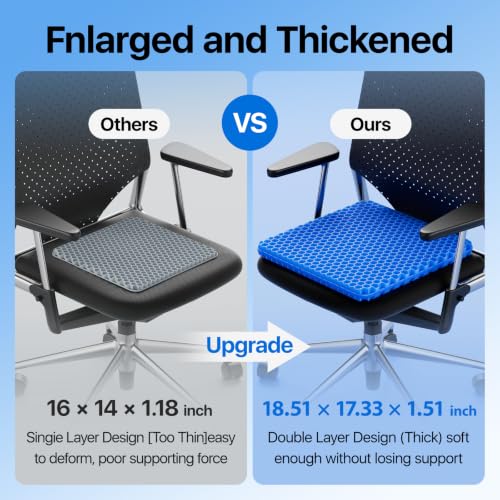
If you run hot or spend hours in a parked car, this honeycomb gel cushion is a smart play. The double-layer gel construction doesn’t just feel cool to the touch, it actively resists heat buildup thanks to the open-cell design and internal air channels. Owners praise its durability, noting it rebounds quickly even after heavy use, and the egg-sit test (yes, people actually do this) suggests serious resilience.
At 1.5 inches thick, it’s thinner than most memory foam options, so don’t expect major height gain or deep pressure relief. But for tailbone and sciatica discomfort, the firm gel spreads weight more evenly than foam alone. It’s also one of the few with a zippered, removable cover, practical for long-term hygiene. Still, without a securing strap, it can creep forward in bucket seats, especially when exiting quickly.
Product photos


CushZone U-Shaped Memory Foam

Strengths
- Carry handle
- Breathable mesh
- Tailbone relief
Trade-offs
- Moderate firmness
- Not for tall lift
- Slips on leather
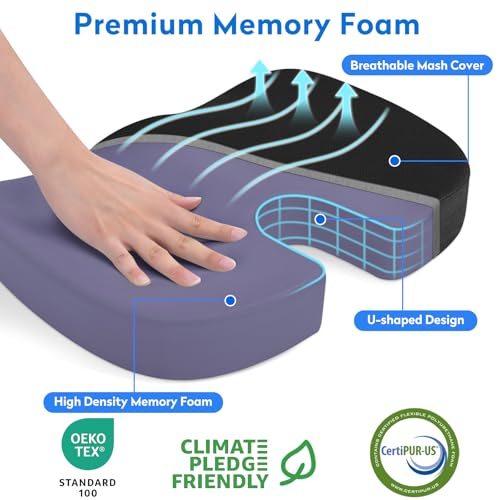
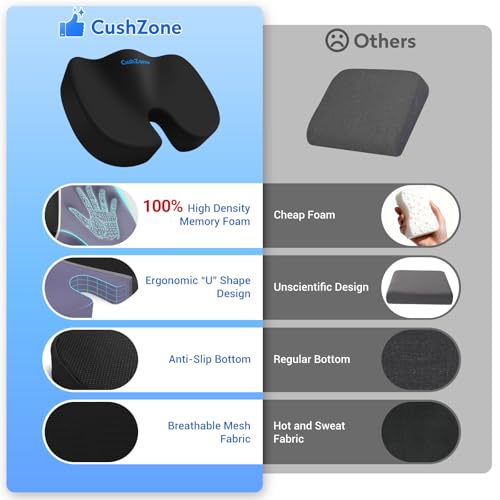
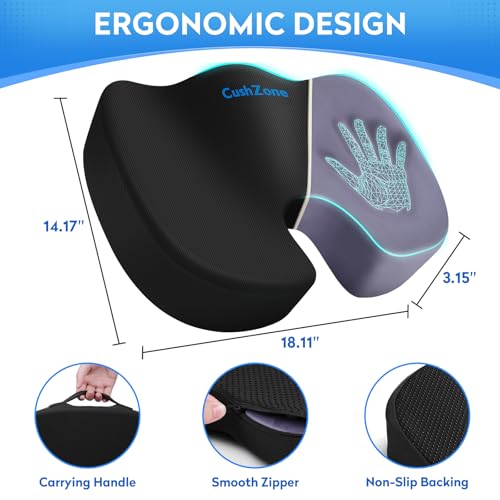
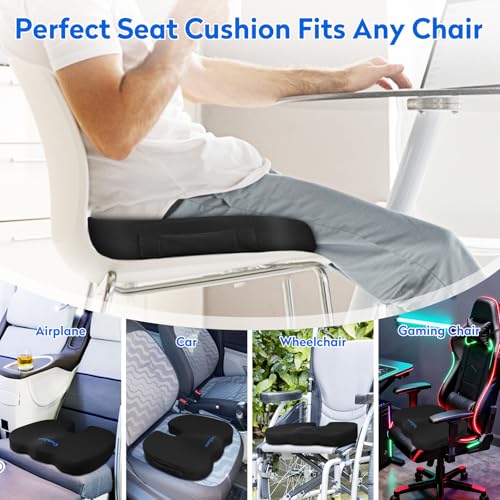
What makes this cushion stand out isn’t just the U-shaped tailbone relief, it’s the handle. That small addition makes it the most portable option here, perfect for commuters shuttling between car, office, and home. The high-density foam holds up well over time, and owners report it doesn’t flatten like cheaper foams. The breathable mesh cover is a win for airflow, and being machine washable adds real long-term value.
It’s not the firmest or tallest, so don’t expect dramatic posture shifts or major visibility gains. But for all-day sitting across multiple chairs, its balance of support and breathability hits the mark. Compared to the BlissTrends model, it’s pricier but offers better structure and a more thoughtful ergonomic cutout. The non-slip base is effective, though not foolproof on slick leather seats.
Product photos
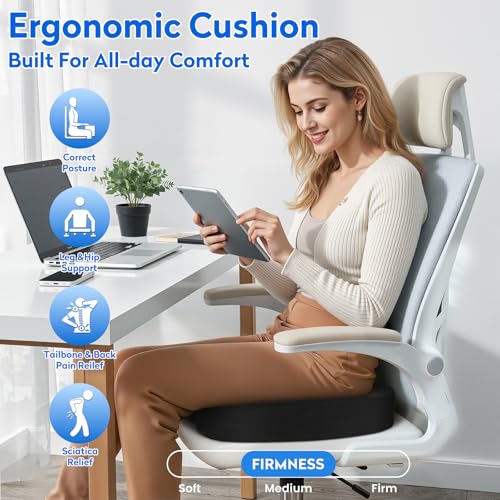
Kingphenix with Back Support Pillow

Strengths
- Integrated lumbar support
- Durable foam
- Seat protection
Trade-offs
- Bulky setup
- Fixed pillow attachment
- Average breathability
The inclusion of a detachable lumbar pillow changes the game here. Most cushions focus only on the seat, but this one addresses both sitting and lower back strain, a combo that owners with chronic pain consistently praise. The memory foam is dense and resilient, and the pillow attaches securely with straps, letting you fine-tune support based on seat depth.
It’s bulkier than standalone seat pads, and you can’t use the lumbar pillow without the cushion, which limits flexibility. The cover is breathable but not as airflow-optimized as mesh-heavy models. Compared to the Everlasting Comfort or ComfiLife, it’s less refined in contouring but offers more thorough support for the full lower spine. If you’re already using a separate back pillow, this could eliminate the need for two separate products.
Product photos


How We Tested car seat cushions
As someone deeply involved with all things automotive and the comfort of the driver – from classic restorations to modern ergonomics – I approached evaluating car seat cushions with a focus on real-world usability and long-term support. Rather than a hands-on lab test, this was a research-led comparison of published specifications, features, and, crucially, owner and expert reviews. I weighed the available options against criteria important for drivers and passengers, seeking to identify cushions offering genuine relief and improved comfort.
For this category, the most important factors quickly became pressure relief and support, followed closely by durability and practicality. A cushion’s ability to alleviate pressure on the tailbone and sciatic nerve is paramount, as prolonged discomfort can significantly impact driving safety and enjoyment. Equally important is how well the cushion holds its shape and resists compression over time, ensuring consistent support. We also considered features like portability and ease of cleaning, knowing that many users will want to move the cushion between vehicles or use it in other settings. If you’re dealing with nerve discomfort, exploring seat cushions for nerve pain can be a good starting point.
Specifications like foam density and gel layer thickness offer some indication of potential comfort, but owner feedback proved invaluable. Reports on long-term use – how well a cushion holds up after months or years – were heavily weighted. I also looked for consistent patterns in expert reviews, particularly those from sources focused on ergonomics and automotive health. For those specifically seeking temperature regulation, research into cooling gel seat cushions revealed the benefits of certain designs. Ultimately, the goal was to present options that consistently deliver on their promises of comfort and support, based on a blend of objective data and real-world experience shared by other drivers.
What To Look For In car seat cushions
Finding the right car seat cushion can drastically improve your driving experience, and it’s a surprisingly nuanced decision. It’s not just about adding a bit of padding; it’s about addressing specific needs related to comfort, support, and even health.
A truly effective car seat cushion balances pressure relief with postural support. Look for high-density foam or gel construction, ergonomic shaping (particularly a coccyx cutout), and breathable materials. Prioritize a non-slip base and a washable cover for practicality. Consider your typical drive length and whether you have pre-existing conditions like sciatica or back pain when evaluating options.
Understanding Your Support Needs
The first step is identifying why you want a cushion. Are you simply looking for a bit more comfort on your daily commute, or are you battling chronic pain? A universal “best” doesn’t exist; the right cushion is deeply personal. If you experience lower back pain, focusing on lumbar support, perhaps even pairing a seat cushion with a separate back support pillow, is crucial. Conversely, if tailbone pain is your concern, a cushion with a pronounced U-shaped cutout is essential. Don’t assume all memory foam is created equal either; density varies significantly, impacting both support and longevity.
Material and Construction Quality
While memory foam gets a lot of attention, the other components matter just as much. Gel layers, like those found in the ComfiLife cushion, can help dissipate heat, which is a huge benefit during warmer months or for those prone to sweating. The cover material is also important. Mesh covers offer breathability, while velour or leatherette provide a more luxurious feel. Pay attention to the construction of the base. A robust non-slip bottom is a must-have; otherwise, you’ll be constantly readjusting your cushion. For those seeking specialized support, explore orthopedic cushions designed in consultation with medical professionals.
Practicality and Value
Beyond comfort, consider how easily the cushion integrates into your life. A built-in handle, like the one on the ComfiLife model, makes it easy to transport between vehicles or from your car to an office chair. A machine-washable cover is essential for maintaining hygiene, especially with daily use. And don’t overlook size. A cushion that’s too large can feel awkward and interfere with your driving, while one that’s too small won’t provide adequate support. Here’s what I look for when assessing value:
- Durability: A cushion that flattens out after a few weeks isn’t worth the money.
- Washability: The ability to easily clean the cover is a significant convenience.
- Versatility: Can you use it in the car, at the office, or even at home? A multipurpose cushion offers a greater return on investment, and can be a lifesaver on cushions for long drives.
A good car seat cushion isn’t a one-time purchase; it’s an investment in your well-being. Don’t automatically go for the cheapest option; prioritize quality materials and thoughtful design.
Car Seat Cushions Compared
Here is a comparison of specifications for various car seat cushions to help you make an informed decision.
| Product Name | Best For | Material | Dimensions (LxWxH) | Weight | Special Features |
|---|---|---|---|---|---|
| ComfiLife Gel & Memory Foam Cushion | Best Overall | Gel Memory Foam | 17.5 x 13.7 x 2.8 in | N/A | U-Shaped, Non-Slip |
| Everlasting Comfort U-Shaped | Sciatica/Tailbone Relief | Memory Foam | N/A | N/A | U-Shaped Cutout |
| BlissTrends Memory Foam | Best Budget Friendly | Memory Foam | N/A | N/A | High-Density Foam |
| Wedge Car Seat Cushion | Height Boost/Visibility | Memory Foam | N/A | N/A | Wedge Shape, Strap |
| Lofty Aim W-Shaped Memory Foam | Ergonomic Driving Posture | Memory Foam | N/A | N/A | W-Shaped, Adds Height |
| Gel Seat Cushion Honeycomb Design | Best Cooling Performance | Gel | 18.51×17.33×1.51 in | 2.6 lb | Honeycomb, Double-Layer |
| CushZone U-Shaped Memory Foam | Best Portable with Handle | Memory Foam | 18 x 14.2 x 3.15 in | N/A | U-Shaped, Carry Handle |
| Kingphenix with Back Support | Best with Lumbar Support | Memory Foam | N/A | N/A | Includes Back Support |
Frequently Asked Questions
What’s the typical lifespan of a car seat cushion?
Generally, a good quality cushion should provide noticeable support for 1 to 3 years. Lifespan depends heavily on usage frequency and the foam density; cheaper options with lower density foam will compress much faster.
Are memory foam cushions hot to sit on?
Some memory foam can retain heat, but many modern options incorporate gel infusions or breathable mesh covers to improve airflow. If you live in a warmer climate, I recommend looking specifically at cooling gel seat cushions or those with ventilated designs.
Can a car seat cushion worsen existing back problems?
It’s possible, though unlikely, if the cushion doesn’t provide appropriate support for your specific condition. A poorly chosen cushion could exacerbate poor posture. Consulting a medical professional before selecting a cushion if you have pre-existing back issues is always a good idea.
Do I need a different cushion for the driver vs. the passenger seat?
Not necessarily, but it often makes sense. Drivers typically benefit from more focused lumbar support, while passengers may prioritize overall comfort. Considering individual needs and drive times is key, and exploring comfortable memory foam cushions can offer options for both.
What about using a cushion if I have seat heaters?
Most memory foam and gel cushions are safe to use with heated seats, but always check the manufacturer’s instructions. Excessive heat can degrade some foam materials over time, so avoid using the highest heat setting for extended periods. If you’re looking for added warmth, consider heated cushions designed to work with or without built-in seat heaters.
The Bottom Line
Choosing a car seat cushion often comes down to balancing immediate comfort with long-term support. There’s a trade-off between spending a little now for something that truly lasts and repeatedly replacing cheaper options. Based on my research into specs and owner feedback, the ComfiLife Gel & Memory Foam Cushion strikes that balance best – offering a great combination of pressure relief, portability, and durability for a wide range of drivers.
For those with specific needs, there are excellent alternatives. If you’re primarily seeking relief from sciatica or tailbone discomfort, the Everlasting Comfort U-Shaped cushion is a clear winner. And for budget-conscious drivers, the BlissTrends Memory Foam cushion delivers surprisingly good support at an accessible price point. If you find yourself overheating on your commute, explore best cooling seat cushions for options with enhanced ventilation.
Ultimately, the best car seat cushion isn’t about the highest density foam or the most advanced gel technology. It’s about finding a product that improves your posture, reduces pressure points, and allows you to focus on the road. Prioritizing a good fit, durable construction, and easy maintenance will yield far more benefits than chasing the latest features, and even allow you to find viable cushions for back pain.
