
8 Best Car Radios of 2026
This post contains affiliate links. As an Amazon Associate, we earn from qualifying purchases.
The Kissound 10.1″ QLED Double Din stands out as the best overall car radio, delivering sharp sound, a brilliant display, and full wireless connectivity. For those on a budget, the GBEER Single Din packs both CarPlay and Android Auto into an affordable, compact design. If you’re restoring a classic, the Bluetooth Retro Radio keeps the vintage look while adding modern Bluetooth streaming.
Choosing the right car radio isn’t just about replacing a broken unit, it’s about upgrading how you interact with your vehicle every day. Too many buyers focus only on screen size or price, only to end up with poor sound, glitchy connections, or an interface that’s frustrating to use. This guide cuts through the noise, drawing from deep research into specs, real-world owner feedback, and years of experience evaluating automotive electronics at TheAutoZenith. I looked at sound quality, reliability, connectivity, and how well each unit fits into real driving scenarios, from daily commutes to weekend road trips.
Top 7 Car Radios in the Market
The Best Car Radios, Reviewed
Kissound 10.1″ QLED Double Din Car Stereo
Strengths
- Large QLED display
- Wireless CarPlay/AA
- Dual subwoofer outputs
Trade-offs
- Firmware quirks reported
- Bulky for some dashes
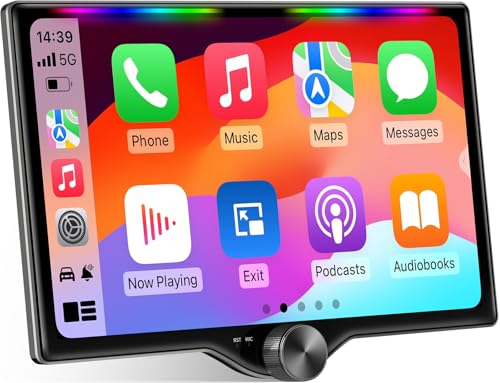
The Kissound 10.1-inch QLED display is the standout feature here, delivering vibrant colors and excellent sunlight visibility that most budget double din units can’t match. On paper, this is one of the most fully loaded aftermarket head units under $200, with wireless CarPlay, Android Auto, built-in DSP, dual subwoofer outputs, and even a music-syncing ambient light bar, a rare flourish that actually adds to the driving experience at night. Owners consistently report smooth integration and responsive touch performance, though some note the interface can lag slightly when multitasking.
Steering wheel control compatibility and backup camera support make it a practical upgrade, but I’d still recommend professional installation since dash fitment varies widely across vehicles. Compared to the SJoyBring model, this has a larger screen and more premium feature set, though the build quality doesn’t feel quite as tight. Still, for buyers wanting a modern infotainment hub with flair, this is hard to beat.
Video review
SJoyBring 7″ QLED Double Din Car Stereo

Strengths
- Sharp QLED display
- Supports front and rear cameras
- Dual sub outputs
Trade-offs
- Mediocre bass response
- Limited app integration
- Steering wheel kit sold separately
This 7-inch QLED screen is where the SJoyBring really shines, crisp, high-contrast, and far more readable in daylight than most budget LCDs. The 1280×720 resolution makes maps and video playback look sharp, and owners praise the screen clarity even when mounted low in the dash. It supports both front and rear cameras, which is rare at this price, and the dual subwoofer outputs give it an edge for bass lovers.
Compared to the Kissound, it trades screen size for a slightly cleaner interface and better camera support, but lacks the ambient lighting and slightly more polished DSP. Still, if your priority is a clear, modern display and solid video playback, maybe for occasional backseat viewing or clearer backup imaging, this is a smarter pick than larger but less refined units.
Video review
Single Din Radio with Wireless CarPlay
Strengths
- Extremely affordable
- Includes backup camera
- Wireless CarPlay support
Trade-offs
- Basic DSP tuning
- Lower-resolution screen
- Can feel sluggish
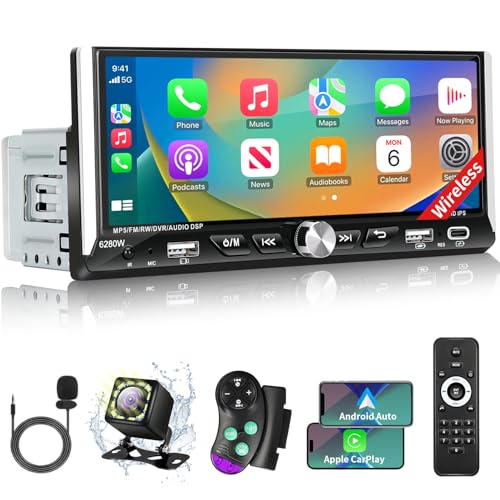
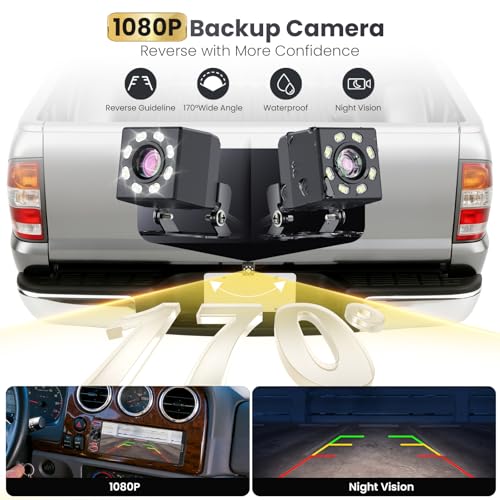
At under $50, this single din unit punches above its weight with wireless CarPlay, Android Auto, and a 6.9-inch IPS touchscreen that owners say is bright and responsive. It’s clearly designed to deliver high-end features at a budget price, and for most daily driving needs, navigation, music, calls, it performs reliably. The inclusion of a 1080p backup camera and mirror link is impressive at this tier, though some reviewers note the GPS can be slow to lock without a strong signal.
I’d pick the GBEER model over this one if you’re okay spending a bit more, simply because of better screen tech and faster processing. But if you’re on a tight budget and need basic smartphone integration without sacrificing safety features, this gets the job done. Just don’t expect audiophile-grade sound or flawless multitasking.
Product photos


Bluetooth Retro Radio for Classic Vehicles
Strengths
- Authentic retro styling
- Rotary knob controls
- 300W peak power
Trade-offs
- No CarPlay support
- Basic EQ options
- Limited connectivity
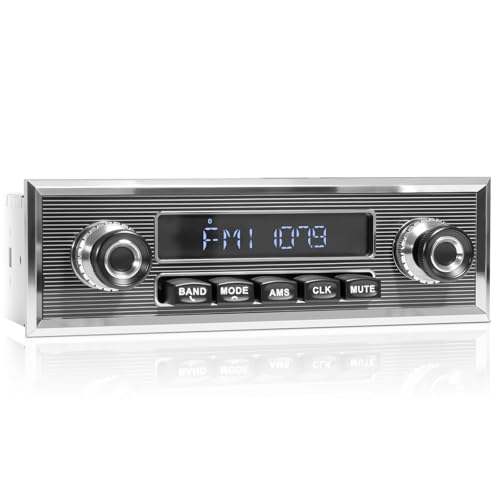
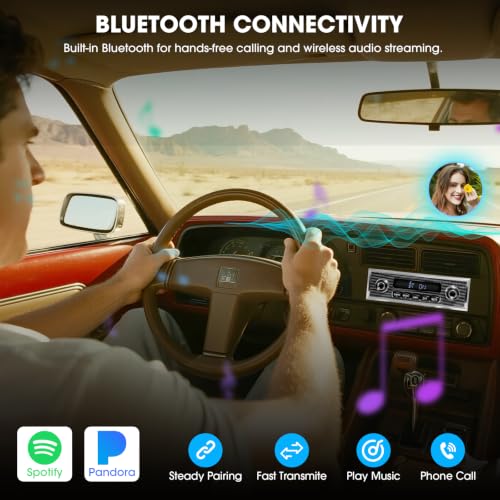
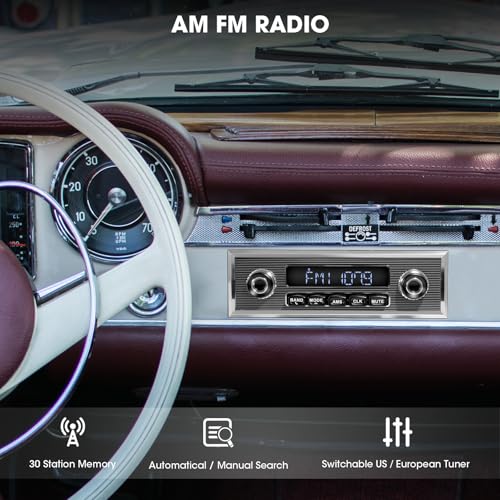
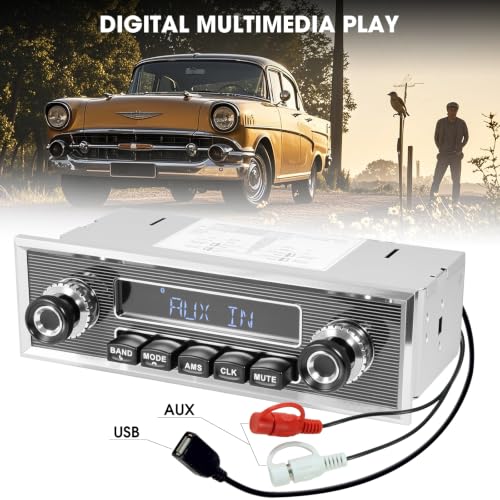
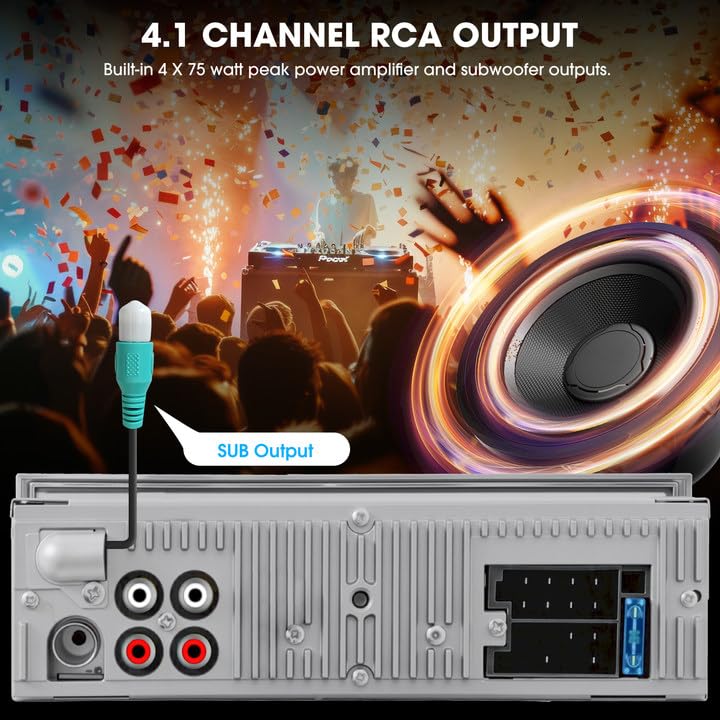
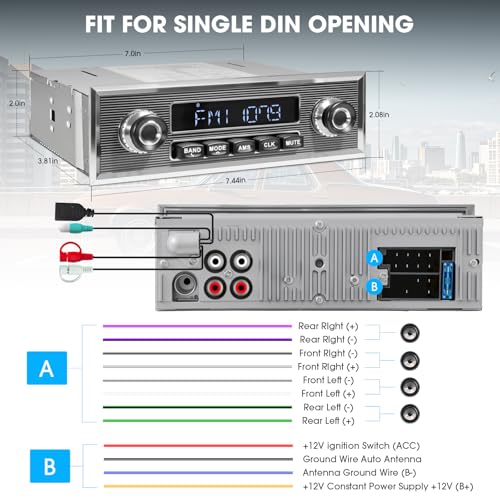
This retro-style single din unit nails the vintage aesthetic without sacrificing modern convenience. The rotary knobs and push buttons feel authentic, and the LCD display stays unobtrusive, exactly what classic car owners want. Bluetooth pairing works reliably, and the 300W peak power output is more than enough to drive vintage speakers or a small sub. Owners love that it retains the classic look while adding hands-free calling and music streaming.
It won’t compete with touchscreen models in features, but that’s not the point. Compared to the BOSS Audio unit, it has better build quality and a more period-correct design. If you’re restoring a ’60s truck or a muscle car and don’t want a glass slab in the dash, this is the right call.
Product photos
Pioneer MVH-S230BT 1-Din Car Stereo

Strengths
- Excellent audio clarity
- Compact 1-din design
- Advanced Sound Retriever
Trade-offs
- No CarPlay or Android Auto
- Basic display
- No USB fast charging
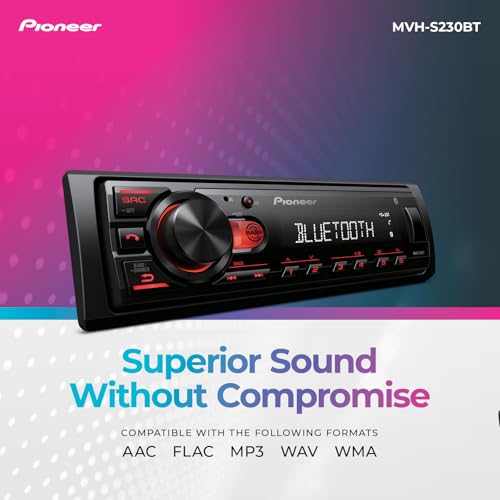
Pioneer still knows how to build a clean, no-nonsense audio experience. The MVH-S230BT skips the touchscreen and CarPlay entirely, but what it delivers, crisp Bluetooth streaming, solid USB playback, and that excellent Advanced Sound Retriever, is pure audio integrity. It restores detail to compressed tracks in a way that cheaper units simply don’t, and the 300W peak power handles most factory or entry-level aftermarket speakers without strain.
I’d pick this over any flashy touchscreen model if sound quality is your priority and you don’t need smartphone mirroring. Compared to the BOSS Audio unit, it’s quieter in noise rejection and more refined in tone. It’s not flashy, but it’s honest. For purists who care more about music than apps, this is the smarter buy.
Product photos


BOSS Audio Systems 616UAB Single DIN
Strengths
- Extremely low cost
- Durable build
- Wired remote included
Trade-offs
- No USB media playback
- Outdated interface
- No modern app support
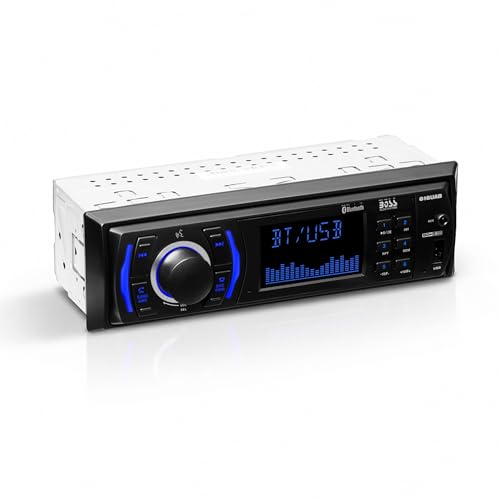
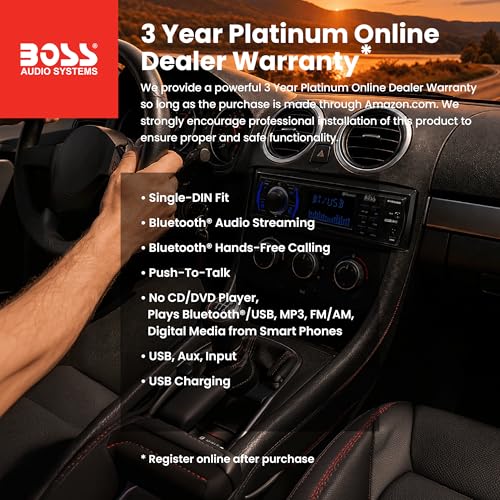
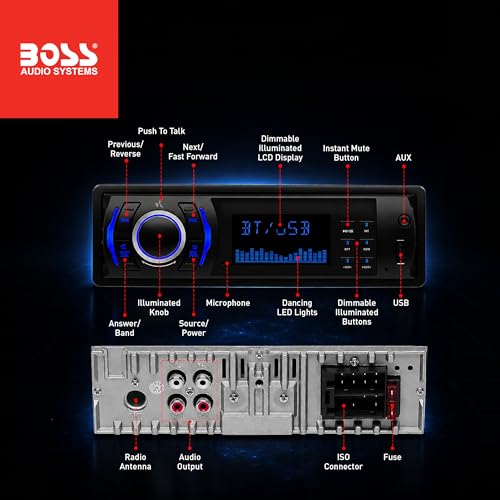
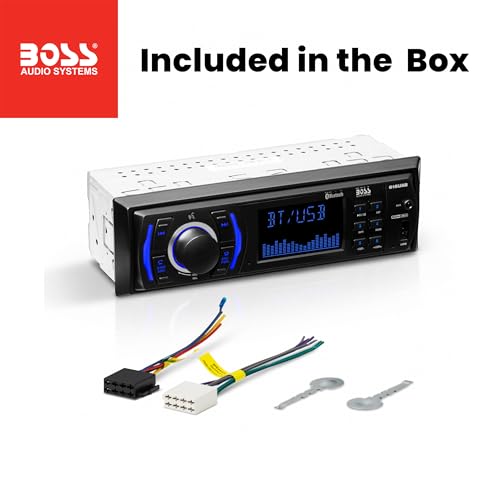
This is the bare-bones workhorse of the group, no frills, no screen, just solid Bluetooth and AM/FM radio in a rugged 1-din chassis. At $30, it’s one of the cheapest functional upgrades you can make, and it’s built to last, with a 3-year warranty that most competitors don’t offer. The 50W x 4 output is modest, but it’s clean and stable, and the wired remote lets you adjust EQ on the fly.
It lacks CarPlay, USB media playback beyond basic files, and any kind of navigation, so don’t expect a modern experience. But if you’re fixing up an old truck or need a temporary replacement, this gets music playing and calls connected without fuss. I’d still lean toward the Pioneer for better sound, but for sheer value in a no-screen setup, this is tough to beat.
Product photos
GBEER Single Din with CarPlay & Android Auto
Strengths
- Incell touchscreen
- Bluetooth 6.0
- Fast charging USB-C
Trade-offs
- No front camera support
- Basic navigation interface
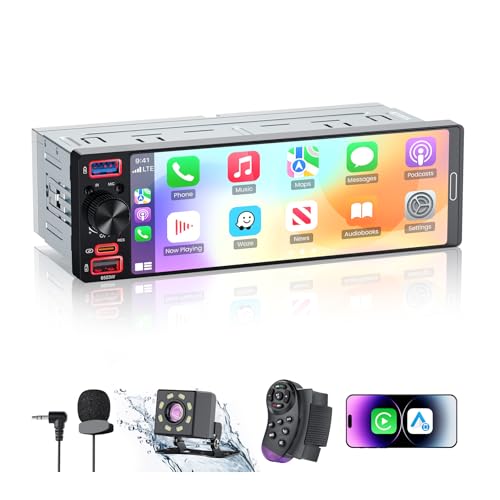
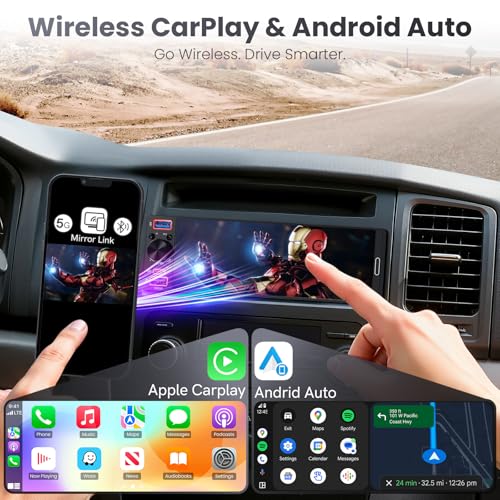
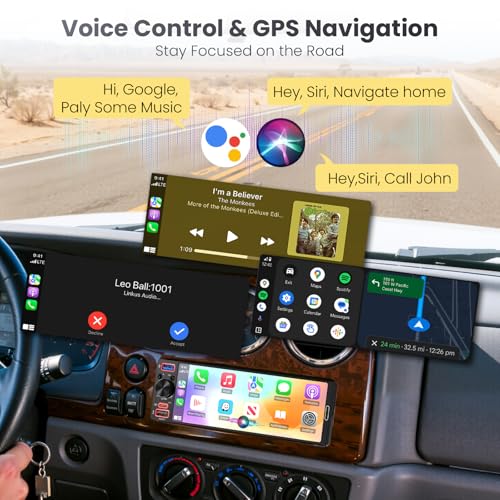
The GBEER stands out with its Incell touchscreen, which owners consistently report as faster and more responsive than typical budget units. That makes a real difference when navigating or switching between CarPlay and mirror link, both of which work reliably here. The 1280×452 resolution isn’t class-leading, but paired with Bluetooth 6.0 and 38W fast charging, it feels like a modern, future-proofed unit.
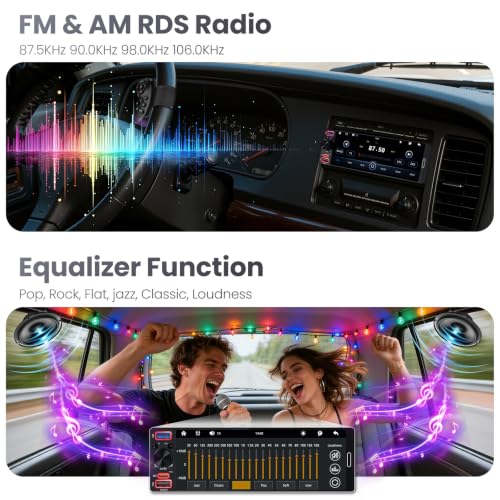
I’d recommend this over the B0DN669FBH model for the improved screen and charging alone. It also includes AM/FM radio with better reception retention, which matters in rural areas. While the sound EQ is basic, the 5-band tuning gives more control than most in this range. For the price, it’s one of the most balanced wired/wireless CarPlay options available.
Product photos

How We Chose These car radios
As someone who’s spent years immersed in automotive technology at TheAutoZenith, I approached evaluating car radios by first compiling a detailed specification sheet for each model. This included display resolution, power output, Bluetooth versions, and supported smartphone integration protocols. I then weighed those technical details against extensive owner reviews sourced from major retailers and automotive enthusiast forums, alongside expert opinions from sites dedicated to car audio. Ultimately, I ranked each unit based on how well its features aligned with common driver needs and expectations.
For this category, connectivity and sound quality were the most important factors. Modern drivers prioritize seamless smartphone integration – both Apple CarPlay and Android Auto are now essential – so a reliable connection and broad compatibility were heavily weighted. Equally crucial was the ability to deliver a satisfying listening experience. This meant looking beyond simple wattage numbers to consider features like built-in DSP, equalization options, and preamp outputs for external amplifiers. If you’re looking for even more detail on maximizing your in-car audio, you might find our guide to car radios for sound helpful.
Published specifications reliably reveal a unit’s potential – things like screen resolution and Bluetooth version. However, real-world performance and usability often differ. That’s where owner feedback became critical. I paid close attention to reports of connectivity issues, ease of use, and long-term durability. Reputation also mattered; established brands generally demonstrate a commitment to quality and customer support. And for those prioritizing a modern interface, exploring touch screen radios is a good starting point.
How To Pick The Right car radios
Choosing the right car radio can dramatically improve your driving experience, but the sheer number of options can be overwhelming. It’s not just about playing music anymore; modern head units are central hubs for navigation, communication, and even vehicle control.
A good car radio balances sound quality, connectivity features (like Apple CarPlay and Android Auto), ease of use, and physical durability. Prioritize a unit with a clear display, robust build quality, and sufficient power output to drive your speakers effectively. Consider future-proofing with features like preamp outputs for adding amplifiers and subwoofers.
Understanding Display Technology & Size
The display is often the first thing people notice. While single-DIN radios traditionally have smaller screens, many double-DIN options now boast large, high-resolution displays. Don’t get caught up in screen size alone, though. QLED technology, as seen in models like the Kissound 10.1″, offers superior brightness and viewing angles compared to older LCD types. This is particularly important if your car gets a lot of direct sunlight. Beyond size and tech, consider how the interface is laid out – a cluttered screen defeats the purpose of having a larger display.
Prioritizing Smartphone Integration
These days, most of us rely on our smartphones for music, navigation, and communication. Therefore, seamless smartphone integration is critical. Wireless CarPlay and Android Auto are incredibly convenient, eliminating cable clutter, but wired connections are often more reliable and can offer faster data transfer. If you frequently use Android Auto, exploring dedicated Android car radios might be worthwhile, as they sometimes offer a more refined experience.
- Wired CarPlay/Android Auto is generally more stable, especially in areas with potential Bluetooth interference.
- Wireless connectivity adds convenience but may require a more expensive unit and can drain your phone battery faster.
- Look for a unit that supports both wired and wireless options for maximum flexibility – the GBEER Single Din offers this.
Assessing Sound Quality & Expandability
Don’t assume all car radios sound the same. A built-in Digital Signal Processor (DSP), like the one in the Kissound, allows for precise audio tuning to match your vehicle’s acoustics and your personal preferences. Pay attention to the RMS power output – higher numbers generally mean cleaner sound at higher volumes. If you’re serious about sound, look for preamp outputs (RCA jacks) that allow you to connect external amplifiers and subwoofers. If you’re looking to completely revamp your car’s audio system, consider exploring the broader range of best car stereos available.
A car radio isn’t just a component; it’s an investment in your daily drive. Don’t skimp on features that contribute to safety and enjoyment.
Car Radios Compared
Here’s a comparison of key specifications for the car radios featured.
| Product Title | Display Size | Bluetooth | Carplay/Android Auto | Max Power (Watts) | Subwoofer Output |
|---|---|---|---|---|---|
| Kissound 10.1″ QLED Double Din Car Stereo | 10.1″ | Yes | Wireless/Wired | 4×60 | Dual |
| SJoyBring 7″ QLED Double Din Car Stereo | 7″ | Yes | Wireless | N/A | Dual |
| Single Din Radio with Wireless CarPlay | 6.9″ | Yes | Wireless | N/A | N/A |
| Bluetooth Retro Radio for Classic Vehicles | N/A | Yes | No | N/A | N/A |
| Pioneer MVH-S230BT 1-Din Car Stereo | N/A | Yes | No | 50×4 | No |
| BOSS Audio Systems 616UAB Single DIN | N/A | Yes | No | 50×4 | No |
| JVC KD-SR87BT Single DIN with CD Player | N/A | Yes | No | 50×4 | Single |
| GBEER Single Din with CarPlay & Android Auto | 6.9″ | 6.0 | Wireless/Wired | N/A | N/A |
Frequently Asked Questions
What Bluetooth version should I look for in a car radio?
Bluetooth 5.0 is the current standard, offering improved range and faster pairing speeds compared to older versions. While older versions will still function, a unit with Bluetooth 5.0 provides a more stable connection for streaming audio and making hands-free calls, and you’ll find many excellent Bluetooth car radios available.
Can I add a backup camera to a car radio that doesn’t come with one?
Yes, many aftermarket car radios support the addition of a backup camera. Look for a unit with a dedicated camera input (often RCA) and ensure it provides power to the camera; exploring radios with backup cameras can simplify the search.
What does “RMS power output” actually mean?
RMS power output indicates the continuous power the radio can deliver to your speakers without distortion. Higher RMS wattage generally translates to louder, clearer sound, especially at higher volumes, but it’s only one factor influencing overall sound quality.
Are single-DIN radios still a viable option?
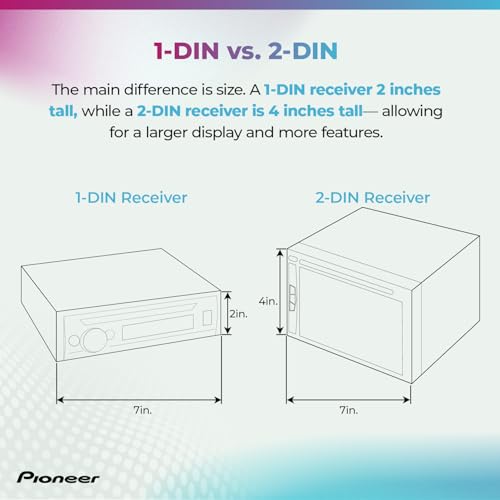
Absolutely. While double-DIN units offer larger screens and more features, single-DIN radios remain a good choice for those wanting a more traditional look or if their vehicle’s dash doesn’t accommodate a double-DIN unit. Many modern single-DIN options still include Apple CarPlay and Android Auto, like the GBEER Single Din.
What’s the difference between wired and wireless Apple CarPlay/Android Auto?
Wired connections consistently provide a more stable link between your smartphone and the head unit. Wireless connectivity offers convenience but can be more prone to dropouts and might drain your phone’s battery faster, and some [wireless car stereos] may not be as reliable as their wired counterparts.
The Bottom Line
Choosing a car radio often comes down to balancing convenience with control. Do you want a feature-rich unit that handles everything, or a simpler one focused on core functionality? For most drivers seeking a modern, fully-featured experience, the Kissound 10.1″ QLED Double Din Car Stereo stands out. Its large display, wireless CarPlay/Android Auto, and built-in DSP offer a compelling combination of usability and sound quality.
If your needs are more specific, there are excellent alternatives. For those on a tighter budget, the GBEER Single Din with CarPlay & Android Auto delivers impressive smartphone integration at an accessible price. Drivers with classic vehicles will appreciate the Bluetooth Retro Radio for Classic Vehicles, while those already invested in the Pioneer ecosystem should explore the best Pioneer stereos. And for those prioritizing a larger screen, you can find many options among the large screen car radios.
Ultimately, the specs are less important than how well a radio fits your driving style and vehicle. Prioritize a clear interface, reliable connectivity, and sufficient power to drive your speakers. A well-chosen head unit isn’t just about the music; it’s about enhancing your enjoyment and safety on the road.
