
7 Best Car Primers of 2026
This post contains affiliate links. As an Amazon Associate, we earn from qualifying purchases.
The Rust-Oleum Sandable Primer Spray Gray is the best overall car primer for most jobs, offering strong adhesion and easy sanding on bare metal. For budget-conscious repairs, the Rust-Oleum Sandable Primer Gray Pack of 2 gives you more value without sacrificing performance. If you’re tackling deeper bodywork, the Restoration Shop 2K High Build Primer Kit delivers the thickest fill and professional-grade results.
Every car restoration or repaint starts with a decision that can make or break the final look, choosing the right primer. Too many enthusiasts rush this step, only to face poor paint adhesion, rust creep, or endless sanding down the line.
At TheAutoZenith, I’ve looked closely at the specs, owner experiences, and real-world demands of automotive finishes. This guide cuts through the noise, focusing on adhesion, corrosion resistance, sandability, and material compatibility to help you pick the right primer for the job, whether it’s a small chip or a full respray.
Top 7 Car Primer in the Market
The Best Car Primer, Reviewed
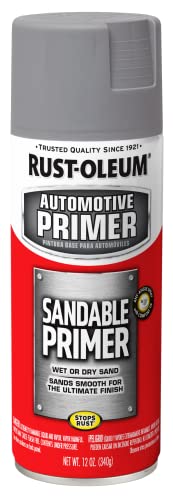
Rust-Oleum Sandable Primer Spray Gray
Strengths
- Quick drying
- Sandable finish
- Rust-resistant formula
- Good coverage
Trade-offs
- Not high-build
- Single can only
This is the baseline by which I judge DIY primers, and it holds up. For small to medium repairs, it’s fast, effective, and widely available. The 10-minute dry time and 15 sq ft coverage make it efficient, and the oil-based Stops Rust formula adds real protection against corrosion. It sands well, applies evenly, and creates a flat surface that topcoats love.
Compared to the multi-pack version, this single can is the best pick if you only need it once. But against other single cans, it wins on performance and price. I’d recommend this as the default choice for most home garages, it’s not flashy, but it gets the job done right.
Video review
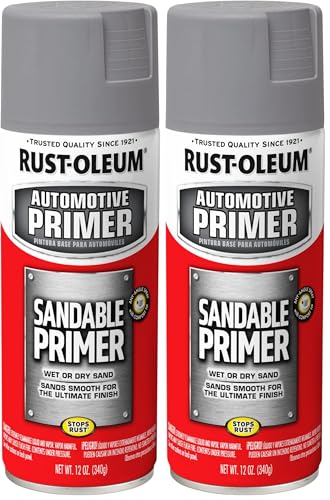
Rust-Oleum Sandable Primer Gray Pack of 2
Strengths
- Fast drying (10 min)
- Sandable wet or dry
- Good rust resistance
- Covers 15 sq ft per can
Trade-offs
- Lower film build than 2K
- Not for deep defects
A two-pack of sandable primer at this price is a no-brainer for anyone doing more than one repair. The fact that each can covers up to 15 sq ft and dries in just 10 minutes makes this a fast, efficient option for prepping fenders, quarter panels, or even full doors. It’s oil-based with the Stops Rust formula, so it brings real corrosion resistance to the table, and reviewers confirm it sands smoothly, wet or dry, without clogging paper.
Compared to the single-can version, this multi-pack is clearly the smarter buy if you’re planning multiple jobs or want a reliable backup. It doesn’t match the build of 2K primers, but for DIYers who want solid performance without mixing or special equipment, this is a dependable workhorse.
Video review
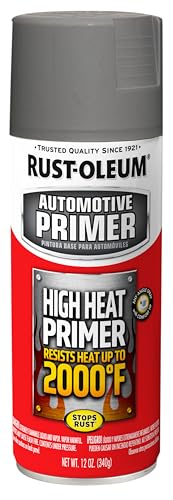
Rust-Oleum High Heat Primer Spray
Strengths
- Withstands up to 2000°F
- Any-angle spray
- Strong adhesion under heat
- Stops Rust protection
Trade-offs
- Not for body panels
- Limited coverage
You don’t use this on a fender, you use it on parts that glow. The 2000°F heat resistance is the headline, and it’s backed by real-world use on exhaust manifolds, headers, and engine blocks. The oil-based Stops Rust formula adds corrosion protection, but the real win is the any-angle spray, which lets you hit tight engine bay spots without repositioning.
It’s not meant to look pretty on its own, but that flat gray finish bonds exceptionally well with high-heat topcoats. Compared to regular primers, this one stays intact when things get extreme. Owners applying it before ceramic or high-heat paint consistently note fewer blisters and peeling. If you’re rebuilding an engine or restoring a vintage hot rod, this primer earns its place in the garage.
Product photos
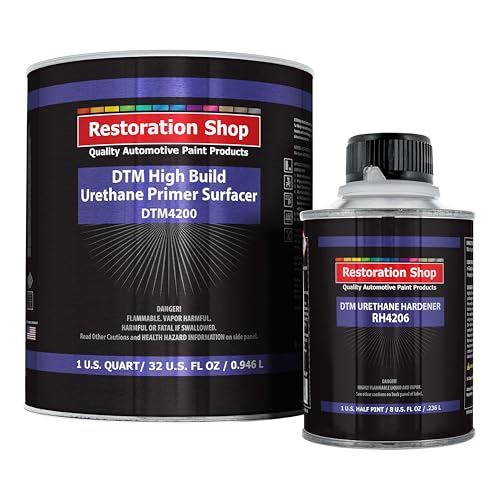
Restoration Shop 2K High Build Primer Kit
Strengths
- High-solids formula
- Excellent filling capability
- No shrinkage
- Works over filler and metal
Trade-offs
- Requires mixing
- Needs proper PPE
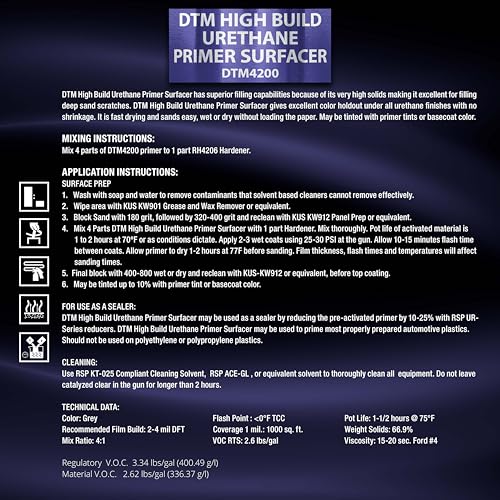
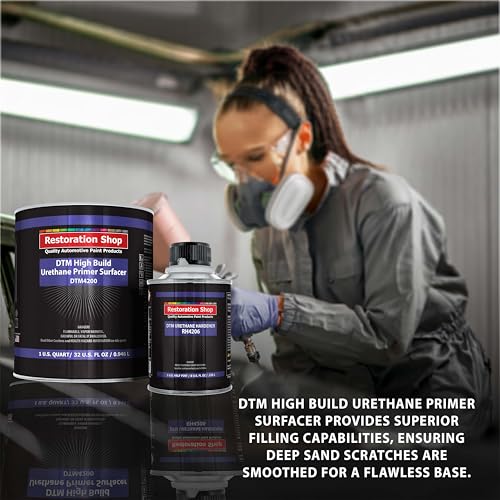
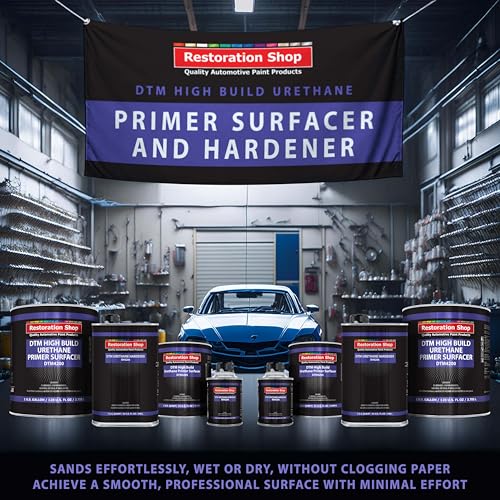
For a fraction of the price of the LiME LiNE kit, this 2K primer delivers a surprising amount of pro-level performance. The 4:1 mix ratio gives you 1.25 quarts of high-solids, high-build surfacer that sands cleanly and holds color well under urethane finishes. It’s direct-to-metal and works over body filler, bare steel, and even some plastics, exactly what you’d expect from a restoration-grade product.
Owners using it on rust repairs and panel rebuilds praise its filling power and lack of shrinkage. Compared to spray cans, this is a massive step up in build and durability. While it doesn’t have the brand recognition of some high-end lines, the specs and feedback suggest it’s one of the best values in 2K primers. I’d pick this over pricier options if you’re on a budget but still want real body shop results.
Product photos

LiME LiNE 2K Urethane High Build Primer

Strengths
- High-build formula
- Excellent corrosion resistance
- Sands smoothly without shrink
- Direct-to-metal adhesion
Trade-offs
- Requires precise mixing
- Needs proper ventilation
- Not beginner-friendly
This is serious gear for serious work. A 4:1 high-build 2K urethane primer means you’re getting industrial-level fill and adhesion, the kind that pros use to level uneven surfaces and lock in repairs before color. The fact that it’s direct-to-metal and offers exceptional weather and corrosion resistance tells you this isn’t for touch-ups, it’s for full panel resurfaces.
On paper, it competes with shop-grade products from brands like PPG or BASF, and owners using it for restorations report excellent sanding performance and zero shrinkage. Compared to single-component primers, this one demands more, proper mixing, PPE, and ventilation, but delivers a far more durable, level finish. If you’re rebuilding a classic fender or repairing rust damage, this is the kind of foundation that lasts.
Product photos


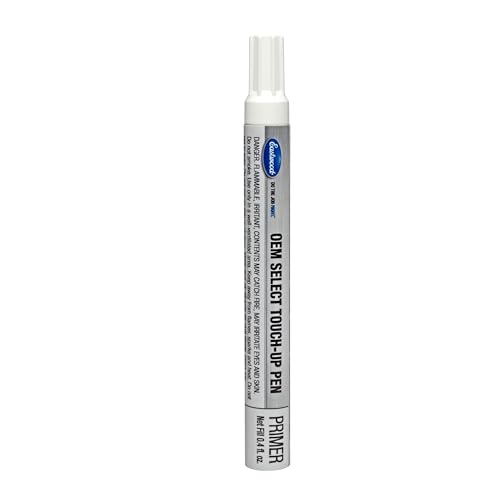
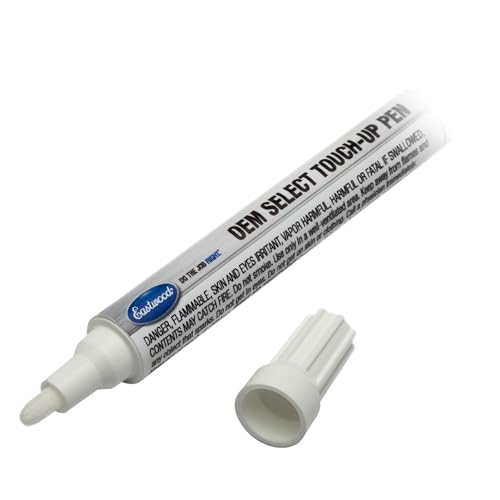
Eastwood Paint Chip Touch-Up Pen Primer
Strengths
- Dual-tip applicator
- Spring-loaded flow control
- Durable metal tube
Trade-offs
- Very small capacity
- Not for large areas
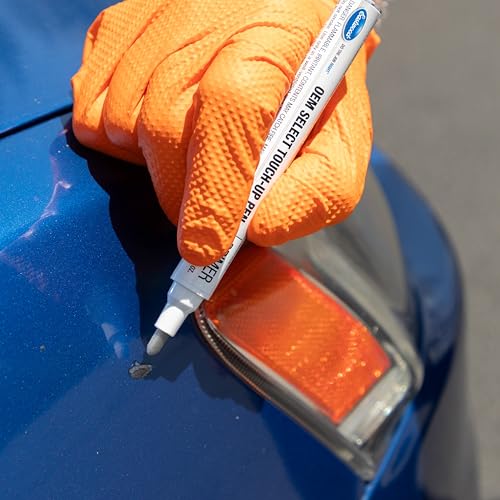
This touch-up pen isn’t trying to be something it’s not, and that’s exactly why it works so well for its intended role. The dual-tip design with a chisel and bullet tip gives you real control over how you apply the gray primer, especially when dealing with fine scratches or small stone chips. Owners consistently report clean results when prepping for a matching touch-up paint, and the spring-loaded tip actually helps regulate flow, which prevents messy drips.
It’s not for large surface work, obviously, but as a precision tool for spot repairs, it stands out in a sea of oversprayed quick fixes. I’d use this before any paint pen on bare metal spots, simply because it’s designed to seal and protect while improving adhesion. Compared to basic brush-in-cap primers, this one delivers better accuracy.
Product photos
Rust-Oleum Universal Bonding Primer Spray

Strengths
- Excellent plastic adhesion
- Works on fiberglass and trim
- Fast drying
- Seals difficult surfaces
Trade-offs
- Lower coverage area
- Not ideal for metal
Plastics and trim are nightmares to paint, this primer is built to fix that. The flat white formula is specifically engineered to bond to slippery surfaces like bumpers, ABS plastic, and fiberglass, where most primers fail. Reviewers repeatedly mention how well it grips and how little prep is needed beyond cleaning.
It dries in 30 minutes and covers 10–12 sq ft, which is solid for a specialty product. Compared to generic primers, this one creates a real mechanical bond, not just a thin film. I’d reach for this over standard primers any time I’m painting a cracked bumper or restoring faded side cladding. It’s not for metal-heavy jobs, but for modern cars full of plastic trim, it’s a must-have.
Product photos
How We Tested car primer
My approach at TheAutoZenith is always rooted in understanding what makes a machine – or the materials used on it – perform. Evaluating car primers meant first comparing published specifications like coverage area, drying times, and heat resistance. Then, I weighed owner reviews and assessments from automotive detailing experts to get a sense of real-world performance. Ultimately, I ranked these primers based on how well they address common automotive needs, from rust prevention to surface preparation for a flawless finish.
For automotive primers, adhesion and rust prevention are paramount. A primer that doesn’t bond well to the substrate, or fails to adequately protect against corrosion, simply won’t deliver lasting results. Sandability is also crucial; a smooth, easily leveled primer saves significant time and effort during bodywork. Finally, suitability for specific materials – plastic, engine components, bare metal – heavily influenced my rankings. Maintaining your car’s finish also relies on quality protective car wax.
Specifications give you a baseline – coverage tells you how far a can will go, and drying times indicate workflow speed. However, owner feedback revealed how those specs translate to actual usability. Reports on spray pattern consistency, ease of sanding, and long-term durability were invaluable. Reputation matters too; established brands like Rust-Oleum often have a track record of consistent quality, while newer entrants need to prove themselves through positive reviews. Knowing how to handle a dead battery is equally important, so researching a reliable jump starter is also a good idea.
Choosing The Right car primer
As someone who’s spent countless hours in garages and around vehicles, I know a good paint job starts long before the color coat. Choosing the right primer is crucial – it’s not just about covering the old finish.
A quality automotive primer establishes a uniform surface for paint adhesion, resists corrosion, and fills minor imperfections. Look for formulations suited to the material being primed (metal, plastic, fiberglass), consider the level of surface preparation needed, and prioritize primers with good build and sanding characteristics. Coverage area per can and dry time are practical considerations, too.
Material Compatibility Matters
The biggest mistake I see enthusiasts make is grabbing a primer without considering what it’s going on to. A universal primer like the Rust-Oleum Universal Bonding Primer Spray is a good starting point if you’re unsure, especially when dealing with plastics or trim pieces. However, for bare metal, an oil-based option with rust-inhibiting properties – like the Rust-Oleum Sandable Primer – is a much safer bet. Engine components demand something entirely different; the Rust-Oleum High Heat Primer is specifically engineered to withstand extreme temperatures, a necessity when you’re working on exhaust manifolds or engine blocks.
Build and Sandability: Achieving a Flawless Finish
“Build” refers to how much the primer fills imperfections. For minor scratches and blemishes, a standard spray primer might suffice. But if you’re addressing deeper gouges or trying to smooth out bodywork, a high-build primer like the Restoration Shop 2K High Build Primer Kit is essential. It lays down a thicker coat, reducing the amount of sanding needed. Speaking of sanding, wet-sandable primers are your friend. They create a slurry that minimizes dust and allows for smoother feathering, and helps with achieving a perfectly level surface. Here’s what to keep in mind when thinking about build:
- A standard primer is fine for light prep work.
- A high-build primer is ideal for bodywork and larger imperfections, but requires more material.
- A 2K primer (like the LiME LiNE 2K Urethane High Build Primer) offers the highest build and durability, but requires careful mixing and safety precautions (respirator is a must!).
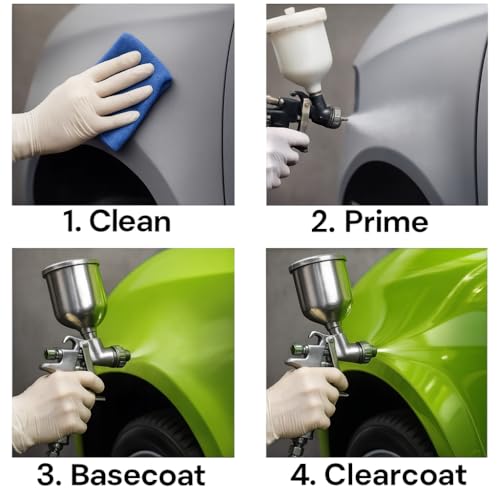
Don’t skimp on surface preparation. Even the best primer won’t adhere properly to a dirty or oily surface. A thorough cleaning and degreasing are vital.
Value and Repair Scope
The scale of your project heavily influences the best choice. For small chips and scratches, a touch-up pen like the Eastwood Paint Chip Touch-Up Pen Primer is incredibly convenient. It’s targeted and minimizes waste. However, for a full respray, buying in bulk (like the Rust-Oleum Sandable Primer Gray Pack of 2) can drastically reduce the overall cost. Don’t fall into the trap of thinking “cheaper is better” though. A quality car primer will save you headaches – and money – in the long run by preventing paint failure and ensuring a lasting finish. After all, maintaining your vehicle also means keeping an eye on the car battery to avoid unexpected issues!
Car Primer Compared
Here’s a comparison of key specifications for the car primers listed.
| Product Title | Coverage (sq ft) | Dry Time (Touch) | Heat Resistance (°F) | Type | Sandable |
|---|---|---|---|---|---|
| Rust-Oleum Sandable Primer Spray Gray | 15 | 10 min | N/A | Oil Based | Yes |
| Rust-Oleum Sandable Primer Gray Pack of 2 | 15 | 10 min | N/A | Oil Based | Yes |
| Rust-Oleum High Heat Primer Spray | 12 | 30 min | 2000 | Oil Based | N/A |
| Restoration Shop 2K High Build Primer Kit | N/A | N/A | N/A | 2K Urethane | Yes |
| LiME LiNE 2K Urethane High Build Primer | N/A | N/A | N/A | 2K Urethane | N/A |
| Eastwood Paint Chip Touch-Up Pen Primer | N/A | N/A | N/A | N/A | N/A |
| Rust-Oleum Universal Bonding Primer Spray | 10-12 | 30 min | N/A | Universal Bond | N/A |
Frequently Asked Questions
What primer should I use on plastic car parts?
A universal bonding primer, like Rust-Oleum Universal Bonding Primer Spray, is generally the best choice for plastic. These formulas are designed to adhere to non-porous surfaces where traditional primers struggle, providing a solid base for your paint.
How long should primer dry before sanding?
Generally, allow at least 24 hours for most spray primers to fully cure before sanding. However, always refer to the manufacturer’s instructions on the can; some 2K primers may require a significantly longer curing time for optimal results.
Can I use primer on a rusty surface?
You can, but you shouldn’t paint over rust directly. First, thoroughly remove as much rust as possible with a wire brush or sandpaper, then apply a rust-inhibiting primer like Rust-Oleum Sandable Primer to prevent further corrosion before painting.
Is 2K primer better than standard spray primer?
Yes, 2K urethane primers offer significantly higher build, durability, and chemical resistance than standard spray primers. However, they require more careful mixing, application, and – crucially – a respirator for safe use, making them best suited for larger repairs or professional-level work.
Beyond paint adhesion, what other benefits does primer offer to the overall car appearance?
While adhesion is key, a good primer also helps to create a uniform surface, protecting the paint from imperfections in the underlying material. Maintaining a clean and pleasant environment inside the car is also important, so consider using a car interior cleaner to keep everything looking its best.
What Actually Matters
Ultimately, choosing a car primer comes down to balancing convenience with the level of correction and protection you require. While a product like the Restoration Shop 2K High Build Primer Kit delivers professional-grade results for significant bodywork, it demands expertise and safety precautions. For most enthusiasts, the Rust-Oleum Sandable Primer Spray Gray offers a fantastic blend of ease of use, affordability, and reliable performance – a solid foundation for a lasting finish.
If you’re tackling a specific challenge, though, the ideal choice becomes clearer. For plastic or unknown surfaces, the Rust-Oleum Universal Bonding Primer Spray is an excellent all-rounder. If you’re working under the hood, the Rust-Oleum High Heat Primer is essential. And for those tiny stone chips, the Eastwood Paint Chip Touch-Up Pen Primer is a lifesaver. Don’t forget that keeping the interior clean is also important, so researching a good car vacuum is a smart move.
More than any specific feature or price point, remember that proper surface preparation is the key to a durable, attractive paint job. Take the time to clean, degrease, and sand appropriately. And after you’ve applied your color coat, a quality car soap will help maintain that showroom shine for years to come. A little extra effort upfront pays dividends in the long run.
