
8 Best Car Headliner Cleaners of 2026
This post contains affiliate links. As an Amazon Associate, we earn from qualifying purchases.
The CarGuys Super Interior Cleaner stands out as the best overall headliner cleaner, balancing power and safety across most fabric types. For those on a budget, the Stoner Upholstery & Carpet Cleaner delivers solid performance without the cost, while the SONAX Alcantara & Upholstery Foam is the top pick for luxury interiors with sensitive materials like Alcantara.
Cleaning a car headliner is trickier than it looks. One wrong move with a harsh or over-saturated product can lead to sagging, staining, or permanent damage, especially on older vehicles or delicate fabrics. Most people don’t realize how much their choice of cleaner can affect both appearance and longevity.
This guide cuts through the noise by focusing on real user experiences, material safety, and practical application. I compared formulas based on residue, pH balance, scent, and compatibility with common interior materials, because protecting your headliner shouldn’t mean guessing what works.
Top 8 Car Headliner Cleaners in the Market
The Best Car Headliner Cleaners, Reviewed
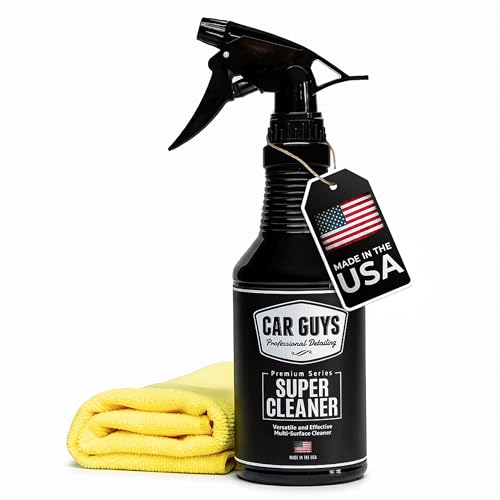
CarGuys Super Interior Cleaner 18 Oz
Strengths
- Multi-surface use
- No sticky film
- Strong stain lifting
- Long-lasting bottle
Trade-offs
- Higher price point
- Not specialized for delicate weaves
If I had to pick one all-around interior cleaner for both daily upkeep and surprise spills, this would be it. Owners praise its ability to cut through grime on everything from leather dashboards to stained headliners, and the concentrated formula means you use less per session. The no-rinse design is a real time-saver, spray, wipe, done, and reviewers consistently note it leaves zero residue, which helps prevent future dust attraction.
Compared to Stoner 911, it’s stronger on embedded dirt; against Chemical Guys’ foaming kit, it doesn’t require extra tools. It won’t replace a dedicated Alcantara treatment like SONAX, but for mixed-material interiors (which most modern cabins are), it strikes the best balance of performance and convenience. My recommendation for most drivers: this is the smarter buy unless you have specialty materials.
Video review
Stoner 91144 Upholstery & Carpet Cleaner

Strengths
- Foam application
- Safe on fabrics
- No sticky residue
Trade-offs
- Weak on oil stains
- Limited deep-cleaning power
This cleaner has been around for ages, and owners consistently report it works well on light to moderate headliner stains without risking fabric damage. The water-based formula means it’s less aggressive than solvent-heavy options, which is a plus if you’re dealing with older or fragile interior fabrics. On paper, the thick foam action sounds effective, and many users confirm it lifts dirt to the surface quickly, though heavy buildup often needs multiple passes.
It doesn’t tackle greasy or oily stains as aggressively as some pricier formulas, but for routine maintenance and budget buyers, it’s a solid baseline choice. Compared to CarGuys Super Cleaner, it lacks multi-surface versatility, but for pure headliner use where you want minimal saturation, that’s actually a benefit.
Video review
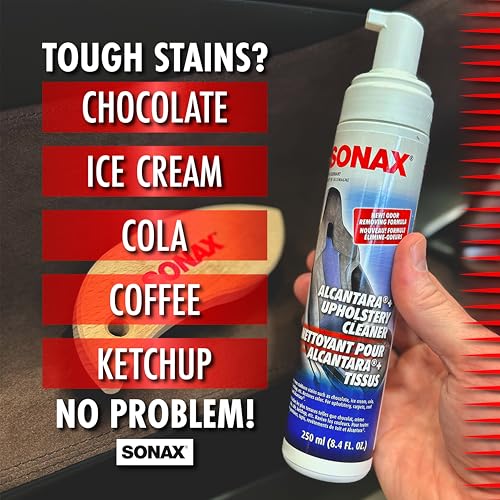
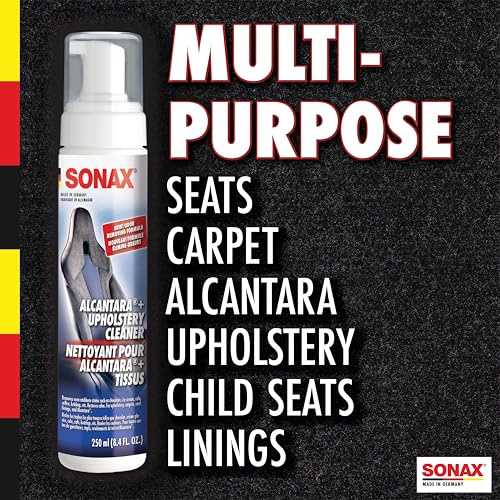
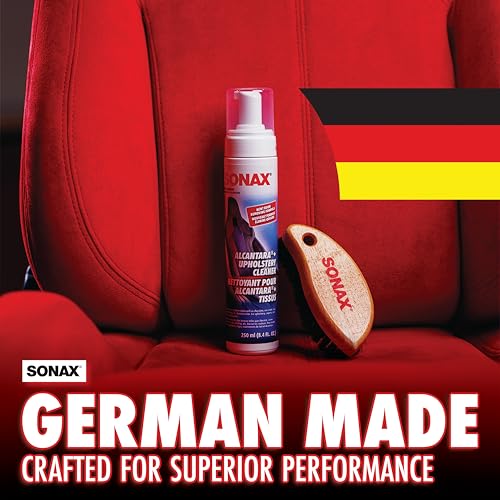
SONAX Alcantara & Upholstery Foam Cleaner

Strengths
- Specifically for Alcantara
- Preserves texture
- Odor neutralizing
Trade-offs
- Niche application
- Expensive for small volume
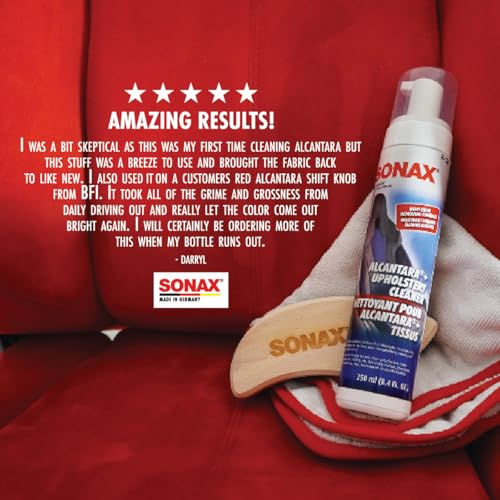
Alcantara is unforgiving. Use the wrong cleaner and you’ll crush the nap or leave permanent marks. This formula is purpose-built for that exact challenge. Owners consistently report it restores matted fibers and lifts stains without flattening texture, something few all-purpose cleaners achieve. The controlled foam delivery keeps moisture localized, which is essential on steering wheels and sport seats wrapped in synthetic suede.
It’s not meant for large-area cleaning like full headliners, and it’s overkill on plain cloth. But for high-end interiors with luxury trim, it’s unmatched. Compared to Griot’s or CarGuys, it’s less versatile but far more precise. If your car has Alcantara pillars or a suede headliner, skip the generics, this is the one worth spending extra on.
Product photos
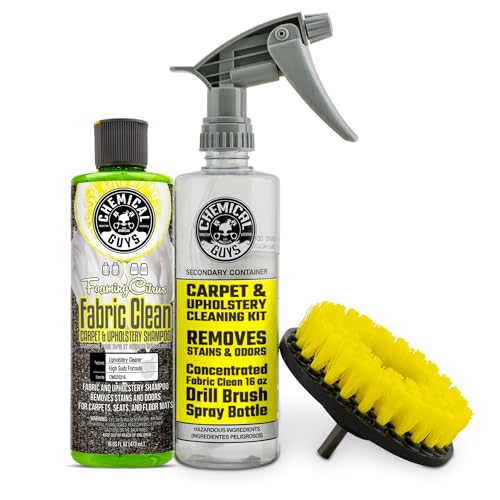
Chemical Guys Citrus Foaming Fabric Kit
Strengths
- Includes drill brush
- Deep foam penetration
- Effective on odors
Trade-offs
- Over-aggressive for headliners
- High price
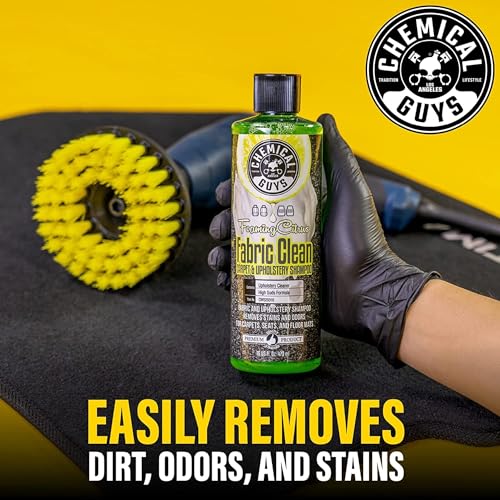
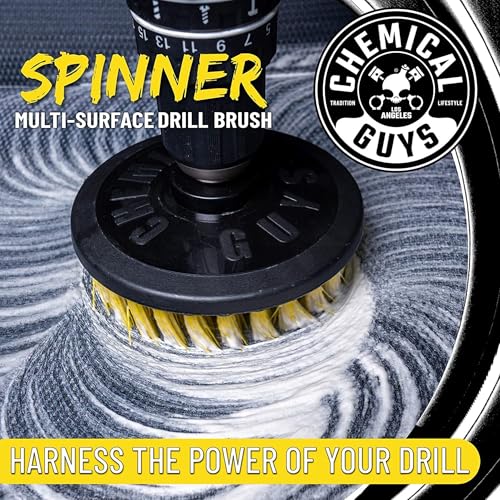
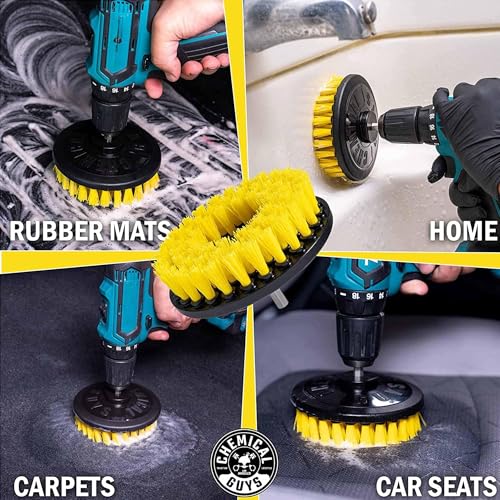
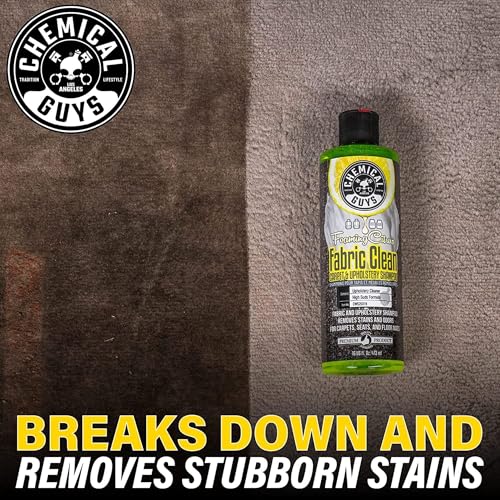
When you need to agitate, this kit earns its premium price. The included drill brush attachment changes the game for carpeted floor mats and densely woven headliners, where hand scrubbing takes forever. The foaming formula expands into fibers, and owners using rotary tools report significantly faster results on ground-in dirt and pet messes. The citrus scent masks odors well, and the cleaner itself breaks down organic stains effectively.
That said, the drill brush is overkill for most headliner jobs, you risk damaging thin roof fabric if you’re not careful. It’s better suited to floor mats and seat cushions. Without mechanical agitation, the cleaner performs similarly to cheaper foaming sprays. If you already own a detailing drill, this becomes a powerful add-on; otherwise, it’s hard to justify over CarGuys or SONAX.
Product photos

500ml Car Interior Foam Cleaner Kit

Strengths
- Large 500ml bottle
- Pleasant citrus scent
- Works on multiple surfaces
- Includes sponge and towel
Trade-offs
- Average stain removal
- Foam dissipates quickly
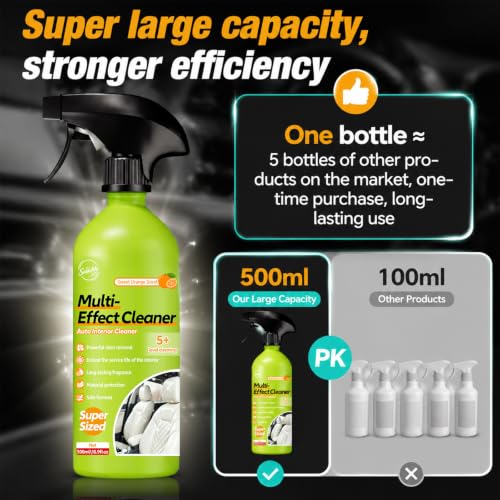
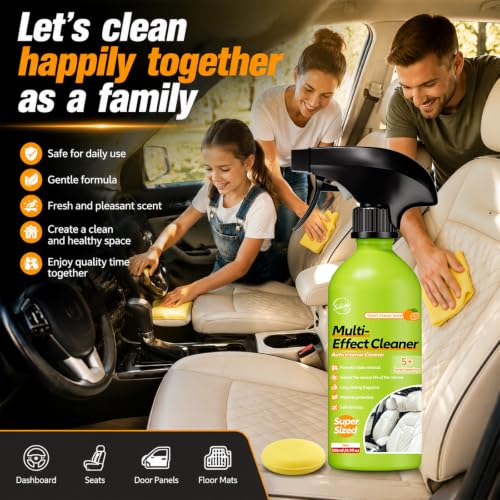
At 500ml, this offers the largest volume in the lineup, making it a value-focused pick for frequent detailers or those with SUVs and vans that demand more coverage. The citrus-scented foam spreads evenly and, according to user feedback, penetrates moderately soiled headliners without excessive dripping, a common issue with runnier formulas. It’s safe across leather, vinyl, and fabric, which broadens its usefulness beyond just ceiling cleaning.
Still, while the capacity is impressive, the formula isn’t notably stronger than others in this range. Some owners report needing repeated applications for stubborn stains, and it lacks the odor-neutralizing depth of SONAX or the pet-targeted power of VICBTZT’s rose-extract version. But if you’re doing monthly cleanups across multiple vehicles, the size alone makes it a practical workhorse.
Product photos

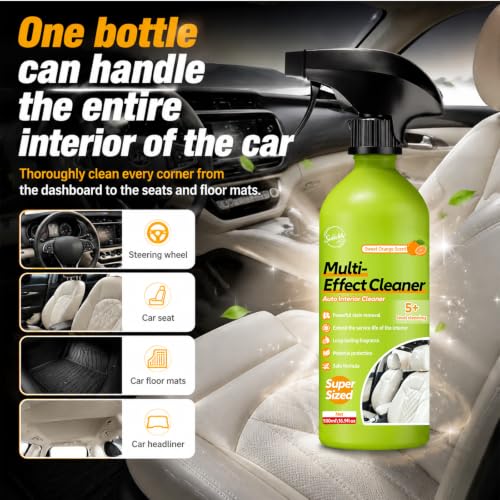

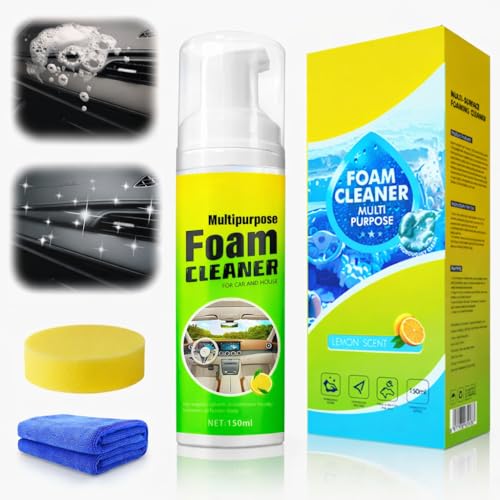
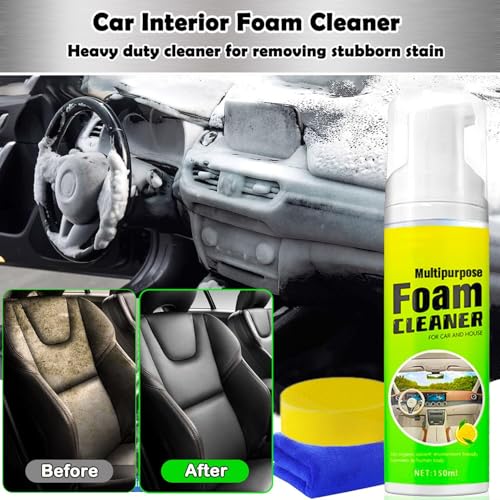
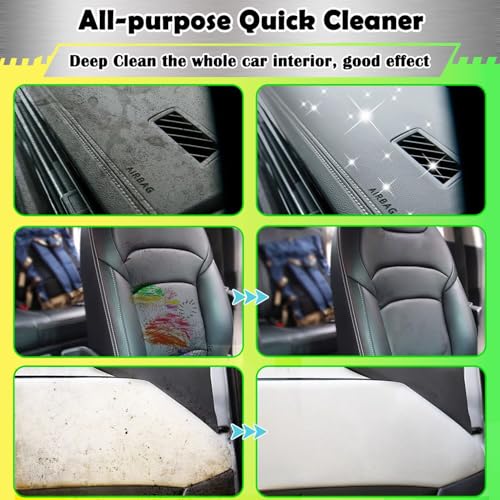
150ml Multi-Surface Car Foam Cleaner
Strengths
- Hypoallergenic
- Safe for kids and pets
- Light citrus scent
Trade-offs
- Low cleaning power
- Small 150ml size
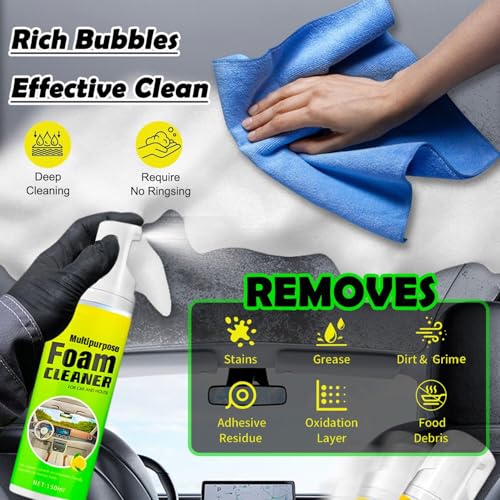
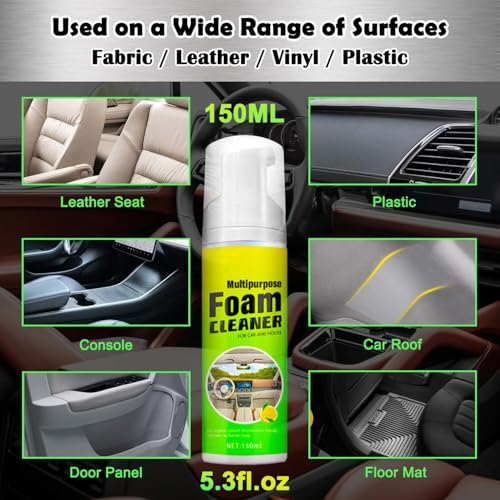
This is the lightest-weight formula on the list, both in volume and chemical intensity. Designed with sensitive users in mind, it’s non-toxic, hypoallergenic, and carries only a faint lemon scent, ideal for people prone to headaches from strong detailing products. The foam is gentle and doesn’t risk color bleed, which makes it a safe bet for beige or white headliners that scare some owners.
But that mildness comes at a cost. It struggles with anything beyond surface dust or fresh spills. Compared to CarGuys or Chemical Guys, it’s not a deep cleaner. Still, for quick touch-ups or households with kids and pets where chemical exposure is a concern, it fills a niche. Not my go-to for restoration, but I wouldn’t hesitate to keep it in the glovebox for minor refreshes.
Product photos

Griot’s Garage 22 Fl Oz Interior Cleaner

Strengths
- Zero residue
- Safe on all colors
- Made in USA
Trade-offs
- No foaming action
- Less aggressive on stains
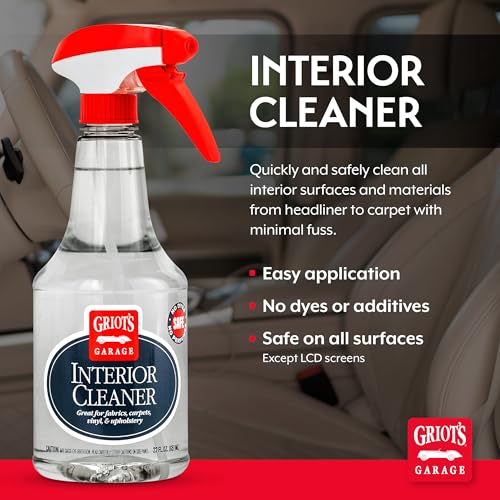
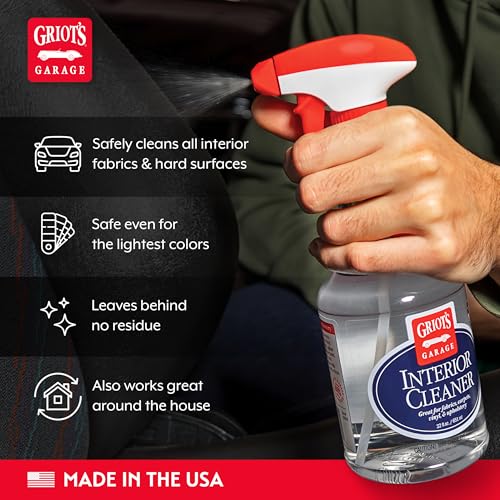
Griot’s formula stands out for one key reason: it truly leaves no residue. In a category where many cleaners, especially foaming ones, leave behind a slight tackiness that attracts dust days later, this one dries completely inert. That’s critical on headliners, where even minor stickiness can pull fibers loose over time. Owners appreciate how safely it handles dyed fabrics and light-colored upholstery without discoloration.
It’s not the strongest on grease, and it doesn’t foam like others, so visual feedback during cleaning is limited. But if your priority is preserving material integrity while achieving a clean finish, this beats Chemical Guys and matches CarGuys in residue control. For classic car owners or anyone with factory-original interiors, that’s a big deal. I’d choose this over most for long-term preservation.
Product photos


VICBTZT No-Rinse Foam Upholstery Cleaner
Strengths
- Excellent odor removal
- Safe on light fabrics
- Includes dedicated brush
Trade-offs
- Scent may not appeal to all
- No foam expansion
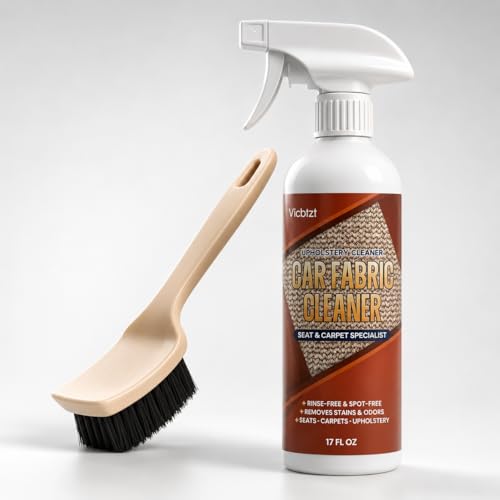
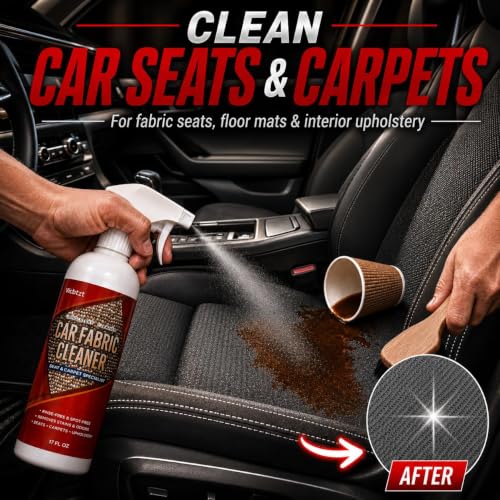
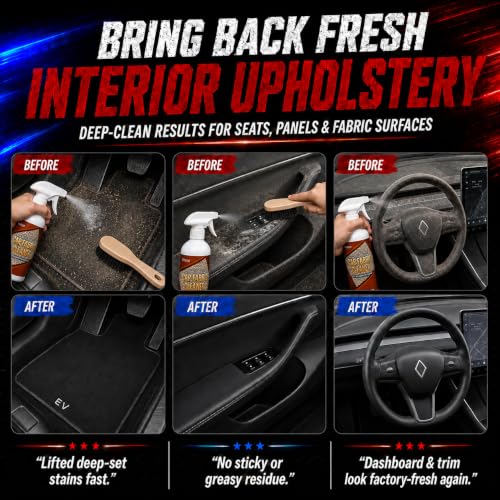
This cleaner leans hard into family and pet ownership realities, coffee spills, muddy shoes, vomit, pet accidents, and delivers accordingly. The rose-extract formula doesn’t just mask odors; users confirm it breaks them down, which is rare at this price. The included soft-bristle brush is a thoughtful touch, minimizing fabric damage during scrubbing. It’s also one of the few labeled explicitly safe for seat belts and child seat fabrics, which speaks to its gentleness.
While it doesn’t come with a drill attachment like Chemical Guys, it holds its own on most stains with hand wiping. Against CarGuys, it’s slightly milder but safer on light-colored upholstery. For rideshare drivers or parents, that reliability on bio-mess makes it a top contender. I’d recommend this over most others in homes where spills are routine, not rare.
Product photos
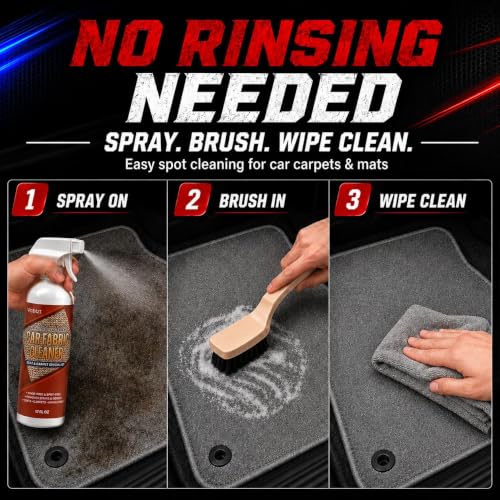
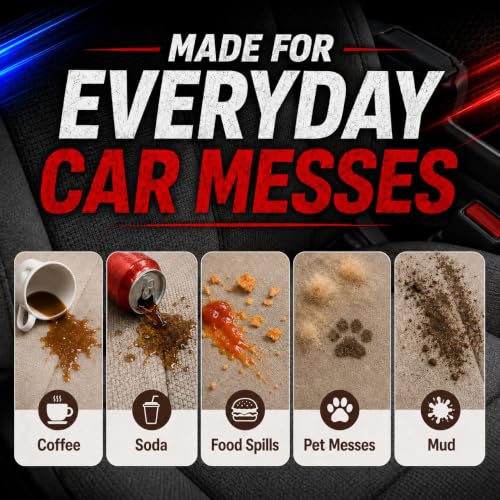

How We Picked These car headliner cleaners
As someone who spends a lot of time thinking about vehicle interiors at TheAutoZenith, I approached researching car headliner cleaners with a focus on real-world usability. Rather than a hands-on lab test, this was a research-led comparison of published specifications, owner reviews from multiple retail sites, and insights from professional detailing forums. I weighed features, ingredient lists, and reported effectiveness against established criteria for interior cleaning products. This allowed me to build a picture of how each cleaner performs in practice.
For headliner cleaners, the most important factors are gentleness and residue-free formulas. Headliners, especially those with delicate fabrics like Alcantara, can be easily damaged by harsh chemicals. Equally crucial is avoiding products that leave behind a sticky or staining residue, as this attracts more dirt and can be difficult to remove. I also prioritized cleaners that addressed odor control, understanding how quickly interiors can accumulate smells from pets, smoke, or everyday use. You’ll find many products overlap with general all-purpose interior cleaners, but these are specifically formulated for the challenges of a horizontal, often fabric, surface.
Product specifications provided baseline information on compatibility with different materials (leather, vinyl, fabric) and application methods (spray, foam). However, I placed much more weight on owner feedback regarding long-term effects, ease of use, and scent. Professional detailing opinions helped me assess the effectiveness of different formulations and identify potential risks. For example, while a product might claim to be safe for all surfaces, user reports of discoloration or staining were a major red flag. Properly maintaining and regularly cleaning your car dashboard cleaners is important, but a headliner demands a different level of care.
How To Pick The Right car headliner cleaners
Keeping your vehicle’s interior looking its best requires more than just a quick vacuum. A dedicated car headliner cleaner is essential for tackling grime and stains that build up on these often-overlooked surfaces.
A truly effective car headliner cleaner should be formulated to lift dirt without causing discoloration or sagging. Look for pH-neutral formulas, especially if you have delicate materials like Alcantara. Pay attention to application methods – foam sprays are generally safer than liquids, minimizing the risk of saturation. Finally, consider odor neutralization, as headliners can trap smells.
Material Compatibility is Key
The first thing I always tell people is to understand what your headliner is made of. Many assume it’s all the same fabric, but that’s far from true. Older cars often have a cardboard backing with glued-on fabric, making them incredibly susceptible to damage from excessive moisture. Newer vehicles may have a molded composite structure, which is more durable. Using a harsh cleaner on a delicate headliner can cause it to detach, stain permanently, or even warp. Before applying any product, test it in an inconspicuous area (like under a sun visor) to ensure compatibility. If you’re unsure, opt for a cleaner specifically designed for delicate materials, like the SONAX Alcantara & Upholstery Foam Cleaner, or research your vehicle’s specific interior materials.
Foam vs. Liquid Application
Generally, foam-based cleaners are the safer bet for headliners. Liquids carry a much higher risk of soaking the backing, leading to sagging and potential mold growth. Foaming agents cling to the dirt and grime, allowing you to lift it away with minimal saturation. However, don’t automatically discount liquids. Some products, like the CarGuys Super Interior Cleaner, have a carefully balanced formula that avoids excessive wetting.
Here’s what to consider when deciding between the two:
- Foam: Excellent for general cleaning and maintenance; less risk of damage.
- Liquid (with caution): Can be more effective on stubborn stains, but requires precise application.
- Agitation Tools: Pairing either formula with a soft-bristled brush (or even a dedicated drill brush, as seen in the Chemical Guys Citrus Foaming Fabric Kit) can significantly improve results, but be extremely gentle.
Value & Ease of Use
Let’s be realistic: how much effort are you willing to put into cleaning? Some cleaners require significant scrubbing and multiple applications, while others are designed for quick, one-pass cleaning. For those wanting the easiest experience, a no-rinse formula is a huge plus. I often recommend considering the size of the bottle too. If you detail regularly, or have multiple vehicles, a larger capacity like the 500ml Car Interior Foam Cleaner Kit might be the more economical choice. However, a smaller bottle, like the 150ml Multi-Surface Car Foam Cleaner, may be sufficient for occasional touch-ups.
A little bit of cleaner goes a long way. Over-saturating the headliner is the biggest mistake most people make.
Ultimately, selecting the right headliner cleaner depends on your specific needs and the condition of your vehicle’s interior. If you’re looking for a broader range of options for your vehicle’s entire interior, exploring interior car cleaners can be helpful. And, if you’re dealing with particularly stubborn stains on other fabrics, checking out dedicated car fabric cleaners could be a smart move.
Car Headliner Cleaners Compared
Here’s a comparison of key specifications for popular car headliner cleaning products.
| Product Name | Capacity | Best For | Safe for Alcantara? | Scent | Drill Brush? | No-Rinse? |
|---|---|---|---|---|---|---|
| CarGuys Super Interior Cleaner | 18 Oz | Best Overall | N/A | N/A | No | Yes |
| Stoner Upholstery & Carpet Cleaner | N/A | Best Budget Friendly | Yes | N/A | No | Yes |
| SONAX Alcantara & Upholstery Foam | N/A | Best for Alcantara | Yes | Odor Neutral | No | N/A |
| Chemical Guys Citrus Foaming Kit | N/A | Best with Drill Brush | N/A | Citrus | Yes | Yes |
| 500ml Car Interior Foam Cleaner Kit | 500ml | Best Value Large Capacity | Yes | Citrus | No | Yes |
| 150ml Multi-Surface Car Foam Cleaner | 150ml | Best Lightweight & Safe | Yes | Lemon | No | Yes |
| Griot’s Garage Interior Cleaner | 22 Fl Oz | Best No-Residue Formula | N/A | N/A | No | Yes |
| VICBTZT No-Rinse Foam Cleaner | N/A | Best for Pet & Family Use | Yes | Rose | No | Yes |
Frequently Asked Questions
What’s the biggest mistake people make when cleaning a headliner?
Over-saturating the headliner is the most common error. Excessive moisture can loosen the adhesive, causing the fabric to sag or even detach, especially in older vehicles with cardboard backing.
Are all “interior cleaners” safe to use on a car headliner?
No, not all interior cleaners are suitable. Headliners require gentler formulas than many all-purpose cleaners, so always check the label and test in an inconspicuous area first. For delicate materials, consider dedicated car upholstery cleaners specifically designed for fabrics.
Can a headliner be cleaned if it’s heavily stained?
Heavily stained headliners can be challenging, but not impossible. Multiple applications of a dedicated cleaner, possibly paired with gentle agitation using a soft brush, might be necessary. If stains persist, professional detailing is often the best course of action.
How often should I clean my car’s headliner?
Ideally, you should clean your headliner every 3-6 months as part of a regular interior detailing routine. More frequent cleaning is recommended if you smoke in the car, have pets, or live in a dusty environment. Regular vacuuming with a car vacuum cleaners will also help prevent buildup.
What should I do if my headliner starts to sag after cleaning?
If sagging occurs, immediate action is crucial. Try to gently lift the affected area and allow it to dry completely. In some cases, adhesive can be reapplied (a task best left to a professional), but significant sagging often requires a full headliner replacement.
The Bottom Line
Choosing a car headliner cleaner often comes down to balancing convenience with the level of care your interior demands. While some products offer a quick and easy solution, the CarGuys Super Interior Cleaner stands out as the strongest overall pick – it consistently receives high marks for effectiveness and versatility without reported issues with residue or damage. It’s a solid choice for most vehicles and interior materials.
For those with specific needs, the market offers excellent alternatives. If you’re lucky enough to have an Alcantara headliner, the SONAX Alcantara & Upholstery Foam Cleaner is the clear winner. And if budget is a primary concern, the Stoner Upholstery & Carpet Cleaner delivers impressive cleaning power at a very accessible price point. Don’t overlook the 500ml Car Interior Foam Cleaner Kit if you detail multiple vehicles or simply prefer to have plenty on hand.
Ultimately, remember that the “best” cleaner is the one you’ll actually use, and use correctly. More important than any specific formula or feature is a gentle approach, proper material compatibility checks, and avoiding over-saturation. Taking the time to understand your headliner’s material and applying the product carefully will yield far better results than simply choosing the most aggressively marketed option – or even investing in the most expensive interior cleaning solutions.
