
7 Best Car Buffers of 2026
This post contains affiliate links. As an Amazon Associate, we earn from qualifying purchases.
The Chemical Guys TORQX Random Orbital Polisher stands out as the best overall car buffer for its balance of power and safety, making it ideal for most users. For those on a tighter budget, the WEN 6010 delivers solid performance without breaking the bank. If cordless convenience is a priority, the cotaros Cordless Car Buffer Polisher offers strong versatility with reliable runtime and included accessories.
Choosing the right car buffer isn’t just about shine, it’s about protecting your vehicle’s finish while getting results you can be proud of. Too much power or poor control can do more harm than good, especially for those still building their confidence in paint correction.
This guide cuts through the noise by focusing on real-world usability, safety, and performance. I compared specs, analyzed owner feedback, and evaluated features like orbital action, speed control, and kit value to identify the models that deliver where it matters most.
Top 7 Car Buffers in the Market
The Best Car Buffers, Reviewed
Chemical Guys TORQX Random Orbital Polisher
Strengths
- 800W motor
- 9-piece kit
- Swirl-free finish
- Ergonomic design
- Beginner-friendly
Trade-offs
- Corded only
- Heavier than cordless options
- Higher initial cost
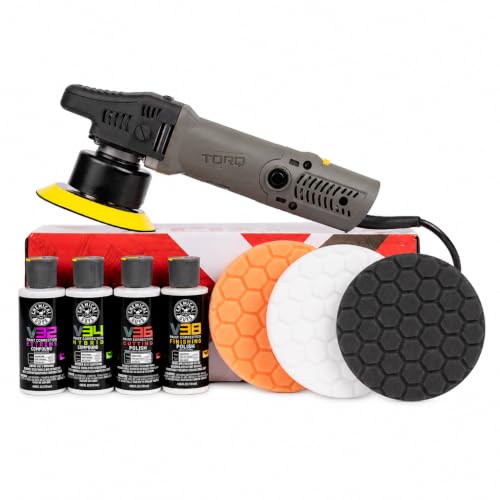
This is the kind of kit that makes you feel prepared right out of the box. The TORQX polisher packs a solid 800W motor and an 8mm orbital throw, which on paper strikes a smart balance between cutting power and safety for daily paintwork. Owners consistently report it’s smooth, predictable, and forgiving, especially when working on clear coats or tackling light swirls without fear of burning through. It’s not the most aggressive machine here, but that’s the point: it’s built for consistency, not heroics.
What really sets it apart is the included accessories. You get compounds, polishes, and multiple pad types, so beginners aren’t left scrambling to buy extras. Compared to bare-bones budget models, this is a turnkey solution. For enthusiasts who want professional results without stepping into rotary territory, this is the logical starting point. I’d pick this over entry-level cordless kits if you’re serious about finish quality and long-term usability.
Video review
WEN 6010 6-Inch Waxer/Polisher
Strengths
- Low cost
- Simple operation
- Comfortable grip
- Lockable switch
- Solid build for price
Trade-offs
- No speed control
- Minimal accessories
- Weak motor for compounding
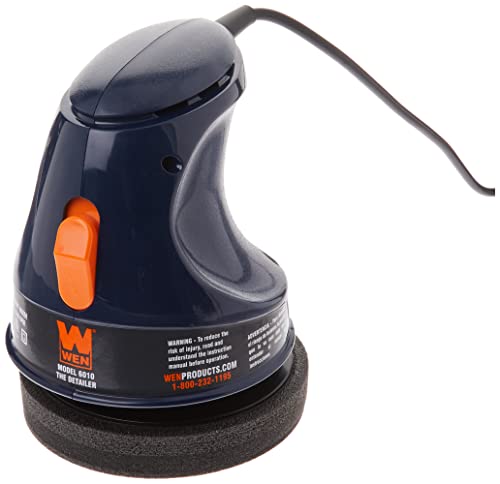
This is the definition of no-frills. The WEN 6010 runs at a fixed 3500 RPM with a modest 0.5-amp motor, so don’t expect it to power through compound like a pro tool. But for basic wax application or buffing off sealant on a weekly driver? It does the job. At this price, it’s hard to argue with the simplicity. The ergonomic grip is comfortable, and the lockable switch means you’re not white-knuckling the trigger.
It comes with just two bonnets, no compounds, no extra pads, so you’ll supply everything else. Compared to the feature-packed Chemical Guys kit, this is bare bones. But sometimes that’s enough. I see this as a secondary tool or a starter buffer for someone testing the waters. It won’t correct much, but it spreads wax evenly and won’t break the bank. For the occasional user with a garage project car, it’s a sensible placeholder until they’re ready to upgrade.
Video review
cotaros Cordless Car Buffer Polisher
Strengths
- Dual 21V batteries
- 8-speed control
- LED display
- Lightweight
- Low vibration
Trade-offs
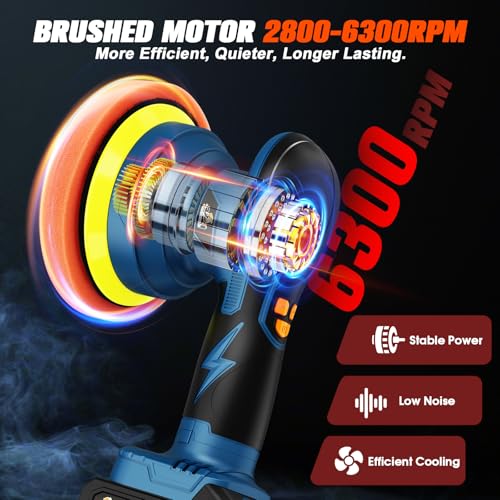
- Brushed motor (less durable than brushless)
- Not for deep defect removal
- Plastic housing feels less rugged
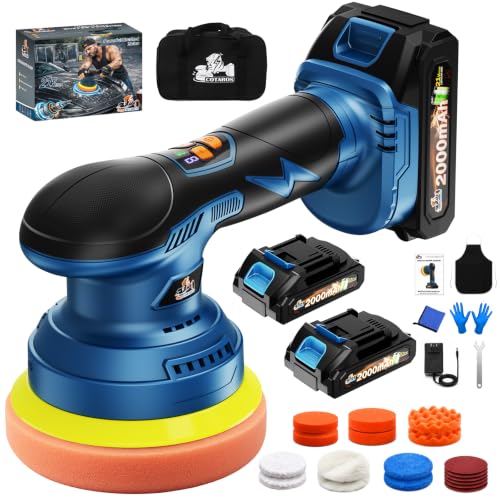
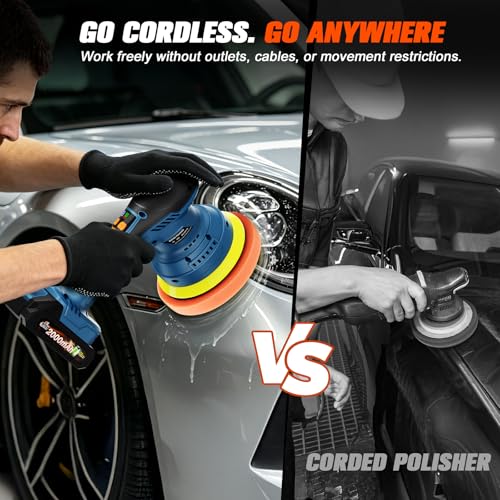
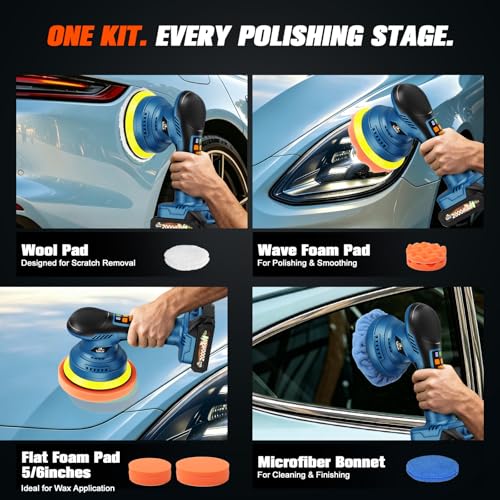
Cordless freedom meets real functionality here. With 8 speeds topping out at 6300 RPM and a true dual-action mechanism, this cotaros model delivers more control than most in its class. The LED display is a small but meaningful upgrade, knowing your speed and battery life at a glance matters when you’re mid-panel. At just 3 lbs, it’s easy to maneuver overhead or along lower body panels, and owners praise how fatigue-free sessions feel even on full-sized SUVs.
The twin 21V batteries are the real win. Unlike single-battery rivals, you can swap and keep going, which reviewers note makes a big difference on larger vehicles. It won’t cut as aggressively as the LDHTHOPI rotary, but that’s fine, it’s safer for newer paint. When stacked against similarly priced cordless units, this one edges ahead with better ergonomics and a broader accessory set, including wave pads that help distribute polish evenly. My recommendation? This is the smarter buy if you value runtime and versatility over brute force.
Product photos

Cordless Car Buffer Polisher 8 Speed
Strengths
- 8-speed control
- Dual batteries
- Real-time LED display
- 18-piece kit
- Multi-surface use
Trade-offs
- Motor lacks torque for heavy jobs
- Plastic construction
- Average heat dissipation
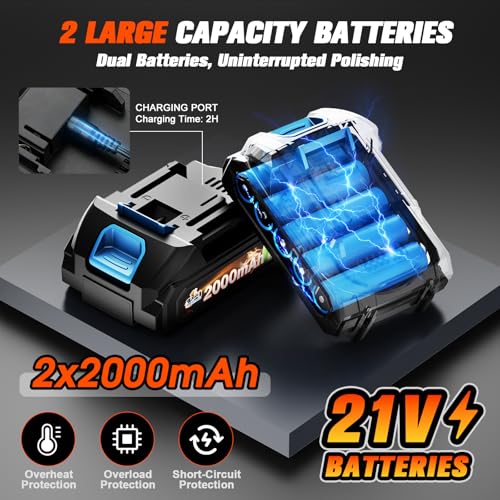
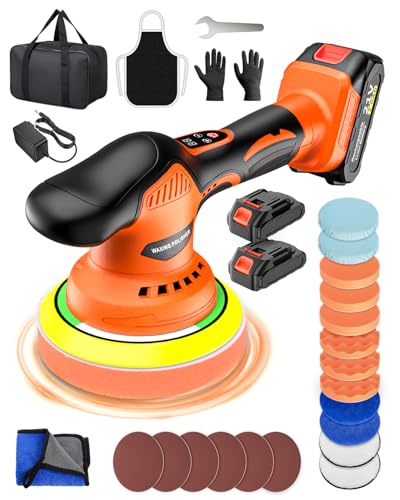
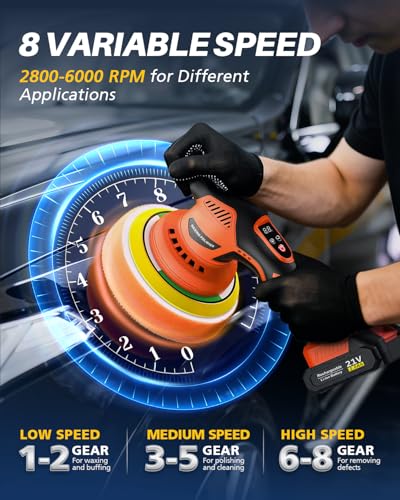
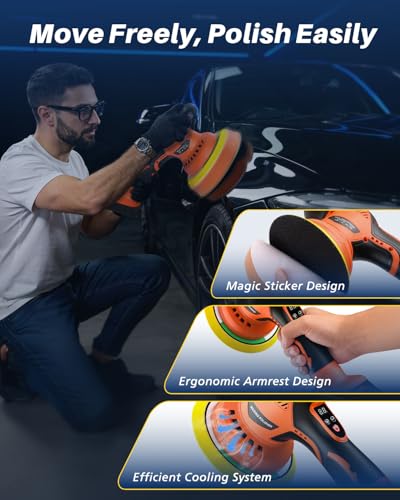
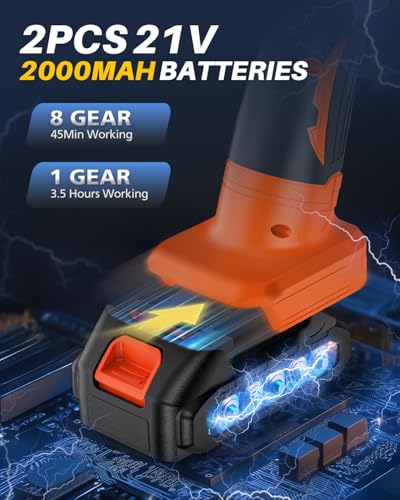
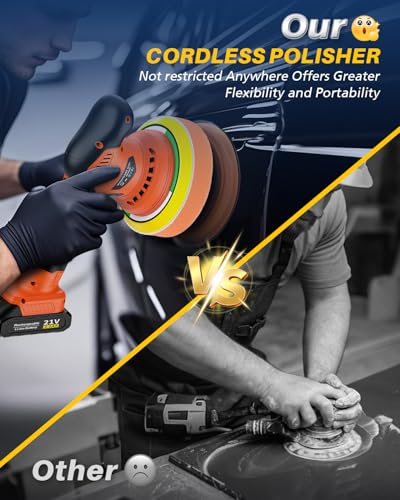
For the money, this might be the best-stocked kit here. Eight speeds, dual 21V batteries, and 18 attachments, including multiple pad types and sanding discs, make this a versatile contender. The 300W motor isn’t the strongest, but paired with eccentric motion, it delivers consistent, low-vibration performance ideal for beginners. Real-time LED feedback on speed and battery helps avoid guesswork, and owners say the hook-and-loop pads stay secure during use.
It’s nearly identical in specs to the cotaros and Protmex models, but the broader accessory count gives it an edge for multi-surface use. Whether you’re touching up a fender, polishing wood trim, or cleaning boat gelcoat, this kit covers more ground out of the gate. While the motor isn’t built for marathon sessions, the swappable batteries keep downtime low. Between this and the cotaros, I’d call it a tie, but if you want more pads and sanding options upfront, this is the smarter pick.
Product photos
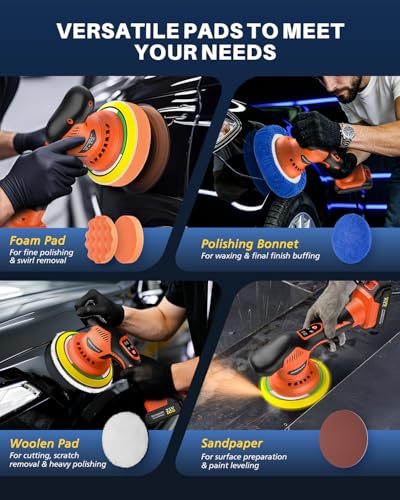
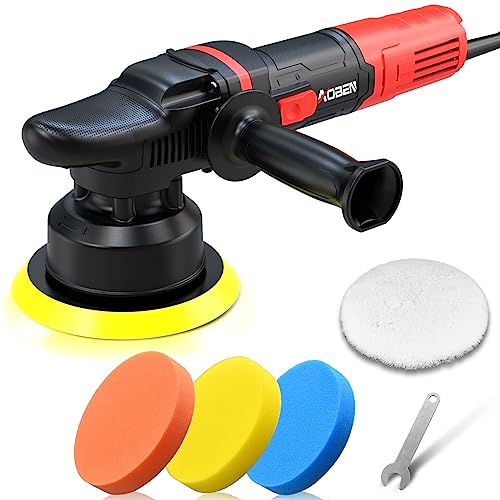
AOBEN 6-Inch Dual Action Polisher
Strengths
- 6 variable speeds
- Detachable handle
- 6.5-inch pads
- Safe for paint
- Beginner-safe
Trade-offs
- Heavy at 5.3 lbs
- Corded only
- Limited pad selection
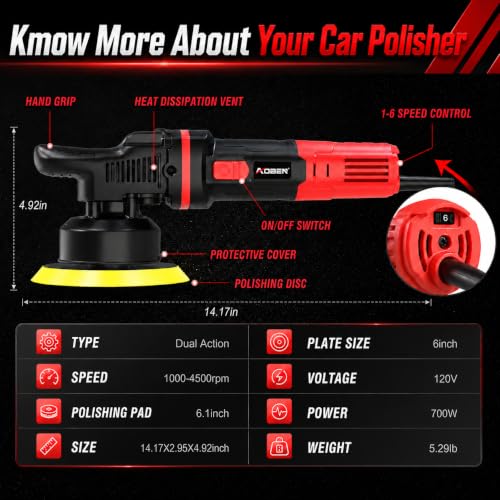
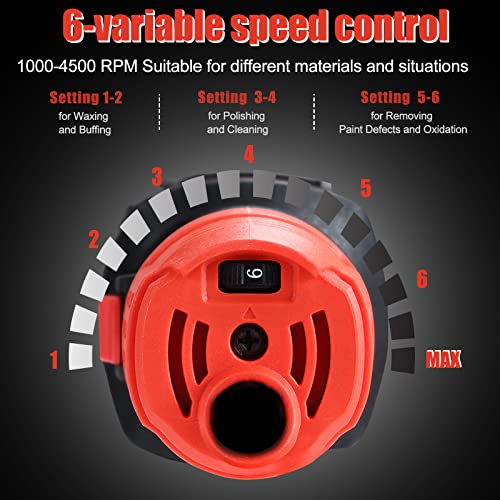
With six speeds ranging from 1000 to 4500 RPM and a 700W motor, this AOBEN polisher hits a sweet spot for new users. The low-end torque is surprisingly usable for waxing and light polishing, and the dual-action motion keeps things safe on factory paint. What stands out is the inclusion of a detachable side handle, uncommon at this price, which adds stability when leaning into the pad. Owners note it’s especially helpful when working on curved panels or door edges.
It’s heavier than the cordless models at 5.3 lbs, and the corded design limits mobility, but the trade-off is consistent power delivery. The 6.5-inch foam pads also help prevent edge marking, which reviewers appreciate. Compared to the WEN 6010, this offers far more control and capability. For someone stepping up from hand waxing to machine polishing, this provides room to grow without overwhelming. I’d recommend this as the best starting point for true beginners who want adjustability and safety in one package.
Product photos


LDHTHOPI 1600W Rotary Buffer Polisher

Strengths
- 1600W motor
- Aggressive cutting
- Multiple handles
- 7 included pads
- Multi-surface use
Trade-offs
- High risk of paint damage
- Requires skill
- Needs cooldown periods
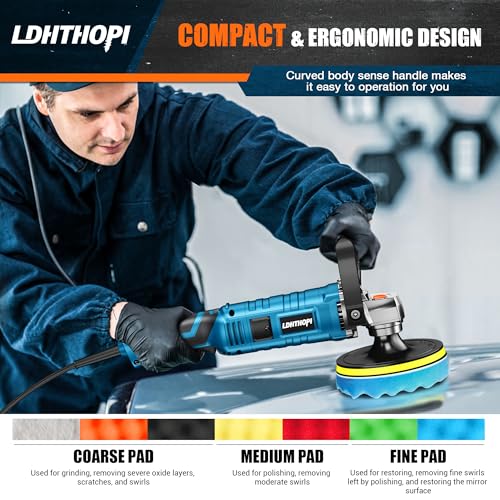
Let’s be clear: this is not a beginner’s tool. The 1600W rotary motor and 3500 RPM max speed mean serious cutting power, the kind needed to erase deep scratches and heavy oxidation. It’s one of the few in this list that leans into rotary aggression rather than random orbital safety. Owners who’ve used it on neglected classics or fleet vehicles say it cuts compound faster than any dual-action unit here. But that power demands respect: too much pressure or wrong speed, and you risk burn-through.
The three-handling options (D-handle, side handle, direct) make controlling that force easier, and the seven included pads let you stage your correction properly. Compared to the Chemical Guys TORQX, this is the hammer to its scalpel. I’d recommend it only to experienced users or those restoring older cars with worn finishes. And yes, the 15-minute duty cycle limit is a real constraint, but expected at this power level. If you need heavy correction and don’t mind the learning curve, this delivers unmatched value.
Product photos



Protmex Cordless Car Buffer Polisher

Strengths
- Ultra lightweight
- Dual batteries
- Good heat control
- Ergonomic grip
- Wide application
Trade-offs
- Only 6 speeds
- Lower max RPM
- Build quality feels budget-tier
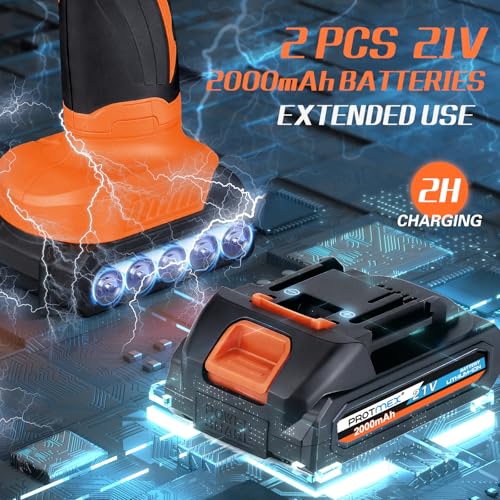
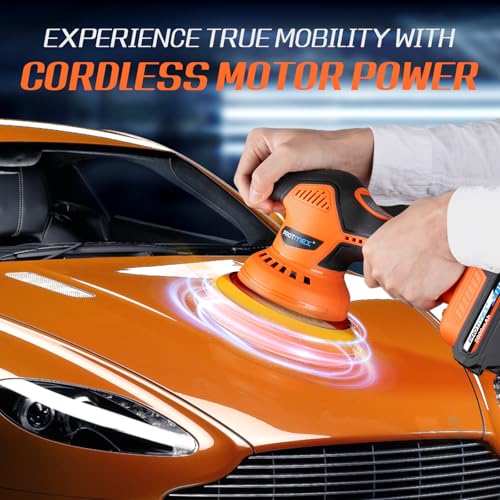
At under 3.3 lbs and fully cordless, this Protmex polisher is built for comfort first. Its 6-speed range (2800–5500 RPM) covers most detailing needs, though it doesn’t reach the high end of some competitors. Still, for waxing and light polish work, that’s plenty. The pure copper motor helps with heat management, and owners say it runs cool even during extended use, important since overheating kills cheap buffers fast.
It comes with a well-rounded set of pads and bonnets, making it a solid all-in-one option for casual users. But where it really shines is weight and handling. If you’ve ever struggled with arm fatigue using heavier orbital machines, this one will feel like a relief. That said, it lacks the precision of higher-RPM models and isn’t ideal for tough oxidation. Against the cotaros unit, it trades two speeds and a slightly dimmer interface for a brighter color and similar battery setup. For weekend warriors, it’s a capable tool, but not the last buffer you’ll ever need.
Product photos


How We Evaluated car buffers
As someone who’s spent years around vehicles – from restorations to routine maintenance – I approach detailing tools with a critical eye. Rather than a hands-on lab test, this evaluation is a research-led comparison of published specifications, owner reviews, and professional detailing insights. I focused on identifying key features and performance indicators across a range of models, weighing them against each other to determine which buffers offer the most value in different scenarios. This process involved analyzing data from manufacturer websites, reputable automotive publications, and, crucially, thousands of user experiences.
For car buffers, several factors stood out as most important. Power – measured in watts or amps – dictates the ability to tackle tougher paint correction. Orbit diameter and adjustability are also vital, influencing both effectiveness and the risk of damaging the finish. Finally, ergonomics and included accessories significantly impact usability, especially for those new to detailing. A buffer’s ability to deliver swirl-free results and handle various tasks (polishing, waxing, defect removal) was central to my assessment. You can find more about the convenience of modern detailing with these cordless car buffers.
Specifications provide a baseline understanding of a buffer’s capabilities, but owner feedback is where the real story emerges. Specs reliably indicate motor strength and speed ranges, helping predict performance on different tasks. However, reports on vibration levels, ease of use, and long-term durability come directly from those using the tools. Reputation also played a role; established brands with consistent positive feedback were viewed more favorably, and I considered the quality of included accessories alongside recommendations for using the best car polish with these tools.
Choosing The Right car buffers
Picking the right car buffer can elevate your detailing game from simple washing to a truly professional finish. It’s a surprisingly nuanced purchase, and getting it wrong can lead to frustration – or worse, damage to your vehicle’s paint.
A good car buffer balances power with control. Key considerations include motor strength (measured in Watts or Amps), orbital diameter (for swirl prevention), speed adjustability, ergonomics for extended use, and the inclusion of necessary pads and compounds to tackle various paint correction levels. Prioritize random orbital action for safety, especially if you’re new to detailing.
Understanding Orbital Action
The core of a car buffer is how it moves. You’ll primarily encounter two types: rotary and dual-action (DA), sometimes called random orbital. Rotary buffers spin in a single direction, offering immense cutting power but demanding a skilled hand. Mistakes are easily made with rotaries, potentially burning through clear coat. DA polishers, on the other hand, oscillate in an elliptical pattern, drastically reducing the risk of damage. I strongly suggest a dual-action polisher for most enthusiasts. Don’t feel you need the aggressive power of a rotary unless you’re tackling seriously neglected paint, and even then, consider starting with a DA. If you’re looking for something truly user-friendly, check out our guide to car buffers for beginners.
Power and Speed Control
Don’t fall into the trap of thinking “more power is always better.” While a robust motor is essential – particularly for heavier correction work – excessive power without precise control is a liability. Look for a buffer with variable speed settings. Lower speeds (1000-3000 RPM) are ideal for applying waxes and sealants, while higher speeds (3000-6000 RPM+) are needed for compounding and polishing to remove imperfections.
Here’s a quick guide to speed selection: * 1000-2000 RPM: Wax and sealant application. * 2000-4000 RPM: Light polishing, removing minor swirl marks. * 4000+ RPM: Compounding, removing deeper scratches and oxidation (use with caution!).
A buffer with a soft-start feature is also a nice touch, gradually increasing speed to prevent product splatter and give you better control.
Ergonomics and Kit Contents
You’ll be holding this machine for extended periods, so ergonomics are vital. Pay attention to the grip design, weight, and balance. A lighter buffer (under 5 pounds) will reduce fatigue. Beyond the polisher itself, consider what’s included in the kit. A thorough kit will include a variety of pads – foam, microfiber, and possibly wool – to tackle different tasks. Compounds and polishes are also essential, and a good kit will offer a range of abrasiveness levels. If you’re aiming for professional-level results and need a more powerful machine, our list of professional car buffers might be a better fit.
A well-chosen pad is as important as the buffer itself. Always match the pad’s aggressiveness to the severity of the paint defect and the polish you’re using. Start with the least aggressive combination and work your way up if needed.
Car Buffers Compared
Here’s a comparison of key specifications for the car buffers featured in this guide.
| Product Title | Motor (W) | Max RPM | Cordless | Battery Voltage (V) | Weight (lbs) | Included Pads |
|---|---|---|---|---|---|---|
| Chemical Guys TORQX Random Orbital Polisher | 700 | N/A | No | N/A | N/A | Multiple |
| WEN 6010 6-Inch Waxer/Polisher | N/A | 3500 | No | N/A | N/A | 2 |
| cotaros Cordless Car Buffer Polisher | N/A | 6300 | Yes | 21 | 3 | 11 |
| Cordless Car Buffer Polisher 8 Speed | 300 | 6000 | Yes | 21 | 3 | Multiple |
| AOBEN 6-Inch Dual Action Polisher | 700 | 4500 | No | N/A | 5.29 | 4 |
| LDHTHOPI 1600W Rotary Buffer Polisher | 1600 | 3500 | No | N/A | N/A | 7 |
| Protmex Cordless Car Buffer Polisher | N/A | 5500 | Yes | 21 | 3.3 | 11 |
Frequently Asked Questions
What’s the biggest difference between a dual-action and a rotary buffer?
A dual-action (DA) polisher is much safer for beginners because it uses an oscillating motion, significantly reducing the risk of paint damage, while a rotary buffer spins in one direction and requires a skilled operator to avoid imperfections. For most enthusiasts, a DA is the preferable choice.
How often should I polish my car?
You should polish your car only when needed to remove imperfections, typically every six to twelve months. Frequent polishing removes clear coat over time, so it’s best reserved for addressing swirl marks, light scratches, or oxidation, and after that, maintain the finish with regular waxing using the best buffers for wax.
What pad should I use with a new buffer?
Start with a soft foam polishing pad to test the buffer and your chosen polish on an inconspicuous area. This allows you to assess the combination’s cutting power and avoid potential damage; it’s always better to start conservatively and increase aggressiveness if needed.
Can I use a car buffer on a matte finish?
Generally, no. Most car buffers are designed for traditional clear coat finishes and can alter or remove the matte texture. Specialized matte paint correction requires specific techniques and products, and using a standard buffer can cause irreversible damage, although you can find excellent detailing supplies for maintaining a matte finish.
What power (watts or amps) is sufficient for correcting minor paint swirls?
A buffer with between 400 and 600 watts is usually sufficient for removing minor paint swirls and imperfections. However, deeper scratches or oxidation will require a more powerful buffer, potentially in the 700-watt range or higher, alongside appropriate compounds to get the job done, and all the essential detailing items to support the process.
The Bottom Line
Choosing a car buffer often comes down to balancing how much control you want versus how much effort you’re willing to put in. While a powerful machine like the LDHTHOPI 1600W Rotary Buffer Polisher offers aggressive correction capabilities, it demands experience to wield safely. For most enthusiasts, I believe the Chemical Guys TORQX Random Orbital Polisher strikes the best overall balance – offering enough power for effective polishing while remaining forgiving and easy to learn with.
If you’re on a tighter budget, the WEN 6010 6-Inch Waxer/Polisher is a solid starting point. For those prioritizing cordless convenience, the cotaros Cordless Car Buffer Polisher provides excellent runtime and a generous selection of pads. And for those seeking a versatile option capable of handling a wide range of tasks, the AOBEN 6-Inch Dual Action Polisher is a strong contender, especially when paired with the best car wax for a lasting shine.
Ultimately, the specs are less crucial than understanding the fundamentals. Consistent preparation – thorough washing, clay barring, and selecting the right pads and compounds – will yield far better results than the most expensive buffer in the wrong hands. Don’t underestimate the importance of taking your time, practicing on a less visible area first, and researching techniques to achieve a truly professional finish with these car polish buffers.
