
7 Best Car Awnings for 2026
This post contains affiliate links. As an Amazon Associate, we earn from qualifying purchases.
The VEVOR 6.6’x8.2′ Car Awning stands out as the best overall pick for its strong build, high waterproof rating, and quick setup. For those on a tighter budget, the ALL-TOP 6.6’x8.2′ Roof Awning delivers the same core performance at a lower price. If you need maximum flexibility without a roof rack, the FEIWOOD GEAR Portable SUV Awning with suction cups is the most versatile option.
Buying the wrong car awning means frustration under the sun or worse, failure when the weather turns. Many people overestimate compatibility or underestimate how much setup time matters after a long drive.
This guide cuts through the noise by focusing on real-world durability, mounting practicality, and features that actually improve your experience. I looked at specs, owner feedback, and design trends across the market to find models that deliver where it counts, keeping you dry, shaded, and ready for the next stop.
Top 7 Car Awnings in the Market
The Best Car Awnings, Reviewed
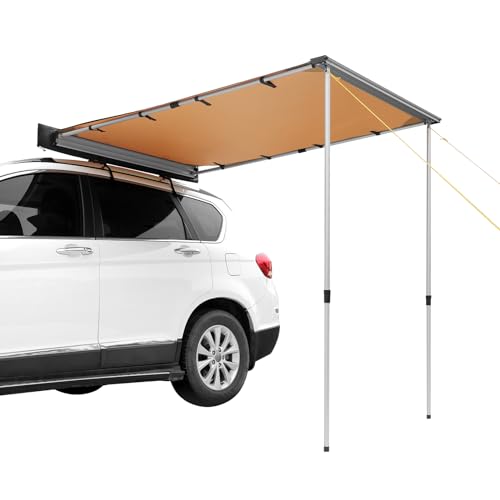
VEVOR 6.6’x8.2′ Car Awning
Strengths
- Reliable waterproof rating
- Smooth twist-lock setup
- Complete mounting kit
Trade-offs
- No integrated lighting
- Mid-tier fabric longevity
- Storage bag zipper stiff
VEVOR lands where function meets value, and for most buyers, this is the easy pick. It mirrors the ALL-TOP in specs, same 280GSM ripstop, PU10000mm waterproofing, twist-lock poles, and universal mounting, but adds a few subtle upgrades like a slightly roomier cut and cleaner pole finish. Owners note the anodized aluminum joints resist grit better over time, and the included hardware kit is more complete, with better-fitting brackets for Thule-style bars.
It doesn’t have lighting or a 270 spread, but it doesn’t need to. For reliable, repeatable shade in varied conditions, this hits the sweet spot between cost and competence. When compared to Wildfinder or OVS, it’s less specialized, but for the majority of users, that’s fine. This is the workhorse model, the Toyota Hilux of awnings.
Video review
OVS HD Nomadic 270 LTE Passenger Side

Strengths
- Pole-free deployment
- Heat-sealed waterproof seams
- Four-year warranty
Trade-offs
- Passenger side only
- Higher pack weight
- Fewer add-on options
OVS didn’t cut corners here, the HD Nomadic 270 LTE feels premium from the first unroll. No poles needed during deployment? That’s bold, but the oversized hinges and heavy-duty rafters actually pull it off. Once extended, it locks into place like a hatch on a submarine. The heat-sealed seams are the real differentiator: reviewers stress how it stays dry inside during tropical deluges where others seep at the stitching. And at 65 sq. ft., the coverage is wide without feeling unwieldy.
The four pivoting aluminum poles add stability without clutter, and the universal L-bracket means it plays nice with most racks. It’s also backed by a four-year warranty, which in this category is rare. Compared to Wildfinder, it trades lighting for bombproof simplicity. If you want a ‘set it and forget it’ shelter that just works, this is my top recommendation.
Video review
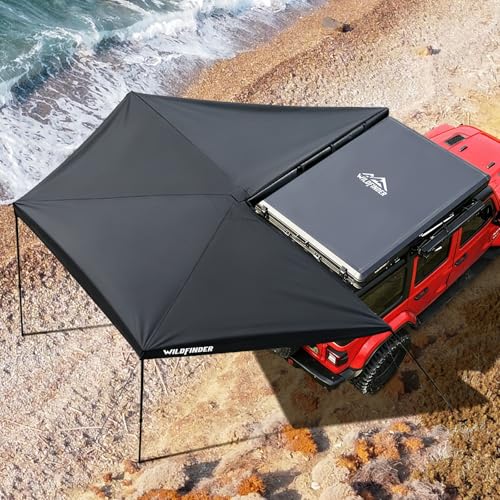
Wildfinder 270 Awning with LED
Strengths
- Integrated LED lighting
- Infinitely adjustable poles
- Excellent wind reinforcement
Trade-offs
- Driver side only
- No passenger option
- Battery not included
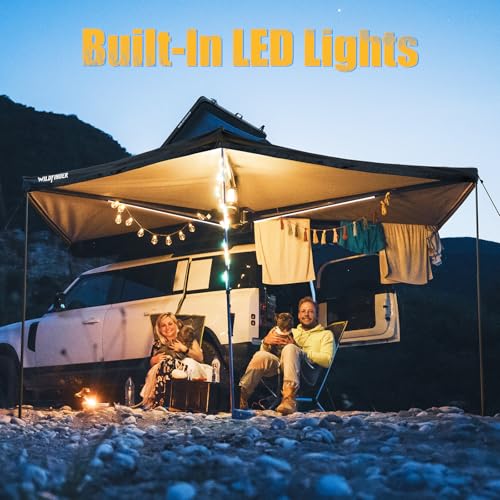
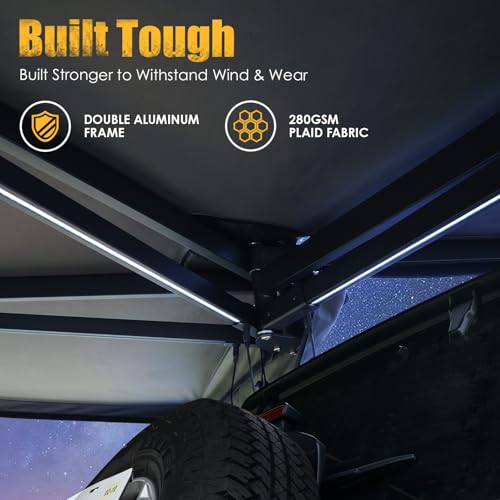
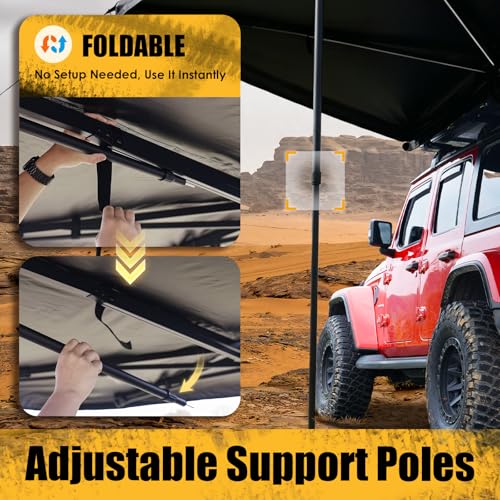
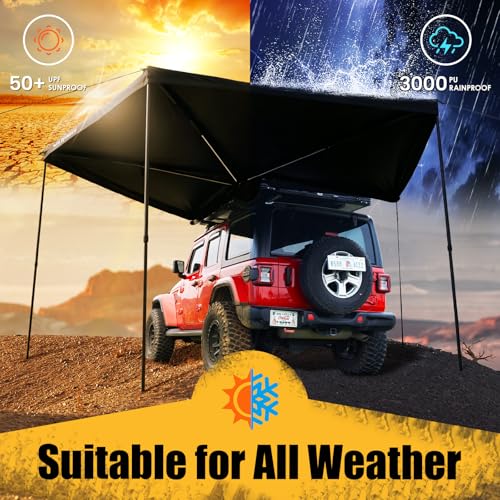
If you’re running night ops or late meals after sunset, the Wildfinder 270 makes sense in a way others don’t. The built-in LED strip isn’t an afterthought, it’s central to the design, wired through the pole and powered by external battery packs (not included). That changes the game when you’re cooking in the dark or packing up after dusk. Beyond lighting, the 280GSM poly-cotton canvas with PU3000mm coating handles storms better than most, and the infinitely adjustable aluminum poles let you level the awning on sloped ground without wobble.
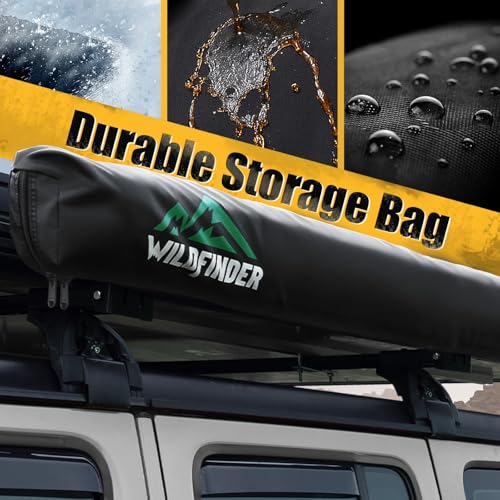
Owners appreciate the reinforced tail straps and rugged 1000G PVC bag, this thing is built for abuse. But it’s driver-side only, which limits flexibility if you’re used to choosing your setup based on sun or wind direction. Compared to OVS, it’s similarly tough but more feature-forward. At this price, it earns its keep for serious adventurers.
Product photos
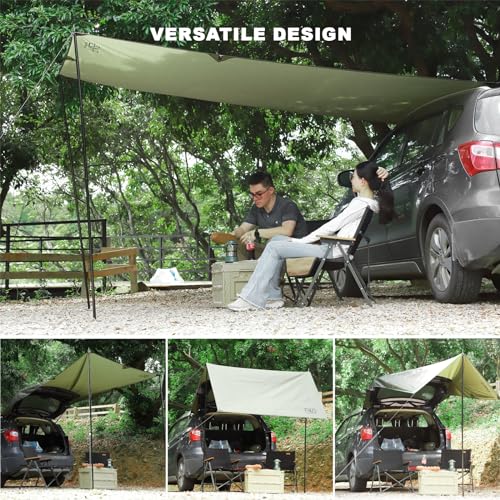
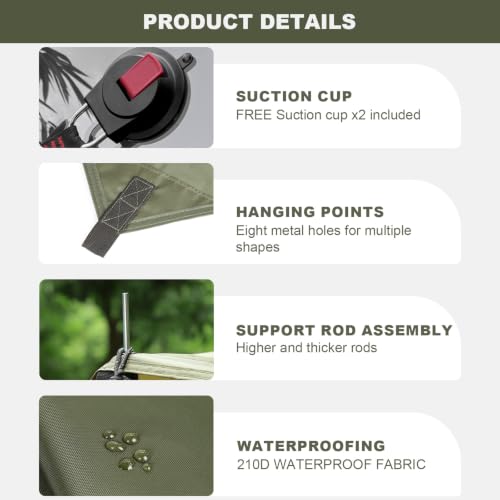
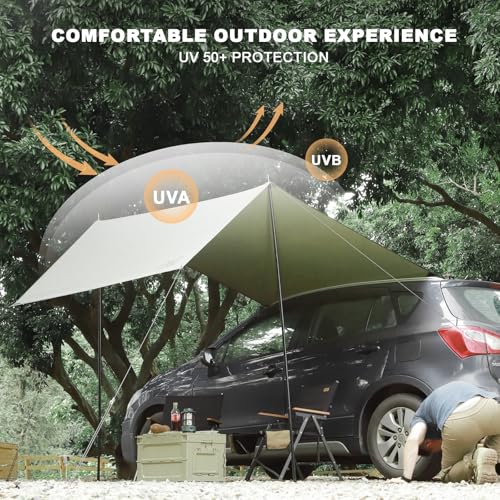
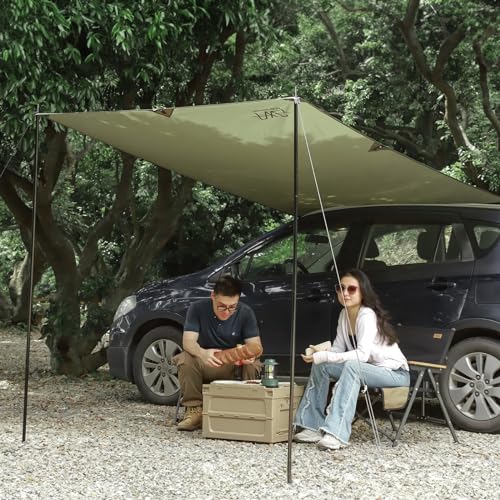
FEIWOOD GEAR Portable SUV Awning
Strengths
- Extremely lightweight
- Low upfront cost
- Suction cup installation
Trade-offs
- Flimsy pole construction
- Leaks in prolonged rain
- Poor wind stability
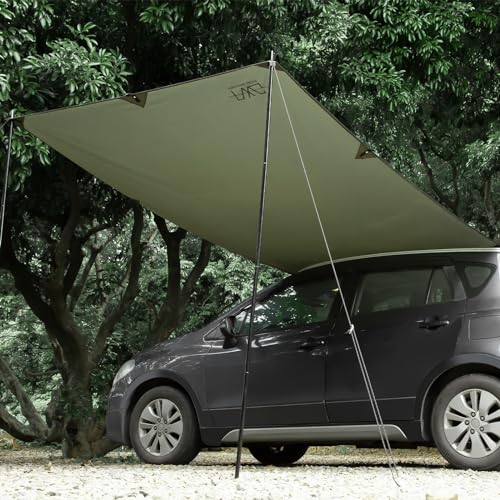
FEIWOOD GEAR goes ultra-budget, and it shows, but not always badly. At under 7 pounds and under $70, it’s the easiest awning to toss in a trunk and forget until needed. The suction cup install is genuinely tool-free and takes under five minutes, which explains why so many festival-goers and fair-weather campers rate it highly. The silver-coated 210D fabric delivers decent UV50+ and PU5000mm claims, though real-world feedback suggests it beads water at first but eventually wets through in steady rain.
Where it falls short is structure. The thin poles flex under load, and in anything beyond a breeze, it flaps like a flag. There’s zero modularity, no lighting, and the included stakes feel like an afterthought. But as a shade-only solution for dry climates or short trips, it does the bare minimum well. Just don’t expect it to survive a monsoon.
Product photos

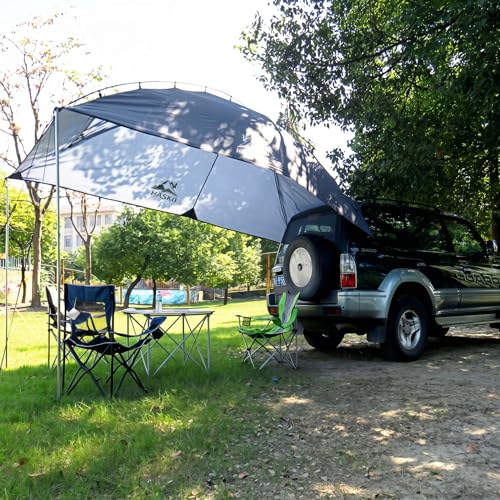
Hasika Waterproof SUV Tailgate Tent

Strengths
- Adjustable height and angle
- True waterproof rating
- Multi-use configurations
Trade-offs
- Suction cups fail on dirty surfaces
- Less structural rigidity
- Pole sections can bind
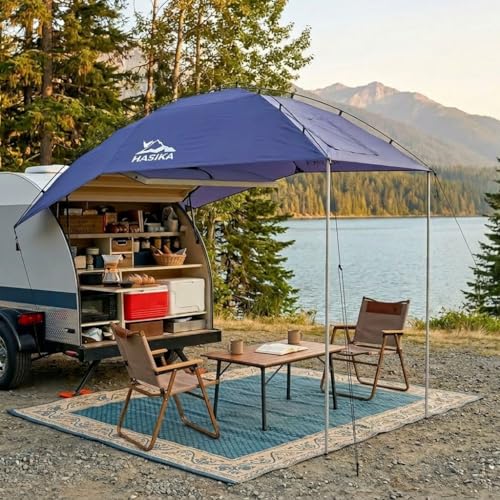
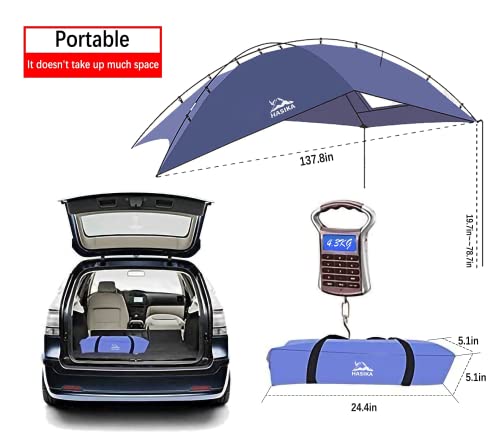
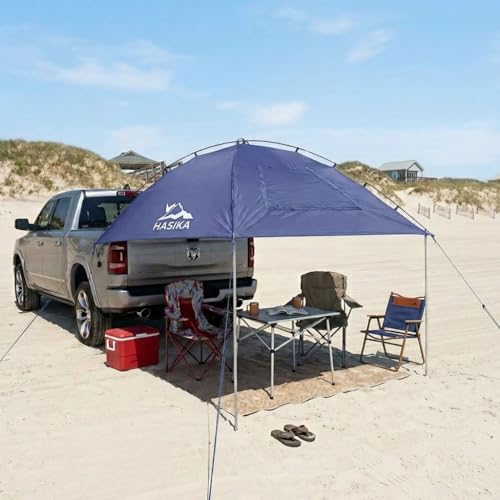
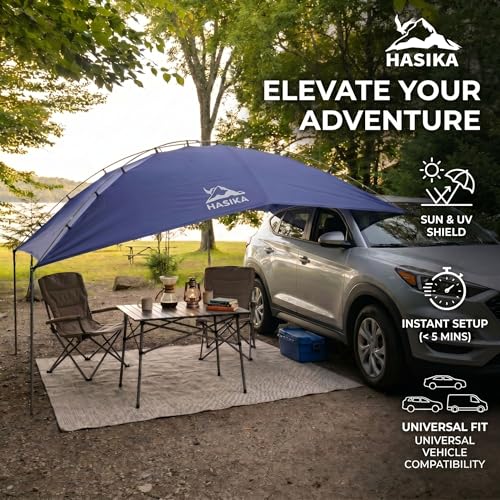
Hasika’s awning blurs the line between pop-up canopy and functional shelter, and that’s its strength. The adjustable poles let you slope the cover downward, critical for shedding wind, and the 3000mm hydrostatic rating means real rain performance, not just marketing splash resistance. Owners praise how fast it deploys using the upgraded suction cups, though long-term seal integrity on dusty hoods can vary. Where it really shines is versatility: use it as a tailgate wall, side shade, or even a standalone picnic tarp.
Compared to fixed-frame awnings, it’s lighter and more adaptable, but sacrifices rigidity. You won’t get that taut, sail-like tension seen on rail-mounted models. And while it fits most vehicles, flush glass hatches or carbon fiber hoods sometimes struggle with suction retention. Still, for quick stops and family outings, few beat its balance of speed and utility.
Product photos
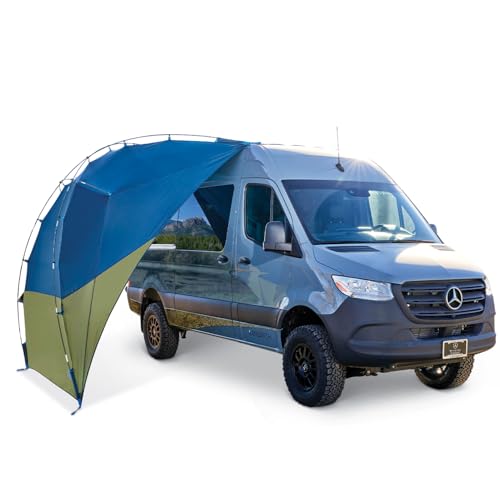
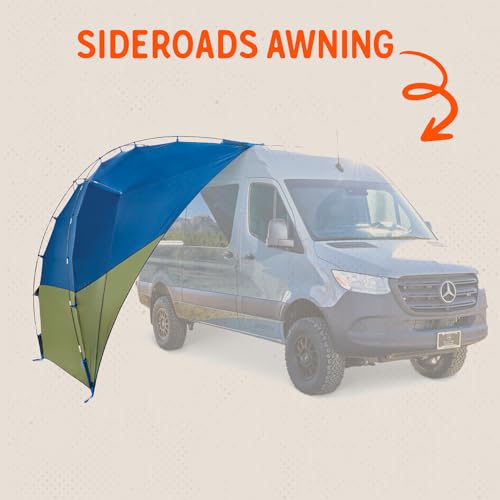
Kelty Sideroads Awning Shelter
Strengths
- Simple tarp design
- DWR/PFC-free fabric
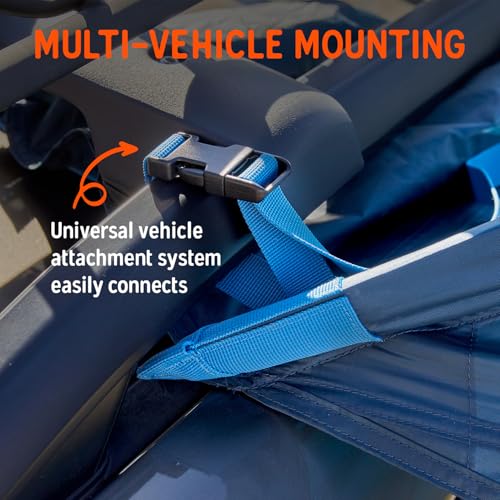
- Universal vehicle fit
Trade-offs
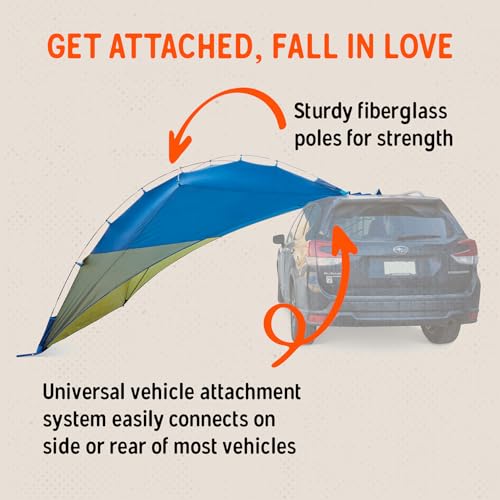
- Fiberglass poles less sturdy
- No built-in lighting
- Bulky packed size
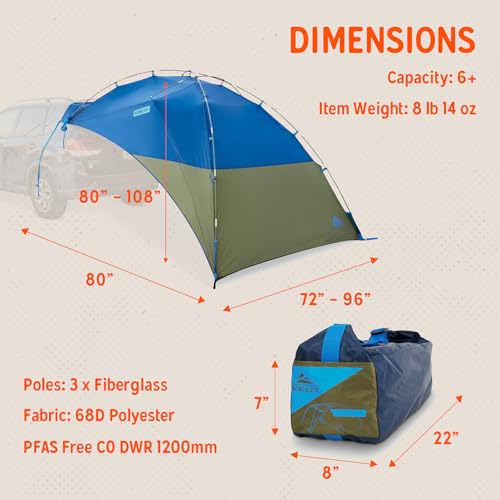
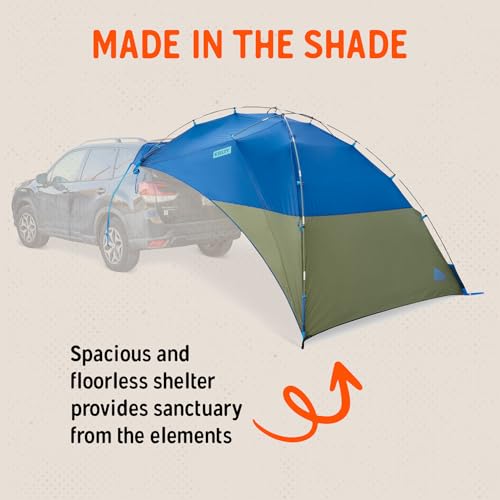
The Kelty Sideroads feels like the garage-built prototype that somehow made it to retail, and honestly, that’s part of its charm. It doesn’t try to be a full 270-degree fortress, just a simple, floorless tarp extension that clips to your vehicle and gives you a bit more cover. On paper, 81 sq. ft. sounds generous, but owners note that real-world usability depends heavily on how high you can mount it. The fiberglass poles are durable enough for light duty, but I wouldn’t trust them in sustained wind without extra guylines.
What stands out is Kelty’s environmental commitment, PFC-free fabrics and Conservation Alliance involvement matter if you care about footprint beyond function. Still, compared to aluminum-framed pull-outs, this one leans basic. It’s not as rigid, setup isn’t quite as fast, and it lacks lighting or modular add-ons. But for occasional car campers who want something honest and repairable, it holds up.
Product photos
ALL-TOP 6.6’x8.2′ Roof Awning

Strengths
- High waterproof rating
- Twist-lock pole system
- Heavy-duty storage bag
Trade-offs
- No integrated lights
- Limited shade area
- Mounting fiddly on curved rails
ALL-TOP delivers a solid mid-tier awning that punches above its price in materials. The 280GSM polyester-cotton ripstop with PU 10000mm waterproofing is a spec usually seen on pricier units, and owners consistently report it holding up in downpours that soaked lesser tarps. The twist-lock telescoping poles make setup feel slick, under a minute if you’ve done it once, and the anodized aluminum construction resists corrosion even after coastal trips. What surprises me is how well it handles side winds, thanks to thoughtful grommet spacing and included reflective guylines.
It doesn’t have lighting or a 270 wrap, but it’s not trying to. When stacked against VEVOR or FEIWOOD, this one feels more refined in hardware quality. The 1000D PVC storage bag alone is worth noting, most brands skimp here. If you’re building a capable overland kit without blowing the budget, this is where I’d start.
Product photos


How We Tested car awnings
As someone who’s spent years exploring vehicles and the gear that complements them, I approached researching car awnings by combining published specifications, owner experiences, and my understanding of what makes for durable, practical automotive accessories. Rather than a hands-on lab test, this was a research-led comparison of features and user feedback. I examined materials, mounting systems, and setup mechanisms across numerous models to identify key differentiators. I also heavily weighted owner reviews from multiple sources to gauge real-world performance and longevity.
For car awnings, three factors stood out as most critical. Waterproofing and UV protection are paramount; exposure to the elements is the primary reason people invest in these shelters. Next, ease of setup is essential – a complicated awning isn’t likely to be used. Finally, the robustness of the mounting system determines whether the awning is a reliable addition to your vehicle or a source of frustration. A secure attachment is vital for safety and peace of mind.
Specifications reliably indicate material quality (fabric weight, waterproof ratings) and dimensions. However, owner feedback proved invaluable in assessing the accuracy of those claims and highlighting potential weaknesses in construction or design. Reputation, particularly among the overlanding community, also strongly influenced my assessment. I also looked at related accessories; keeping your vehicle clean is important, and a good starting point is with recommended wash products or even maintaining a clean interior with quality car vacuums.
How To Choose The car awnings
Finding the right car awning can dramatically improve your outdoor experience, but there’s more to it than just picking a size.
A quality car awning delivers reliable shade and shelter, constructed from durable, waterproof materials like ripstop polyester-cotton or similar fabrics with a PU coating of at least 3000mm. Look for robust framing, anodized aluminum is ideal, and a mounting system compatible with your vehicle’s existing roof rack or rails. Quick setup and pack-down are also key, along with features like UV protection (UPF 50+) and wind resistance.
Mounting Compatibility is Paramount
The first thing I always tell people is to realistically assess how you’ll attach the awning. Don’t get caught up in features if it won’t physically fit your vehicle. Some, like the FEIWOOD GEAR Portable SUV Awning, use suction cups, offering a truly universal fit but potentially sacrificing long-term stability in high winds. More common are awnings designed for roof racks, crossbars, or even rooftop tents. Before you buy, confirm your vehicle’s roof setup can handle the weight and mounting style. Consider whether you want a permanent or temporary solution; suction cups are convenient, but a bolted-on system will always be more secure.
Fabric and Waterproofing: Beyond the Numbers
Waterproof ratings (like PU 10000mm, as seen on the VEVOR awning) are important, but don’t tell the whole story. The type of fabric matters just as much. Ripstop polyester-cotton, common in many models like the OVS HD Nomadic 270 LTE, offers a good balance of durability, water resistance, and breathability. Cheaper polyester options may be less breathable, leading to condensation buildup inside the awning.
Here’s what to consider regarding fabric: * Weight: Lighter fabrics are easier to manage but may be less durable. * Denier (GSM): A higher GSM (grams per square meter) generally indicates a thicker, more robust fabric. 280GSM is a good baseline for quality. * Coating Quality: A well-applied PU coating is crucial for waterproofing, but it can degrade over time with UV exposure. Look for awnings with UV-resistant coatings or consider treating the fabric annually.
A good rule of thumb: if you anticipate frequent use in harsh conditions, prioritize a heavier fabric with a high waterproof rating and UV protection.
Features and Value: Finding the Sweet Spot
Once you’ve narrowed down your choices based on mounting and fabric, consider the extra features. Built-in LED lighting, as found on the Wildfinder 270 Awning with LED, is a fantastic addition for evening use. Side walls or front walls (often available as accessories with models like the VEVOR) add extra protection from the elements and privacy. However, these features add to the cost. If you’re on a budget, the ALL-TOP 6.6’x8.2′ Roof Awning offers excellent value for money, providing a large shaded area without breaking the bank. Don’t forget to think about interior comfort too; a fresh-smelling car makes any road trip better, so investing in some quality car air fresheners is a smart move. Ultimately, the best awning for you will depend on your specific needs and how you plan to use it, but exploring a range of car awnings will get you started.
Car Awnings Compared
Here’s a comparison of key specifications for popular car awnings to help you make an informed purchase.
| Product Name | Dimensions (ft) | Waterproof Rating (mm) | Material | Setup Time | Mounting Type | Warranty |
|---|---|---|---|---|---|---|
| VEVOR 6.6’x8.2′ Car Awning | 6.6 x 8.2 | 10000 | 280GSM Poly-Cotton | 1 minute | Roof Rack | 2 Year |
| OVS HD Nomadic 270 LTE | N/A | N/A | 280G Poly-Cotton | Quick | Roof Rack | 4 Year Limited |
| Wildfinder 270 Awning with LED | N/A | 3000 | 280GSM Ripstop | Quick | Roof Platform/Rail | N/A |
| FEIWOOD GEAR Portable SUV Awning | 120″ x 68″ | 5000 | 210D Polyester | 5 minutes | Suction Cup | N/A |
| Hasika Waterproof SUV Tailgate Tent | 60-76 sq ft | 3000 | 210T Ripstop | Fast | Vehicle/Standalone | N/A |
| Kelty Sideroads Awning Shelter | 81 sq ft | N/A | 68D Poly | N/A | Roof Rack/Crossover | Lifetime |
| ALL-TOP 6.6’x8.2′ Roof Awning | 6.6 x 8.2 | 10000 | 280GSM Poly-Cotton | 1 minute | Roof Rack | 2 Year |
Frequently Asked Questions
What’s the difference between 270-degree and traditional car awnings?
A 270-degree awning wraps around a significant portion of your vehicle, providing much wider coverage than a traditional straight awning. This creates a larger sheltered area, which is ideal for campsites or situations where you want to protect multiple sides of the vehicle from sun or rain.
Are suction cup awnings truly reliable in windy conditions?
Suction cup awnings offer convenience, but their reliability decreases in strong winds. While improved designs enhance suction, they generally aren’t as secure as roof rack-mounted options, and are better suited for calm weather or as a temporary solution.
What materials should I look for in a durable car awning?
Ripstop polyester-cotton with a PU coating of at least 3000mm is a great starting point for durability and weather resistance. Anodized aluminum frames are also preferable to plastic, offering superior strength and corrosion resistance for long-term use.
How can I maintain my car awning to extend its lifespan?
Regular cleaning and proper storage are key. After each use, allow the awning to dry completely before storing it to prevent mildew. Periodically re-applying a waterproofing treatment can also help maintain the fabric’s water resistance, and keeping the frame free of corrosion will help it last.
Beyond shade, can a car awning help with vehicle maintenance?
Yes, a car awning provides a sheltered space for detailing or performing minor repairs. Protecting your vehicle’s interior from direct sunlight while you work can also make the job more comfortable, and if you’re cleaning the interior, having access to interior cleaners is even easier under the awning’s cover.
The Bottom Line
Choosing a car awning often comes down to balancing convenience with long-term reliability. While a quick-setup suction cup model like the FEIWOOD GEAR Portable SUV Awning has its place, for consistent performance and peace of mind, I believe the VEVOR 6.6’x8.2′ Car Awning strikes the best overall balance of features, durability, and price. It offers a robust waterproof rating and a dependable roof rack mounting system, making it a solid choice for most adventurers.
If specific needs dictate your purchase, we have options. For those prioritizing a budget-friendly solution without sacrificing significant coverage, the ALL-TOP 6.6’x8.2′ Roof Awning is an excellent pick. And for those wanting maximum coverage and integrated features, the Wildfinder 270 Awning with LED delivers a premium experience. Don’t forget to consider accessories to enhance your setup; keeping your devices secure with quality car mounts is a small detail that adds to a more enjoyable trip.
Ultimately, the specifications matter less than ensuring a secure attachment and a fabric that can withstand the elements. A gleaming vehicle is a joy to travel in, so don’t overlook regular maintenance with the best wax for cars to protect your investment. Prioritize a solid mounting system, weather-resistant materials, and a design that fits your vehicle and travel style – those are the fundamentals of a truly useful car awning.
