
7 Best Car Audio Subs of 2026
This post contains affiliate links. As an Amazon Associate, we earn from qualifying purchases.
The Rockford Fosgate Punch P300-12 stands out as the best overall car audio sub for its balanced performance and self-contained design, while the Skar Audio Dual 12″ SDR Package delivers serious power for bass enthusiasts on a budget, and the Seventour 10″ Slim Under Seat Sub offers a clean, space-saving option for those who want solid low end without sacrificing cargo room.
At TheAutoZenith, I’ve spent years digging into the mechanics of sound and motion, and car audio is no different, great bass isn’t just about volume, it’s about control, clarity, and how well it fits your ride. Too many people buy subs based on peak wattage alone, only to end up with distorted, muddy output or an installation nightmare.
This guide cuts through the hype. I compared specs, owner feedback, and build quality across top models to find subs that actually perform in real vehicles. Whether you’re after deep, accurate lows or chest-thumping punch, I’ll help you pick the right sub for your car, your system, and your ears.
Top 6 Car Audio Subs in the Market
The Best Car Audio Subs, Reviewed
Rockford Fosgate Punch P300-12 Sub
Strengths
- All-in-one convenience
- Excellent OEM integration
- Trusted Rockford reliability
- Tuning controls included
Trade-offs
- Lower power vs. high-end kits
- Sealed box limits air movement
- Heavier than slim alternatives
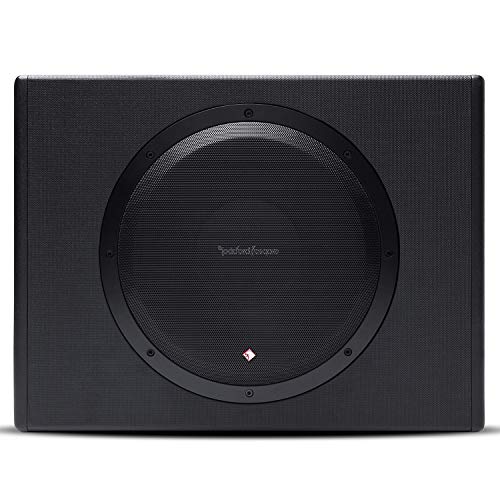
The Rockford Fosgate Punch P300-12 is one of those rare all-in-one packages that actually lives up to the brand’s reputation. With a built-in 300-watt amp, sealed enclosure, and full suite of tuning options, including phase control, bass EQ, and remote level knob, it’s designed for plug-and-play simplicity without sacrificing adjustability. Reviewers note smooth integration with factory head units, and the closed-loop design helps maintain clarity even when driven hard.
Compared to raw component deals, this isn’t the loudest or most powerful option here. But for someone who wants reliable, musical bass without wiring an amp or sourcing a box, it’s a smarter pick than most combo units. The Rockford name still means something in car audio, and the build quality shows it. I’d choose this over flashy RGB-lit underseat subs any day if sound fidelity matters.
Video review
Skar Audio Dual 12″ SDR Package
Strengths
- Extreme power handling
- Complete package with wiring
- Vented enclosure for louder output
- High-efficiency Class D amp
Trade-offs
- Large footprint
- Requires electrical upgrades
- Can overwhelm small cabins
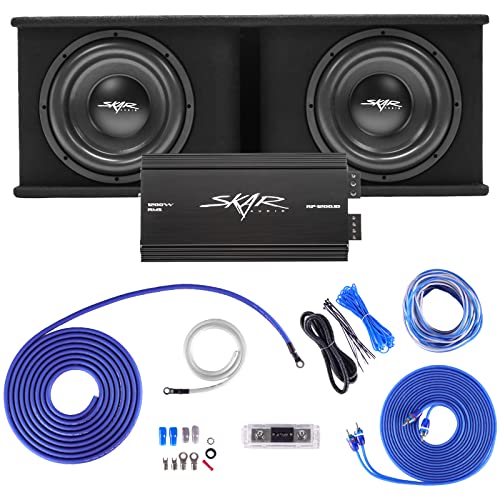
If you’re after serious decibels, the Skar Audio SDR dual 12” package is where the rubber meets the road. With 1,200 watts RMS feeding two 12-inch subs in a vented enclosure, plus a dedicated Class D amp and full 4-gauge wiring kit, this is a full-on assault on silence. Owners report room-filling bass and strong low-frequency reach, especially in trucks and SUVs where airspace helps.
It’s not subtle, and it’s definitely not stealthy, but that’s the point. Compared to the Rockford or Pioneer options, this is for people who measure success in rattled windows, not tonal nuance. The trade-off? Size and power demands. You’ll need space for the enclosure and a solid electrical upgrade. But if you want raw power and don’t mind the commitment, this Skar kit is arguably the most complete high-output solution here.
Video review
SUBPULSIX 2000W Underseat Sub Package
Strengths
- Beat-synced RGB lighting
- App control for lighting
- Clean Class D amplification
- Space-saving under-seat fit
- Tunable sound settings
Trade-offs
- Peak wattage misleading
- Not for SPL enthusiasts
- App required for full lighting features
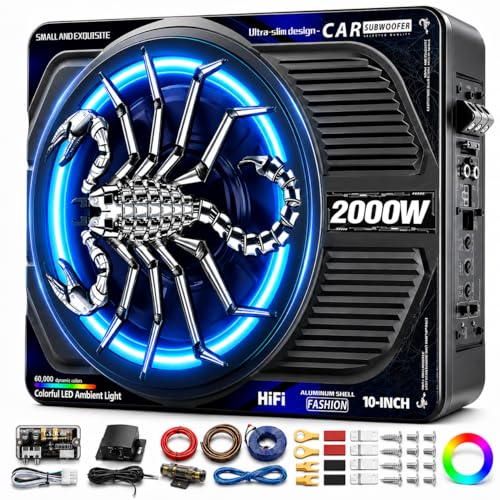
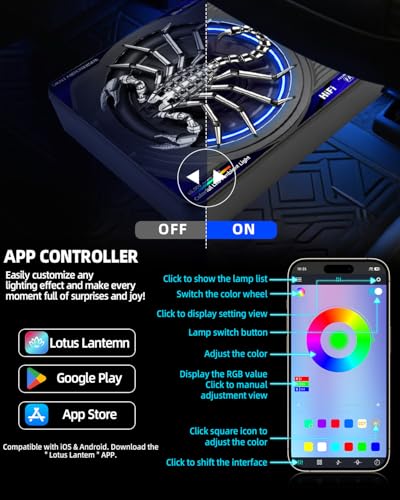
The SUBPULSIX underseat subwoofer raises the bar for compact powered subs, not just with 1,200 watts of real output potential, but with smart touches like app-controlled, beat-synced RGB lighting. Unlike basic glow rings, this one pulses with the music, adding a dynamic layer to the experience. More importantly, the built-in Class D amp offers proper tuning: adjustable gain, bass boost, and crossover, which means you can dial it in without extra gear.
It competes directly with the Seventour unit but pulls ahead with better software integration and cleaner power delivery. While still no match for a dual 12” ported box, it’s the best-sounding underseat option here, especially for trucks and SUVs where you want hidden bass that doesn’t eat cargo space. I’d pick this over the cheaper RGB model any day if you want both performance and polish.
Product photos



Seventour 10″ RGB Under Seat Sub
Strengths
- Slim, space-saving design
- RGB ambient lighting
- Easy plug-and-play install
- Built-in protection circuits
Trade-offs
- Overstated power claims
- Bass boost adds distortion
- Lighting not beat-synced
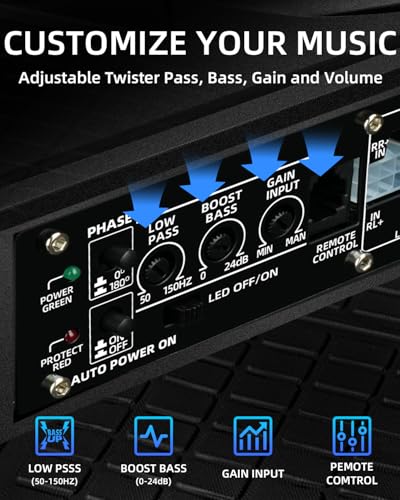
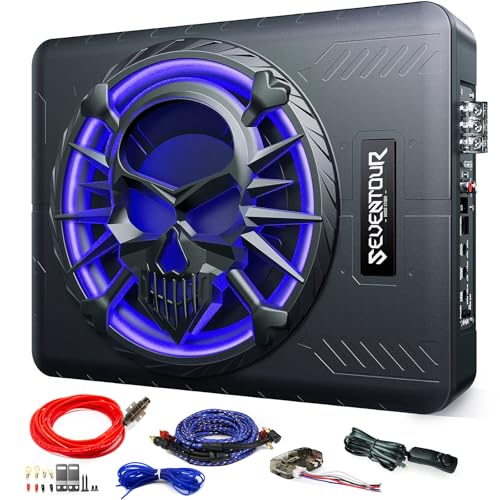
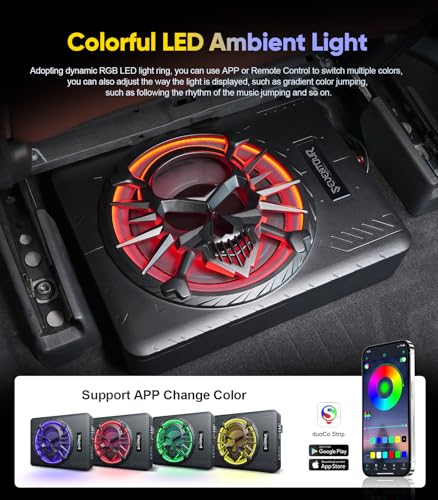
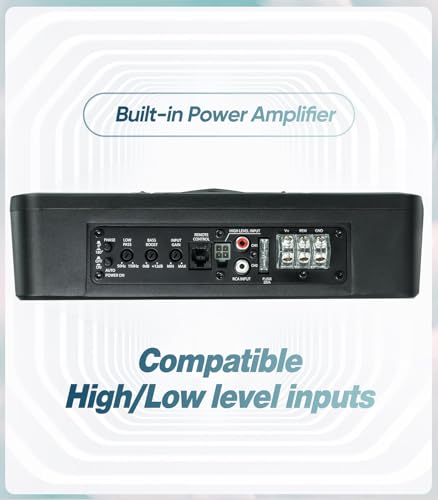
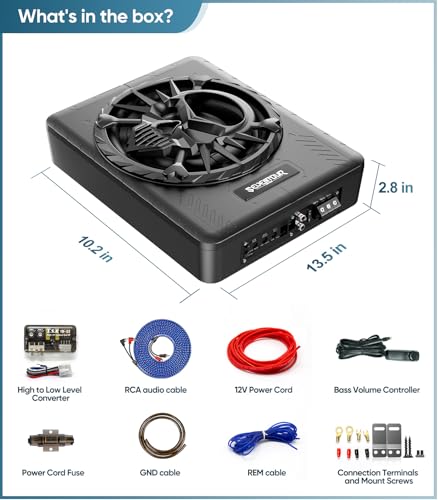
This Seventour KL-10 underseat subwoofer is clearly targeting the style-conscious buyer who wants instant gratification, both sonically and visually. At nearly 100 bucks, it includes a built-in amp, RGB lighting ring, and enough tuning options (gain, crossover, bass boost) to shape the sound moderately. The compact size and under-seat fit make it ideal for commuters or small cars where trunk space is sacred.
But let’s be real: that 1200-watt peak rating is marketing fluff. Real-world output is modest, and while the bass boost helps simulate punch, it can muddy things quickly. The RGB lights are fun, but they don’t move air. Compared to the SUBPULSIX or Rockford units, it’s less refined and lacks app-based lighting control. Still, for a beginner wanting a simple, lit-up bass bump without cutting wires or buying components, it gets the job done.
Product photos


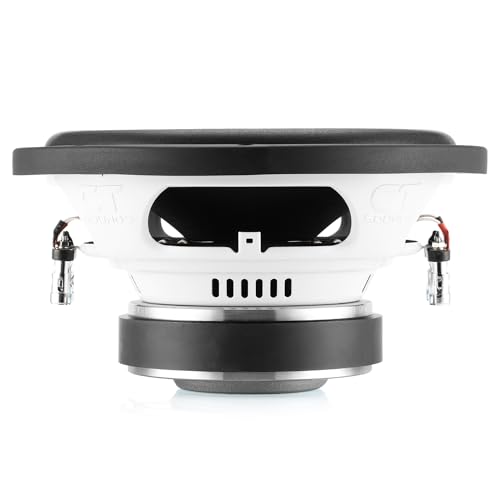
CT Sounds Bio 10″ Car Subwoofer

Strengths
- High RMS for price
- Dual 4-ohm flexibility
- Shallow mount depth
Trade-offs
- Limited deep bass extension
- Build quality functional but not premium
- Not ideal for high-SPL applications
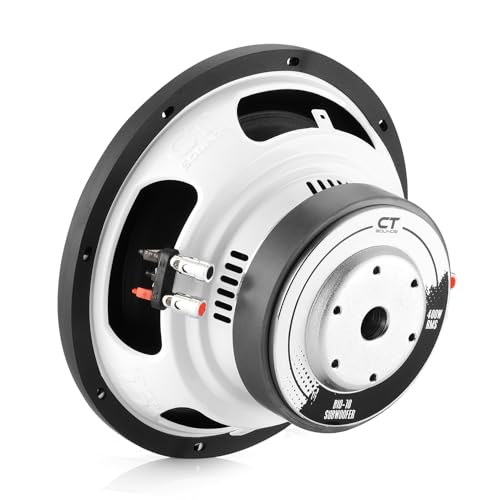
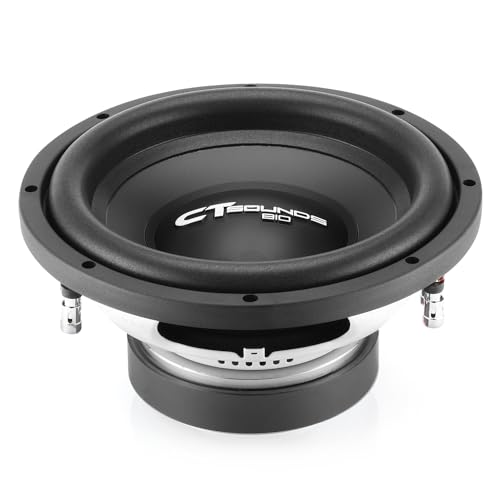
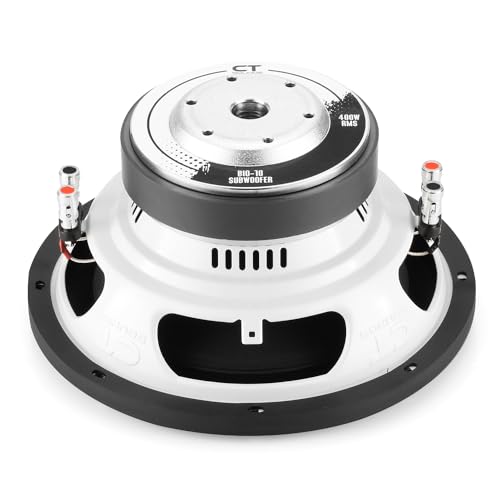
On paper, the CT Sounds Bio 10” looks like a solid value play, 400 watts RMS on a 10-inch frame is no joke for under seventy bucks. The dual 4-ohm voice coils and 4-layer copper winding suggest it’s built to handle real power without overheating, and owners consistently report clean bass in sealed enclosures when paired with a decent amp. The shallow mounting depth also makes it a candidate for tight installs where space is at a premium.
Still, while the specs are impressive for the price, I wouldn’t expect concert-level output or earth-shaking low-end extension. It’s not going to match the punch of larger or more refined drivers from Rockford or Skar. But if you’re building a budget-conscious component system and need a capable 10” that won’t break the bank, this one delivers honest performance for the dollar.
Product photos

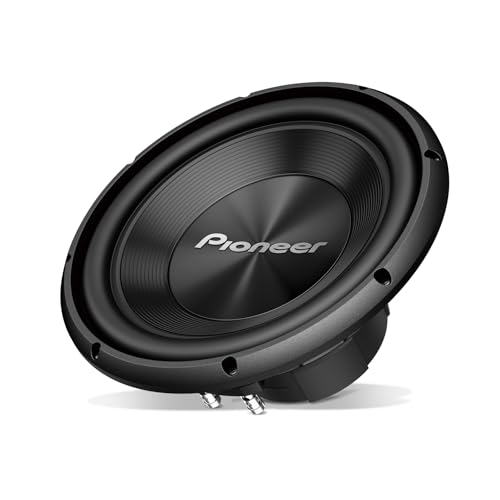
PIONEER A-Series TS-A120D4
Strengths
- Musical, articulate bass
- Good sensitivity for low-power setups
- Strong OEM compatibility
- Extended voice coils
Trade-offs
- Max power rating overstated
- Needs proper enclosure to shine
- Lower output than competition
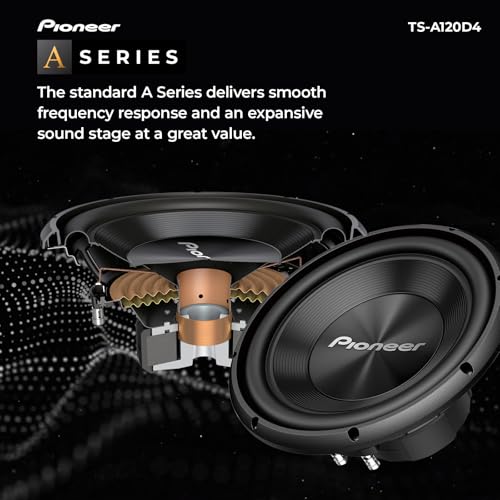
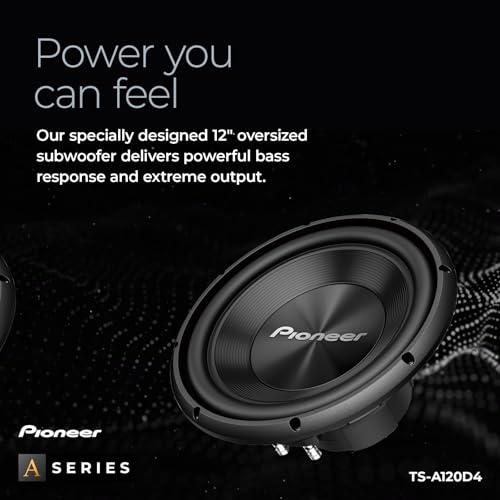
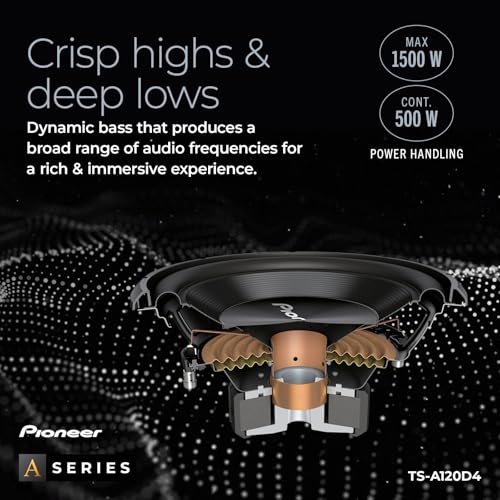
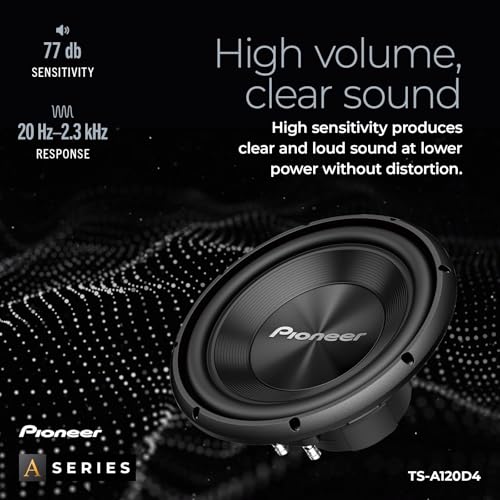
Pioneer’s TS-A120D4 leans into its heritage as a leader in OEM-friendly audio upgrades. With dual extended voice coils and a sensitivity of 77 dB, it’s tuned to work efficiently with stock head units or modest aftermarket amps. The frequency response down to 20 Hz is optimistic in practice, but owners report a noticeable improvement in depth and warmth over factory systems, especially in sedans and coupes where space limits larger builds.
Where it stands out is in linear excursion and mid-bass punch, this sub doesn’t just boom, it articulates. That makes it a favorite among listeners who care about vocals, drums, and acoustic layers, not just hip-hop thump. Compared to the Skar or CT Sounds models, it’s less about raw power and more about musical coherence. If your goal is balanced enhancement, not domination, this Pioneer is quietly brilliant.
Product photos
How We Chose These car audio subs
My approach to evaluating car audio subs, as with all things at TheAutoZenith, isn’t about long-term ownership or lab testing. Rather, it’s a research-led comparison of published specifications, owner reviews across multiple platforms, and insights from established experts in the car audio world. I weighed features, power handling, enclosure type, and reported real-world performance to arrive at these recommendations. This allows for a broad look at the market without the limitations of hands-on testing with every model.
For car audio subs, three factors stood out as most critical. First, power handling (RMS and peak) dictates how well a sub will perform with your existing amplifier or a potential upgrade. Second, enclosure type – sealed, ported, or underseat – significantly impacts sound quality and space requirements. Finally, build quality and the materials used are crucial for longevity and consistent performance, especially considering the demanding environment inside a vehicle. Finding the right balance between these elements is key.
Specifications provide a solid foundation – wattage, impedance, frequency response – but owner feedback truly reveals how these numbers translate to real-world performance. I paid close attention to reports about bass clarity, distortion levels, and ease of installation. Reputation also played a role; brands with a consistent history of producing quality high-performance subwoofers gained more consideration. Ultimately, a sub’s ability to deliver satisfying bass within its intended application was the deciding factor, and often complements a full upgrade of your best car speakers.
Choosing The Right car audio subs
Choosing the right subwoofer can dramatically change your in-car listening experience. It’s not just about raw power; a well-chosen sub integrates with your vehicle and musical tastes for truly impactful sound.
A quality car subwoofer delivers accurate low-frequency reproduction, handles rated power without distortion, and complements the existing audio system. Consider enclosure type (sealed vs. ported), impedance matching with your amplifier, and physical dimensions to ensure a proper fit and optimal performance. Look for robust construction and clear specifications regarding power handling and frequency response.
Understanding Power and Impedance
The wattage ratings on subwoofers can be misleading. Peak power is often inflated; focus on the RMS (Root Mean Square) wattage. This represents the continuous power the sub can handle. Equally important is impedance (measured in ohms). A lower impedance (2-ohm) draws more power from your amplifier, but requires an amplifier stable at that low impedance. Mismatched impedance can damage either the sub or the amplifier, or both. If you’re unsure, leaning towards a 4-ohm subwoofer and pairing it with a compatible amplifier is the safer bet. Don’t forget to check out our guide to best car subs for a deeper explore power considerations.
Enclosure Type: Sealed vs. Vented
The enclosure is almost as important as the subwoofer itself. Sealed enclosures offer tighter, more accurate bass. They’re generally easier to install in limited spaces, but require more power to achieve the same output as a vented (ported) enclosure. Vented enclosures are tuned to a specific frequency, providing louder bass in that range, but can sound “boomy” if not properly matched to the subwoofer and vehicle. Many all-in-one packages, like the Rockford Fosgate Punch P300-12, use sealed enclosures for their simplicity and predictable performance.
- For a truly customized setup, consider building your own enclosure.
- Pre-fabricated enclosures offer convenience, but ensure they match the subwoofer’s specifications.
- Vented enclosures generally need a larger volume than sealed enclosures to perform optimally, which can be a challenge in smaller vehicles.
Integration and Amplification
A subwoofer needs power, and that usually means a dedicated amplifier. While some subwoofers come integrated with an amplifier (like the SUBPULSIX 2000W), these are often a compromise. For serious bass, a separate amplifier gives you much more control. When selecting an amplifier, pay attention to its class (A/B, D, etc.). Class D amplifiers are efficient and run cooler, making them popular for car audio. Also, consider the features: adjustable crossovers, bass boost, and a remote gain control can all help you fine-tune the sound. Don’t underestimate the importance of a proper wiring kit; running sufficient power and ground wires is crucial. To get the most out of your system, explore our recommendations for car audio amplifiers to find the perfect match.
Don’t skimp on the wiring! Undersized power and ground cables starve the amplifier, reducing power output and potentially causing overheating. Always use the gauge wire recommended by the amplifier manufacturer.
Car Audio Subs Compared
Here’s a comparison of key specifications for popular car audio subwoofers.
| Product Title | Subwoofer Size | Max Power (Watts) | RMS Power (Watts) | Mounting Depth (in.) | Enclosure Type | Features |
|---|---|---|---|---|---|---|
| Rockford Fosgate Punch P300-12 | 12″ | N/A | 300 | N/A | Sealed | Self-Contained |
| Skar Audio Dual 12″ SDR Package | 12″ (Dual) | 2,400 | 1,200 | N/A | Vented | Complete Package |
| SUBPULSIX 2000W Underseat Sub Package | N/A | 2,000 | N/A | N/A | Underseat | RGB Lighting |
| Seventour 10″ RGB Under Seat Sub | 10″ | 1,200 | N/A | 3.1″ | Underseat | RGB Lighting |
| Seventour 10″ Slim Under Seat Sub | 10″ | 800 | 220 | 3.1″ | Underseat | Slim Profile |
| CT Sounds Bio 10″ Car Subwoofer | 10″ | 800 | 400 | 4.69″ | N/A | Dual 4-Ohm |
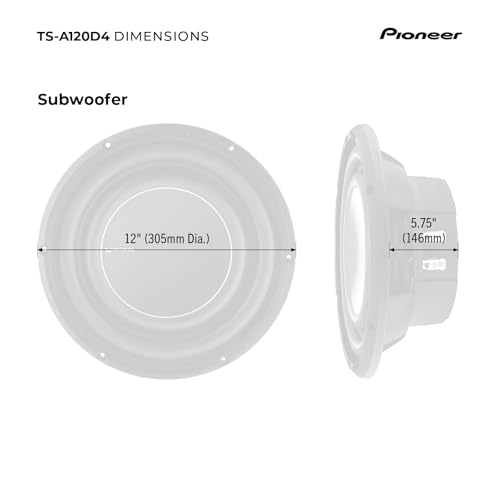
| PIONEER A-Series TS-A120D4 | 12″ | 1,500 | 500 | N/A | N/A | OEM Integration |
Frequently Asked Questions
What size subwoofer is best for a small car?
A 10-inch subwoofer is generally the best fit for a small car, as it provides a good balance of bass response and manageable size. Underseat subwoofers, or compact powered subwoofers, are also excellent choices when space is limited.
How long does a typical subwoofer installation take?
Installation time varies, but a straightforward install of a pre-wired subwoofer usually takes between one and three hours. Custom enclosure builds or complex wiring can easily extend that to a full day, or even require professional assistance.
Can I install a subwoofer myself if I have limited experience?
Yes, especially if you choose a self-contained unit. However, working with car electrical systems requires caution, and incorrect wiring can damage your vehicle or the subwoofer. If you’re uncomfortable, professional installation is recommended.
What is the difference between a sealed and ported enclosure, and which is better?
Sealed enclosures offer tighter, more accurate bass, while ported enclosures provide louder bass at a specific frequency. The “better” option depends on your preference; sealed is often favored for sound quality, while ported is preferred for maximizing volume, and requires careful consideration of your overall key car audio components.
What other components will I need when adding a subwoofer?
Beyond the subwoofer itself, you’ll likely need an amplifier, wiring kit (power, ground, and RCA cables), and potentially a fuse holder. Depending on your existing setup, you might also require a line output converter (LOC) to integrate with a factory stereo, and consider upgrading other essential audio parts for a more balanced sound.
The Bottom Line
Ultimately, building a great car audio system comes down to balancing your expectations with your budget and available space. While peak wattage numbers get attention, the Rockford Fosgate Punch P300-12 strikes a compelling balance of power, convenience, and sound quality in a self-contained package, making it our overall pick for most drivers looking to add serious low-end. It simplifies installation and delivers a noticeable improvement over factory systems.
For those seeking maximum impact on a tighter budget, or who prefer a complete package, the Skar Audio Dual 12″ SDR Package provides tremendous value. If space is at a premium, the Seventour 10″ RGB Underseat Sub offers a surprising amount of bass from a compact form factor – and those looking for subs for bass will appreciate its output. There are also options like the SUBPULSIX 2000W for those wanting underseat convenience with visual flair.
Beyond specifications, remember that proper installation and matching components are paramount. A well-tuned system, even with moderately priced equipment, will always outperform a haphazardly installed, high-end setup. Don’t overlook the importance of building a complete audio systems – quality speakers, a capable amplifier, and proper wiring are just as crucial as the subwoofer itself for achieving the sound you envision.
