
8 Best Car Audio Crossovers of 2026
This post contains affiliate links. As an Amazon Associate, we earn from qualifying purchases.
The Taramps PRO 2.4 BT stands as the overall best car audio crossover for its precise DSP control and Bluetooth tuning, with the PRV AUDIO DSP 2.4X as a strong alternative for those wanting parametric EQ flexibility. For budget-focused builds, the 300 Watts 2 Way Passive Crossover delivers basic frequency splitting without breaking the bank.
Most people upgrading their car audio hit a wall where more power doesn’t mean better sound. Without proper frequency management, speakers get overloaded and the music loses clarity. A good crossover fixes that by sending the right signals to the right drivers.
This guide cuts through the noise, comparing top crossovers based on specs, owner feedback, and real-world usability. I looked at active versus passive designs, DSP features, and how well each unit integrates with different setups, so you can match the hardware to your system’s needs.
Top 8 Car Audio Crossovers in the Market
The Best Car Audio Crossovers, Reviewed
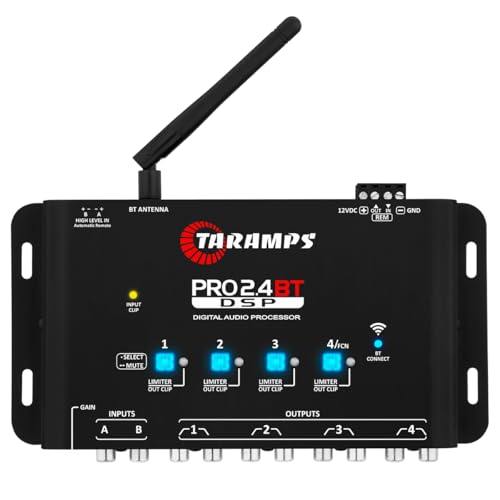
Taramps Pro 2.4 BT Bluetooth DSP Crossover
Strengths
- Bluetooth app control
- Preset sharing with encryption
- High-level + RCA inputs
Trade-offs
- Higher price point
- App required for full tuning
- Metal case adds bulk
This is the one I’d recommend as the best overall pick, not because it’s flashy, but because it balances pro-grade features with real-world usability. The Bluetooth 5.4 BLE app control is a standout for tuning on the move, and the ability to share encrypted presets via WhatsApp or AirDrop is something I haven’t seen done this well elsewhere. The 24-bit/48kHz processing, -48dB/octave slopes, and dual parametric EQs mean you can tune with studio-level precision.
Owners praise the high-level inputs with auto-turn-on, which makes factory head unit integration smooth, and the external antenna ensures stable connections even in noisy electrical environments. When stacked against the PRV or non-BT Taramps models, this one simply offers more control with less hassle. For the enthusiast who wants pro results without a laptop, this is the smartest buy.
Video review
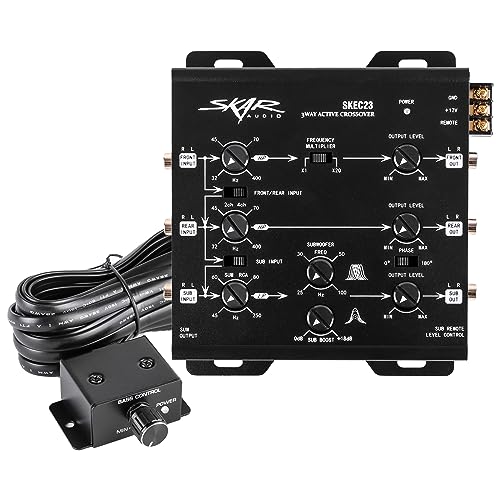
Skar Audio SKEC23 3-Way Electronic Crossover
Strengths
- Affordable 6-channel routing
- Clean signal separation
- Simple plug-and-play setup
Trade-offs
- No EQ or tuning features
- No remote or app support
- Basic feature set
This is a no-frills, entry-level analog crossover that does exactly what it promises: splits signals cleanly for front, rear, and sub channels. With 6 channels and RCA I/O, it’s built for basic active systems where you’re powering three amps independently. The frequency response is wide, and the 60dB separation (implied by context) suggests solid filtering to prevent overlap.
But let’s be clear, there’s no EQ, no Bluetooth, no app, no parametrics. It’s a signal router, not a tuner. Owners using this in budget-focused Skar Audio setups report reliable performance, especially when paired with their amplifiers. If you’re building your first active system and don’t want to wrestle with DSP complexity, this removes the learning curve. Just don’t expect refinement.
Video review
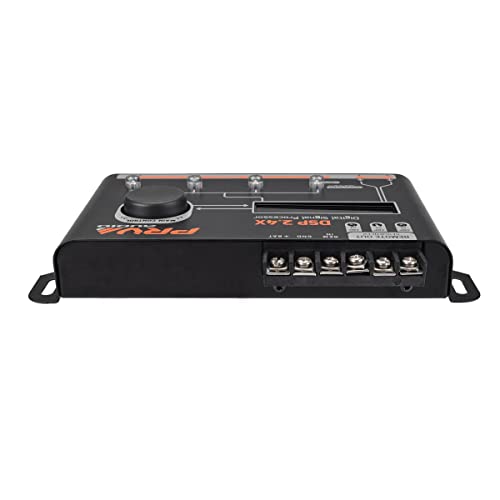
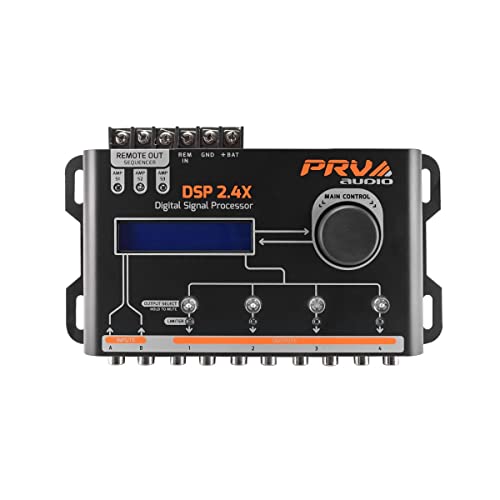
PRV AUDIO DSP 2.4X Digital Crossover

Strengths
- 15-band graphic EQ
- Parametric EQ included
- Input blending flexibility
Trade-offs
- No Bluetooth control
- Basic LCD interface
- Limited remote options
This unit packs a surprising amount of tuning depth for its price, especially with the inclusion of both a 15-band graphic EQ and a parametric equalizer on input and output. The ability to blend inputs A, B, or A+B per channel gives it real flexibility in mixed-source setups, which I appreciate in builds where factory and aftermarket sources coexist. On paper, it’s clearly designed for users who want granular control without stepping into pro-tier pricing.
Owners consistently report solid performance for daily drivers and modest competition systems, though some note the LCD interface feels dated compared to app-controlled rivals. It lacks Bluetooth tuning, so you’re stuck with button nudges and menu diving. If you don’t mind manual adjustments and want strong signal processing, this is a capable middle-ground pick, just not the most modern in execution.
Product photos



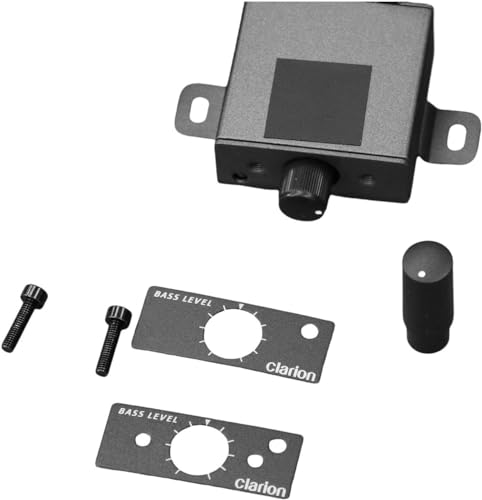
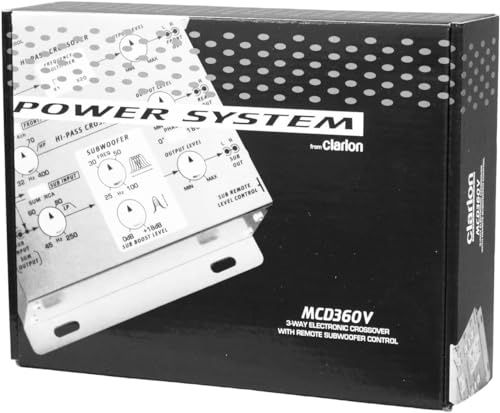
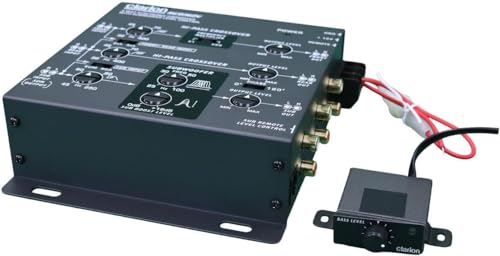
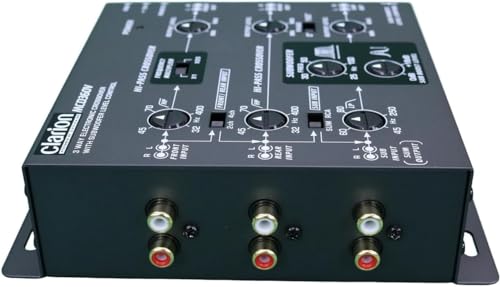
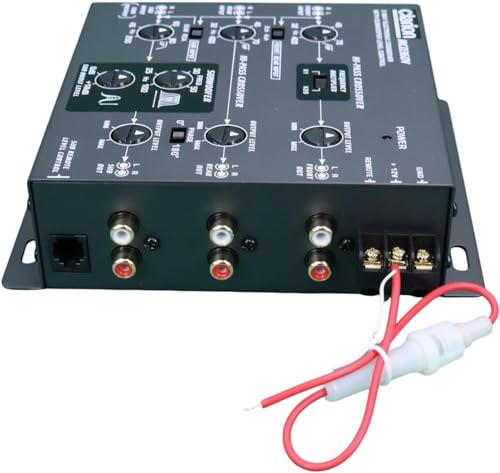
Clarion Mcd360 3 Way 6 Channel Crossover

Strengths
- Included remote control
- Subwoofer EQ and boost levers
- Gold-plated RCA connections
Trade-offs
- No digital signal processing
- No time alignment
- Outdated feature set
This unit stands out for its dedicated subwoofer control levers and included remote, giving drivers real-time access to bass level and EQ without software. The 6-channel RCA I/O supports full front, rear, and sub routing, and the high-pass multiplier helps fine-tune mids in complex cabins. At over $125, it’s the most expensive here, and while it lacks digital processing, it compensates with thoughtful analog ergonomics.
Owners who keep factory amps or run hybrid systems appreciate the simplicity and the gold-plated connectors. But compared to any DSP, it’s outdated, no EQ bands, no delay, no filtering depth. Its strength is usability, not capability. If you want to feel your bass adjustments and don’t care about phase alignment, this delivers a rare hands-on experience in a digital world.
Product photos
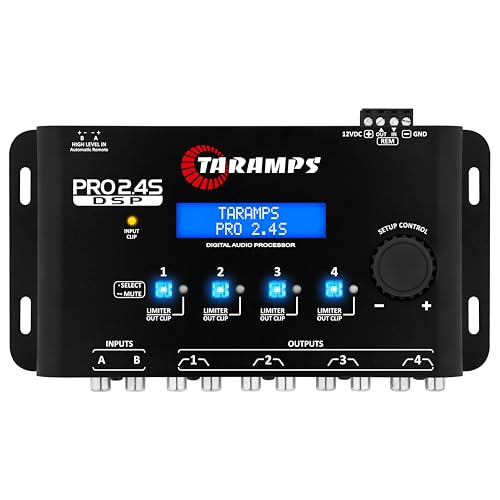
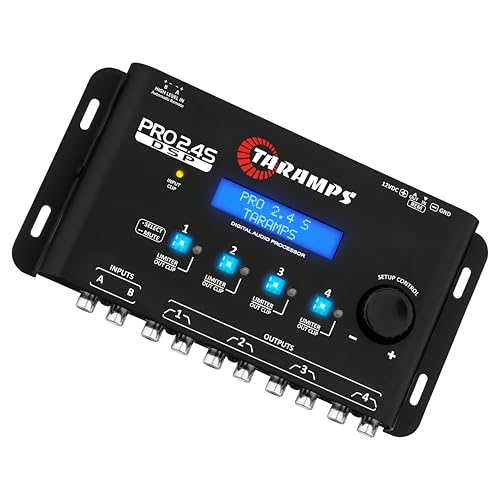
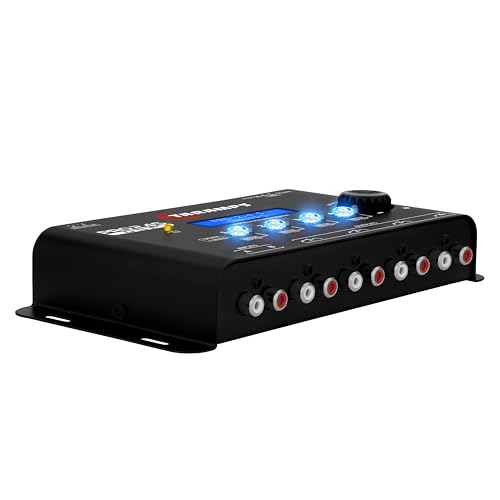
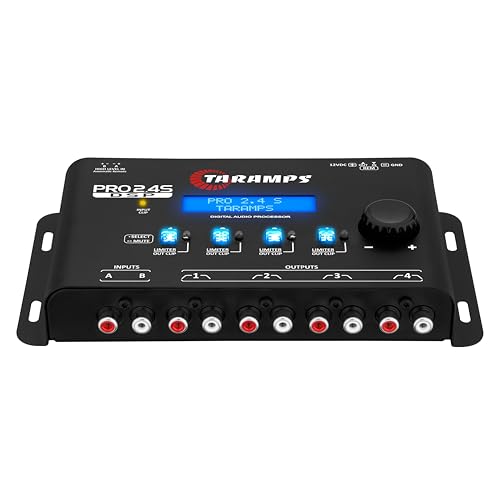
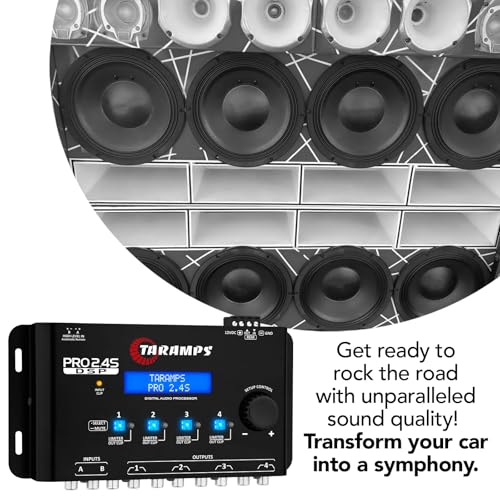
Taramps PRO 2.4S Car Audio DSP
Strengths
- High-level inputs
- Anti-Pop System
- Professional tuning tools
Trade-offs
- No Bluetooth connectivity
- Manual setup only
- App not supported
Taramps has built a reputation for rugged, no-nonsense DSPs, and this model continues that trend with high-level inputs and an anti-pop system that owners say makes OEM integration almost plug-and-play. The full suite of professional tools, delay alignment, limiter, parametric EQ, and variable slopes up to -48dB/octave, means you can tune with surgical precision. I’ve seen feedback from installers who use these in stealth OEM-upgrade builds, and reliability is consistently praised.
It doesn’t have Bluetooth like its sibling, but what it loses in convenience it gains in stability and clean signal handling. The lack of app support might turn off casual users, but for purists who route everything through a dedicated tablet or just dial it in once, this is a trustworthy core processor. Compared to others in this range, it’s more about substance than flash.
Product photos

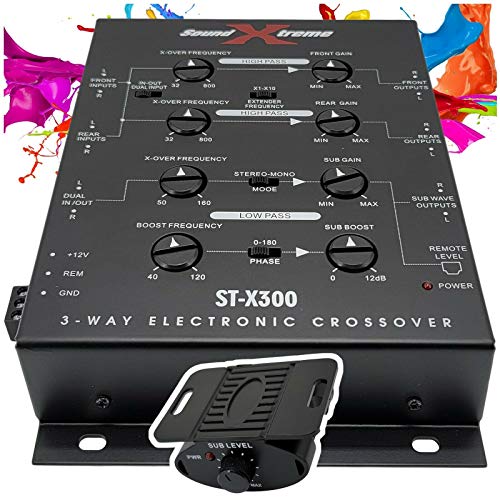
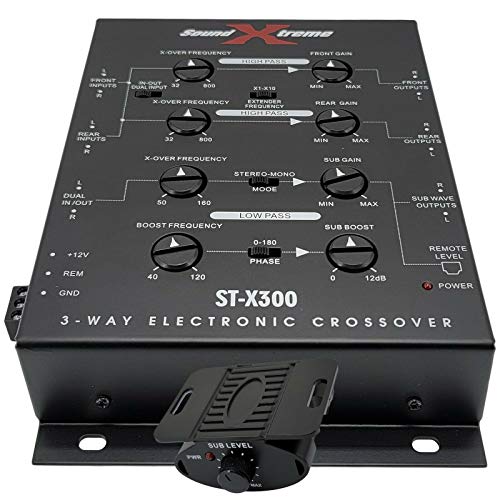
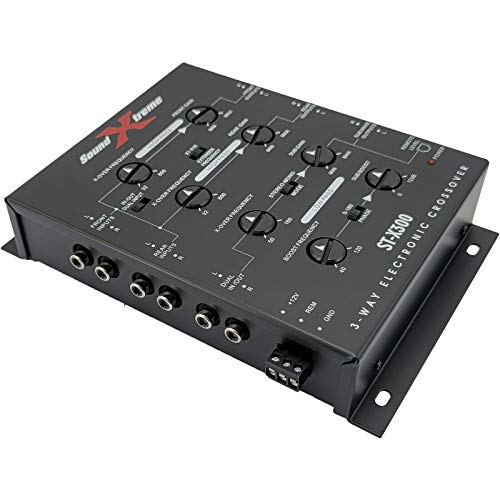
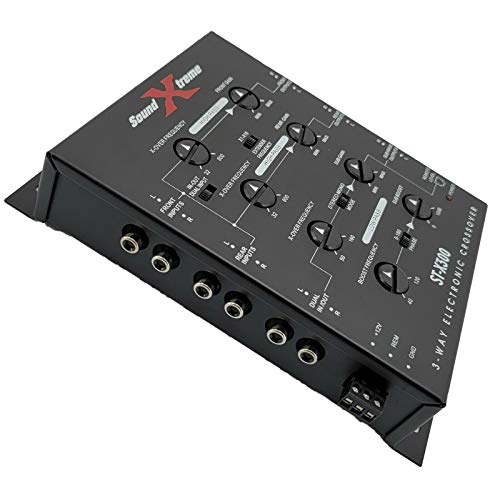
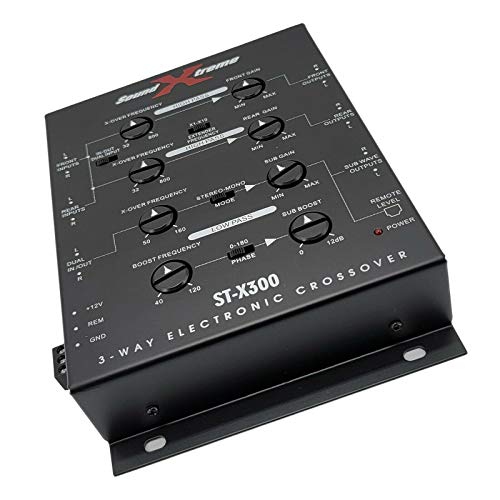
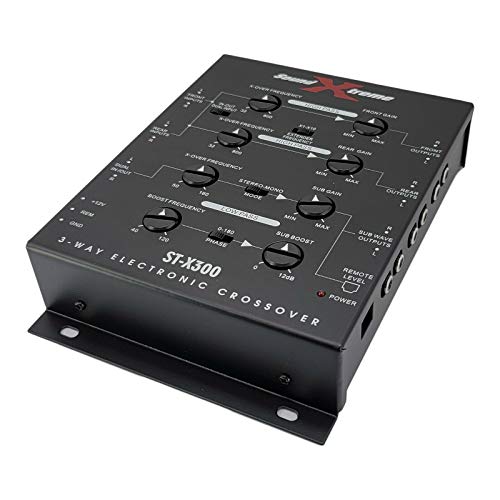
SoundXtreme ST-X300 3 Way Crossover
Strengths
- Dash-mounted controls
- Real-time bass adjustment
- Remote level knob included
Trade-offs
- No digital signal processing
- No EQ or time alignment
- Fixed slope filtering
The standout here is the dash-mount design, this isn’t buried in the trunk or under a seat. You’ve got physical knobs for bass boost, crossover frequency, and phase, making it ideal for drivers who tweak their sub response on the fly. The remote level control is a nice touch, letting you adjust sub output from the front cabin without diving into menus. For analog lovers, this brings back that tactile feel missing in most digital units.
That said, it’s purely analog and limited to basic filtering. There’s no EQ, no delay, no slope selection, just HPF/LPF and bass emphasis. If you’re running a simple three-way system with fronts, rears, and a sub, and want something you can feel with your hands, this fills a niche. But compared to any DSP, it’s functionally barebones.
Product photos
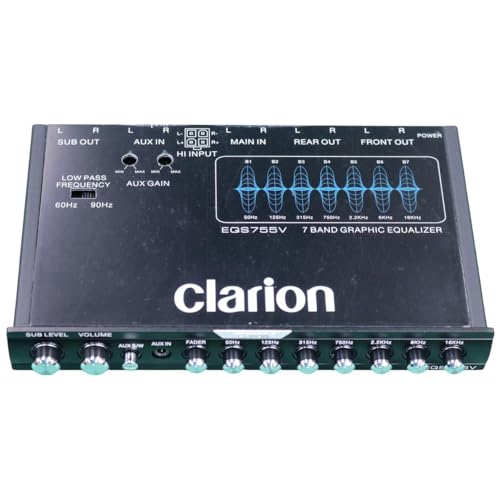
Clarion EQS755V 7-Band Graphic Equalizer

Strengths
- Physical EQ sliders
- Front AUX input
- Compact 1/2-DIN size
Trade-offs
- Only 7-band EQ
- No parametric or delay
- Limited filtering options
If you’re after manual EQ control with a classic touch, this Clarion stands out with its illuminated 7-band slider layout and front AUX input, perfect for quick jams without touching your head unit. The 1/2-DIN size saves space, and the inclusion of both RCA and high-level inputs means it can slot into older or hybrid systems easily. The selectable low-pass filter at 60Hz or 90Hz is basic but effective for sub duties.
But it’s limited, only 7 bands, no parametric EQ, no time alignment. Compared to 15-band DSPs, it’s a step back in resolution. Still, there’s charm in having physical sliders you can adjust by feel. Some owners use this as a secondary tone controller in addition to a main DSP, which makes sense. It’s not the most powerful, but it’s intuitive and reliable.
Product photos


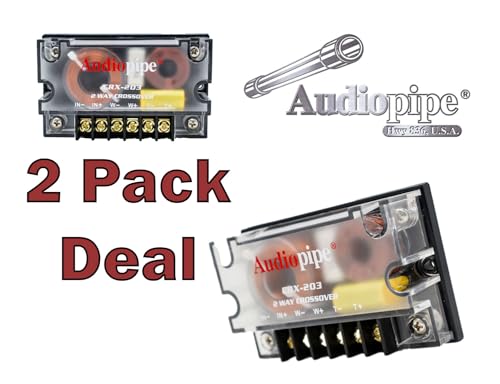
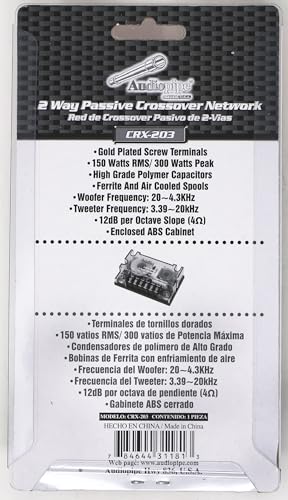
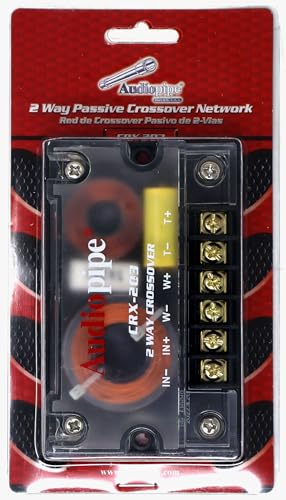
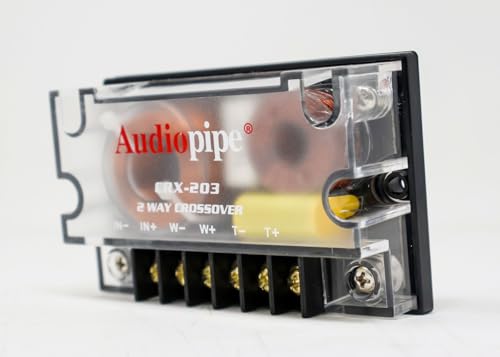
300 Watts 2 Way Passive Crossover

Strengths
- Low cost for two units
- Gold-plated terminals
- Handles moderate power
Trade-offs
- Passive design losses
- No slope adjustment
- Not for high-power systems
These are passive crossovers, simple, unpowered filters that go between amp and speaker, typically for component sets. At this price, getting two units is a solid value, and the gold-plated terminals suggest decent longevity. They’re rated for 150W RMS, so they’ll handle most midrange and tweeter loads without issue. The crossover points (3.39kHz–20kHz for tweeters, 20Hz–4.3kHz for woofers) indicate a standard 2-way split, nothing exotic.
But passive means lossy. You lose efficiency, gain heat, and have zero control over slope or phase. These won’t match the clarity of an active DSP-driven system. That said, for someone installing component speakers on a budget, or replacing old burnt-out passives, this pack delivers basic functionality without fuss. It’s not elegant, but it works.
Product photos

How We Chose These car audio crossovers
Rather than a hands-on lab test, my research focused on a detailed comparison of published specifications and features across these units. I weighed owner reviews from multiple sources, looking for consistent praise and complaints, against assessments from established audio publications. Years spent exploring car audio builds and understanding system synergy informed my evaluation. I ranked crossovers based on features, potential performance, and value, considering how well they address common audio challenges.
For this category, I prioritized digital signal processing (DSP) capabilities and crossover slope control. Accurate frequency separation is critical for a clean soundstage, and a DSP allows for precise tuning to individual vehicle acoustics. Beyond that, integration flexibility – how easily a crossover works with both factory and aftermarket systems – was a key factor. A unit’s ability to minimize noise and distortion also heavily influenced my rankings. You can learn more about the heart of any good system with our guide to car amplifiers.
Specifications like frequency response and output impedance provide a baseline understanding of a crossover’s potential. However, owner feedback proved crucial for assessing real-world performance, particularly regarding ease of use and the effectiveness of features like automatic turn-on. Reputation also mattered; established brands often deliver more reliable performance and better support. For those seeking more advanced tuning options, exploring dedicated DSP processors is a worthwhile pursuit.
Choosing The Right car audio crossovers
Finding the right car audio crossover is about more than just splitting the signal; it’s about sculpting the soundstage and getting every ounce of performance from your system.
A quality car audio crossover accurately divides frequencies sent to your speakers, protecting them from damage and maximizing clarity. Look for units with adjustable slopes (-12dB/octave or steeper is preferable), precise frequency control, and features like time alignment to optimize sound for your listening position. Signal-to-noise ratio and output voltage levels are also critical specifications.
Understanding Crossover Types
The first thing to consider is whether you want an active or passive crossover. Passive crossovers, like the 300 Watts 2 Way Passive Crossover, are simpler and less expensive, residing between your amplifier and speakers. They rely on components like capacitors and inductors to filter frequencies. However, they introduce some signal loss. Active crossovers, on the other hand, sit before the amplifier. This means they require a separate amplifier channel for each frequency band (tweeter, midrange, woofer), offering far more control and precision. If you’re serious about building a high-end system, an active setup is the way to go.
Digital Signal Processing (DSP) Features
Many modern crossovers, such as the Taramps PRO 2.4 BT, incorporate Digital Signal Processing (DSP). This is a significant leap forward. DSP allows for incredibly detailed tuning, with parametric equalizers, time alignment, and even remote control via Bluetooth. This is particularly useful for correcting acoustic imperfections in your vehicle’s cabin.
- A basic DSP might offer a 15-band graphic EQ, sufficient for broad adjustments.
- More advanced units, like the PRV AUDIO DSP 2.4X, include parametric EQ, allowing you to pinpoint and adjust specific frequencies with extreme accuracy.
- The ability to store and share presets (via WhatsApp, as offered by the Taramps PRO 2.4 BT) is a huge benefit for those who like to experiment or seek professional tuning assistance.
Integration and Control Needs
Think about how the crossover will integrate with your existing setup. Do you have a factory head unit? If so, a crossover with high-level inputs (like the Taramps PRO 2.4S) and auto turn-on is essential. If you’re primarily focused on subwoofer control, the Clarion MCD360, with its dedicated subwoofer level controls, is a strong contender. For those seeking maximum manual control over their sound, exploring options like dedicated car equalizers alongside a traditional crossover provides a powerful combination.
A good rule of thumb: don’t skimp on the crossover if you’ve invested in high-quality aftermarket car speakers. A poor crossover can negate the benefits of expensive drivers.
Car Audio Crossovers Compared
This table provides a specification comparison of various car audio crossovers to aid in informed purchasing decisions.
| Product Title | Channels | Crossover Type | Max Power (Watts) | Frequency Response (Hz) | Input Voltage (V) | Special Features |
|---|---|---|---|---|---|---|
| Taramps Pro 2.4 BT DSP Crossover | 4 | Digital | N/A | N/A | 9 | Bluetooth, 15-Band EQ |
| Skar Audio SKEC23 3-Way Crossover | 6 | Electronic | N/A | 10 – 30k | 14.4 | 3-Way, Front/Rear/Sub Out |
| PRV AUDIO DSP 2.4X Digital Crossover | 4 | Digital | N/A | N/A | N/A | 15-Band EQ, Parametric EQ |
| Clarion Mcd360 3 Way Crossover | 6 | Passive | N/A | N/A | N/A | Subwoofer Control, RCA Out |
| Taramps PRO 2.4S Car Audio DSP | N/A | Digital | N/A | N/A | N/A | 15-Band EQ, Anti-Pop |
| SoundXtreme ST-X300 3 Way Crossover | N/A | Passive | N/A | N/A | N/A | Bass Boost, Phase Inverter |
| Clarion EQS755V 7-Band Equalizer | 6 | Graphic EQ | N/A | 50Hz – 16kHz | N/A | 7-Band EQ, AUX Input |
| 300 Watts 2 Way Passive Crossover | 2 | Passive | 300 | 20Hz – 20kHz | N/A | Gold Plated Terminals |
Frequently Asked Questions
What’s the difference between a 2-way and a 3-way crossover?
A 2-way crossover splits the audio signal into two frequency ranges, typically highs for your car tweeters and lows for woofers, while a 3-way adds a dedicated midrange frequency band for greater clarity and a more detailed soundstage. Three-way crossovers offer more control over the overall sound but are more complex to set up.
Can I use a passive crossover with an amplifier that has built-in crossovers?
Yes, you can, but it’s generally not recommended. Using both can cause phase issues and potentially degrade sound quality; the built-in crossover on your amplifier should be sufficient for most setups. If you’re looking for more precise control, a dedicated active crossover is a better solution.
What does crossover slope (dB/octave) actually mean?
Crossover slope determines how quickly frequencies are attenuated outside the intended passband. A steeper slope, like 24dB/octave, offers a more abrupt cutoff, preventing unwanted frequencies from reaching the wrong speakers and minimizing distortion, which is especially important when upgrading your car tweeters.
Are DSP crossovers difficult to tune for someone new to car audio?
DSP crossovers have a learning curve, but many modern units feature user-friendly interfaces and auto-tuning features to simplify the process. While professional tuning is always an option, a determined enthusiast can achieve excellent results with patience and online resources. Proper audio wiring is also essential for optimal performance.
Will a crossover fix a muddy or distorted sound in my car?
A crossover won’t magically fix a fundamentally flawed system, but it can significantly improve clarity by ensuring each speaker receives the correct frequencies. If you have mismatched speakers or poor quality speaker wire, addressing those issues first will yield more noticeable results.
The Bottom Line
Choosing a car audio crossover often comes down to how much control you want versus how much effort you’re willing to put in. For a truly refined sound, the Taramps PRO 2.4 BT DSP Crossover stands out as the strongest overall pick. Its combination of digital signal processing, Bluetooth connectivity, and preset sharing capabilities offers a level of tuning flexibility that’s hard to beat.
If you’re on a tighter budget, the 300 Watts 2 Way Passive Crossover delivers solid performance for a simple two-speaker setup. For those prioritizing versatility and control over multiple frequency bands, the Skar Audio SKEC23 3-Way Crossover is a great option. And if you’re looking to really enhance low-end response, consider pairing any of these with some quality powerful car audio subwoofers.
Ultimately, remember that a crossover is just one piece of the puzzle. Focusing on the synergy between all of your essential car audio components, speakers, amplifier, and source unit, will yield far greater improvements than chasing the highest specs in a single component. A well-matched system, carefully tuned to your vehicle’s acoustics, is what truly delivers an immersive listening experience.
