
7 Best Camping Trailer Generators of 2026
This post contains affiliate links. As an Amazon Associate, we earn from qualifying purchases.
The Westinghouse 5000W Super Quiet stands out as the best overall camping trailer generator for its reliable power, low noise, and clean output, while the AIVOLT 1600W Ultra-Qiuet is a smart budget pick for light-duty use and the Westinghouse 5000W Dual Fuel offers unmatched versatility with propane capability.
If you’ve ever had a generator sputter under the load of your trailer’s AC or disturb the peace at a quiet campground, you know how critical the right unit is. As someone who’s spent years deep in the mechanics of mobile power, I’ve seen how poor choices lead to frustration and downtime on the road.
This guide cuts through the noise by focusing on real-world performance, not just specs on a box. I looked at power consistency, owner-reported reliability, noise levels, and fuel flexibility to find models that actually deliver when you’re off the grid.
Top 7 Camping Trailer Generators in the Market
The Best Camping Trailer Generators, Reviewed
Westinghouse 5000W Super Quiet Inverter Generator
Strengths
- Wheel and handle kit
- Remote electric start
- Long 18-hour runtime
- Quiet at 52 dBA
- 3-year warranty
Trade-offs
- Gas only
- Heavy at 94 lbs
- No propane option
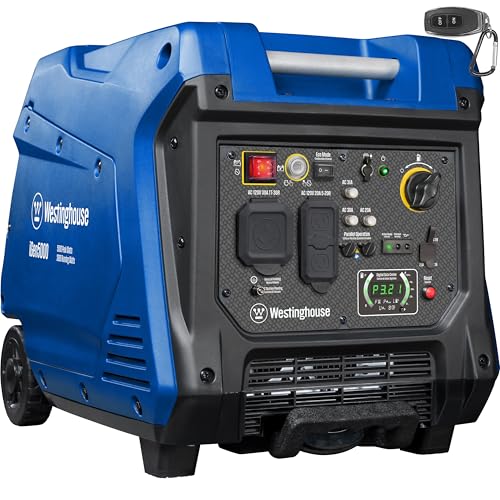
This Westinghouse model is my pick for best overall, not just for its 5000 peak watts and 3900 rated output, but for the full package: electric start with remote, wheel kit, and a clear LED display that shows fuel level and runtime. It’s quiet at 52 dBA, runs up to 18 hours in economy mode, and the included wheel kit makes transport far easier than most in this class.
It runs on gas only, so it loses points to the dual-fuel Westinghouse model, but for most RV users, gasoline is still the go-to. The parallel capability and RV-ready outlet make it versatile, and the 3-year warranty with nationwide support adds real value. Owners consistently rate it as reliable and well-built.
Video review
Westinghouse 5000W Dual Fuel Inverter Generator
Strengths
- Dual fuel support
- 18-hour runtime
- Remote electric start
- CO sensor
- Quiet at 52 dBA
Trade-offs
- Higher price
- Heavier than some
- Slight fuel odor reported
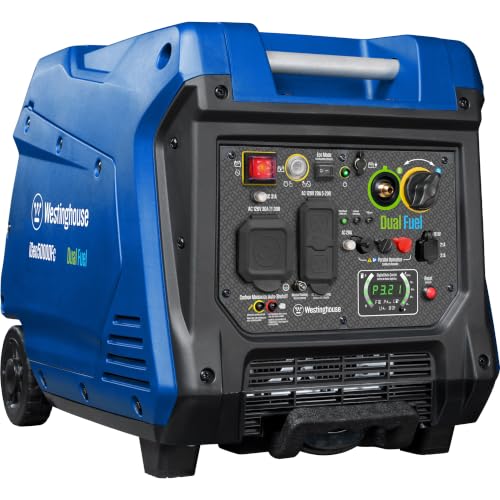
This Westinghouse model is a serious upgrade for campers who want dual-fuel versatility and long runtimes. With 3.4 gallons of fuel and economy mode, owners report up to 18 hours on gasoline and even longer on propane, making it one of the most dependable options for extended trips. The remote electric start is a luxury feature that works reliably, and the digital display gives real-time feedback on fuel, voltage, and runtime.
It matches the other Westinghouse 5000W model in output but adds propane capability, which is a major plus for those wanting cleaner burns and easier fuel storage. The CO sensor adds peace of mind, especially when camping with family. It’s pricier, but the safety, runtime, and dual-fuel performance justify it for serious users.
Video review
AIVOLT 1600W Ultra-Quiet Portable Generator
Strengths
- Ultra lightweight
- Quiet operation
- USB-C included
- Safe for electronics
- Low price
Trade-offs
- Low power output
- Short runtime at full load
- No propane option
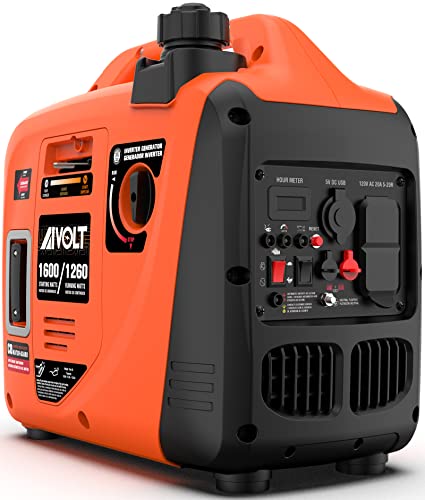
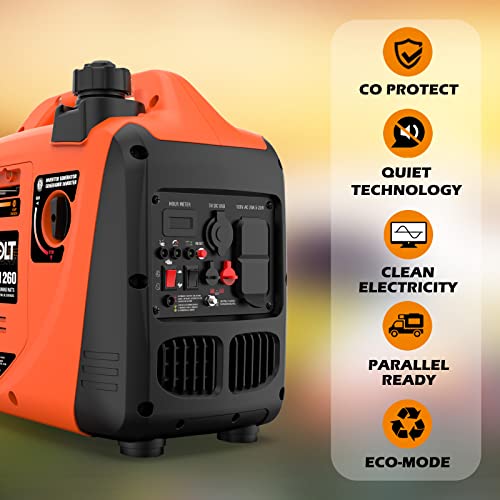
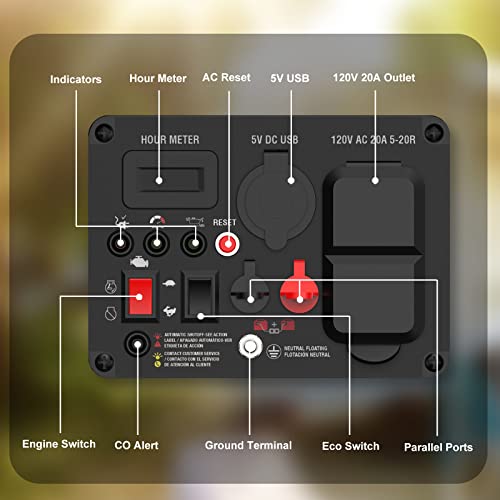
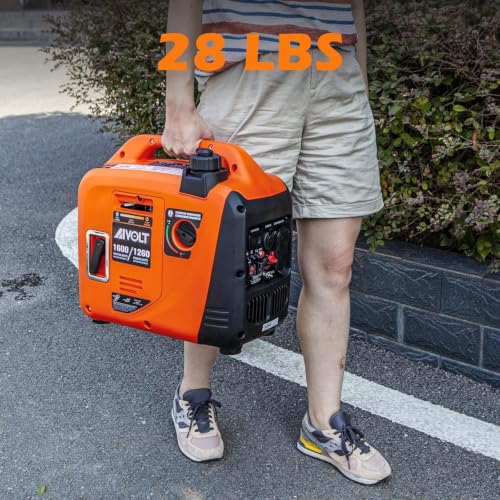
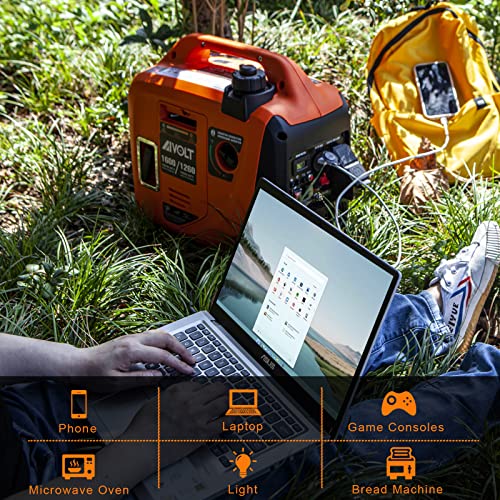
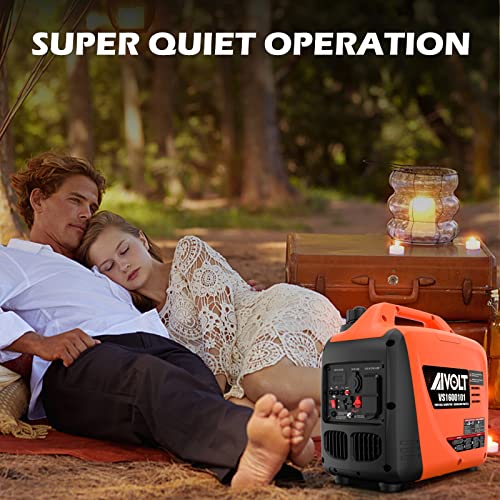
At just 28 lbs and 57 dBA, the AIVOLT 1600W is one of the most portable and quiet budget inverter generators on the market. It’s clearly built for minimalist campers who need to charge phones, run a small fridge, or power LED lights without disturbing the peace. The <3% THD means it’s safe for laptops and cameras, and owners appreciate the USB-C port, a rare find at this price.
But 1260 running watts won’t run an AC or microwave, and the 2-hour full-load runtime limits it to light-duty use. Still, for solo hikers, car campers, or backup power for small devices, it’s hard to beat the value. It’s also parallel capable, so you can double up if needs grow.
Product photos
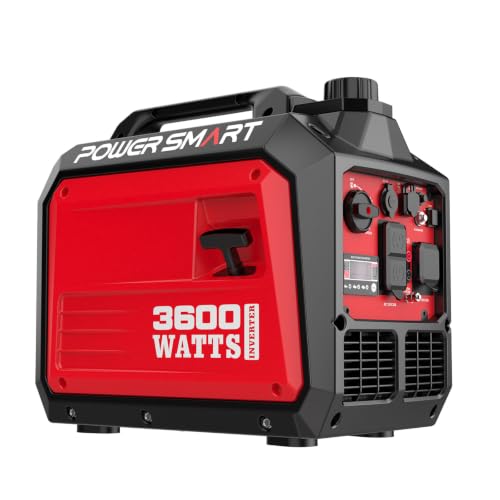
PowerSmart 3600W Inverter Generator
Strengths
- Great price-to-power ratio
- 8-hour runtime
- RV-ready outlet
- Parallel capable
- Quiet operation
Trade-offs
- No electric start
- Gas only
- No remote start
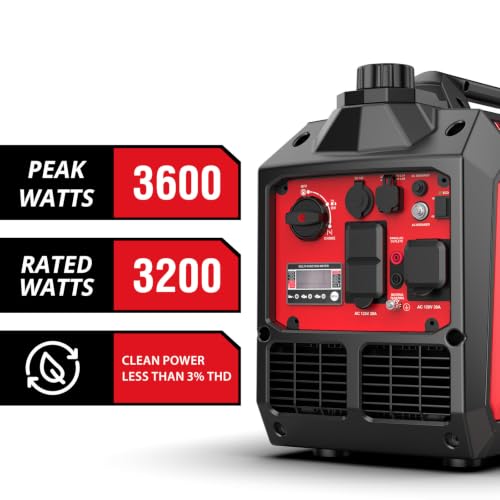
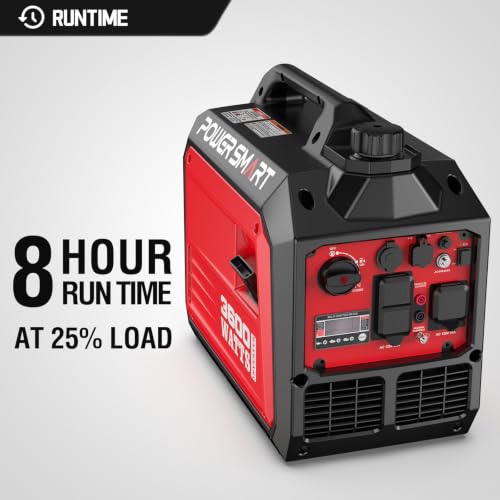
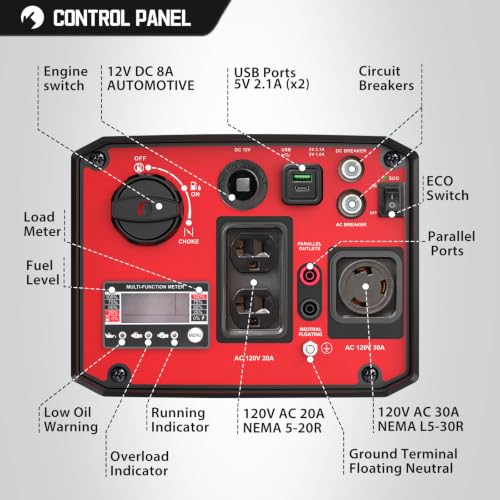
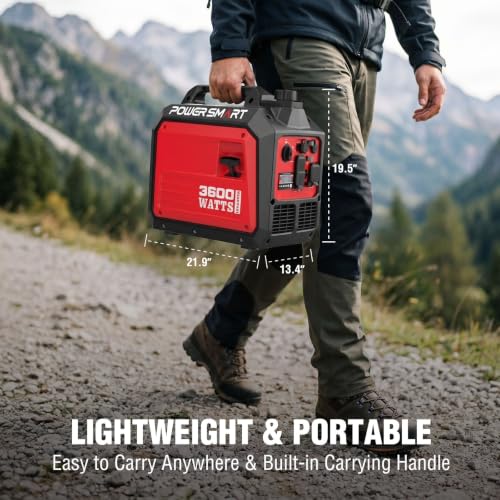
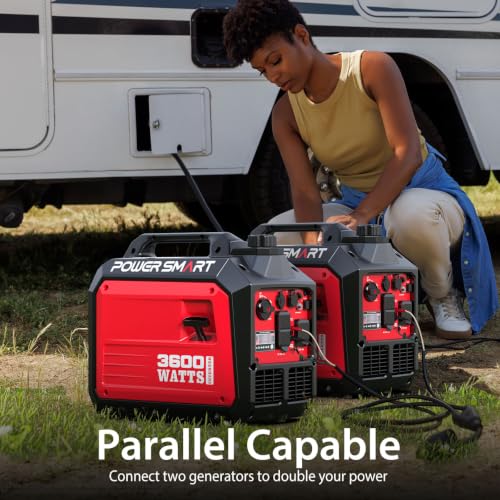
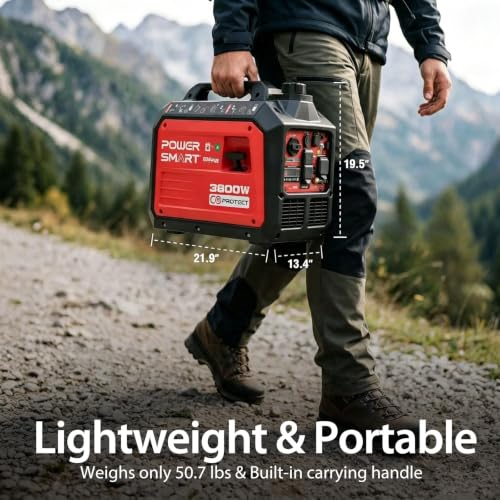
This PowerSmart 3600W hits the sweet spot between price and performance. At just under $400, it delivers 3200 running watts, 8 hours of runtime, and a full set of outlets including a 30A RV port, making it a strong value contender. It’s parallel capable, quiet at 59 dBA, and owners praise its reliability for weekend trips and backup power.
It doesn’t have electric start or propane support, but for most casual campers, that’s not a dealbreaker. Compared to the AIVOLT or Oxseryn models, it strikes a better balance of power, runtime, and build quality. If you want a no-frills, dependable unit that won’t break the bank, this is it.
Product photos
PowerSmart 3800W Dual Fuel Inverter Generator

Strengths
- 24-hour propane runtime
- Dual fuel support
- CO sensor
- Quiet at 59 dBA
- 2-year warranty
Trade-offs
- Twist-lock outlet (needs adapter)
- Lower peak watts
- No remote start
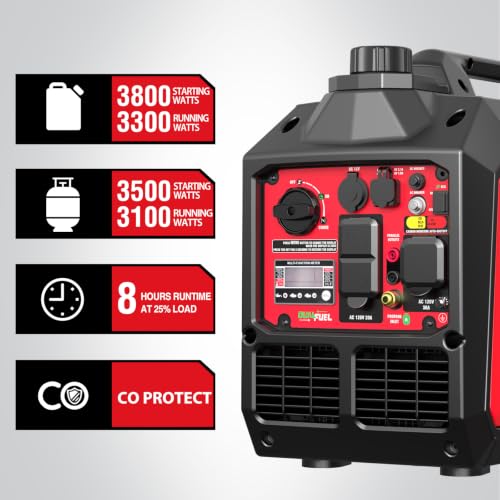
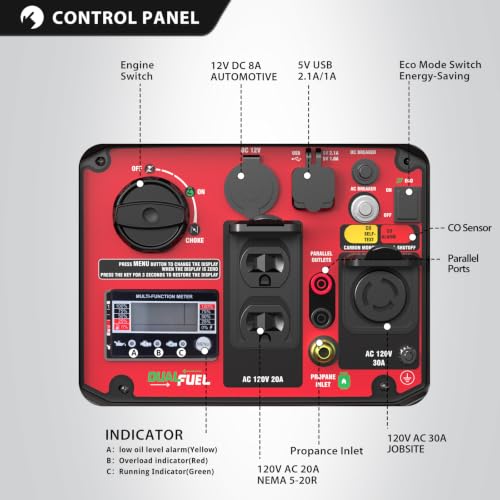
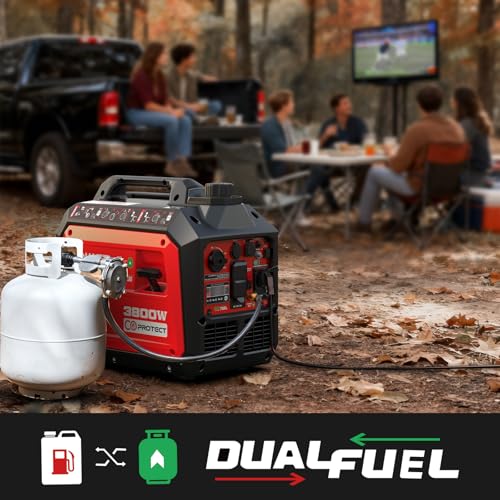
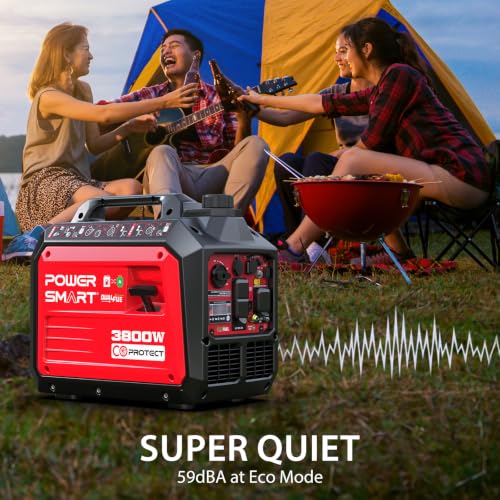
If you’re running on propane, this PowerSmart model is a standout. With up to 24 hours of runtime on a 20-lb tank, it’s ideal for long weekends or off-grid camping where refueling isn’t easy. The dual-fuel system works smoothly, and owners say the switch between gas and propane is hassle-free. At 59 dBA, it’s not the quietest, but it’s acceptable for most campgrounds.
It’s slightly less powerful than the Westinghouse 5000W units, but the runtime advantage on propane is huge. The L5-30R outlet requires an adapter for most RVs, which is a minor annoyance. Still, for propane loyalists or those prioritizing fuel efficiency and long operation, this is a smart pick.
Product photos
Oxseryn 4400W Open Frame Inverter Generator
Strengths
- High wattage for price
- 14-hour runtime
- RV-ready outlet
- Low cost
- Cold start tech
Trade-offs
- Noisy for camping
- Open frame design
- Gas only
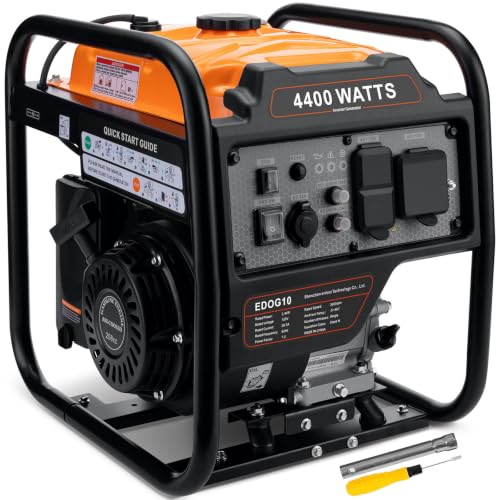
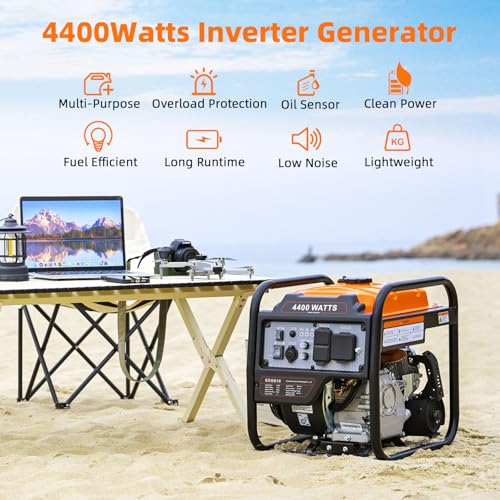
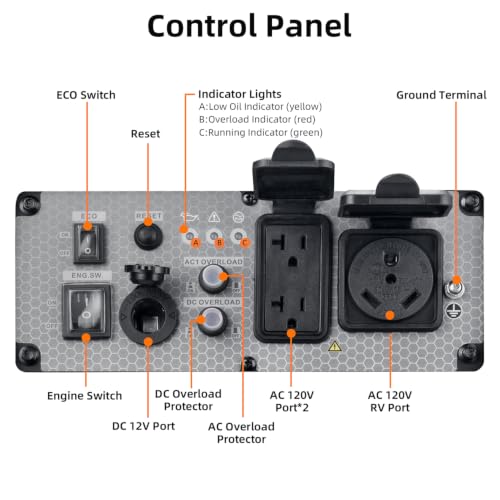
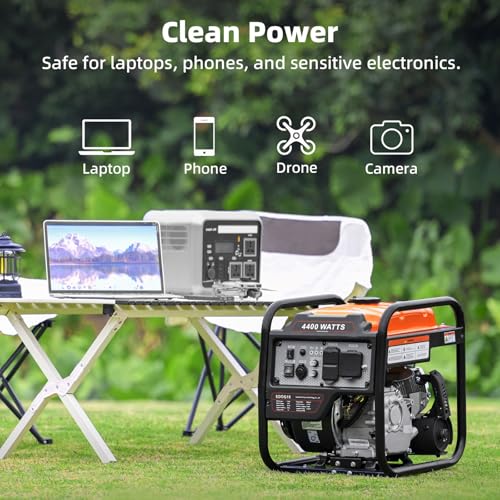
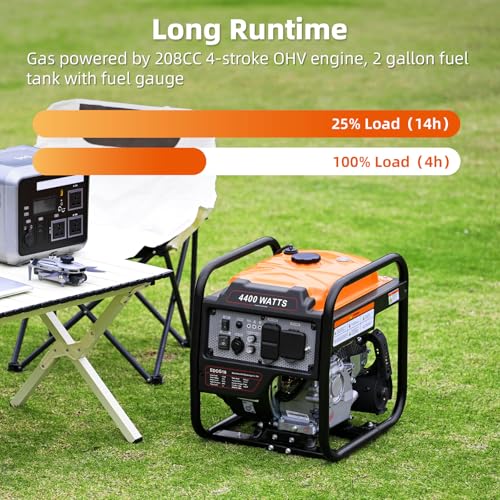
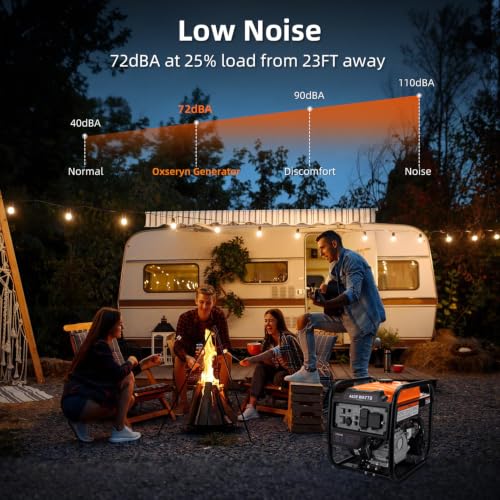
The Oxseryn 4400W packs a punch on paper, 4400 peak watts and 14 hours of runtime at 25% load, but it’s an open-frame design, which usually means more noise and less refined engineering than true inverter units. Owners note it’s louder than expected despite the ‘inverter’ label, and the 56 lb weight isn’t bad, but it lacks wheels on this model.
It’s one of the few sub-$300 generators offering a 30A RV outlet and solid wattage, making it tempting for budget-focused buyers. But the build quality and noise levels don’t match the Westinghouse or Pulsar competitors. If you need raw power on a tight budget and don’t mind the noise, it works, but don’t expect quiet mornings at the campground.
Product photos
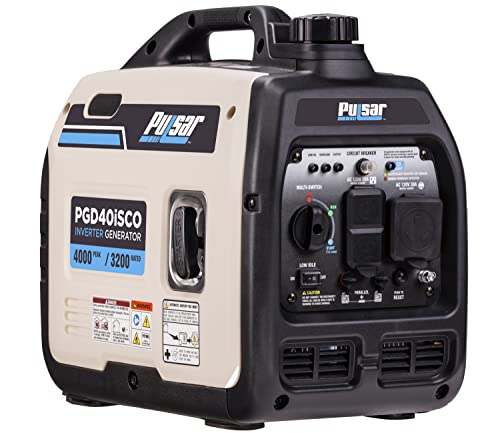
Pulsar PGD40ISCO 4000W Lightweight Generator
Strengths
- Lightweight design
- Quiet at 59 dB
- RV-ready outlet
- Parallel capable
- 4000 peak watts
Trade-offs
- Short runtime
- Gas only
- Small fuel tank
For a gas-powered inverter generator in the 4000W class, the Pulsar PGD40ISCO stands out by being lightweight and genuinely quiet at 59 dB, which is a big deal when you’re trying to enjoy a peaceful campsite. Owners consistently report it’s easy to move and stores well in an RV compartment, and the 3,200 rated watts can handle a 13,500 BTU AC unit, no small feat for weekend campers.
It runs on gasoline only, which limits fuel flexibility compared to dual-fuel models, and the 1-gallon tank means just 4 hours at half load. That’s not great for extended off-grid use without frequent refueling. Still, for those prioritizing portability and noise control over runtime, this one makes sense.
Product photos


How We Chose These camping trailer generators
Rather than a hands-on lab test, my research for these recommendations centered on a detailed comparison of published specifications and features across numerous models. I then weighed owner reviews – paying close attention to recurring praise and complaints – alongside assessments from respected automotive and outdoor publications. As someone who’s spent years observing the needs of vehicle enthusiasts, I applied my understanding of power demands and typical usage scenarios to rank these generators against clear criteria.
For camping trailer generators, sustained output and noise level were the most crucial factors. A generator’s ability to reliably deliver consistent power for extended periods is paramount when you’re looking at running appliances or even air conditioning while travel trailer generators. Equally important is minimizing noise disruption; a quiet generator contributes significantly to the enjoyment of the outdoors, and is respectful of fellow campers. Fuel efficiency also played a key role in the final ranking.
Specifications provide a good baseline for wattage, runtime, and THD (Total Harmonic Distortion – a measure of power quality). However, owner feedback proved essential in gauging real-world performance and durability. I found that reported noise levels often differed from manufacturer claims, and owner experiences highlighted potential issues with starting or long-term reliability. Understanding whether you’ll be boondocking preparation or relying on established campgrounds also shaped my assessment of features like dual-fuel capability and parallel connectivity.
How To Choose The camping trailer generators
Finding the right generator for your camping trailer is about more than just wattage. It’s about balancing power needs with portability, noise levels, and fuel efficiency to truly enhance your experience.
A good camping trailer generator prioritizes clean power (low THD), quiet operation (under 60 dBA), and a balance between runtime and weight. Consider your power demands – air conditioning, microwaves, and multiple devices drastically increase wattage requirements. Dual-fuel options add versatility, while inverter technology protects sensitive electronics.
Power Needs & Wattage
First, let’s talk about what you’re actually powering. Many folks underestimate their needs, leading to a generator that struggles. Don’t just add up the running watts of each appliance; account for starting watts, which can be several times higher, especially for air conditioners and refrigerators. A 30-amp RV outlet is standard for many trailers, and you’ll want a generator capable of comfortably handling that load, plus a little extra. If you’re primarily running lights and charging devices, a smaller, lighter unit like the AIVOLT 1600W might suffice. However, if you’re looking to run air conditioning, consider something in the 4000-watt range, like the Pulsar PGD40ISCO, or even step up to the Oxseryn 4400W if you need a high-output option on a budget. Understanding your power consumption is the crucial first step.
Fuel Type & Runtime
Gasoline is readily available, but propane offers cleaner burning and longer storage life – a significant benefit if you’re prepping for extended trips or emergencies. Dual-fuel generators, like the Westinghouse 5000W Dual Fuel Inverter Generator, give you the best of both worlds. Runtime is also key. While a larger fuel tank equates to longer runtimes, it also adds weight.
Here’s what to consider about runtime:
- Short Trips (1-2 nights): A smaller generator with a 4-6 hour runtime might be sufficient.
- Weekend Trips (3-4 nights): Look for 8-12 hours of runtime on a single tank.
- Extended Stays (5+ nights): Prioritize long runtime or consider propane, which can be easily refilled.
Ultimately, the best approach is to estimate your daily power consumption and choose a generator that exceeds it, accounting for potential weather-related needs.
Noise Level & Portability
Camping is about enjoying the outdoors, and a roaring generator can quickly ruin that. Look for inverter generators; they’re generally much quieter than traditional models. Anything under 60 dBA is considered relatively quiet, and models like the Westinghouse 5000W Super Quiet Inverter Generator boast noise levels around 52 dBA.
A good rule of thumb: prioritize a generator with a noise level below 60 dBA to maintain a peaceful campsite.
Weight is also a huge factor. You’ll be loading and unloading this thing, so a lighter model will save your back. If you’re looking for other ways to power your trailer, exploring trailer batteries and RV battery options can supplement your generator and potentially reduce its runtime demands. And for a broader overview of power solutions for your trailer, check out our guide to camper trailer generators.
Camping Trailer Generators Compared
Here’s a comparison of key specifications for popular camping trailer generators.
| Product Name | Peak Watts | Rated Watts | Fuel Type(s) | Run Time (Max) | Noise (dBA) | Outlets (120V) |
|---|---|---|---|---|---|---|
| Westinghouse 5000W Super Quiet | 5000 | 3900 | Gas | 18 hrs | 52 | 2 |
| Westinghouse 5000W Dual Fuel | 5000 | 3900 | Gas/Propane | 18 hrs | 52 | 2 |
| AIVOLT 1600W Ultra-Quiet | 1600 | 1260 | Gas | 8 hrs | 57 | 2 |
| PowerSmart 3600W Inverter | 3600 | 3200 | Gas | 8 hrs | 59 | 2 |
| PowerSmart 3800W Dual Fuel | 3800 | 3300 | Gas/Propane | 24 hrs (Propane) | 59 | 2 |
| Oxseryn 4400W Open Frame | 4400 | 3400 | Gas | 14 hrs | N/A | 2 |
| Pulsar PGD40ISCO 4000W | 4000 | 3200 | Gas | 4 hrs | 59 | N/A |
Frequently Asked Questions
What size generator do I really need for a travel trailer?
Generally, you’ll want at least a 3000-watt generator to run essential appliances like the air conditioner and refrigerator, but 4000 watts is safer for starting loads. Accurately calculating your total wattage needs, including both running and starting watts, is the most reliable way to determine the right size.
Are dual-fuel generators actually worth the extra cost?
Yes, dual-fuel generators offer significant flexibility. While typically more expensive upfront, the ability to switch between gasoline and propane provides a backup fuel source and cleaner burning with propane, extending storage life for longer trips.
What’s the difference between peak watts and rated watts?
Peak watts represent the maximum power a generator can produce for a short burst, while rated watts indicate the sustainable power output over time. You should always size a generator based on its rated watts to avoid overloading it and damaging your appliances.
How can I minimize generator noise at the campsite?
Positioning the generator as far from your campsite as safely possible and utilizing sound-dampening materials like blankets or foam can help reduce noise. Choosing an inverter generator, known for being quieter, is also a good strategy if you’re looking for low-noise travel trailer generators.
Beyond a generator, what other power options should I consider for my trailer?
Exploring solar power and upgrading your trailer’s battery system are great ways to supplement generator use. Investing in high-quality car camping gear including a robust battery setup can reduce your reliance on a generator and enhance your off-grid capabilities.
The Bottom Line
Choosing a camping trailer generator often comes down to how much control you want over your power setup versus how much fuss you’re willing to tolerate. If you want a reliable, quiet, and versatile option that handles most needs, the Westinghouse 5000W Dual Fuel Inverter Generator is an excellent all-around choice. It balances power, noise, and fuel flexibility in a way few others manage.
For those on a tighter budget, the AIVOLT 1600W Ultra-Quiet is a great starting point, especially if you primarily need to power smaller devices while enjoying your small camping trailers. If you anticipate heavier loads and want a budget-friendly high-output option, the Oxseryn 4400W Open Frame generator presents a compelling value. And for those seeking a dedicated, high-quality power solution for their RV, exploring inverter generators for RVs can offer tailored performance.
Ultimately, the wattage and features are secondary to understanding your actual power needs and prioritizing a generator that offers clean, reliable power without disrupting the peace of the outdoors. Don’t get lost in the specs; focus on building a power plan that supports the kind of camping experiences you want to have.
