
8 Best Camper Covers of 2026
This post contains affiliate links. As an Amazon Associate, we earn from qualifying purchases.
The best overall camper cover is the CAMMOO RV Cover 24-27ft, thanks to its rugged 9-layer construction and thorough windproofing system. For those on a tighter budget, the Yelmzir Travel Trailer Cover 24-27ft delivers solid protection with durable Oxford fabric at a lower price point.
If you’ve ever come back to your camper after months in storage only to find faded trim, water stains, or worse, mold creeping in, you know a flimsy cover isn’t worth the hassle. A good one doesn’t just block rain; it handles UV rays, resists tearing from wind, and lets moisture escape.
In this guide, I’ll walk you through the top picks based on material strength, real-world feedback, and smart design details like ventilation and strap placement. These were chosen by comparing specs, durability claims, and owner experiences across seasons and climates.
Top 8 Camper Covers in the Market
The Best Camper Covers, Reviewed
CAMMOO RV Cover 24-27ft
Strengths
- Superior windproof system
- Excellent access features
- Stylish, cohesive design
Trade-offs
- Premium price tag
- Bulkier to store
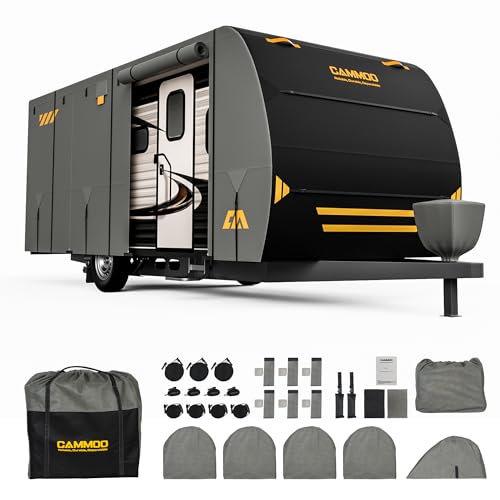
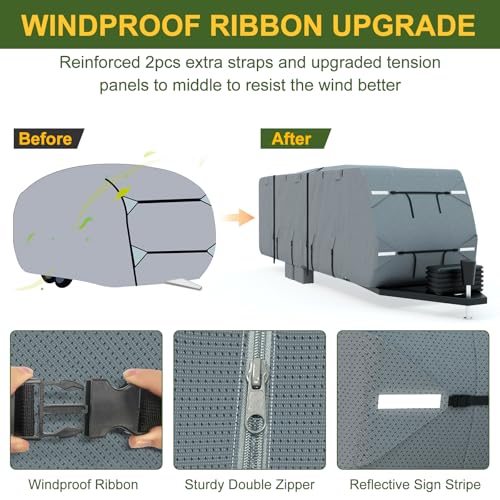
This is my pick for best overall, not because it dominates in any single category, but because it excels across the board. The 9-layer fabric with 180g/sq.m roof reinforcement gives it serious heft, and the multi-point windproof system (top, bottom, and front/rear straps) keeps it locked down better than most. Reviewers repeatedly mention how little it billows, even in gusty conditions.
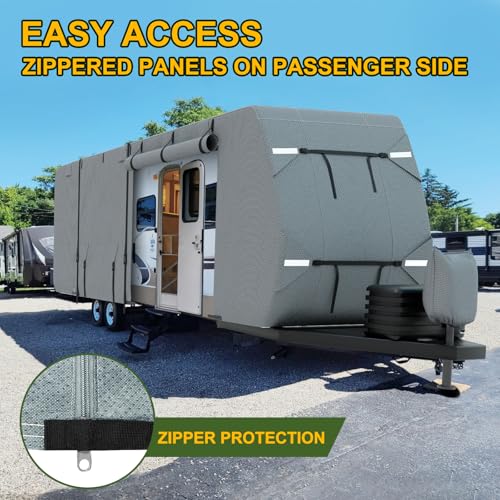
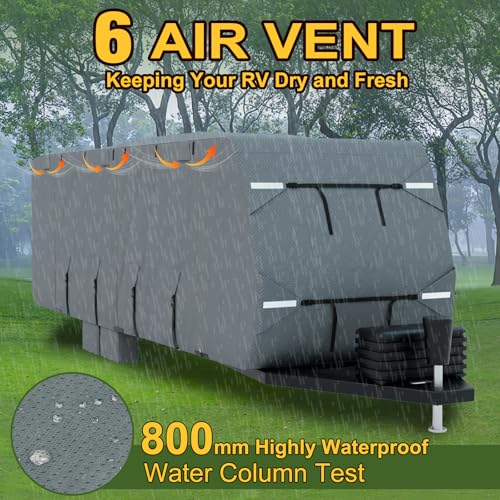
Add in five vents, three zippered side panels, plus a rear roll-up section for loading bikes or gear, and you’ve got unmatched versatility. The inclusion of tire covers, gutter protectors, toss sticks, and even a matching black-and-orange storage bag makes this feel premium. Yes, it’s among the pricier options, but the completeness justifies it. Compared to others, it’s the only one that truly feels designed rather than assembled.
Video review
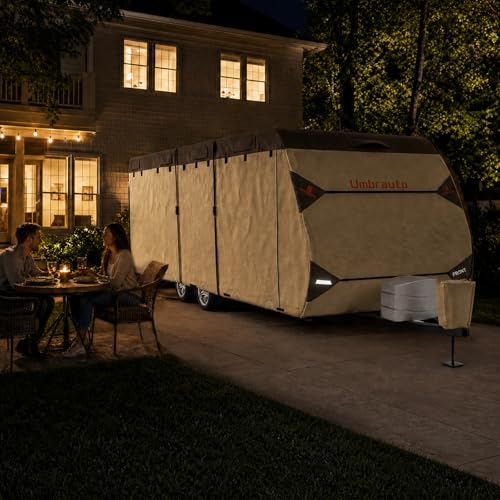
Umbrauto Pop Up Camper Cover
Strengths
- Affordable price point
- Lightweight and portable
- Simple installation
Trade-offs
- Not for large or full-time RVs
- Fewer straps than premium models
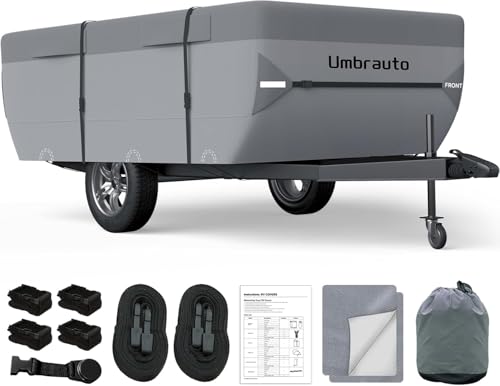
For pop-up trailers under 10 feet, this cover delivers surprising value. The 9-layer polypropylene build isn’t as rugged as what you’d want for a full-size travel trailer, but it’s more than enough for a folding camper that sees occasional outdoor storage. Owners praise how easy it is to deploy and pack down, the included storage bag takes up almost no space in your trunk.
It doesn’t have the heavy-duty straps or ventilation count of larger models, but for its size class, the 6 side vents and elasticized edges do a decent job minimizing flapping and moisture. If you’re covering a lightweight tent trailer and don’t want to spend over $100, this hits the sweet spot between cost and protection.
Video review
Mofeez Travel Trailer Cover 24′-27′
Strengths
- Great value for size
- Abundant included accessories
- Solid tear-resistant build
Trade-offs
- Ventilation could be better
- Fit can be inconsistent
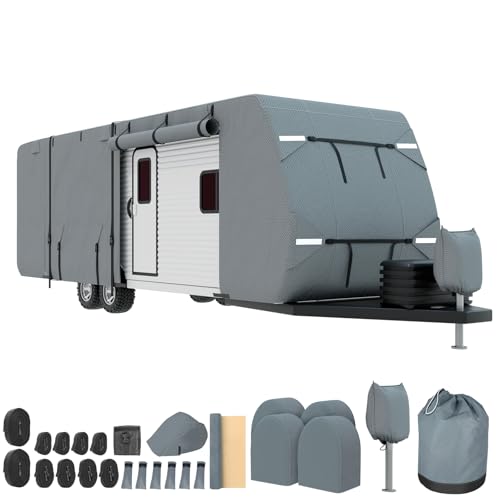
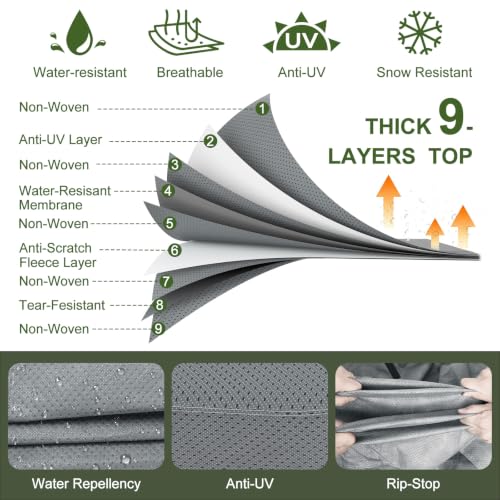
This cover punches above its price in both materials and accessories. The 9-layer panel fabric with UV-resistant film and 110g non-woven sides offers solid defense against sun and storms, and owners report it holds up well after multiple seasons. The windproof setup, with extra-long straps and layered waterproof tape, is effective, though not quite as secure as the CAMMOO’s multi-angle system.
What impresses me is the sheer volume of included gear: tire covers, gutter sponges, ladder sleeve, repair patches, even reflective strips. For the mid-size RV owner who wants thorough protection without stretching to premium pricing, this is arguably the smarter buy. It’s not flashy, but it’s thorough.
Product photos

Umbrauto Travel Trailer Cover 30′-33′
Strengths
- Tailored for large trailers
- Robust roof construction
- Full accessory bundle
Trade-offs
- Side panels less reinforced
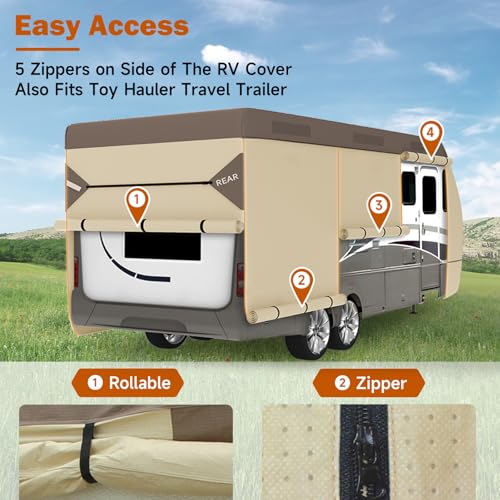
- Zippered access limited
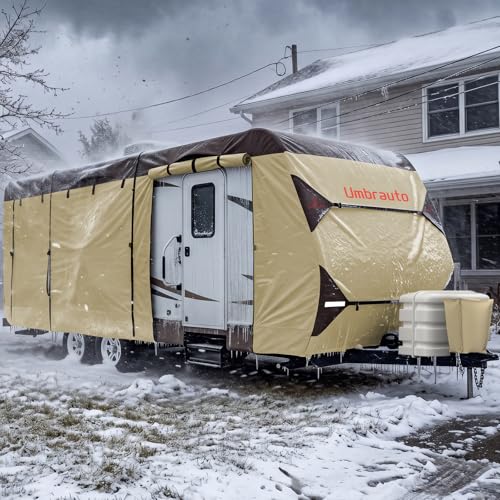
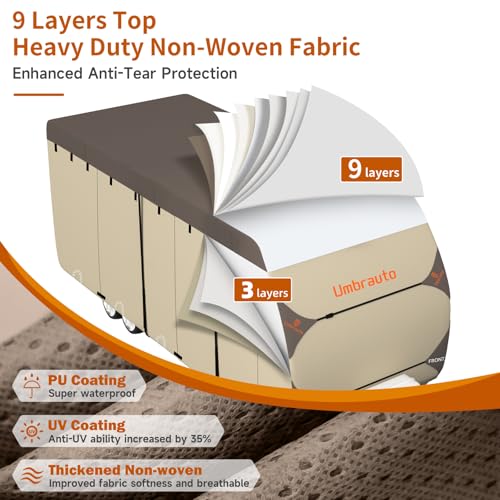
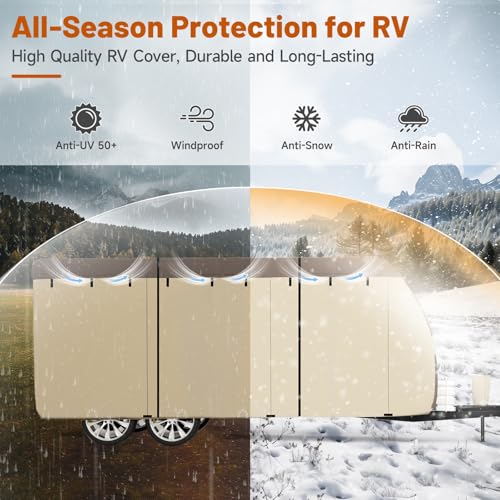
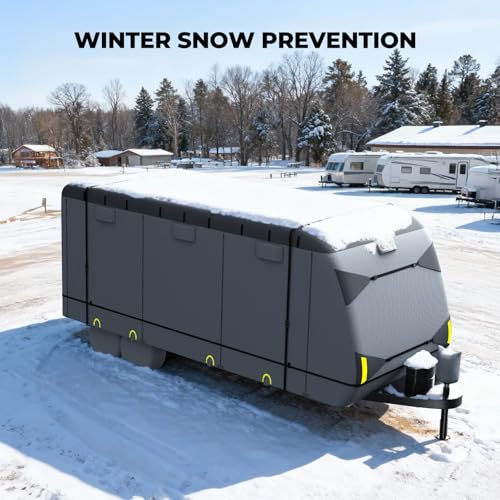
If you’ve got a large rig, finding a cover that actually fits without flapping loose is half the battle, and this one nails the sizing. At 30–33 feet, it’s built for serious campers, and the 9-ply roof with 3-ply sides shows thoughtful engineering: heavy protection where it matters most, lighter elsewhere to keep weight manageable. Owners in snowy regions say it shrugs off winter buildup better than thinner models.
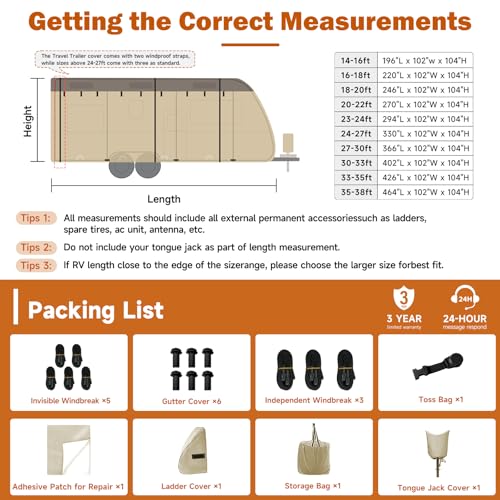
The full accessory set, including ladder and tongue jack covers, adds real value. I also like the internal buckles and extra body straps; they reduce stress points that often fail in high winds. Compared to other big-rig covers, this one strikes a smart balance between structure and usability, though it’s not quite as refined as the CAMMOO in overall fit.
Product photos
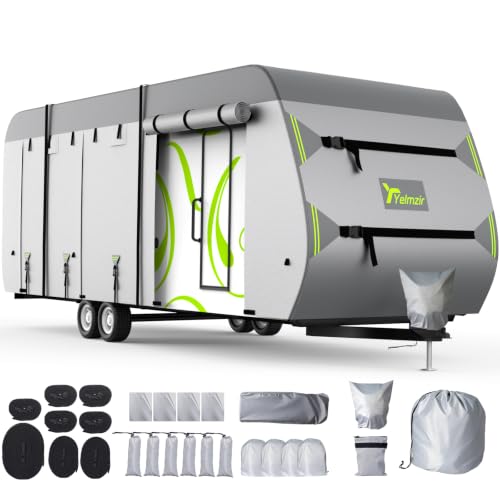
Yelmzir Travel Trailer Cover 24-27ft
Strengths
- Durable oxford construction
- Soft inner layer prevents scratches
- Good strap configuration
Trade-offs
- Less breathable than non-woven
- Heavier drape
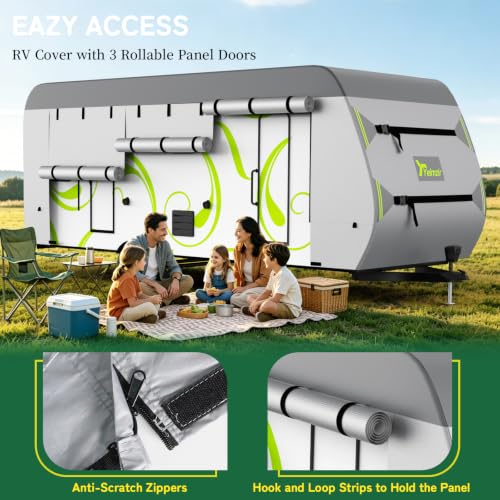
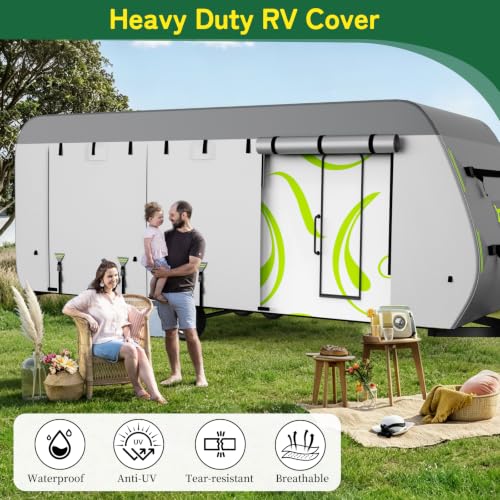
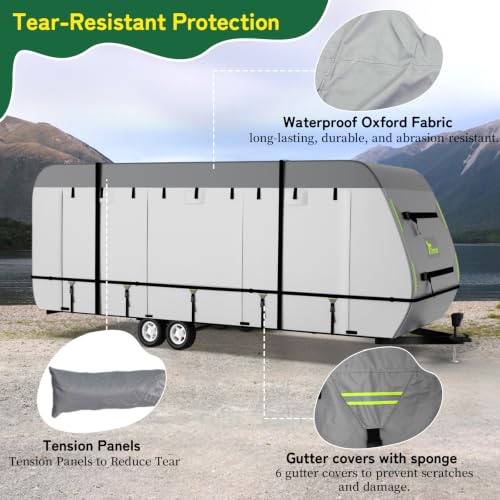
Choosing oxford fabric over non-woven is a different approach, and it brings real benefits. The 420D top is notably tougher against abrasion and punctures, ideal if your RV has sharp edges or sits near trees. Owners like how stiff yet flexible it feels, especially when securing straps. The soft inner lining is a nice touch for protecting gel coats and glossy finishes.
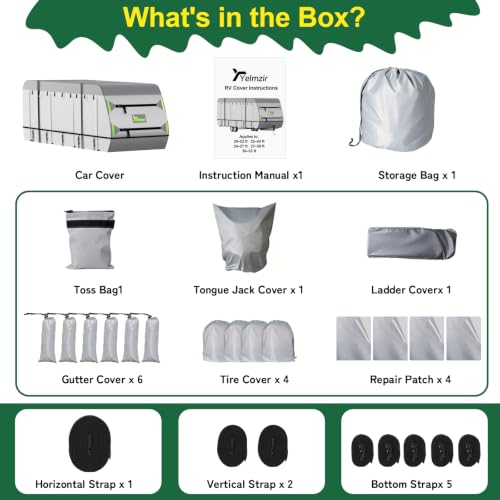
With 5 bottom straps and 3 additional body fixers, wind resistance is strong, and the 6 air vents help with airflow. It comes with a full kit including repair patches and toss bags, so setup is smooth. While it doesn’t have the multi-layer breathability of non-woven composites, the oxford build offers a more rugged, workwear-like durability that some will prefer.
Product photos
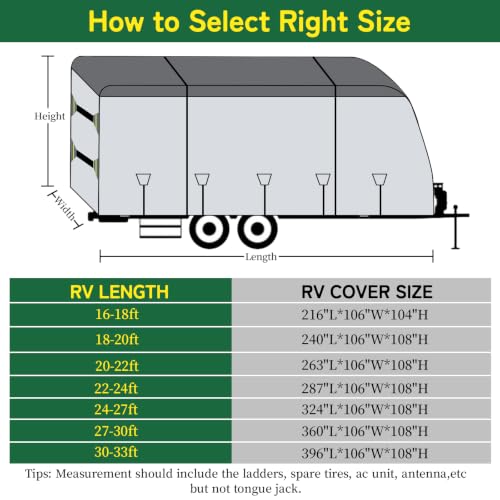
Travel Trailer Cover 24-27ft Ripstop
Strengths
- Soft inner lining protects paint
- Cross-stitched mesh boosts strength
- Rear roll-up access panel
Trade-offs
- No accessory kit included
- Higher price with fewer extras
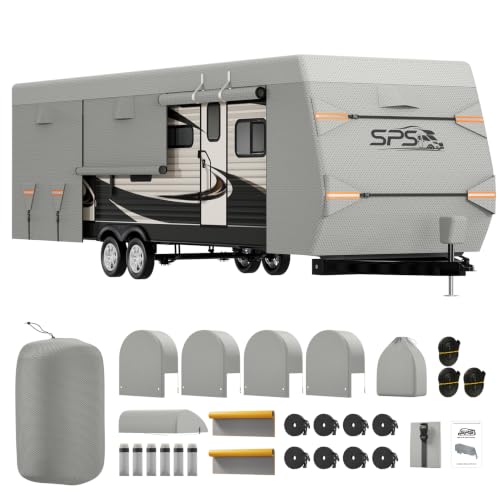
Built with dual-sided composite cotton fabric and cross-stitched inner mesh, this cover leans into long-term resilience. The material choice is interesting, cotton blend offers better paint friendliness than pure synthetics, reducing surface abrasion over time. That’s a subtle but meaningful perk if you’re storing a newer RV with a delicate finish.
The rear roll-up door is a standout feature, making gear loading far easier than with competitors that force full removal. Paired with 6 to 14 vents depending on size, it promotes airflow better than average. But it doesn’t come with extras like tire or gutter covers, which puts it behind others in convenience. Still, for pure protective performance, especially in dry or fluctuating climates, this is one of the most durable builds in the list.
Product photos
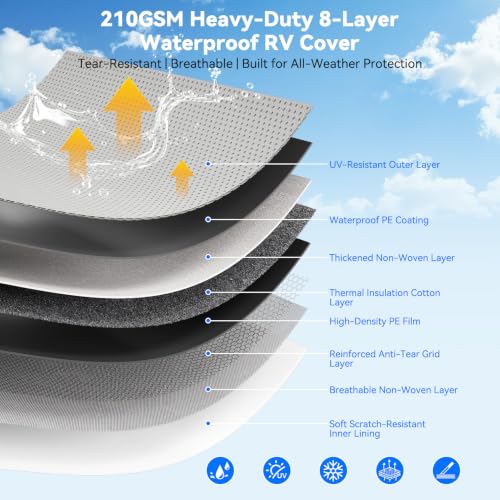
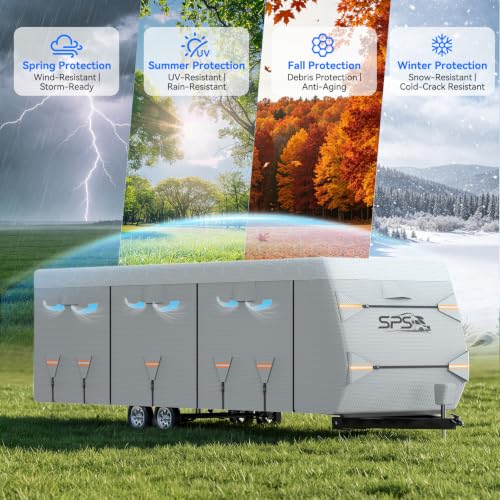
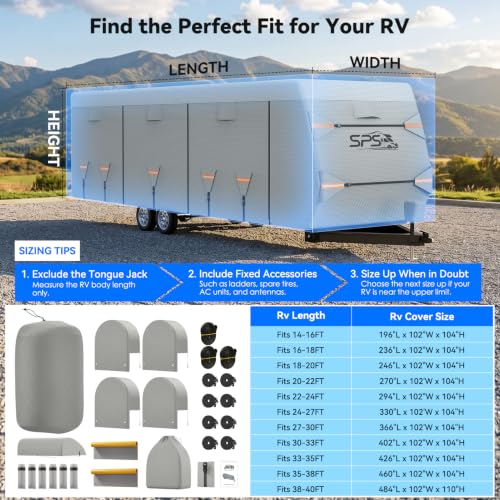
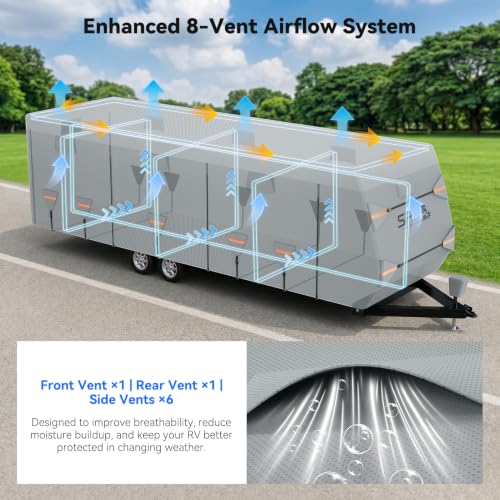
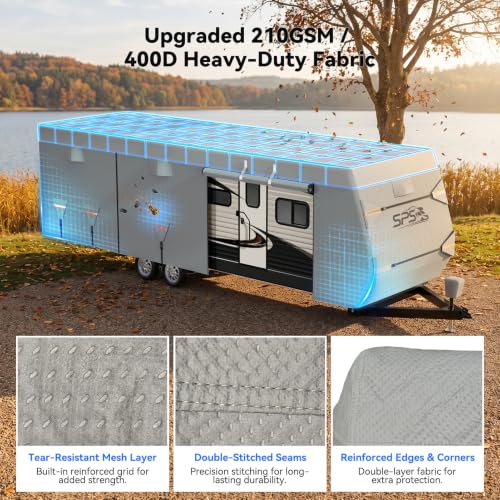
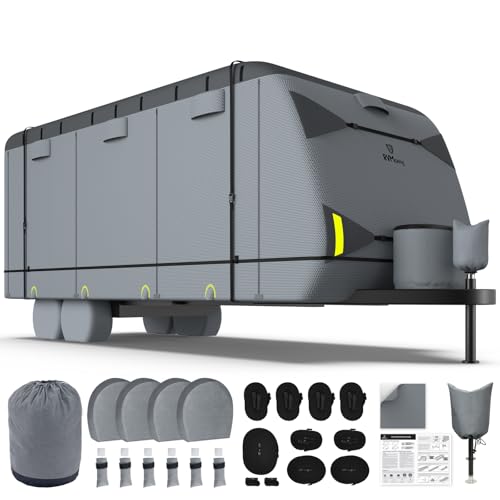
RVMasking Travel Trailer Cover 24-26ft
Strengths
- Excellent windproof design
- Thorough accessory kit
- Reinforced corner patches
Trade-offs
- Heavier than some
- Slightly steeper setup curve
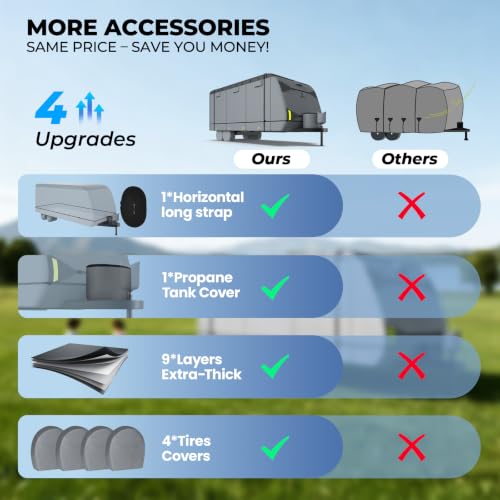
This cover stands out for its obsessive attention to wind protection. The inclusion of an extra-long horizontal strap that wraps around the bottom of the RV is a smart move, it’s something most competitors skip, and owners consistently report it makes a real difference during storm season. On paper, the 9-layer non-woven fabric with 4% anti-UV composite looks solid, and the breathable membrane helps manage moisture buildup, which is critical for long-term storage.
What really pushes this ahead for certain users is the full accessory bundle: tire covers, propane tank cover, gutter spout protectors, even a tongue jack sleeve. It’s one of the few models that feels like a complete armor kit straight out of the box. Compared to others in this range, it leans hard into durability and fit security, especially if you’re parked in an exposed or windy area.
Product photos
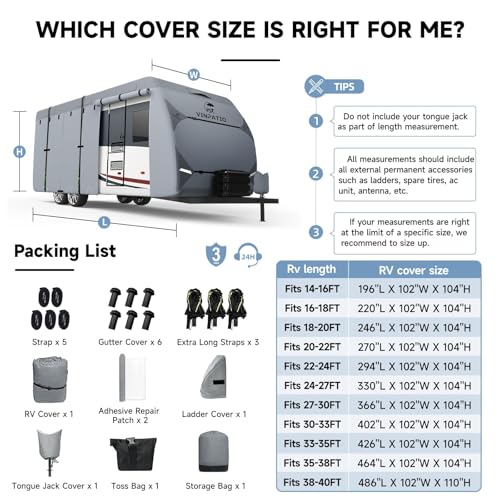
VINPATIO RV Cover 20-22ft
Strengths
- Strong waterproof rating
- Good ventilation layout
- Reflective safety strips
Trade-offs
- Limited size range
- Less corner reinforcement
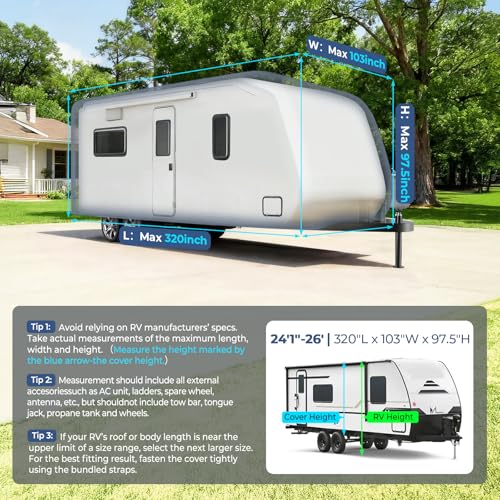
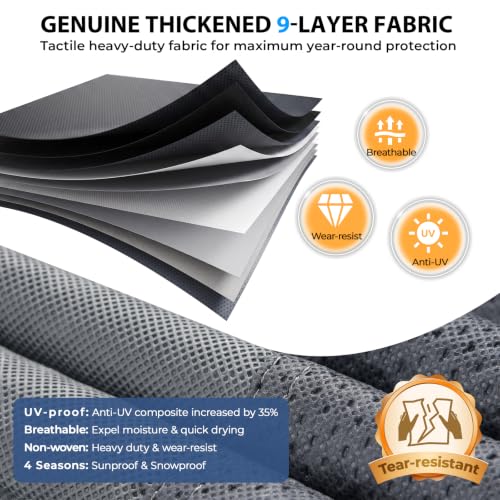
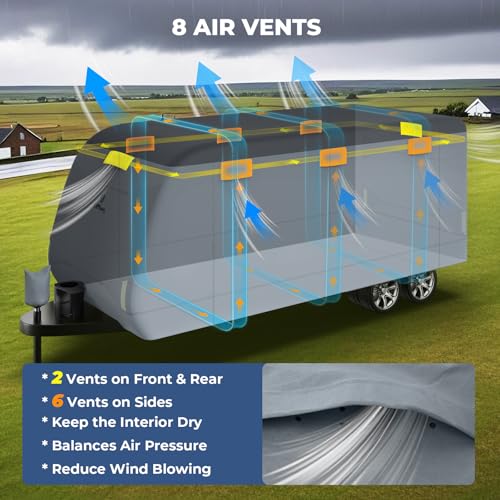
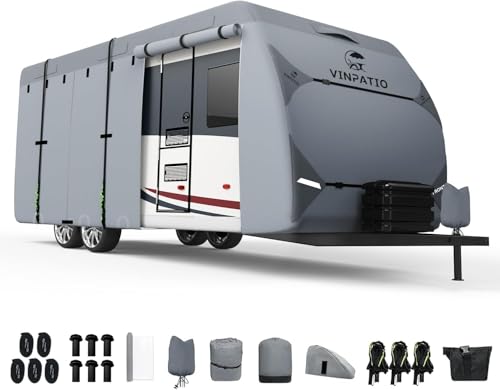
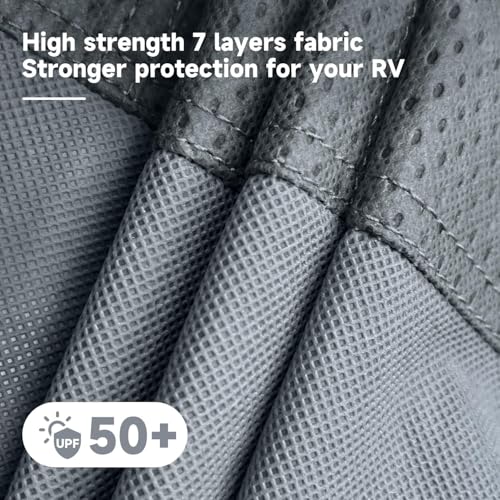
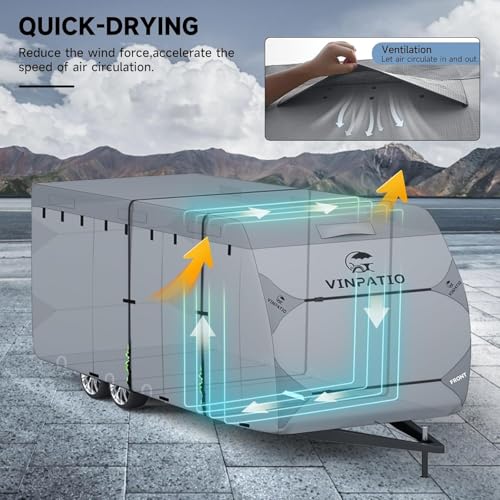
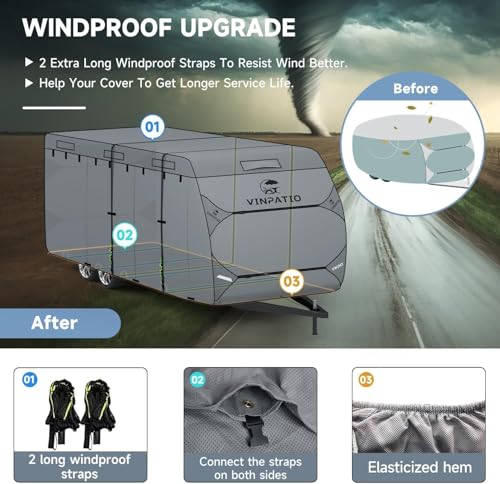
This is a well-rounded option for small to mid-sized RVs, especially those between 20 and 22 feet where balance between coverage and manageability matters. The 9-ply non-woven fabric with 2000mm waterproof rating checks the right boxes on spec sheets, and reviewers note it handles rain better than many similarly priced models. I appreciate the reflective strips, small detail, big safety win at night.
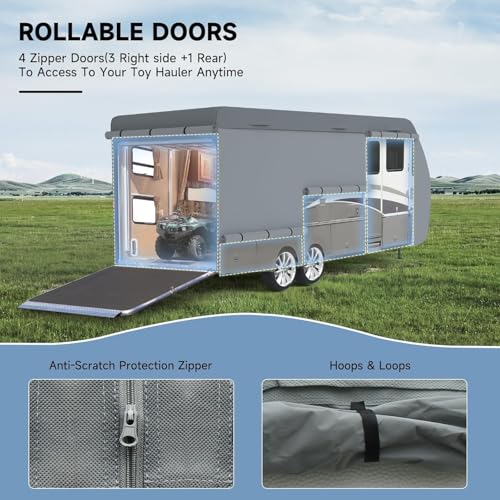
The zippered access panels (three on the side, one rear) are practical for checking systems without full removal. While it lacks some of the deep structural reinforcements seen in top-tier covers, it holds up well in moderate climates. Compared to the Mofeez or CAMMOO options, it’s slightly less robust but still a strong pick if you’re not battling constant storms.
Product photos
Our Testing Process
As someone who’s spent years exploring the world of vehicles – from classic restorations to modern innovations – I approach camper covers with a focus on long-term protection and practicality. My research wasn’t about owning and testing each cover personally; rather, it was a research-led comparison of published specifications, owner reviews from across various platforms, and insights from respected automotive publications. I weighed these data points against my existing knowledge of materials science, RV construction, and the demands placed on exterior coverings.
For camper covers, durability and weather resistance were paramount. I prioritized covers offering multi-layered fabrics – specifically those with enhanced tear resistance – and robust windproofing systems. A cover that fails in these areas quickly becomes a costly disappointment. Equally important was the inclusion of well-designed ventilation to prevent moisture buildup, a common issue that can lead to significant damage. Considering these factors allowed me to rank options effectively.
Specifications reliably indicate material thickness and layering, giving a baseline for expected durability. However, real-world performance – how a cover holds up to prolonged sun exposure, heavy rain, and strong winds – is best gleaned from owner feedback. I paid close attention to reports of tearing, fading, and the effectiveness of the windproof straps. For further context on winterizing your RV, you might also find our guide to winter travel trailer covers helpful. And if you’re looking for options tailored to smaller setups, exploring protective truck camper covers can provide valuable insights.
How To Choose The camper covers
Finding the right camper cover is about more than just throwing something over your rig. It’s about protecting your investment from the elements and extending its lifespan. We’ll break down what really matters when selecting a cover, moving beyond marketing buzzwords to focus on practical durability and functionality.
A quality camper cover prioritizes tear resistance through multi-layered fabrics, robust windproofing systems using straps and tensioners, and adequate ventilation to prevent moisture buildup. Look for covers specifying fabric weight (gsm – grams per square meter) and the number of layers, as these directly correlate to durability. Pay close attention to how the cover secures to the chassis and whether it addresses potential problem areas like roof seams and sharp edges.
Fabric and Construction
The material a camper cover is made from is paramount. You’ll see a lot of talk about “layers,” and for good reason. More layers generally mean better protection, but the type of material matters just as much. Oxford fabric and non-woven polypropylene are common, but the weight (measured in gsm) tells you a lot about strength. A heavier gsm means a thicker, more durable fabric. Don’t fall for marketing around “miracle” coatings; a mechanically strong base material is more important than a fancy finish. Consider that some covers, like the Yelmzir, use 420D Oxford fabric for the top, offering a good balance of durability and affordability.
Wind Resistance: Beyond Straps
Straps are essential, but a truly wind-resistant cover isn’t just about quantity. The placement and type of straps matter. Look for covers with straps that span the width of the camper, not just individual corner tie-downs. The CAMMOO RV Cover, for example, uses a combination of top, bottom, and buckle straps, plus an elastic hem, which is a good indicator of a well-thought-out system. Here’s what to consider when evaluating windproofing:
- Number of straps: More is usually better, but quality trumps quantity.
- Strap material: Heavy-duty nylon webbing is preferable to thin polyester.
- Buckle quality: Look for robust buckles that won’t snap in strong winds. A good design will also incorporate tensioners to tighten the straps securely.
Remember, a loose cover acts like a sail, increasing the risk of tearing. A well-fitted cover will minimize billowing and stress on the fabric.
A properly secured camper cover should feel taut, like a drum. If it’s flapping in a moderate breeze, the straps need tightening or the fit isn’t right.
Accessibility and Ventilation
A cover that’s impossible to access defeats the purpose. Many covers offer zippered access panels, but their placement and number are critical. Having access to the door and storage compartments without completely removing the cover is a huge convenience. Beyond access, ventilation is key. Moisture trapped under the cover can lead to mold, mildew, and corrosion. The Mofeez Travel Trailer Cover highlights the importance of ventilation with its six strategically placed vents. If you live in an area with harsh winters, investing in quality winter camper covers is a smart move to prevent freeze damage. And don’t forget about the need for protective RV covers year-round to safeguard against all types of weather.
Camper Covers Compared
Here is a comparison of key specifications for various camper covers to help you make an informed decision.
| Product Title | Size Fit (ft) | Fabric Layers | Windproof Features | Waterproof Rating (mm) | Included Accessories |
|---|---|---|---|---|---|
| CAMMOO RV Cover 24-27ft | 24-27 | 9 | Straps (3 top, 4 bottom, 4 buckle), Elastic Hem, Vents | N/A | Tire covers, gutter covers, ladder cover, repair patches, etc. |
| Umbrauto Pop Up Camper Cover | 8-10 | 9 | 3 Straps/Buckles, Elastic Edges | N/A | Buckle Straps, Patch Kit, Throw Bag, Storage Bag |
| Mofeez Travel Trailer Cover 24′-27′ | 24-27 | 9 | 2 Extra-Long Straps, Buckles | N/A | Tire covers, Jack cover, Ladder cover, Toss bag, Repair patch, etc. |
| Umbrauto Travel Trailer Cover 30′-33′ | 30-33 | 9 (Roof), 3 (Sides) | 6 Bottom Straps, 3 Body Straps | N/A | Tongue jack cover, Ladder cover, Storage bag, Gutter covers, etc. |
| Yelmzir Travel Trailer Cover 24-27ft | 24-27 | 420D/300D Oxford | 5 Bottom Straps, 3 Body Straps, Elastic Hem | N/A | Tire Covers, Gutter Covers, Jack Cover, Ladder Cover, etc. |
| Travel Trailer Cover 24-27ft Ripstop | 24-27 | 8 | Windproof Straps, Bottom Edge, Waterproof Tape | N/A | Repair Patch, Toss Sticks |
| RVMasking Travel Trailer Cover 24-26ft | 24-26 | 9 | Horizontal Strap, Bottom Straps, Elastic Hem | N/A | Tire Covers, Propane Tank Cover, Gutter Covers, etc. |
| VINPATIO RV Cover 20-22ft | 20-22 | 9 | Windproof Straps | 2000 | Drain Gutter Covers |
Frequently Asked Questions
What fabric weight (gsm) should I look for in a camper cover?
A higher gsm generally indicates a more durable fabric; I recommend looking for covers with a gsm of at least 200 for adequate protection, and ideally over 300 for long-term use and resistance to tearing. This is a better indicator of strength than simply counting layers.
Are all “waterproof” camper covers truly waterproof?
Many are water-resistant, but truly waterproof ratings are often not specified or are quite low. Look for a stated waterproof rating in millimeters (mm) – anything above 1500mm offers good protection, but remember that seams are often the weak point.
How often should I adjust the straps on my camper cover?
You should check and readjust the straps after any significant weather event, like a strong wind or heavy rain. Beyond that, I suggest a monthly inspection during periods of consistent use to ensure a snug fit and prevent strain on the material.
What’s the best way to prevent mold and mildew under my camper cover?
Adequate ventilation is key. Many quality covers, like the CAMMOO, incorporate vents, but you can also use moisture-absorbing products inside the camper itself. Regularly checking for and addressing any leaks will also prevent moisture buildup.
Where can I find other helpful resources for maintaining my camper?
Beyond a quality cover, you’ll want to explore other camper supplies to keep your RV in top condition. You might also want to consider specialized protective pop-up covers if you own that style of camper.
The Bottom Line
Choosing a camper cover often comes down to balancing upfront cost with the level of protection you desire. While numerous options exist, the CAMMOO RV Cover 24-27ft consistently rises to the top due to its thoughtful design, thorough accessory package, and robust windproofing system. It represents a strong investment for those who want peace of mind knowing their camper is well-defended against the elements.
For owners prioritizing affordability, the Yelmzir Travel Trailer Cover 24-27ft provides a good balance of features and price. If you need a cover specifically tailored for a pop-up camper, the Umbrauto Pop Up Camper Cover stands out with its design focused on that particular RV style. And for those with a fifth wheel, exploring options like dedicated fifth wheel covers will yield the best fit and protection.
Ultimately, the specifications on a cover are less critical than ensuring a snug fit and consistent maintenance. A well-maintained, properly secured cover – even one that’s not the most expensive – will always outperform a premium cover that’s loose or neglected. Don’t underestimate the value of comfortable camper bedding, either – a good camper mattress makes all the difference inside while your cover protects the exterior.
