
8 Best Camper Beds of 2026
This post contains affiliate links. As an Amazon Associate, we earn from qualifying purchases.
The Celestial Sleep 10 Inch RV Short Queen Mattress is the best overall camper bed for its deep support and quality foam, while the Zinus 8 Inch offers a solid budget-friendly alternative without sacrificing too much comfort. For campers needing a more versatile, packable option, the FNARMW inflatable pad stands out.
Finding the right bed for your camper isn’t just about filling a bunk, it’s about making sure you’re rested and ready for the road ahead. Too many travelers settle for lumpy, thin mattresses that leave them sore and exhausted, missing the point of a restful escape.
This guide cuts through the noise by focusing on real specs and owner experiences to find beds that deliver lasting comfort and practicality. I looked at support, durability, and how well each model fits the unique demands of life on wheels, from classic RVs to converted vans.
Top 8 Camper Beds in the Market
The Best Camper Beds, Reviewed
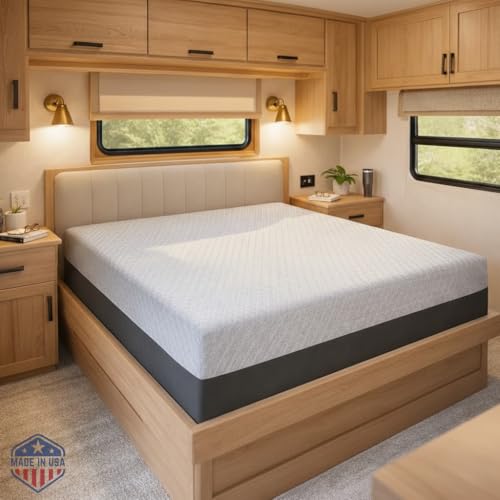
Celestial Sleep 10 Inch RV Short Queen Mattress
Strengths
- 10-inch premium comfort
- Cooling gel infusion
- CertiPUR-US and Oeko-Tex certified
Trade-offs
- Higher price tag
- Takes 2–3 days to expand
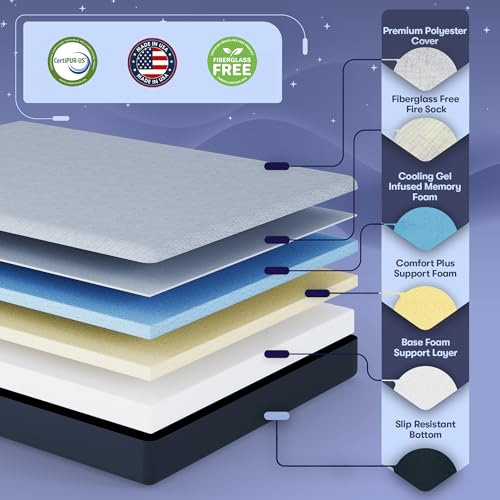
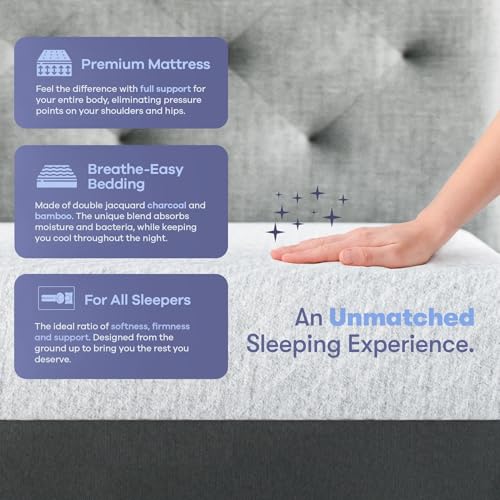
This is the gold standard for RV mattress upgrades. With 10 inches of cooling gel-infused memory foam, it brings hotel-bed comfort into tight camper spaces. The multi-layer construction includes a quilted heat-wicking cover and supportive base foam, delivering both softness and spinal alignment. Owners report staying cooler than expected, even in summer months, thanks to the gel beads and breathable fabric.
Made in the USA and certified by CertiPUR-US and Oeko-Tex, it checks every box for health-conscious buyers. It expands fully within 72 hours, though some note a mild odor at first. Compared to thinner models like the Zinus or 3-inch replacements, this one dominates in comfort and durability. Yes, it costs more, but for full-time RVers or frequent travelers, it’s worth every penny.
Video review
Zinus 8 Inch Short Queen RV Memory Foam Mattress

Strengths
- Affordable 8-inch comfort
- Odor-resistant infusion
- Eco-friendly packaging
Trade-offs
- Average cooling performance
- Foam may soften over time
This Zinus model is the smart buy if you’re upgrading an RV bed without blowing the budget. The 8-inch thickness gives real cushioning, and the 7-zone foam system targets pressure points in hips and shoulders, something many owners notice right away. Infused with green tea and charcoal, it resists odors better than standard foams, which matters in enclosed spaces.
It arrives compressed in a small box, reducing shipping impact, and expands in 2–3 days. While not as cool as gel-infused models, it breathes decently thanks to the OEKO-TEX cover. Compared to the Celestial Sleep options, it lacks the same level of temperature control and material transparency, but for half the price, it’s a strong contender. Just don’t expect luxury-grade longevity.
Video review
Celestial Sleep 8 Inch RV Short Queen Mattress
Strengths
- Firm, supportive feel
- Cooling technology
- High-quality certified foams
Trade-offs
- Still requires expansion time
- Less plush for side sleepers
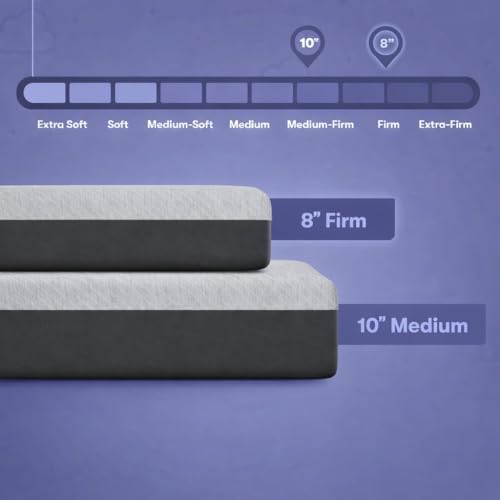
If you prefer a firmer sleep surface but still want quality materials, this 8-inch model is my top pick over the softer 10-inch version. The firm feel suits back and stomach sleepers who need strong lumbar support, and the cooling gel memory foam still adapts enough to avoid pressure points. Like its plusher sibling, it’s made in the USA with fiberglass-free, certified foams, important for indoor air quality in small spaces.
The build is slightly slimmer, so it fits easier in low-clearance RV bunks. Expansion time is similar, up to three days, and edge support holds well. Compared to budget picks like the Zinus, this one maintains shape longer and resists sagging. For couples where one prefers firmness, this could be the compromise.
Product photos
YELLOW JACKET Folding Camping Cot with Mattress

Strengths
- 600 lb weight capacity
- Extra-wide 28” sleeping area
- Removable washable mattress
Trade-offs
- Mattress requires expansion time
- Bulkier than minimalist cots
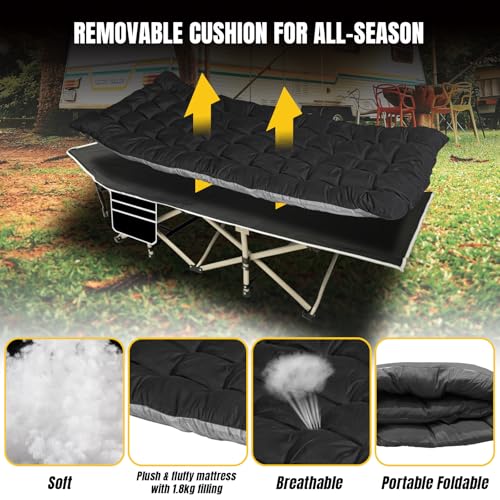
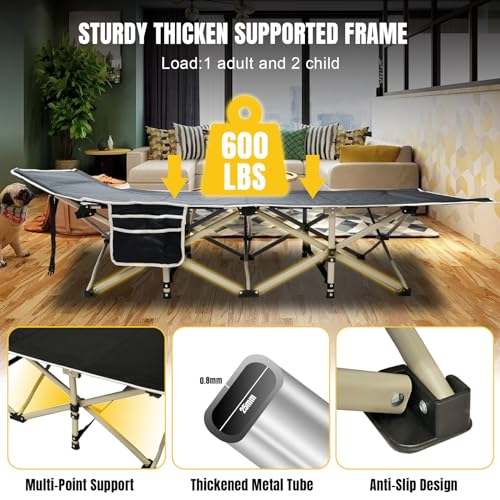
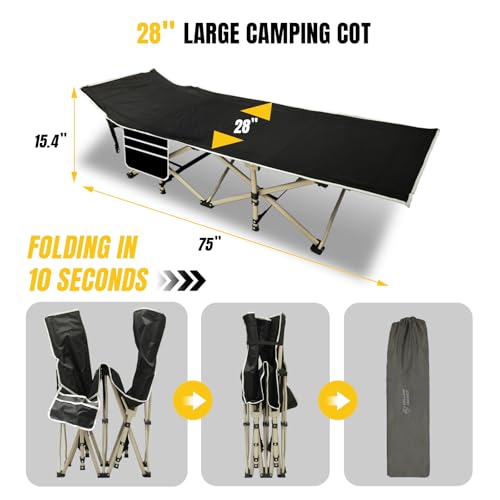
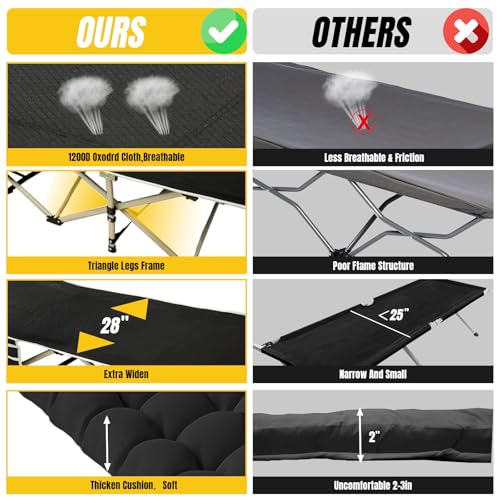
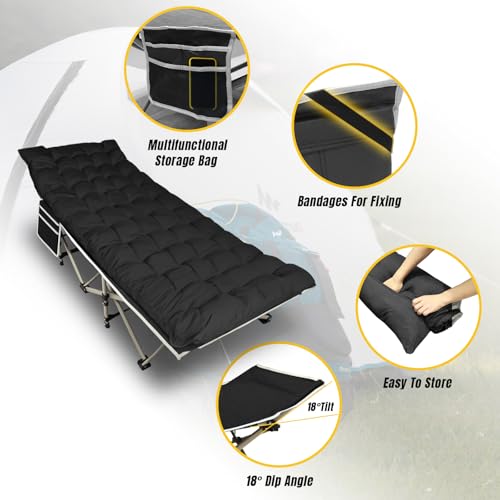
This cot stands out for its 600-pound capacity and 28-inch width, unusually spacious for a foldable unit. The dual-sided 1200D Oxford fabric feels durable and skin-friendly, and the removable padded mattress adds comfort without trapping heat. I appreciate the 18-degree head tilt, which actually improves sleep ergonomics over flat cots. Setup is near-instant, and it folds compactly with a carry bag.
Owners use it everywhere, from backyard hangs to family camping trips, and the built-in side pocket is a small but useful perk. The mattress ships compressed and needs fluffing, but most say it recovers well. Compared to thinner cots, this one balances portability and sturdiness better. It’s not ultralight, but for car-based adventures, it’s a workhorse.
Product photos
Greenvelly Folding Bed with 5 Inch Mattress

Strengths
- 5-inch memory foam comfort
- Sturdy metal frame
- Rolls and locks for mobility
Trade-offs
- Bulky when folded
- Not ultra-light for hiking
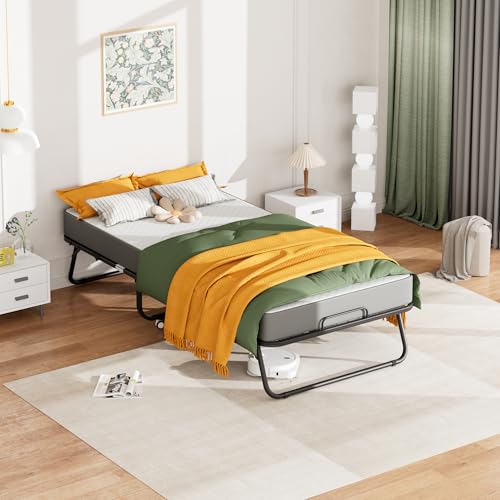
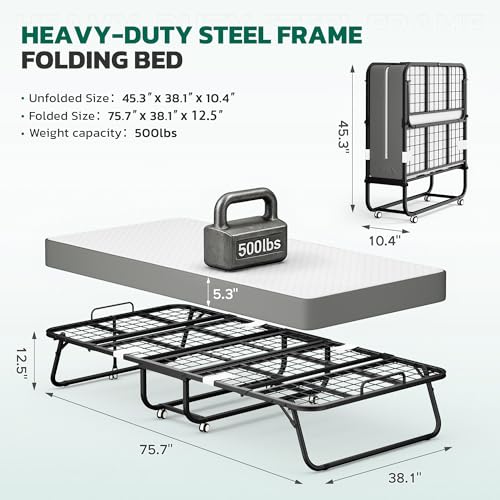
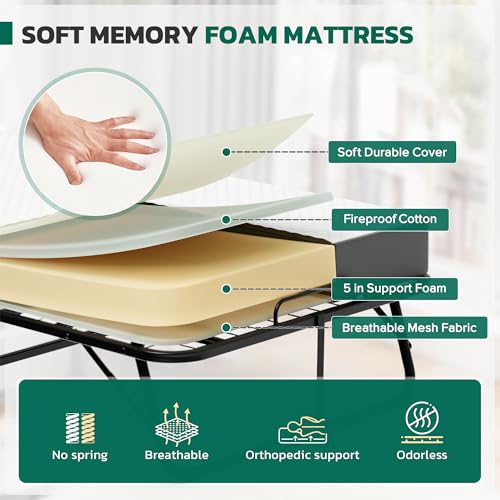
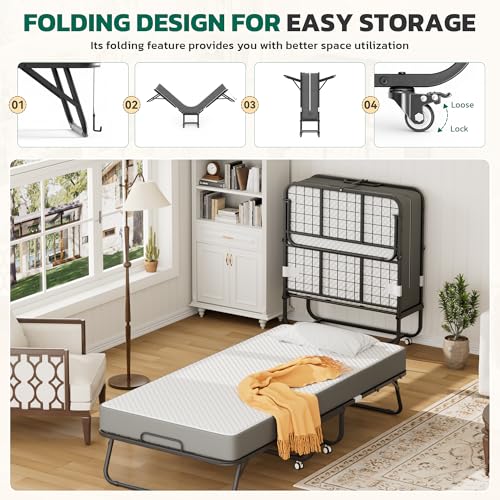
At nearly 5 inches thick, this rollaway bed stands out in a category often dominated by flimsy cots. The memory foam layer gives it a bedroom-bed feel, which reviewers consistently mention when using it for guests. Paired with a rigid metal frame rated for 450 pounds, it doesn’t creak or shift during use, something many folding beds fail at. I’d pick this over basic cots any day if you’re setting up a semi-permanent guest spot at home.
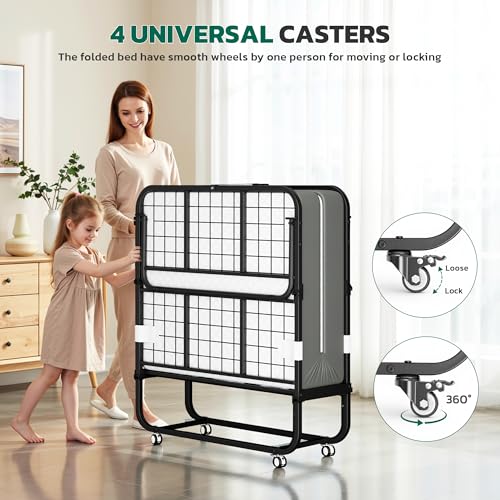
It folds flat with locking wheels and comes with a fitted storage cover, making it easy to stash in a closet or car trunk. Assembly takes under 15 minutes, and everything needed is included. While it’s marketed as portable, its bulk makes it better for home or office backup than backpacking. Still, for occasional camping or road trips, it’s surprisingly capable.
Product photos
CYMULA CertiPUR-US Memory Foam Camping Mattress Pad

Strengths
- Certified safe materials
- Waterproof non-slip base
- Ultra-portable design
Trade-offs
- Slow to fully expand
- No firmness adjustment
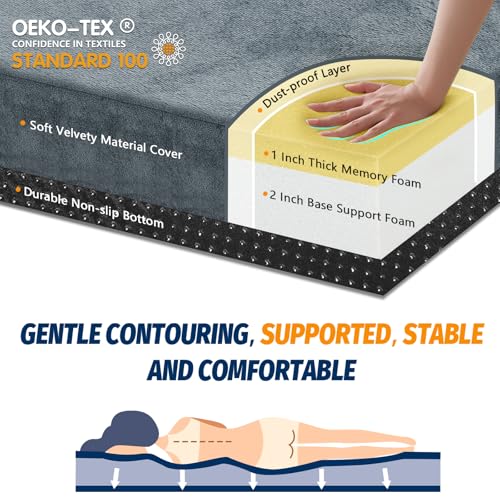
This roll-up foam pad is a minimalist’s dream, light, packable, and certified free of harmful materials. At 3 inches thick and made from high-density memory foam, it offers real cushioning without the hassle of inflation. Owners love how quickly it unrolls and how well it insulates against cold ground, a common issue with air pads. Its non-slip, waterproof bottom works reliably on rocky or damp terrain, which sets it apart from cheaper foam rolls.
Available in multiple sizes, including twin and queen, it doubles as a floor bed for sleepovers or a car sleeper. The included straps and carry bag make transport simple. That said, because it’s foam, full recovery after compression can take up to 72 hours. If you’re comparing it to inflatables, you trade adjustability for reliability, no punctures, no leaks, just consistent support.
Product photos


FNARMW 5 Inch Inflatable Camping Sleeping Pad

Strengths
- Foot pump for quick inflation
- Ultra-compact and lightweight
- Heavy-duty 50D nylon
Trade-offs
- Inflatable = puncture risk
- Pillow is minimal
For backpackers and minimalist campers, this inflatable pad punches way above its price. At 5 inches thick with a built-in foot pump, it inflates in seconds, no lung power needed. The 800-pound capacity and rugged 50D nylon mean it won’t tear on rough ground, and the egg-crate top adds insulation and comfort. Owners consistently highlight how fast setup is compared to traditional air mats.
It packs down small and weighs only 4.2 pounds, making it a favorite among hikers. The integrated pillow is a nice touch, though not super supportive. One thing to watch: while durable, any inflatable carries puncture risk. But with a 1-year warranty and repair kit potential, that’s manageable. Against foam pads, it wins on comfort; against other inflatables, it wins on convenience.
Product photos


72″ x 28″ x 3″ RV Bunk Mattress Replacement
Strengths
- Right size for RV bunks
- Medium-firm support
- Breathable terry cover
Trade-offs
- Only 3 inches thick
- Minimal pressure relief
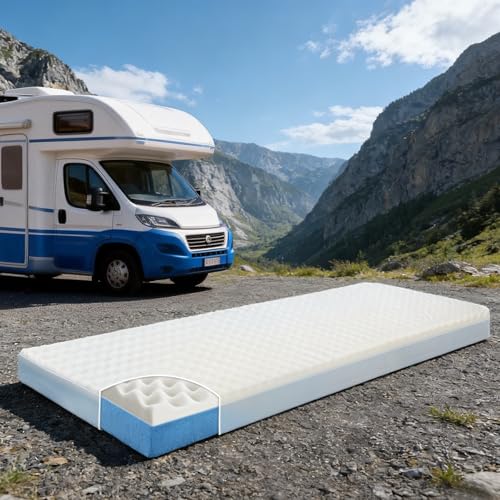
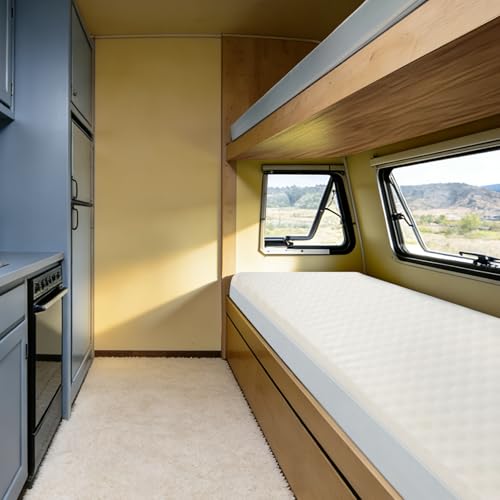
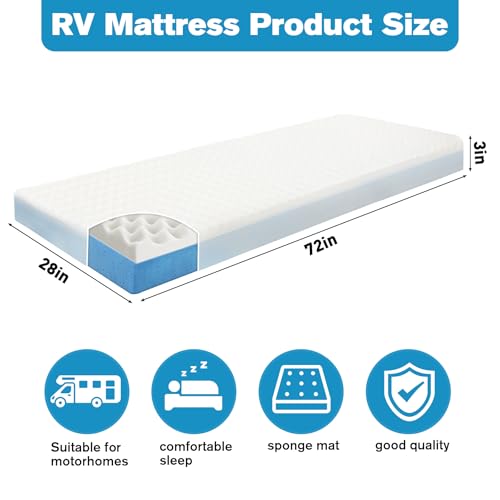
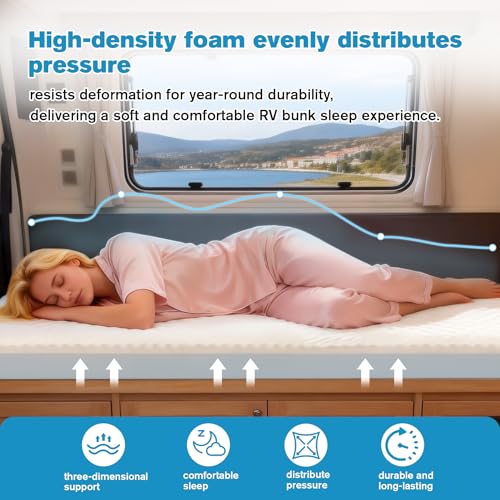
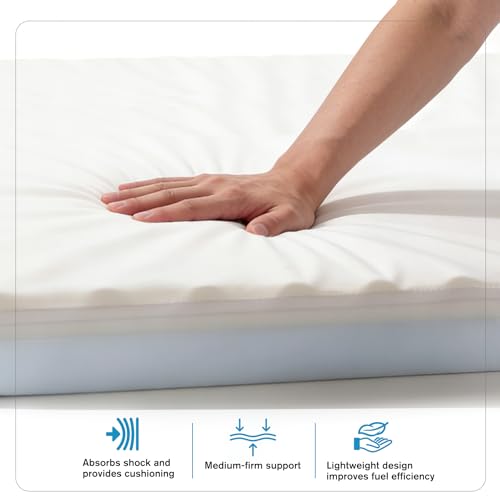
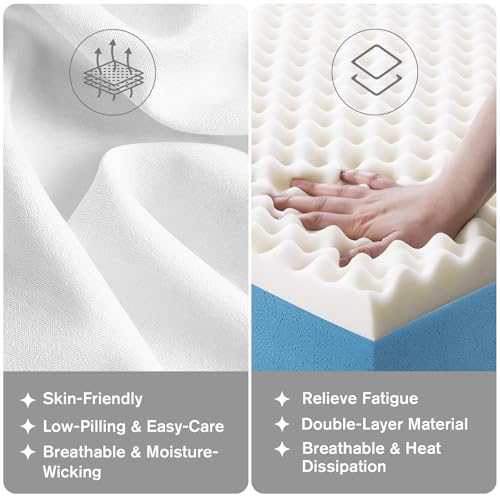
This 3-inch bunk replacement is exactly what it claims to be, a no-frills, functional fix for worn-out RV bunks. The high-density blue egg foam delivers a medium-firm feel that most owners say holds up well over time, especially for its price point. It’s not plush, but it’s not supposed to be. For campers and van lifers dealing with sagging original padding, this is a solid upgrade that fits standard dimensions without fuss.
Breathability gets consistent praise, thanks to the terry cloth cover that wicks moisture and resists odors. Setup is straightforward, just unbox and wait a few days for full expansion. Some users report a slight off-gassing smell at first, but nothing worse than average for compressed foam. Compared to thicker options, this one wins on space efficiency, not comfort depth.
Product photos
How We Picked These camper beds
Rather than a hands-on lab test, this selection is a research-led comparison of specifications and owner feedback. I approached this as I do any mechanical component – by first understanding the core requirements for comfortable sleep on the road, and then evaluating how well each bed meets those needs. We compared listed dimensions, material composition, weight capacity, and included features across numerous models, then weighed those specs against what owners are saying about long-term comfort and durability.
For camper beds, support and temperature regulation emerged as the most crucial factors. A good night’s sleep is vital when you’re exploring, and a mattress that doesn’t provide adequate support or leads to overheating will quickly ruin a trip. Weight is also significant, especially for those using smaller rigs or prioritizing fuel efficiency. Those considering further enhancements to their sleep setup might also explore a quality sleep comfort upgrade to personalize their experience.
Specifications reliably indicate a bed’s basic construction and size, but owner reviews proved invaluable for assessing real-world comfort. I paid close attention to reports on firmness, motion isolation, and how well the mattress held up over time. Brand reputation also played a role; established manufacturers often have a track record of quality and customer service. For those looking to upgrade their entire setup, exploring options in small campers might be a good starting point.
What To Look For In camper beds
Finding the right camper bed is about more than just fitting the space; it’s about ensuring a good night’s sleep on the road. A comfortable sleep system directly impacts the enjoyment of any journey.
A quality camper bed balances support, comfort, and space efficiency. Key considerations include mattress type (foam, inflatable, folding), dimensions matching your RV’s berth, material breathability to prevent overheating, and ease of setup and storage. Prioritize CertiPUR-US certification for foam components to minimize off-gassing and ensure healthier sleep.
Mattress Type: Foam, Air, or Folding?
The first big decision revolves around the type of mattress. Foam mattresses, like those from Celestial Sleep and Zinus, offer consistent support and are generally more affordable. Inflatable options, such as the FNARMW, prioritize packability and quick setup, but can sometimes feel less stable. Folding beds, like the Greenvelly, provide a more traditional bed feel but require dedicated storage space when not in use. I’ve seen many travelers successfully use a combination, employing an inflatable pad over a folding cot for added comfort. Don’t underestimate the importance of considering your typical camping style – are you constantly moving, or do you prefer longer stays in one location?
Firmness and Sleep Position
Don’t assume “memory foam” automatically means comfortable. Firmness is crucial and varies wildly. Side sleepers generally need a softer surface to cushion their shoulders and hips, while back and stomach sleepers often benefit from firmer support to maintain spinal alignment. The Celestial Sleep 8-inch model is often favored for those needing firm support, while the Zinus is a good starting point if you prefer a softer feel. To help you narrow down your choices:
- Consider your weight: Heavier individuals will need a denser foam for adequate support.
- Read owner reviews carefully: Pay attention to comments about firmness and how the mattress feels after extended use.
- Look for zoned support: Some mattresses, like the Zinus 8-inch, feature different foam densities in specific areas to target pressure points.
Portability and Setup Convenience
If you’re frequently moving between campsites, portability is paramount. A bulky, heavy mattress can quickly become a nuisance. The CYMULA foam pad is designed with portability in mind, rolling up compactly and including a carry bag. However, I’ve observed that many find the convenience of a self-inflating or folding option, even with a slight compromise in ultimate comfort, is preferable to wrestling with a large foam mattress every night. Speaking of convenience, explore other camper accessories to streamline your setup and make your camper feel more like home. Investing in a quality camper mattress is a great start, but don’t overlook these supporting elements.
A good rule of thumb: prioritize a mattress that’s easy to set up and take down, even if it means sacrificing a small amount of luxury. You’ll thank yourself when you’re setting up camp after a long day of driving.
Camper Beds Compared
Here’s a comparison of key specifications for various camper beds to help you find the right fit.
| Product Name | Size (in) | Thickness (in) | Material | Weight Capacity (lbs) | Certifications |
|---|---|---|---|---|---|
| Celestial Sleep 10 Inch RV Short Queen Mattress | Short Queen | 10 | Memory Foam | N/A | CertiPUR-US |
| Zinus 8 Inch Short Queen RV Memory Foam Mattress | Short Queen | 8 | Memory Foam | N/A | CertiPUR-US |
| Celestial Sleep 8 Inch RV Short Queen Mattress | Short Queen | 8 | Memory Foam | N/A | CertiPUR-US |
| YELLOW JACKET Folding Camping Cot with Mattress | 75x28x15.4 | N/A | Oxford Fabric, Cotton | 600 | N/A |
| Greenvelly Folding Bed with 5 Inch Mattress | N/A | 5 | Memory Foam, Metal Frame | 450 | N/A |
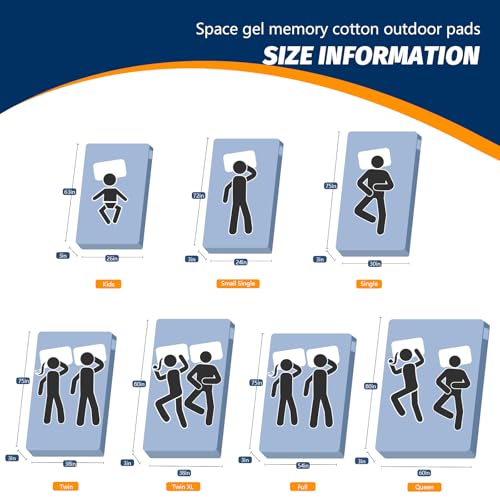
| CYMULA CertiPUR-US Memory Foam Camping Mattress Pad | 63x26x3 to 60x80x3 | 3 | Memory Foam | N/A | CertiPUR-US |
| FNARMW 5 Inch Inflatable Camping Sleeping Pad | 79×28 | 5 | 50D Nylon, TPU | 800 | N/A |
| 72″ x 28″ x 3″ RV Bunk Mattress Replacement | 72×28 | 3 | Egg Foam, High-Density Foam | N/A | N/A |
Frequently Asked Questions
What size mattress should I get for my camper?
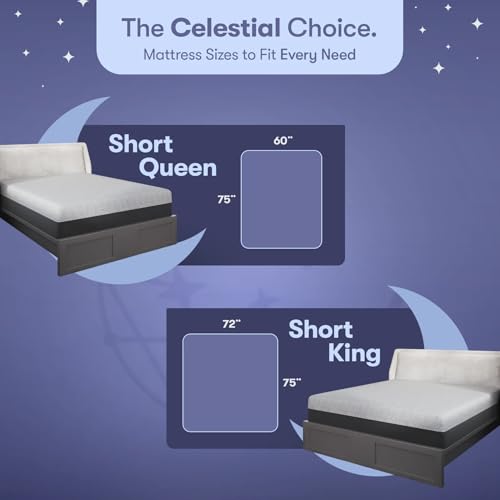
Short queen (60×80 inches) is the most common RV mattress size, offering extra length without taking up too much width. However, always measure your existing bed platform precisely before ordering to avoid fit issues – manufacturers’ listed sizes can vary slightly.
Are foam camper mattresses breathable enough for warm weather?
While traditional memory foam can trap heat, many modern camper mattresses incorporate gel infusions or open-cell foam structures to improve airflow. Look for mattresses specifically marketed as “cooling” or with CertiPUR-US certification, which indicates lower levels of potentially heat-retaining chemicals.
How do inflatable camper beds compare to foam in terms of support?
Inflatable beds generally offer less consistent support than foam, especially over extended periods. However, higher-end inflatable models with multiple air chambers and thicker materials can provide surprisingly good support, and they excel in portability – making them a good choice if you frequently move your camper and need to pack up quickly.
What’s the best way to store a folding camper bed when not in use?
Folding beds require dedicated storage space, usually inside the camper or in a larger vehicle. Many models fold relatively flat, allowing them to be stored vertically against a wall or under a bench seat. Consider where you’ll store it before purchasing, especially if space is limited.
Where can I find other helpful items for my camper build?
Beyond a comfortable bed, outfitting your camper often requires a range of additional gear. You can find a selection of must-have camper accessories to enhance your experience, from kitchen essentials to power solutions.
The Bottom Line
Choosing a camper bed often comes down to balancing the desire for a truly comfortable, home-like sleep with the realities of limited space and weight considerations. While a thick, luxurious mattress like the Celestial Sleep 10 Inch RV Short Queen Mattress offers exceptional support and comfort, it’s not always practical for every camper. Ultimately, the best setup prioritizes a restful sleep that allows you to fully enjoy your adventures.
For those prioritizing budget and portability, the FNARMW 5 Inch Inflatable Camping Sleeping Pad represents an excellent starting point. If you’re looking for versatility and a more traditional feel, the Greenvelly Folding Bed with 5 Inch Mattress provides a good compromise, though it does require dedicated storage. And for those planning extensive conversion vans or building out a dedicated sleeping platform, exploring options for dedicated portable car beds can unlock even more comfort.
More than any specific specification – foam density, inflation speed, or folding mechanism – remember that a good night’s sleep relies on finding a bed that fits your body and your camping style. Don’t chase the highest numbers on a spec sheet; focus on support, breathability, and the overall feeling of comfort. A well-rested traveler is a safer and happier one, no matter what kind of rig they’re driving.
