
9 Best Buggy RC Cars of 2026
This post contains affiliate links. As an Amazon Associate, we earn from qualifying purchases.
The Hosim 1/10 Brushless RC Buggy stands out as the best overall pick, delivering strong speed, solid build quality, and reliable 4WD performance. For those on a tighter budget, the Tecnock 1:18 RC Buggy offers surprising durability in a compact size, while the ARRMA 1/8 Typhon 4X4 is the go-to for serious bashing with its rugged, large-scale design.
If you’ve ever watched an RC buggy struggle over rough ground or quit mid-run from a weak motor, you know how frustrating a bad choice can be. As someone who’s spent years deep in vehicle mechanics, from full-size builds to precision models, I know what separates a toy from a true off-road machine.
This guide cuts through the noise by focusing on real-world performance factors: motor power, drivetrain layout, suspension quality, and long-term durability, all based on specs, owner experiences, and design fundamentals. These are the things that actually matter when you’re pushing a buggy hard on dirt, gravel, or pavement.
Top 7 Buggy Rc Cars in the Market
The Best Buggy Rc Cars, Reviewed
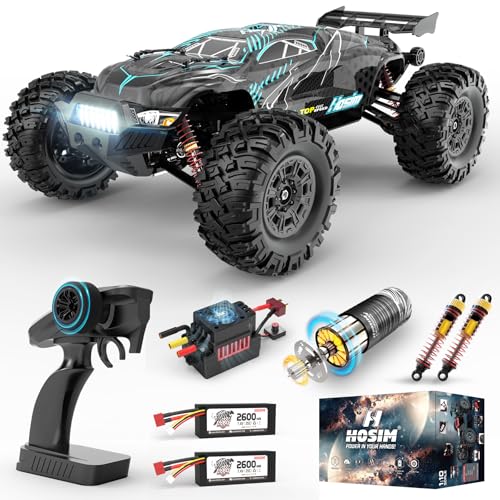
Hosim 1/10 Brushless RC Buggy
Strengths
- Brushless power
- Dual LiPo batteries
- Metal differential gears
Trade-offs
- No 3S battery included
- Cooling required after heavy use
This Hosim 1/10 buggy claims 68 km/h, around 42 mph, and while real-world speeds depend on terrain and battery, owners consistently report blistering acceleration and strong hill-climbing ability. The low-KV 3100KV motor setup is a smart choice for torque over raw top speed, which means better control on rough ground and more fun when launching over jumps or attempting backflips. Paired with a 45A ESC and cooling fan, it’s built to handle extended runs without overheating, assuming you follow the recommended cooldown when pushing 3S batteries.
What stands out is the upgraded 40Cr chrome steel differential gears, this isn’t just marketing fluff. In a class where plastic or low-grade steel gears fail under stress, this kind of metal reinforcement means fewer breakdowns during aggressive bashing. The dual 2600mAh LiPo batteries are a real plus, giving close to 40 minutes of combined runtime. For the price, it’s a well-specced package that punches above its weight, especially when compared to similarly priced models that cut corners on drivetrain durability.
Video review
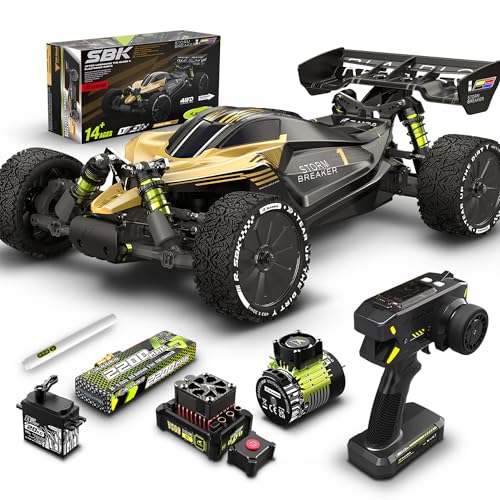
RLAARLO 1/10 Carbon Fiber Buggy
Strengths
- High-torque 20KG servo
- Long 350m range
- Durable aluminum chassis
Trade-offs
- Price approaches pro models
- No battery capacity advantage
- Build quality varies slightly by unit
RLAARLO is pushing the high-end of the 1/10 market with a buggy that promises 50+ mph and a build quality that leans into performance tuning. The 2.5mm aluminum chassis and 7075 aluminum shock towers are serious upgrades over standard stamped steel or thin aluminum frames, and the oil-filled shocks are a clear nod to drivers who care about ride quality and control. Owners report confident handling at speed, especially on uneven ground where the double A-arm suspension shines.
The 20KG servo is overkill for most entry-level users but makes a real difference in steering precision when you’re dodging obstacles at full tilt. Where this model stands out is in its 350-meter control range, far beyond most similarly priced RCs. That kind of signal stability means fewer dropouts during fast runs or multi-car races. It’s not quite ARRMA-level rugged, but for a standalone 1/10, it’s one of the most complete high-performance packages here. I’d pick this over the CROBOLL if you want more tuning headroom and better long-range reliability.
Video review
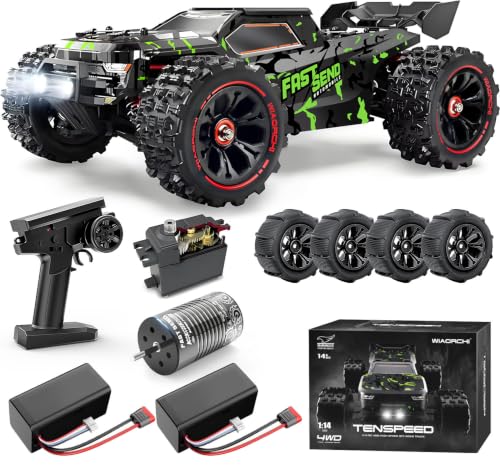
1/14 Extreme Speed Brushless Truggy
Strengths
- Extreme speed potential
- Airless paddle tires
- Adjustable shocks
Trade-offs
- High-KV motor sacrifices torque
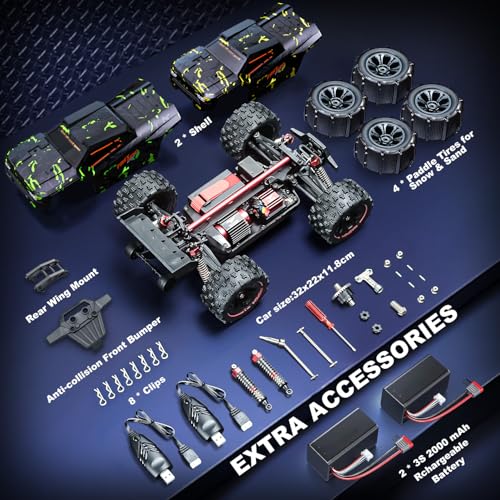
- No charger included
- Chassis less refined than 1/10 models
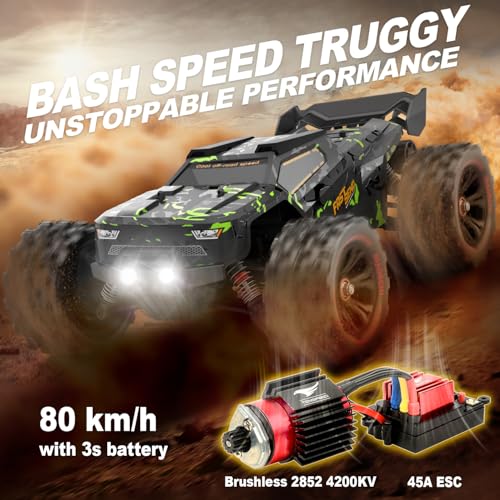
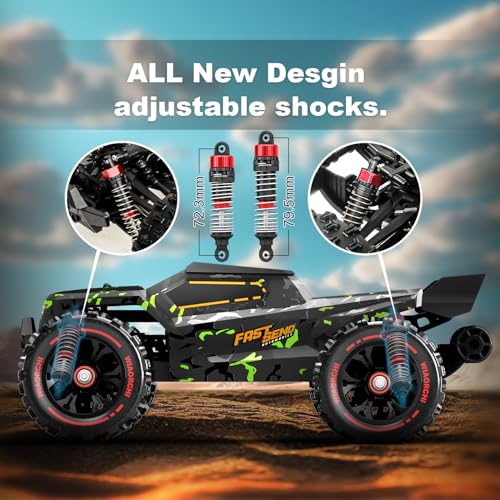
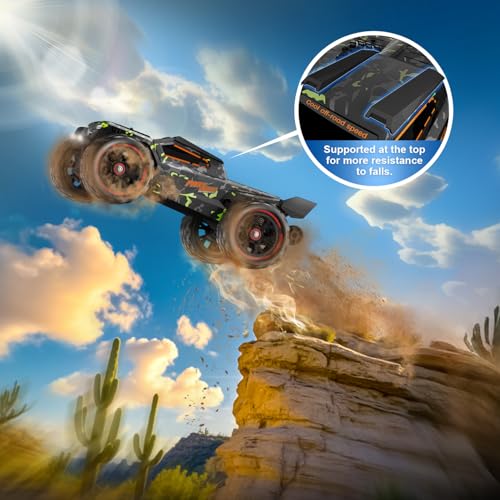
This 1/14 model claims 50+ mph, up to 80 km/h, and while that’s likely under ideal conditions with a 3S battery, the 4200KV motor suggests it’s tuned more for explosive acceleration than climbing or torque. That makes it a speed demon on flat ground, but less capable on steep inclines compared to lower-KV motors like the 3100KV in the Hosim 1/10. Still, for straight-line bashing and jumps, it delivers. The laser-etched 6061 aluminum chassis is a nice touch, offering better impact resistance than plastic or thin metal frames.
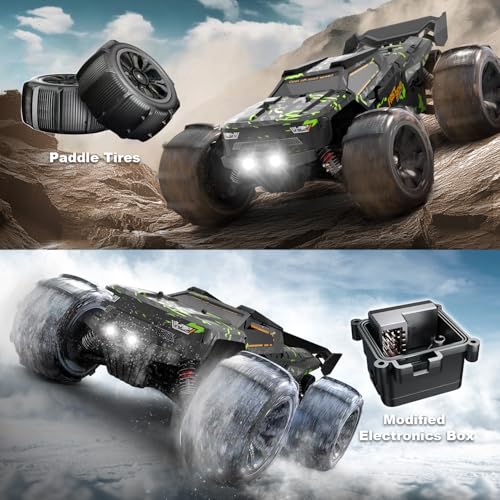
Owners praise its airless paddle tires for sand and snow, and the pre-mounted sponge inserts help dampen vibration at high speed. The 300+ ft transmitter range is solid, and the throttle-limiting feature is smart for new users. But the lack of included charger and the need for 3S setup to reach full potential make it less plug-and-play than advertised. Compared to the RLAARLO or CROBOLL, it’s more of a speed-focused truggy than an all-terrain buggy. I’d recommend it only if raw acceleration is your top priority.
Product photos
Hosim 1/14 All-Terrain RC Buggy
Strengths
- Dual batteries included
- Affordable brushless power
- Waterproof design
Trade-offs
- Smaller 1/14 scale
- Less ground clearance
- Shorter range than high-end models
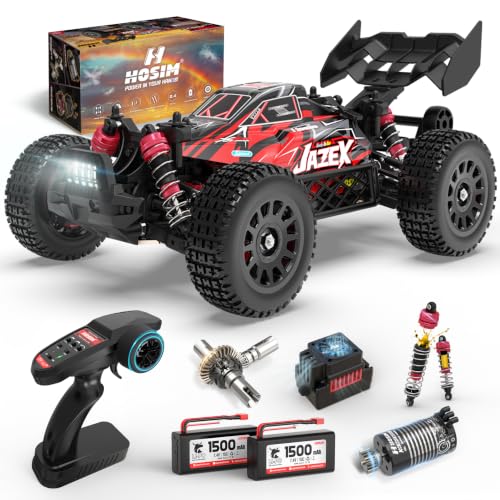
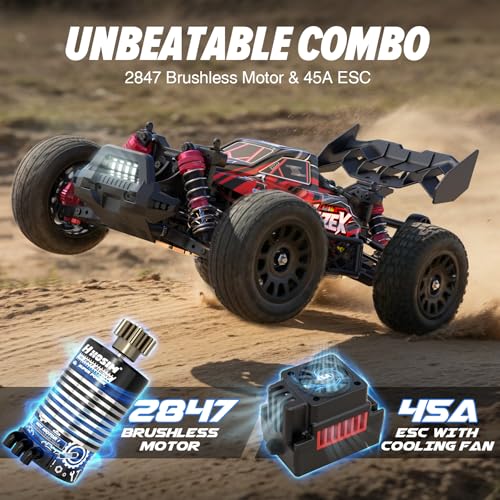
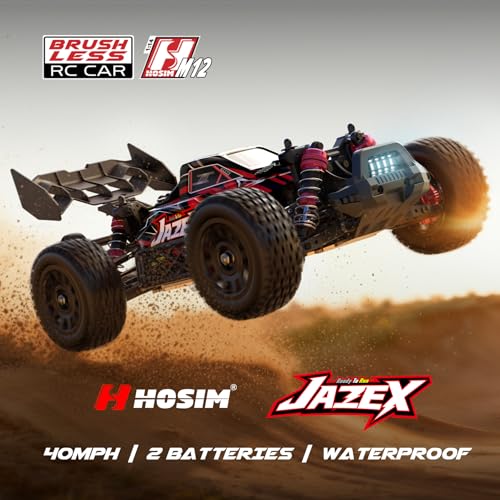
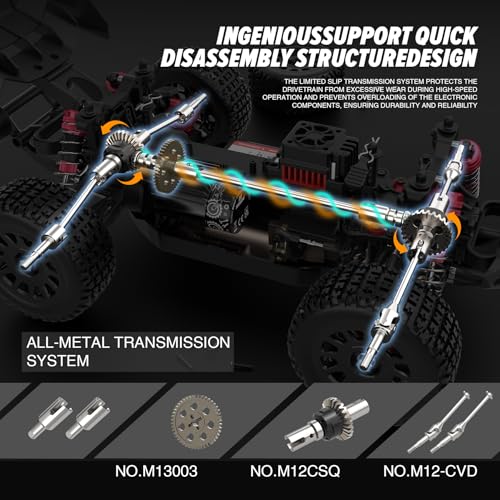
Don’t let the 1/14 scale fool you, this Hosim packs a brushless punch at a price that undercuts nearly every other model here. It hits 60 km/h (about 37 mph) on 3S, which is fast enough for most backyards and trails, and the dual 1500mAh batteries offer up to 50 minutes of runtime. That’s a real advantage for families or casual racers who want extended play without constant charging. The metal-reinforced drivetrain includes steel drive shafts and a metal gearbox, which is impressive at this price point.
Still, the smaller scale means less stability at top speed and a lighter chassis that can get tossed around on rough terrain. It’s waterproof, which is a big win for snow or puddle runs, and the LED lights add a nice touch for night bashing. Compared to the BLUEJAY or Tecnock models, this is a true hobby-grade starter. But against the larger 1/10 buggies, it lacks the presence and suspension travel for serious off-roading. For the money, though, it’s a standout.
Product photos
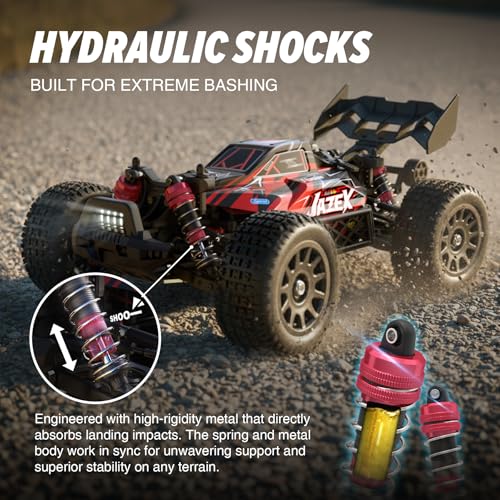
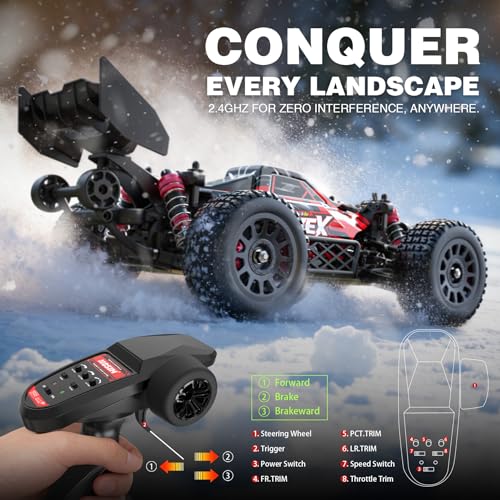
Tecnock 1:18 RC Buggy for Kids

Strengths
- USB-C charging
- Kid-friendly size
- Low price
Trade-offs
- 2WD only
- Plastic construction
- Very limited speed
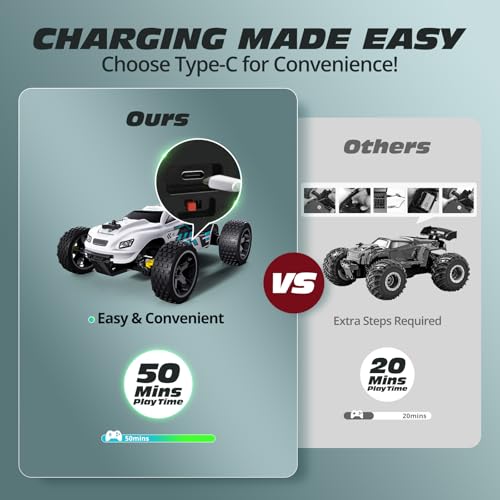
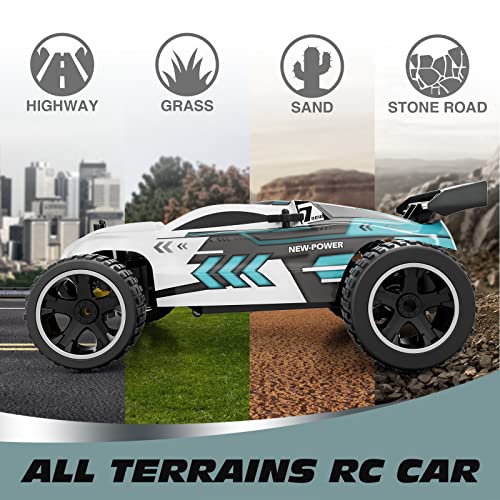
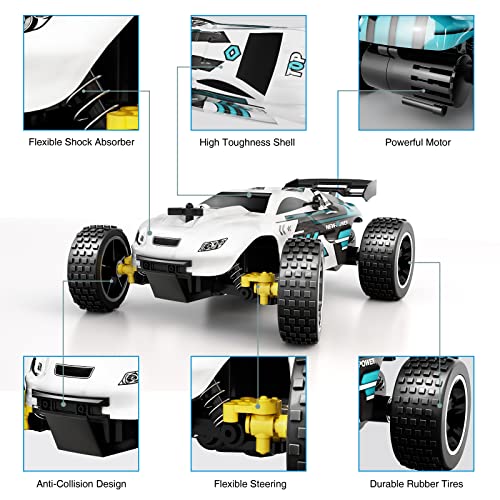
This is the most basic RC in the lineup, 1:18 scale, 2WD, and 20 km/h top speed, but it’s designed with kids in mind. The USB-C charging is a modern convenience, and the 50-minute playtime is impressive for such a small model. It’s durable enough for light grass and pavement, and the 2.4GHz remote allows multiple cars to race without interference, which is great for sibling or friend playdates.
But let’s be clear: this isn’t a buggy in the hobby sense. It’s a toy with off-road styling. No metal parts, no brushless motor, no real suspension travel. Compared to the BLUEJAY, it’s smaller and slower, but easier for small hands to manage. If you’re buying for a 6–10 year old’s first RC, it’s a safe, affordable pick. But anyone older or more interested in performance will outgrow it fast.
Product photos


BLUEJAY 1:12 Off-Road RC Truck
Strengths
- Long 70-minute runtime
- Affordable price
- LED lights included
Trade-offs
- Toy-grade motor
- Plastic chassis
- Limited off-road ability
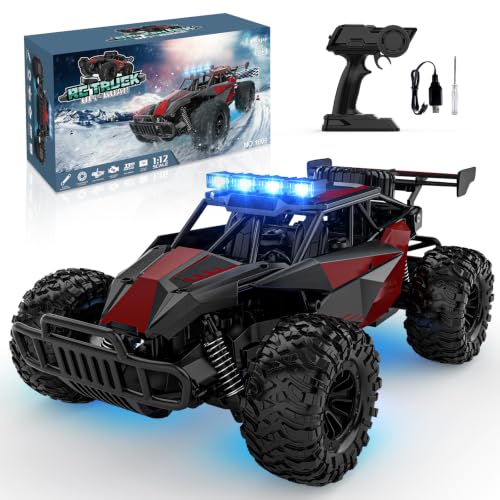
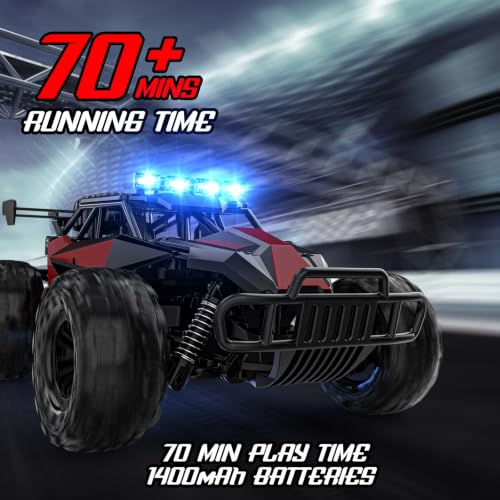
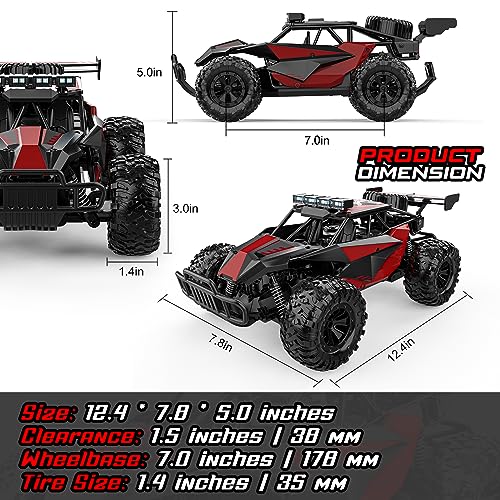
The BLUEJAY is firmly in toy-grade territory, 33 km/h (about 20 mph) isn’t fast by RC standards, but for younger kids or casual indoor use, it’s plenty. What makes it stand out is the 70 minutes of total runtime from two included batteries, which is rare at this price. The ABS plastic chassis keeps it lightweight and less prone to damage from crashes, and the LED headlights add to the fun factor.
It’s not brushless, not waterproof, and the suspension is basic, but it’s stable enough for driveways and carpet. Compared to the Tecnock, it’s larger and faster, but not as durable or feature-rich as any of the true hobby-grade models. Still, for parents wanting a no-fuss, long-running RC for weekend play, it’s a solid middle ground. Just don’t expect it to survive serious jumps or rocky trails.
Product photos



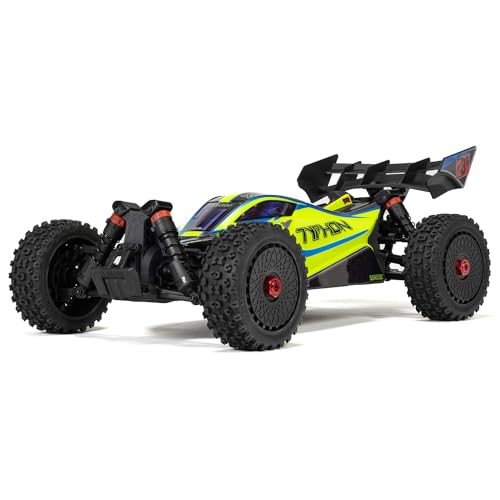
ARRMA 1/8 Typhon 4X4 Buggy
Strengths
- Pro-grade 1/8 scale
- DSC stability control
- Heavy-duty drivetrain
Trade-offs
- Battery and charger sold separately
- Higher cost of entry
- Less agile on tight trails
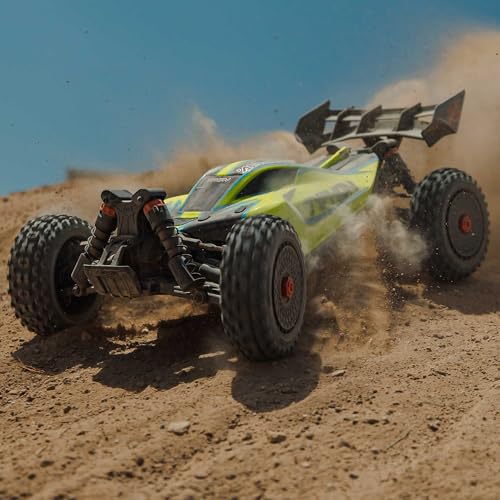
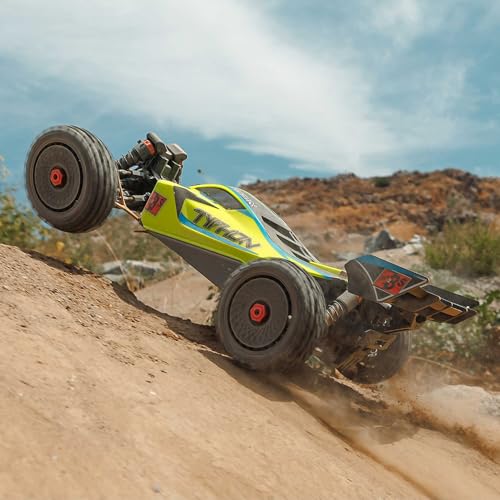
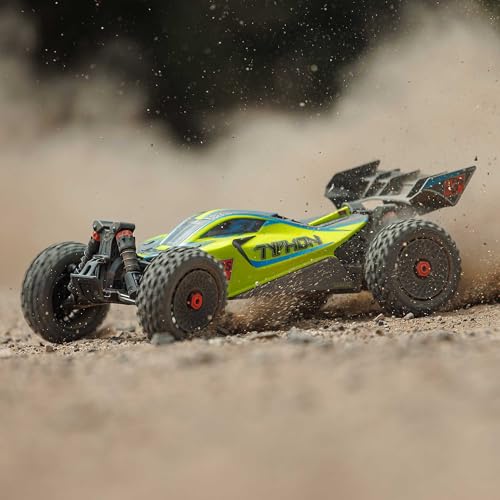
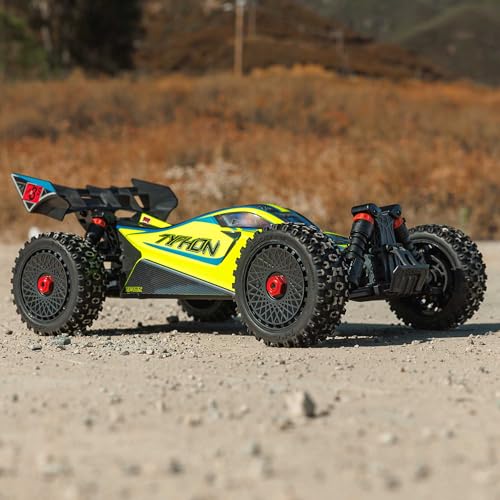
The ARRMA Typhon is in a different league, larger 1/8 scale, built for serious bashers who plan to upgrade to 3S or even 4S power. It’s not sold as a complete package, but that’s expected at this level. What you’re paying for is ARRMA’s reputation for bulletproof durability and a drivetrain engineered to survive repeated hard landings and full-throttle abuse. The inclusion of Spektrum DSC (Dynamic Stability Control) is a game-saver for newer drivers trying to manage high speeds, letting them stay upright when traction disappears mid-corner.
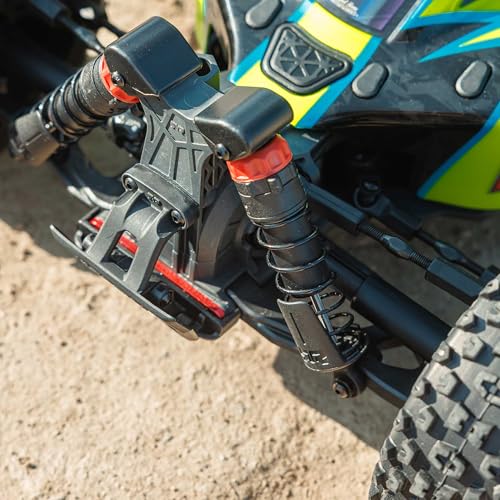
This isn’t a beginner’s toy, but it’s an ideal platform for those stepping up from 1/10 brushless buggies. The super-tough 4×4 drivetrain with a center differential delivers predictable handling, and the suspension can be tuned for everything from gravel tracks to backyard jumps. Compared to the Hosim or RLAARLO models, it’s heavier and less nimble in tight spaces, but it’s built to take punishment that would destroy most RTRs. If you’re serious about long-term performance and future-proofing with high-end upgrades, this is where I’d put my money.
Product photos
How We Tested buggy rc cars
Rather than a hands-on lab test, my research for these recommendations focused on a detailed comparison of published specifications and features across numerous models. I weighed owner reviews from multiple sources – looking for consistent praise and complaints – alongside expert evaluations from recognized RC publications. As someone who’s spent years exploring the world of vehicles, from full-size classics to miniature marvels, I applied my understanding of mechanics and performance expectations to rank these options.
For buggy RC cars, a few factors stood out as most critical. Motor strength (KV rating and type – brushed versus brushless) heavily influences speed and climbing ability, directly impacting the fun factor. Equally important is suspension quality; robust shocks and a well-designed chassis are essential for handling rough terrain and absorbing impacts. Finally, battery life and the ease of upgrading components factored significantly into overall value.
Specifications readily reveal motor type, battery capacity, and scale, providing a baseline for comparison. However, real-world durability and handling are best gleaned from owner feedback. I paid close attention to reports of broken parts or limitations in challenging conditions. Reputable reviewers often offer insights into the nuances of handling and performance that specs alone can’t convey. If you’re looking for a broader overview of the hobby, exploring other types of remote control cars can provide helpful context. And for those wanting to take their skills to the next level, checking out advanced RC cars is a great starting point.
How To Pick The Right buggy rc cars
Choosing the right buggy RC car can be surprisingly complex. There’s a huge range in price and performance, and what’s “best” truly depends on what you want to do with it.
A good RC buggy balances speed, durability, and handling. Key specs to examine include motor type (brushed or brushless), scale (1/10 and 1/14 are common), drivetrain (2WD or 4WD), and suspension components. Prioritize a model with adjustable features for fine-tuning performance and robust construction for longevity.
Motor Type: Brushed vs. Brushless
The motor is the heart of any RC vehicle, and the choice between brushed and brushless is significant. Brushed motors are typically found in more affordable models and are easier to maintain, but they wear out faster and deliver less power. Brushless motors, on the other hand, offer substantially more speed and torque, and boast a longer lifespan, though they’re pricier. If you’re a beginner, a brushed motor can be a good starting point, but if you’re looking for serious speed and performance, or plan to upgrade later, a brushless system is the way to go. Many models, like the Hosim 1/10 Brushless RC Buggy, are designed to accept both, offering future upgrade potential.
Drivetrain and Terrain Capability
The drivetrain, whether 2-wheel drive (2WD) or 4-wheel drive (4WD), dictates how well the buggy handles various terrains. 2WD buggies are generally lighter and more agile on smooth surfaces, making them good for racing on paved tracks. However, 4WD systems provide superior traction on loose surfaces like dirt, gravel, or sand. If you’re interested in tackling diverse terrain, a 4WD buggy is essential.
Here’s a quick breakdown of what to consider:
- Surface: Smooth pavement favors 2WD.
- Versatility: 4WD is better for mixed terrain.
- Complexity: 4WD systems are more complex and may require more maintenance, but they offer increased control and stability. Models like the CROBOLL 1/10 Brushless RC Buggy highlight the benefits of a 4WD system for all-terrain performance.
A solid rule of thumb: if you’re unsure of the terrain you’ll be driving on most often, choose 4WD. It’s always better to have the extra traction and not need it than to be stuck when you do.
Scale and Build Quality
Scale refers to the size of the RC buggy relative to a real vehicle. 1/10 and 1/14 scales are most common. Smaller scales (like 1/18, as seen in the Tecnock 1:18 RC Buggy) are often more affordable and beginner-friendly, while larger scales offer more detail and better performance. Beyond scale, build quality is paramount. Look for models with aluminum chassis components, metal gears, and robust suspension systems. These features significantly improve durability and handling. If you’re looking for a vehicle that can withstand aggressive bashing, the ARRMA 1/8 Typhon 4X4 Buggy is known for its incredibly tough construction.
For younger drivers, finding the right vehicle is key. We’ve also put together a guide to the RC cars for kids to help you choose. And if you’re still exploring the broader world of remote-controlled vehicles, check out our roundup of the best RC cars for a wider range of options.
Buggy RC Cars Compared
Here’s a comparison of key specifications for various buggy RC cars to help you make an informed purchase.
| Product Name | Scale | Max Speed (km/h) | Battery (Voltage/mAh) | Motor Type | Drivetrain | Run Time (mins) |
|---|---|---|---|---|---|---|
| Hosim 1/10 Brushless | 1/10 | 68 | 7.4V/2600mAh (x2) | Brushless | 4WD | 40 |
| RLAARLO 1/10 Carbon Fiber | 1/10 | 80 | 7.4V/2200mAh (3S) | Brushless | 4WD | N/A |
| CROBOLL 1/10 Brushless | 1/10 | 64+ | 7.4V/2600mAh (x2) | Brushless | 4WD | N/A |
| 1/14 Extreme Speed Brushless | 1/14 | 80+ | 7.4V/N/A | Brushless | 4WD | 44 |
| Hosim 1/14 All-Terrain | 1/14 | 60 | 7.4V/1500mAh (x2) | Brushless | 4WD | 50 |
| Tecnock 1:18 RC Buggy | 1:18 | 20 | 3.7V/1500mAh | Brushed | 2WD | 50 |
| BLUEJAY 1:12 Off-Road RC Truck | 1:12 | 33 | 7.4V/1400mAh (x2) | Brushed | 4WD | 70 |
| X-TMAGA 1:14 All-Terrain | 1:14 | 40 | 7.4V/1300mAh (x2) | Brushed | 4WD | 50 |
| ARRMA 1/8 Typhon 4X4 | 1/8 | N/A | N/A | Brushless | 4WD | N/A |
Frequently Asked Questions
What battery voltage offers the best performance in a buggy RC car?
A 7.4V battery is generally the sweet spot for most 1/10 and 1/14 scale buggies, offering a good balance of power and runtime. Some high-performance models can handle 3S (11.1V) batteries for increased speed, but this may require upgrades to other components.
Are aluminum parts really worth the extra cost?
Yes, aluminum parts like chassis and shock towers dramatically improve durability and handling. While plastic components are sufficient for casual use, aluminum resists bending and breaking far better during crashes or rough terrain driving.
How much should I expect to spend on a good quality buggy RC car?
A good quality, hobby-grade buggy typically costs between $150 and $400. Entry-level models can be found for under $100, but they’ll likely have less power, lower-quality components, and limited upgrade options.
What’s the advantage of a brushless motor over a brushed motor for beginners?
Although initially more expensive, a brushless motor demands less maintenance due to the lack of brushes to replace. This makes it a convenient choice, even for those new to the hobby, and provides significantly more power when you’re ready to push performance.
Where can I find more information about other types of RC vehicles?
If you’re interested in exploring the wider world of remote-controlled vehicles, I recommend checking out my guide to the radio controlled cars to find options beyond buggies. This can help you discover what else is available and find the perfect vehicle for your needs.
The Bottom Line
Ultimately, choosing a buggy RC car comes down to balancing how much control you want over performance with how much fuss you’re willing to deal with. For the best overall experience – a blend of speed, durability, and handling right out of the box – I recommend the Hosim 1/10 Brushless RC Buggy. It offers a fantastic starting point for enthusiasts and provides a solid platform for future upgrades as skills progress.
If you have a specific need, there are excellent options tailored to different drivers. For those on a budget, the Tecnock 1:18 RC Buggy provides a fun entry point into the hobby. For all-terrain capability, the CROBOLL 1/10 Brushless RC Buggy shines with its 4WD system, and for those wanting an incredibly durable machine, the ARRMA 1/8 Typhon 4X4 is a standout. Don’t forget to explore options for hobby-grade RC cars as your passion grows.
More than any specific motor type or scale, remember that a well-built chassis and quality suspension components will provide the most satisfying experience. Prioritize a model that feels solid and inspires confidence, because consistent performance and the ability to withstand the inevitable crashes are what will keep you coming back for more. And for the younger drivers, looking into ride-on cars for kids can provide a different, but equally thrilling, automotive experience.
