
9 Best Bug Remover Sprays for Cars 2026
This post contains affiliate links. As an Amazon Associate, we earn from qualifying purchases.
Wizards Bug Release Spray is the overall best bug remover for cars, effectively dissolving splatter without harming surfaces. For budget-conscious buyers, Rain-X 3-in-1 Bug Remover delivers solid performance at a lower price, while Chemical Guys Bug & Tar Remover stands out for those using foam cannons in their wash routine.
Every driver knows the frustration of a front grille caked with dried bugs, especially after a long summer drive. Left too long, that residue can damage paint and dull your finish, so choosing the right remover matters.
In this guide, I break down the top bug remover sprays based on formula type, surface safety, real-world effectiveness, and value. These picks reflect what owners consistently report works, backed by specs and detailing standards I’ve come to understand through years of covering car care.
Top 8 Bug Remover Sprays For Cars in the Market
The Best Bug Remover Sprays For Cars, Reviewed
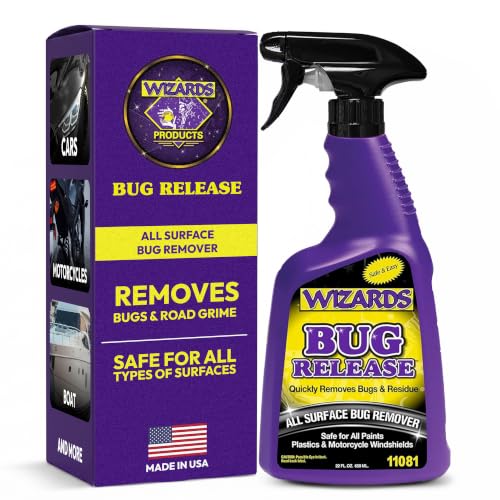
Wizards Bug Release Spray
Strengths
- Neutralizes bug acids
- Fast 60-second dwell
- Safe on all front-end surfaces
Trade-offs
- Slightly higher price
- Not the cheapest option
If you’re serious about preserving paint and reducing wash-induced scratches, Wizards Bug Release is the one to beat. Its chemistry targets the acidic proteins in bug residue, neutralizing them instead of just pushing them around. That’s why so many professional detailers keep this in rotation. Owners consistently report it works in 60 seconds, even on dried highway splatter, and it’s safe on everything from chrome to motorcycle windshields.
I’d choose this over Rain-X or Armor All for a true pre-wash step because it’s formulated to reduce scrubbing force, meaning fewer chances of swirls. The 22 oz spray is convenient, but the gallon option is where it really shines for frequent users.
Video review
Rain-X 3-in-1 Bug Remover

Strengths
- Very affordable
- Multi-contaminant use
- No oily residue
Trade-offs
- Less effective on dried bugs
- Requires more scrubbing
- Shorter dwell performance
This is the bargain bin hero, cheap, accessible, and surprisingly capable on multiple contaminants. It’s not just for bugs; owners use it on tar, tree sap, and stickers with decent results. The water-based formula avoids the oily residue some solvent removers leave behind, which is a plus. But that also means it’s less aggressive than chemical-heavy competitors.
It works, but you’ll need to repeat applications for tough jobs. Compared to Chemical Guys or Wizards, it’s slower and requires more elbow grease. Still, for the price, it’s hard to ignore if you’re only tackling light to moderate splatter.
Video review
Chemical Guys Bug & Tar Remover

Strengths
- Fast-acting formula
- Works in foam cannon
- Safe on finishes
Trade-offs
- Stronger scent
- Not enzyme-based
This is a workhorse formula built for pre-wash efficiency. It’s fast, it foams well in a foam cannon, and it cuts through baked-on bugs and tar in seconds. Reviewers love how easily it rinses away without streaks, and it’s safe on all finishes when used as directed. It’s one of the few that performs just as well diluted in a wash bucket as it does sprayed directly.
Compared to Rain-X or Armor All, it’s more aggressive without being harmful, ideal for drivers who log highway miles regularly. I’d pick this over milder options if you’re dealing with summer road trips or live in bug-heavy regions.
Product photos


ExoForma Bug Remover Spray
Strengths
- Enzyme-based formula
- Safe on multiple surfaces
- Made in USA
Trade-offs
- Slower dwell time
- Needs agitation
- Not for hot surfaces
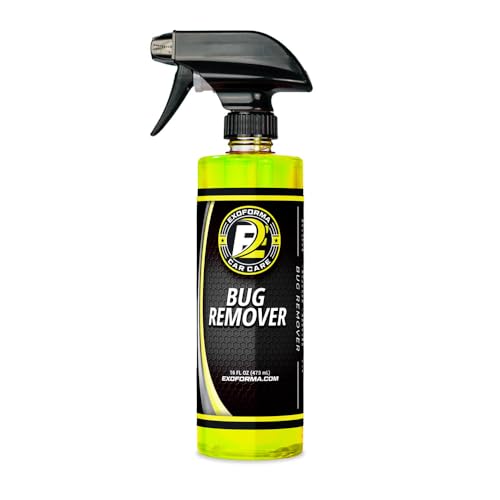
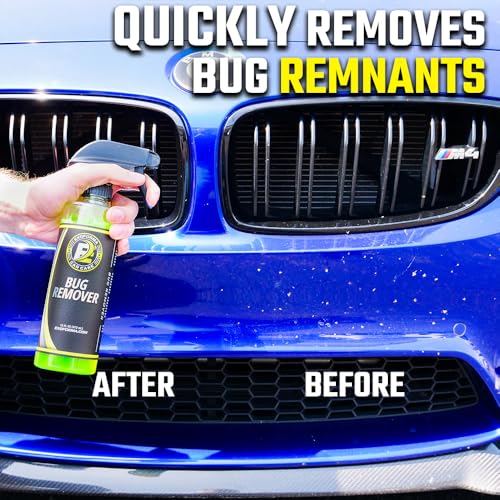
This one leans into enzyme-based chemistry, which makes sense for breaking down the protein-heavy remains of bugs. On paper, it’s designed to digest residues rather than dissolve them, and owner feedback confirms it works well when given a full 2 minutes to dwell. It’s not the fastest actor, but it’s effective on older splatter that’s started to etch. The fact that it’s made in the USA and avoids harsh solvents adds to its appeal for regular use.
Still, it’s outperformed by faster-acting formulas when you’re in a hurry. Compared to Chemical Guys or Wizards, it lacks the immediate punch, and some users report needing to agitate more than expected.
Product photos


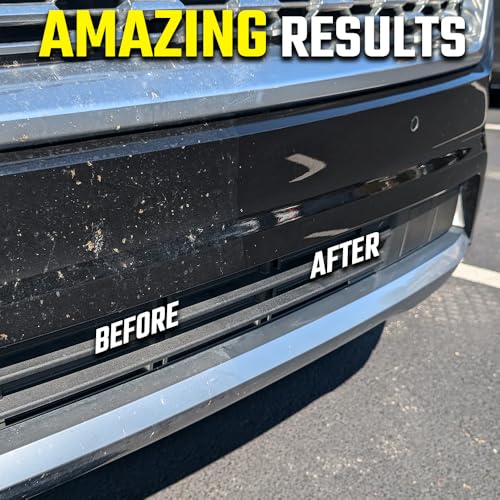
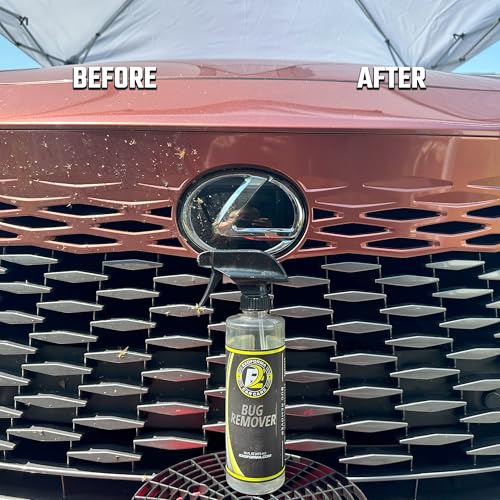
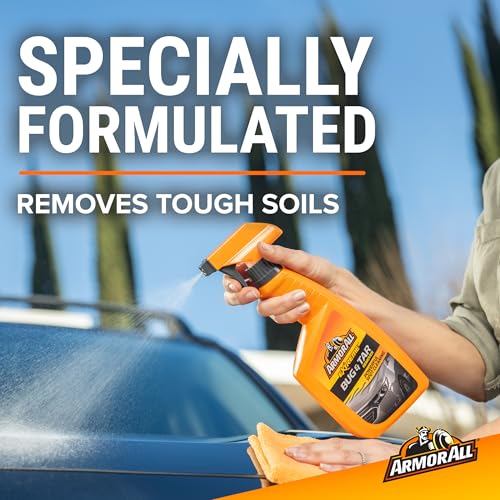
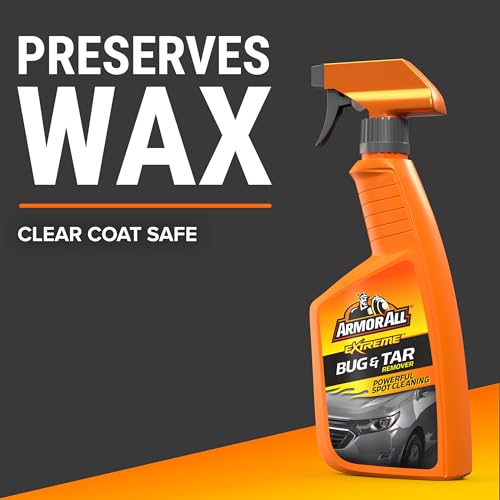
Armor All Bug and Tar Remover
Strengths
- Wax-safe formula
- Streak-free finish
- Widely available
Trade-offs
- Less effective on dried bugs
- Needs more wiping
- Milder action
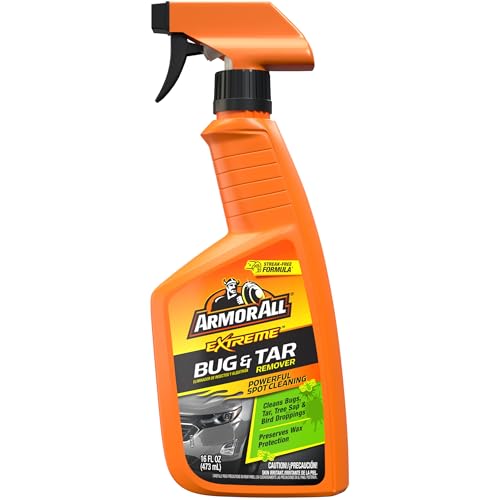
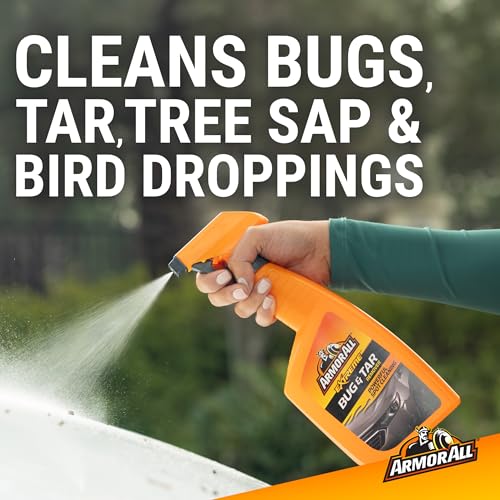
Armor All’s version is wax-safe by design, which makes it a decent choice for drivers who wax religiously and don’t want to strip their work. The formula is mild but effective on fresh bugs and light tar, and it’s widely available. Reviewers note it works best as a spot cleaner rather than a full pre-wash soak.
But compared to Chemical Guys or Wizards, it lacks bite. It doesn’t neutralize acids as effectively, and it requires more wiping to get clean results. I’d use this only if you’re prioritizing wax preservation over cleaning speed.
Product photos

CyberSudZ Bug Remover Spray
Strengths
- pH neutral
- Ceramic safe
- Multi-residue cleaning
Trade-offs
- Average dwell speed
- Limited brand reputation
- Less aggressive
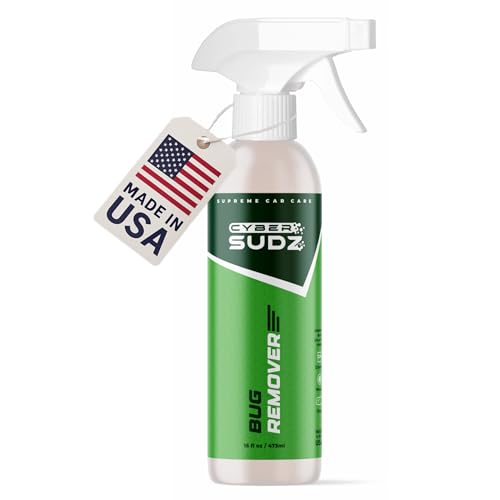
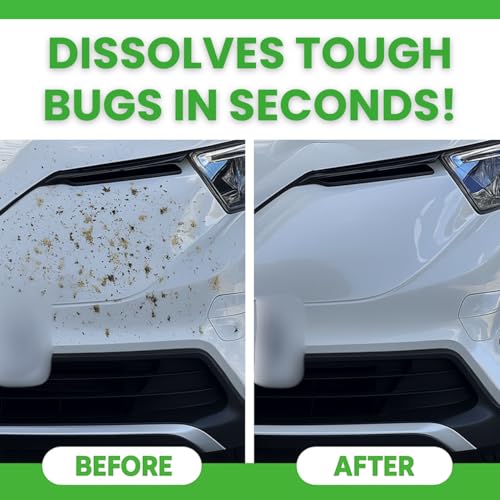
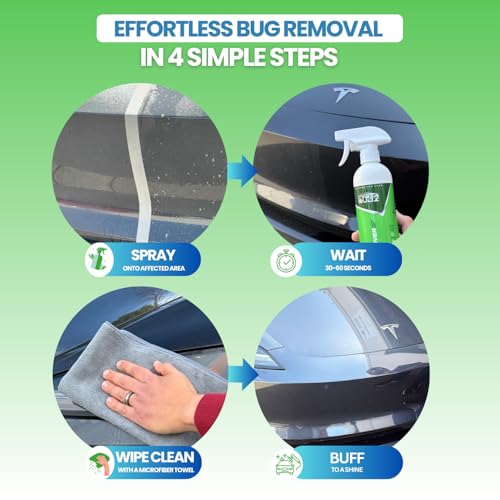
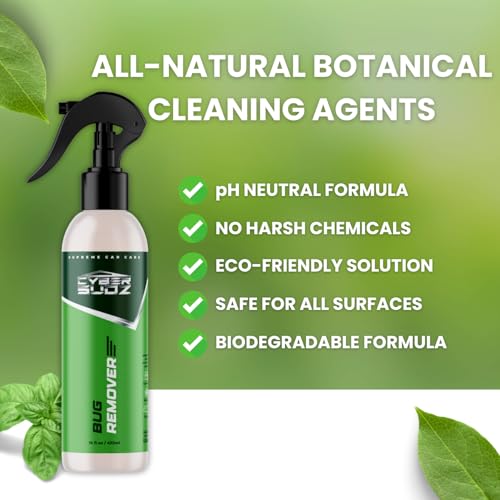
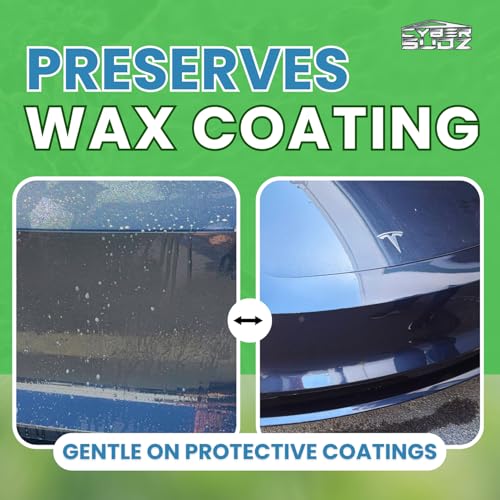
CyberSudZ markets a pH-neutral, ceramic-coating-safe formula, which is a big selling point in today’s market. On paper, it’s designed to dissolve bugs, bird droppings, and grime without disturbing protective layers. Owner feedback is mostly positive, with many noting it works well as a rinseless wash add-in or spot treatment. It’s not the fastest, but it’s gentle.
Still, it doesn’t stand out in performance compared to Wizards or Chemical Guys. It’s a safe middle ground, better than generic brands but not quite at the level of category leaders. For those with coated cars, that safety margin matters.
Product photos

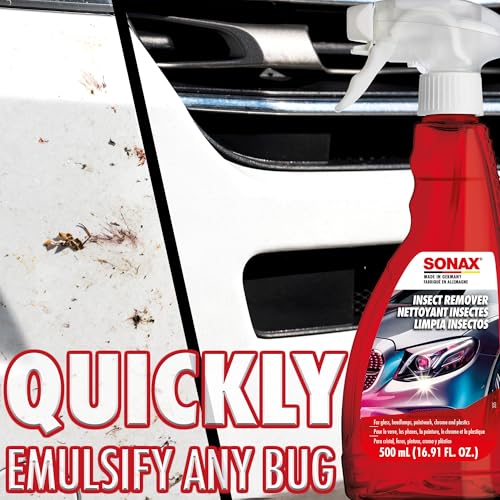
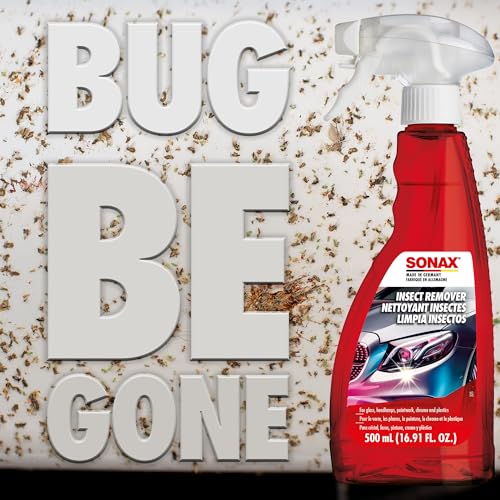
SONAX Insect Remover

Strengths
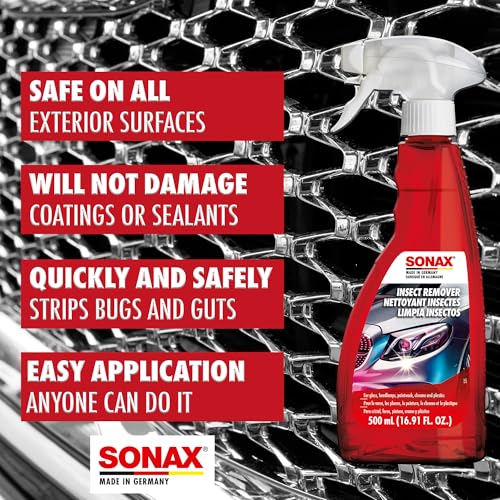
- Solvent-free
- No-rinse formula
- Safe on coatings
Trade-offs
- Smaller bottle
- Higher price per ounce
- Limited availability
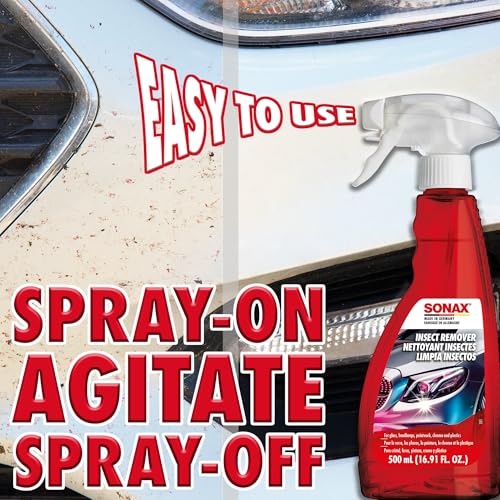
SONAX takes a smarter, chemistry-first approach with a solvent-free formula that actually breaks down insect proteins instead of just blasting them off. That’s a big deal because it means less risk to clear coat and no harsh fumes. Reviewers note it works in under a minute on most splatter, and the no-rinse feature is a real time-saver during detailing. It’s one of the few that earns consistent praise for streak-free results on glass and clarity on plastic trim.
I’d pick this over harsher degreasers for show cars or daily drivers with ceramic coatings, its pH-neutral balance means you won’t strip wax or sealants. Compared to enzyme-based sprays, it’s faster and more predictable in cooler temps.
Product photos
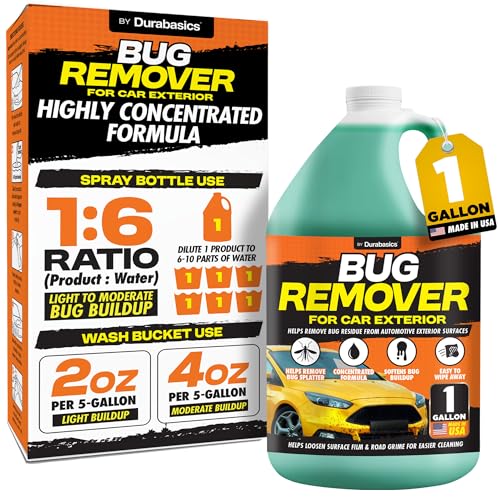
Durabasics Bug Remover (Gallon)
Strengths
- Highly concentrated
- Large volume
- Affordable per ounce
Trade-offs
- Slower on dried bugs
- Dries quickly
- Requires dilution
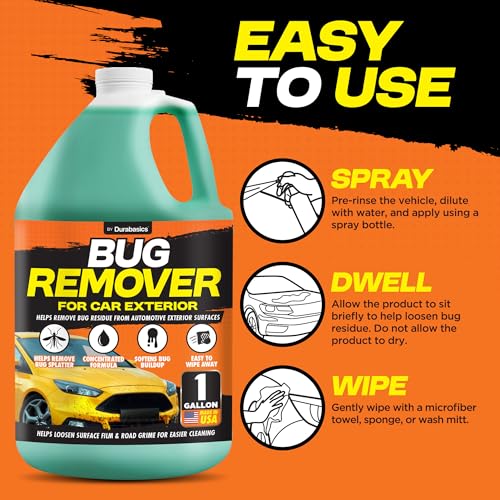
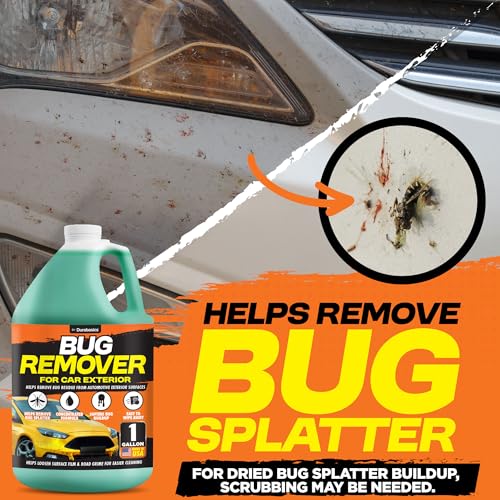
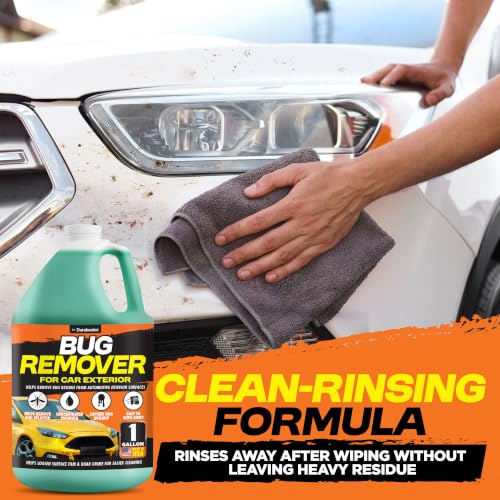
This 1-gallon concentrate is the obvious pick if you hate constantly restocking. On paper, it’s a straightforward, no-frills formula designed to loosen bugs and grime without claiming miracles. Owners consistently report it works fine for routine washes, especially when diluted properly, though it doesn’t act as fast as some of the premium sprays. It won’t replace a dedicated clay bar session for bonded contaminants, but it does reduce scrubbing when used as a pre-wash.
Where it falls short is in dwell time, several reviewers note it dries too fast in direct sun, so you have to work quickly. Compared to more specialized options, it’s less aggressive on baked-on residues but safe enough for regular use on paint, glass, and trim.
Product photos
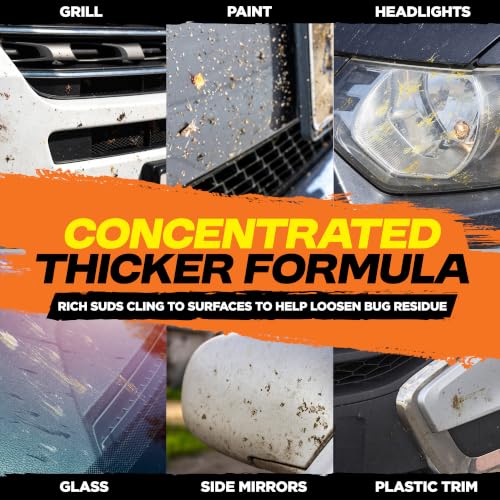

How We Picked These bug remover sprays for cars
Rather than a hands-on lab test, my research focused on comparing published specifications and features across a range of bug remover sprays. I weighed owner reviews from multiple sources, looking for consistent praise or complaints, alongside expert opinions from detailing publications. This process allowed me to build a comparative ranking based on real-world feedback and established category standards.
For bug remover sprays, the most important factors are cleaning effectiveness, surface safety, and ease of use. A product needs to actually remove bug residue without damaging paint or clear coat, and it should do so with minimal effort. The ability to tackle a variety of surfaces is also key, as owners want a single solution for the entire front of their vehicle. I also prioritized formulations that address the acidic nature of bug splatter, which can etch paint over time.
Product specifications reliably indicate the formula type (enzyme-based, solvent-based, pH neutral) and surfaces it’s designed for. However, I placed greater weight on owner feedback regarding real-world performance, particularly how well a product performed on baked-on splatter and whether it truly offered safe bug removal methods. Reputation and the consistency of positive reviews also informed my assessment of long-term value and reliability, especially when evaluating bug removal products.
How To Pick The Right bug remover sprays for cars
Choosing the right bug remover spray isn’t just about blasting a hose at the mess; it’s about protecting your car’s finish and making the job as painless as possible.
A truly effective bug remover doesn’t simply rinse away debris. It chemically breaks down the proteins and sugars in insect remains, neutralizing the acidic compounds that can etch into paint and damage clear coats. Look for formulas designed for multiple surfaces, offering convenience, and consider whether a pre-wash or spot treatment approach suits your needs.
Understanding the Formula
The core of any good bug remover is its chemistry. Enzyme-based formulas, like those found in the ExoForma Bug Remover Spray, are gaining popularity because they specifically target the protein structures within bug splatter. This is a gentler approach than harsh solvents. However, solvent-based options (like SONAX Insect Remover) can be faster acting, especially on baked-on residue. I’ve seen many enthusiasts successfully use both types, but remember that solvent-based cleaners might require more careful attention to wax protection. Don’t automatically assume “stronger” is better; a formula that effectively lifts the bug without stripping your wax is the sweet spot.
Considering Your Cleaning Routine
How you typically wash your car dictates the best type of bug remover for you. If you prefer a quick, pre-wash soak, a product like the Chemical Guys Bug & Tar Remover, designed for foam cannons, is ideal. These are meant to sit and dwell, loosening debris before you even touch the paint. For more targeted cleaning, or if you discover splatters after a drive, a targeted spray like Wizards Bug Release Spray is more practical. If you’re looking for a more involved approach, exploring different bug removal techniques might be helpful.
- A concentrated formula (like Bugs N’ All Concentrate Cleaner) offers the best value if you frequently drive through areas with heavy insect activity.
- If you’re concerned about protecting existing wax, prioritize wax-safe formulas like Armor All Bug and Tar Remover. These formulas balance cleaning power with a commitment to maintaining your protective layers.
- For those who want a truly versatile product, something like Rain-X 3-in-1 Bug Remover can tackle bugs, tar, and bird droppings, simplifying your detailing supplies.
Balancing Cost and Convenience
Price isn’t always an indicator of performance. There’s a wide range of options, from budget-friendly choices like Rain-X to more premium formulas. However, consider the concentration and application method. A larger, concentrated bottle may initially cost more but offer a significantly lower cost per use. Also, think about the surfaces you need to clean. A product specifically designed for all exterior surfaces, as claimed by several options, eliminates the need for multiple bottles. Sometimes, the convenience of an all-in-one solution justifies a slightly higher price. For a broader look at the options, check out our list of the top bug remover products.
Never let a bug remover dry on your car’s surface. Always work in sections and rinse thoroughly after application.
Bug Remover Sprays for Cars Compared
This table provides a reference comparison of specifications for various bug remover sprays available for cars.
| Product Title | Best For | Formula Type | Safe for Wax? | pH Neutral? | Size |
|---|---|---|---|---|---|
| Wizards Bug Release Spray | Best Overall | Protein Neutralizing | N/A | N/A | 22oz / Gal |
| Rain-X 3-in-1 Bug Remover | Best Budget Friendly | Water Based | N/A | N/A | N/A |
| Chemical Guys Bug & Tar Remover | Best Pre-Wash Performance | N/A | Yes | N/A | N/A |
| ExoForma Bug Remover Spray | Best Enzyme Formula | Enzyme Based | N/A | N/A | N/A |
| Armor All Bug and Tar Remover | Best Wax-Safe Formula | N/A | Yes | N/A | N/A |
| CyberSudZ Bug Remover Spray | Best pH Neutral Option | pH Neutral | N/A | Yes | N/A |
| SONAX Insect Remover | Best Solvent-Free Formula | Solvent-Free | N/A | N/A | N/A |
| Bugs N’ All Concentrate Cleaner | Best Value Concentrate | Concentrated | N/A | N/A | 4oz (to 32oz) |
| Durabasics Bug Remover (Gallon) | Best Bulk Option | Concentrated | N/A | N/A | 1 Gallon |
Frequently Asked Questions
What’s the difference between enzyme-based and solvent-based bug removers?
Enzyme-based formulas use biological catalysts to break down bug remains, offering a gentler approach, while solvent-based options rely on chemical agents for quicker action. Generally, enzyme-based cleaners are safer for wax but may require longer dwell times.
Can I use a bug remover on all car surfaces?
Many bug removers are formulated for multiple exterior surfaces like paint, glass, and chrome, but always check the product label. Some may not be suitable for certain plastics or rubber trim, so testing in an inconspicuous area is always a good idea.
Will bug remover damage my car’s wax coating?
Some solvent-based bug removers can strip away wax, so choosing a wax-safe formula like Armor All is best if wax protection is a concern. Regularly reapplying spray wax after using a bug remover will help maintain your vehicle’s protection.
How can I prevent bug splatter from sticking to my car in the first place?
Applying a quality wax or sealant creates a slick surface that makes it harder for bugs to adhere. Consider a ceramic coating for even longer-lasting protection, or regularly using a dual-purpose bug remover as a preventative measure before long drives.
What’s the best way to remove baked-on bug residue?
Baked-on residue requires a longer dwell time with the bug remover, and potentially multiple applications. Pre-soaking with warm water can also help, and for particularly stubborn cases, you may need to use a dedicated stubborn contaminant remover alongside a microfiber cloth.
The Bottom Line
Choosing a bug remover often comes down to how much effort you want to put in versus how thoroughly you need to clean. For most owners, the Wizards Bug Release Spray strikes the best balance – it consistently receives high marks for effectiveness and ease of use, making it our top pick overall. It’s a product designed to deliver results without demanding a complete detailing session every time you encounter insect debris.
If you’re on a tighter budget or want a versatile solution, the Rain-X 3-in-1 Bug Remover is a great starting point. For those prioritizing a specific need, the Chemical Guys Bug & Tar Remover excels as a pre-wash, while the ExoForma Bug Remover Spray leads the pack with its advanced enzyme-based formula. And if you’re looking for long-term protection, don’t forget to explore ceramic sprays to help repel future messes.
Ultimately, the best bug remover isn’t about chasing the highest price tag or the most complex chemistry. It’s about finding a formula that effectively lifts bug remains, won’t harm your car’s paint, and fits into your existing wash routine. Regular cleaning and prompt removal of bug splatter, coupled with quality bug cleaners, are far more important than any single product’s specifications.
