
8 Best Bondos for Cars 2026
This post contains affiliate links. As an Amazon Associate, we earn from qualifying purchases.
The best overall bondo for cars is Bondo Original Filler 6.30 lb, thanks to its reliable adhesion and smooth sanding, while the Bondo Original Filler 14 oz is the smart budget pick for smaller jobs. For major rust-through repairs, Bondo Hair Long Strand Filler stands out with its reinforced strength.
Every car enthusiast dreads finding that dent or patch of rust, especially when it threatens both appearance and integrity. A poor filler job can crack, shrink, or fail under paint, wasting time and money.
As someone who’s restored more than a few vehicles, I know choosing the right bondo comes down to matching the product to the damage. This guide cuts through the noise by focusing on real-world performance, based on specs, owner feedback, and repair principles that matter most in the garage.
Top 8 Bondos For Cars in the Market
The Best Bondos For Cars, Reviewed
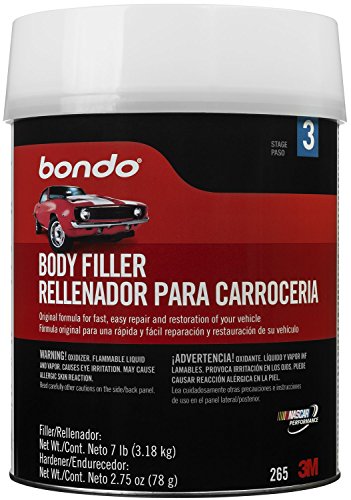
Bondo Original Filler 6.30 lb
Strengths
- Trusted original formula
- Large volume
- Smooth application
Trade-offs
- No fiber reinforcement
- Can shrink if mixed poorly
- Heavy once opened
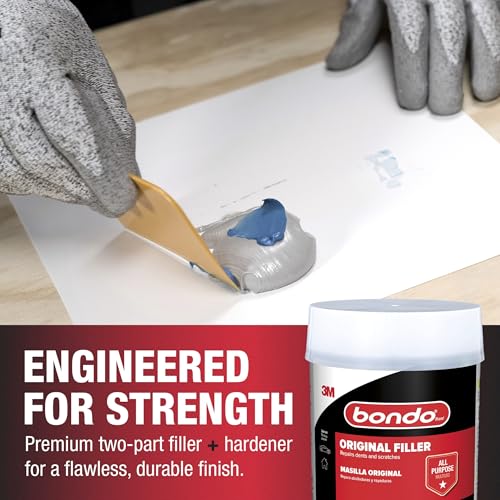
If you’re serious about auto body work, this is the default choice. Six pounds of proven filler with the same non-shrinking, spread-easy formula that’s stood the test of time. It’s bulkier than the 7 lb Original pack, but functionally identical, just branded slightly differently across markets.
Owners consistently rate this as reliable and smooth-working, especially when paired with proper prep and priming. While it lacks reinforcement, for general dent repair across steel or fiberglass, it’s still the baseline standard. The smarter buy here is this size if you do more than one project a year.
Video review
Bondo Original Filler 14 oz

Strengths
- Compact and usable
- Quick 20-minute cure
- Paintable finish
Trade-offs
- Small batch size
- Same limitations as original
- Hardener dries out fast
At just 14 ounces, this is the smallest practical entry point into real body repair. The formula matches the larger versions, non-shrinking, two-part, fast-curing, but in a size that won’t go stale before you finish it. First-time users appreciate the manageable volume, and owners confirm it works fine for door dings or quarter-panel dents.
It’s essentially the same as the big tub but scaled down, so you pay a bit more per ounce. Still, for occasional use, that’s fair. I’d recommend this over the giant tub for someone fixing one panel on a vintage ride they only bring out in summer.
Video review
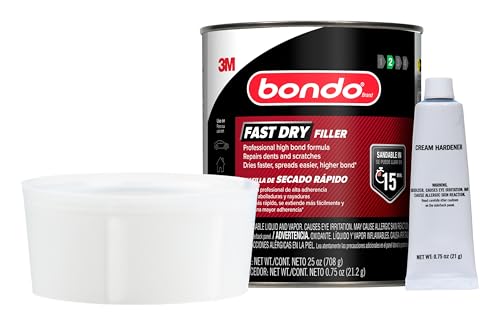
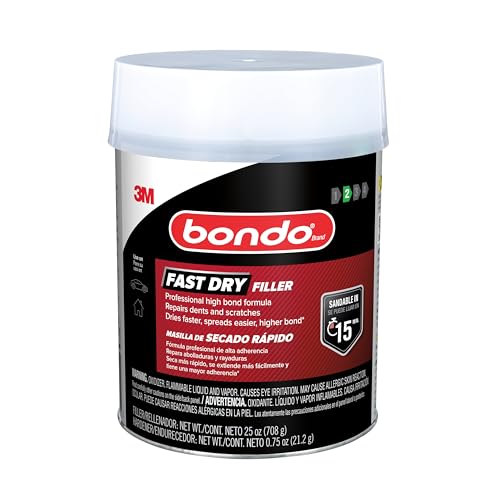
3M Fast Dry Filler Quart
Strengths
- Extremely fast drying
- Smooth professional finish
- Ready for paint fast
Trade-offs
- Narrow mixing window
- Higher price
- Less beginner friendly
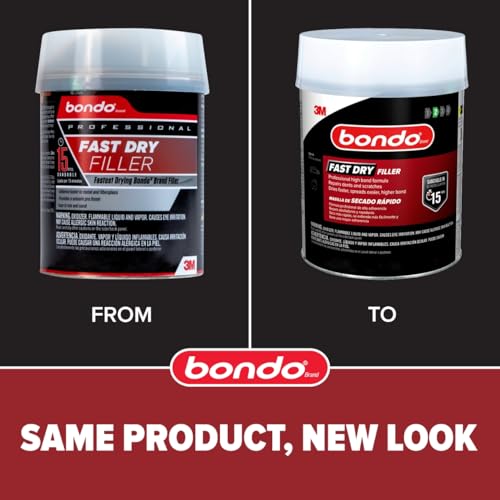
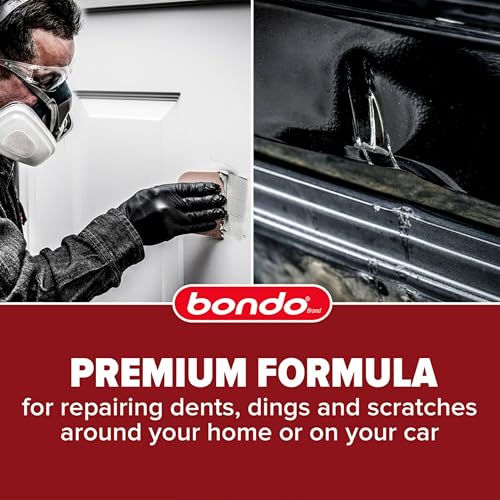
This is the quickest-setting filler Bondo offers under the 3M pro line. Advertised as the ‘fastest drying’, and owner feedback backs that, many say it’s sandable in under 15 minutes in warm conditions. That speed matters when you’re on a tight schedule or working in a humid climate where curing drags.
It spreads smoothly and holds up well under paint, though some note it can be finicky with hardener ratios. Compared to the standard original filler, this one trades a bit of forgiveness for speed. If you value efficiency over margin for error, this is your pick.
Product photos
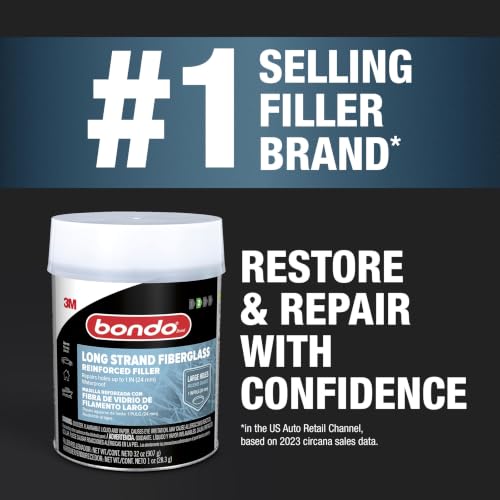
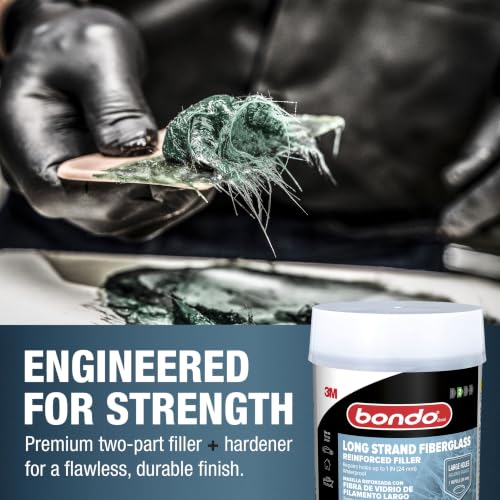
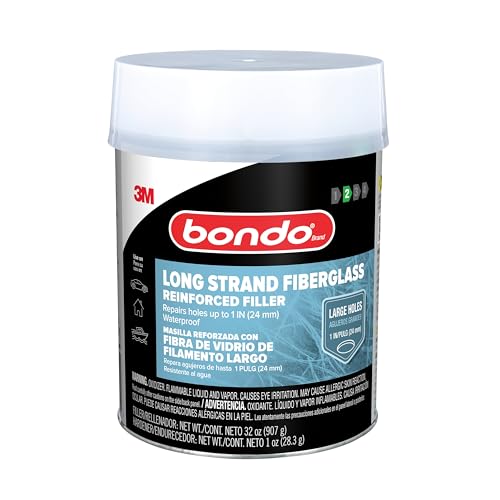
Bondo Hair Long Strand Filler
Strengths
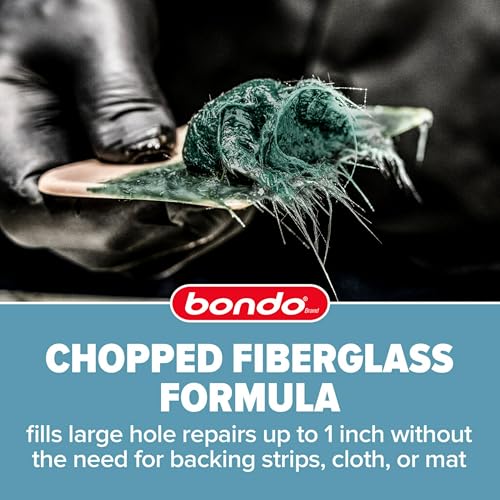
- Fills holes up to 1 inch
- Fiberglass reinforced
- Waterproof and strong
Trade-offs
- Rough sanding texture
- Harder to finish smooth
- Thicker mixing consistency
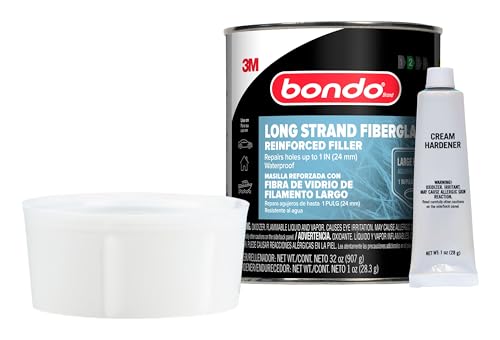
When you’ve got a hole larger than an inch, say from rust rot or impact damage, this is the Bondo product that steps up. The long strand fiberglass reinforcement gives it real structural integrity, far beyond what standard body filler can handle. Reviewers note it holds up well even without backing support in deep cavities, which makes it a favorite for fender arches or floor pans.
It sands slower than regular filler and has a coarser finish, but that’s the trade-off for strength. Compared to the original formula, this one’s in a different class entirely, meant for rebuilding, not just smoothing. My recommendation for severe corrosion work starts here.
Product photos
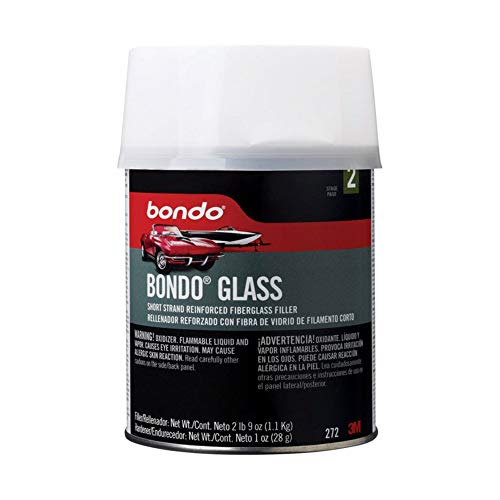
Bondo Glass Short Strand Filler
Strengths
- Stronger than lightweight filler
- Fills holes up to ½ inch
- Sands in 20 minutes
Trade-offs
- Limited depth capacity
- Requires careful mixing
- Higher cost per ounce
This is my pick for rust holes under half an inch, common in door bottoms, rocker panels, and wheel wells. The short strand fiberglass adds more strength than standard filler without going full reconstruction mode like the long strand version. It sands faster than the long strand type and integrates better with top layers of body filler.
Reviewers highlight its waterproof nature and quick 20-minute sand time, making it efficient for targeted fixes. Paired with a glaze or topcoat filler, it forms part of a smart layered repair strategy. For most common rust spots, this beats using plain Bondo.
Product photos
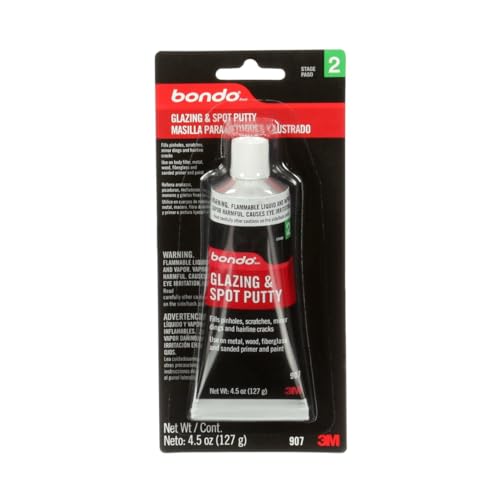
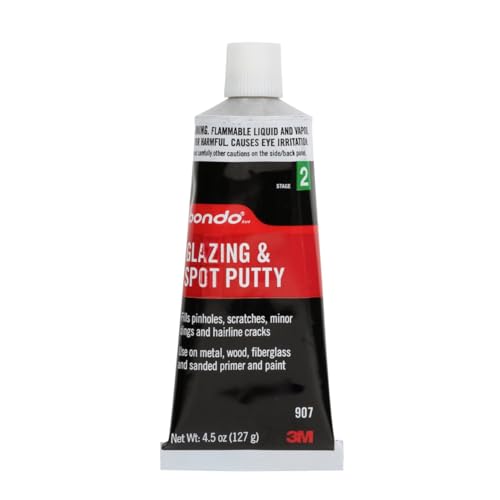
Bondo Glazing and Spot Putty
Strengths
- Fast drying
- Fills pinholes and cracks
- Non-staining finish
Trade-offs
- Not structural
- Very short work time
- Small quantity
This isn’t meant for dents, it’s for what comes after. Glazing putty seals pinholes, hairline cracks, and minor imperfections that regular filler can’t fully close. It flows thin, so it wicks into tiny gaps, and owners praise how it prevents “telegraphing” through primer and paint. Plus, its 3-minute working time means you can spot and move quickly.
I’d use this as a final skim coat before priming, never as a primary filler. It doesn’t add strength, but it does deliver a clean finish. When compared to heavier fillers, this one earns its place as the precision tool in the kit.
Product photos
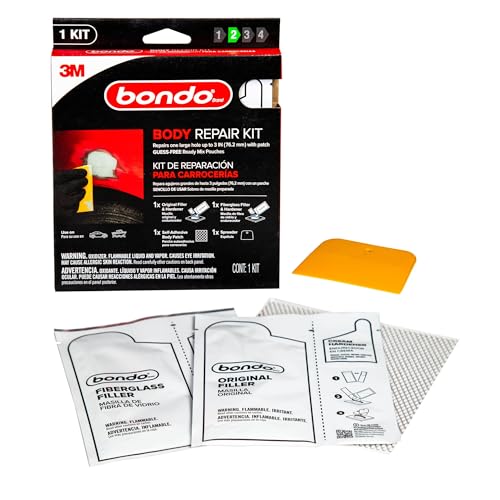
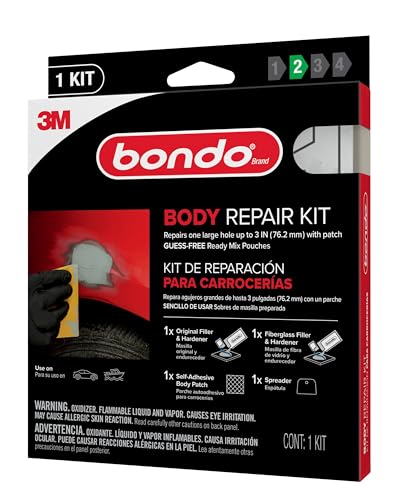
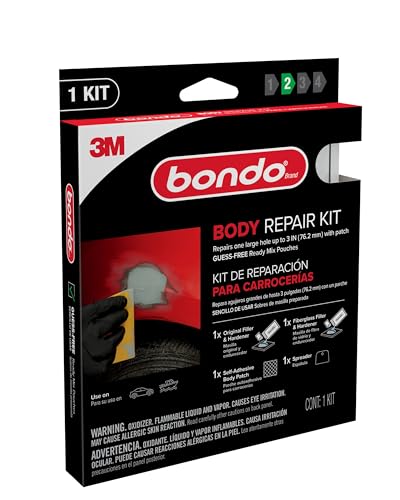
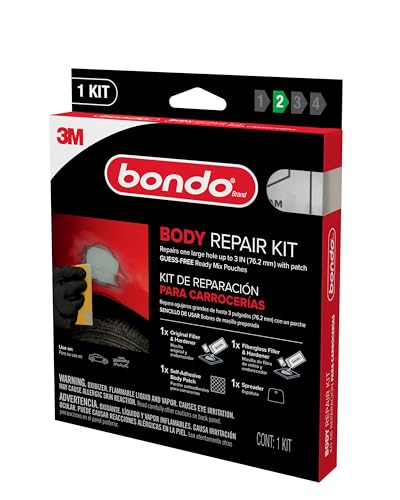
Bondo Body Repair Kit
Strengths
- No measuring required
- Includes patch and tools
- Beginner friendly
Trade-offs
- Expensive per repair
- Pouches dry out fast
- Limited to small jobs
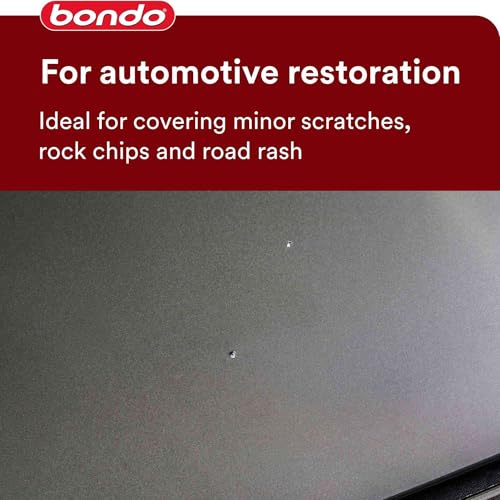
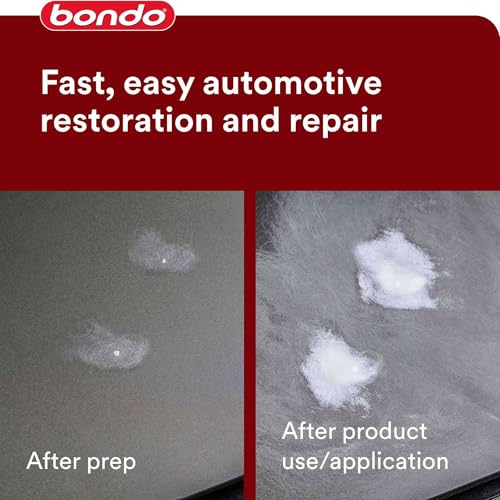
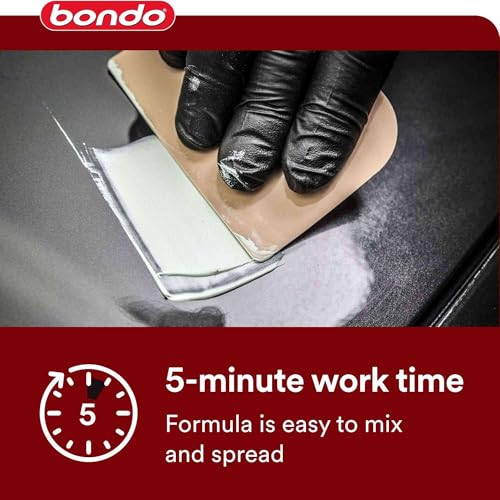
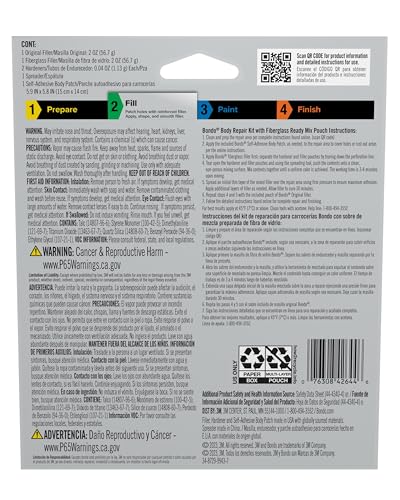
This kit removes the guesswork for first-timers. Pre-measured pouches mean no eyeballing hardener, and including a self-adhesive patch makes it viable for holes up to 3 inches, even on fenders or trunk lids. The combo of original and fiberglass filler gives a layered approach without requiring advanced skills.
Reviewers love how simple it is to use, though pros knock it for cost-per-use and limited scalability. As a starter system? It’s solid. But once you’re past the learning curve, loose fillers make more sense.
Product photos
Bondo Original Filler 7 lb
Strengths
- Multi-surface use
- Non-shrinking formula
- Large quantity
Trade-offs
- Not ideal for big holes
- Basic hardener ratio
- No reinforcement fibers
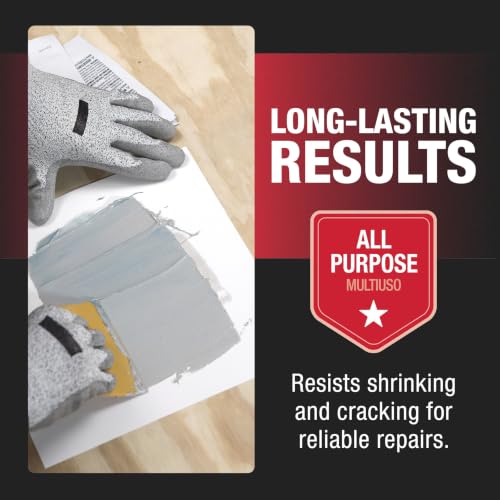
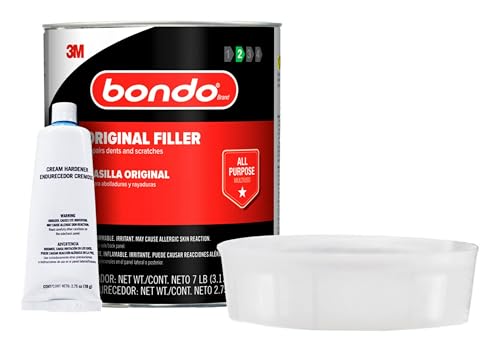
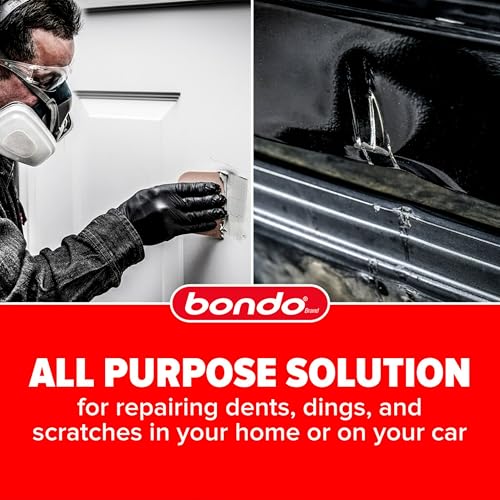
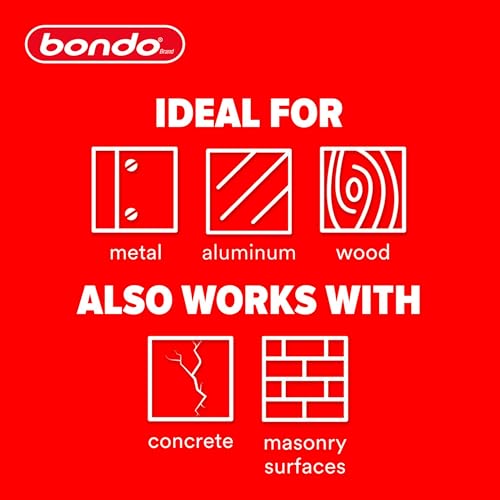
This 7-pound tub of Bondo Original Filler is the go-to for anyone doing multiple repairs or running a shop where filler gets used often. On paper, it’s the same trusted non-shrinking formula that’s been around for decades, easy to mix, spreads smoothly, and bonds well to clean metal. Owners consistently report solid results on dents, scratches, and minor rust areas, especially when prepped properly.
It’s not the strongest option for large missing sections, but for general bodywork on steel or fiberglass, it performs reliably. I’d pick this over smaller cans if you’re tackling more than one panel or want to avoid buying refills every few jobs.
Product photos
How We Evaluated bondos for cars
As someone who’s spent years under the hood and restoring vehicles, I understand the importance of a quality body filler. Rather than a hands-on test of each product – applying and finishing each one would be a monumental task – my approach was to research and compare published specifications, features, and, crucially, owner and professional reviews. I weighed this information against my understanding of what makes a body filler truly effective for different repair scenarios.
For bondos, the ability to properly adhere to a variety of materials and the speed of curing were paramount. A filler that doesn’t bond well is useless, and downtime waiting for a cure can significantly extend a project. Beyond that, I considered the type of repair the product is best suited for – from minor scratches to significant rust-through – as the ideal filler will vary depending on the damage. You’ll find I also considered value; a larger quantity doesn’t always equate to a better deal.
Specifications clearly indicate a filler’s composition and intended surfaces (metal, fiberglass, etc.), but owner feedback revealed a lot about real-world performance. I paid close attention to reports on shrinkage, sandability, and how well the filler holds paint. For example, many users detailed success with Bondo Hair Long Strand Filler for larger repairs, while others found the quick-drying time of the 3M Fast Dry Filler ideal. Don’t forget to also check out our guide to best leather cleaners to keep the rest of your car looking its best, and for dealing with summer pests, our rundown of bug removers.
Choosing The Right bondos for cars
As someone who’s spent countless hours restoring vehicles, I understand the frustration of body damage. Getting it right isn’t just about aesthetics; it’s about structural integrity and preventing further issues.
A quality automotive filler should exhibit minimal shrinkage, adhere strongly to a variety of materials (metal, fiberglass, plastic), be easily sandable without gumming up abrasive paper, and offer a work time sufficient for reasonably complex repairs. Consider the size of the damage, the material being repaired, and your skill level when making a selection.
Understanding Filler Types
The world of auto body filler isn’t one-size-fits-all. You’ll find formulations tailored for specific problems. While Bondo Original is a fantastic all-rounder, assuming it will handle every repair is a mistake. For instance, tackling large rust holes demands a filler with reinforcement. The Bondo Hair Long Strand Filler, with its fiberglass strands, provides that necessary strength, unlike a standard cream hardener filler. Don’t skimp here; a structurally sound repair is crucial.
Work Time and Cure Speed
How quickly a filler hardens is a massive factor, particularly for those new to bodywork. A longer work time – like you’ll find in the Bondo Original – gives you more leeway to spread and shape the filler before it sets. However, this comes at the cost of a longer overall repair time. Faster-drying options, such as the 3M Fast Dry Filler, are great for quick fixes but require a faster pace and more precise mixing.
Here’s a breakdown of what to consider:
- Small imperfections: Glazing putty with a 3-minute work time is ideal.
- Moderate dents & scratches: Standard Bondo Original (20-minute cure) provides a good balance.
- Large holes/structural repairs: Long strand fillers (30-minute cure) offer strength and a bit more working time to get the repair right.
Ultimately, choosing the right speed often depends on whether you’re aiming for a show-quality finish or a practical, durable repair.
Beyond the Filler: Considering the Finish
Filler is just the first step. A perfectly applied filler needs a perfectly applied finish. It’s easy to get caught up in the repair process and forget about the final result. If you’re planning on a professional-grade paint job, or even investing in best ceramic coatings, you’ll want a filler that sands smoothly and doesn’t react negatively with modern paint systems. Many fillers are compatible, but it’s worth checking the manufacturer’s recommendations. And don’t underestimate the importance of a quality primer and, depending on the color of your car, a dedicated wax for black cars to maintain that flawless look.
Remember this: a good filler is only as good as the prep work and the finishing touches. Don’t rush any step.
Bondos for Cars Compared
Here’s a comparison of key specifications for various bondos used in automotive repair.
| Product Name | Size | Best For | Cure Time (min) | Max Hole Size | Material Compatibility |
|---|---|---|---|---|---|
| Bondo Original Filler 6.30 lb | 6.30 lb | Best Overall | 20 | N/A | Wood, Steel, Aluminum, Fiberglass, Concrete |
| Bondo Original Filler 14 oz | 14 oz | Best Budget Friendly | 20 | N/A | Wood, Steel, Aluminum, Fiberglass, Concrete |
| 3M Fast Dry Filler Quart | Quart | Best Fast Drying | N/A | N/A | Metals, Wood, Fiberglass, Masonry, Concrete |
| Bondo Hair Long Strand Filler | N/A | Large Hole Repair | 30 | 1 inch | Fiberglass, Metal, Wood |
| Bondo Glass Short Strand Filler | N/A | Rust Holes | 20 | 0.5 inch | Metal, Wood, Concrete, Fiberglass |
| Bondo Glazing & Spot Putty | N/A | Minor Repairs | 3 | N/A | Metal, Fiberglass, Wood |
| Bondo Body Repair Kit | N/A | DIY Starter Kit | N/A | 3 inch | N/A |
| Bondo Original Filler 7 lb | 7 lb | Best Value Bulk | N/A | N/A | Metal, Aluminum, Masonry, Concrete |
Frequently Asked Questions
What’s the biggest mistake people make when choosing a body filler?
Many people select a filler based solely on price, overlooking the specific damage they’re trying to repair. Using a standard filler on a large rust hole, for example, will likely lead to structural weakness and a failed repair; a reinforced filler is necessary in those cases.
Can body filler be used on plastic bumpers?
Yes, but not all fillers adhere well to plastic. Look for products specifically labeled as compatible with polypropylene or polyethylene plastics, or use a flexible bumper repair filler designed for that purpose to prevent cracking.
How much sanding is typically required after applying body filler?
The amount of sanding varies depending on the filler and the skill of the applicator, but generally expect to start with a coarser grit (80-120) to shape the repair, then progress to finer grits (180-220) for smoothing before priming. Achieving a perfectly smooth surface prepares it for clear coats and paint.
Is it necessary to use a primer after applying body filler?
Absolutely. Primer creates a uniform surface for the paint to adhere to, prevents the filler from absorbing moisture, and helps prevent paint from sinking into the filler, ensuring a durable and professional finish. It also helps seal the filler.
What’s the best way to prepare the surface before applying body filler?
Thorough preparation is key. Remove all rust, loose paint, and contaminants, then clean and degrease the area with a wax and grease remover. Lightly sanding the surrounding paint creates a better mechanical bond for the filler; clean your automotive glass cleaners before you begin.
The Bottom Line
Choosing the right body filler often comes down to balancing control with convenience. If you’re after a single product that can handle a wide range of repairs with a forgiving work time, I recommend the Bondo Original Filler 6.30 lb. It’s a classic for a reason, offering a solid foundation for both beginners and experienced restorers.
For those with specific needs, the choices become clearer. If speed is essential, the 3M Fast Dry Filler Quart is a standout. For significant structural damage, the Bondo Hair Long Strand Filler provides the necessary reinforcement. And if you’re just starting out, the Bondo Body Repair Kit offers everything you’ll need in one package. Don’t forget to consider pairing your repair with a quality scratch removers to address any existing imperfections.
Ultimately, the “best” bondo isn’t about a single specification or brand. It’s about understanding the nature of the damage, preparing the surface properly, and taking your time. A quality repair relies more on meticulous prep work and careful finishing – including maintaining your interior with appropriate best leather conditioners – than any single product’s advertised features.
