
5 Best Boat Trailer Steps of 2026
This post contains affiliate links. As an Amazon Associate, we earn from qualifying purchases.
The Aupar 4-Step Trailer Tongue Steps stand out as the best overall choice for most boaters, offering solid construction and reliable performance. If you’re watching your budget, the MILBOPAX 4-Step Boat Trailer Steps deliver strong durability at a lower price, while the NUOVEPE 3-Step gives a smart side-mount alternative when tongue space is tight.
Boat trailer steps seem simple, but a flimsy or poorly placed set can make boarding awkward or even dangerous. I’ve seen too many setups fail from rust, wobble, or weak mounting, especially after repeated exposure to water and road grime.
That’s why this guide focuses on real-world toughness, weight capacity, and smart design based on specs and owner feedback. We looked at build materials, step spacing, and mounting options to find models that hold up season after season.
Top 5 Boat Trailer Steps in the Market
The Best Boat Trailer Steps, Reviewed
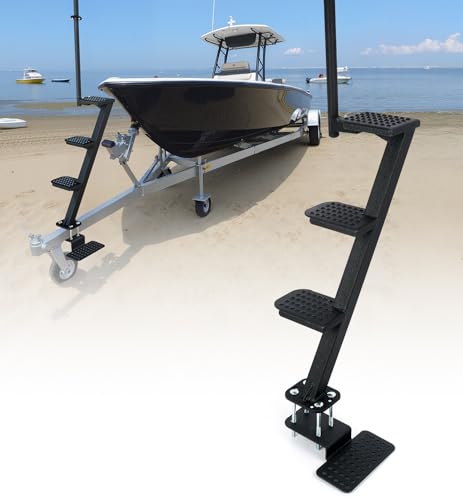
Aupar 4-Step Trailer Tongue Steps
Strengths
- 4 flat steps
- Textured tread
- Grab handle
- Universal fit
- 450 lb capacity
Trade-offs
- Not 500 lb rated
- Finish less durable in salt
- No angle adjustability
This is the model I’d recommend to most people shopping in this category. It takes the budget-friendly Aupar design and upgrades it with a fourth step, which changes the game for comfort. The extra height means less of a final hop onto the deck, something you’ll appreciate after a long day on the water. The textured tread and grab handle are consistent with the brand’s focus on practical safety, and the 450 lb capacity still covers most real-world scenarios.
It’s not as rugged as the MILBOPAX unit with its gusseted steel plates, but it’s stiffer than the 3-step Aupar and priced well below the top-tier options. Owners report solid performance in both freshwater and occasional salt use, though I’d suggest rinsing it down after coastal trips. When you balance cost, function, and build, this one hits the sweet spot, especially for mid-sized fishing boats and bowriders.
Video review
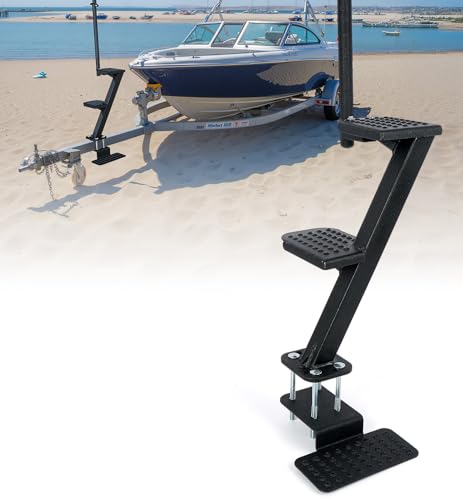
Aupar 3-Step Trailer Steps
Strengths
- Affordable price
- Universal fit
- Grab handle included
- Anti-slip surface
- 3-step layout
Trade-offs
- 450 lb capacity
- Less rigid construction
- Basic finish
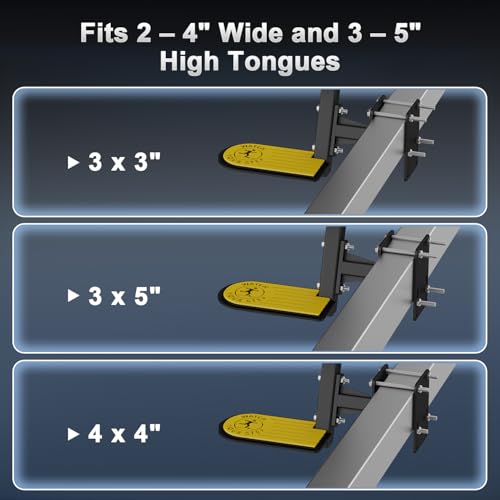
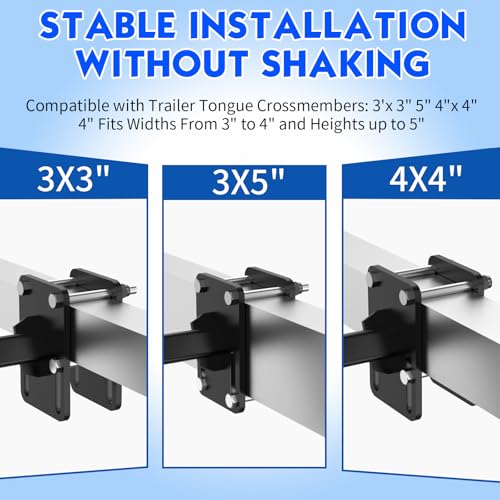
At this price, it’s hard to ignore the value. These Aupar steps deliver the basics without flash, three solid steps, a textured anti-slip surface, and a grab handle that actually feels secure when pulled. The 450 lb capacity is slightly below the 500 lb class leaders, but in practice, that difference rarely matters for solo boarding or light tandem use. The universal fit for 3×3 and 3×5 crossmembers means most users won’t need adapters, which speeds up installation.
Still, this is clearly the budget build. The steel feels thinner than the MILBOPAX or NUOVEPE units, and some owners report minor flex under heavier loads. It’s not a dealbreaker, but it does remind you you’re saving money. Compared to the pricier Aupar model with four steps, this one feels like a compromise, fine for smaller boats, but you’ll notice the missing step on taller trailers.
Video review
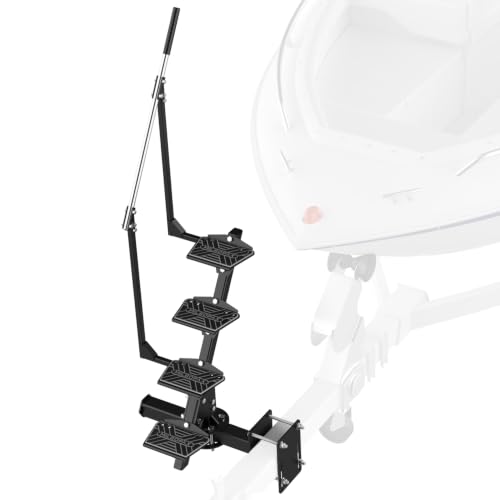
MILBOPAX 4-Step Boat Trailer Steps
Strengths
- 4 wide steps
- 3-section handrail
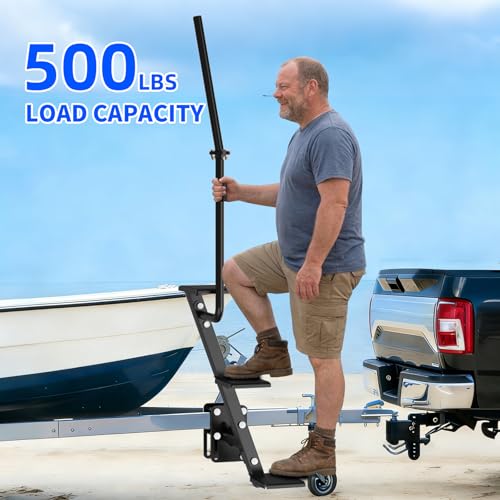
- 500 lb capacity
- Adjustable fit
- Non-slip EVA pads
Trade-offs
- Higher price point
- Heavier than basic models
- May be overkill for small boats
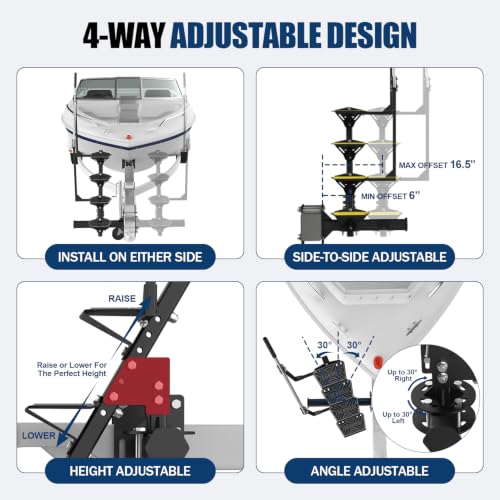
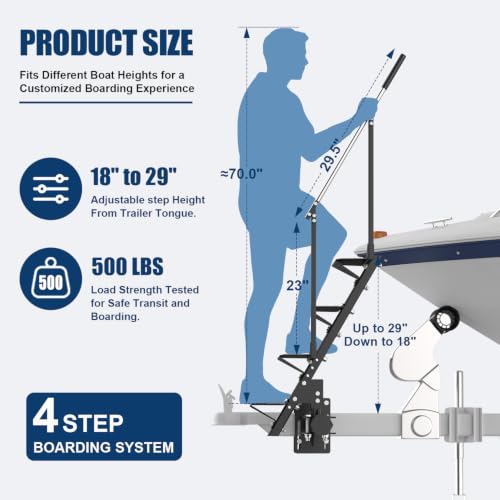
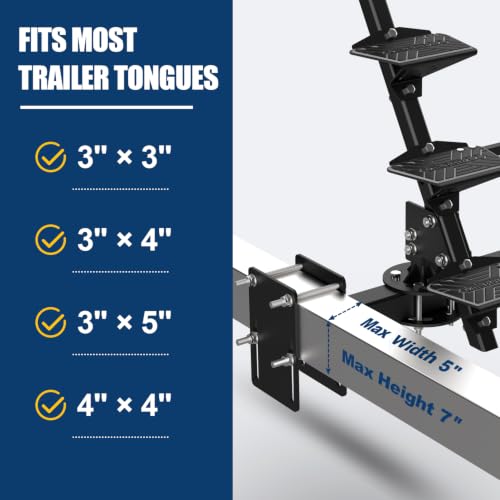
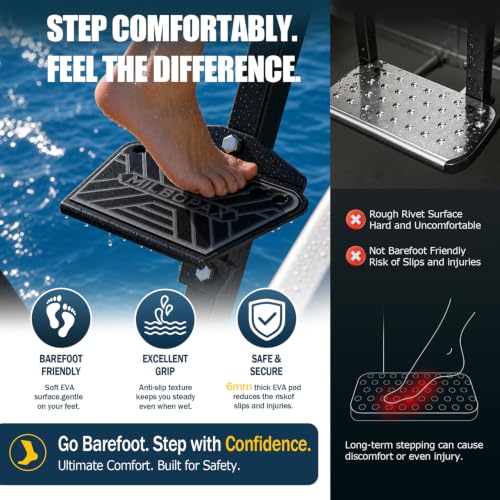
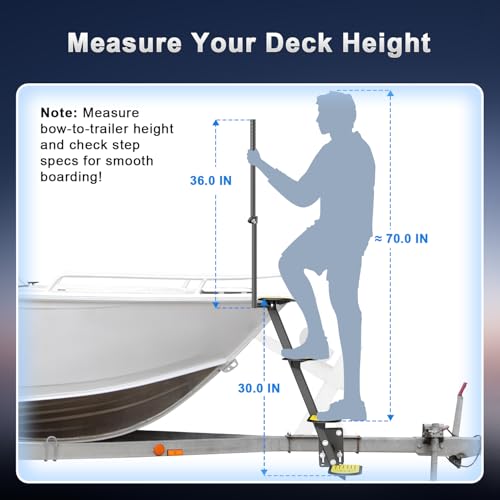
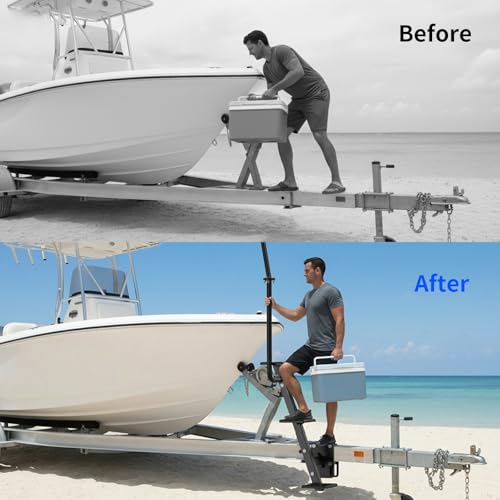
This is one of the few trailer steps that actually feels like it was designed with real boaters in mind. The 4-step layout combined with the 3-section handrail gives a ladder-like climbing experience that’s closer to boarding a small cabin cruiser than wrestling with a trailer. On paper, the 500 lb capacity and carbon steel build suggest serious durability, and owners consistently report these holding up well in both freshwater and coastal environments, especially with the powder coat fending off surface rust.
The adjustability is a real win. Being able to tweak the angle and height means you can dial in the step alignment even if your trailer tongue isn’t perfectly level at the ramp. And the left/right installation flexibility? That’s something more brands should offer. Compared to basic 3-step models, this one reduces the final jump to the deck by several inches, which matters when you’re wet, tired, and balancing gear.
Product photos
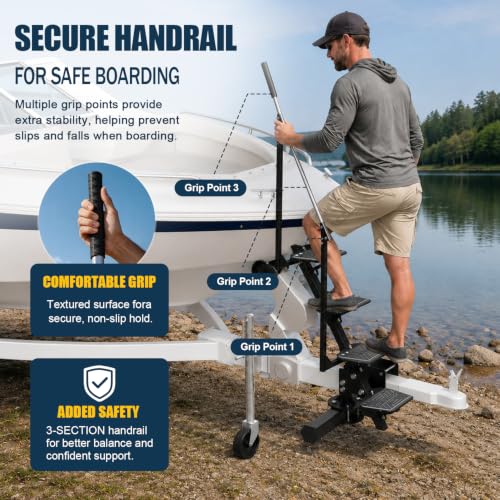
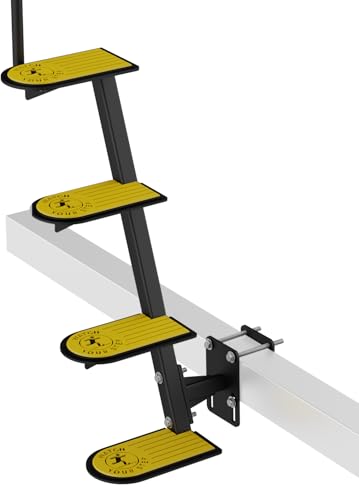
MILBOPAX Heavy-Duty 4-Step Trailer Steps
Strengths
- 1/4″ steel plates
- Dual gussets
- 500 lb capacity
- Pre-assembled frame
- Anti-slip EVA pads
Trade-offs
- Less adjustable
- Heavier unit
- Slightly narrower step depth
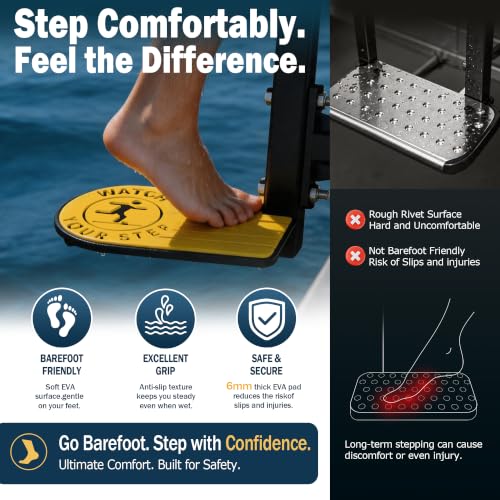
This MILBOPAX model is built like a workshop favorite, over-engineered in the right places. The 1/4-inch steel plates and dual gussets under each step aren’t just marketing fluff; they translate to a noticeably stiffer climb with minimal wobble, even when stepped on hard. The 500 lb rating feels justified, and the full carbon steel frame with powder coat has earned praise from owners using it in humid and brackish conditions.
What sets it apart is the pre-assembled frame, no fiddling with aligning brackets or loose panels during install. The anti-slip EVA pads are bright and easy to spot, even in low light, and the rounded step edges are a small but thoughtful touch for avoiding shin bruises. Compared to the other 4-step model from MILBOPAX, this one prioritizes rigidity over adjustability, but for most users, that trade-off makes sense. If you want the toughest-feeling steps in this lineup, this is the one.
Product photos

NUOVEPE 3-Step Side-Mount Steps
Strengths
- 500 lb capacity
- Rust-resistant hardware
- Side-mount design
- Simple installation
- Avoids equipment clash
Trade-offs
- Only 3 steps
- Handrail is basic
- Limited height adjustment
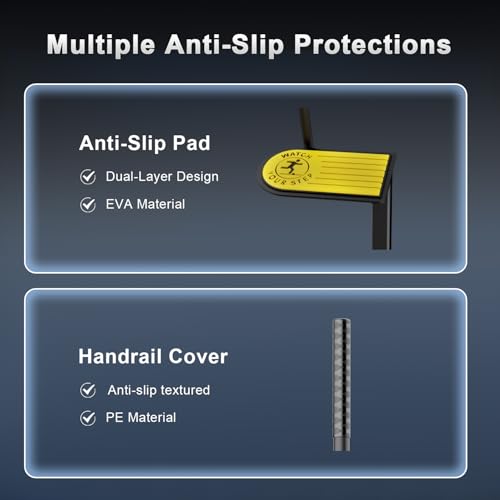
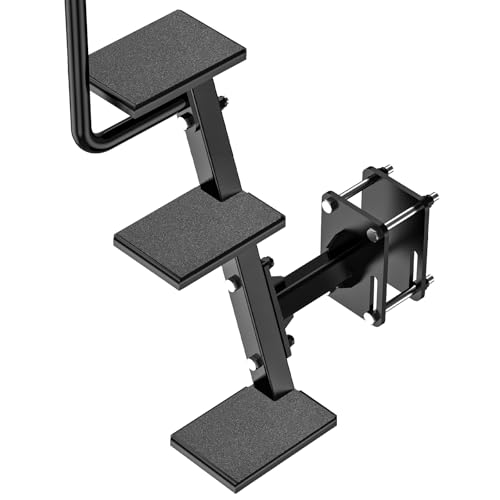
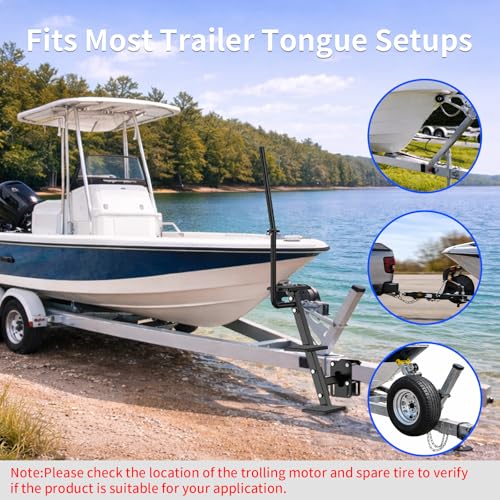
If you’re tired of stepping on greasy trailer frames or wobbling on tire sidewalls, this side-mount design from NUOVEPE is a smart fix. The 500 lb rating matches top-tier models, and the focus on rust-resistant hardware stands out, owners in saltwater regions note the bolts and fasteners hold up noticeably better than cheaper alternatives. The side-mount system avoids winch and jack interference, which is a real headache on crowded trailer tongues.
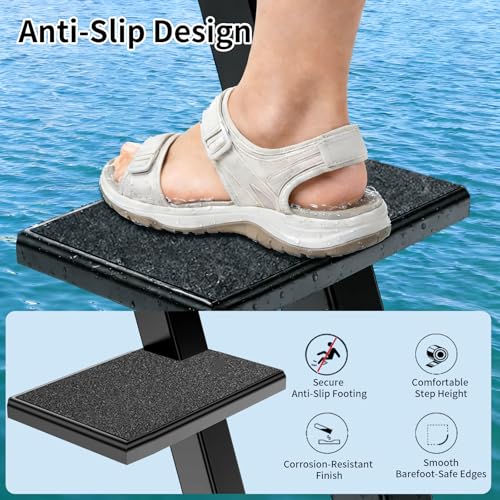
It’s not the tallest ladder out there, but the 3-step layout with anti-slip pads delivers solid footing without overcomplicating the install. The handrail is functional, though not as extensive as the MILBOPAX 4-step model. Where this one shines is simplicity: it mounts cleanly, fits most standard tongue sizes, and doesn’t require custom mods. For the price, it’s one of the more dependable 3-step options available.
Product photos
How We Chose These boat trailer steps
My approach to evaluating boat trailer steps, as with all things at TheAutoZenith, began with a detailed comparison of published specifications and features. I then weighed owner reviews from major retailers alongside assessments from boating and towing experts. It’s crucial to understand how these steps perform in real-world conditions, so I focused heavily on reported durability and ease of installation. Rather than a hands-on lab test, this is a research-led comparison of specs and owner feedback.
For boat trailer steps, the most important factors are weight capacity and build quality. A step needs to reliably support a person’s weight, especially when wet, and withstand the corrosive elements common around boats. Beyond that, universal fitment is key – nobody wants a step that requires extensive modification to install. I also gave considerable weight to the inclusion of safety features like grab handles and effective non-slip surfaces.
Specifications clearly define weight limits and materials used, providing a baseline for comparing construction. However, owner feedback is invaluable for understanding long-term durability and real-world usability. Reports of rust, wobbling, or difficult installations heavily influenced my rankings. Don’t underestimate the importance of proper maintenance, though – regular application of trailer bearing grease will extend the life of any trailer component, including your steps. And, of course, ensuring you have quality boat trailer winches is just as vital for a safe launch and retrieval.
How To Choose The boat trailer steps
Finding the right boat trailer steps is about more than just convenience; it’s about safety and preserving your boat’s finish. After all, nobody wants a stumble while boarding or a scratch on the hull.
A quality set of boat trailer steps should offer a robust weight capacity (at least 400lbs is a good starting point), use non-slip surfaces even when wet, and demonstrate solid construction to resist corrosion from both freshwater and saltwater exposure. Universal fitment is a bonus, but verifying compatibility with your specific trailer tongue is crucial.
Step Configuration: How Many Steps Do You Need?
The number of steps is often the first consideration, and it ties directly to your boat’s freeboard (the height of the boat’s deck above the waterline). A three-step unit, like the Aupar 3-Step, works well for lower-riding boats, while taller vessels will benefit from the added reach of a four-step model. Don’t underestimate the impact of step spacing, too. Wider steps are easier to navigate, especially with gear in hand, but remember they also require more space along the trailer tongue.
- For very low freeboard boats (under 2 feet), a simple two or three-step setup might suffice.
- A four-step configuration is ideal for most standard-sized boats, providing a comfortable and stable climb.
- If you have a particularly high-riding boat or frequently board with heavy equipment, consider a five-step model or explore adding a dedicated boarding ladder in addition to trailer steps – this is especially true if you also need to consider upgrading your boat trailer tires due to the added weight.
Mounting Style: Tongue vs. Side Mount
Most trailer steps mount to the tongue, offering a direct path to the boat. These are generally easier to install and provide a very stable feel, like the Aupar 4-Step. Side-mount steps, such as the NUOVEPE 3-Step, offer a different approach, which can be useful if tongue space is limited or you have winches or boat trailer jacks obstructing a tongue-mounted setup. Side mounts require careful consideration of the trailer frame’s strength and the potential for sway.
Construction and Durability: Beyond Stainless Steel
While stainless steel is often touted as the gold standard, it’s not the whole story. Carbon steel with a quality powder coat finish, as seen in the MILBOPAX models, can offer comparable corrosion resistance at a lower price point. Look for steps constructed with thick steel plates (1/4” is a good benchmark) and reinforced gussets to minimize wobble. Pay attention to the hardware, too. Many steps fail due to rusted or stripped bolts, so upgraded, rust-resistant fasteners are a sign of a well-built product.
A good rule of thumb: if the step feels shaky before you even bolt it to the trailer, it will only get worse with use.
Boat Trailer Steps Compared
Here’s a comparison of key specifications for various boat trailer steps to help you make an informed decision.
| Product Title | Steps | Max Capacity (lbs) | Mounting Type | Handle Included | Width Compatibility |
|---|---|---|---|---|---|
| Aupar 4-Step Trailer Tongue Steps | 4 | 450 | Tongue | Yes | 3″ x 3″, 3″ x 5″ |
| Aupar 3-Step Trailer Steps | 3 | 450 | Tongue | Yes | 3″ x 3″, 3″ x 5″ |
| MILBOPAX 4-Step Boat Trailer Steps | 4 | 500 | Tongue | Yes | N/A |
| MILBOPAX Heavy-Duty 4-Step Trailer Steps | 4 | N/A | Tongue | Yes | 2″-4″ Wide |
| NUOVEPE 3-Step Side-Mount Steps | 3 | N/A | Side | Yes | 3″-3.8″ Wide |
Frequently Asked Questions
What’s the typical lifespan of boat trailer steps?
With regular cleaning and maintenance, you can generally expect boat trailer steps to last 5-10 years. However, saltwater exposure and lack of preventative care can significantly shorten this, so consistent rinsing and occasional rust treatment are vital.
Can I install boat trailer steps myself, or do I need a professional?
Most boat trailer steps are designed for DIY installation, typically requiring basic tools like a wrench and drill. However, if you’re uncomfortable with mechanical work or have a complex trailer setup, professional installation is a sensible option.
Are all “stainless steel” steps truly rust-proof?
While stainless steel offers good corrosion resistance, it’s not entirely immune to rust, particularly in harsh saltwater environments. Marine-grade 316 stainless steel is superior to 304, and proper cleaning and maintenance are still necessary to prevent corrosion buildup.
How do boat trailer steps affect fuel efficiency when towing?
The added weight and potential aerodynamic drag from boat trailer steps have a minimal impact on fuel efficiency, usually less than a 1-2% reduction. Prioritizing proper trailer maintenance, like ensuring correctly inflated boat trailer tires and well-lubricated bearings, will have a far greater effect on your gas mileage.
What other trailer accessories should I consider alongside new steps?
Beyond steps, investing in quality boat trailer lights is critical for safety and legal compliance. Don’t overlook the importance of boat trailer rock guards to protect your boat from road debris as well.
The Bottom Line
Choosing boat trailer steps often comes down to balancing initial cost with long-term durability and convenience. While cheaper options exist, I consistently find that the Aupar 4-Step Trailer Tongue Steps offer the best overall combination of build quality, weight capacity, and ease of installation for most boaters. You’re getting a robust step that should hold up well over time, and it’s a straightforward addition to your trailer.
For those on a tighter budget, or with very specific mounting needs, the NUOVEPE 3-Step Side-Mount Steps are a solid alternative. If you prioritize versatility and have limited tongue space, these side mounts can be a real asset. Similarly, if you need something particularly heavy-duty, the MILBOPAX Heavy-Duty 4-Step Trailer Steps are built to withstand a lot of abuse. Don’t forget to check out options for trailer locks to protect your investment.
Ultimately, the best boat trailer steps aren’t about fancy features or the highest weight rating. They’re about providing a safe, stable, and reliable way to board your boat, trip after trip. Ensuring you’ve also considered things like quality trailer bunk wood and proper trailer maintenance will contribute far more to a positive boating experience than any single component.
