
8 Best Biking Backpacks of 2026
This post contains affiliate links. As an Amazon Associate, we earn from qualifying purchases.
The Osprey Berm 8L stands out as the best overall biking backpack, combining smart design with reliable performance. For those on a budget, the Teton Oasis Hydration Backpack offers solid features at a lower price, while the Anmeilu 18L is a strong pick if you need more cargo space and versatility.
Choosing the right biking backpack isn’t just about carrying gear, it’s about staying comfortable, balanced, and hydrated when the trail gets rough. Too many riders end up with bouncing packs, sore shoulders, or inadequate water access, which ruins an otherwise great ride.
This guide cuts through the noise by focusing on what actually matters: fit, stability, durability, and hydration setup. I researched the field, compared specs, and weighed real owner feedback to find packs that deliver where it counts.
Top 8 Biking Backpacks in the Market
The Best Biking Backpacks, Reviewed
Osprey Berm 8L Bike Hydration Pack
Strengths
- Lightweight build
- Hydration included
- Excellent ventilation
Trade-offs
- No helmet carry
- Limited expandability
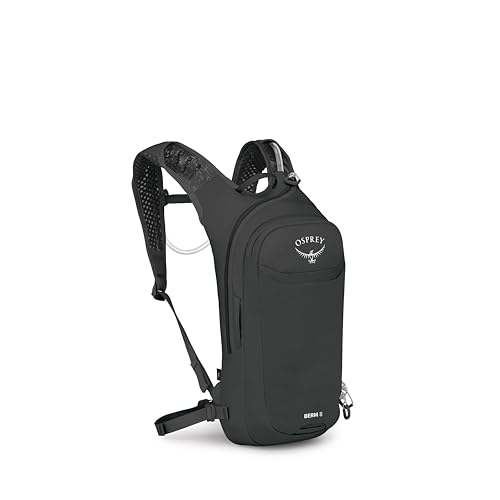
The Osprey Berm 8L is the kind of pack that makes you wonder why others in this category don’t just copy it outright. On paper, it’s balanced: 8L of storage, a 2.5L reservoir included, and a well-ventilated AirScape backpanel that owners consistently say keeps your back drier than most competitors. The bike-specific harness and removable hipbelt give it a performance feel without sacrificing comfort on longer rides.
What stands out isn’t just the specs but the refinement, magnetic bite valve clip, S-zip reservoir access, and smart internal tool pockets. It’s not the cheapest, but it’s the one most reviewers come back to when comparing fit and function. I’d pick this over bulkier packs for mid-distance trail rides where agility matters.
Video review
Teton Oasis Hydration Backpack 18L/22L
Strengths
- Bladder included
- Sewn-in rain cover
- Insulated reservoir pocket
Trade-offs
- Back panel less breathable
- Fit runs wide
- Zippers feel mid-tier
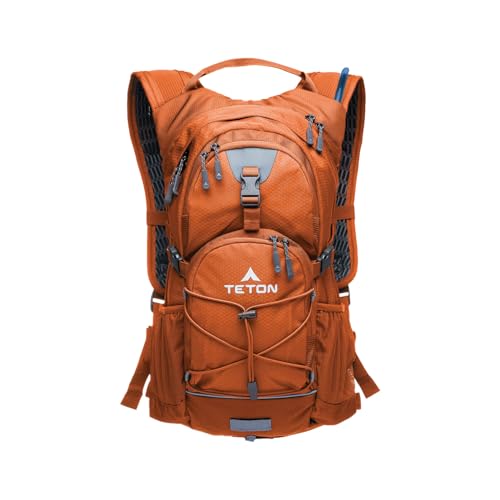
The Teton Oasis hits a sweet spot: it includes a 2L bladder, offers 18L or 22L options, and comes with a sewn-in rain cover, rare at this price. The insulated bladder pocket is a small but meaningful detail, keeping water cooler longer, and owners report the bite valve is comfortable and leak-resistant. The butterfly opening allows wide access to the main compartment, which is a plus for organizing gear.
It’s not as ventilated as the Osprey, and the back panel isn’t as sculpted, but for the mix of included features and price, it’s hard to beat. I’d choose this over the NOOLA or MARCHWAY if you want a ready-to-ride pack without buying a bladder separately. It’s the best value for riders who want hydration included and don’t need MOLLE or extreme durability.
Video review
MARCHWAY Tactical Molle Hydration Pack

Strengths
- 3L bladder included
- Extremely durable build
- MOLLE expandability
Trade-offs
- Heavier than average
- Less breathable
- Tactical over bike-focused
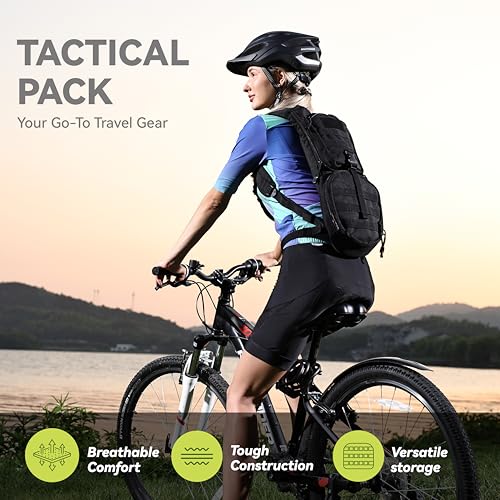
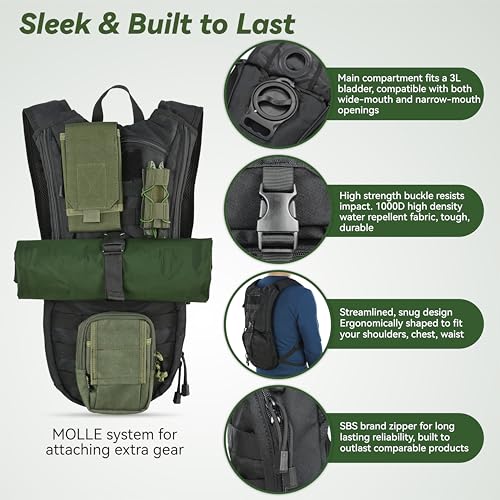
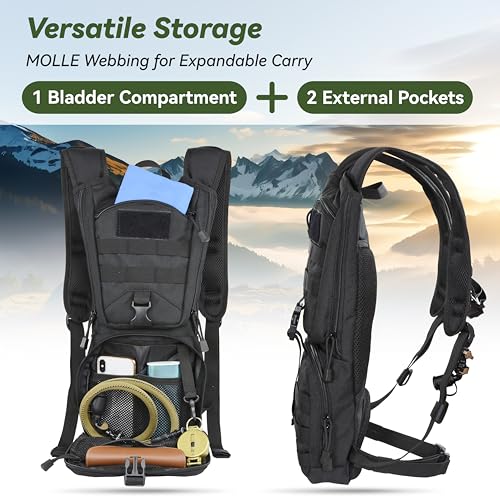
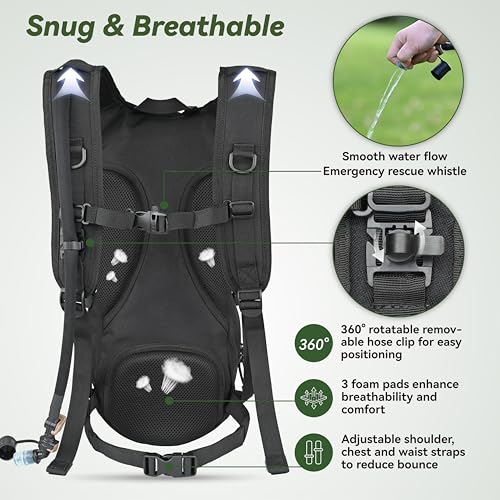
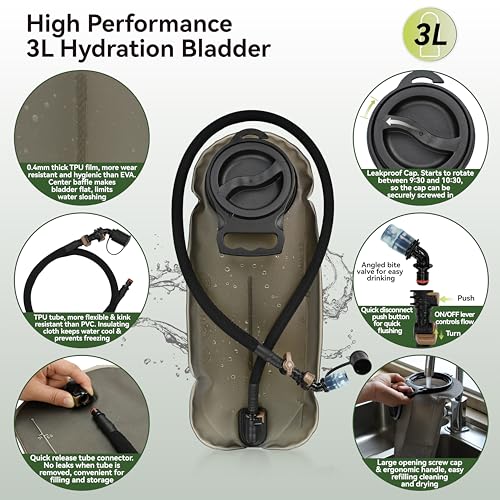
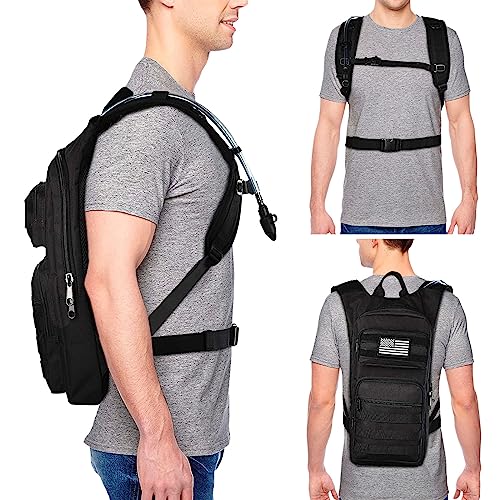
The MARCHWAY pack feels built for war, not just trails. With 1000D nylon, military-grade webbing, and a 3L taste-free TPU bladder, it’s one of the most durable options here. The rotating bite valve and leakproof design are standout features owners actually praise, and the MOLLE system lets you strap on extra pouches for longer missions. At 19.5 inches tall, it carries tall but stays stable thanks to thick shoulder padding and a snug harness.
But it’s also heavier and less ventilated than purpose-built bike packs. The design leans tactical, so bike-specific ergonomics take a back seat. Still, if you want a bombproof pack with serious hydration and expansion potential, this is the one. I’d pick it over others for hunting, training, or rugged multi-day trips where durability trumps finesse.
Product photos
Anmeilu 18L Cycling Backpack with Helmet Holder
Strengths
- Hidden helmet storage
- Rain cover included
- 18L functional capacity
Trade-offs
- No bladder included
- Basic ventilation
- Generic styling
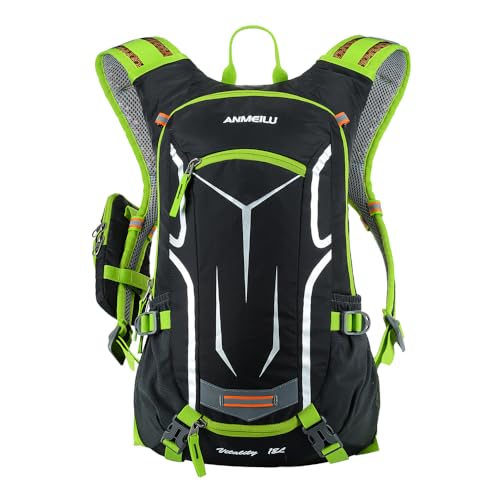
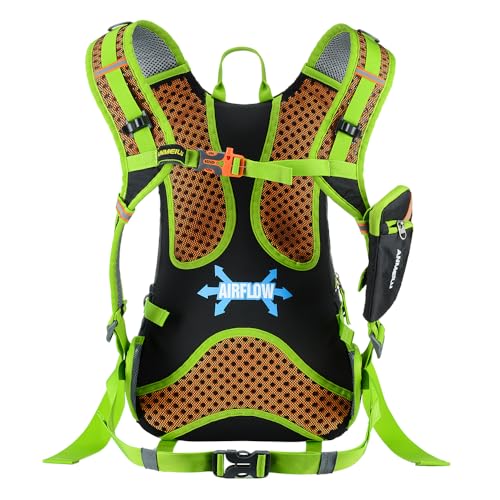
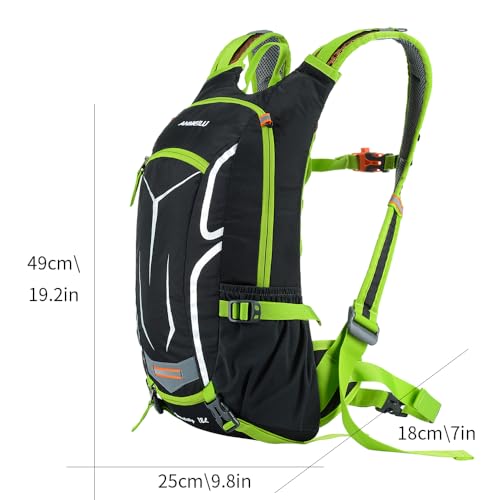
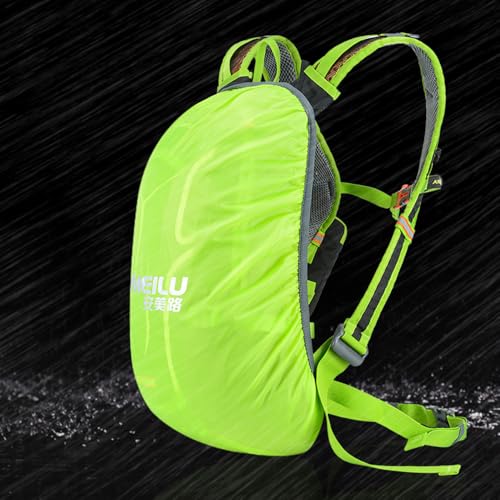
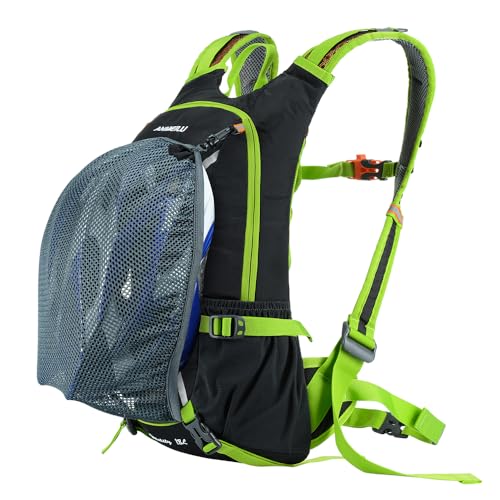
This Anmeilu pack nails one thing better than most: the hidden helmet net. It’s a small detail, but riders who switch between biking and hiking will appreciate how cleanly it stows a helmet without eating internal space. The 18L volume is practical, the fabric is tear-resistant, and the included rain cover and phone case add real-world utility.
But the design feels more utilitarian than refined. The bladder isn’t included, and while the shoulder strap hose guide works, owners note the back padding isn’t as breathable as Osprey or Teton. Still, for riders who regularly carry a helmet and want a mid-sized, durable pack, this one solves a real problem better than most. I’d pick it over others specifically for that helmet net.
Product photos
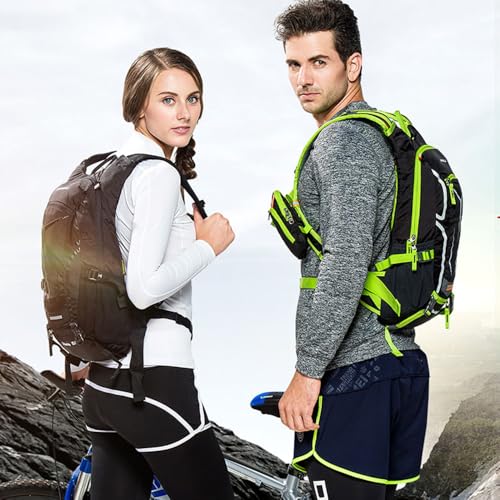
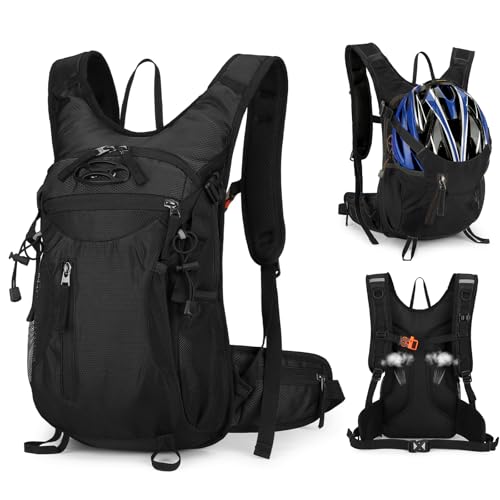
Outplea 15L Waterproof Cycling Backpack
Strengths
- Extremely lightweight
- Budget-friendly price
- Water-resistant fabric
Trade-offs
- No bladder included
- Fit inconsistent
- Minimal padding
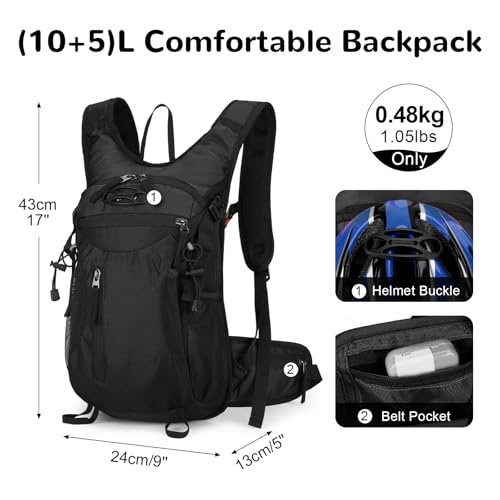
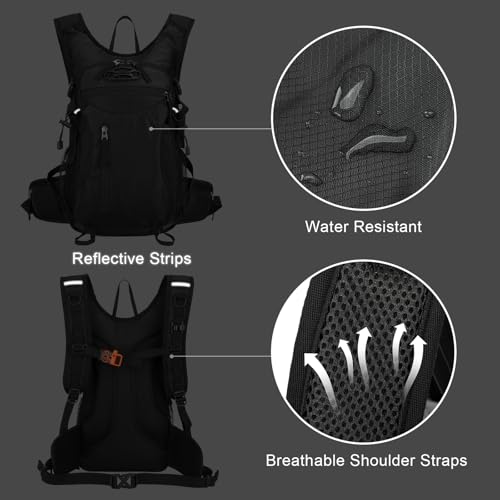
At under $27 and just over a pound, the Outplea 15L is a standout for budget-focused riders who still want smart touches. It’s lightweight, has reflective strips, an emergency whistle, and a front helmet buckle, features usually found on pricier packs. The 3D foam back panel and mesh straps offer decent breathability, and owners say it holds up well in wet conditions thanks to ripstop oxford fabric.
But it’s not perfect: the fit can feel a bit loose on smaller frames, and while it has a hydration sleeve, there’s no included bladder or hose clip. Still, for the price, it delivers exceptional value. If you’re new to MTB or want a secondary pack without overspending, this is the smarter buy over more expensive but similarly basic models.
Product photos
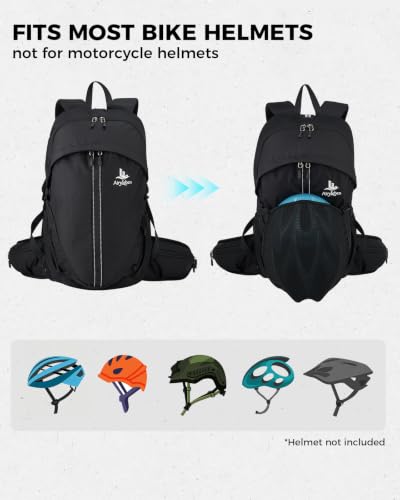
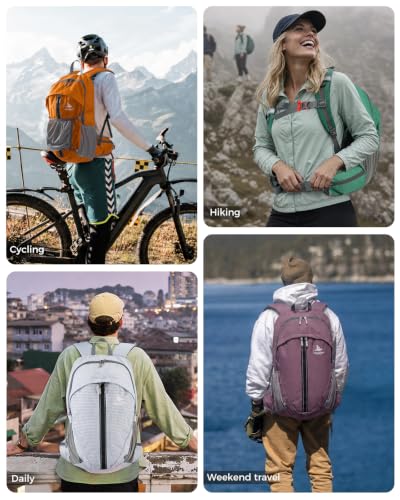
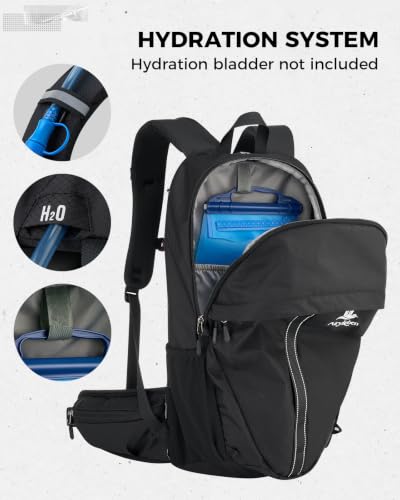
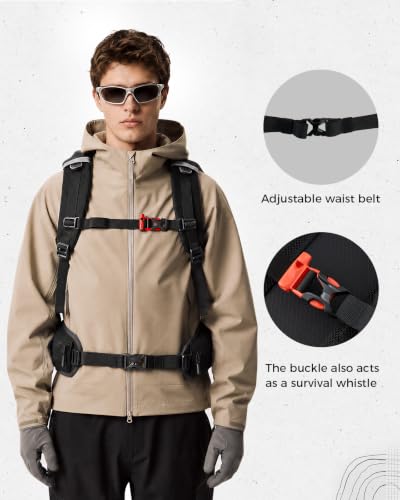
AiryLeben 25L Hiking Backpack with Rain Cover
Strengths
- Integrated rain cover
- Helmet holder included
- 25L generous capacity
Trade-offs
- Bulky for pure MTB
- Fit less agile
- No included bladder
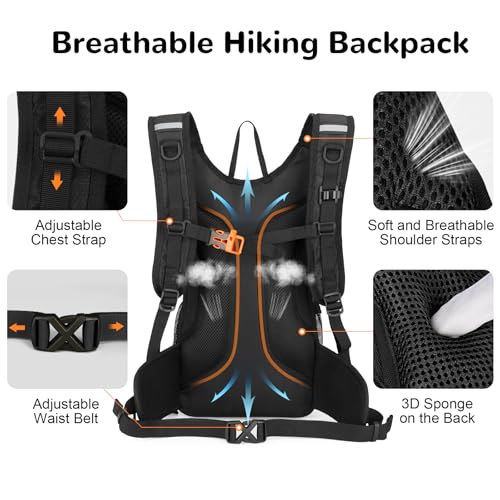
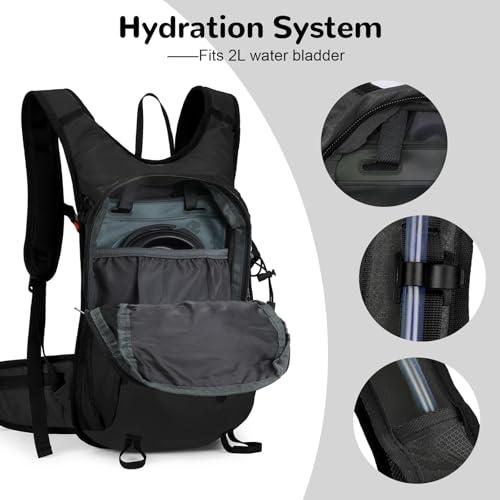
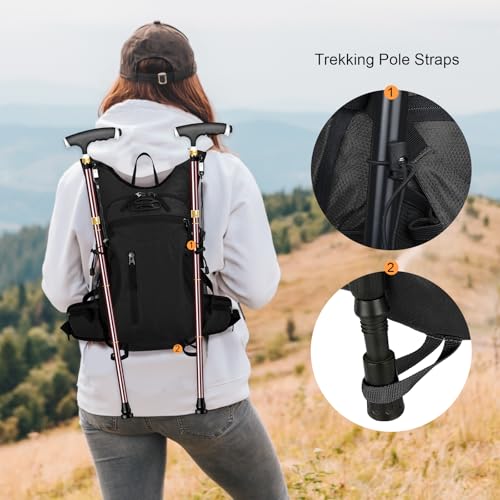
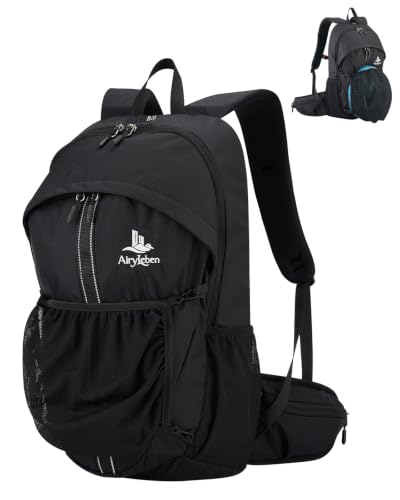
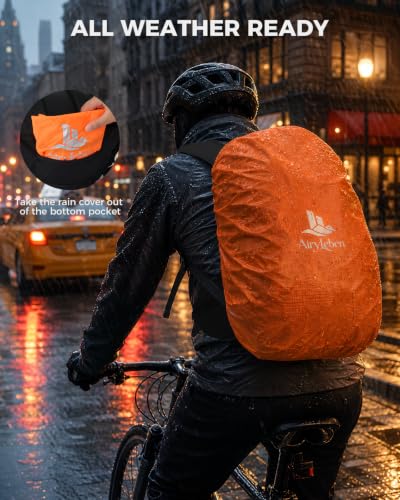
The AiryLeben’s 25L capacity and helmet holder make it stand out in a sea of smaller packs, it’s clearly aimed at riders who need to carry more and ride in unpredictable weather. The hidden rain cover is a smart touch, and owners consistently report it works well when storms hit. The breathable mesh back and shoulder straps help manage sweat, and the waist belt with zippered pockets is a nice upgrade for securing small items.
Still, at 25L, it’s verging on hiking-pack territory. It’s not as nimble as sub-15L packs on technical descents, and the hydration sleeve is internal but lacks a dedicated hose guide in some user reports. I’d recommend it over smaller models only if you’re doing long, variable-condition rides where gear volume and weather protection matter most.
Product photos
NOOLA Hydration Backpack with 3L Bladder
Strengths
- Massive pocket count
- 3L bladder included
- MOLLE expandability
Trade-offs
- Poor bike-specific fit
- Back panel runs warm
- Less ventilation
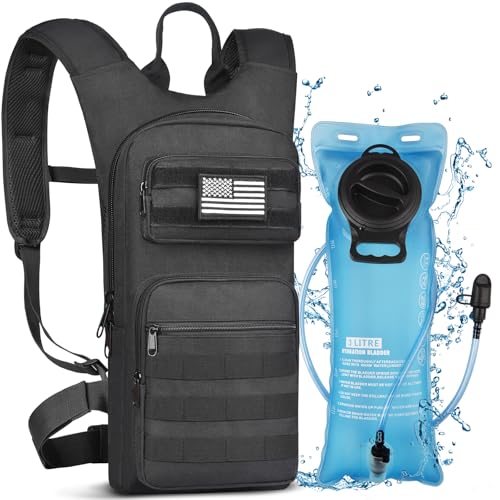
This NOOLA pack throws a lot of features at the wall, 9 pockets, a 3L BPA-free bladder, MOLLE compatibility, and a rugged 900D nylon shell, and honestly, most of them stick. For the price, the organization is exceptional, with zippered and molle-attached zones making it easy to customize for gear-heavy outings. The 3L bladder is a plus for long hikes, and owners note it stays odor-free with regular cleaning.
But it’s not built for bikes, the cut is more tactical than cycling-specific, and the back panel, while padded, doesn’t breathe as well as mesh-covered designs. If you’re hiking with a bike commute on the side, fine. But for serious trail riders, it’s a compromise. I’d favor it over others only if storage volume and modularity are top priorities.
Product photos


Arvano 6L Lightweight Bike Daypack
Strengths
- Ultra-slim profile
- Lightweight at 1.1 lbs
- Reflective safety strips
Trade-offs
- No bladder included
- Minimal padding
- Small hydration capacity
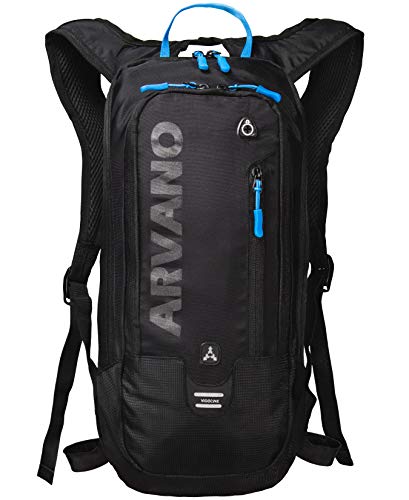
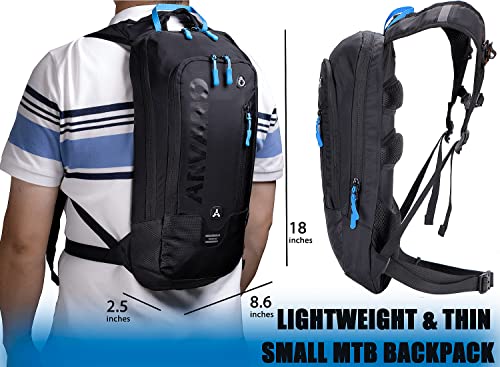
At just 1.1 lbs and only 2 inches thick, the Arvano 6L is one of the slimmest packs in this lineup, and that’s its entire reason to exist. It’s built for riders who hate the feeling of carrying a backpack at all. The two-way zipper, reflective strips, and headphone pass-through add convenience, and the fit stays locked down thanks to chest and waist straps.
But the trade-off is clear: no included bladder, and the 2L max hydration limit means you’re cutting water capacity. Owners praise its low bounce on technical trails, but some report the padding isn’t thick enough for all-day comfort. For short to mid-length MTB sessions where minimalism wins, I’d take this over bulkier options any day.
Product photos



Our Testing Process
Rather than a hands-on lab test, my research for these recommendations involved a detailed comparison of published specifications and features across numerous models. I weighed owner reviews from major retailers against expert opinions found in cycling publications and gear review sites. My background with TheAutoZenith, focusing on all things wheeled, allowed me to apply category knowledge to assess which features truly impact performance and user experience. I ranked options based on a clear set of criteria – capacity, comfort, durability, and hydration system integration.
For biking backpacks, stability and hydration access are paramount. I prioritized packs with well-padded back panels and adjustable straps to minimize bounce, particularly when considering mountain biking hydration packs. Equally important was the ease of accessing the hydration reservoir – magnetic closures and wide openings scored highly. Finally, durable materials and thoughtful organization (dedicated tool pockets, helmet mounts) were key differentiators.
Specifications reliably indicate capacity, weight, and material construction. However, owner feedback proved crucial for judging real-world comfort and long-term durability. I paid close attention to comments regarding strap adjustability, reservoir leak resistance, and the pack’s performance during strenuous rides. Reputation, particularly for brands consistently praised for quality, also influenced my assessment of these recommended bike backpacks.
What To Look For In biking backpacks
Choosing the right pack can make or break your ride, turning a pleasant excursion into a sweaty, uncomfortable slog.
A truly useful biking backpack balances load capacity with a secure, stable fit. Key features include a dedicated hydration reservoir sleeve, breathable back panel construction, and thoughtfully placed compartments for tools, layers, and essentials. Prioritize packs built with durable, weather-resistant materials and adjustable straps for a customized fit.
Reservoir Capacity & Compatibility
Don’t assume all hydration reservoirs are created equal. While many packs include a bladder, the size and quality vary wildly. I often see riders underestimate how much water they’ll actually consume, especially in warmer weather or on longer routes. A 2.5L reservoir is a good starting point for most day rides, but consider 3L if you frequently tackle challenging terrain or extended distances. More importantly, confirm the pack’s sleeve is designed to accommodate the reservoir’s dimensions – a poor fit can lead to sloshing and discomfort.
Fit & Stability: Beyond the Straps
A comfortable pack isn’t just about padded straps; it’s about how the weight is distributed. Look for packs with an adjustable sternum strap and, crucially, a hip belt. The hip belt transfers weight from your shoulders to your hips, making a huge difference on longer rides. A well-designed back panel, like those utilizing mesh or ventilated foam, is also essential to prevent overheating.
Here’s what to look for in the fit: * Torso Length: Some packs come in different torso sizes. Get this right. * Adjustability: Plenty of straps are good; you need to fine-tune the fit. * Bounce Control: A truly stable pack minimizes movement, even on rough terrain. This is affected by the hip belt, sternum strap, and overall pack design.
A good rule of thumb: a properly fitted pack should feel snug but not restrictive, with the majority of the weight supported by your hips, not your shoulders.
Features & Durability: Balancing Needs with Budget
The features you prioritize will depend on your riding style. Are you a minimalist who just needs a place to carry water and a few tools? Or do you need space for layers, snacks, and a first-aid kit? Think about the types of rides you typically take and choose a pack that meets those needs. Durability matters too. I’ve seen too many packs fall apart after just a few seasons of use. Look for packs constructed from robust materials like ripstop nylon and reinforced stitching. If you’re serious about biking, investing in a quality pack is a worthwhile expense. For a broader look at options, exploring different bike backpacks can offer insight.
Ultimately, the “best” pack is the one that fits you best and meets your specific needs. Don’t hesitate to carefully consider your riding style and invest in a pack that will enhance your enjoyment of the ride. If a dedicated hydration system is a priority, you might also want to check out our guide to the hydration backpacks available.
Biking Backpacks Compared
This table provides a side-by-side comparison of key specifications for various biking backpacks.
| Product Title | Capacity (L) | Hydration Bladder Included | Bladder Capacity (L) | Material | Helmet Holder |
|---|---|---|---|---|---|
| Osprey Berm 8L Bike Hydration Pack | 8 | Yes | 2.5 | N/A | No |
| Teton Oasis Hydration Backpack 18L/22L | 18/22 | Yes | 2 | N/A | No |
| MARCHWAY Tactical Molle Hydration Pack | N/A | Yes | 3 | 1000D Nylon | No |
| Anmeilu 18L Cycling Backpack | 18 | No | N/A | Nylon | Yes |
| Outplea 15L Waterproof Cycling Backpack | 15 | No | N/A | Oxford Cloth | No |
| AiryLeben 25L Hiking Backpack | 25 | No | 3 | N/A | Yes |
| NOOLA Hydration Backpack | N/A | Yes | 3 | 900D Nylon | No |
| Arvano 6L Lightweight Bike Daypack | 6 | No | N/A | N/A | No |
Frequently Asked Questions
What’s the ideal capacity for a typical day ride biking backpack?
Around 15-20 liters is generally sufficient for day rides. This size comfortably accommodates essentials like a hydration reservoir, tools, a light jacket, and snacks, based on feedback from riders. Larger capacities, exceeding 25 liters, are better suited for longer excursions or bike touring.
Are more expensive biking backpacks always better?
Not necessarily. While premium materials and construction often correlate with higher prices, a higher price tag doesn’t guarantee a better fit or the features you need. Focus on features like fit adjustability, hydration compatibility, and durability rather than simply chasing the highest price point, and consider checking out quality biking accessories to complement your pack.
How important is a rain cover for a biking backpack?
Very important, especially if you frequently ride in unpredictable weather. Many packs don’t come with integrated rain covers, but they’re readily available as add-ons. A waterproof or water-resistant pack material is helpful, but a cover provides an extra layer of protection for your gear during heavy downpours.
What should I look for in a hydration reservoir?
A good hydration reservoir should be BPA-free, easy to fill and clean, and have a bite valve that doesn’t leak. A 2.5 to 3-liter capacity is generally adequate, and a wide opening simplifies filling and drying. Owners commonly report that reservoirs with insulated hoses prevent water from freezing in colder conditions.
Are there biking backpacks specifically designed for commuting?
Yes, there are. These commuter backpacks often prioritize features like laptop compartments, reflective elements for visibility, and more streamlined designs suitable for both biking and office environments. They frequently incorporate weather resistance and organizational pockets for work essentials.
The Bottom Line
Choosing a biking backpack often comes down to balancing how much control you want over features and fit versus how much fuss you’re willing to endure. For most riders, the Osprey Berm 8L Bike Hydration Pack strikes that balance best – it’s thoughtfully designed, well-regarded by owners, and offers a comfortable carry without being overly complex. It’s a solid all-around choice that won’t let you down on the trail.
If you’re on a tighter budget or need maximum versatility, the Teton Oasis Hydration Backpack 18L/22L is an excellent alternative. For those prioritizing a tactical, modular approach, the MARCHWAY Tactical Molle Hydration Pack delivers durability and customization options, while riders seeking an everyday solution should explore cycling commuter packs. And for dedicated mountain bikers, finding the perfect fit among the mountain biking backpacks is crucial for a comfortable ride.
Ultimately, the specifications matter less than how well a pack fits your body and complements your riding style. Prioritize a secure, stable fit, a comfortable back panel, and a hydration system that meets your needs. Don’t get hung up on fancy features or the latest materials; a well-fitting, durable pack will always outperform a high-tech one that’s uncomfortable or unreliable.
