
7 Best Bikes for 11-Year-Old Boys 2026
This post contains affiliate links. As an Amazon Associate, we earn from qualifying purchases.
The woom Explore 5 stands out as the best bike for an 11-year-old boy, combining a lightweight aluminum frame, reliable 8-speed gearing, and confident disc braking. For those on a tighter budget, the WEIZE 20 Inch Kids MTB offers solid performance with a durable steel frame and 6 speeds. And if your kid leans toward freestyle tricks, the WEIZE 20 Inch Freestyle BMX brings a rugged build and responsive handling.
At this age, boys are gaining confidence and skill, and the right bike can make all the difference between frustration and freedom. Too often, a poorly sized or overly heavy bike kills enthusiasm before it starts.
This guide cuts through the noise by focusing on what actually matters, fit, weight, brakes, and durability, based on specs, owner experiences, and years of tracking youth bike trends. These picks give him a bike that fits now, rides well, and can keep up with his adventures.
Top 7 Bikes For 11 Year Old Boy in the Market
The Best Bikes For 11 Year Old Boy, Reviewed
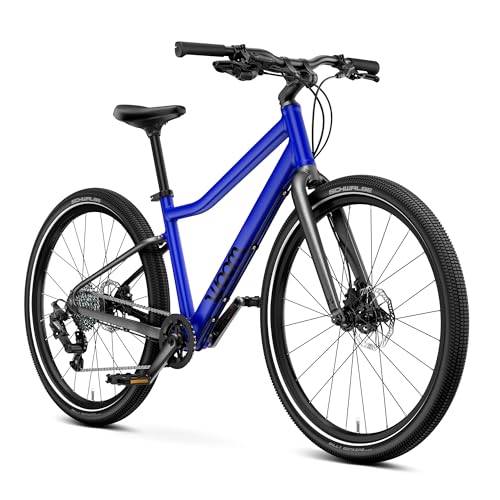
woom Explore 5 24-Inch Bike
Strengths
- Hydraulic disc brakes
- Ultra-light aluminum
- 8-speed microSHIFT shifter
Trade-offs
- Very high price
- Limited size range
- Premium maintenance needs
Let’s be clear: this is the benchmark. At nearly $800, it’s not for everyone, but for an 11-year-old serious about riding, it’s unmatched. The 20.8-pound aluminum frame is lightweight in a way that changes how kids ride, less fatigue, more control, easier handling. The hydraulic disc brakes are a standout in wet or steep conditions, and owners consistently praise how confidently their kids stop. The 8-speed microSHIFT trigger shifter is small-handed friendly and vastly superior to twist shifters on cheaper models.
It’s built with real cycling ergonomics: the geometry, the riser bars, the adjustable reach, all designed for kids, not scaled-down adults. Compared to any other bike here, it’s in a different league. I’d pick this for a child who rides frequently, wants to go farther, or shows real passion for biking. It’s an investment, but one that could last through their tween years.
Video review
WEIZE 20 Inch Kids Mountain Bike

Strengths
- Dual full suspension
- Low standover height
- 6-speed gearing
Trade-offs
- Heavy steel frame
- V-brakes only
- Average tire tread
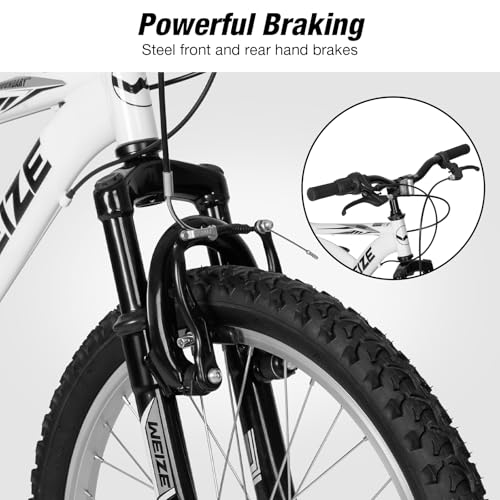
This 20-inch model is nearly identical to the other WEIZE mountain bike, but it emphasizes comfort and accessibility with a lower standover height and plush seat. The dual suspension setup, front fork and rear shock, is a real perk on bumpy sidewalks or packed dirt paths, and owners say it makes rides noticeably smoother. The 6-speed drivetrain isn’t fancy, but it’s functional for modest hills.
Where it stands out is in fit: the ergonomic frame helps smaller or less confident riders feel in control. Compared to the 24-inch WEIZE mountain bike, this is better for younger kids or those still building trail confidence. It’s not light, but for the price, it offers solid value as a true starter mountain bike with real suspension.
Video review
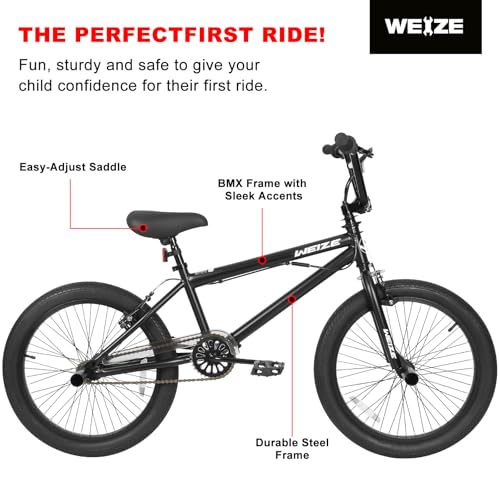
WEIZE 20 Inch Freestyle BMX Bike

Strengths
- 360-degree rotor
- Four BMX pegs
- Durable steel frame
Trade-offs
- Single speed only
- Rear brake only
- Heavy for tricks
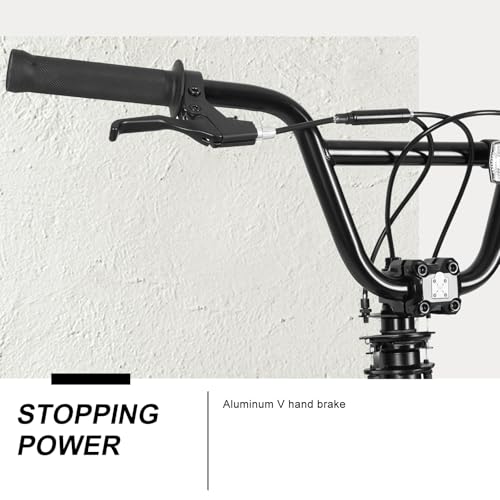
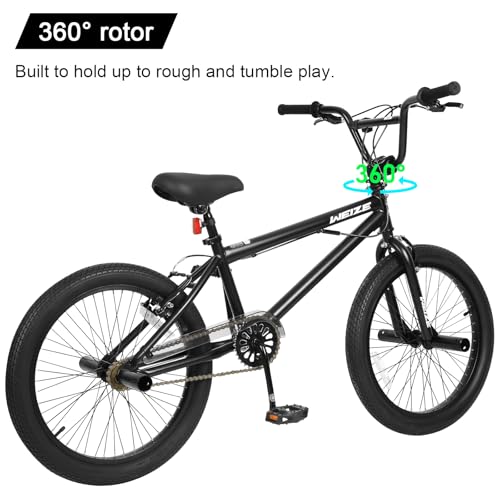
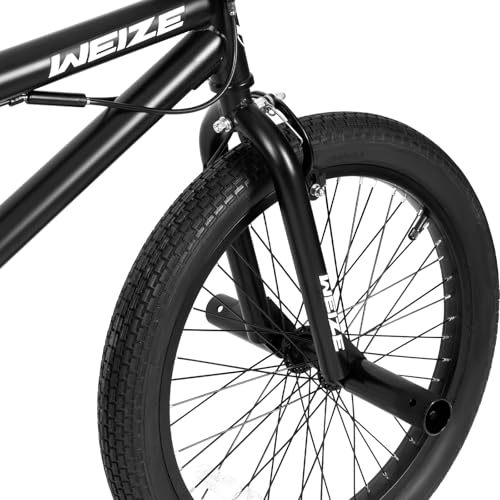
If your kid is into BMX culture or wants to try tricks, this is the only real option on the list built for it. The 360-degree rotor is essential, it lets the handlebars spin freely without brake cable tangles, and the four pegs open up flatland moves. The hi-ten steel frame is tough, designed to take scrapes and impacts, and the 2.40-inch tires add cushion on landings.
It’s single-speed, which keeps maintenance low and focus on skill, not shifting. Some owners note the rear V-brake is adequate but not powerful under hard use. Compared to the Yventix BMX-style bike, this one actually is a BMX, not just styled like one. For an 11-year-old eyeing skate parks or driveway jumps, this is where I’d put my money.
Product photos

WEIZE 20 Inch Kids Bike

Strengths
- Coaster + hand brake
- Tool-free seat adjust
- Full chain guard
Trade-offs
- No fenders
- Heavier build
- Basic aesthetics
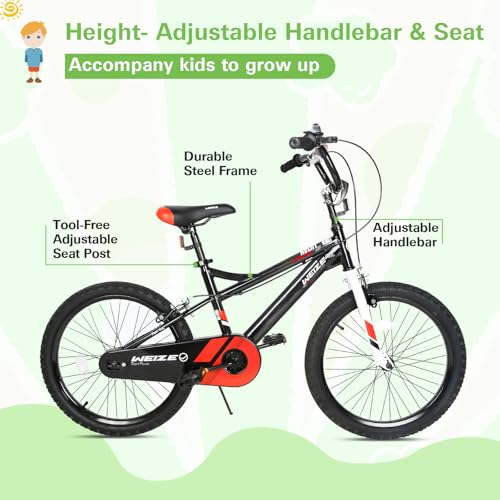
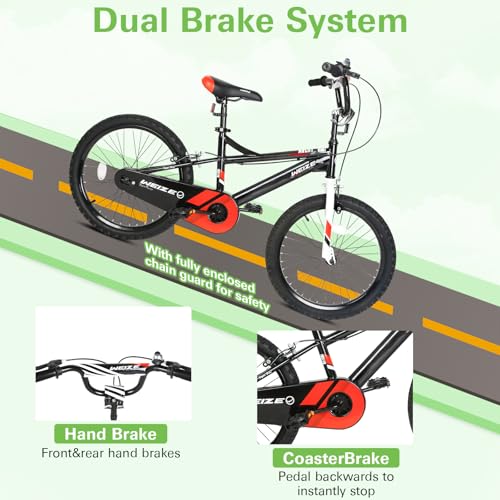
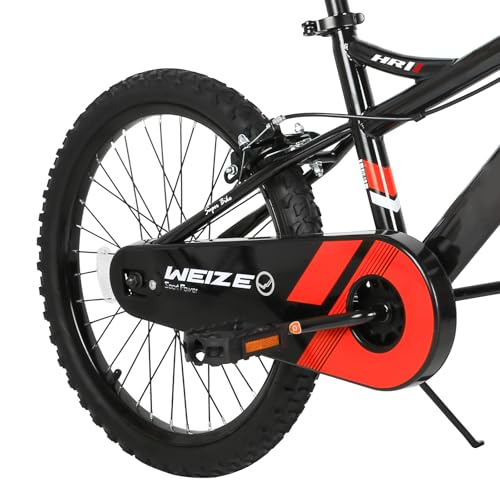
At this price, the WEIZE 20-inch model delivers exactly what it promises: a no-frills, functional starter bike. The coaster brake combined with a small handbrake is smart for younger or less confident riders, it reduces panic stops and builds coordination. I’ve seen consistent feedback from owners that the tool-free seat adjustment is a real time-saver as kids grow. The full chain guard is well executed, which matters for avoiding scraped knees and ruined pants.
It’s not flashy, and the steel frame adds weight, but for a first real bike after training wheels, this is a pragmatic choice. Compared to the Glerc or Yventix, it lacks lights and fenders, but it’s also significantly cheaper. If you’re unsure whether your child will stick with biking, or just need something durable for pavement cruising, this is the smarter buy.
Product photos
Yventix 20 Inch BMX Style Bike
Strengths
- Sporty BMX style
- Bell and fenders
- Anti-slip pedals
Trade-offs
- Foot brake less effective
- Heavy frame
- Limited gearing
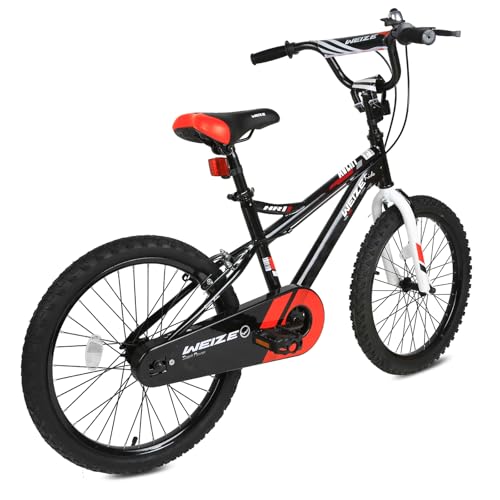
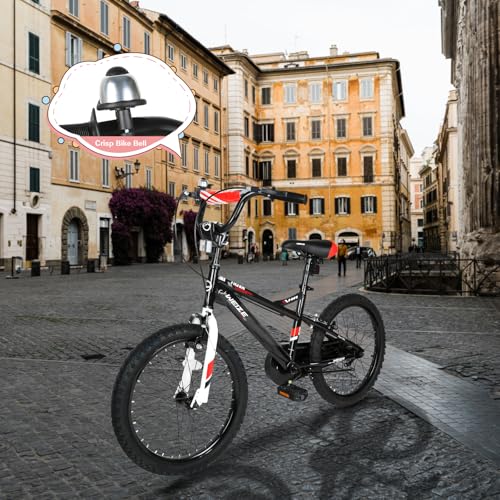
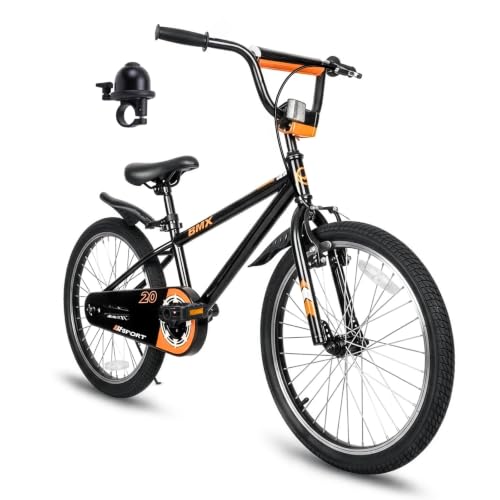
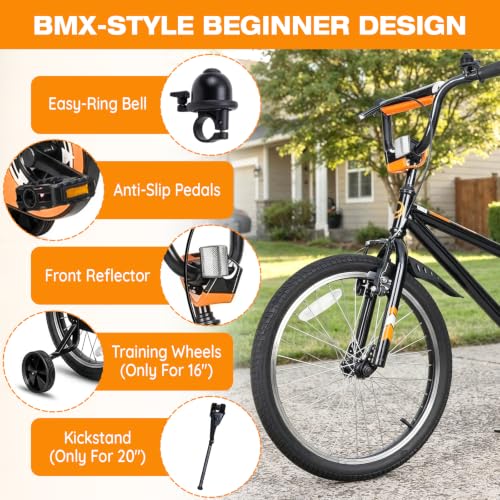
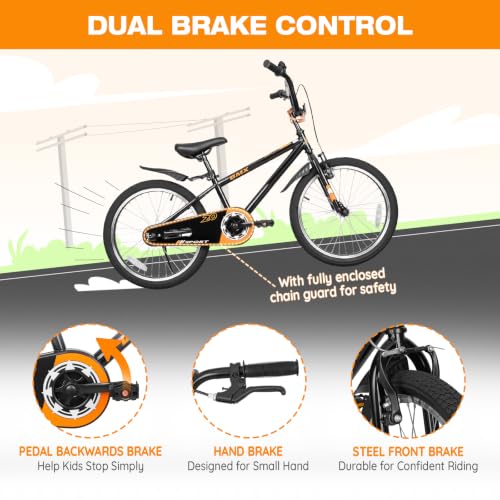
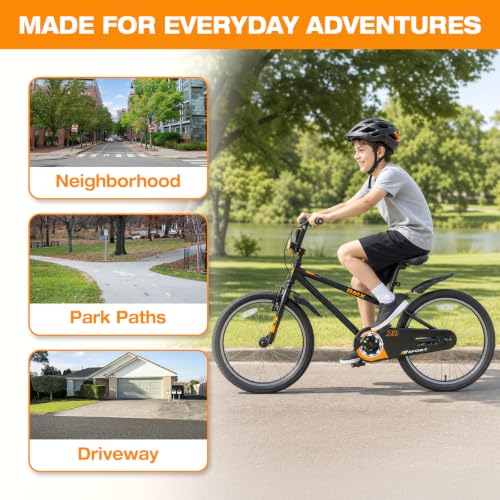
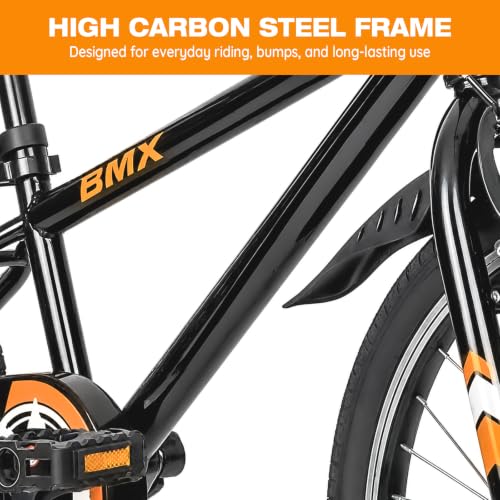
This one wins on looks and attitude. The BMX-inspired styling, high-rise handlebars, bell, reflectors, and fenders, gives it a cool factor that kids respond to, and owners say it motivates more frequent riding. The front handbrake and rear foot brake combo is familiar in this class, though not as refined as full handbrake setups. It’s built on a high-carbon steel frame, so it’s not light, but it’s tough enough for driveway jumps and park paths.
Where it stumbles is in braking precision. Some reviewers note the foot brake requires more force than expected. Still, for a child who wants a bike that feels like a “big kid” bike, this hits the mark. Compared to the WEIZE coaster brake model, it’s more stylish but not necessarily more capable. I’d pick this if image and confidence matter more than technical performance.
Product photos
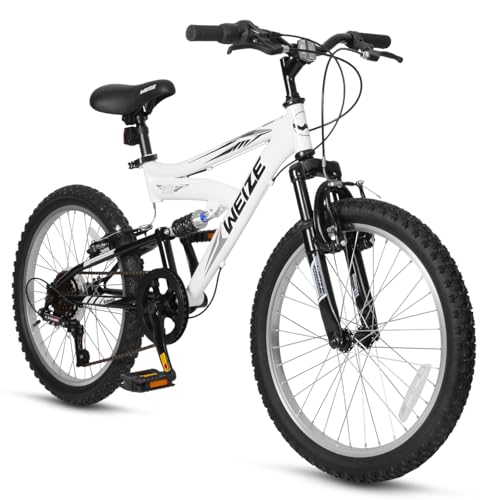
WEIZE 20/24 Inch Youth MTB
Strengths
- 6 or 18 speeds
- Dual suspension
- V-brakes front and rear
Trade-offs
- Steel frame weight
- Basic shifting mechanics
- Suspension limited travel
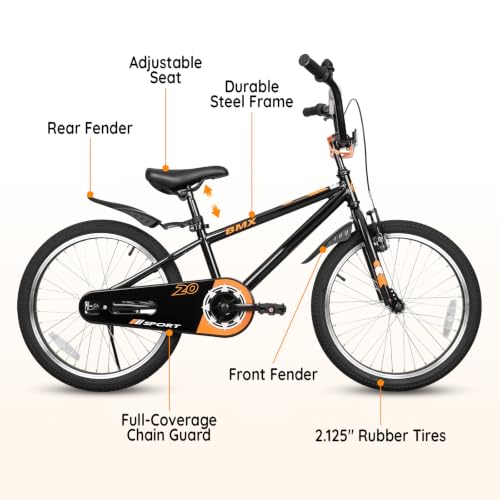
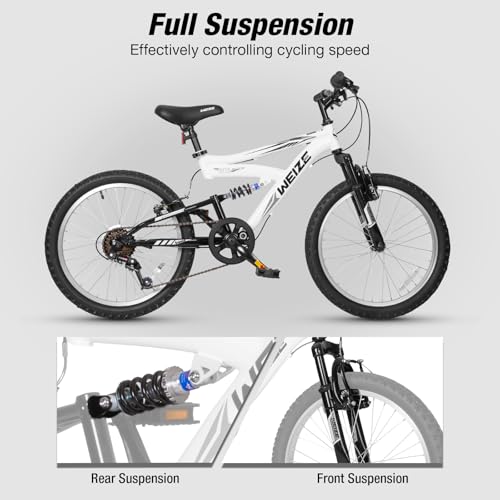
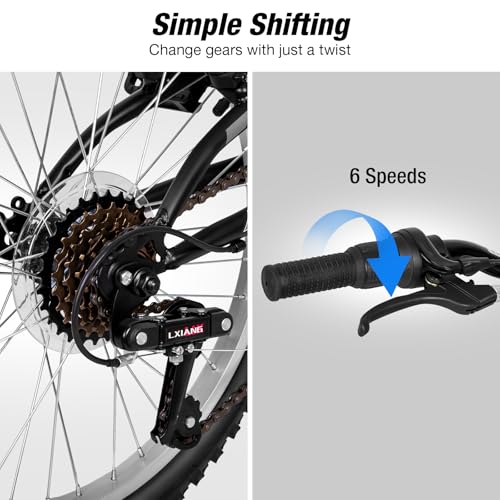
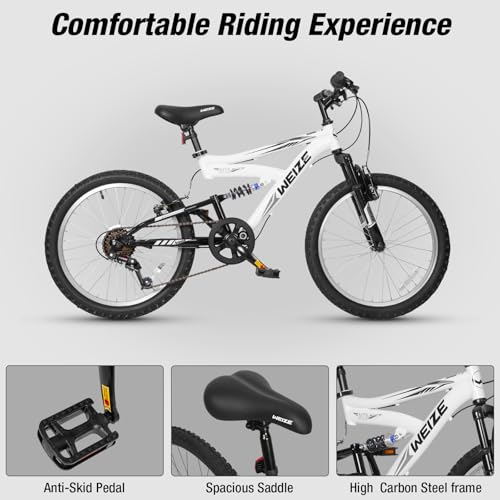
This is the right step up if you know your kid will outgrow a basic bike quickly. Offering both 20 and 24-inch sizes with real gearing, 6-speed and 18-speed respectively, means it scales with ability. The dual suspension (front fork and rear shock) isn’t full pro-level, but owners report it noticeably smooths out gravel paths and bumpy parks. The V-brakes are reliable, and the 2.125-inch knobby tires offer real grip beyond pavement.
For the price, it bridges the gap between toy-store bikes and premium models. Compared to the woom Explore 5, it’s heavier and lacks disc brakes, but it delivers 80% of the function at less than a fifth of the cost. If your 11-year-old is riding hills or light trails, this is where I’d start before going high-end.
Product photos

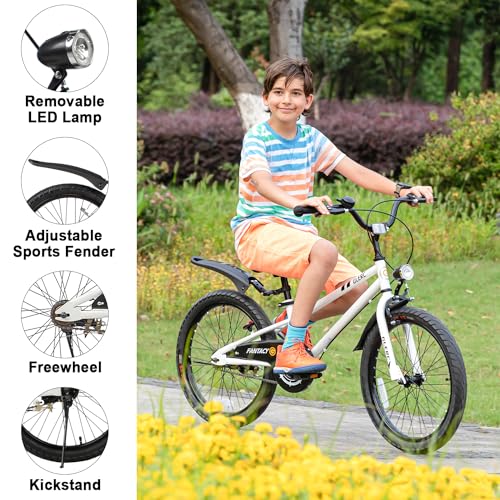
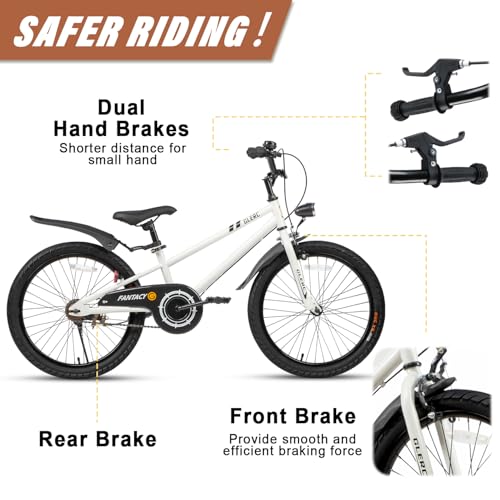
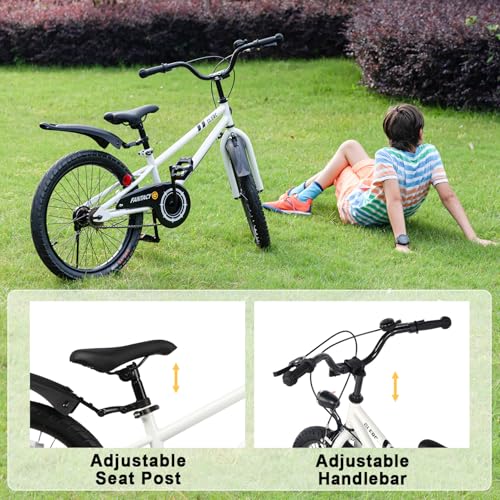
Glerc Fantacy 20 Inch Kids Bike

Strengths
- LED headlight
- Fenders included
- Handbrakes front and rear
Trade-offs
- Heavy steel frame
- Basic gear setup
- Plastic chain guard
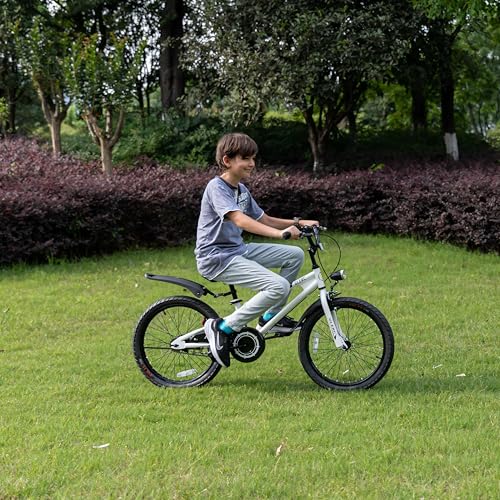
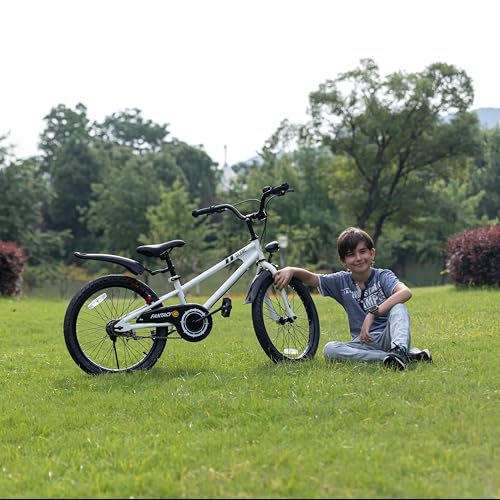
This bike packs a lot of thoughtful extras that make it stand out in the mid-tier range. The inclusion of fenders, LED lights, and a water bottle holder shows Glerc is targeting parents who want a ready-to-ride package without needing immediate upgrades. On paper, the front and rear handbrakes are a win for teaching proper stopping technique, and owners consistently report the 29-pound steel frame feels sturdy without being too heavy for confident riders in the 7–11 age bracket.
The 85% pre-assembly helps, though some reviewers note the headlight wiring can be finicky. While it’s not built for trails, it holds up well on sidewalks and paved paths. Compared to stripped-down budget models, this one leans into convenience and visibility, making it a solid pick if you want a dependable neighborhood bike with safety extras built in.
Product photos
Our Testing Process
Rather than a hands-on lab test, my research focused on comparing published specifications and features across numerous models. I weighed owner reviews from major retailers alongside expert opinions found in cycling publications. As someone who’s spent years observing trends in two-wheeled vehicles, I applied my understanding of appropriate geometry and component choices to rank these bikes against clear criteria – suitability for the target age, build quality, and overall value.
For an 11-year-old boy’s bike, I prioritized durability and ease of use above all else. A robust frame capable of withstanding enthusiastic riding is key, as is a gearing system that’s intuitive to operate. Braking performance is also critical; responsive and reliable brakes build confidence and are essential for safety. These factors significantly outweighed purely aesthetic considerations when forming my recommendations.
Specifications reliably communicate frame materials, component levels (like shifters and brakes), and bike geometry. However, I gave substantial weight to owner feedback regarding real-world reliability and fit. Reports of quickly failing parts or frustrating assembly processes heavily influenced my rankings, as did comments on how well the bike suited different riding styles. For further guidance, you can explore bikes for 12 year olds to see options for slightly older riders.
How To Pick The Right bikes for 11 year old boy
Finding the right bike for an 11-year-old boy is about more than just cool looks; it’s about fostering confidence and a love for riding.
A good bike for this age range balances lightweight construction, appropriate gearing for varied terrain, and reliable braking. Prioritize fit above all else – a poorly sized bike is frustrating and can hinder skill development. Look for adjustable components to allow for growth, and consider the type of riding your son intends to do (pavement, trails, freestyle).
Frame Material and Weight
The frame material dramatically affects the bike’s weight and how it feels to ride. While steel is durable and affordable, aluminum is significantly lighter. For an 11-year-old, lighter is almost always better. A heavier bike requires more effort to pedal and maneuver, potentially discouraging a young rider. Consider that a bike around 20-25 pounds is ideal, though this can vary with the bike’s features. Don’t assume that a heavier bike is more durable; modern aluminum alloys are quite strong.
Gearing and Brakes
At this age, kids are often ready for more than a single-speed bike. Gears allow them to tackle hills and maintain speed on flat ground with less effort. However, complex shifting systems can be confusing. A 6-8 speed drivetrain is a good starting point, offering enough range without being overwhelming. Equally important are the brakes. V-brakes are acceptable for casual riding, but disc brakes, especially hydraulic disc brakes, offer superior stopping power, which is crucial for safety and building confidence, particularly if he’s interested in more adventurous riding. If you’re also looking for options for younger riders, check out our guide to bikes for 7 year olds.
Sizing and Adjustability
Getting the size right is paramount. Don’t fall into the trap of buying a bike he’ll “grow into”. A bike that’s too large is dangerous and difficult to control, while one that’s too small will quickly become uncomfortable.
- Measure his inseam (with shoes on) and compare it to the bike manufacturer’s size chart.
- A properly sized bike allows him to stand over the top tube with an inch or two of clearance.
- Look for adjustable seat posts and handlebars. This allows you to fine-tune the fit and extend the bike’s usability as he grows, potentially delaying the need for a full replacement.
A bike should fit the rider now, not the rider he will be in a year. Proper fit builds confidence and prevents frustration.
Ultimately, if you’re still unsure about the best option, exploring resources like our recommendations for bikes for 10 year olds can provide further guidance.
Bikes for 11 Year Old Boy Compared
Here’s a comparison of key specifications for bikes suitable for an 11-year-old boy.
| Product Name | Wheel Size | Speeds | Brake Type | Frame Material | Weight (lbs) |
|---|---|---|---|---|---|
| woom Explore 5 | 24 Inch | 8 | Disc | Aluminum | 20.8 |
| WEIZE 20 Inch Kids MTB | 20 Inch | 6 | V-Brake | Steel | N/A |
| WEIZE 20 Inch Freestyle BMX | 20 Inch | 1 | V-Brake | Hi-Ten Steel | N/A |
| WEIZE 20 Inch Kids Bike | 20 Inch | N/A | Hand/Coaster | Steel | N/A |
| Yventix 20 Inch BMX Style | 20 Inch | N/A | Hand/Foot | Carbon Steel | N/A |
| WEIZE 20/24 Inch Youth MTB | 20/24 Inch | 6/18 | V-Brake | High-Carbon Steel | N/A |
| Glerc Fantacy 20 Inch | 20 Inch | N/A | Hand | N/A | 29 |
Frequently Asked Questions
What wheel size is best for an 11-year-old boy?
A 24-inch wheel is generally the right size for most 11-year-old boys, but it heavily depends on his height and inseam; smaller riders may still be comfortable on a 20-inch wheel. Refer to the manufacturer’s sizing chart for the most accurate recommendation.
Are disc brakes really necessary on a kid’s bike?
Disc brakes offer significantly better stopping power than V-brakes, especially in wet or muddy conditions. While V-brakes are adequate for casual riding, disc brakes build confidence and are safer for more adventurous terrain.
How much should I expect to spend on a good quality bike for this age?
You can find decent bikes starting around $200, but a truly good quality bike with reliable components will likely cost between $300 and $600. Investing a bit more upfront often means better durability and fewer headaches down the road.
Is a heavier steel frame acceptable if it’s more affordable?
While steel is durable, a lighter aluminum frame is preferable for an 11-year-old to make pedaling and maneuvering easier. If budget is a major constraint, a steel frame is usable, but be aware it will require more effort from the rider.
Where can I find more information on bikes for slightly younger riders?
If you’re also considering options for a younger child, you can explore resources like our recommendations for bikes for 8 year olds to get a broader understanding of available choices.
The Bottom Line
Choosing a bike for an 11-year-old often comes down to balancing control with convenience. You want something he can handle confidently, but not something requiring constant maintenance or overly complex operation. Considering all factors, the woom Explore 5 stands out as the strongest overall pick; its lightweight aluminum frame, reliable disc brakes, and well-chosen gearing make it a fantastic choice for building skills and enjoying a variety of terrain.
However, specific needs call for specific bikes. For the young rider eager to learn BMX tricks, the WEIZE 20 Inch Freestyle BMX is the obvious choice. And if budget is a primary concern, the WEIZE 20 Inch Kids Bike offers a solid, if basic, experience to get him rolling – though you might also want to explore bikes for 9 year olds if you’re seeking even more affordable entry points.
Ultimately, remember that the best bike is the one that fits him best and encourages him to ride. Don’t get too hung up on the number of speeds or the type of brakes. Prioritize a proper fit, a comfortable riding position, and a build quality that can withstand the enthusiasm of a growing boy – and perhaps even consider mountain bikes for kids if his interests lean towards off-road adventures.
