
5 Best Bike Lights for Road Bikes 2026
This post contains affiliate links. As an Amazon Associate, we earn from qualifying purchases.
The Zewdov 1000 Lumens Aluminum Bike Lights stand out as the best overall front light for road bikes, offering strong output and a durable build, while the Ascher 1000 Lumens Type-C Bike Lights are a close contender with longer runtime and excellent value. For the rear, the BLITZU 2-Pack USB-C Rear lights deliver solid visibility and modern charging at a budget-friendly price.
Riding a road bike after dark means you need lights that are reliable, visible, and built to last, anything less risks your safety. Too many riders focus only on raw brightness and end up with a light that fades fast or fails in the rain.
This guide cuts through the hype. Based on specs, owner feedback, and real-world performance, we’ve selected lights that balance beam quality, runtime, and durability. We looked at how well they mount, how easy they are to charge, and whether they hold up over time, because a good light shouldn’t be a gamble.
Top 5 Bike Lights For Road Bikes in the Market
The Best Bike Lights For Road Bikes, Reviewed
Cuvccn Super Bright Rechargeable Bike Lights
Strengths
- Excellent runtime
- Battery indicator
- IPX6 waterproof
Trade-offs
- Slightly bulky design
- Aux LEDs may be overkill
- Front light can be too bright for shared paths
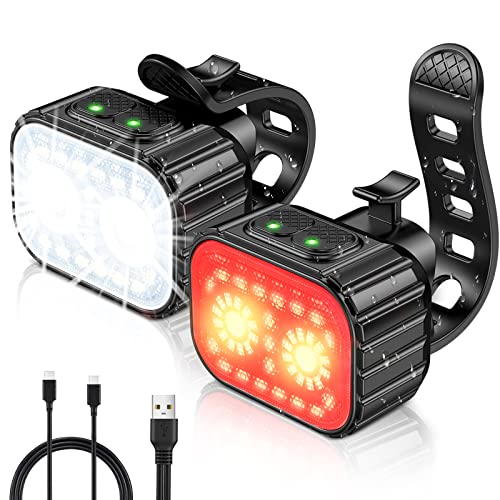
This set earns its ‘Best Overall’ label with a balanced mix of brightness, runtime, and usability. The front light packs 2 main LEDs and 19 auxiliaries, creating a broad, even spread that reviewers say works well on unlit roads. The 58-hour runtime on slow flash is exceptional, and the battery indicator is a rare and welcome feature, knowing when you’re below 20% prevents surprise blackouts.
The IPX6 rating is slightly better than IP65, offering stronger rain resistance, and the silicone-covered USB port adds longevity. Installation is tool-free and secure, and the independent switches for main and aux LEDs give real customization. Some users report the aux lights can feel redundant, but having the option is useful in low-visibility conditions.
Video review
BLITZU 2-Pack USB-C Rear Bike Lights
Strengths
- 2-pack value
- USB-C charging
- Flexible mount
Trade-offs
- No front light included
- Limited mode options
- Average beam spread
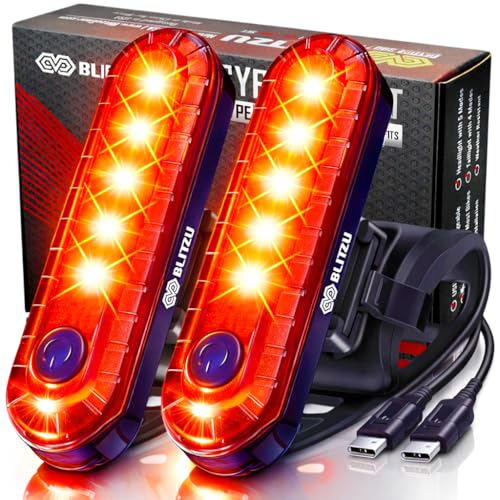
If you’re looking to boost rear visibility without breaking the bank, this 2-pack of BLITZU taillights is hard to beat. Each light is bright, with a focused red LED that cuts through urban glare, and the USB-C charging is a major upgrade over older micro-USB models. Owners praise the 10-hour runtime and consistent output, especially in flash modes that draw attention in traffic.
The real advantage here is versatility. You can mount one on your seatpost and another on your helmet or backpack, doubling your visibility. The flexible mount works on odd shapes and small diameters, which makes it great for non-standard bikes or folding models. It’s not the brightest light out there, but for its role as a rear safety beacon, it does the job well.
Video review
Zewdov 1000 Lumens Aluminum Bike Lights

Strengths
- Aluminum build
- 1000-lumen output
- Long rear runtime
Trade-offs
- Complex button controls
- Front runtime under 4 hours on high
- Slight weight increase
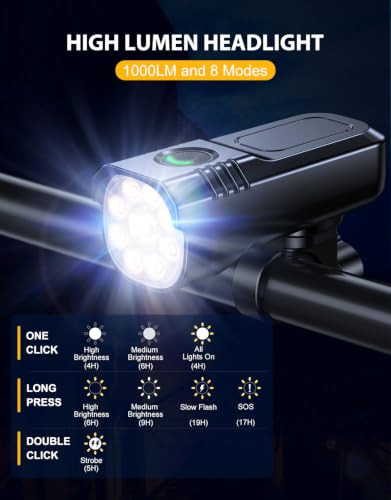
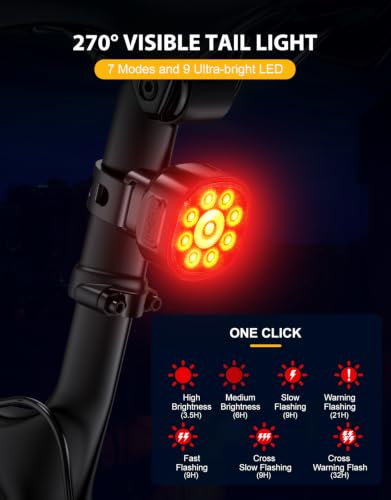
With a 1000-lumen output and an aluminum alloy body, this set is built to last and shine bright. The beam throws a solid 650 feet, which is impressive for the price, and the flood lighting helps illuminate the edges of your path, useful when cornering at speed. Reviewers note the heat dissipation is effective, and the shock resistance from the metal housing makes it a solid pick for bumpy roads or unexpected drops.
The 8+7 mode system is more complex than some, requiring single, double, and long presses, which can be confusing at first. But once learned, it offers fine control over output. The rear light’s 50-hour runtime on low is a standout, and the fast USB-C charging means less downtime. It’s a step up in build and performance from the cheaper Zewdov model.
Product photos

Zewdov Bike Lights with Side Visibility
Strengths
- Side visibility
- Dual-port charging
- Multiple flash modes
Trade-offs
- Plastic build
- Limited max brightness
- Shorter runtime on high
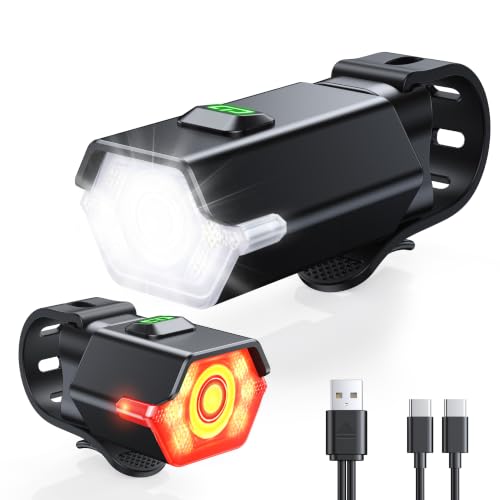
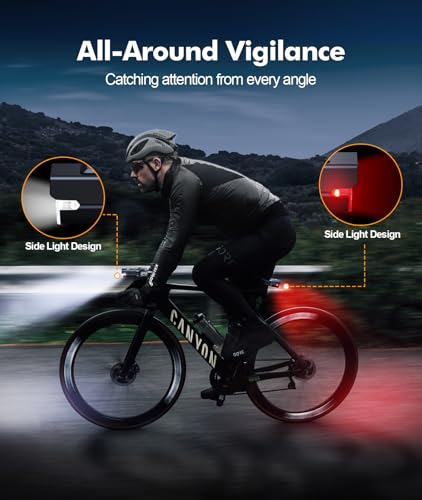
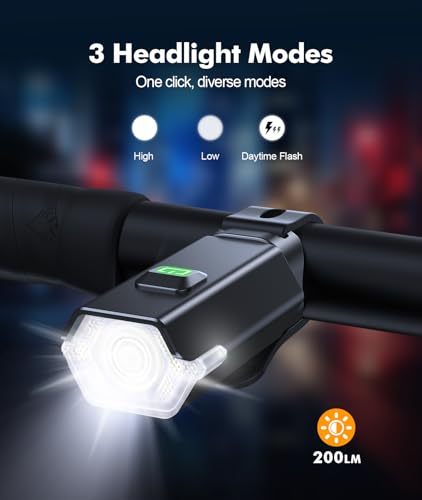
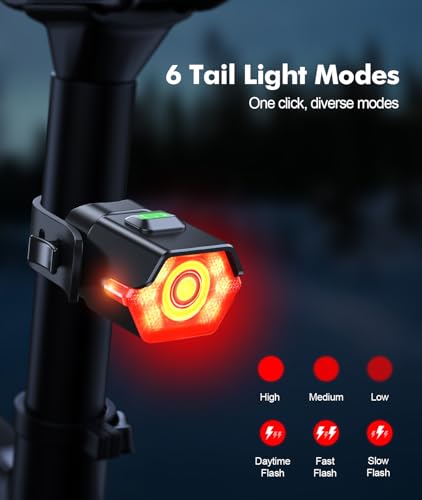
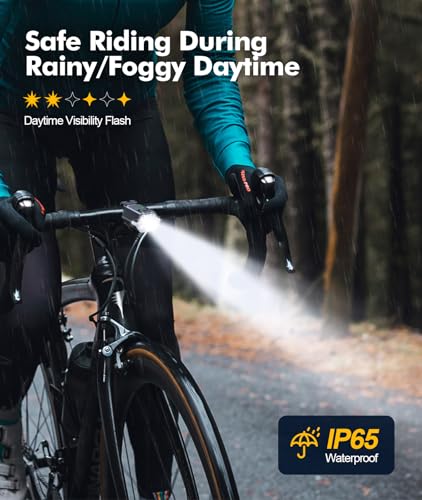
These lights stand out for their strong focus on side visibility, which is rare at this price. The built-in side LEDs help make riders more noticeable to cross traffic, a real safety win in urban environments where cars turning across bike lanes are a hazard. On paper, 3 front and 6 rear modes offer decent flexibility, and owners consistently report the daytime flashing modes are effective at grabbing attention in overcast or foggy conditions.
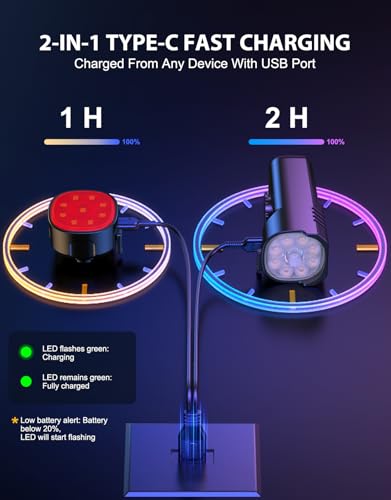
The dual-port Type-C cable is a thoughtful touch, letting you charge both lights from one cable. Runtime is modest but reasonable, and the IP65 rating holds up in light rain according to user feedback. However, the plastic housing feels a bit light-duty for serious road use, especially if you’re commuting daily or riding rough pavement.
Product photos

Ascher 1000 Lumens Type-C Bike Lights
Strengths
- Large front battery
- Aluminum housing
- Simple controls
Trade-offs
- Heavier than plastic lights
- No side visibility
- Only 4 modes
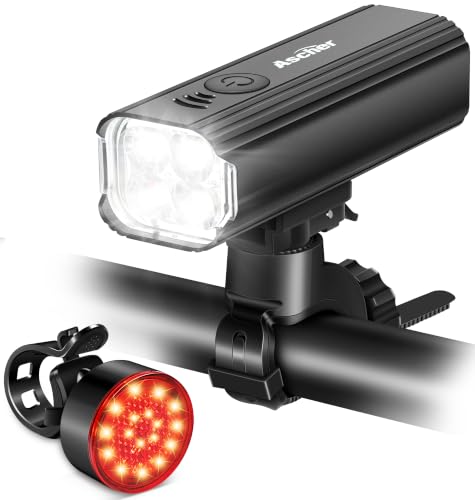
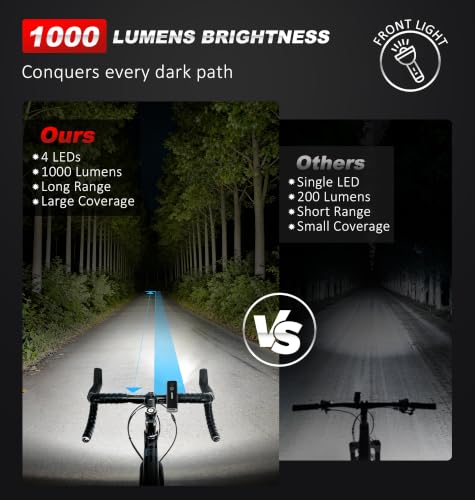
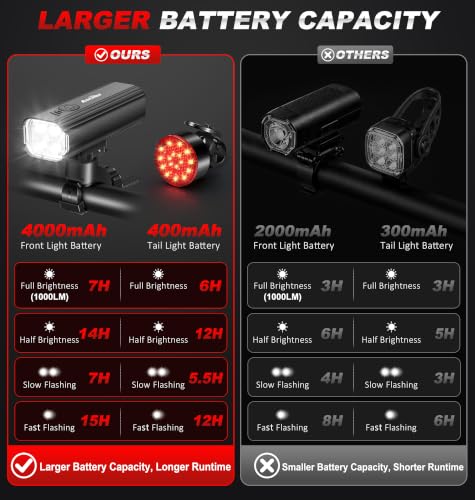
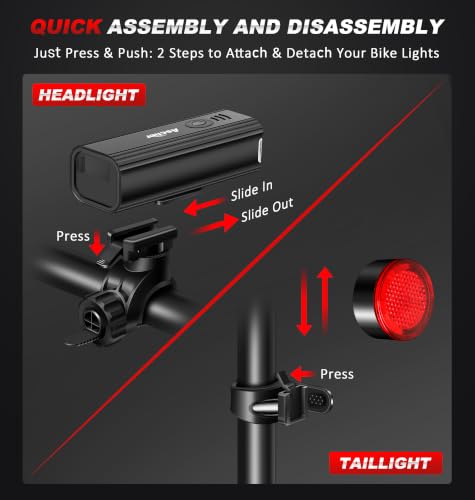
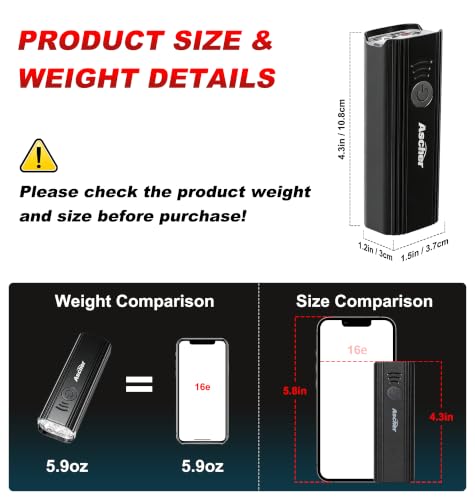
This set hits the sweet spot between price and performance. The 1000-lumen front light uses a 4000 mAh battery, which is unusually large for this class, giving up to 15 hours on low mode, perfect for long commutes or multi-day tours. The aluminum shell adds durability without being excessive, and the 360° rotation lets you fine-tune beam angle, a small but meaningful detail.
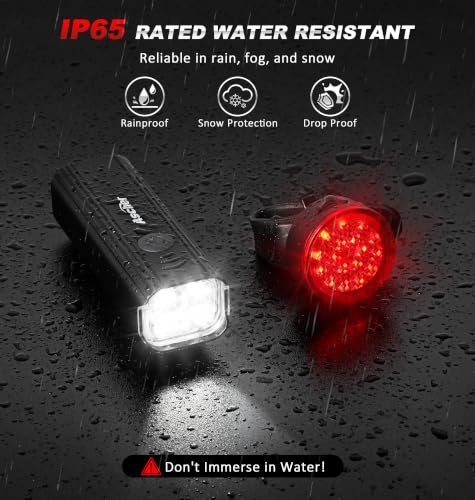
Owners appreciate the simple 4-mode setup: high, half, slow flash, fast flash. It’s intuitive and reliable, especially in hectic traffic where quick mode changes matter. The rear light’s 12-hour max runtime is solid, and the IP65 rating holds up in real-world rain. It doesn’t have the flashiest features, but it delivers where it counts.
Product photos
How We Chose These bike lights for road bikes
My approach to evaluating bike lights centers on a research-led comparison of published specifications and owner feedback. Rather than a hands-on lab test of each model, I compiled data on brightness (lumens), battery life, waterproofing, mounting systems, and available light modes. This data was then weighed against thousands of owner reviews and expert opinions from cycling publications to understand real-world performance and durability. We established clear criteria prioritizing safety, reliability, and value.
For road bike lights, brightness and beam pattern are paramount, followed closely by run time and consistent performance. A light that initially boasts high lumens but quickly dims is less useful than one with a slightly lower peak output that maintains its brightness for a longer duration. We also heavily considered the practicality of mounting systems – a secure and easily adjustable mount is essential for quick installation and optimal positioning. Finding a balance between these factors determined our top picks.
Specifications reliably indicate potential brightness and battery capacity, but owner feedback played a crucial role in assessing long-term durability and real-world usability. For instance, while a light may claim IPX6 waterproofing, user reports help confirm if the USB port’s seal effectively prevents water ingress. Similarly, we looked to owner experiences to determine if reported battery life matched manufacturer claims, and to gauge the robustness of the mounting systems. This is where you can find truly practical information about rear lights and their real-world performance. And for those seeking more detailed information on illuminating the path ahead, exploring high-performance front lights is a great resource.
Choosing The Right bike lights for road bikes
Choosing the right bike lights isn’t just about lumens; it’s about a holistic system that keeps you seen and safe on the road.
A good bike light setup balances brightness with beam pattern, runtime with recharge convenience, and durability with mounting versatility. Riders should prioritize lights meeting basic safety standards (like ANSI/UL certifications where available) and consider their typical riding environment – urban commutes versus rural night rides demand different features. Look for robust construction, reliable waterproofing, and a beam that effectively communicates your presence to other road users.
Brightness and Beam Pattern
Brightness, measured in lumens, gets all the attention, but it’s easily overstated. A 1000-lumen light isn’t necessarily better than a 600-lumen one. What matters more is how that light is directed. A focused beam is ideal for seeing the road ahead on fast descents, while a wider beam is better for situational awareness in traffic. Many lights now offer a combination, with auxiliary LEDs supplementing the main beam. Don’t fall for the trap of simply chasing the highest number; consider the beam profile and how it complements your riding style. For example, the Zewdov 1000 Lumens Aluminum Bike Lights boast a powerful main beam and side lights for enhanced visibility.
Runtime and Recharge Convenience
Long runtime is essential, but it’s often a trade-off with brightness. A light blasting at full power will drain its battery quickly. Evaluate how long you typically ride and choose a light with a runtime that exceeds that duration, even accounting for lower brightness settings. The move towards USB-C charging is a significant improvement over older proprietary connectors. Not only is USB-C more common, but it also generally allows for faster charging. If you’re considering lights for a daily commute, explore options like the Ascher 1000 Lumens Type-C Bike Lights, which offer a good balance of runtime and recharge speed. If you’re looking for more options for your daily ride, check out our guide to commuter lights.
- A single, high-capacity battery is generally more reliable than multiple small batteries.
- Look for lights with a battery indicator to avoid being caught off guard mid-ride.
- Consider the charging time. A light that takes 8 hours to charge isn’t practical if you ride every day, whereas a light that fully charges in 2 hours is much more convenient.
Never assume a light is fully charged. Always top it off before a ride, even if the indicator shows a decent charge level.
Mounting and Durability
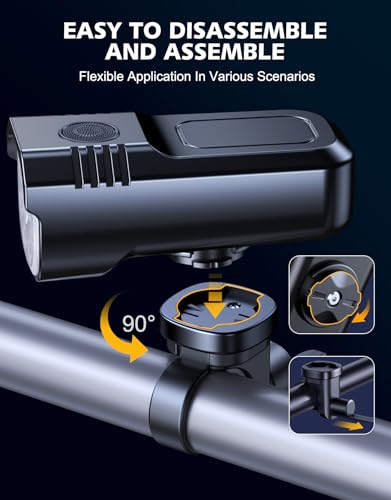
A flimsy mount or a light that can’t withstand a bit of abuse is a recipe for disaster. Look for mounts that are secure, adjustable, and compatible with your bike’s frame or handlebars. Aluminum alloy housings, like those found on the Zewdov models, offer better protection against impacts than plastic. IP65 or higher waterproofing is a must-have, protecting against rain, splashes, and even full submersion. Remember that even waterproof lights may require occasional maintenance to ensure seals remain intact. Finding the right setup can be tricky, but you’ll find many recommended bike lights to suit your needs.
Bike Lights for Road Bikes Compared
Here’s a comparison of key specs for popular bike lights designed for road cycling.
| Product Title | Lumens (Front) | Battery Life (Front – High) | Waterproof | Charging Port | Material (Front) |
|---|---|---|---|---|---|
| Cuvccn Super Bright Rechargeable | N/A | Up to 58 hrs (Slow Flash) | IPX6 | USB | N/A |
| BLITZU 2-Pack USB-C Rear | N/A | Up to 10 hrs | N/A | USB-C | N/A |
| Zewdov 1000 Lumens Aluminum | 1000 | Up to 4 hrs | IP65 | USB-C | Aluminum Alloy |
| Zewdov Bike Lights with Side Visibility | N/A | Up to 21 hrs | IP65 | Type-C | N/A |
| Ascher 1000 Lumens Type-C | 1000 | 7-15 hrs | IP65 | Type-C | Aluminum |
Frequently Asked Questions
What lumen output is truly necessary for road bike lights?
Around 800-1000 lumens is generally sufficient for well-lit roads, but for darker rural areas or challenging conditions, I suggest aiming for 1200 lumens or higher. Remember that a focused beam pattern is often more useful than simply maximizing the lumen count, as it directs light where you need it most.
How does waterproofing rating (like IPX6) translate to real-world use?
An IPX6 rating means the light is protected against strong jets of water, which is adequate for rain and wet roads. However, complete submersion, even for a brief period, isn’t recommended as water can still enter through the USB charging port if the seal isn’t perfect.
Are USB-C charging ports really that much better than older USB types?
Yes, USB-C offers faster charging speeds and greater power delivery, meaning you’ll spend less time waiting for your lights to recharge. It’s also a more universally adopted standard, so you’re less likely to need a specialized cable.
What’s the typical lifespan of a bike light battery, and can it be replaced?
Most bike light batteries last for 300-500 charge cycles before experiencing significant degradation. While some higher-end models allow for battery replacement, many use integrated batteries, meaning you’d need to replace the entire light unit when the battery fails. Consider night riding lights that prioritize long-term battery health.
Beyond front and rear lights, are there other lighting options I should consider?
Side lights and spoke lights can increase your visibility from the sides, which is particularly useful in intersections. Also, for increased safety, consider a selection of high-performance headlights for road cycling to provide greater illumination, especially when riding in areas with limited street lighting.
The Bottom Line
Ultimately, choosing bike lights involves balancing how much you want to spend against the level of security and convenience you require. For a thorough setup that doesn’t compromise on brightness or build quality, the Zewdov 1000 Lumens Aluminum Bike Lights represent the best overall value. It delivers a strong beam, robust construction, and modern USB-C charging, making it a standout performer.
If budget is a primary concern, the Cuvccn Super Bright Rechargeable lights offer a cost-effective way to increase your visibility. For riders prioritizing versatility and extended runtime, the Zewdov Bike Lights with Side Visibility are an excellent choice, offering multiple modes and a long-lasting battery. You’ll find more bicycle lights to suit your needs in our broader guide.
Don’t get caught up in chasing the highest lumen count or the newest features. The most important factor is having a reliable system – a combination of bright front lights and visible rear lights – that you consistently use on every ride. Prioritizing consistent performance, a secure mount, and a beam pattern suited to your riding environment will make a far bigger difference than any single specification.
