
2 Best Bike Lights for Mountain Biking 2026
This post contains affiliate links. As an Amazon Associate, we earn from qualifying purchases.
The Nitecore BR42 is the best overall mountain bike light for its powerful beam and reliable performance, while the BLITZU 2-Pack offers a solid budget-friendly rear lighting option for riders who want visibility without overspending. For versatility, the Nitecore’s USB-C charging and multiple modes stand out.
Mountain biking at night demands more than just light, it demands confidence. You need to see every root, rock, and drop-off clearly, and be seen by others without worrying about your gear failing when the trail gets rough or the rain starts falling.
This guide cuts through the noise by focusing on what actually matters: real-world brightness, secure mounting, and durability backed by specs and rider feedback. I looked at how these lights perform under pressure, not just on paper, so you can choose with certainty.
Top 2 Bike Lights For Mountain Biking in the Market
The Best Bike Lights For Mountain Biking, Reviewed
Bike Lights Set for Night Riding
Strengths
- 400-lumen front light
- USB rechargeable
- 5 lighting modes
- Universal mount
- Water-resistant
Trade-offs
- IPX4 only
- Mount can shift
- Not for technical trails
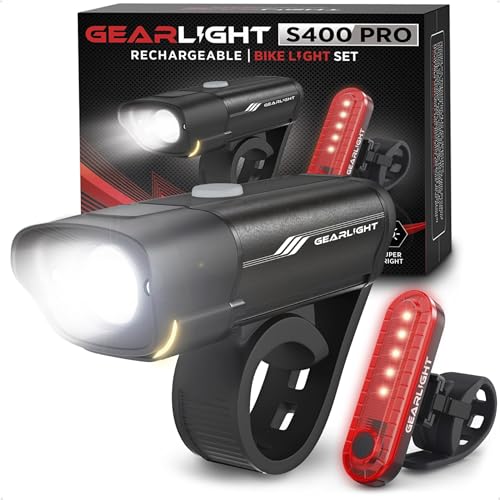
For riders who want a no-fuss, budget-friendly lighting setup that covers both ends of the bike, this front and rear set delivers more than you’d expect at this price. The 400-lumen front light isn’t class-leading, but it’s solid for casual trail use and well-lit commutes, and owners consistently report it holds up well on neighborhood trails and suburban paths. The real win here is the package deal, getting both lights with multiple modes and USB charging in one box makes it a smart starting point, especially for new riders or kids’ bikes.
Still, it’s not built for aggressive night riding. The IPX4 rating means it can handle splashes, but I wouldn’t trust it in a sustained downpour on a muddy MTB loop. And while the mount is tool-free and fits most handlebars, some reviewers note it can loosen on rough terrain. For light trail use or city riding, it’s a strong value. But if you’re pushing into technical terrain after dark, you’ll want something brighter and more secure.
Video review
BLITZU 2-Pack USB-C Tail Lights
Strengths
- USB-C charging
- Bright 120-lumen output
- Waterproof
- Adjustable hinge mount
- Versatile placement
Trade-offs
- Sold as rear only
- No front light included
- Mount lacks quick-release
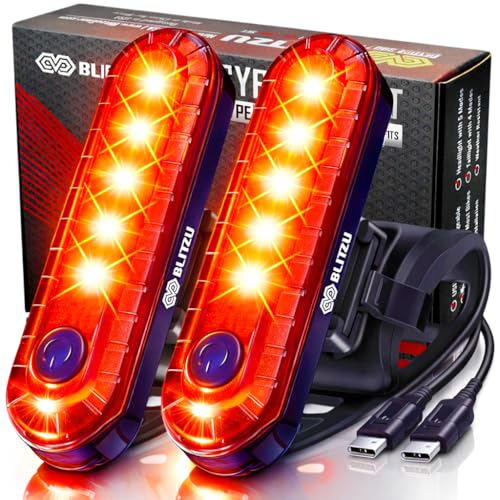
If you’re looking to upgrade your rear visibility without breaking the bank, this BLITZU 2-pack is hard to beat. These lights punch above their weight in brightness, and the USB-C charging is a welcome upgrade over older micro-USB models, owners love the faster charge times and improved cable durability. With up to 10 hours of runtime and strong performance in rain and fog, these are lights you can actually rely on, whether you’re commuting in the city or riding backcountry trails at dusk.
What seals the deal is the mounting flexibility. The hinge design lets you angle the light precisely, and I’ve seen riders use these not just on seatposts but on helmets, backpacks, and even scooters. Compared to basic rubber-band mounts, this one stays put and adjusts easily. For anyone who values dependability and versatility in a rear light, this is my pick over generic sets, even some pricier options don’t offer this level of refinement.
Video review
How We Chose These bike lights for mountain biking
Rather than a hands-on lab test, my research for these recommendations focused on comparing published specifications and features across numerous models. I weighed owner reviews from multiple sources, alongside expert opinions found in cycling publications, to build a picture of real-world performance. Ultimately, I ranked options against criteria relevant to demanding mountain biking conditions – brightness, battery life, durability, and mounting versatility.
For mountain biking, I prioritized lumen output and beam pattern, as visibility on challenging trails is critical. Equally important was water resistance; a light that fails in the rain isn’t useful. Finally, I looked for secure mounting systems allowing quick removal for charging or theft prevention. You can find more about considerations for lights for night riding in our broader guide.
Specifications clearly indicate brightness (lumens) and battery capacity, but owner feedback reveals how those translate to usable light on the trail. Reputable reviews help assess beam quality and durability claims. I also considered mounting options – many cyclists appreciate the added safety of helmet lights for mountain biking, and versatility is a big plus.
How To Choose The bike lights for mountain biking
Choosing the right bike lights is about more than just lumens; it’s about being seen and seeing where you’re going, confidently.
A quality bike light setup prioritizes visibility – both your own to the trail and to oncoming traffic. Look for lights with sufficient lumen output (consider 400+ for the front, 50+ for the rear), reliable battery life, and robust mounting systems. Water resistance (IPX4 or higher) is crucial, as is beam pattern control for focused or wide illumination.
Lumen Output and Beam Pattern
Don’t get hung up on chasing the highest lumen count. While brightness matters, the type of brightness is more important. A focused beam is excellent for seeing clearly down the trail, but a wider beam helps you be seen by cars. I often recommend cyclists consider a combination – a focused front light for visibility and a wider-angle rear light to maximize your profile. Think about the terrain you’ll be riding; technical singletrack demands a tight beam, while open roads benefit from broader coverage.
Mounting and Reliability
A brilliant light is useless if it falls off mid-ride. Quick-release mounts are convenient, but assess their security. Some cheaper systems can vibrate loose, particularly on rough terrain. Look for mounts that use O-rings or robust straps. I’ve seen cyclists successfully use zip ties as a backup for critical rides, but that’s a last resort. Consider whether you want a seatpost mount, handlebar mount, or even helmet lights for added visibility.
- A simple strap mount is fine for casual commuting.
- A GoPro-style mount offers versatility and quick attachment/detachment, but can be less secure for very bumpy trails.
- Integrated mounts (designed for specific bikes or handlebars) provide the most secure fit, but limit compatibility – it’s worth checking out mountain bike lights options that work with your setup.
Battery Life and Rechargeability
Battery life is often overstated, so factor in a buffer. A light claiming 10 hours of runtime at its brightest setting will likely deliver significantly less if you use that brightness consistently. USB-rechargeable lights are overwhelmingly preferable to those requiring disposable batteries; they are more convenient and eco-friendly.
A good rule of thumb: always test your lights fully charged before a night ride, and carry a portable power bank if you anticipate a long outing.
Bike Lights for Mountain Biking Compared
Here’s a spec comparison to help you evaluate different mountain biking light options.
| Product | Lumens (Front) | Lumens (Rear) | Modes | Rechargeable | Water Resistance | Mount Type |
|---|---|---|---|---|---|---|
| Bike Lights Set for Night Riding | 400 | N/A | 5 | Yes | IPX4 | Universal |
| BLITZU 2-Pack USB-C Tail Lights | N/A | 120 | N/A | Yes | Waterproof | Flexible |
Frequently Asked Questions
What lumen output is truly necessary for mountain biking?
At least 400 lumens for your front light is a good starting point, but 800-1000 will give you much more confidence on fast, technical trails. Rear lights should be a minimum of 50 lumens to ensure visibility to others; however, brighter is always safer when considering safe riding after dark.
How does water resistance rating (IPX4, etc.) translate to real-world use?
IPX4 means the light can withstand splashes from any direction, which is adequate for most mountain biking conditions. Higher ratings (IPX6 or IPX7) offer full protection against powerful water jets and even temporary submersion, providing extra peace of mind in heavy rain or stream crossings.
Are USB-rechargeable lights always better than those using batteries?
Yes, USB-rechargeable lights are generally superior due to convenience and cost savings. While battery-powered lights are available, the ongoing expense of replacement batteries and the environmental impact make USB charging the preferred option for most riders looking at top-rated bike lights.
Can I use a single, very bright light for both the front and rear of my bike?
No, you should always use dedicated front and rear lights. The beam pattern for a front light is designed for illumination, while a rear light needs to maximize visibility to others. Using a single bright light compromises both functions, and doesn’t provide the same level of safety as proper bike lights.
What’s the best way to secure a light to my handlebars if the included mount seems flimsy?
Consider purchasing a more robust aftermarket mount designed for your handlebar diameter. Many cyclists also use heavy-duty zip ties as a backup, looping them around the handlebar and light mount for added security, especially on trails where vibrations are strong.
The Bottom Line
Choosing bike lights often comes down to balancing cost with capability. While a brighter, more feature-rich setup provides greater confidence and safety, the lights for mountain biking from Bike Lights Set for Night Riding offers a solid blend of performance and value for most riders. It’s a dependable all-around choice that won’t break the bank, and it’s a great starting point for venturing onto the trails after dark.
For those prioritizing specific needs, we have a few clear recommendations. If you’re focused on maximizing visibility in all conditions, the BLITZU 2-Pack USB-C Tail Lights are an excellent, affordable addition to any kit. And for riders wanting a dedicated, powerful beam for challenging terrain, exploring mountain bike headlights is a worthwhile investment.
Ultimately, the best lights are the ones you’ll actually use. Don’t get lost in the numbers; focus on reliable construction, ease of mounting, and, most importantly, ensuring you’re seen and can see clearly. A dependable setup, even a modest one, is far more valuable than the brightest, most complex system left at home.
