
7 Best Bike Helmets for 1 Year Old (2026)
This post contains affiliate links. As an Amazon Associate, we earn from qualifying purchases.
The Toddler Bike Helmet Strawberry-XS stands out as the best overall pick for one-year-olds, combining dual safety certifications, a precise dial fit, and excellent ventilation. For a solid budget-friendly option, the Schwinn Classic Helmet Blue Space delivers reliable protection and comfort from a trusted brand.
Parents want real peace of mind when their one-year-old starts riding, and that starts with a helmet that fits right and won’t come off during play. Too many helmets claim to fit toddlers but fall short on adjustability or ventilation, making them hard to keep on a wiggly child.
This guide cuts through the noise by focusing on what actually matters: safety certifications, secure fit systems, and real-world usability. I compared specs and dug into owner feedback to find models that consistently perform well where it counts.
Top 7 Bike Helmets For 1 Year Old in the Market
The Best Bike Helmets For 1 Year Old, Reviewed
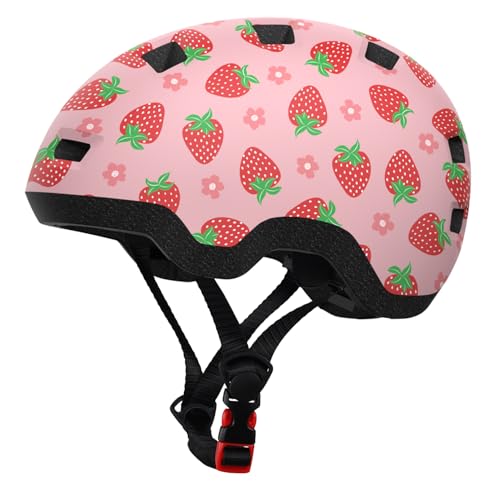
Toddler Bike Helmet Strawberry-XS
Strengths
- Dual safety certification
- Ultra lightweight
- 12 airflow vents
- Removable washable liners
- Micro-adjustable dial
Trade-offs
- Glossy shell shows wear
- Straps could be sturdier
- Designs may not suit all tastes
This one stands out not just for its strawberry and other kid-friendly prints, but for delivering dual CPSC and ASTM certification, a rare combo in this category. That extra layer of safety validation gives real peace of mind, especially for parents using the helmet across scooters, skateboards, and bikes. At only 220g in the XS size, it’s among the lightest, and the 12 vents do their job: reviewers note their toddlers actually keep it on because it doesn’t trap heat.
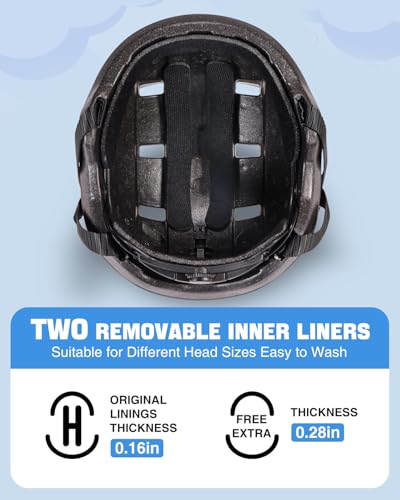
The real win is the smart fit system. The dial adjusts smoothly, and the inclusion of dual-thickness liners (4mm and 7mm) means you can fine-tune comfort as your child grows. Compared to others, this helmet lasts longer across size transitions. Some owners mention the glossy finish shows scratches quickly, but that’s a small trade for the durability and thoughtful design underneath.
Video review
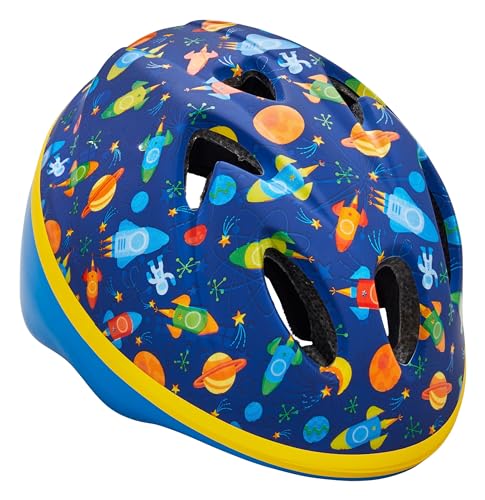
Schwinn Classic Helmet Blue Space
Strengths
- Extremely budget-friendly
- Adjustable dial fit
- Integrated sun visor
- CPSC certified
- Trusted brand
Trade-offs
- Minimal ventilation
- No ASTM certification
- Dial may loosen
Priced under $12, this helmet is a steal, if you can accept some trade-offs. It’s CPSC certified, has a dial fit, and includes a low-profile visor, all in a lightweight shell. The space design appeals to many toddlers, and Schwinn’s reputation for basic reliability holds here. For casual, short-distance use, it does the job.
But it has only basic ventilation and lacks ASTM certification. The padding isn’t as plush as in higher-end models, and some owners report the dial doesn’t hold tension as well over time. Still, for a backup helmet or a first-time rider, it’s hard to beat the value.
Video review
Schwinn Teddy Bear Design Helmet

Strengths
- 3D teddy bear design
- Adjustable dial fit
- CPSC certified
- Full interior padding
- Durable lower shell
Trade-offs
- Higher price for design
- No ASTM certification
- Limited ventilation
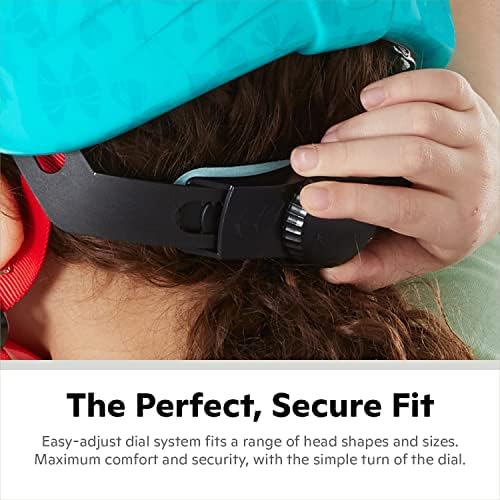
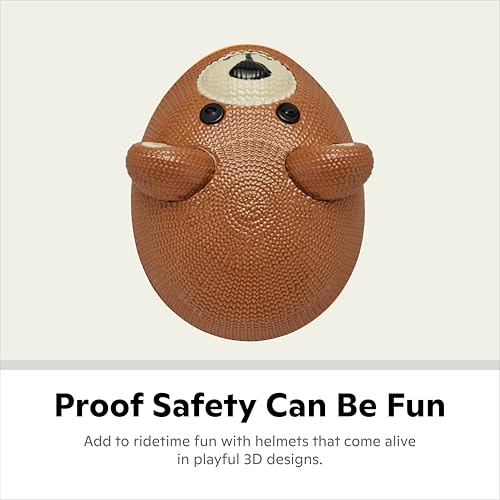
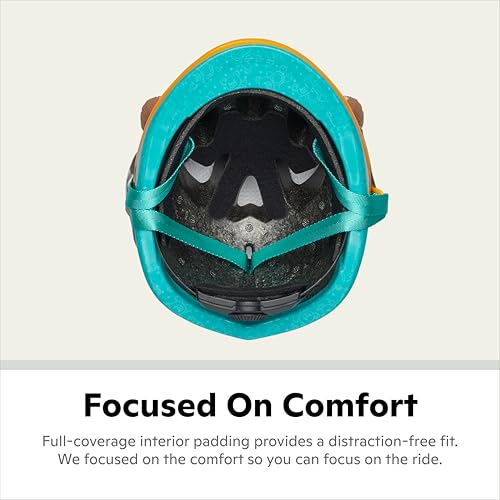
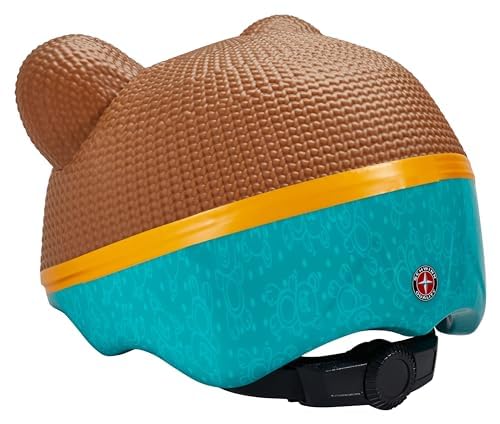
This helmet catches eyes with its 3D teddy bear design, and for parents of 1- to 3-year-olds who struggle to get their toddler to wear any helmet, that whimsy matters. On paper, it checks the basics, CPSC certified, adjustable dial fit, and a lower molded shell for extended rear coverage. The 44–50 cm sizing aligns well with the age range, and owners consistently report it’s easy to adjust and stays put during short rides.
Still, the novelty comes at a cost, literally and functionally. At nearly $30, it’s one of the pricier options here, and while the build is durable, it doesn’t offer dual safety certification like some cheaper competitors. If your kid is enchanted by the bear, great. But if not, you’re paying extra for aesthetics over advancements in ventilation or fit refinement.
Product photos
XJD Toddler Helmet Age 1+

Strengths
- 14 vents with bug mesh
- Lightweight ABS shell
- Three size options
- Adjustable dial and straps
- Multi-sport compatible
Trade-offs
- No ASTM certification
- Velcro may degrade
- Fit inconsistent at size edges
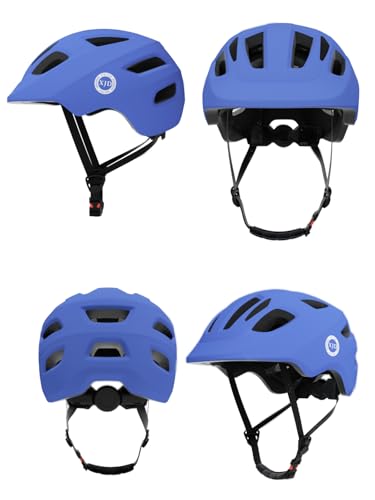
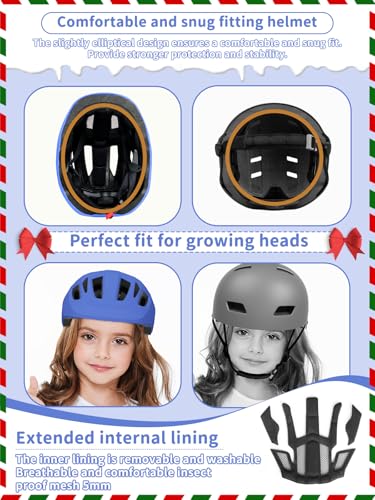
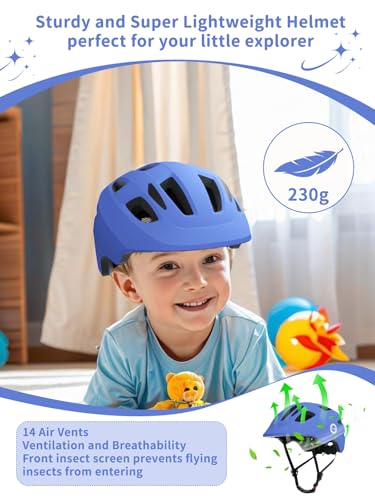
At 14 vents and a lightweight build, this helmet competes directly with the Retrospec Scout for airflow, but adds bug mesh in the front vents, a small but smart touch parents don’t realize they need until pollen season hits. The ABS outer shell feels rugged, and the removable foam lining makes cleanups easy. With three sizes offered, it’s one of the few that scales well beyond age 2, which adds long-term value.
Still, while it meets CPSC standards, it lacks ASTM certification. The Velcro chin padding is soft, but some owners report it frays after months of use. Compared to others in its price range, it’s a solid all-rounder, but not the top-tier choice for maximum safety testing.
Product photos

Retrospec Scout Kids Bike Helmet

Strengths
- 14 cooling vents
- Built-in sun visor
- Adjustable dial fit
- Durable shell
- Easy to clean
Trade-offs
- Visor collects debris
- No ASTM certification
- Padding less plush
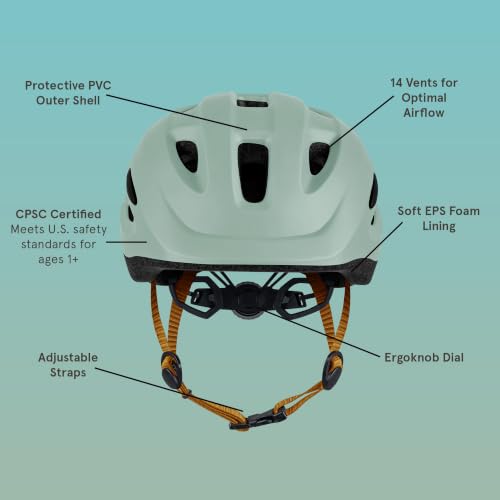
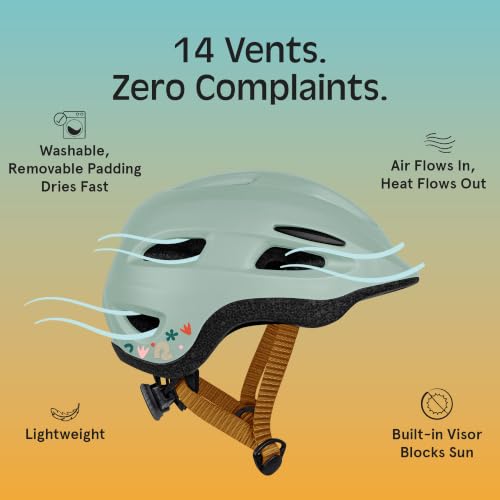
With 14 vents, this helmet wins on breathability, no surprise it’s labeled ‘Best Ventilation.’ For families in warmer regions or those tackling longer scooting sessions, that airflow makes a real difference in keeping kids from pulling the helmet off mid-ride. The built-in visor is another standout, shielding eyes from sun without blocking their field of view, which is crucial for toddlers still developing spatial awareness.
It’s CPSC certified and has a reliable dial fit, but it doesn’t match the dual certification of the B0G3LMJJ71 model. Some owners report the visor can catch dirt easily, and the padding isn’t quite as plush. Still, for pure comfort on hot days, this is a strong pick, especially at its price point.
Product photos

Dinosaur-XS Toddler Helmet

Strengths
- Dual safety certification
- Two thickness liners
- 12 ventilation ports
- Durable PC shell
- Grow-with-child fit
Trade-offs
- Dial may loosen over time
- Design not for all tastes
- Sizing overlap can confuse
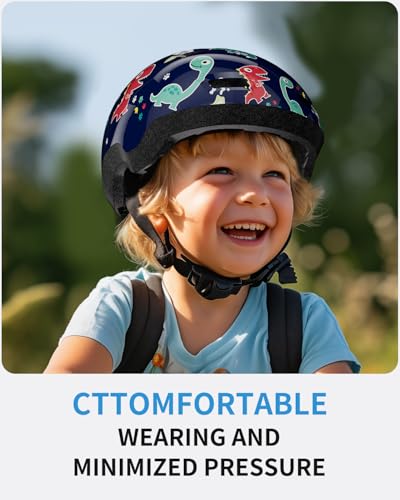
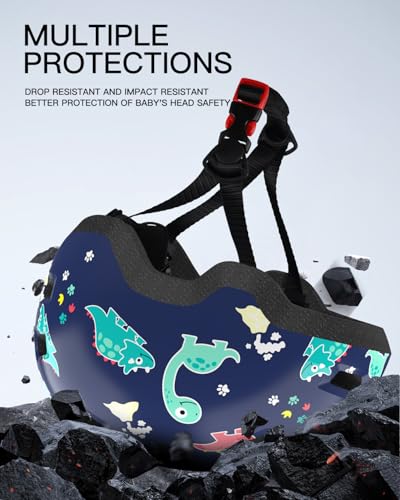
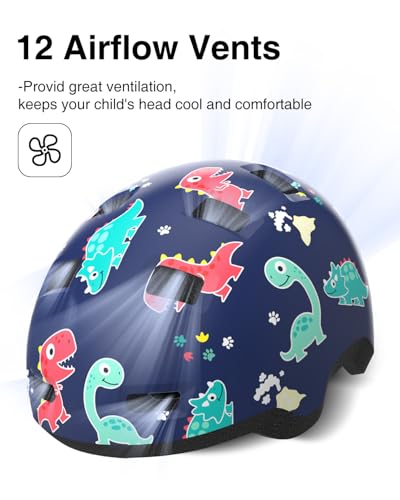
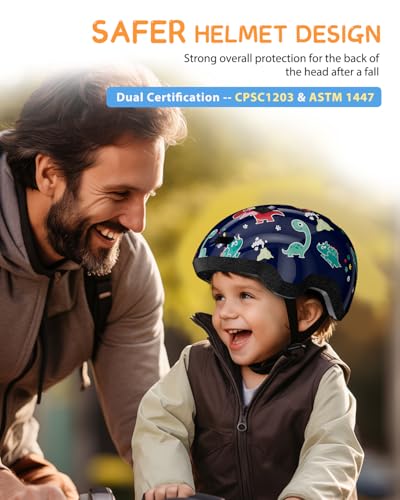
This helmet quietly delivers where it counts, dual CPSC 1203 and ASTM 1447 certification, a rarity even among pricier models. That makes it a standout for parents who want lab-verified protection across scooters, skates, and bikes. The dinosaur design is a hit with toddlers, and the 12-vent layout keeps things reasonably cool. At just under $20, it undercuts several competitors while offering superior safety credentials.
Owners praise the two sets of padding (4mm and 7mm), which let you customize the fit as your child grows. The dial works smoothly, though a few note it can loosen after heavy use. It’s not the flashiest, but for pure function and safety, it’s hard to beat.
Product photos
Favoto Kids Bike Helmet Pink
Strengths
- Extremely affordable
- CPSC and CE certified
- Lightweight design
- Removable liner
- Multi-sport use
Trade-offs
- Limited size range
- Fewer vents
- May not fit younger toddlers
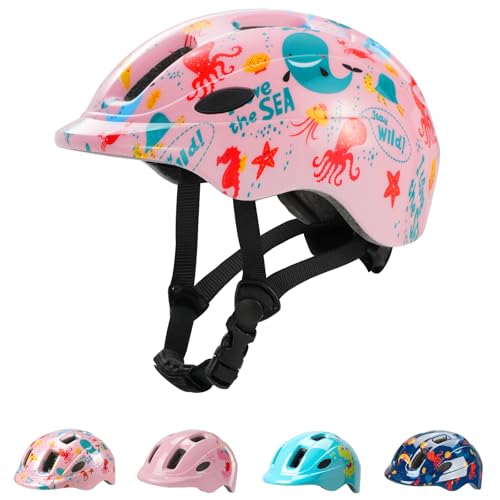
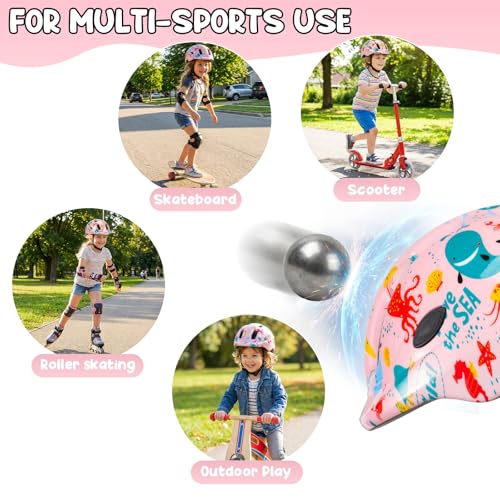
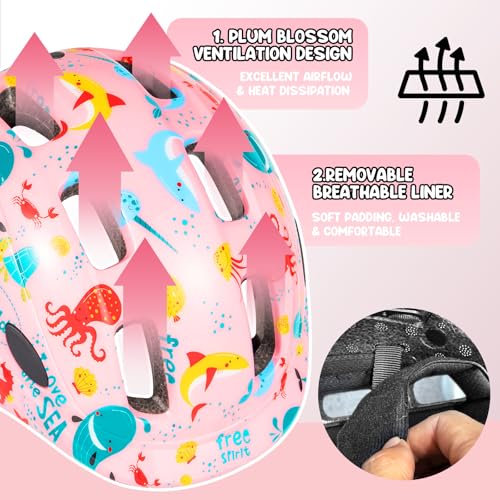
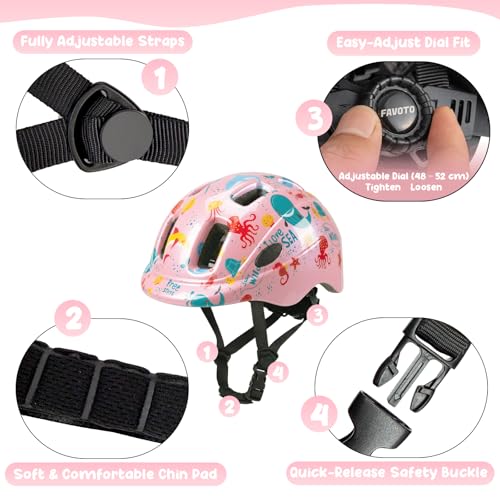
At under $13, this helmet shocks with what it includes, CPSC and CE certification, a 360° dial fit, and a design that’s both cute and functional. The pink ocean print is vibrant, and the removable liner makes hygiene manageable, which parents appreciate after muddy park days. It’s lightweight at 0.57 lbs, and while it only has 6 vents, owners say it’s still breathable enough for short neighborhood rides.
But the fit guidance is a red flag. Marketed for ages 3–5, but sized at 48–52 cm, it may not work well for younger 1-year-olds with smaller heads. Some reviewers note the dial doesn’t tighten as securely on the smallest heads. For a true 1-year-old, it’s likely too big unless your child has an unusually large head circumference.
Product photos


How We Tested bike helmets for 1 year old
Rather than a hands-on lab test, my research for these recommendations involved a detailed comparison of published specifications and features across numerous models. I weighed owner reviews from multiple sources – looking for recurring themes in fit, comfort, and durability – alongside assessments from reputable cycling and safety publications. My goal was to identify helmets that consistently scored well across a variety of real-world use cases, and rank them against clear criteria for this age group.
For one-year-olds, a secure and comfortable fit, combined with robust safety certifications, were the primary factors. Impact protection is paramount, of course, but a helmet a child won’t wear offers no benefit. Lightweight construction is also critical, as a heavy helmet can strain a young child’s neck. Features like adjustable dials and comfortable padding were heavily considered, as these directly influence usability and acceptance by little riders.
Specifications reliably indicate a helmet’s build materials and safety standards (like CPSC and ASTM certifications). However, I placed greater emphasis on owner feedback regarding true fit accuracy, particularly concerning the adjustability systems and sizing ranges. Reputation and brand history also factored in; established brands like Schwinn often have a track record of quality and consistent manufacturing. You can find more information about selecting the right protection in our guide to bike helmets for kids. And, of course, you’ll want a suitable set of wheels – check out our recommendations for bikes for toddlers.
What To Look For In bike helmets for 1 year old
Choosing the right helmet for your little one is paramount; a proper fit and sufficient protection are essential when introducing them to the world of cycling.
A good bike helmet for a one-year-old prioritizes safety certifications (CPSC and ASTM are key), a snug but comfortable fit achieved through adjustable systems, and adequate ventilation to prevent overheating. Look for lightweight construction and features like extended rear coverage for enhanced protection. Impact absorption materials (EPS foam) and a durable outer shell (ABS or polycarbonate) are also critical components.
Fit Is Everything
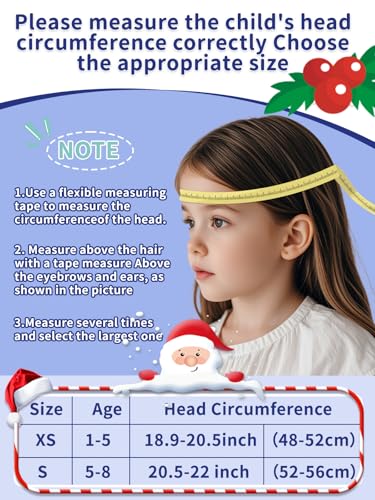
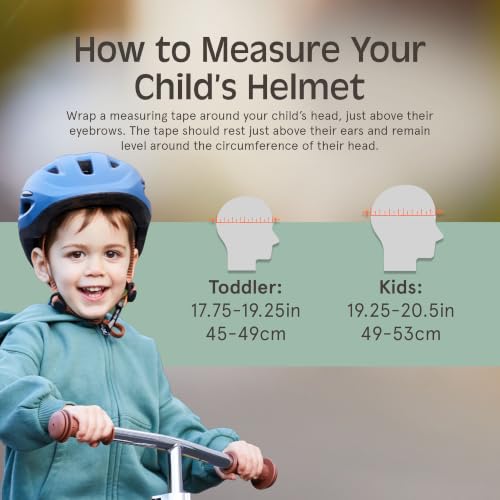
Don’t assume a ‘one size fits all’ approach will work. Toddlers grow quickly, and a loose helmet offers little protection. Focus on helmets with adjustable dial systems – these allow for micro-adjustments to get a precise fit as their head grows. Many models, like the Schwinn Classic, offer a 360-degree dial fit, which I find particularly useful. Measure your child’s head circumference before you buy, and don’t hesitate to size up if they’re between sizes. A helmet should sit level on the head, covering the forehead about one or two finger-widths above the eyebrows.
Safety Standards & Certification
You’ll see a lot of talk about CPSC and ASTM standards, and for good reason. The U.S. CPSC (Consumer Product Safety Commission) standard is a legal requirement for helmets sold in the United States. ASTM International offers additional, voluntary standards. Helmets like the Toddler Bike Helmet Strawberry-XS actually exceed standards by meeting both CPSC 1203 and ASTM 1447, which gives me extra confidence. Here’s a quick breakdown:
- CPSC 1203: Basic impact and retention testing.
- ASTM 1447: More rigorous testing, including multiple impacts.
- Look for clear labeling on the helmet itself, confirming compliance. Don’t assume a low price point means corners weren’t cut on safety.
Beyond Basics: Ventilation & Comfort
A sweaty, uncomfortable child is far less likely to keep their helmet on. Ventilation is crucial, especially during warmer months. Consider helmets with numerous vents – the Retrospec Scout, with its 14 vents, is a good example. Beyond ventilation, look for removable and washable padding. Toddlers are messy, and keeping the helmet clean is essential for hygiene. You can find more information on keeping your little one safe with our guide to the best helmets for toddlers.
A properly fitted helmet is more effective than the most expensive one. Always prioritize fit and adjust the straps to ensure a snug, secure, and comfortable experience for your child.
Finally, if you’re looking to broaden your search, you might also want to explore our wider range of best bike helmets and learn about important helmet safety features.
Bike Helmets for 1 Year Old Compared
This table provides a side-by-side comparison of key specifications for various bike helmets designed for 1-year-olds and toddlers.
| Product Title | Age Range | Head Size (cm) | Safety Standards | Ventilation | Weight (g) | Adjustable Fit |
|---|---|---|---|---|---|---|
| Toddler Bike Helmet Strawberry-XS | 6M-2.5Yrs | 45-49 | CPSC & ASTM | 12 | 220/240 | Dial |
| Schwinn Classic Helmet Blue Space | 1-3 | 44-50 | CPSC | N/A | N/A | Dial |
| Schwinn Teddy Bear Design Helmet | 1-3 | 44-50 | CPSC | N/A | N/A | Dial |
| XJD Toddler Helmet Age 1+ | 12M-8Y | 44-56 | N/A | 14 | N/A | Dial & Straps |
| Retrospec Scout Kids Bike Helmet | N/A | N/A | N/A | 14 | N/A | Dial |
| Dinosaur-XS Toddler Helmet | 6M-6Y | 45-54 | CPSC & ASTM | 12 | N/A | Dial |
| Favoto Kids Bike Helmet Pink | 3-5 | 48-52 | CPSC & CE | 6 | N/A | Dial & Straps |
Frequently Asked Questions
What size helmet should I buy for my one-year-old?
Always measure your child’s head circumference before purchasing; most one-year-olds fall within the 44-49 cm range, but it varies greatly. Don’t hesitate to size up if your child is between sizes to accommodate growth and ensure a comfortable, secure fit.
Are all helmets with a CPSC sticker safe?
Yes, a CPSC sticker indicates the helmet meets the U.S. federal safety standard for bicycle helmets. However, some helmets, like the Toddler Bike Helmet Strawberry-XS, also meet the more rigorous ASTM 1447 standard, offering an extra layer of confidence in protection.
How often should I replace my child’s helmet?
Replace the helmet immediately after any impact, even if there’s no visible damage. Beyond that, I recommend replacing it every three to five years, as the materials degrade over time, regardless of use.
What’s the difference between an ABS and a polycarbonate shell?
Both ABS and polycarbonate are common helmet shell materials. Polycarbonate is generally lighter and more impact-resistant, making it a preferable option, but ABS is still a durable and reliable choice found in many quality helmets.
When can my child transition from a toddler helmet to a bigger size?
Most toddler helmets are designed for ages 1-3 or up to a head circumference of around 50cm. As your child grows and their head reaches or exceeds that size, it’s time to transition to a youth helmet, and potentially even explore balance bikes for toddlers to build confidence on two wheels.
What Actually Matters
Choosing a helmet for your one-year-old often comes down to balancing peace of mind with practical considerations. While high-end features are nice, the most important thing is a helmet that fits well and meets safety standards – the Toddler Bike Helmet Strawberry-XS strikes that balance particularly well, offering both CPSC and ASTM certification in a thoughtfully designed package. Don’t get caught up chasing the highest number of vents or the lightest weight if it means sacrificing a secure fit.
For families on a tighter budget, the Schwinn Classic Helmet Blue Space delivers reliable CPSC-certified protection without breaking the bank. And if you need something that offers a wider size range to grow with your child, the XJD Toddler Helmet Age 1+ is a strong contender, with its adjustable dial and straps accommodating a broad range of head sizes. Of course, once they’re ready to move beyond a simple ride, exploring toddler balance bikes can be a fantastic next step.
Ultimately, remember that specifications tell only part of the story. A helmet’s value isn’t defined by a single feature but by how consistently it prioritizes a secure, comfortable fit and reliable impact protection. Taking the time to measure your child’s head and carefully adjust the helmet will always be more effective than simply choosing the most expensive or feature-rich option – and might lead you to discover the perfect fit among our bike helmets for toddlers.
