
8 Best Bike Carrier Hitches of 2026
This post contains affiliate links. As an Amazon Associate, we earn from qualifying purchases.
The best bike carrier hitch overall is the Young 2-Bike Platform Hitch Rack, it handles weight well, tilts for rear access, and stays stable on the road. For RV owners, the Young RV-Approved 2-Bike Rack is the clear choice, built to handle longer overhangs. If you’re after simplicity and strength for a single heavy bike, the Aluminum Motocross Hitch Carrier can’t be beat with its 400-pound capacity.
Hitch racks seem straightforward until you’re wrestling with wobble, struggling to load a heavy e-bike, or blocked from your trunk. Many riders don’t realize how much bike weight and hitch dynamics affect safety and convenience until it’s too late.
This guide cuts through the noise, focusing on real-world performance, how these racks handle weight, resist sway, and fit your lifestyle. I compared specs, owner feedback, and expert insights to highlight the ones that deliver where it matters most.
Top 8 Bike Carrier Hitches in the Market
The Best Bike Carrier Hitches, Reviewed
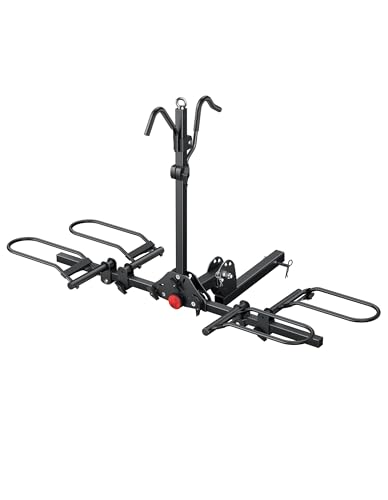
Young 2-Bike Platform Hitch Rack
Strengths
- Tilts for trunk access
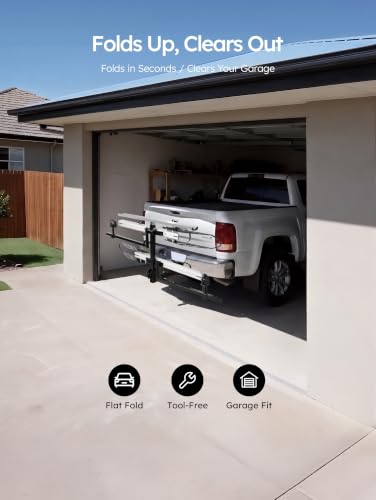
- Folds up when not in use
- Soft padded cradles
Trade-offs
- No lock included
- Not ideal for very wide e-bike frames
- No spare parts availability noted
This hits the sweet spot for most car and SUV owners who want a no-fuss, reliable 2-bike solution. The smart tilting feature works exactly as advertised, pull a lever, and the whole rack swings down so you can open your trunk without unloading bikes. That’s a huge convenience advantage over non-tilting models, and reviewers repeatedly praise it for daily use.
With 200 pounds of total capacity and compatibility up to 5-inch fat tires, it handles e-bikes and mountain bikes without breaking a sweat. The soft padding on the tire cradles prevents scratches, and the hitch tightener does a solid job minimizing wobble. Compared to pricier options, it delivers similar core functionality with fewer frills but better value.
Video review
TANX 2-Bike Anti-Wobble Rack

Strengths
- Tilts with bikes loaded
- Reinforced steel build
- Padded cradles and straps
Trade-offs
- No lock included
- Wheel trays may limit ultra-wide tires
- Slight learning curve on assembly
TANX built this with e-bike owners in mind, and it shows. The 160-pound capacity, reinforced alloy steel frame, and padded cradles make it a solid match for heavier bikes, including models with 5-inch tires. The smart tilting feature works smoothly, pull the lever, and the whole rack tilts down with bikes still attached, giving you trunk access without unloading. That’s a rare convenience at this price.
Owners report the anti-wobble hitch pin makes a noticeable difference on rough roads, and the quick-lock straps hold bikes securely. Some note the wheel trays could be wider for ultra-fat tires, but overall, it’s one of the better-built mid-range options. Compared to the WEIZE, it feels more refined and better finished, justifying the slight price bump.
Video review
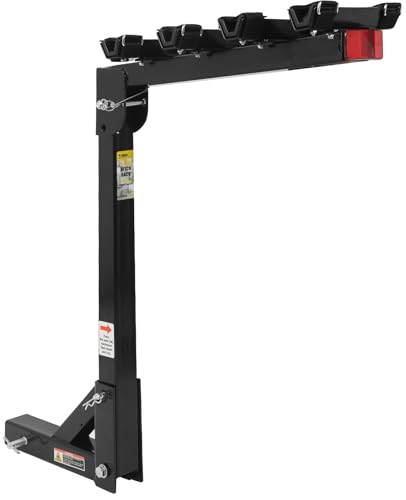
MaxxHaul 4-Bike Swing-Down Rack
Strengths
- Holds 4 bikes
- Low price
- Steel construction
Trade-offs
- Low weight capacity
- No frame padding
- No tilting when loaded
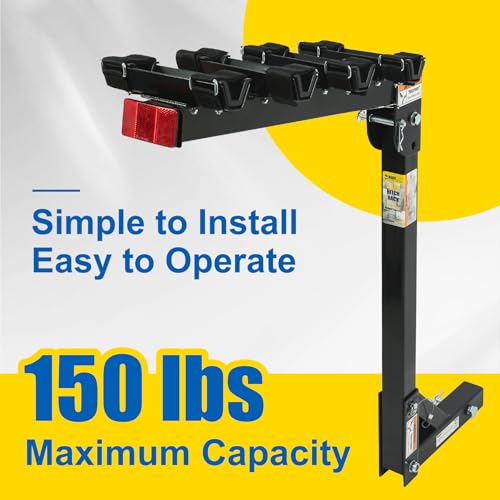
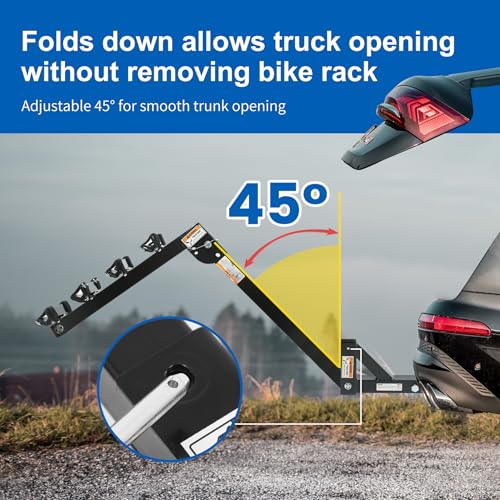
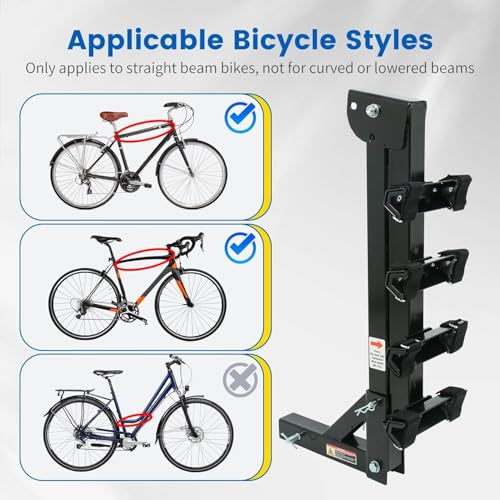
If you need to carry four bikes and are watching your budget, this MaxxHaul rack is one of the few sub-$100 options that actually works. The swing-down feature gives you rear access when unloaded, and the all-steel construction feels rugged enough for regular use. At 150 pounds total, the capacity is tight, about 37 pounds per bike, so it’s really only safe for standard bikes, not e-bikes or heavy mountain models.
Owners say assembly is quick, but the lack of padding on the cradles is a red flag. Without aftermarket foam, there’s a real risk of frame scratches. It also doesn’t tilt when loaded, so you’ll need to remove bikes to open the trunk. For families with multiple kids’ bikes or casual riders, it’s a functional workhorse. But if you’ve got expensive bikes, this isn’t the safest bet.
Product photos
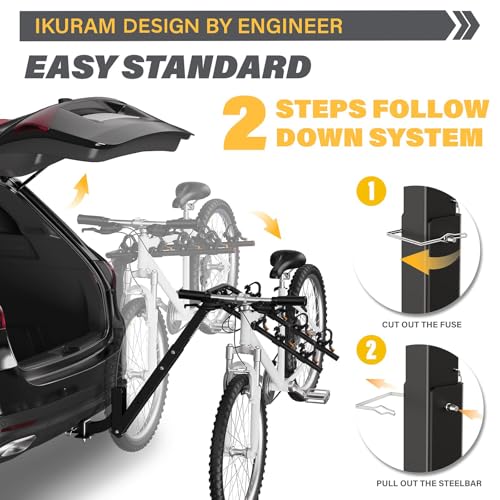
IKURAM R 4-Bike Foldable Rack
Strengths
- Holds 4 bikes
- Lifetime warranty
- Steel construction
Trade-offs
- Low weight limit
- No padding on cradles
- Tilt requires unloading bikes
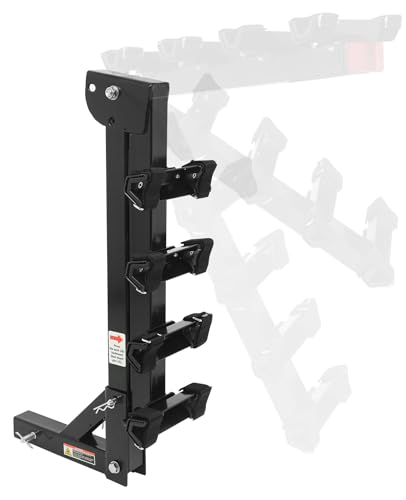
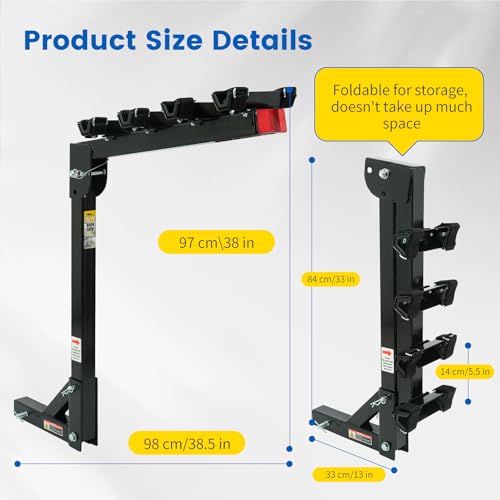
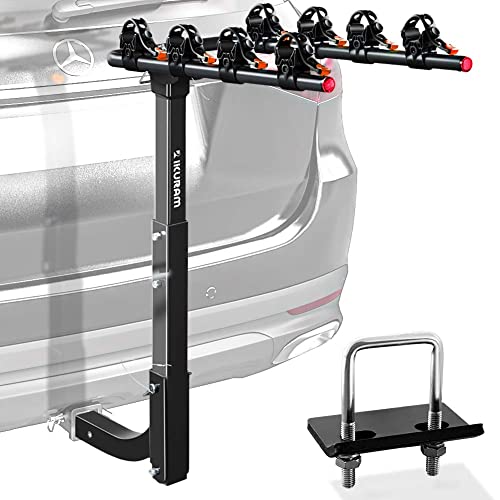
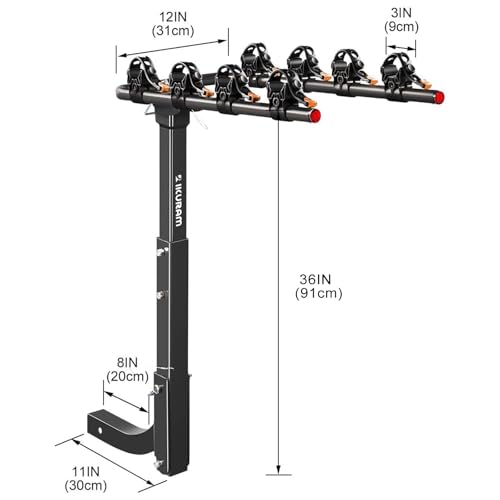
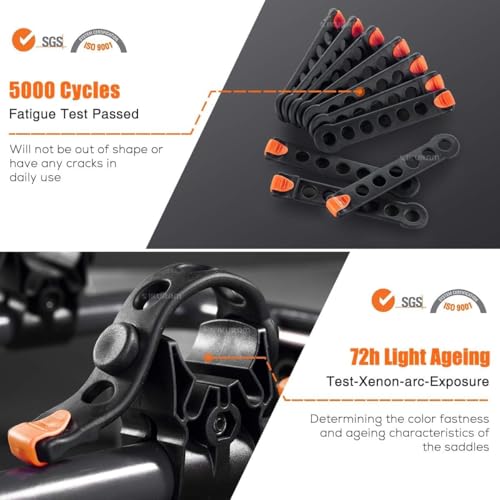
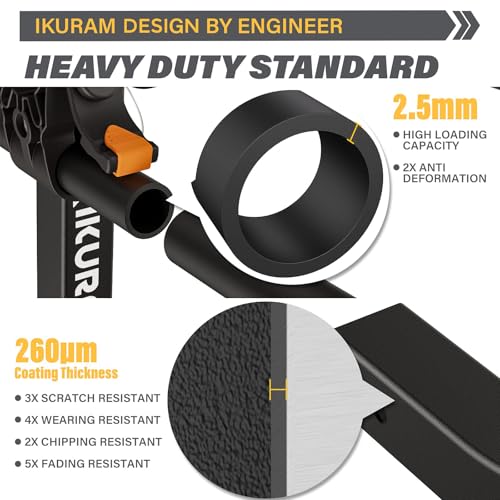
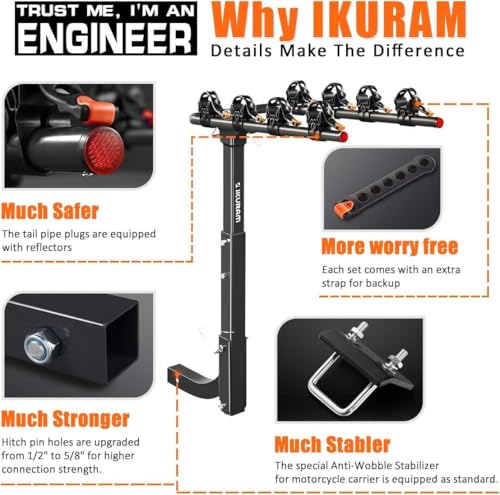
For a 4-bike rack at this price, the IKURAM R delivers solid value. The dual-arm design spreads bikes out, reducing frame contact, and the all-steel build with powder coating resists rust better than cheaper alternatives. The tilt-down feature works well when you need rear access, and the foldable arms make storage easier.
But the 150-pound limit is the same as the MaxxHaul, meaning you’re still capped at about 37 pounds per bike. That rules out e-bikes and heavier mountain models. Some owners report the hitch fit can be loose without an aftermarket anti-rattle device. Still, the lifetime warranty is a standout, few competitors offer that kind of backing. For families with multiple standard bikes, it’s a dependable, long-term pick.
Product photos
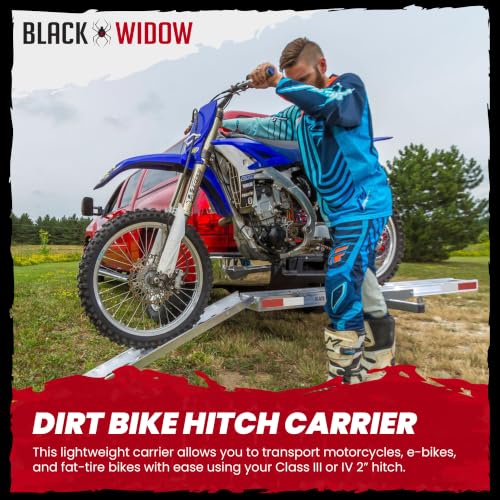
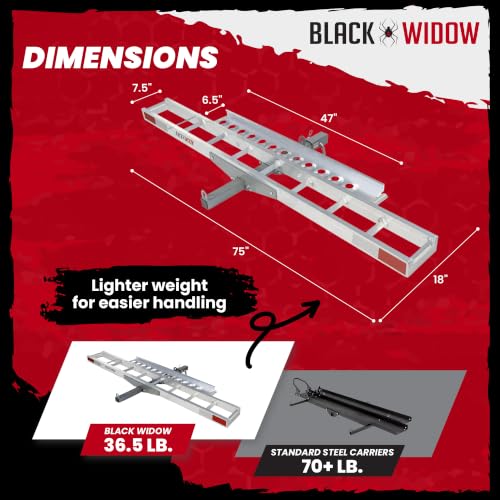
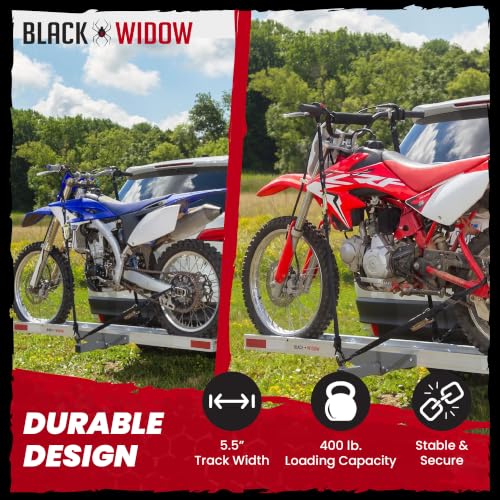
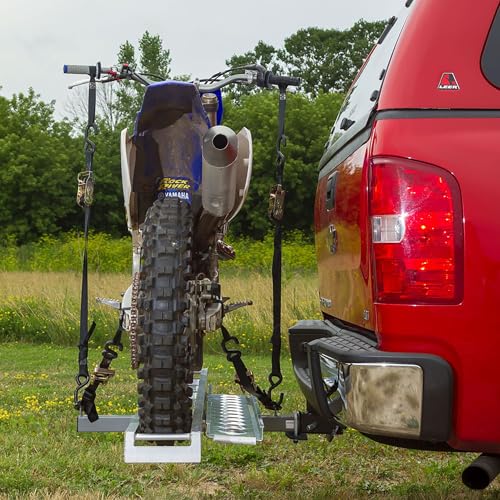
Aluminum Motocross Hitch Carrier

Strengths
- 400 lb capacity
- Lightweight aluminum
- Roll-on ramp included
Trade-offs
- No folding or tilting
- No trunk access with bikes loaded
- Limited feedback on long-term corrosion resistance
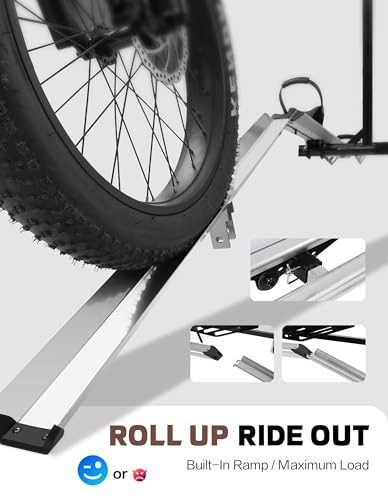
If you’re hauling dirt bikes or heavy e-bikes, this aluminum carrier stands out for its 400-pound capacity, double what most hitch racks offer. That kind of headroom means you’re not sweating over weight limits, especially with modern e-bikes pushing 70+ pounds each. The roll-on ramp is a real win, making loading less of a chore, and owners consistently report it works smoothly with fat tires and knobby motocross setups.
The anti-rattle device helps, but some users note that at highway speeds, there’s still minor movement unless the hitch fit is absolutely snug. It’s built for rugged use, but the lack of a folding or tilting function means you’ll need to unload bikes to access your trunk. For dedicated off-road riders who prioritize load capacity and ramp convenience over daily usability, this one makes sense.
Product photos

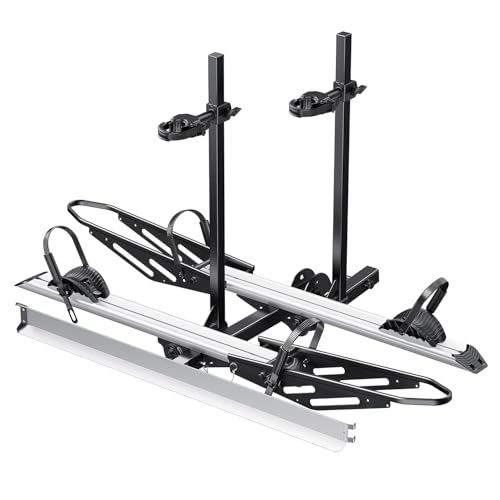
Young RV-Approved 2-Bike Rack
Strengths
- 200 lb capacity
- Ramp included
- RV approved
Trade-offs
- Very high price
- No folding or tilting
- Heavy and bulky
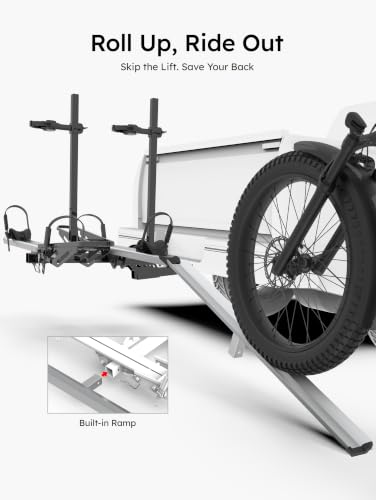
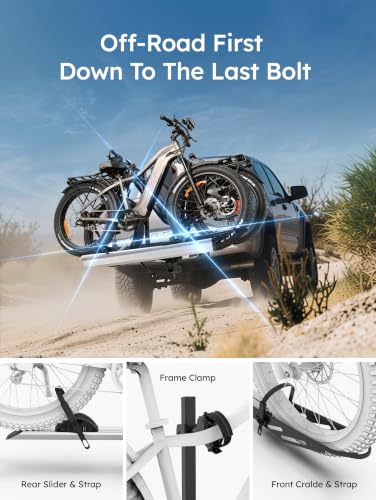
This is the big brother of the single-bike model, and it’s the go-to if you’re hauling two heavy e-bikes, especially on an RV. With a 200-pound total capacity and dual 100-pound arms, it’s one of the few racks rated for two full-size e-bikes without compromise. The ramp makes loading much easier, and the anti-wobble structure keeps bikes stable even on uneven roads.
It’s expensive, but that’s the cost of e-bike readiness. Unlike many dual racks that max out at 80–90 pounds per bike, this one doesn’t force you to upgrade to a custom solution. Owners using it with RVs praise its stability and ease of use. If you’ve got two e-bikes and a 2-inch hitch, this is the safest, most straightforward option.
Product photos

WEIZE 2-Bike Smart Tilting Rack

Strengths
- Affordable price
- Tilting and folding
- Foam-padded protection
Trade-offs
- 160 lb limit too low for two e-bikes
- No lock included
- Tilt not compatible with swing gates
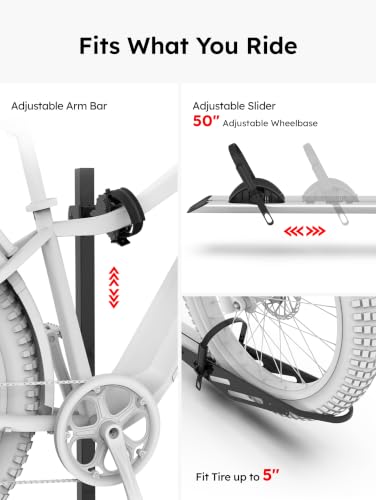
At this price, the WEIZE rack punches above its weight with a tilting, folding design and 160-pound capacity that covers most standard and lighter e-bikes. It’s built from reinforced steel, so it feels sturdy, and the foam-padded clamps do their job protecting both bike and vehicle paint. The compatibility with up to 5-inch tires makes it a strong budget pick for fat tire or mountain bike owners.
But the 160-pound limit means you’re cutting it close with two modern e-bikes. Owners report it works fine for one e-bike and one standard bike, but two heavy e-bikes are pushing it. The tilting function is handy, but it’s not designed for swing-out tailgates, which limits trunk access on some SUVs. Still, for casual riders or those with lighter setups, it’s a smart, affordable entry.
Product photos


Young Single Bike with Ramp
Strengths
- 100 lb per bike capacity
- Includes loading ramp
- RV approved
Trade-offs
- Single bike only
- High price for one-bike use
- No folding or tilting
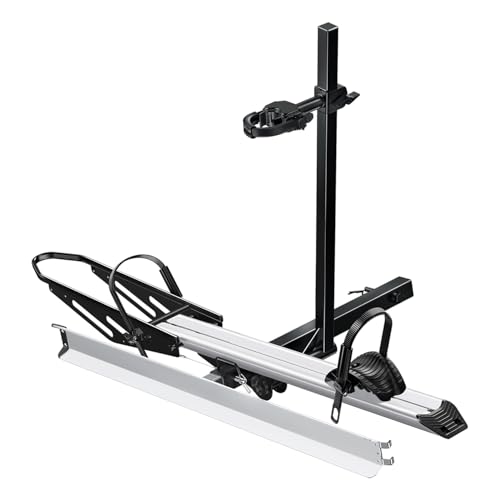
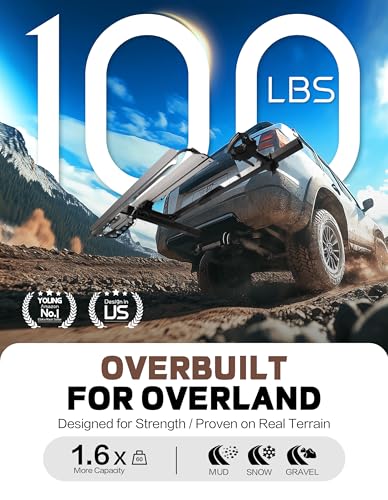
This single-bike rack is built for one job: hauling heavy e-bikes safely. The 100-pound capacity per bike is rare at this level, and the integrated ramp makes loading a breeze, especially useful if you’re short on strength or dealing with a heavy e-bike. The anti-wobble bolt and reinforced steel/aluminum build keep things stable, and it’s officially RV-approved, which means it’s been tested for longer, bumpier rides.
It’s overkill if you only have one standard bike, and the price reflects its niche role. But for e-bike owners, especially those towing with RVs or trucks, the ramp and high capacity make it one of the most practical single-bike solutions out there. Compared to dual racks that skimp on per-bike limits, this one gives you real confidence.
Product photos


How We Chose These bike carrier hitches
My approach to evaluating bike carrier hitches centers on a research-led comparison. Rather than a hands-on lab test with each model, I examined published specifications and features, carefully weighed owner reviews from multiple sources, and considered insights from reputable automotive and cycling experts. I then ranked these hitches against a set of criteria focused on real-world usability and long-term reliability.
For this category, the most important factors are weight capacity and anti-wobble performance. Carrying capacity is critical, especially with the rise of heavier e-bikes, and a stable mount directly impacts safety and prevents damage to both the vehicle and the bikes. Beyond those, ease of use – how readily the rack can be loaded, tilted for access, and stored – also heavily influenced my rankings. You’ll find more detail about different types of bike racks for tow hitches in our broader guide.
Specifications reliably indicate maximum weight limits, hitch receiver size compatibility, and overall dimensions. However, judging real-world stability and durability requires looking at owner feedback. I focused on comments regarding wobble, ease of securing bikes, and long-term build quality. Expert reviews helped validate those owner experiences and assess features like ramp quality and the effectiveness of anti-rattle mechanisms. Comparing these points with other rear bike racks helped set a benchmark for quality and value.
What To Look For In bike carrier hitches
Choosing the right hitch-mounted bike carrier isn’t just about finding one that fits your hitch; it’s about matching the rack to your bikes, your vehicle, and how you plan to use it.
A quality bike carrier hitch should prioritize secure bike retention, minimizing sway and frame damage. Look for robust construction, steel or aluminum are both good choices, and a hitch tightener to eliminate wobble. Consider the weight capacity, ensuring it exceeds the combined weight of your bikes, and check compatibility with your vehicle’s hitch receiver size (usually 1.25″ or 2″).
Weight Capacity and Bike Type
The first thing I always tell people is to honestly assess what you’ll be carrying. A basic rack rated for 100-150lbs might be fine for two standard road bikes, but if you’re dealing with electric bikes, or plan to carry heavier mountain bikes, you’ll need something more substantial. Many newer racks, like the Young Single Bike with Ramp, are specifically designed for heavier loads, boasting capacities of 100lbs for a single bike. Don’t just look at the total weight; consider how the rack holds the bikes. Platform-style racks generally handle varying frame shapes better than those that rely on frame contact.
Hitch Receiver Compatibility
This seems obvious, but it’s a common mistake. Most racks fit either a 1.25” or 2” hitch receiver, and some are compatible with both. However, the 2” receiver is becoming the standard, and offers greater stability, especially with heavier loads. If you’re unsure what you have, check your vehicle’s documentation. Beyond the receiver size, RV owners should pay special attention, as the increased distance between the bumper and axle can create excessive stress on the rack and bikes. For those needing options, exploring different carrier styles could be helpful; you can find more information on various bike carrier types.
- A 1.25” receiver is often found on smaller cars and older vehicles.
- A 2” receiver is standard on most trucks, SUVs, and newer cars.
- Adapters can be used to go from 2” to 1.25”, but they reduce the weight capacity and can introduce wobble, so I generally advise against it if you can avoid it.
Features and Usability
Beyond the basics, think about convenience. Do you frequently need access to your trunk? A tilting mechanism, found on racks like the WEIZE 2-Bike Smart Tilting Rack, is a lifesaver. For those with limited storage space, a foldable design, like the IKURAM R 4-Bike Foldable Rack, is a huge plus. Furthermore, consider how easy the rack is to load and unload your bikes. Ramps, as seen on some models, are especially helpful for heavier bikes or for those who may have difficulty lifting.
A wobbly hitch rack is a safety hazard. Always use a hitch tightener and, if possible, a locking hitch pin to secure the rack to your vehicle.
When you’re looking at options, remember to check out reviews of different hitch bike racks to get a better feel for what other owners are saying. And don’t hesitate to invest in quality; a well-built rack will provide years of reliable service and protect your investment in your bikes. You can also find information about recommended hitch carriers on our site.
Bike Carrier Hitches Compared
Here’s a comparison of key specifications for different bike carrier hitches to help you choose the right one.
| Product Name | Hitch Size | Max. Capacity (lbs) | Max. Bikes | Foldable | Tiltable | RV Approved |
|---|---|---|---|---|---|---|
| Young 2-Bike Platform Hitch Rack | 2″ | 200 | 2 | Yes | Yes | No |
| TANX 2-Bike Anti-Wobble Rack | 2″ | 160 | 2 | Yes | Yes | No |
| MaxxHaul 4-Bike Swing-Down Rack | 2″ | 150 | 4 | No | Yes | No |
| IKURAM R 4-Bike Foldable Rack | 2″ | N/A | 4 | Yes | Yes | No |
| Aluminum Motocross Hitch Carrier | 2″ | 400 | 1 | No | No | No |
| Young RV-Approved 2-Bike Rack | 2″ | 200 | 2 | No | No | Yes |
| WEIZE 2-Bike Smart Tilting Rack | 2″ | 160 | 2 | Yes | Yes | No |
| Young Single Bike with Ramp | 2″ | 100 | 1 | No | No | Yes |
Frequently Asked Questions
What’s the biggest benefit of a hitch-mounted bike rack over roof-mounted or trunk-mounted options?
A hitch-mounted rack generally offers greater stability and easier loading. Because the weight is closer to the vehicle’s axle, it minimizes sway and makes it simpler to secure your bikes, especially heavier ones.
Can I use a hitch rack on any vehicle?
Not necessarily. You need a vehicle equipped with a receiver hitch, and the rack must match the hitch size (1.25” or 2”). Adapters exist, but reducing weight capacity and potentially increasing wobble means I don’t recommend relying on them long-term.
What should I do if my hitch rack wobbles even after tightening the hitch pin?
A hitch tightener is your next best step; these inexpensive devices fill the empty space in the receiver and eliminate much of the wobble. If the wobble persists, it could indicate the rack is overloaded or that the hitch itself isn’t properly installed on your vehicle.
Are there hitch racks specifically designed for e-bikes?
Yes, several racks are built to handle the increased weight and demands of e-bikes. You’ll want to look for models with a higher weight capacity (150lbs+) and robust construction, or explore racks for electric bikes specifically.
Where can I find more information on different types of bike racks beyond hitch-mounted options?
Our site offers thorough bike rack reviews covering roof-mounted, trunk-mounted, and other styles, helping you determine the best fit for your needs and vehicle.
The Bottom Line
Choosing a bike carrier hitch often comes down to balancing convenience with long-term durability. While price is a factor, skimping on quality can lead to wobble, damage to your bikes, or even a safety hazard. For the best overall performance and peace of mind, I recommend the Young 2-Bike Platform Hitch Rack. It offers a fantastic combination of weight capacity, build quality, and user-friendly features.
If you’re on a tighter budget, the WEIZE 2-Bike Smart Tilting Rack is a solid choice. For those needing to haul more bikes, exploring options like 4-bike hitch racks is a good idea, and the IKURAM R 4-Bike Foldable Rack provides a good balance of capacity and portability. And if you’re planning on towing, ensuring you have the right vehicle trailer hitches is crucial.
Ultimately, the specifications matter less than a secure, stable connection. Always prioritize a rack that fits your hitch receiver correctly, uses a hitch tightener, and has a weight capacity that exceeds your needs. Don’t forget to factor in the type of bikes you’ll be carrying and how often you’ll be loading and unloading them – those fundamentals are more important than any single feature.
