
7 Best Bicycles for Teenagers 2026
This post contains affiliate links. As an Amazon Associate, we earn from qualifying purchases.
The Schwinn High Timber and Yventix 24 Inch Mountain Bike stand out as top choices for teenagers, with the Schwinn taking the edge as the overall best for its reliable components and smooth ride. For budget-conscious buyers, the Dynacraft Vertical Gauntlet offers solid performance at a lower price, though with a heavier frame.
Teenagers need bikes that match their growing height, changing interests, and increasing independence, bikes that are durable enough for daily use but versatile enough for trails, streets, or weekend adventures. As someone who’s spent years working on and reviewing two-wheeled machines, I know that the right fit and function matter more than flashy looks.
This guide cuts through the clutter by focusing on real-world performance, based on specs, owner feedback, and mechanical soundness. I looked at frame materials, braking power, gearing range, and how well each bike adapts to a rider’s growth and riding style.
Top 7 Bicycles For Teenager in the Market
The Best Bicycles For Teenager, Reviewed
Dynacraft Vertical Gauntlet 24 Inch
Strengths
- Full suspension
- Shimano 21-speed
- Durable steel frame
Trade-offs
- Heavy build
- Basic saddle comfort
- Limited warranty
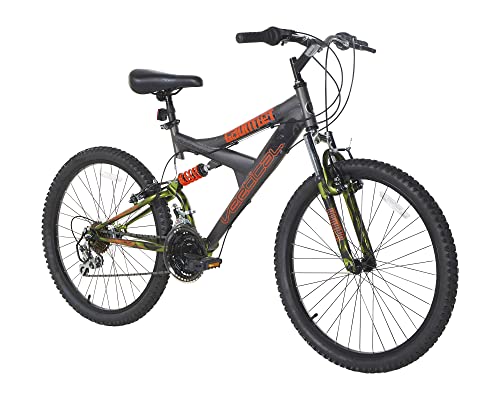
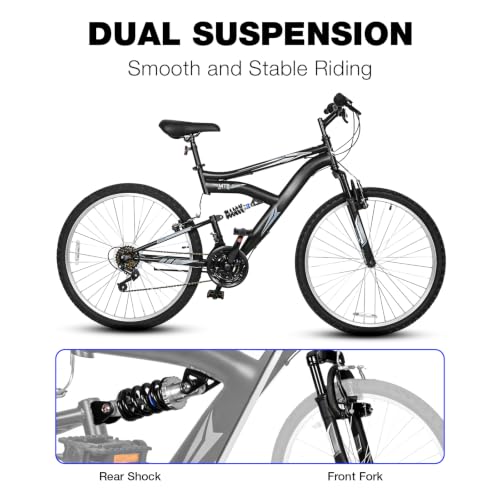
The Dynacraft Vertical Gauntlet stands out in the teen mountain bike space because it actually delivers full suspension at this price point, a rare combo. On paper, the 21-speed Shimano drivetrain and dual suspension setup suggest real trail capability, and owners consistently report it handles rough sidewalks, packed dirt paths, and occasional dips off paved trails without bucking the rider. The carbon alloy steel frame isn’t light, but it’s tough enough for the kind of riding most teens actually do: jumping curbs, grinding over gravel, and surviving backyard storage.
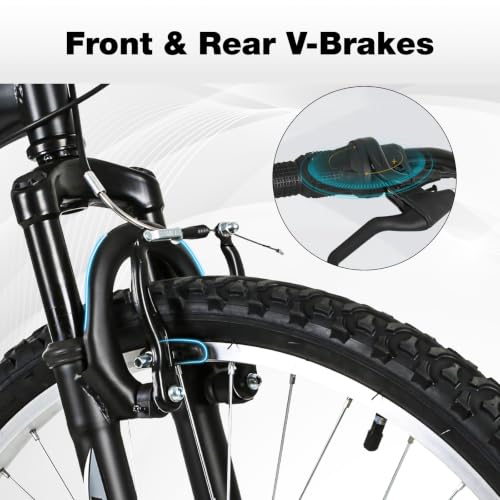
Where it pulls ahead of budget rivals like the Yventix is in component quality, Shimano shifters are more reliable than generic ones, and the V-brakes offer more consistent stopping power, especially on descents. It’s not going to replace a high-end hardtail, but for a beginner or intermediate rider stepping into real trail riding, this hits a sweet spot between performance and price. I’d pick this over the heavier 26-inch WEIZE if the teen is under 5’8″ and wants a true 24-inch fit.
Video review
Yventix 24 Inch Mountain Bike

Strengths
- 18-speed drivetrain
- Dual suspension
- Affordable price
Trade-offs
- Heavy steel frame
- Generic components
- Sluggish shifting
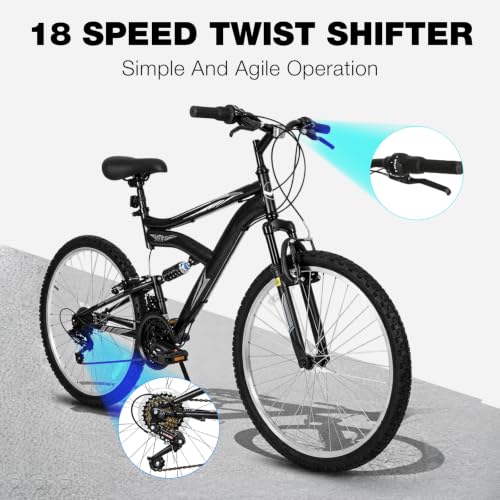
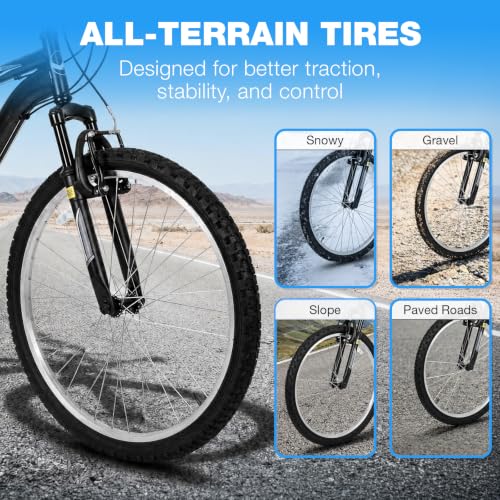
The Yventix 24-inch MTB is a solid budget pick that borrows design cues from more expensive bikes, dual suspension, 18 speeds, knobby tires, all at a price that won’t break the bank. On paper, it looks a lot like the Dynacraft, but owners report the shifters and brakes aren’t as crisp, and the steel frame feels heavier in practice. Still, for a first serious bike or a hand-me-down candidate, it covers the basics well.
It’s a better value than the StarterRide 24-inch if you want more gears and trail-ready tires, but it doesn’t have the name-brand components that inspire long-term confidence. I’d recommend this for families who need a dependable bike for school routes, bike paths, and occasional trail use, just don’t expect precision shifting or light handling. It’s the kind of bike that gets the job done without surprises.
Product photos
StarterRide 24 Inch Mountain Bike
Strengths
- Step-through frame
- Includes bell and kickstand
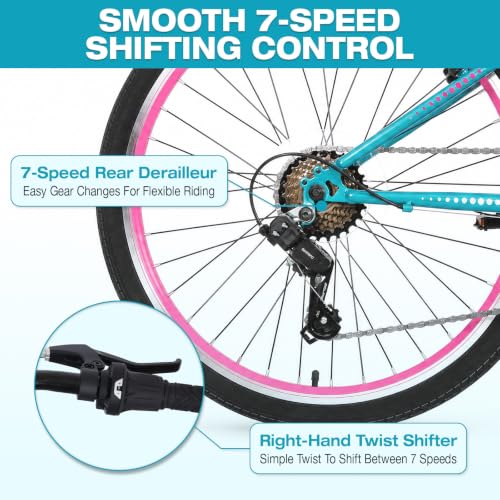
- 7-speed twist shifter
Trade-offs
- Narrow tires
- Heavy frame
- Basic components
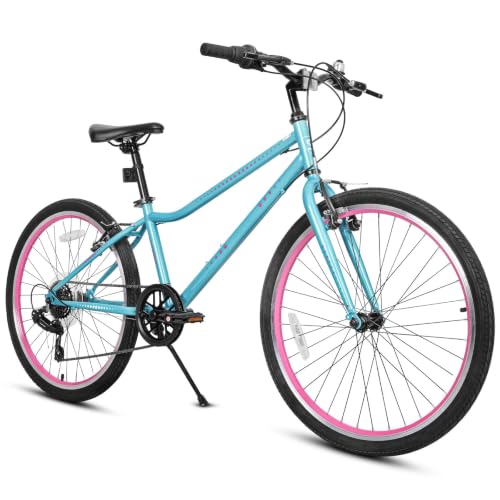
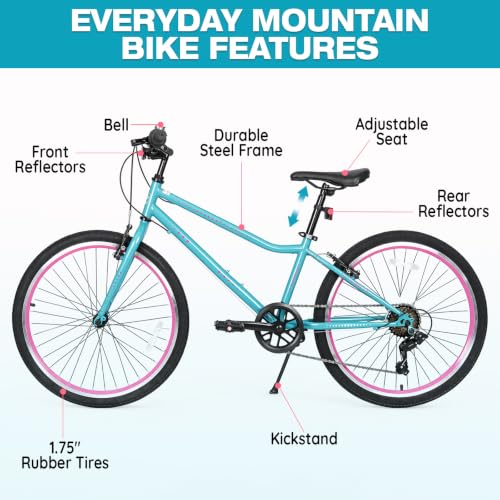
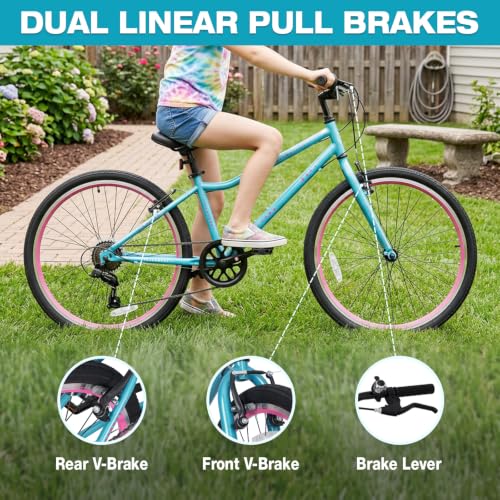
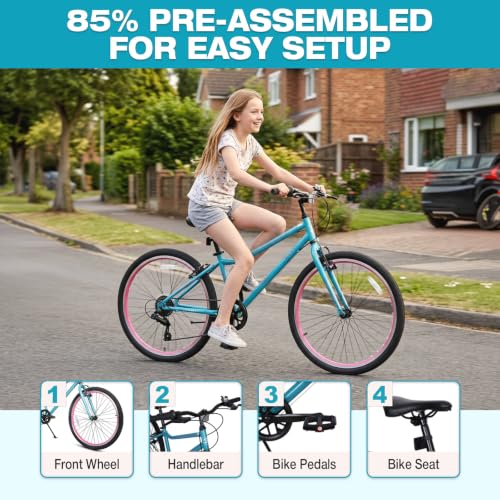
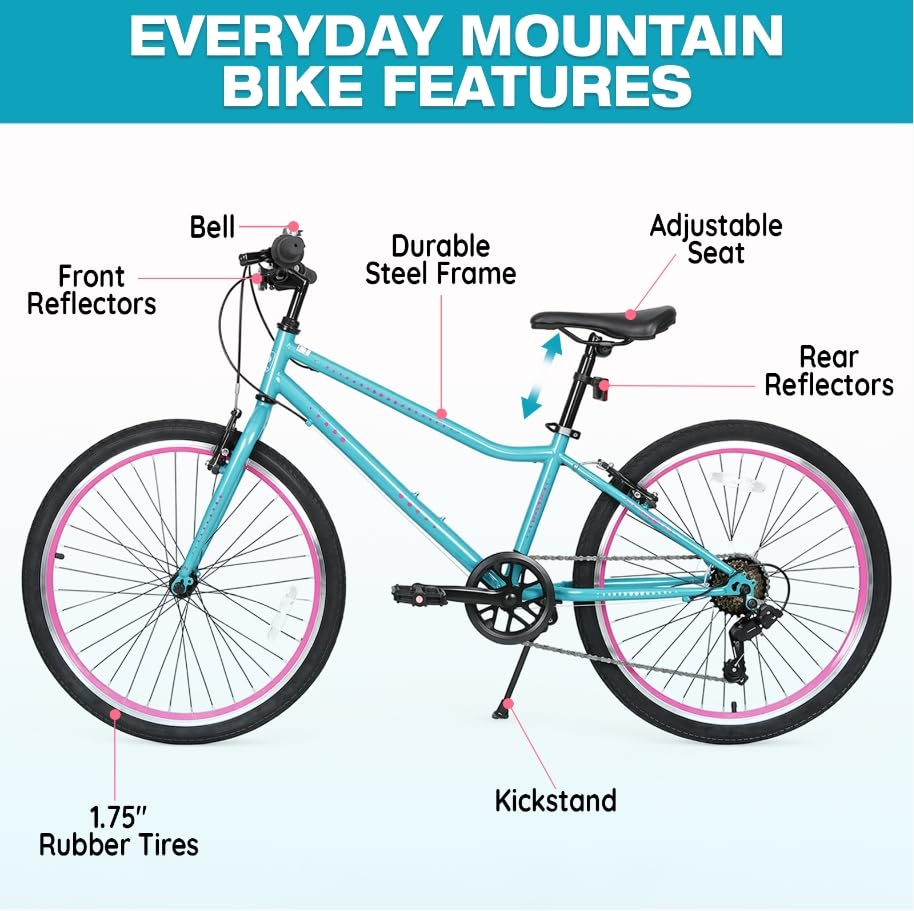
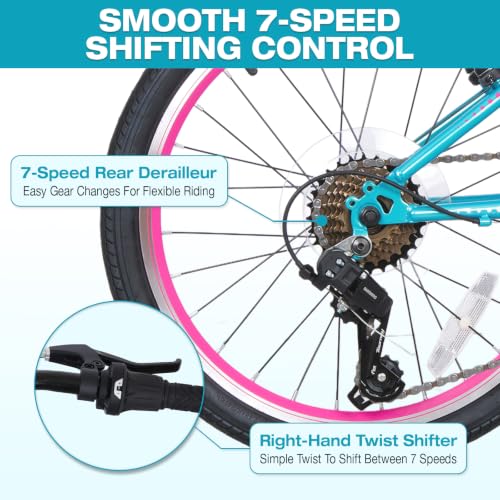
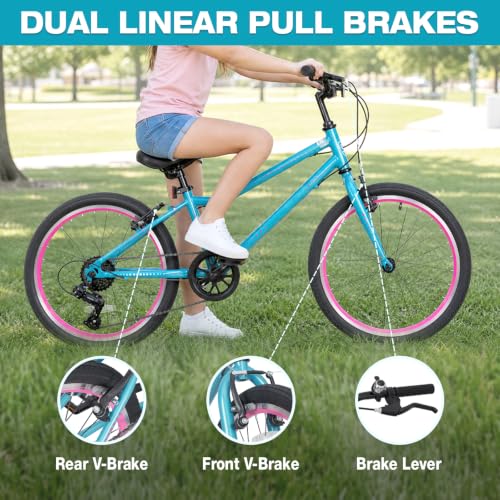
This 24-inch StarterRide model is nearly identical to the 20-inch version but sized for older or taller girls, think ages 14+, 58 to 68 inches tall. The step-through frame makes it easier to mount and dismount, which some parents appreciate for safety and accessibility. It keeps the same 7-speed drivetrain and linear pull brakes, so it’s not a performance upgrade over the Yventix or Dynacraft, but it does include useful extras like a bell and kickstand.
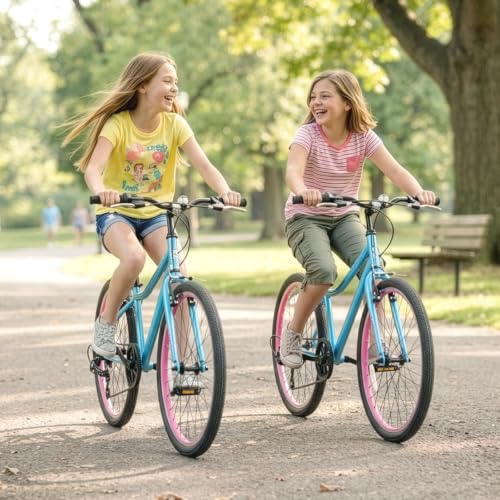
The alloy steel frame is durable but not lightweight, and the 1.75-inch tires limit off-road grip. Still, for a teen girl who wants a reliable, low-maintenance bike for school, errands, or casual rides with friends, this hits the mark. It’s more practical than the WEIZE BMX and more accessible than the heavier mountain bikes. I’d choose this over the 20-inch version for taller teens who value comfort and convenience over speed or trail capability.
Product photos
WEIZE 20 Inch BMX Freestyle Bike

Strengths
- 360-degree rotor
- Four axle pegs
- Sturdy steel frame
Trade-offs
- Single speed only
- Rear brake only
- Not for long rides
If your teen is more interested in spinning bars than climbing hills, this WEIZE 20-inch BMX bike makes a lot of sense. The 360-degree rotor is the real star here, it lets the handlebars spin freely, which is essential for learning whip turns, tabletops, and other beginner-to-mid-level tricks. Owners praise it for holding up to regular park and driveway use, and the inclusion of four pegs means riders can start practicing grinds without needing immediate upgrades.
The single-speed drivetrain keeps things simple and low-maintenance, and the hi-tensile steel frame shrugs off typical BMX abuse. It’s not the lightest BMX out there, but at this price, it’s one of the few that includes real freestyle features without cutting corners on safety or structure. Compared to the StarterRide models, this is far more specialized, it’s not built for commuting or long rides, but if tricks are the goal, it’s the smarter buy.
Video review
Folding Electric Bike for Teens
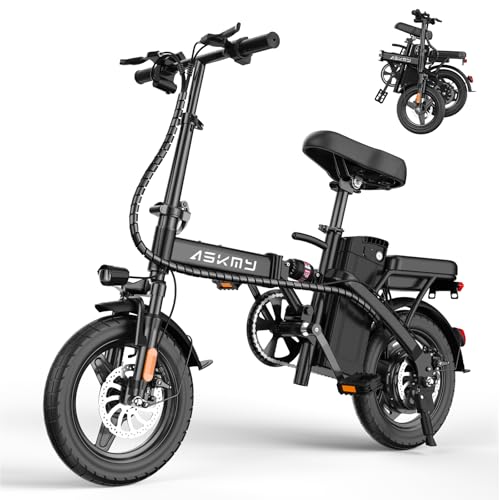
Strengths
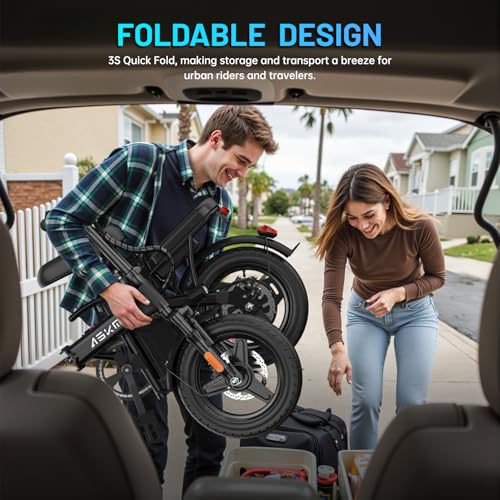
- Folding compact design
- Removable UL-certified battery
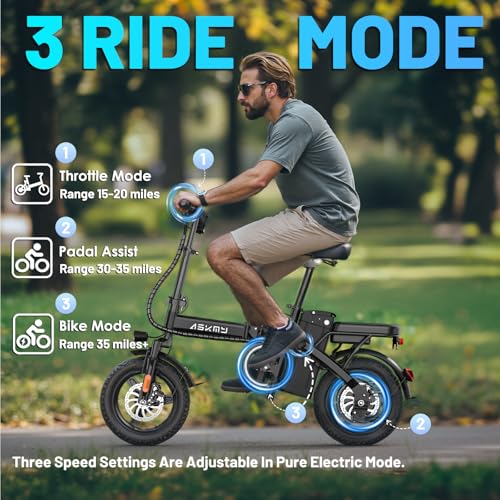
- Pedal-assist and electric modes
Trade-offs
- Small wheels limit stability
- Heavy when folded
- Not for off-road
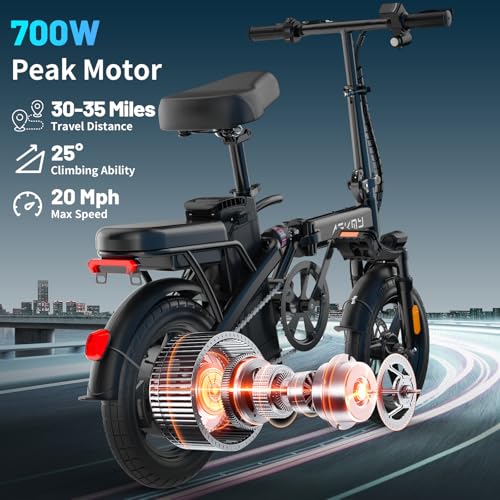
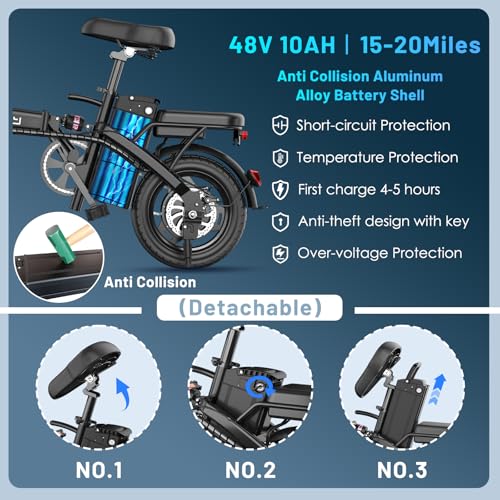
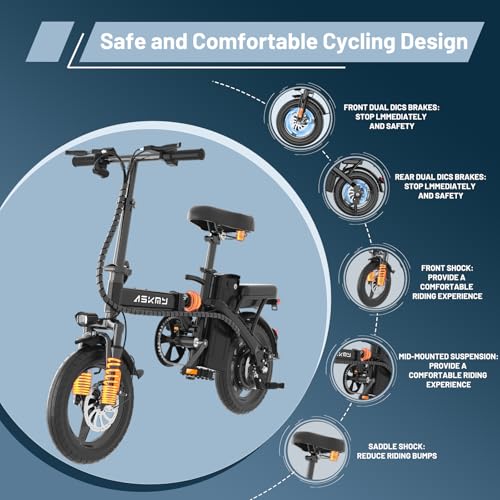
This folding e-bike is a wildcard in a teen bike list, but it makes sense for older teens who need a commute solution. The 700W peak motor and 20 mph top speed are impressive on paper, and the removable 48V battery offers real range for school or part-time job trips. The UL 2849 certification is a big plus, it means the battery and system meet safety standards, which isn’t always guaranteed at this price.
Owners report it’s easy to fold and store in a car or small room, and the LED display helps monitor speed and battery. But it’s not a mountain bike replacement, the 14-inch wheels struggle on rough terrain, and the weight makes it awkward to carry. Compared to the Dynacraft or WEIZE models, it’s in a different category entirely. I’d recommend it only if the teen needs efficient transportation over 3–5 miles and has safe access to roads or bike lanes.
Product photos
StarterRide 20 Inch Kids Bike
Strengths
- Includes kickstand and bell
- Easy 7-speed shifting
- Simple setup
Trade-offs
- Narrow tires
- Basic steel frame
- Limited off-road ability
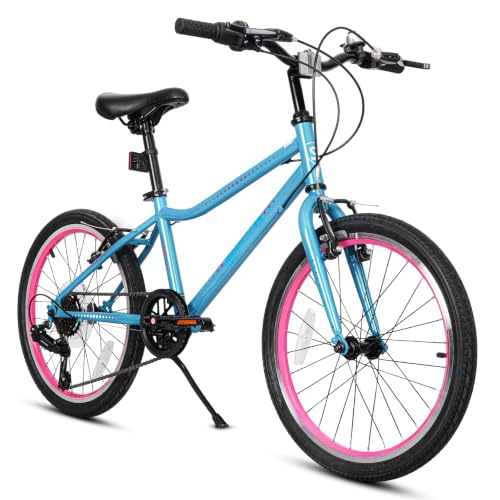
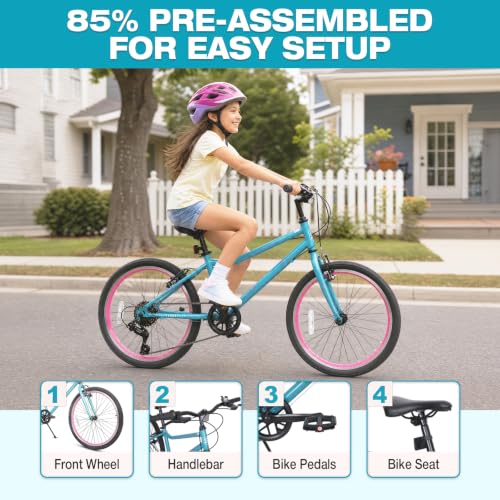
This 20-inch StarterRide model is clearly designed with younger teens or smaller riders in mind, those between 48 and 60 inches tall. What makes it stand out isn’t performance, but practicality: it comes with a kickstand, bell, and reflectors, which are small touches but matter for daily use like school commutes or park trips. The 7-speed twist shifter is easy for less experienced riders to manage, and the linear pull brakes offer decent control without being overly aggressive.
It’s not built for trail jumping or speed, and the 1.75-inch tires limit grip on loose terrain. But compared to the 24-inch version, this one fits a younger age bracket better and avoids the awkward in-between sizing that can discourage new riders. If you’ve got a 10- to 13-year-old who needs a reliable, no-fuss bike for paved paths and sidewalks, this is a sensible pick, even if it lacks the fun factor of a BMX or full-suspension MTB.
Product photos

WEIZE 26/27.5 Inch Mountain Bike

Strengths
- Fits taller riders
- 18-speed drivetrain
- Dual suspension
Trade-offs
- Heavy steel frame
- Twist shifters less precise
- Basic tire width
This WEIZE 26-inch hybrid MTB is one of the few in this list that comfortably fits taller teens, up to 6’2″, making it a strong option for older or growing riders who’ve outgrown 24-inch models. The 18-speed twist shifters and dual suspension offer decent versatility across paved and unpaved paths, and the linear pull brakes deliver solid stopping power. Owners note it’s heavier than aluminum bikes, but the high-carbon steel frame holds up well to regular use.
Compared to the Dynacraft, it’s a better fit for longer legs but lacks the brand-name Shimano components. It’s also not as nimble as a true 24-inch mountain bike for younger riders. I’d recommend this for teens nearing adult height who need a durable, no-frills ride for commuting, parks, or light trail use, especially if they’ll be sharing or upgrading from a kids’ bike.
Product photos


How We Evaluated bicycles for teenager
My approach to evaluating bicycles for teenagers centered on a research-led comparison of specifications and owner feedback. Rather than a hands-on lab test, I compared published features – frame materials, drivetrain components, brake types, and suspension systems – across numerous models. I then weighed owner reviews from multiple sources, looking for consistent themes regarding durability, ease of use, and suitability for the intended age range. Finally, I applied my experience with bicycle mechanics and design to assess overall value and build quality.
For this category, I prioritized suspension quality, gearing, and brake performance. Teenagers often encounter varied terrain, so a responsive suspension system is key for comfort and control. A wide gear range allows them to tackle hills and adjust to changing conditions, while reliable brakes are, of course, essential for safety. I also considered frame size ranges to identify bikes that accommodate growing riders. Choosing the right size can be as important as finding bikes for adults, ensuring a safe and enjoyable experience.
Specifications provide a solid foundation – frame material indicates potential durability, and drivetrain details reveal shifting smoothness. However, owner feedback proved crucial for understanding real-world usability. Reviews often highlighted issues with assembly, component quality, or long-term reliability that aren’t apparent from specs alone. I also considered the reputation of the manufacturer, looking for brands known for producing dependable bikes and offering good customer support, especially when considering options beyond standard street bikes.
What To Look For In bicycles for teenager
Finding the right bicycle for a teenager requires a bit more thought than just picking a cool color. They’re outgrowing kids’ bikes but aren’t quite ready for adult models, and their needs are changing as they gain independence and explore different types of riding.
A good bicycle for a teenager balances size and capability. Focus on frame geometry that allows for a comfortable, upright riding position, reliable components, especially brakes and shifters, and a build quality that can withstand regular use. Wheel size should match the rider’s height, and consider the type of terrain they’ll be tackling most often.
Frame Material and Suspension
The frame is where it all starts, and for teenagers, durability is key. While aluminum frames are lighter, steel frames offer a more forgiving ride and are generally more affordable. Full suspension (front and rear) is nice to have, especially if your teen is interested in trail riding, but it adds weight and complexity. For mostly pavement and light trails, a front suspension fork is usually sufficient. Don’t overlook the importance of frame size; a bike that’s too big or too small will be uncomfortable and difficult to control. A step-through frame might be easier for some riders to mount and dismount, especially if they’re new to cycling.
Gearing and Brakes
Teenagers need gearing that allows them to tackle hills and maintain a comfortable cadence on flat ground. A wider range of gears is better than a limited one, but overly complex systems can be fiddly. Shimano is a reliable brand for drivetrain components. More importantly, brakes are critical. V-brakes are common on lower-priced bikes and are adequate for casual riding, but disc brakes offer superior stopping power, especially in wet conditions. Make sure the brake levers are easily reachable and adjustable for smaller hands.
Here’s what to consider when it comes to gear ratios: * A single-speed bike is simplest, but limits terrain. * 7-speed drivetrains are a good starting point for varied riding. * 21-speed or higher offers versatility for hills and longer distances, but requires more maintenance and shifting skill.
A properly adjusted brake is more important than the brake type. Regularly inspect and maintain the brakes to ensure they are functioning correctly.
Fit and Intended Use
Beyond the technical specs, consider what your teen actually wants to do with the bike. Are they commuting to school, hitting the trails, or just cruising around the neighborhood? A mountain bike is suitable for off-road adventures, while a hybrid model might be better for pavement and gravel. Proper fit is paramount. Check out resources on bicycles for children to learn about sizing guides and how to measure your teen for the correct bike size. If your teen is interested in more serious cycling, you might even consider exploring women’s hybrid bikes for a comfortable and efficient ride.
Bicycles for Teenager Compared
The following table provides a detailed specification comparison of bicycles designed for teenagers.
| Product Title | Wheel Size | Speeds | Suspension | Brake Type | Frame Material | Electric |
|---|---|---|---|---|---|---|
| Dynacraft Vertical Gauntlet 24 Inch | 24 Inch | 21 | Full | V-Brake | Carbon Alloy Steel | No |
| Yventix 24 Inch Mountain Bike | 24 Inch | 18 | Front & Rear | V-Brake | Steel | No |
| StarterRide 24 Inch Mountain Bike | 24 Inch | 7 | N/A | Linear Pull | Alloy Steel | No |
| WEIZE 20 Inch BMX Freestyle Bike | 20 Inch | Single | N/A | V-Brake | Hi Ten Steel | No |
| Folding Electric Bike for Teens | 14 Inch | N/A | N/A | N/A | N/A | Yes |
| StarterRide 20 Inch Kids Bike | 20 Inch | 7 | N/A | Linear Pull | Alloy Steel | No |
| WEIZE 26/27.5 Inch Mountain Bike | 26/27.5 Inch | 18 | Full | Linear Pull | Steel | No |
Frequently Asked Questions
What wheel size is best for a teenage bicycle?
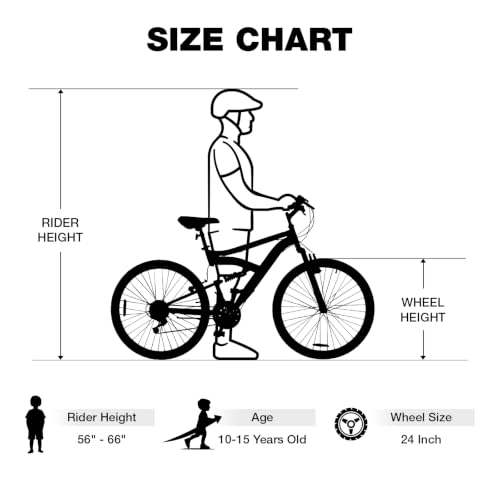
Generally, a 24-inch wheel is suitable for teens between 4’10” and 5’4”, while those taller than 5’4” will likely be more comfortable on a 26- or 27.5-inch wheel. Correct sizing ensures better control and pedaling efficiency.
Are disc brakes really necessary on a teenager’s bike?
Disc brakes offer significantly better stopping power, especially in wet or muddy conditions, and are a worthwhile investment for safety. While V-brakes are adequate for dry pavement, disc brakes provide added confidence for varied terrain and unpredictable weather.
How much should I expect to spend on a good quality teenage bicycle?
A decent quality bicycle for a teenager will typically cost between $200 and $600, depending on the features and components. Expect to pay more for full suspension, disc brakes, and higher-end materials.
My teen is interested in tricks and stunts. What type of bicycle should I consider?
For tricks and stunts, a BMX bike with a durable frame and smaller wheel size (usually 20 inches) is the best choice. These bikes are designed to withstand the stresses of freestyle riding and offer the maneuverability needed for performing tricks. You might also want to explore teen scooters as an alternative.
What are the benefits of an electric bicycle for a teenager?
An electric bicycle can provide assistance with hills and longer distances, making cycling more accessible and enjoyable. However, they are typically more expensive and require regular charging, and may not be permitted in all locations or for all activities. If you’re looking for options for other age groups, you can find senior bicycles to compare features.
The Bottom Line
Choosing a bicycle for a teenager often comes down to balancing capability with cost and intended use. While a full-suspension bike like the Dynacraft Vertical Gauntlet 24 Inch offers comfort and control, the WEIZE 26/27.5 Inch Mountain Bike strikes a sweet spot for many, providing a good level of performance without breaking the bank. Ultimately, the best bike isn’t about the flashiest specs, but about getting your teen out riding and enjoying the experience.
For those prioritizing affordability, the StarterRide 24 Inch Mountain Bike is a solid option, and if your teen is focused on tricks and freestyle riding, the WEIZE 20 Inch BMX Freestyle Bike is purpose-built for that. If a little extra help is needed on hills or for longer distances, the Folding Electric Bike for Teens could be a good fit, though it represents a significant price jump. Remember to also consider beginner road bikes if your teen shows interest in speed and efficiency.
At the end of the day, a well-fitting bike with reliable brakes and appropriate gearing will always be more valuable than any fancy component. Prioritize safety and comfort above all else, and encourage your teen to get familiar with basic bike maintenance. A comfortable rider is a safe rider, and a little knowledge goes a long way toward enjoying many miles of casual bikes.
