
9 Best Bicycle Saddles for Long Rides 2026
This post contains affiliate links. As an Amazon Associate, we earn from qualifying purchases.
The WTB Volt Bike Seat stands out as the best overall saddle for long rides, combining smart design with reliable comfort. For those on a budget, the Bike Seat Saddle Comfortable offers impressive support without the price tag, while the Twomaples Noseless Bike Seat is a top pick if you need maximum pressure relief.
Long hours in the saddle shouldn’t mean numbness, chafing, or constant shifting. Yet so many riders settle for discomfort because they assume pain is just part of the ride. The truth is, the right saddle makes all the difference, and it’s not just about padding.
This guide cuts through the noise by focusing on what actually matters for endurance comfort: sit bone support, pressure relief, and materials that hold up over miles. I looked at specs, design intent, and real-world feedback to find saddles that deliver where it counts.
Top 9 Bicycle Saddles For Long Rides in the Market
The Best Bicycle Saddles For Long Rides, Reviewed
WTB Volt Bike Seat
Strengths
- Multiple width options
- Effective pressure cutout
- Durable steel rail
Trade-offs
- Firmer ride
- Higher price
- Heavier than racing saddles
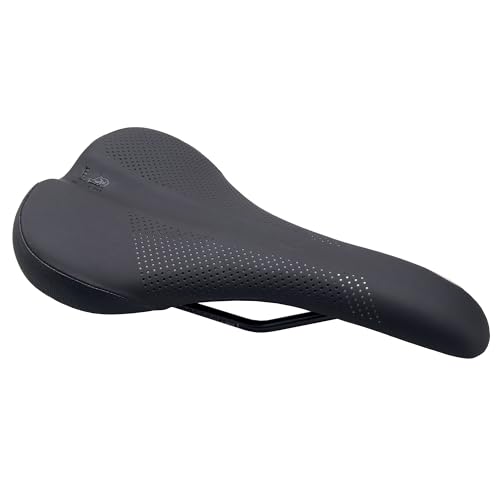
The WTB Volt stands out because it treats saddle fit like a science, not a guess. The three width options and deep sit-bone cradling make it one of the few saddles that actually adapts to your anatomy. The Love Channel and Comfort Zone cutouts aren’t gimmicks, they’re proven relief zones that owners with numbness issues consistently praise.
It’s firmer than plush seats, but that’s the point: it supports, not swallows, your weight. Compared to the gel-heavy budget models, this one wins on long-haul integrity. For gravel, e-bikes, or mixed commuting, it’s the most balanced option here. My recommendation? Spend the extra and get the width that matches your pelvis.
Video review
Twomaples Noseless Bike Seat

Strengths
- Noseless pressure relief
- Wide concave base
- Strong shock absorption
Trade-offs
- Requires adaptation
- Adapter needed
- Not for all frames
Noseless designs aren’t for everyone, but this one executes the concept well. The wide concave base stabilizes wide hips without slipping, and the lack of a nose eliminates pubic bone pressure, riders with chronic numbness or prostate issues often call this a game-saver. The 580 lb load rating and silicone damping tech sound impressive, and owners confirm the ride feels damped, not bouncy.
Still, the noseless shape shifts more weight to the sit bones, so riders unaccustomed to it may need an adjustment period. It’s also not a direct rail mount, requires an adapter, which complicates fit on some exercise bikes. But for the right rider, the pressure relief is unmatched.
Video review
Twomaples Oversized Bike Seat
Strengths
- Ultra-wide support
- High weight capacity
- Memory foam and gel
Trade-offs
- May rub thighs
- Adapter required
- Bulky profile
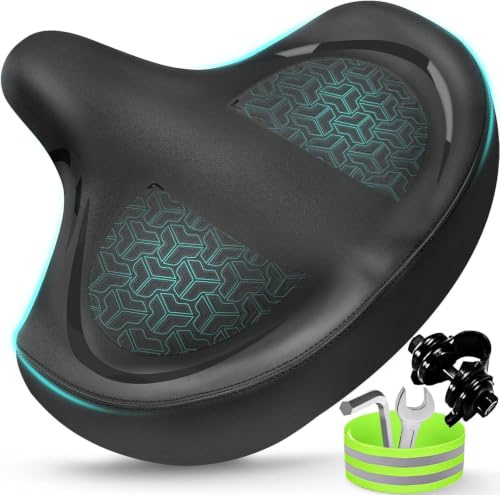
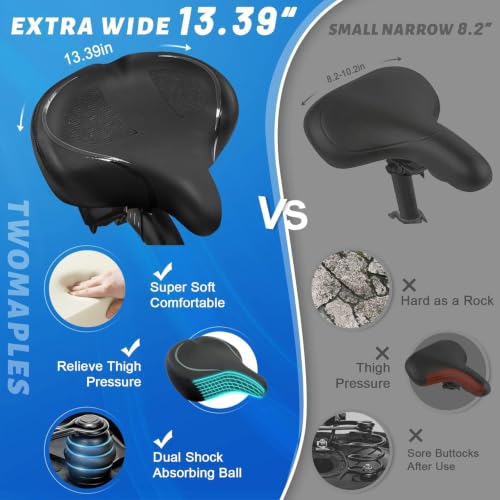
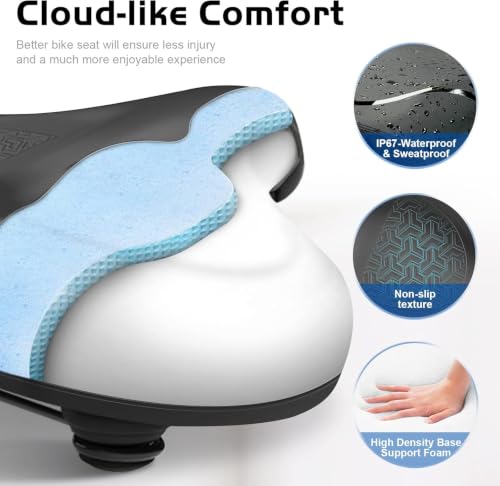
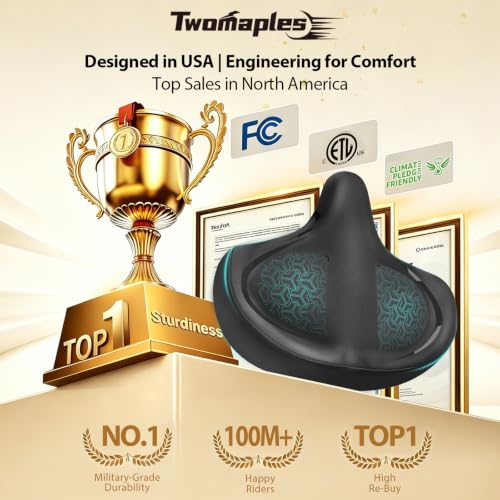
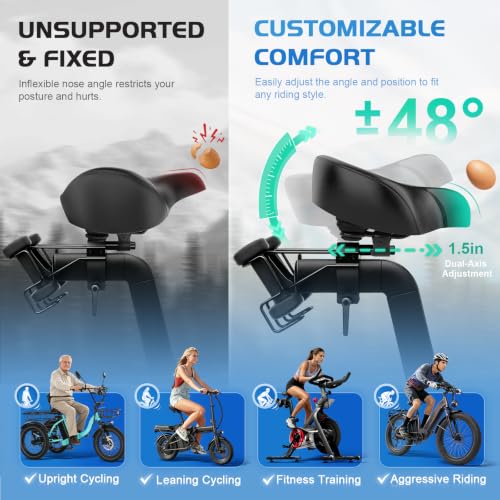
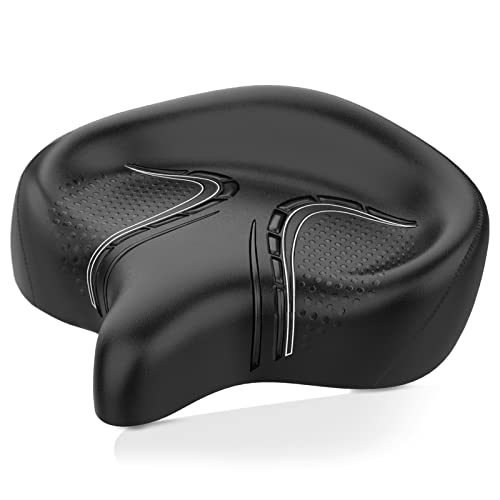
This Twomaples model is nearly identical to the noseless version but with a convex shape, targeting riders with broad sit bones who need lateral support. The 650 lb rating suggests serious durability, and the memory foam-gel combo feels plush without sagging. Owners with wider builds consistently say it fits better than standard saddles, which often pinch or gap.
The convex wings help, but some report the front edge can still rub during aggressive pedaling. Like its sibling, it needs an adapter for triangle mounts, which is a recurring hassle. But for larger-framed riders tired of ill-fitting seats, this one finally gets the width right.
Product photos
BLUEWIND Oversized Bike Seat
Strengths
- Oversized cushion
- Integrated backrest
- Durable microfiber
Trade-offs
- Bulky design
- Round post only
- Not for performance bikes
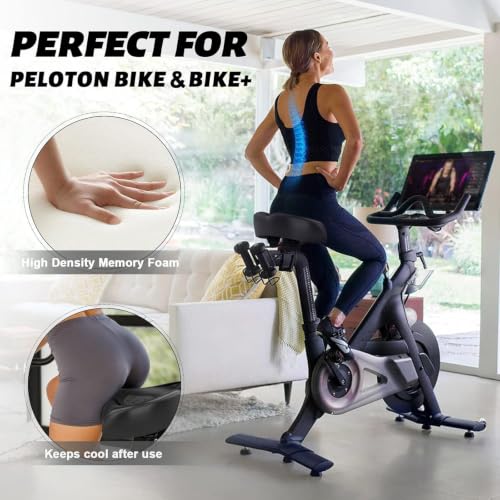
This seat is built for riders who prioritize sheer size and back support over sleek performance. The oversized dimensions and integrated backrest are a bold move, and owners consistently report noticeable relief on the lower back and tailbone during long stationary or casual rides. The 7cm foam cushion doesn’t bottom out easily, and the thick padding makes it a strong contender for electric bike or cruiser riders who aren’t chasing speed.
That said, the bulkiness could be a liability on more aggressive bikes or tight frames. The round adapter limits compatibility, and while the backrest helps posture, it may interfere with some riding positions. Still, for comfort-first riders, especially on upright or indoor bikes, this design delivers where it counts.
Product photos



OUXI Gel Bicycle Saddle

Strengths
- Thick gel padding
- Hollow ventilation zone
- Includes tools and cover
Trade-offs
- Gel may degrade
- Average durability
- Narrow width
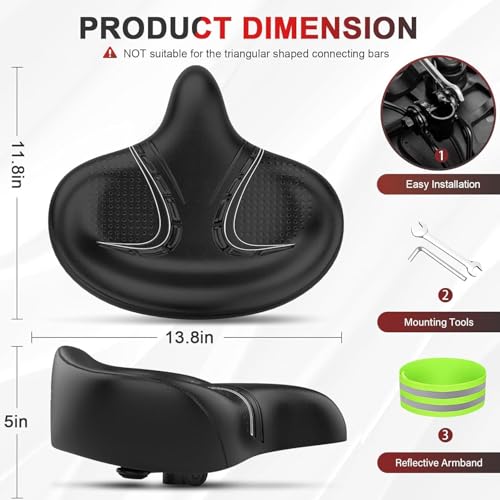
This saddle leans hard into gel comfort, and on paper, it looks like a plush upgrade for sore riders. The ‘artificial fatty gel’ is a quirky term, but owners confirm it feels softer and more adaptive than standard foam, especially on short to mid-length rides. The hollowed-out center helps, though it’s not as effective as a true anatomical cutout.
Where it falls short is structure, some users report the gel compressing over time, leading to a sunken feel after months. The non-slip pattern works, but the overall build feels budget-grade. It’s a decent temporary fix or replacement for a worn-out stock saddle, but not a long-term solution for serious mileage.
Product photos


Bike Seat Saddle Comfortable
Strengths
- Low cost
- Simple install
- Decent foam thickness
Trade-offs
- Basic materials
- No advanced support
- Short lifespan
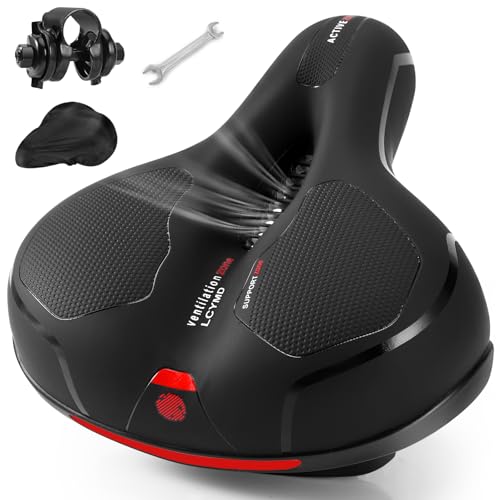
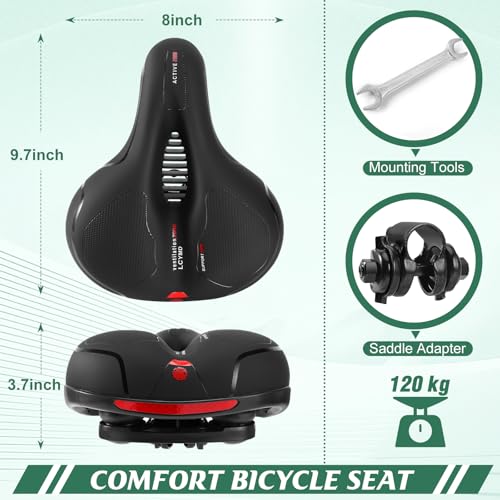
This is the bare-bones budget workhorse. It gets the job done with thick foam and a center vent, and at this price, it’s a no-brainer for replacing a cracked stock saddle on a cruiser or exercise bike. The universal adapter fits most round posts, and owners say installation takes minutes.
But it’s clearly built to spec, not to last. The padding is dense but unsophisticated, no gel, no cutout, no rail tuning. Long-term riders report it flattens out after a few months. Still, for a short-term fix or a second bike you don’t ride hard, it’s the smarter buy than spending more on overhyped models.
Product photos
Gincleey Comfort Bike Seat

Strengths
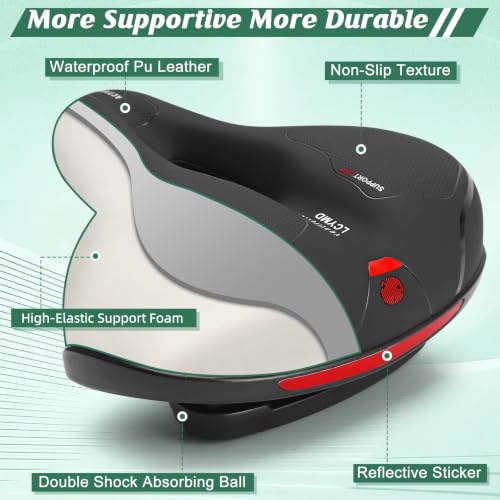
- Dual anti-shock balls
- Memory foam padding
- Reflective safety strip
Trade-offs
- Tall profile
- Heavier build
- May alter fit
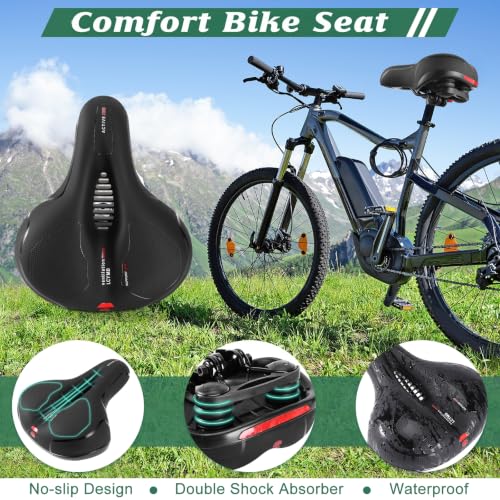
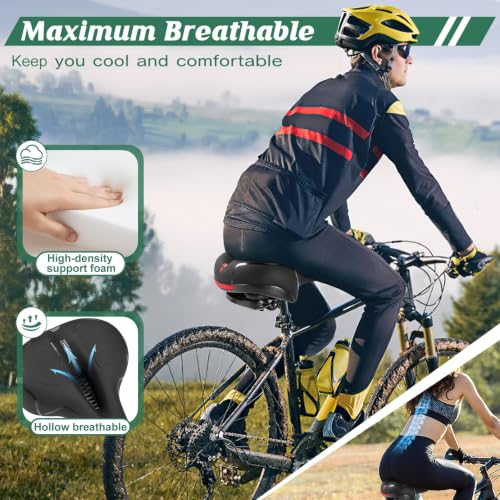
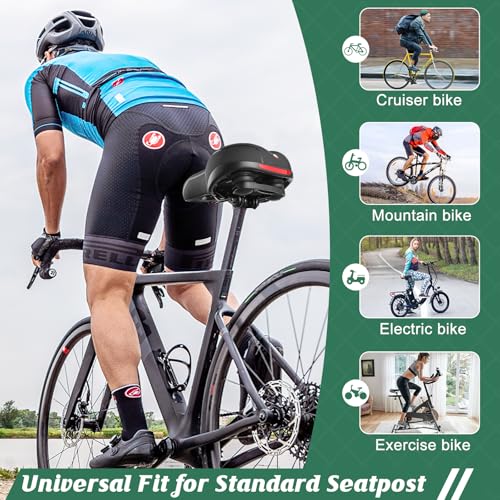
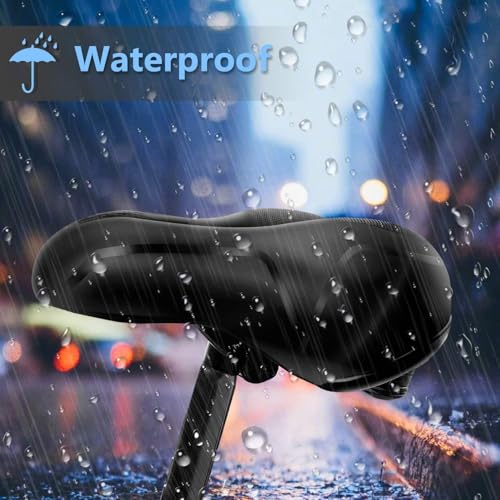
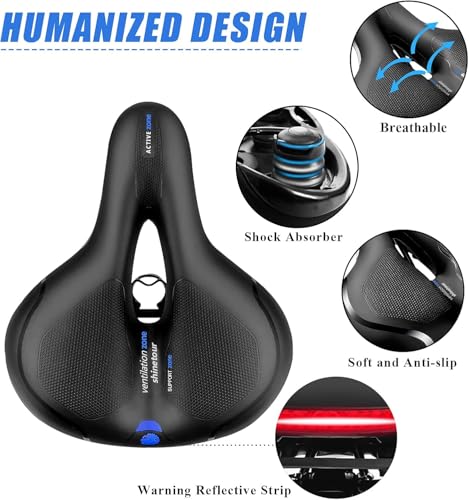
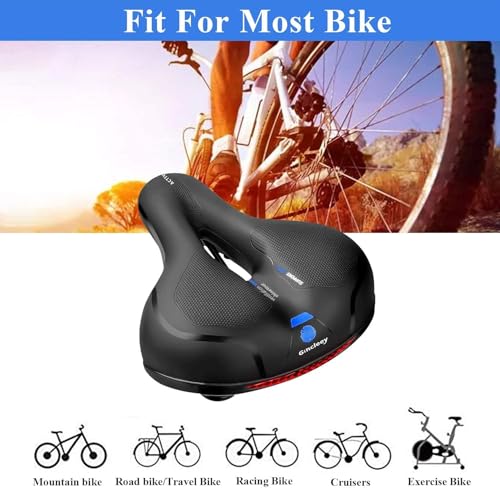
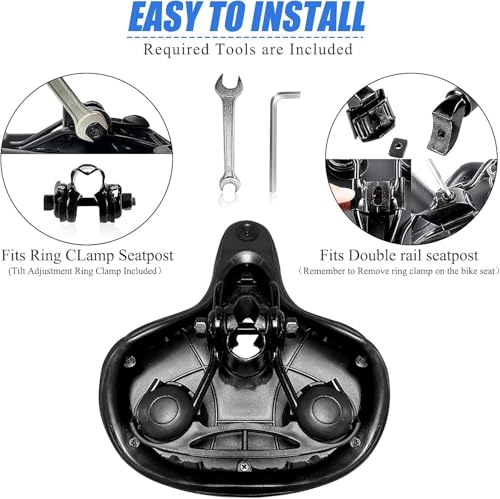
If shock absorption is your top priority, this one deserves attention. The dual rubber ball suspension under the memory foam base actually isolates bumps better than foam alone, and owners on rough urban routes or pothole-prone streets report a noticeable smoothing effect. The memory foam stays supportive without going flat quickly.
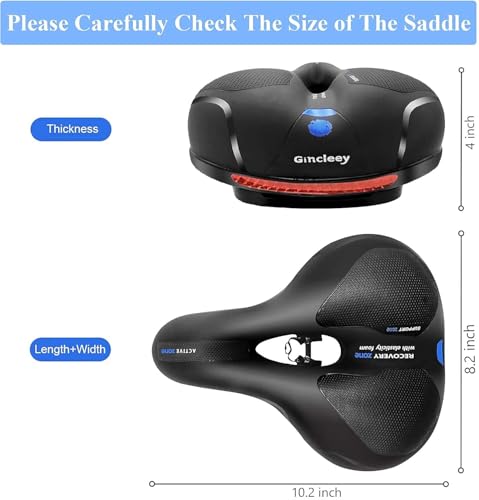
However, the suspension adds bulk, and the saddle sits higher than stock, which can throw off your riding posture. It’s also heavier, so it’s not for weight weenies. But for city riders or e-bike users pounding cracked pavement, the trade-off makes sense. Just verify your frame clearance first.
Product photos
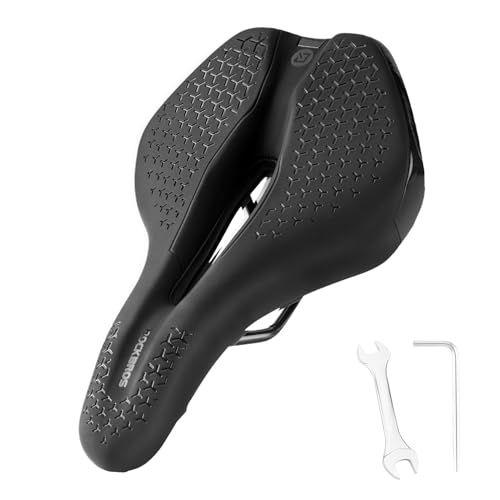
ROCKBROS Wave Ergonomic Saddle
Strengths
- Wave ergonomic shape
- Excellent airflow
- Durable steel rails
Trade-offs
- No cutout design
- Firm for some
- Minimal rear support
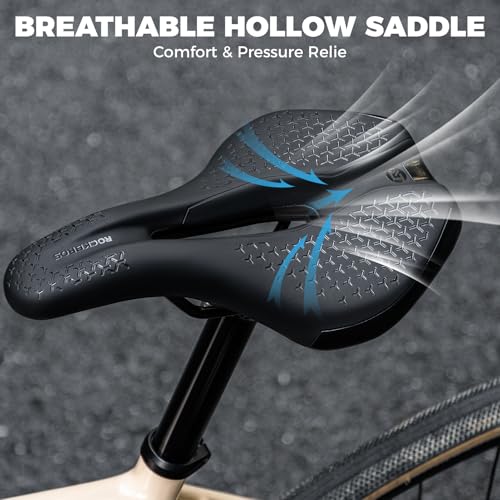
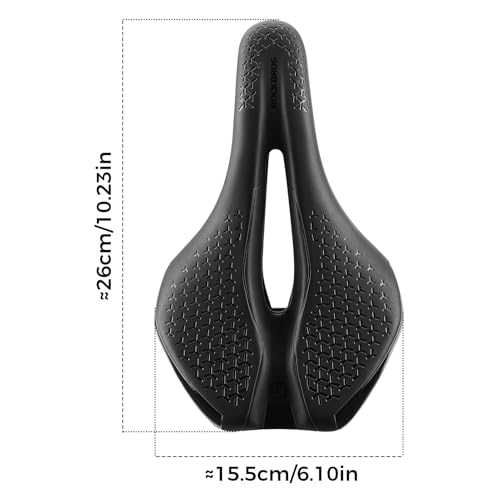
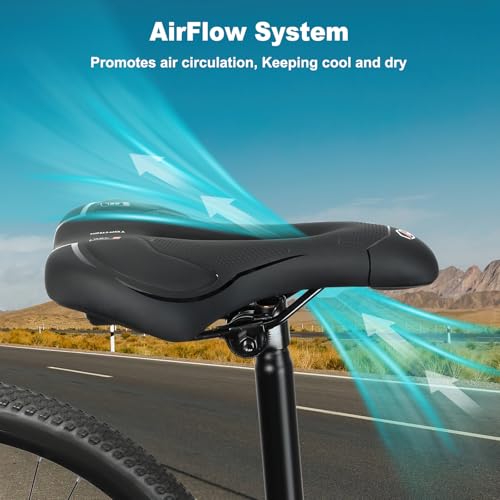
ROCKBROS nails breathability with that straight-slot airflow channel, riders in hot climates or those prone to sweating praise how well it vents. The wave shape lifts the front slightly, reducing crotch pressure without sacrificing thigh clearance, and the high-density foam holds up better than cheaper alternatives.
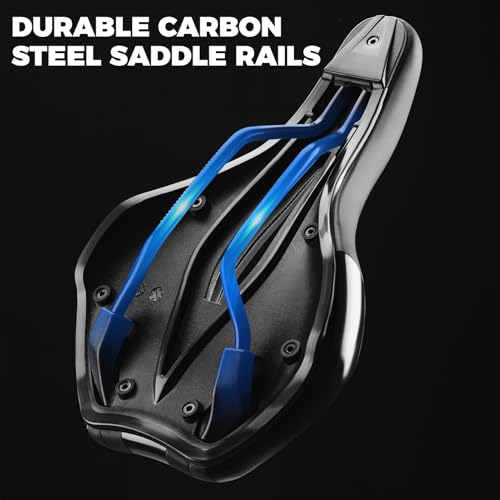
The carbon steel rails are overkill for comfort bikes but add real durability. Still, it lacks a true pressure-relief cutout, so numbness can creep in on rides over two hours. Compared to the WTB Volt, it’s less anatomically precise, but for hot-weather riders, the airflow edge makes it a strong mid-tier pick.
Product photos
Topcrown Mountain Bike Seat
Strengths
- Dual-layer gel and foam
- Ergonomic zoned support
- Breathable center channel
Trade-offs
- No rear suspension balls
- Basic clamp design
- Limited width options
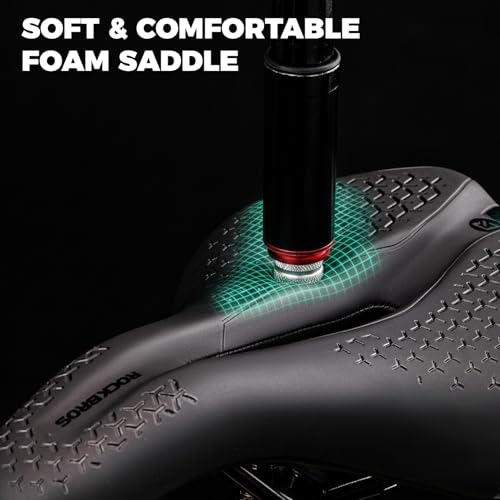
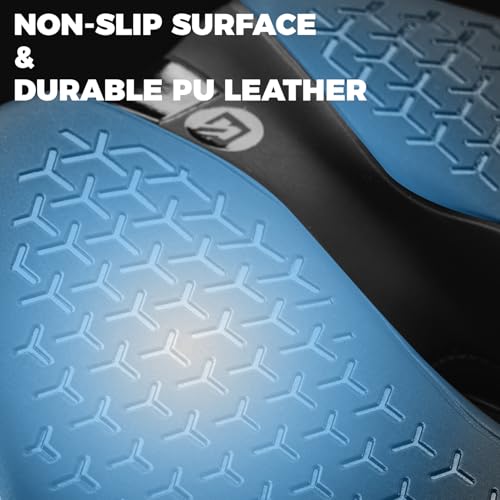
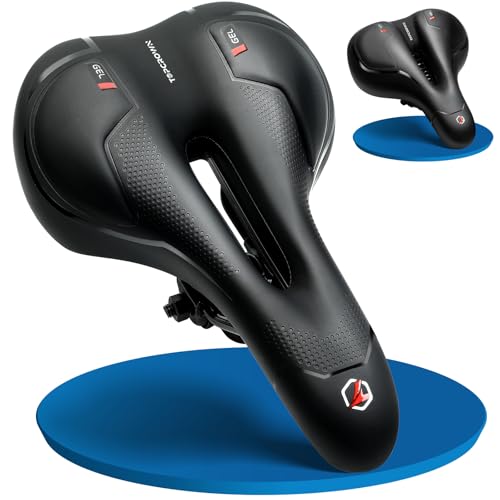
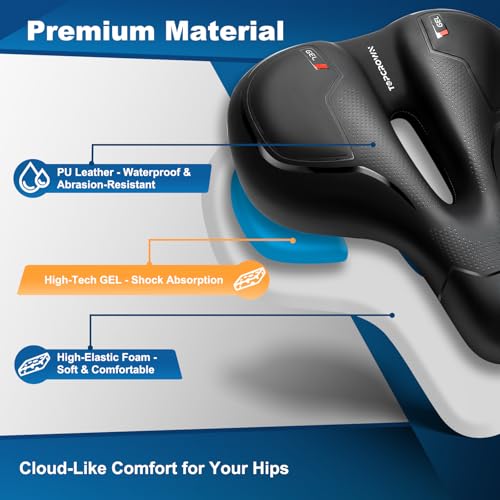
Topcrown’s dual-layer approach, gel on top, firm foam beneath, hits a sweet spot for mixed-terrain riders who want cushion without mush. The 3D ergonomic shape aligns well with sit bones, and owners note it reduces numbness better than basic foam saddles, especially on road or touring bikes. The central ventilation channel actually works, keeping things drier during humid rides.
It’s not the most refined option here, and the lack of shock-absorbing balls in the Touring model means rough trails will still transmit vibration. But for the price, the balance of support and breathability is solid. I’d pick this over generic gel seats any day for long-distance comfort.
Product photos

How We Chose These bicycle saddles for long rides
Rather than a hands-on lab test, this selection is a research-led comparison of published specifications, features, and, crucially, owner and expert feedback. I began by compiling a list of highly-rated bicycle saddles marketed for longer rides, then systematically compared their stated dimensions, padding materials, rail construction, and design features. Weight limits and intended use cases (road, mountain, touring) were also key factors. Finally, I weighed owner reviews from multiple sources, paying close attention to recurring themes regarding comfort, fit, and durability.
For this category, the most heavily weighted factors were pressure relief and support. Long-distance comfort hinges on minimizing pressure points and providing stable support for the sit bones. Features like central cutouts, gel padding, and contoured shapes directly address these needs. I also prioritized breathability, as moisture buildup can significantly detract from comfort on extended rides. Considering these factors allowed me to rank saddles based on their potential to deliver a truly enjoyable experience.
Specifications reliably indicate build quality and intended use, but owner feedback reveals how a saddle performs in real-world conditions. I judged materials and construction against reported durability and comfort levels. While specs detail padding thickness, reviews clarify how effective that padding is over several hours in the saddle. I also looked to reputable cycling publications for expert consensus, often finding corroboration for common owner experiences. You can find more information about comfortable cycling seats.
Choosing The Right bicycle saddles for long rides
Finding the right bicycle saddle is a remarkably personal pursuit. It’s the primary contact point between you and your bike, and a poor fit can ruin even the most scenic ride.
A good bicycle saddle balances cushioning with support, prioritizes pressure relief in key areas, and accommodates the rider’s anatomy. Look for features like cutouts, varying widths, and materials designed to minimize chafing and maximize comfort over distance. Consider the type of riding you do most – a saddle suited for road cycling will differ from one intended for mountain biking.
Width and Sit Bone Support
The biggest mistake I see riders make is assuming one size fits all. Saddles come in different widths to match the distance between your sit bones (ischial tuberosities). Too narrow, and you’ll be riding on soft tissue. Too wide, and the edges will chafe. Getting measured at a bike shop is ideal, but you can approximate it at home with cardboard and a towel. Beyond the width itself, pay attention to the saddle’s overall shape. Some saddles have more curvature than others, influencing how well they cradle your sit bones. If you’re considering expanding your options to include options for off-road riding, you might also want to check out our guide to the mountain bike saddles for long rides.
Padding and Pressure Relief
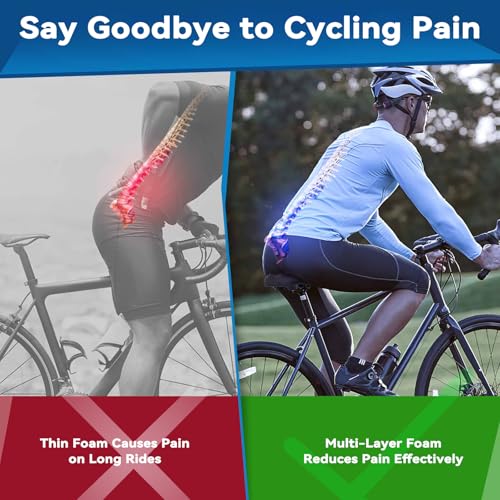
Padding isn’t simply about softness. A super-plush saddle can actually increase pressure by allowing you to sink in. The goal is strategic cushioning and pressure relief. Many saddles now feature cutouts or “love channels” (a recessed area down the center) to alleviate pressure on the perineum. Gel padding is popular, but high-density foam can often provide a more supportive and long-lasting solution. Remember, a saddle’s padding interacts with your cycling shorts, so those are part of the equation, too.
Here’s what to look for when it comes to padding: * Minimal padding: Often favored by experienced riders who prioritize efficiency and don’t need a lot of cushioning. * Medium padding: A good balance of comfort and support for general riding. * Thick padding with gel: Best for riders who prioritize comfort above all else, or those with sensitivity in the sit bone area – though be aware it can sometimes lead to more chafing if not paired with well-fitting shorts.
A well-placed cutout is more valuable than a thick layer of foam.
Materials and Overall Design
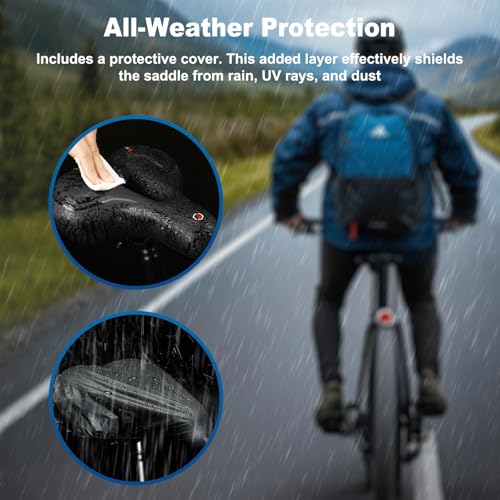
The cover material of the saddle plays a bigger role than many realize. Leather is durable and conforms to your shape over time, but requires maintenance. Synthetic materials like PU (polyurethane) are more weather-resistant and easier to care for. Beyond the cover, consider the saddle’s rails. Carbon steel rails are common and affordable, while carbon fiber rails are lighter and can absorb some road vibration. If you’re serious about maximizing comfort on the road, you should also explore our recommendations for the best saddles for road bikes and comfortable road bike seats.
Bicycle Saddles for Long Rides Compared
This table provides a side-by-side comparison of key specifications for bicycle saddles designed for long-distance comfort.
| Product Name | Best For | Padding Type | Width (in) | Features | Weight (lbs) |
|---|---|---|---|---|---|
| WTB Volt Bike Seat | Best Overall | Medium | N/A | Cutout, Love Channel | N/A |
| Twomaples Noseless Bike Seat | Best for Pressure Relief | N/A | 12.2 | Oversized, No Nose | N/A |
| Twomaples Oversized Bike Seat | Best for Wide Hips | Memory Foam/Gel | N/A | Widened Base, Shock Abs. | N/A |
| BLUEWIND Oversized Bike Seat | Best with Backrest Design | Foam | N/A | Backrest, Shock Abs. | N/A |
| OUXI Gel Bicycle Saddle | Best Gel Padding | Gel | 5.5 | Ventilation, Non-Slip | 1.2 |
| Bike Seat Saddle Comfortable | Best Budget Friendly | High-Density Foam | 9.7 | Airflow Vent | N/A |
| Gincleey Comfort Bike Seat | Best Shock Absorption | Memory Foam | N/A | Shock Absorption, Vent. | N/A |
| ROCKBROS Wave Ergonomic Saddle | Best Breathability | High-Density Foam | N/A | Wave Design, Airflow | N/A |
| Topcrown Mountain Bike Seat | Best Dual-Layer Support | Gel/Foam | N/A | 3D Ergonomic, Waterproof | N/A |
Frequently Asked Questions
What saddle width do I actually need?
Your ideal saddle width depends on the distance between your sit bones, typically measured in millimeters. Most riders fall between 130-155mm, but getting a professional measurement is best; otherwise, the cardboard cutout method offers a good approximation.
Are expensive saddles always more comfortable?
Not necessarily. Price often reflects materials (carbon rails versus steel) and construction techniques, but comfort is subjective. A well-fitting, moderately priced saddle is often preferable to a high-end one that doesn’t match your anatomy.
Can I improve saddle comfort with accessories?
Yes, accessories can help. Consider padded bike shorts for added cushioning and chafing protection, as well as a quality seatpost suspension to absorb road vibrations. Finding the best shorts for long rides is crucial.
What’s the difference between gel and foam padding?
Gel padding conforms to your shape but can sometimes feel squishy and less supportive over long distances. High-density foam provides more consistent support and is often preferred by serious cyclists, especially when paired with strategically placed cutouts. For maximizing comfort on long rides, consider looking at comfortable seats for touring.
How important is a central cutout?
A central cutout or “love channel” is very important for many riders, particularly men. It alleviates pressure on the perineum, reducing the risk of numbness and discomfort during extended rides. It’s a feature I consistently see praised in owner reviews.
The Bottom Line
Choosing a bicycle saddle often comes down to balancing control and comfort. You can chase the absolute peak of performance with a minimalist design, or prioritize plushness for all-day rides. For the best combination of support, pressure relief, and overall ride quality, the WTB Volt Bike Seat stands out as an excellent choice.
If you have specific needs, this list offers tailored solutions. Riders seeking maximum pressure relief will find the Twomaples Noseless Bike Seat uniquely effective, while those with wider sit bones will appreciate the stability of the Twomaples Oversized Bike Seat. And for those on a tighter budget, the Bike Seat Saddle Comfortable provides a surprisingly comfortable experience without breaking the bank. You can find more details on comfortable long-ride seats in our full guide.
Ultimately, the best saddle isn’t about the latest technology or highest price tag. It’s about finding a shape and level of padding that complements your anatomy and riding style. Prioritize a good fit and proper bike setup – those fundamentals matter far more than any specific feature when you’re putting in the miles, and are especially important for bike saddles for men.
